- Product Description Description
- Table of Contents TOC
- List of Table & Figure LOT
- Get Free Sample PDF Sample PDF
Market Size, 2025
$239.6 MnMarket Estimate, 2026
$249.4 MnMarket Forecast, 2034
$344.6 MnCAGR, 2026–2034
4.12%Executive Summary: Middle East and Africa Tragacanth Market
- Market Scope: Comprehensive regional tragacanth market analysis covering product types, application segments, distribution channels, and country-level leadership frameworks.
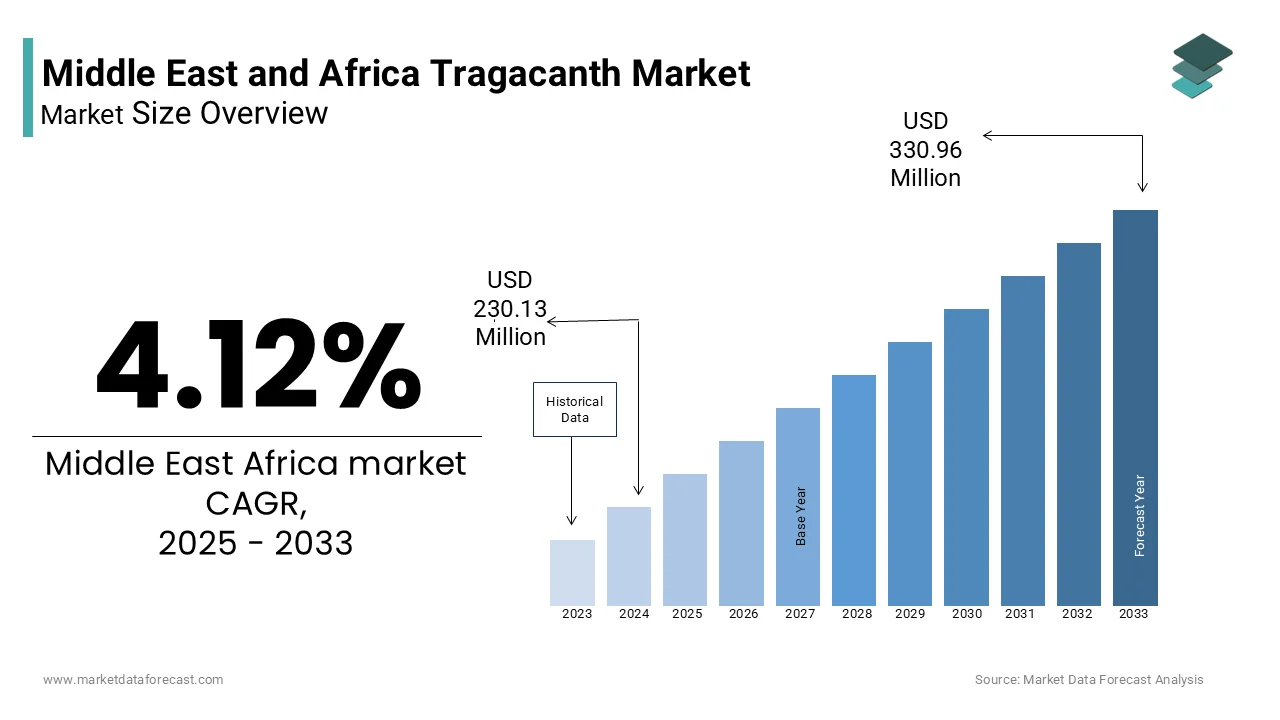
- Market Valuation: Valued at USD 239.61 million (2025), estimated at USD 249.48 million (2026), and projected to reach USD 344.60 million by 2034, registering a steady CAGR of 4.12% (2026–2034).
- Primary Growth Drivers: Expansion of traditional and herbal medicine production across the region, and rising consumer demand for clean-label, plant-derived ingredients in premium and halal-certified food products.
Key Market Segment Metrics (2026–2034)
| Category | Leading Segment (2025 Position) | Fastest-Growing Segment (2026–2034) |
|---|---|---|
| By Product Type | Flakes (captured an estimated 61.4% of total consumption volume in 2025, driven by superior processability and faster hydration kinetics) | Ribbons (projected to expand at a CAGR of 7.5%, credited to rising interest among traditional medicine practitioners and eco-conscious innovators) |
| By Application | Pharmaceuticals & Medical (accounted for 59.4% of total consumption in 2025 as a natural excipient in tablet binders and controlled-release matrices) | Personal Care & Cosmetics (expanding at the fastest pace with a CAGR of 7.9%, driven by clean-label skincare and haircare demand) |
| By Distribution Channel | Direct Selling (prominent channel capturing an estimated 53% of total revenue in 2025 due to technical support and batch certification needs) | Internet Retailing (fastest-growing channel projected at a CAGR of 9.8%, fueled by B2B e-procurement platforms and accessibility for indie makers) |
| By Country | Saudi Arabia (foremost contributor commanding 29.3% share in 2025, rooted in pharmaceutical self-sufficiency and Vision 2030 initiatives) | UAE, South Africa, and Egypt (experiencing rapid growth due to hubs in luxury personal care, clean-label innovation, and herbal medicine modernization) |
Major Market Players & Market Structure
Market Structure: Highly specialized and relationship-driven competitive landscape where participants differentiate through purity, reliability, regulatory alignment, and technical formulation expertise rather than mass availability.
Key Companies: Nexira, Ashland Global Holdings Inc., TIC Gums, Kachabo Gums, Lakrena International, Hawkins Watts Limited, Scents of Earth, Alfa Chemical Corp, and Wizard’s Cauldron, Inc.
Middle East and Africa Tragacanth Market Size
The Middle East and Africa tragacanth market size was valued at USD 239.61 million in 2025 and is expected to reach USD 344.60 million by 2034 from USD 249.48 million in 2026. The market is projected to grow at a CAGR of 4.12%.
Tragacanth is a natural hydrocolloid exuded from Astragalus species native to arid zones of Western Asia. While tragacanth is not cultivated in most of Africa or the Arab world, its use persists across pharmaceuticals, traditional medicine, food stabilization, and artisanal industries in countries such as Saudi Arabia, Egypt, South Africa, and Morocco. The compound functions as a thickener, emulsifier, and binder, valued for its biocompatibility, pH stability, and clean-label compliance.
In Saudi Arabia, tragacanth is recognized under Gulf Cooperation Council Standardization Organization (GSO) regulations as an acceptable additive under code E413, permitted in confectionery, dairy analogues, and herbal preparations. These regulatory acceptances and functional attributes sustain its niche yet critical role in advanced material science and health-oriented industries across the Middle East and Africa.
 MARKET DRIVERS
Expansion of Traditional and Herbal Medicine Production Across the Region
The growing institutionalization of traditional and herbal medicine within national healthcare frameworks, particularly in Saudi Arabia, Egypt, Iran, and South Africa, is one of the primary drivers fueling demand for tragacanth in the Middle East and Africa. Tragacanth serves as a natural binder and suspending agent in tablet formulations, herbal lozenges, and Ayurvedic-inspired remedies, especially where synthetic additives conflict with cultural or religious preferences.
Saudi Arabia’s Vision 2030 includes a strategic initiative to expand the halal-compliant pharmaceutical sector. In Egypt, the Ministry of Health has established Good Manufacturing Practice (GMP) guidelines for phytotherapeutic products, reinforcing the legitimacy of plant-derived excipients. Also, tragacanth enhances the disintegration profile of herbal tablets while maintaining bioavailability. With increasing investment in traditional medicine infrastructure, from centralized compounding units in Riyadh to herbal parks in Morocco, tragacanth’s role as a culturally resonant and functionally effective excipient is becoming deeply embedded in public health strategies.
Rising Demand for Clean-Label Ingredients in Premium Food and Halal-Certified Products
The escalating consumer shift toward clean-label, plant-derived ingredients in premium and halal-certified food products across urban centers in the UAE, Saudi Arabia, Egypt, and South Africa is another significant demand catalyst. Tragacanth functions as a natural stabilizer in plant-based dairy alternatives, gourmet confectionery, and functional beverages—categories experiencing robust growth due to rising health consciousness and religious dietary adherence.
This behavioral change has prompted brands like Almarai Plant-Based (Saudi Arabia), Clover Yoptimal (South Africa), and Just Life (UAE) to reformulate their vegan cheese and yogurt lines using tragacanth instead of xanthan gum or carrageenan.
Moreover, tragacanth’s resistance to thermal degradation enhances its utility in baked goods and desserts consumed during Ramadan and festive seasons. The Gulf Standardization Organization confirmed that tragacanth meets halal certification requirements under GSO 2055:2015, making it suitable for export to Muslim-majority markets.
MARKET RESTRAINTS
Geopolitical Instability and Trade Barriers Affecting Supply from Primary Source Regions
The geopolitical fragility surrounding its primary sourcing regions is a fundamental constraint impeding the Middle East and Africa Tragacanth Market. Also, international sanctions, border conflicts, and export restrictions severely disrupt continuity. Additionally, climate change exacerbates scarcity which is shortening gum exudation periods. Without diversified sourcing or cultivation initiatives, manufacturers across the region remain exposed to supply shocks, undermining long-term investment in tragacanth-dependent formulations.
Inherent Batch Variability Limiting Adoption in Regulated Industrial Applications
The pronounced variability in tragacanth’s chemical composition, which undermines its reliability in high-specification industries such as pharmaceuticals and clinical nutrition, is another significant barrier to market expansion. Tragacanth consists of two primary fractions—soluble tragacanthin and insoluble bassorin—whose ratio fluctuates based on plant age, harvest season, and environmental stressors. Like, galacturonic acid content, a determinant of viscosity and gel strength, varies between batches sourced from different regions. Such inconsistency poses serious compliance risks under Good Manufacturing Practice (GMP) standards enforced by regulatory bodies like the Saudi Food and Drug Authority (SFDA) and South Africa’s Medicines Control Council, where formulation reproducibility is mandatory.
Occupational sensitization also remains a concern. These technical and safety-related challenges reduce willingness among large-scale producers to integrate tragacanth into standardized manufacturing processes, thereby constraining its penetration despite functional advantages.
MARKET OPPORTUNITIES
Advancement of Fermentation-Based Biosynthesis for Sustainable Tragacanth Production
The development of microbial fermentation platforms capable of synthesizing bio-identical tragacanth polysaccharides, offering a sustainable alternative to wild harvesting is an emerging opportunity. Biotech firms in South Africa, the UAE, and Egypt, including BioNile Solutions and Red Sea Biopolymers, are pioneering strain-engineered yeast and bacterial systems designed to replicate the complex heteropolysaccharide structure of natural tragacanthin.
This breakthrough could decouple supply from ecologically vulnerable ecosystems while ensuring batch-to-batch consistency essential for pharmaceutical use.
Consumer sentiment aligns with this transition. If commercialized, fermentation-based production could reduce lead times. With pilot facilities in Dubai and Pretoria advancing toward scale-up, and regulatory pathways opening under Saudi Arabia’s Novel Ingredient framework, this technological evolution may redefine tragacanth accessibility and catalyze renewed interest across pharmaceutical and food sectors in the region.
Integration into Circular Economy Initiatives and Biodegradable Packaging Solutions
A transformative avenue for growth involves tragacanth’s potential application in compostable packaging and water-soluble adhesives, aligning with national sustainability mandates across the Middle East and Africa. Under policies such as the UAE’s 2021 Single-Use Plastics Policy and Egypt’s Extended Producer Responsibility Law, member states are phasing out conventional plastic labels, tapes, and dissolvable sachets, creating demand for renewable binding agents. Tragacanth’s natural tackiness and film-forming capacity make it suitable for replacing petroleum-based adhesives in gummed tapes, envelope seals, and biodegradable pouch linings.
Industry collaboration is gaining momentum. So, tragacanth could secure a niche yet strategically important role in the region’s green materials transformation, especially in premium and medical-grade packaging segments.
MARKET CHALLENGES
Absence of Domestic Cultivation Infrastructure and Climate-Induced Yield Decline
The lack of cultivated sources for Astragalus species, perpetuating dependency on wild-harvested stocks vulnerable to climate-induced yield instability is a principal challenge confronting the Middle East and Africa Tragacanth Market. Unlike other commercially exploited gums such as guar or locust bean, tragacanth-yielding plants require five to seven years to mature and are highly susceptible to root rot in irrigated soils.
Climate change further compounds instability; mean annual temperatures in primary harvesting zones in western Iran have risen since 1990, shortening gum exudation windows. Without domestication, supply forecasting remains nearly impossible. This biological fragility creates a systemic bottleneck, discouraging long-term investment in downstream applications and constraining scalability within the Middle East and Africa, where sustainability mandates increasingly demand traceable, resilient raw material chains.
Limited Technical Expertise and Educational Gaps Among Formulation Scientists
The scarcity of specialized knowledge regarding tragacanth utilization among mid-tier R&D teams across food, pharmaceutical, and cosmetic sectors in the Middle East and Africa is another pressing challenge. While large corporations maintain dedicated natural ingredients divisions, smaller innovators often lack access to practical guidance on optimal hydration, pH stability thresholds, and synergistic blending with co-gums.
This educational deficit translates into conservative formulation choices. Furthermore, technical documentation remains fragmented; pharmacopoeias in Arab League nations provide monographs, but practical formulation guides are scarce. Without structured dissemination of application science, tragacanth remains marginalized in innovation pipelines, limiting its adoption beyond legacy uses and preventing broader market integration across the region.
REPORT COVERAGE
| REPORT METRIC | DETAILS |
| Market Size Available | 2025 to 2034 |
| Base Year | 2025 |
| Forecast Period | 2026 to 2034 |
| CAGR | 4.12% |
| Segments Covered | By Product Type, Application, Distribution Channel, and Region |
| Various Analyses Covered | Global, Regional, & Country Level Analysis; Segment-Level Analysis; DROC; PESTLE Analysis; Porter’s Five Forces Analysis; Competitive Landscape; Analyst Overview of Investment Opportunities |
| Regions Covered | KSA, UAE, Israel, South Africa, And Ethiopia, Kenya, Egypt, Sudan, Rest of GCC Countries, and Rest of MEA |
| Market Leaders Profiled | Kachabo Gums, Lakrena International, Hawkins Watts Limited, Scents of Earth, Alfa Chemical Corp, and Wizard’s Cauldron, Inc., and others. |
SEGMENTAL ANALYSIS
By Product Type Insights
The flakes segment dominated the Middle East and Africa Tragacanth Marketby capturing an estimated 61.4% of total consumption volume in 2025. The dominance of this segment is primarily driven by the superior processability and faster hydration kinetics of flake-form tragacanth in industrial-scale pharmaceutical and food manufacturing. Unlike ribbons, which require prolonged soaking and mechanical dispersion, flakes offer greater surface area exposure, enabling rapid viscosity development in aqueous systems. This efficiency significantly reduces production downtime and energy expenditure in high-throughput environments such as oral suspension lines and emulsion processing units. Additionally, regulatory frameworks favor standardized physical forms. Major ingredient suppliers like Nexira and TIC Gums have optimized packaging formats toward pre-ground flakes to meet downstream demand. These operational advantages solidify flakes as the preferred form across precision-driven sectors.
The ribbons segment is emerging as the fastest-growing product type and is projected to expand at a CAGR of 7.5% from 2026 to 2034. The accelerated growth of this segment is credited to rising interest among traditional medicine practitioners, halal-certified manufacturers, and eco-conscious innovators who value ribbons for their minimal processing and perceived botanical integrity. In niche applications such as herbal lozenges, Ayurvedic-inspired remedies, and small-batch cosmetics, ribbons are favored because they undergo no mechanical grinding, preserving native polysaccharide structure. Moreover, the resurgence of natural adhesives in sustainable packaging has amplified demand. Another contributing factor is import economics—raw ribbons are less expensive to export from source countries like Iran and Turkey, where grading systems classify unprocessed exudates as premium grades. With increasing emphasis on minimally altered natural ingredients, the ribbon segment is gaining traction beyond legacy uses, positioning itself as a high-potential category within the evolving tragacanth landscape.
By Application Insights
The pharmaceuticals & medical segment spearheaded the Middle East and Africa Tragacanth Market by accounting for 59.4% of total consumption in 2025. The lead position is anchored in tragacanth’s irreplaceable role as a natural excipient in tablet binders, controlled-release matrices, and pediatric suspensions across Saudi Arabia, Egypt, South Africa, and the UAE. Its ability to swell and form viscous gels in gastrointestinal environments enables precise modulation of drug release kinetics, particularly in chronic disease treatments. The aging demographic further amplifies demand. Academic institutions such as Cairo University’s Faculty of Pharmacy are exploring tragacanth in nasal sprays for rapid CNS drug delivery, citing its non-toxicity and biocompatibility. Coupled with compliance with WHO-prequalified GMP standards and recognition in national pharmacopoeias, these attributes reinforce its entrenched position in regulated therapeutics, ensuring sustained dominance in the application hierarchy.
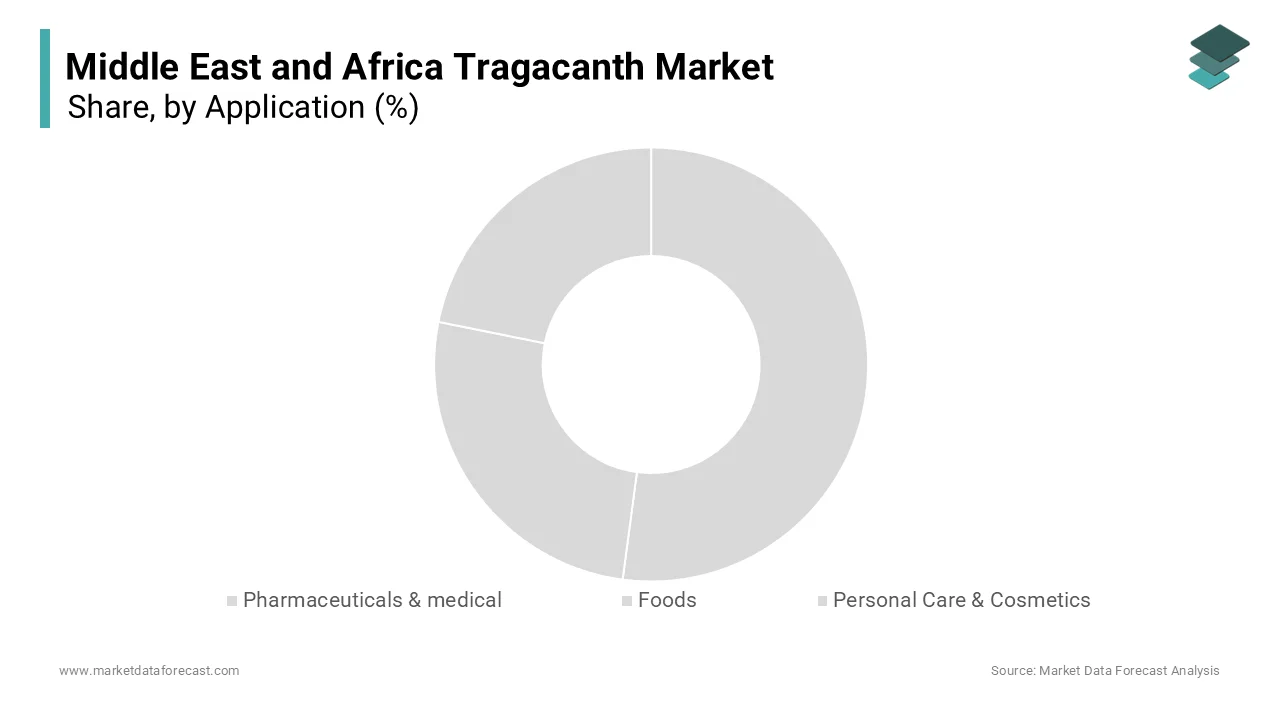
The personal care & cosmetics segment is expanding at the fastest pace and is registering a CAGR of 7.9% between 2026 and 2034. The acceleration of this segment is driven by shifting consumer preferences toward clean-label, plant-derived ingredients in skincare and haircare formulations across urban centers in Dubai, Riyadh, Johannesburg, and Nairobi. Tragacanth functions as a natural thickener, emulsion stabilizer, and film-forming agent in serums, masks, and organic lotions, offering sensory benefits without synthetic rheology modifiers. Brands such as Huda Beauty (UAE), Safi (Egypt), and Lamelle (South Africa) have reformulated key products using tragacanth to replace xanthan gum and carbomers, citing improved skin feel and environmental transparency. Moreover, tragacanth’s hypoallergenic profile enhances suitability for sensitive skin formulations. With e-commerce beauty brands prioritizing sustainability and ingredient traceability, tragacanth’s multifunctionality positions it as a strategic component in next-generation cosmetic innovation.
By Distribution Channel Insights
The direct selling segment continued to be the prominent distribution channel in the Middle East and Africa Tragacanth Market by capturing an estimated 53% of total revenue in 2025. This model prevails due to the specialized nature of tragacanth, which requires technical support, batch certification, and formulation guidance—services best delivered through manufacturer-to-industry relationships. Major suppliers such as Ashland Middle East, Nexira, and TIC Gums operate dedicated account management teams that engage directly with pharmaceutical and food R&D departments, ensuring proper integration into complex processes. Regulatory compliance further reinforces this trend. Additionally, customized processing, such as particle size reduction or blending with co-gums, is routinely offered under direct agreements. Given the low-volume, high-value nature of tragacanth transactions, this personalized, knowledge-intensive distribution method continues to define market logistics across the region.
The internet retailing segment is the fastest-growing distribution channel and is projected to grow at a CAGR of 9.8% from 2026 to 2034. This surge is fueled by the proliferation of B2B e-procurement platforms and the rising accessibility of tragacanth for micro-manufacturers, indie cosmetic makers, and homeopathic practitioners. Online marketplaces such as UL Prospector, Amazon.ae, and Jumia Business now list certified food-grade and pharmaceutical-grade tragacanth, enabling instant access to previously restricted supplies. Multilingual support and integrated payment gateways facilitate cross-border trade, particularly with buyers in Ethiopia, Kenya, and Oman. With AI-driven inventory forecasting and blockchain-enabled authenticity verification being integrated into leading platforms, internet retailing is transforming from a convenience channel into a trusted procurement ecosystem for niche natural ingredients.
REGIONAL ANALYSIS
Saudi Arabia Tragacanth Market Insights
Saudi Arabia was the foremost contributor to the Middle East and Africa Tragacanth Market by commanding an estimated 29.3% share of regional consumption in 2025. The nation's lead position is rooted in its strategic investment in pharmaceutical self-sufficiency and traditional medicine modernization under Vision 2030. Tragacanth serves as a natural binder in tablet formulations, particularly in halal-compliant and herbal medicines, where synthetic polymers may conflict with religious or cultural norms. With a dense network of cold-chain logistics and regional distribution hubs in Riyadh and Dammam, the country remains the central node for tragacanth utilization across high-value pharmaceutical and wellness industries.
United Arab Emirates Tragacanth Market Insights
United Arab Emirates is also a strong regional market. The UAE’s prominence is underpinned by its role as a global trade gateway, advanced pharmaceutical logistics, and booming luxury personal care sector. Emirati cosmetic brands such as Belo and NAYSA have increasingly adopted tragacanth in anti-aging serums and sensitive-skin formulations due to its biocompatibility. Furthermore, the UAE’s 2021 Single-Use Plastics Policy has incentivized green packaging innovation, with companies like Emirates Packaging exploring tragacanth-based adhesives. Academia plays a crucial role. These converging factors position the UAE as a pivotal player in both application innovation and supply chain dynamics.
Egypt Tragacanth Market Insights
Egypt occupies a significant position in the regional market. The nation’s influence stems from its long-standing tradition in herbal medicine, large pharmaceutical base, and active participation in pan-African health initiatives. Egyptian manufacturers utilize tragacanth as a stabilizer in cough syrups, digestive aids, and plant-based yogurts, where its resistance to temperature fluctuations ensures product integrity. Moreover, Egypt’s thriving nutraceutical sector integrates tragacanth into capsule coatings and effervescent tablets. With growing emphasis on scientific validation and export readiness, Egypt continues to champion tragacanth as a bridge between heritage healing and modern functional science.
South Africa Tragacanth Market Insights
South Africa is emerging as a leader in clean-label innovation and regulatory harmonization in sub-Saharan Africa. Though traditionally a minor consumer, South Africa has witnessed rising demand due to expansion in premium food manufacturing and participation in African Union health programs. With increasing investment in sustainable chemistry and strong government support for bioeconomy programs, South Africa is evolving from a peripheral user to a strategically relevant node in the region’s tragacanth value chain.
Kenya Tragacanth Market Insights
Kenya is establishing itself as a regional center for herbal medicine and tropical beverage innovation. The country’s Ministry of Health permits tragacanth in registered phytotherapeutic products. Kenyan manufacturers integrate tragacanth into fruit-based smoothies, collagen drinks, and topical analgesics, leveraging its stability in humid climates. Additionally, Kenya’s growing e-commerce beauty sector is piloting tragacanth in biodegradable face mask sheets. With government incentives for agro-processing and a skilled formulation workforce, Kenya is positioning itself as a niche innovator in the natural ingredients space.
KEY MARKET PLAYERS AND COMPETITIVE LANDSCAPE
Key players in the market include Kachabo Gums, Lakrena International, Hawkins Watts Limited, Scents of Earth, Alfa Chemical Corp, and Wizard’s Cauldron, Inc.
The competitive landscape of the Middle East and Africa Tragacanth Market is defined by specialization, regulatory alignment, and deep technical engagement rather than price competition. With tragacanth remaining a low-volume, high-value ingredient, participants differentiate themselves through reliability, purity, and formulation expertise rather than mass availability. The scarcity of raw material and absence of synthetic substitutes create an environment where supplier credibility becomes a decisive advantage. Leading firms distinguish themselves not merely by supply but by their ability to deliver scientifically validated, application-ready solutions backed by halal certification, pharmacopoeial compliance, and technical documentation. While the number of active suppliers is limited, each player targets distinct niches—pharmaceutical excipients, traditional medicine, gourmet food stabilization, or eco-packaging—minimizing head-to-head confrontation. New entrants face steep barriers due to the need for botanical sourcing networks, purification capabilities, and technical know-how. As sustainability mandates and clean-label trends intensify across the region, existing players are expanding their value proposition beyond ingredient supply to include innovation partnerships, formulation consulting, and lifecycle support. The market remains largely relationship-driven, with long-term contracts and collaborative development defining competitive strength. In this context, leadership is earned through consistency, scientific engagement, and the capacity to transform a rare natural substance into a dependable industrial asset across culturally diverse and rapidly evolving markets.
TOP PLAYERS IN THE MARKET
Nexira
Nexira, a global leader in botanical hydrocolloids, plays a pivotal role in the Middle East and Africa Tragacanth Market through its commitment to sustainable sourcing and scientific innovation. The company has established traceable supply chains from Astragalus harvesters in Iran and Turkey, ensuring ethical procurement and consistent quality for regional clients. Nexira’s expertise lies in delivering highly purified, application-specific tragacanth grades tailored for pharmaceutical excipients, halal-compliant foods, and natural cosmetics. Its technical teams across Dubai, Cairo, and Johannesburg work closely with formulators to optimize functionality in complex systems. By integrating botanical integrity with advanced processing, Nexira bridges traditional hydrocolloid use with modern industrial requirements. The company actively collaborates with research institutions to expand tragacanth’s utility in controlled-release drug delivery and eco-packaging, reinforcing its reputation as a science-driven innovator shaping the future of natural polymers in high-value applications across the region.
Ashland Global Holdings Inc.
Ashland maintains a strong operational presence in the Middle East and Africa, particularly in the pharmaceutical and specialty chemicals sectors, where it supplies high-purity tragacanth under stringent GMP standards. The company leverages its global R&D network to develop tragacanth-based solutions for sustained-release formulations, pediatric suspensions, and mucoadhesive systems used in oral and transdermal therapies. Ashland’s technical service divisions in Riyadh, Dubai, and Cape Town provide formulation support, ensuring seamless integration into regulated manufacturing processes. Its adherence to pharmacopoeial standards and regulatory alignment with agencies such as the Saudi Food and Drug Authority and SAHPRA positions it as a trusted partner for multinational and domestic drug developers. By focusing on performance validation and compliance assurance, Ashland elevates tragacanth from a raw material to a functional enabler in precision medicine. Its strategic investments in technical training and customer engagement underscore its leadership in advancing the acceptance of natural excipients across diverse therapeutic applications in the region.
TIC Gums
TIC Gums operates across the Middle East and Africa through a robust distribution and technical support framework, specializing in transforming tragacanth into customized, ready-to-use blends for food, beverage, and personal care applications. The company distinguishes itself by functioning not merely as a supplier but as a formulation ally, offering expert guidance on hydrocolloid behavior in complex matrices such as plant-based dairy, vegan confectionery, and natural cosmetics. Its solutions address critical challenges like texture stability, thermal resistance, and clean-label compliance, enabling manufacturers to meet evolving consumer demands. TIC Gums invests heavily in education, conducting workshops and providing digital tools that demystify the use of rare gums like tragacanth. This consultative approach fosters deep client relationships and positions the company as a knowledge leader in the niche yet technically demanding world of natural texturizers, driving broader adoption among both large-scale producers and emerging artisanal brands.
TOP STRATEGIES USED BY KEY MARKET PLAYERS
One pivotal strategy employed by leading players is end-to-end supply chain control , encompassing direct partnerships with harvesters in source regions, rigorous quality verification, and regional purification hubs. Given tragacanth’s dependence on wild-collected raw material vulnerable to climate and geopolitical risks, companies are securing long-term agreements with cooperatives in Iran, Turkey, and Afghanistan to ensure ethical sourcing, batch consistency, and uninterrupted supply—critical factors for compliance in regulated industries.
Another core approach is application-specific customization , where firms engineer tragacanth derivatives—such as pre-hydrated gels, micronized powders, or synergistic blends—to meet precise industrial needs. These tailored solutions enhance performance in targeted areas like rapid-dispersing oral suspensions or acid-stable plant-based beverages, allowing manufacturers to overcome traditional limitations of natural gums.
A third strategic focus is technical empowerment and regional collaboration , involving partnerships with universities, participation in government-backed bioeconomy initiatives, and dissemination of practical formulation resources. By positioning themselves as scientific allies rather than mere suppliers, companies build trust, dispel misconceptions about variability, and drive wider adoption across pharmaceutical, food, and green materials sectors in the Middle East and Africa.
RECENT HAPPENINGS IN THE MARKET
- In March 2023, Nexira launched a regional innovation hub in Dubai Science Park focused on advancing tragacanth extraction and modification techniques for pharmaceutical and halal food applications in collaboration with Gulf-based research institutes.
- In July 2023, Ashland Global initiated a strategic partnership with a Turkish botanical cooperative to secure traceable, sustainably harvested Astragalus gum, enhancing supply chain resilience and quality assurance for its Middle East and Africa clientele.
- In November 2023, TIC Gums introduced a multilingual digital formulation assistant platform tailored for Arabic- and Swahili-speaking customers, providing real-time guidance on tragacanth integration in emulsions, gels, and clean-label systems.
- In January 2025, Nexira collaborated with an Egyptian biotech startup to explore enzymatic refinement methods aimed at improving tragacanth solubility and batch consistency for use in traditional herbal medicine compounding.
- In May 2025, Ashland expanded its technical support team in Johannesburg to offer on-site formulation consulting for pharmaceutical companies adopting natural excipients, reinforcing its leadership in regulated tragacanth applications.
MARKET SEGMENTATION
This research report on the Middle East and Africa tragacanth market has been segmented and sub-segmented into the following categories.
By Product Type
- ribbons
- flakes
By Application
- Pharmaceuticals & medical
- Foods
- Personal Care & Cosmetics
By Distribution Channel
- Internet Retailing
- Mass Retailers
- Direct Selling
By Country
- UAE
- Israel
- KSA
- South Africa
- Egypt