- Product Description Description
- Table of Contents TOC
- List of Table & Figure LOT
- Get Free Sample PDF Sample PDF
Market Size, 2025
$364 MnMarket Estimate, 2026
$379 MnMarket Forecast, 2034
$524 MnCAGR, 2026–2034
4.15%Middle East and Africa Used Cooking Oil Market Report Summary
The Middle East and Africa used cooking oil market was valued at USD 364.07 million in 2025, is estimated to reach USD 379.18 million in 2026, and is projected to reach USD 524.95 million by 2034, growing at a CAGR of 4.15% during the forecast period. Market growth is driven by increasing awareness of waste oil recycling, rising demand for sustainable raw materials, and expanding applications in biofuels and industrial processing. Used cooking oil is widely collected and processed for biodiesel production and other industrial uses, supporting circular economy practices. The growth of the food service industry and regulatory focus on proper waste disposal are further contributing to steady market expansion across the region.
Key Market Trends
- Rising focus on recycling and sustainable waste management is driving market growth.
- Increasing demand for biodiesel and renewable energy sources is boosting adoption.
- Growing awareness of environmental impact of waste oil disposal is supporting market expansion.
- Expansion of food service industry is increasing availability of used cooking oil.
- Regulatory initiatives promoting proper waste oil collection and processing are enhancing market development.
Segmental Insights
- Based on sector, the food services segment was the largest and held 60.3% of the Middle East and Africa used cooking oil market share in 2025. This dominance is attributed to large scale oil consumption and waste generation in restaurants, hotels, and catering services.
- Based on application, the industrial usage segment accounted for a significant share of the Middle East and Africa used cooking oil market in 2025. The segment’s growth is driven by increasing use in biodiesel production, animal feed, and other industrial applications.
Regional Insights
- The Middle East and Africa used cooking oil market is experiencing steady growth across key countries, supported by sustainability initiatives and industrial demand.
- South Africa was the largest contributor, accounting for 25.4% of the Middle East and Africa used cooking oil market share in 2025, driven by established recycling infrastructure, growing biodiesel industry, and increasing regulatory focus on waste management.
Competitive Landscape
The Middle East and Africa used cooking oil market is moderately competitive, with key players focusing on collection networks, recycling technologies, and expansion of processing capacities to strengthen their market position. Companies are investing in sustainable solutions, supply chain optimization, and industrial partnerships. Prominent players in the Middle East and Africa used cooking oil market include Cargill Investment China Co Ltd, ACH Food Companies Inc, Cargill Agricola S A, Carapelli Firenze S P A, Bunge Middle East and Africa, Bunge Alimentos S A, Beidahuang Group, and Archer Daniels Midland Company.
Middle East and Africa Used Cooking Oil Market Size
The Middle East and Africa used cooking oil market size was valued at USD 364.07 million in 2025, and the market size is expected to reach USD 524.95 million by 2034 from USD 379.18 million in 2026. The market's promising CAGR for the predicted period is 4.15%.

The used cooking oil is derived from commercial food service establishments industrial food processors and household consumption. The region is characterized by high per capita consumption of edible oils due to cultural dietary habits and a thriving hospitality industry, which generates substantial volumes of waste oil. As per the Food and Agriculture Organization of the United Nations, the Middle East and North Africa region exhibits some of the highest per capita consumption rates of vegetable oils globally exceeding 20 kilograms per person annually. This intense usage creates a significant potential supply base for used cooking oil recovery. According to the International Energy Agency, global demand for low carbon fuels is accelerating driven by decarbonization mandates in Europe and North America, which serve as primary export destinations for Middle Eastern and African used cooking oil. Governments in countries, such as the United Arab Emirates and South Africa are increasingly implementing waste management frameworks to formalize the collection sector. The transition from informal scavenging to structured logistics networks defines the current developmental stage. Stakeholders are focusing on traceability and certification to meet international sustainability standards ensuring that exported volumes qualify for renewable energy incentives in importing jurisdictions.
MARKET DRIVERS
Stringent Global Decarbonization Policies Boost Export Demand
The implementation of stringent decarbonization policies by creating robust demand for low carbon feedstocks is fuelling the growth of Middle East and Africa used cooking oil market. The European Union’s Renewable Energy Directive II and similar regulations in North America mandate increasing blends of advanced biofuels in transportation sectors. As per the European Commission, used cooking oil is classified as an Annex IX Part A feedstock which allows it to count double towards renewable energy targets due to its low indirect land use change risk. This regulatory preference significantly enhances the economic value of used cooking oil sourced from the Middle East and Africa. According to the International Energy Agency, the demand for waste based biofuels is projected to grow substantially as airlines and shipping companies seek to reduce their carbon footprints. Exporters in countries like Saudi Arabia and Egypt are capitalizing on this demand by establishing certified supply chains that meet international sustainability criteria. The premium pricing for certified used cooking oil compared to traditional fossil fuels incentivizes investment in collection infrastructure. Furthermore, the global push for sustainable aviation fuel has opened new high value avenues for processed used cooking oil derivatives.
High Per Capita Edible Oil Consumption Generates Abundant Feedstock
The high per capita consumption of edible oils in the Middle East and Africa generates an abundant and consistent supply of used cooking oil, which is another attribute propelling the growth of Middle East and Africa used cooking oil market. Cultural culinary, practices in the region heavily rely on deep frying and the extensive use of vegetable oils in traditional dishes resulting in significant waste generation. As per the Food and Agriculture Organization of the United Nations, countries in the Gulf Cooperation Council rank among the highest globally in terms of vegetable oil intake per capita. This intensive usage ensures a steady volume of post-consumer waste oil available for recovery. According to the World Bank rapid urbanization and the expansion of the food service industry including fast food chains and hotels further amplify the generation of commercial waste oil. The concentration of large scale food providers in urban centers like Dubai Cairo and Johannesburg facilitates efficient collection operations compared to dispersed rural sources. Household awareness regarding the environmental impact of improper oil disposal is also rising leading to increased participation in community collection programs. The sheer volume of available feedstock reduces the cost of acquisition for processors and exporters. This supply side advantage positions the region as a competitive player in the global used cooking oil trade. The consistency of supply supports long term contracts with international buyers ensuring market stability and growth potential for local collectors and processors.
MARKET RESTRAINTS
Prevalence Of Informal Collection Networks Limits Quality Control
The prevalence of informal collection networks by compromising product quality and traceability is hampering the growth of Middle east and Africa used cooking oil market. A significant portion of used cooking oil is collected by unregulated individuals or small-scale operators, who lack proper storage and handling facilities. As per the United Nations Environment Programme, informal waste pickers often mix used cooking oil with other contaminants or water to increase volume thereby degrading the quality of the final product. This adulteration makes the oil unsuitable for high value applications such as biodiesel production without expensive refining processes. Buyers in Europe and North America require strict adherence to quality parameters and chain of custody documentation which informal suppliers cannot provide. This disconnect limits the access of regional producers to premium markets forcing them to sell at lower prices to local intermediaries. The absence of formal licensing and monitoring mechanisms allows unsafe practices to persist posing environmental and health risks. Efforts to formalize the sector are hindered by the entrenched nature of these informal networks and the lack of economic incentives for small collectors to join regulated systems.
Inadequate Infrastructure For Storage And Transportation Hinders Efficiency
The inadequate infrastructure for storage and transportation by increasing operational costs and limiting scalability is additionally hampering the growth of Middle East and Africa used cooking oil market. Efficient collection and distribution of used cooking oil require specialized tanks trucks and storage facilities to prevent leakage and contamination. As per the study, many regions in Africa lack the necessary logistical infrastructure to support efficient waste management services in remote or peri urban areas. In the Middle East, while urban centers are well developed secondary cities and rural areas often face challenges in accessing reliable collection services. According to the International Transport Forum, high transportation costs due to poor road conditions and limited fleet availability reduce the profitability of collecting used cooking oil from dispersed sources. The lack of centralized aggregation points forces collectors to travel longer distances increasing fuel consumption and carbon emissions. Furthermore, insufficient storage capacity at collection sites can lead to spoilage or accidental spills which violate environmental regulations. The capital investment required to build modern infrastructure is substantial and often beyond the reach of small and medium sized enterprises.
MARKET OPPORTUNITIES
Development Of Domestic Biodiesel Production Facilities Creates Local Value
The development of domestic biodiesel production by enabling local value addition and reducing reliance on exports is creating new opportunities for the growth of Middle east and Africa used cooking oil market. Several countries in the region are investing in renewable energy infrastructure to diversify their energy mix and meet climate commitments. As per the International Renewable Energy Agency, nations such as Morocco, Egypt, and the United Arab Emirates have set ambitious targets for renewable energy adoption including biofuels. Establishing local biodiesel plants allows for the conversion of used cooking oil into fuel for domestic transportation and industrial use. According to the United Nations Industrial Development Organization local processing creates jobs stimulates economic growth and reduces the carbon footprint associated with long distance transportation of raw materials. Governments are offering incentives such as tax breaks and subsidies to attract investment in biofuel manufacturing. This shift towards domestic consumption provides a stable market for used cooking oil collectors reducing exposure to volatile international prices. Furthermore, the production of biodiesel supports energy security by decreasing dependence on imported fossil fuels. The integration of used cooking oil into national energy strategies enhances the strategic importance of the waste management sector.
Implementation Of Digital Traceability Systems Enhances Market Credibility
The implementation of digital traceability systems to enhance credibility and access premium international region is additionally to level up the growth of Middle East and Africa used cooking oil market. Global buyers increasingly demand proof of origin and sustainability compliance to qualify for renewable energy incentives. According to the World Economic Forum, traceability solutions help verify that the oil is genuinely waste derived and not mixed with virgin palm oil which is a common concern in international trade. By adopting these technologies regional exporters can obtain recognized sustainability certifications such as the International Sustainability and Carbon Certification. This certification unlocks access to high value markets in Europe and North America where premiums are paid for verified low carbon feedstocks. Digital systems also improve operational efficiency by optimizing collection routes and managing inventory in real time. The ability to provide auditable data builds trust with international partners and regulators. Furthermore, technology adoption can help formalize the informal sector by integrating small collectors into a monitored network. This digital transformation positions the region as a reliable and compliant supplier enhancing its competitive advantage in the global used cooking oil trade.
MARKET CHALLENGES
Risk Of Fraudulent Mixing With Virgin Palm Oil Undermines Integrity
The risk of fraudulent mixing with virgin palm oil by undermining the integrity and sustainability credentials of the supply chain is one of the key challenges for the growth of Middle East and Africa used cooking oil market. Due to the high price differential between used cooking oil and virgin vegetable oils there is a financial incentive for unethical actors to adulterate waste oil. As per the European Commission, investigations have revealed cases where virgin palm oil was misdeclared as used cooking oil to exploit higher subsidies and tax benefits in importing countries. According to the Roundtable on Sustainable Palm Oil, such fraud distorts the market and undermines the environmental benefits of waste based biofuels. Detecting adulteration requires sophisticated laboratory testing which is not always available or affordable for all stakeholders in the region. The lack of rigorous enforcement and monitoring mechanisms in some Middle Eastern and African countries exacerbates the problem. Repeated instances of fraud can lead to stricter import restrictions or bans by key buying nations damaging the reputation of the entire region. Legitimate exporters face increased scrutiny and higher compliance costs to prove the authenticity of their products.
Fluctuating Global Prices Impact Economic Viability Of Collection
The fluctuating global prices are affecting the economic viability of collection and processing operations, which is additionally to limit the growth of Middle East and Africa used cooking oil market. The price of used cooking oil is closely linked to crude oil prices and the demand for biodiesel which are subject to geopolitical and market volatility. As per the International Monetary Fund commodity, price shocks can significantly impact the profitability of waste management businesses that operate on thin margins. According to the World Bank, sudden drops in oil prices reduce the competitiveness of biofuels leading to decreased demand and lower prices for used cooking oil feedstocks. In periods of low prices informal collectors may abandon the sector leading to supply shortages when demand recovers. Conversely, high prices can encourage fraud and adulteration as discussed previously. The lack of hedging instruments and financial tools for small and medium sized enterprises in the region leaves them vulnerable to price swings. Government subsidies or price stabilization mechanisms are often absent or insufficient to mitigate these risks.
REPORT COVERAGE
| REPORT METRIC | DETAILS |
| Market Size Available | 2025 to 2034 |
| Base Year | 2025 |
| Forecast Period | 2026 to 2034 |
| CAGR | 4.15% |
| Segments Covered | By Sector, Application, and Region. |
| Various Analyses Covered | Global, Regional, and Country Level Analysis, Segment-Level Analysis, DROC, PESTLE Analysis, Porter’s Five Forces Analysis, Competitive Landscape, Analyst Overview of Investment Opportunities |
| Regions Covered | South Africa, Ethiopia, Kenya, Egypt, Sudan, rest of MEA |
| Market Leaders Profiled | Cargill Investment (China) co. ltd, Ach Food Companies Inc, Cargill Agricola S.A, Carapelli Firenze S.P.A, Bunge Middle East and Africa, Bunge Alimentos SA, Beidahuang Group, and Archer Daniels Midland Company. |
SEGMENTAL ANALYSIS
By Sector Insights
The food services sector was the largest by occupying 60.3% of the Middle East and Africa Used Cooking Oil Market share in 2025 with the high concentration of commercial food establishments such as hotels restaurants and fast food chains which generate large quantities of waste oil consistently. As per the World Travel and Tourism Council, the hospitality sector in the Middle East particularly in Gulf Cooperation Council countries has seen robust growth with millions of international tourists visiting annually. These visitors contribute to high dining out frequencies resulting in substantial used cooking oil generation. Commercial kitchens, typically use deep frying methods extensively leading to faster oil degradation and higher replacement rates compared to household cooking. The centralized nature of these establishments allows for efficient collection logistics making it economically viable for waste management companies to service them regularly. Large scale generators often have dedicated storage tanks facilitating bulk collection and reducing contamination risks. Furthermore, regulatory pressures on commercial entities to dispose of waste responsibly are stricter than for households compelling compliance.
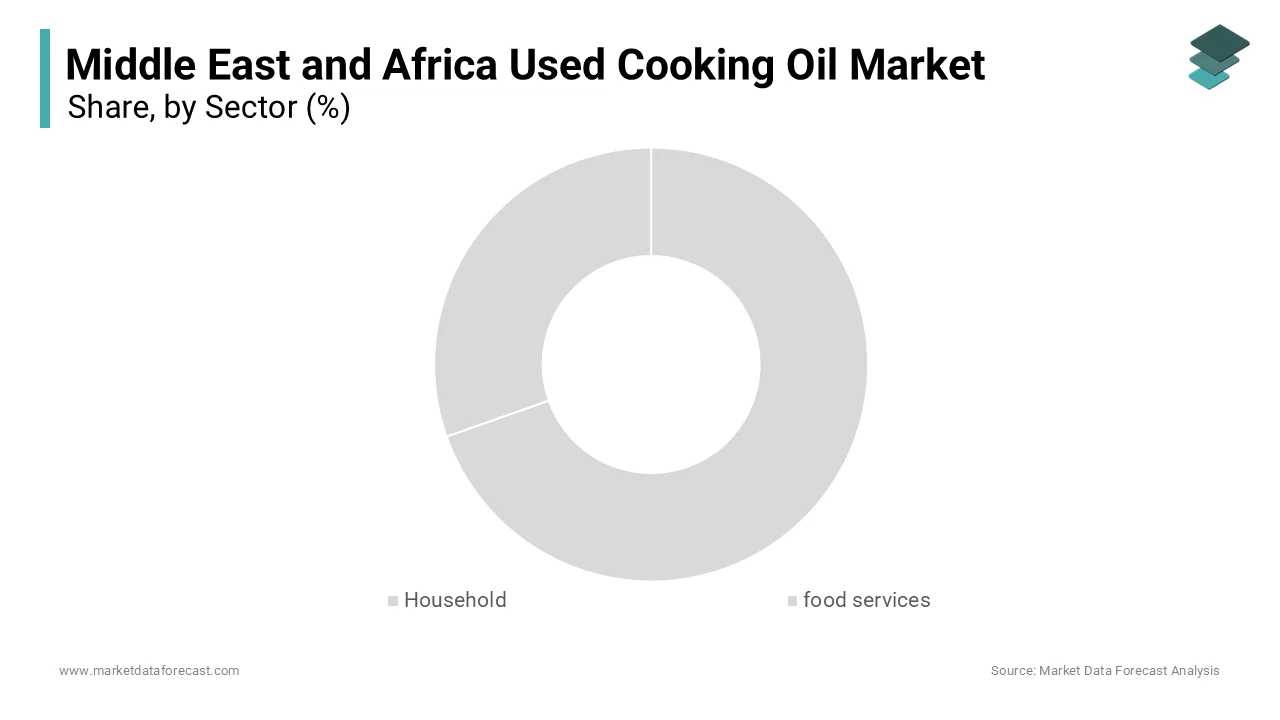
The household sector is expected to witness a fastest CAGR of 7.5% from 2026 to 2034. This accelerated growth is primarily driven by rising urbanization and increasing public awareness campaigns regarding the environmental impacts of improper oil disposal. As per the United Nations Department of Economic and Social Affairs urban populations in Africa and the Middle East are expanding rapidly leading to higher densities of residential waste generation. Municipalities in cities like Cairo Johannesburg and Dubai are launching initiatives to encourage residents to recycle cooking oil through designated drop off points and community collection drives. According to the United Nations Environment Programme, educational programs highlighting the dangers of pouring oil down drains which cause blockages and water pollution are gaining traction among citizens. The proliferation of mobile applications and digital platforms that connect households with certified collectors has simplified the recycling process. These technologies provide incentives such as vouchers or discounts for participating households fostering a culture of recycling. Furthermore, the expansion of modern housing complexes with integrated waste management systems facilitates easier segregation of used cooking oil at the source.
By Application Insights
The industrial usage segment was the largest by holding a significant share of the Middle East and Africa Used Cooking Oil Market in 2025 with the surging global demand for biodiesel and sustainable aviation fuel which utilize used cooking oil as a primary feedstock. As per the International Energy Agency, the transition towards low carbon transportation fuels is accelerating with mandates in Europe and North America driving imports of waste based biofuels. Used cooking oil is classified as an advanced biofuel feedstock due to its low carbon intensity making it highly valuable for meeting renewable energy targets. This regulatory preference creates a lucrative export market for Middle Eastern and African producers, who can supply certified used cooking oil to international refineries. The region’s strategic location facilitates efficient shipping routes to European ports enhancing its competitiveness. Domestic industrial applications are also emerging with countries like South Africa and Egypt exploring local biodiesel production to enhance energy security. The scalability of industrial processing technologies allows for the efficient conversion of large volumes of used oil into high value energy products.
The animal feed segment is expected to grow at a fastest CAGR of 6.8% from 2026 to 2034 with the need for cost effective alternatives to traditional feed ingredients such as soybean meal and virgin vegetable oils. As per the Food and Agriculture Organization of the United Nations, rising prices of conventional feed components due to supply chain disruptions and climate impacts are prompting livestock farmers to seek cheaper options. Processed used cooking oil when treated to remove impurities and free fatty acids can serve as an energy rich supplement in animal diets. According to the study, strict guidelines exist for the use of waste oils in feed to ensure safety and prevent disease transmission. Advances in rendering and purification technologies have made it possible to produce high quality animal feed ingredients from used cooking oil that meet these safety standards. The growing livestock industry in countries like Ethiopia Kenya and Sudan drives demand for affordable feed solutions to support meat and dairy production. Smallholder farmers who constitute a significant portion of the agricultural sector benefit from lower input costs improving their profitability. The utilization of used cooking oil in feed also contributes to waste reduction aligning with circular economy principles.
REGIONAL ANALYSIS
South Africa Used Cooking Oil Market Analysis
South Africa was the largest contributor by holding 25.4% of the Middle East and Africa used cooking oil market in 2025 with a mature waste management infrastructure and a well developed biodiesel industry. As per the Department of Forestry Fisheries and the Environment, the country has implemented comprehensive waste management laws that mandate the proper disposal of hazardous wastes including used cooking oil. The presence of major retail chains and fast food franchises ensures a consistent supply of high quality waste oil from the commercial sector. Local processors have established efficient collection networks leveraging technology to optimize logistics and ensure traceability. The government’s support for renewable energy initiatives including the Integrated Resource Plan encourages the use of biofuels. South Africa serves as a key export hub for used cooking oil destined for European markets due to its strategic port facilities. The existence of industry associations such as the Southern African Biomass Energy Association fosters collaboration and standardization. Regulatory enforcement is relatively strong compared to other regions reducing informal dumping.
Egypt Used Cooking Oil Market Analysis
Egypt used cooking oil market was accounted in holding 18.2% of share in 2025 with the large population and a vibrant food service sector, which generates significant amounts of waste oil. As per the Central Agency for Public Mobilization and Statistics, Egypt has one of the highest populations in the region leading to substantial household and commercial oil consumption. The government has initiated several projects to improve waste management and promote recycling as part of its sustainable development strategy. The availability of used cooking oil is abundant but collection remains fragmented with a mix of formal and informal operators. Recent investments in biodiesel production facilities aim to utilize local waste oil for domestic energy needs reducing reliance on imports. The tourism industry in cities like Cairo and Luxor contributes to commercial waste generation providing opportunities for structured collection. However, the potential for growth is significant given the sheer volume of available feedstock.
Ethiopia Used Cooking Oil Market Analysis
Ethiopia used cooking oil market is expected to have a fastest growth opportunities in coming years with the agricultural and livestock sector. As per the Central Statistical Agency of Ethiopia, the livestock population is among the largest in Africa driving the need for affordable feed supplements. According to the Ministry of Agriculture, initiatives to improve livestock productivity are encouraging the adoption of alternative feed sources. However, the collection infrastructure is still developing with much of the used oil being disposed of improperly or sold informally. Opportunities exist for establishing formal collection systems and processing plants to produce safe animal feed. International development partners are supporting waste management projects that include organic waste recycling. The lack of stringent regulations on waste oil disposal poses environmental challenges but also offers room for policy improvement.
Kenya Used Cooking Oil Market Analysis
Kenya used cooking oil market growth is likely to grow with the dynamic entrepreneurial spirit and growing environmental awareness, particularly in Nairobi and other urban areas. As per the Kenya National Bureau of Statistics, the service sector including hospitality and food services is a major contributor to the economy generating steady volumes of used cooking oil. Private sector initiatives and start ups are leading the way in collecting and recycling waste oil for biodiesel and soap production. Community based organizations play a crucial role in raising awareness and facilitating household collection. The presence of international NGOs supports projects focused on sustainable waste practices. Challenges include inconsistent enforcement of regulations and competition from informal collectors who offer higher prices for unprocessed oil. However, the trend towards formalization is gaining momentum with investors recognizing the value of certified used cooking oil.
Sudan Used Cooking Oil Market Analysis
Sudan used cooking oil market is propelled with the agricultural sector and the need for affordable livestock feed. As per the Central Bureau of Statistics, Sudan has a large livestock population creating demand for alternative feed ingredients including processed used cooking oil. The food service sector in Khartoum and other cities generates waste oil but collection systems are largely informal. According to the Ministry of Livestock Fisheries and Range Resources there is interest in utilizing waste resources to support animal production. Political instability and economic constraints hinder the development of formal waste management infrastructure. Opportunities exist for international aid and investment to establish safe processing facilities and improve collection networks. The lack of regulatory oversight poses risks of contamination and unsafe practices.
COMPETITIVE LANDSCAPE
The competition in the Middle East and Africa used cooking oil market is characterized by a mix of established multinational waste management firms and numerous local informal collectors. Large corporations leverage their extensive logistics networks and technological capabilities to dominate the formal sector while informal operators compete on price and accessibility. The market is fragmented with many small players lacking the resources for certification and export compliance. Intense competition drives innovation in collection methods and processing technologies to improve efficiency and product quality. Regulatory pressures are increasing forcing informal actors to either formalize or exit the market. Strategic alliances with international buyers provide a competitive edge for companies that can guarantee supply consistency and sustainability standards. Price volatility and fluctuating demand from global biofuel markets influence competitive dynamics. Companies must balance cost efficiency with adherence to environmental regulations to remain viable. The entry of new players focusing on niche segments such as household collection adds complexity to the landscape. This dynamic environment fosters consolidation and strategic differentiation among key participants striving for market leadership.
Key Market Players
Some of the key players of Middle East and Africa used cooking oil market are
- Cargill Investment (China) Co. Ltd
- ACH Food Companies Inc
- Cargill Agricola S.A
- Carapelli Firenze S.P.A
- Bunge Middle East and Africa
- Bunge Alimentos S.A
- Beidahuang Group
- Archer Daniels Midland Company
Top Players in the Market
- Enviroserve LLC is a leading environmental solutions provider based in the United Arab Emirates with significant operations in the used cooking oil sector. The company contributes to the global market by collecting and processing waste oils into high quality feedstocks for biodiesel production. Enviroserve utilizes advanced technology to ensure efficient collection from commercial and industrial clients across the Middle East. Recent actions include expanding its logistics network to cover more remote areas and investing in state of the art purification facilities. The corporation focuses on sustainability and compliance with international standards to meet growing demand from European buyers. Their commitment to circular economy principles enhances their reputation as a responsible waste manager.
- Averda Holdings Limited is a prominent integrated waste management company operating extensively, across the Middle East and Africa. The company plays a vital role in the used cooking oil market by offering comprehensive collection and recycling services to diverse sectors. Averda leverages its broad operational footprint to aggregate large volumes of waste oil from multiple sources including households and businesses. Recent initiatives involve deploying digital tracking systems to improve transparency and efficiency in the supply chain. The company actively collaborates with local governments to implement sustainable waste management practices. Averda invests in training programs for staff to ensure safe handling and processing of used oils.
- Recycle UAE is a specialized waste management firm focused on recycling initiatives including the collection of used cooking oil in the United Arab Emirates. The company contributes to the global market by converting waste oil into valuable resources for energy and industrial applications. Recycle UAE operates a robust collection infrastructure that serves restaurants hotels and residential communities. Recent actions include launching community awareness campaigns to encourage household participation in recycling programs. The company has also upgraded its processing capabilities to produce higher purity outputs suitable for export. Strategic partnerships with international biofuel producers help secure long term off take agreements. Recycle UAE prioritizes innovation and customer service to differentiate itself in a competitive landscape. Their dedication to reducing environmental impact through effective waste diversion strategies strengthens their position.
Top Strategies Used by the Key Market Participants
Key players in the Middle East and Africa Used Cooking Oil Market primarily focus on vertical integration and technological innovation to maintain competitive advantage. Companies invest in advanced collection logistics and digital tracking systems to ensure traceability and quality control. Strategic partnerships with hospitality chains and municipal authorities secure consistent supply streams and enhance brand visibility. Expansion into processing facilities allows firms to add value by producing certified feedstocks for international biodiesel markets. Sustainability certifications are pursued to meet stringent global regulatory requirements and access premium buyers. Community engagement programs educate consumers and increase household participation rates. These strategies enable companies to address supply chain fragmentation while capturing growth opportunities in the renewable energy sector.
MARKET SEGMENTATION
This Research Report on the Middle East and Africa used cooking oil market is segmented, and sub segmented into following categories
By Sector
- Household
- food services
By Application
- Industrial Usage
- Animal Feed
- Others
By Region
- South Africa
- Egypt
- Saudi Arabia
- United Arab Emirate
- Israel
- Rest of Middle East and Africa