- Product Description Description
- Table of Contents TOC
- List of Table & Figure LOT
- Get Free Sample PDF Sample PDF
Market Size, 2025
$12.72 BnMarket Estimate, 2026
$13.04 BnMarket Forecast, 2034
$15.89 BnCAGR, 2026–2034
2.5%Global Mineral Paper Market Size, Growth, Trends & Forecast (2026–2034)
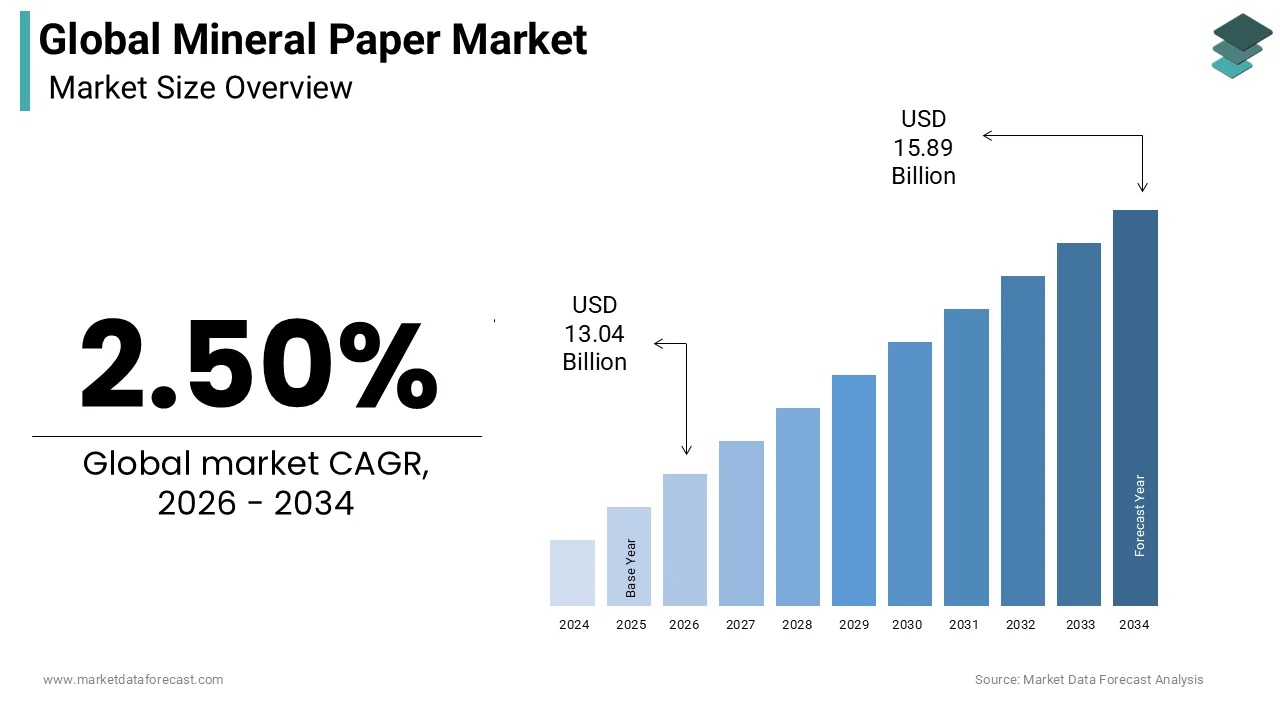
The global mineral paper market size was calculated to be USD 12.72 billion in 2025, is anticipated to grow from USD 13.04 billion in 2026, and is projected to scale up to USD 15.89 billion by 2034, registering a compound annual growth rate (CAGR) of 2.50% during the forecast period from 2026 to 2034. Driven by surging consumer demand for sustainable packaging, strict government regulations on single-use plastics and deforestation, and the unique performance benefits of tree-free substrates, the global mineral paper industry continues to experience steady, progressive expansion.
Key Executive Metrics (At-a-Glance)
- 2025 Base Valuation: USD 12.72 Billion
- 2026 Current Valuation: USD 13.04 Billion
- 2034 Forecast Valuation: USD 15.89 Billion
- Compound Annual Growth Rate (CAGR): 2.50% (2026–2034)
- Dominant Product Type Segment: Resin-Bonded Paper (RBD) (held the majority market share in 2025 due to superior mechanical properties, tear resistance, and water impermeability)
- Fastest-Growing Product Type Segment: Recycled-Paper-Derived (RPD) (expanding rapidly due to circular economy initiatives and lower carbon footprints)
- Dominant Application Segment: Paper Packaging (commanded a commanding share in 2025 driven by the global transition away from single-use plastics)
- Fastest-Growing Application Segment: Labeling Paper (witnessing the highest growth rate owing to booming e-commerce and demand for durable, weather-resistant tags)
- Dominant End-User Segment: Food & Beverage (led the market share in 2025 supported by strict hygiene standards and sustainable food contact packaging mandates)
- Fastest-Growing End-User Segment: Cosmetics & Personal Care (exhibiting significant CAGR fueled by luxury branding and eco-friendly packaging requirements)
- Dominant Region / Country: North America (market leader in 2025 backed by strong regulatory frameworks and high sustainability awareness)
- Key Regional Followers: Europe (positioned second, propelled by aggressive environmental policies like the EU Green Deal) and Asia-Pacific (emerging as a dynamic growth engine due to rapid industrialization)
Core Market Drivers
- Surging Demand for Sustainable Packaging: Growing consumer preference for eco-friendly, biodegradable, and tree-free materials that minimize environmental footprints.
- Stringent Environmental Regulations: Global legislative frameworks (e.g., EU Single Use Plastics Directive, Paris Agreement) imposing restrictions on resource-intensive wood pulping and single-use plastics.
- Superior Functional Performance: Inherent water resistance, durability, and print quality making mineral paper an ideal replacement for conventional paper and plastic films in moist or outdoor conditions.
Primary Market Restraints & Challenges
- High Production Costs: Elevated expenses associated with upstream crude oil resin binders and specialized manufacturing equipment compared to mature wood pulp supply chains.
- Limited Recycling Infrastructure: Technical challenges in municipal facilities designed for wood-based paper, leading to potential contamination risks in standard recycling streams.
- Low Consumer Awareness: Lack of familiarity among mainstream end-users regarding mineral paper's properties, often confusing it with standard plastic or synthetic sheets.
Global Mineral Paper Market Segmentation Breakdown
| Segment Category | Key Segments Covered | Leading / Fastest-Growing Segment |
|---|---|---|
| By Product Type | Resin-Bonded Paper (RBD), Recycled-Paper-Derived (RPD) | Resin-Bonded Paper (Dominant) / Recycled-Paper-Derived (Fastest Growth) |
| By Application | Paper Packaging, Labeling Paper, Outdoor Signage, Maps, Others | Paper Packaging (Dominant) / Labeling Paper (Fastest Growth) |
| By End-User Type | Food & Beverage, Cosmetics & Personal Care, Retail, Healthcare, Others | Food & Beverage (Dominant) / Cosmetics & Personal Care (Fastest Growth) |
| By Region | North America, Europe, APAC, Latin America, Middle East & Africa | North America (Dominant Market Leader) |
Major Industry Players Profiled
Key enterprises shaping the global mineral paper market include Tethia Group, Terraskin Papers, Parax Paper, New Leaf Paper, Simi Valley Paper, Rifle Paper Co, Shenzhen Stone Paper, Taiwan Lung Meng Advanced Composite Materials, Fluid Paper, Rich Mineral Paper, Seven Seventeen, Natur-Tec, BioStone Paper, Rocky Mountain Paper, Biopapyrus, Yip's Chemical Holdings Limited, Xiamen C&D Paper & Pulp Co., Ltd., and New Bamboo Paper Co., Ltd.
Global Mineral Paper Market Size
The global mineral paper market size was calculated to be USD 12.72 billion in 2025 and is anticipated to be worth USD 15.89 billion by 2034, growing from USD 13.04 billion in 2026 at a CAGR of 2.50% during the forecast period.
Mineral paper is an innovative alternative to traditional wood pulp-based paper, composed primarily of calcium carbonate bound with a small percentage of high-density polyethylene. This unique composition eliminates the need for water, bleaching chemicals, and trees during production, positioning it as a sustainable solution for various printing and packaging applications. The material exhibits exceptional durability, water resistance, and tear strength, making it suitable for outdoor signage, maps, and premium packaging where conventional paper fails. As environmental consciousness rises globally, industries are increasingly seeking eco-friendly materials that reduce carbon footprints and conserve natural resources. According to the Food and Agriculture Organization, global deforestation occurred at an estimated 10 million hectares annually between 2015 and 2020, driving interest in tree-free substrates. The European Union's Circular Economy Action Plan targets a reduction in waste and a doubling of circular material use by 2030, fostering broad market opportunities for sustainable alternatives. Furthermore, as per the World Wide Fund for Nature, the pulp and paper industry consumes 33% to 40% of globally traded industrial wood, underscoring the demand for alternative substrates. Mineral paper offers a viable solution by utilizing abundant mineral resources instead of finite forest reserves. Its production process consumes significantly less energy and generates zero wastewater, aligning with stringent environmental regulations in developed markets. The growing emphasis on sustainability across sectors such as retail, hospitality, and education is driving interest in this novel material, establishing a foundation for market expansion in regions prioritizing ecological responsibility and resource conservation.
MARKET DRIVERS
Surging Demand for Sustainable Packaging Solutions Drives Market Growth
The escalating consumer preference for eco-friendly packaging drives the growth of the mineral paper market. This serves as a primary catalyst for mineral paper adoption across multiple industries. Modern shoppers are increasingly aware of environmental impacts and actively seek products with minimal ecological footprints, prompting brands to transition from traditional plastic and wood-based packaging to sustainable alternatives. According to a study, 73 percent of global consumers stated they would definitely or probably change their consumption habits to reduce their impact on the environment, creating substantial pressure on manufacturers to adopt greener materials. Mineral paper addresses this demand by offering a fully recyclable and biodegradable option that does not contribute to deforestation or plastic pollution. The material’s inherent water resistance and durability make it ideal for food packaging, retail bags, and product labels, outperforming conventional paper in moist conditions without requiring plastic laminates. As per the Ellen MacArthur Foundation, only 14 percent of plastic packaging is currently collected for recycling globally, underscoring the urgency for alternative materials. Major retailers and consumer goods companies are integrating mineral paper into their supply chains to meet corporate sustainability goals and comply with evolving regulations. For instance, multiple European supermarket groups are systematically replacing single-use plastic produce bags with lightweight, recyclable fiber-based alternatives to comply with regional waste mandates. This shift is further accelerated by government initiatives banning single-use plastics, which compel businesses to find viable substitutes. The superior print quality and aesthetic appeal of mineral paper also enhance brand image, allowing companies to communicate their commitment to sustainability effectively. Consequently, the convergence of consumer awareness, regulatory pressure, and corporate responsibility is propelling the demand for mineral paper in the packaging sector, establishing it as a critical component of the circular economy.
Stringent Environmental Regulations Accelerate Adoption of Tree-Free Alternatives
Governments worldwide are implementing rigorous environmental policies aimed at reducing deforestation and minimizing industrial waste, which directly drives the expansion and uptake of the mineral paper market. This directly influences the uptake of mineral paper. Traditional paper manufacturing involves extensive water usage, chemical bleaching, and significant carbon emissions, drawing scrutiny from regulatory bodies focused on ecological preservation. According to the World Wildlife Fund, the paper industry is responsible for approximately 40 percent of global industrial wood harvest, contributing substantially to habitat loss and biodiversity decline. In response, legislative frameworks such as the European Green Deal mandate stricter controls on resource consumption and waste generation, encouraging industries to adopt sustainable materials. Mineral paper production requires no water or chlorine, eliminating toxic effluents and reducing the overall environmental burden. As per the European Commission, the EU aims to achieve climate neutrality by 2050, necessitating a transition away from resource-intensive processes. Countries like Germany and France have introduced extended producer responsibility schemes that incentivize the use of recyclable and low-impact materials, favoring mineral paper over conventional options. Additionally, international agreements such as the Paris Agreement compel nations to reduce greenhouse gas emissions, prompting manufacturers to seek low-carbon alternatives. The mineral paper manufacturing process emits significantly fewer greenhouse gases compared to traditional pulping methods, aligning with these climate objectives. Regulatory bodies are also imposing taxes on non-recyclable plastics and virgin wood products, making mineral paper a cost-competitive choice. Compliance with these regulations not only avoids penalties but also enhances corporate reputation among environmentally conscious stakeholders. Thus, the tightening regulatory landscape acts as a powerful driver, compelling industries to integrate mineral paper into their operations to meet legal requirements and contribute to global sustainability targets.
MARKET RESTRAINTS
High Production Costs Impede Widespread Market Penetration
The elevated manufacturing costs associated with mineral paper are a significant barrier to its widespread adoption, which restricts the growth of the mineral paper market. This constraint is despite its environmental benefits. The production process relies heavily on high-density polyethylene and finely ground calcium carbonate, both of which incur higher expenses compared to raw wood pulp. A study demonstrates that price volatility in upstream crude oil markets directly impacts the cost of synthetic polymer resin binders, fluctuating the base production costs of mineral paper. Traditional paper benefits from established supply chains and economies of scale, allowing producers to offer competitive pricing that mineral paper struggles to match. Small and medium-sized enterprises often lack the financial resources to absorb the premium associated with mineral paper, limiting its use to niche applications where durability and water resistance justify the extra expense. Additionally, the initial capital investment required for specialized manufacturing equipment further escalates entry barriers for new players. The lack of large-scale production facilities means that mineral paper cannot yet leverage the cost advantages seen in mature industries. Consumers and businesses accustomed to low-cost paper products may hesitate to switch without clear economic incentives or regulatory mandates. The price disparity will continue to restrict mineral paper to premium markets until production technologies advance and scale up. Consequently, this hinders its potential to replace conventional paper in high-volume applications such as newspapers, office supplies, and basic packaging.
Limited Consumer Awareness and Acceptance Restrict Market Expansion
The limited awareness and understanding among end users regarding its properties and benefits are a significant challenge to the mineral paper market. Many consumers and businesses remain unfamiliar with mineral paper, often confusing it with synthetic plastics or assuming it lacks the tactile qualities of traditional paper. The lack of familiarity leads to hesitation in adopting mineral paper, as users are uncertain about its recyclability, print compatibility, and environmental impact. Educational efforts by manufacturers have been insufficient to reach mainstream audiences, resulting in slow uptake outside of specialized sectors. Retailers and printers may also resist switching due to concerns about customer perception and potential confusion. The absence of standardized labeling and certification further complicates acceptance, as buyers struggle to verify the sustainability claims of mineral paper products. Without clear communication and visible endorsements from trusted authorities, the market faces an uphill battle in changing entrenched behaviors. Overcoming this restraint requires coordinated campaigns involving industry stakeholders, governments, and media to educate the public on the advantages of mineral paper. Until consumer confidence grows and recognition improves, the market will struggle to achieve the critical mass necessary for broader commercial viability and integration into everyday products.
MARKET OPPORTUNITIES
Expansion into Digital Printing and Premium Labeling Segments Offers Growth Potential
Advanced digital printing technologies are highly compatible with mineral paper, offering significant benefits to the global market. This advantage aligns perfectly with the growing demand for premium labeling solutions. Unlike traditional paper, mineral paper offers a smooth, non-porous surface that enhances ink adhesion and color vibrancy, making it ideal for high-resolution digital prints. According to sources, the global digital printing landscape is projected to grow significantly through 2028, driven by the need for short-run customization and rapid turnaround times. Mineral paper’s durability and water resistance make it particularly suitable for outdoor advertisements, event tickets, and luxury product labels that require longevity and visual appeal. Brands in the cosmetics, wine, and gourmet food sectors are increasingly seeking distinctive packaging materials that convey quality and exclusivity, creating a niche opportunity for mineral paper. As per FINAT, premium packaging labels continue to expand their market footprint as consumer brands invest heavily in highly durable, high-end visual designs. The ability of mineral paper to withstand harsh environmental conditions without tearing or fading adds value for applications such as marine charts, construction plans, and restaurant menus. Furthermore, the rise of e-commerce has increased the demand for robust shipping labels that can endure handling and weather exposure, another area where mineral paper excels. Manufacturers can capitalize on this trend by collaborating with digital printing firms to develop specialized coatings and finishes that enhance the material’s performance. The mineral paper industry can establish a strong foothold by targeting high-value segments. In these markets, performance and aesthetics outweigh cost considerations, driving revenue growth and brand differentiation.
Integration with Circular Economy Initiatives Creates New Revenue Streams
The global shift toward circular economy principles offers a substantial opportunity for manufacturers to innovate and expand their presence in the global mineral paper market. Circular economy models emphasize keeping materials in use for as long as possible, extracting maximum value before recovering and regenerating products at the end of their service life. According to the World Economic Forum, transitioning to a circular economy could generate 4.5 trillion dollars in additional economic output by 2030, highlighting the financial incentives for sustainable materials. Mineral paper fits seamlessly into this framework due to its recyclability and potential for closed-loop systems. Unlike traditional paper, which degrades in quality after multiple recycling cycles, mineral paper can be reprocessed repeatedly without losing its structural integrity. Manufacturers can develop take-back programs where used mineral paper products are collected, cleaned, and reintroduced into the production cycle, reducing raw material dependency and waste. Partnerships with waste management firms and recycling facilities can streamline this process, creating efficient recovery networks. Additionally, governments are offering grants and tax incentives for businesses implementing circular practices, further enhancing profitability. By positioning mineral paper as a key enabler of circularity, companies can attract investment from sustainability-focused funds and secure contracts with corporations committed to zero-waste goals. This strategic alignment with circular economy trends not only opens new revenue channels but also strengthens the brand’s reputation as an environmental leader, fostering long-term growth and resilience in an increasingly resource-constrained world.
MARKET CHALLENGES
Competition from Established Recycled Paper Industries Limits Market Share
Intense competition from the well-established recycled paper industry constrains the growth of the mineral paper market. This competition exists because recycled paper benefits from mature infrastructure, lower costs, and widespread consumer acceptance. Recycled paper has long been promoted as an eco-friendly alternative to virgin pulp, with robust collection and processing systems already in place globally. According to the American Forest and Paper Association, the recovery rate for paper in the United States reached 68 percent in recent years, demonstrating the efficiency of existing recycling networks. This established ecosystem makes it challenging for mineral paper to gain traction, as businesses and consumers are accustomed to the convenience and affordability of recycled options. Research shows that recycled paper production processes consume up to 40% less energy and 50% less water than raw virgin milling, challenging alternative substrates on resource footprints. Moreover, recycled paper manufacturers continuously invest in technology to improve quality and reduce costs, maintaining their competitive edge. The familiarity of recycled paper among printers, designers, and end users creates a barrier to entry for mineral paper, which requires education and adjustment in handling procedures. Many organizations have sustainability policies that specifically prioritize recycled content, excluding synthetic alternatives like mineral paper from consideration. Without significant differentiation in performance or cost, mineral paper struggles to displace recycled paper in high-volume applications. The entrenched position of the recycled paper industry, supported by decades of development and regulatory backing, means that mineral paper must carve out niche segments rather than aiming for broad replacement. Overcoming this challenge requires demonstrating unique value propositions that recycled paper cannot match, such as superior durability or water resistance, to justify its adoption despite the competitive landscape.
Technical Limitations in Recycling Infrastructure Hinder Scalability
A current lack of specialized recycling infrastructure impedes the expansion of the mineral paper market. This poses a significant challenge to its scalability and environmental credibility. Unfortunately, while it is theoretically recyclable, it remains difficult to process in practice. Most municipal recycling facilities are designed to process wood-based paper and cardboard, lacking the equipment to separate and handle the polyethylene component of mineral paper. When mineral paper enters conventional paper recycling lines, it can cause operational issues such as clogging machinery and reducing the quality of the recycled pulp. The infrastructure gap creates confusion among consumers and businesses about proper disposal methods, potentially damaging the material’s reputation as a sustainable option. Manufacturers face the additional burden of educating users and investing in separate collection systems, which increases costs and complexity. Without widespread access to appropriate recycling facilities, the circular potential of mineral paper remains unrealized, limiting its appeal to environmentally conscious buyers. Governments and industry stakeholders must collaborate to develop standardized recycling protocols and upgrade facility capabilities to accommodate mineral paper. Until such infrastructure is in place, the material’s sustainability claims may be questioned, hindering its adoption in markets with strict waste management regulations. Addressing this technical limitation is crucial for ensuring that mineral paper delivers on its promise of environmental responsibility and achieves long-term market viability.
REPORT COVERAGE
| REPORT METRIC | DETAILS |
| Market Size Available | 2025 to 2034 |
| Base Year | 2025 |
| Forecast Period | 2026 to 2034 |
| CAGR | 2.5% |
| Segments Covered | By Product Type, Application, End-User Type, and Region. |
|
Various Analyses Covered | Global, Regional, and Country Level Analysis, Segment-Level Analysis, DROC, PESTLE Analysis, Porter’s Five Forces Analysis, Competitive Landscape, Analyst Overview of Investment Opportunities |
| Regions Covered | North America, Europe, APAC, Latin America, Middle East & Africa |
| Market Leaders Profiled | Tethia Group, Terraskin Papers, Parax Paper, New Leaf Paper, Simi Valley Paper, Rifle Paper Co, Shenzhen Stone Paper, Taiwan Lung Meng Advanced Composite Materials, Fluid Paper, Rich Mineral Paper, Seven Seventeen, Natur-Tec, BioStone Paper, Rocky Mountain Paper, Biopapyrus, Yip's Chemical Holdings Limited, Xiamen C&D Paper & Pulp Co., Ltd., New Bamboo Paper Co., Ltd., and Others. |
SEGMENTAL ANALYSIS
By Product Insights
In 2025, the resin-bonded paper (RBD) segment held the majority share of the mineral paper market because of its superior mechanical properties and versatility across diverse industrial applications. This segment utilizes a higher proportion of high-density polyethylene resin compared to other variants, resulting in enhanced tear resistance, water impermeability, and durability. Research shows that global synthetic and composite paper alternatives are seeing significant growth as heavy industries require substrates that withstand harsh outdoor conditions without degradation. The construction and outdoor advertising sectors heavily rely on resin-bonded paper for blueprints, maps, and signage because it does not warp or fade when exposed to moisture or sunlight. Furthermore, the printing industry favors resin-bonded paper for high-quality digital outputs because its smooth surface ensures precise ink placement and vibrant color reproduction. Manufacturers benefit from the material’s compatibility with standard offset and digital printing technologies, reducing the need for specialized equipment investments. The longevity of resin-bonded paper also reduces replacement frequency, offering cost savings over time despite higher initial prices. Its ability to be recycled through specific plastic recovery streams aligns with corporate sustainability goals, making it a preferred choice for environmentally conscious enterprises. Consequently, the combination of functional superiority and growing industrial demand solidifies the leading position of resin-bonded paper in the global mineral paper landscape.
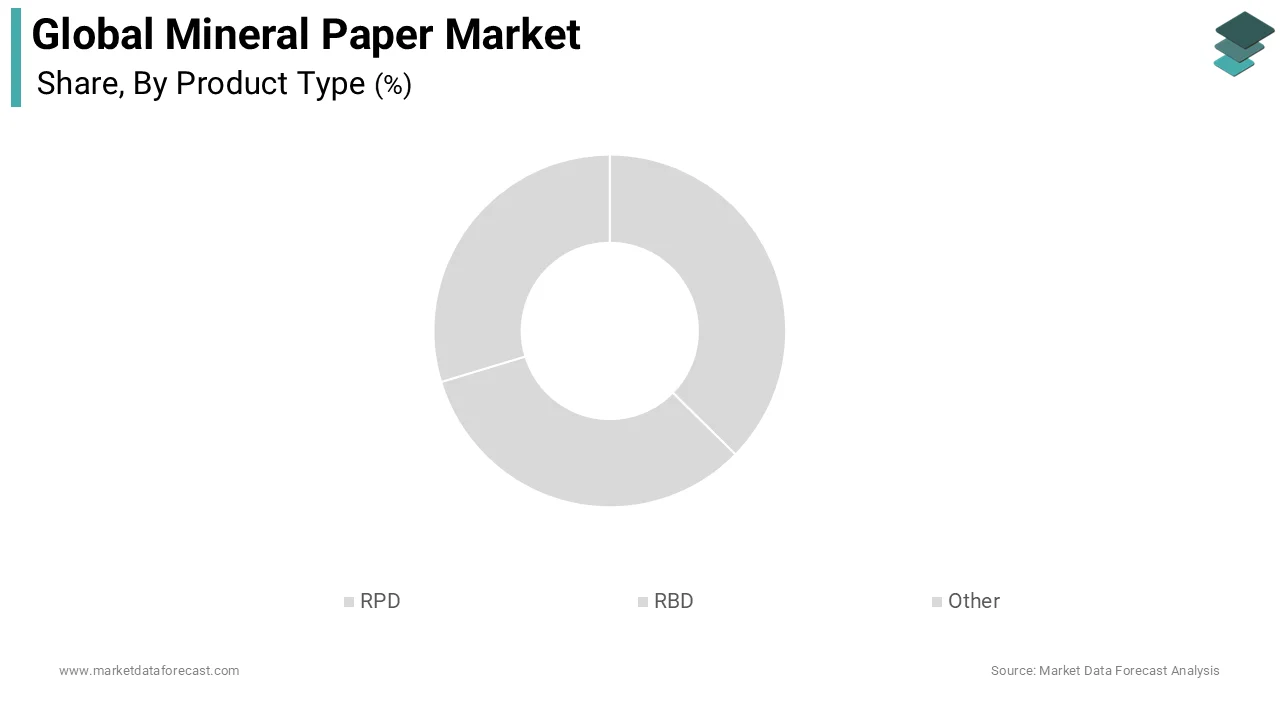
On the other hand, the recycled-paper-derived (RPD) segment is experiencing the fastest growth within the mineral paper market, due to increasing circular economy initiatives and technological advancements in material processing. This variant incorporates post-consumer waste minerals and recycled polymers, significantly lowering the carbon footprint associated with raw material extraction. The RPD segment benefits from government subsidies and tax incentives aimed at promoting waste reduction and resource efficiency, particularly in European markets. Innovations in chemical bonding agents now allow for stronger integration of recycled particles without compromising structural integrity, expanding the application scope of RPD mineral paper. Consumer preference for products with verified recycled content is also accelerating adoption, with surveys indicating that 60 percent of shoppers prefer brands demonstrating tangible waste reduction efforts. The lower energy consumption required for processing recycled materials compared to virgin resources further enhances the economic appeal of this segment. Additionally, partnerships between waste management firms and mineral paper manufacturers are streamlining the supply of raw materials, ensuring consistent quality and availability. These factors collectively contribute to the rapid expansion of the RPD segment, positioning it as a key driver of future market growth.
By Application Insights
The paper packaging segment was the largest in the mineral paper market and occupied a commanding share in 2025. This supremacy of the segment was attributed to the urgent global transition away from single-use plastics and conventional wood-based packaging. The inherent water resistance and tear strength of mineral paper make it an ideal substitute for plastic films in food wrapping, retail bags, and protective packaging. According to the United Nations Environment Programme, over 300 million tons of plastic are produced annually, with a significant portion used for packaging, prompting stringent regulatory bans in many jurisdictions. Mineral paper addresses this challenge by offering a fully recyclable and biodegradable alternative that maintains product integrity during transport and storage. Major retail chains are increasingly adopting mineral paper for produce bags and dry goods packaging to meet consumer demand for sustainable options. The material’s ability to be printed with high-quality graphics also enhances brand visibility on shelves, providing a marketing advantage. Furthermore, the lightweight nature of mineral paper reduces shipping costs and carbon emissions associated with logistics. Regulatory frameworks such as the European Union’s Single Use Plastics Directive are accelerating the adoption of mineral paper in packaging applications by imposing restrictions on traditional plastics. The convergence of regulatory pressure, consumer preference, and functional benefits ensures that paper packaging remains the largest application segment, driving substantial volume growth in the mineral paper industry.
However, the labeling paper segment is witnessing the highest growth rate in the global market owing to the booming e-commerce sector and the rising demand for premium product identification. Mineral paper labels offer exceptional durability against moisture, abrasion, and temperature fluctuations, making them ideal for shipping labels, outdoor product tags, and luxury item branding. A study indicates that global e-commerce volumes surpassed $6.3 trillion, driving unprecedented international demand for durable shipping and logistics label materials. Traditional paper labels often fail under these conditions, leading to lost packages and customer dissatisfaction, whereas mineral paper ensures legibility and adhesion throughout the delivery process. Mineral paper’s smooth surface allows for high-resolution printing and embossing, enhancing the aesthetic appeal of luxury products. Additionally, the rise of smart packaging technologies, including QR codes and NFC tags, requires durable substrates that can support electronic components without degradation. Mineral paper provides the necessary stability for these advanced features, enabling interactive consumer experiences. The ability to recycle mineral paper labels alongside plastic containers in certain waste streams also appeals to brands committed to sustainability. These factors combine to drive the rapid expansion of the labeling paper segment, establishing it as a critical growth avenue for mineral paper manufacturers.
By End-User Insights
The food and beverage segment led the mineral paper market and captured a significant share in 2025. This leading position of the segment was supported by strict hygiene standards, sustainability mandates, and the need for durable packaging solutions. Mineral paper’s non-porous surface prevents bacterial growth and moisture absorption, making it safe for direct contact with food items such as baked goods, fruits, and dried snacks. According to the World Health Organization, foodborne illnesses affect 600 million people annually, emphasizing the importance of hygienic packaging materials that protect consumer health. Mineral paper meets these safety requirements while offering an eco-friendly alternative to plastic wraps and containers. As per the Food and Agriculture Organization, approximately one-third of all food produced globally is wasted, partly due to poor packaging performance, highlighting the role of durable materials in reducing spoilage. The hospitality industry is also adopting mineral paper for menus, table liners, and takeaway containers to enhance sustainability credentials and reduce waste disposal costs. Regulatory bodies in Europe and North America are implementing stricter guidelines on food contact materials, favoring non-toxic and recyclable options like mineral paper. Furthermore, consumer awareness of plastic pollution is driving demand for restaurants and cafes to switch to mineral paper-based disposables. The material’s ability to maintain structural integrity when holding hot or cold items adds to its practicality in food service environments. Brand owners in the beverage sector are using mineral paper for bottle labels and carrier packs to communicate their commitment to environmental stewardship. These combined factors ensure that the food and beverage sector remains the primary driver of mineral paper consumption globally.
The cosmetics and personal care segment is expected to exhibit a noteworthy CAGR during the forecast period. This rapid growth of the segment is fueled by the industry’s focus on luxury branding, sustainability, and innovative packaging designs. High-end beauty brands are increasingly utilizing mineral paper for product boxes, inserts, and labels to convey a sense of premium quality and ecological responsibility. Mineral paper’s smooth texture and excellent printability allow for intricate designs, foil stamping, and embossing, enhancing the unboxing experience and brand perception. The durability of mineral paper protects delicate cosmetic items during shipping and display, reducing damage and returns. Additionally, the rise of clean beauty trends, which emphasize natural and non-toxic ingredients, extends to packaging choices, with mineral paper offering a chemical-free alternative to coated cardboard. Brands are also leveraging mineral paper for limited edition collections and gift sets, where visual appeal and tactile quality are paramount. The ability to recycle mineral paper alongside other plastic components in some systems further supports circular economy goals. These dynamics are accelerating the adoption of mineral paper in the cosmetics sector, making it the fastest-growing end-user segment in the market.
REGIONAL ANALYSIS
North America Mineral Paper Market Analysis
North America dominated the global mineral paper market and accounted for a substantial share in 2025. This dominance of the North American market was driven by strong regulatory frameworks and high consumer awareness regarding sustainability. The region benefits from established recycling infrastructure and a mature packaging industry that is rapidly transitioning away from single-use plastics. According to the Environmental Protection Agency, the United States generates over 290 million tons of municipal solid waste annually, with packaging materials constituting a large portion, driving the search for alternative substrates. Canada and the United States have implemented extended producer responsibility laws that encourage the use of recyclable and durable materials like mineral paper. In addition, the American Forest & Paper Association shows that paper-based containerboard continues to account for over half of total U.S. paper capacity, driven by corporate shifts toward recyclable materials. The presence of major mineral paper manufacturers and technology providers in the region facilitates innovation and cost reduction. Additionally, the robust e-commerce sector in North America increases the demand for durable shipping labels and protective packaging, where mineral paper excels. Consumer preferences for eco-friendly products are particularly strong in this region. Studies indicate that a majority of North American shoppers prioritize sustainability in purchasing decisions, increasing corporate demand for eco-friendly packaging alternatives. Government incentives for green manufacturing and waste reduction further support market growth. The combination of regulatory pressure, consumer demand, and industrial capability positions North America as a key driver of mineral paper adoption, with steady expansion expected across packaging and labeling applications.
Europe Mineral Paper Market Analysis Market
Europe was positioned second in the mineral paper market and captured a significant share in 2025. This growth of the European market was propelled by aggressive environmental policies and a strong cultural emphasis on circular economy principles. The European Union’s Green Deal and Single Use Plastics Directive have created a favorable regulatory environment for sustainable alternatives, compelling industries to adopt materials like mineral paper. According to Eurostat, the EU has achieved an overall recycling rate for packaging waste of 67.5%, reflecting a strong regional commitment to a circular economy. Countries such as Germany, France, and the Netherlands are at the forefront of implementing strict waste management regulations that favor recyclable and durable substrates. As mandated by the European Commission, EU regulations demand the recycling of at least 55% of plastic packaging waste by 2030, stimulating market adoption of plastic-free alternative substrates. The presence of advanced recycling facilities capable of processing synthetic papers enhances the viability of mineral paper in the circular economy. Consumer awareness of environmental issues is exceptionally high in Europe, with citizens actively demanding sustainable products from retailers and brands. The hospitality and retail sectors are rapidly replacing plastic bags and wrappers with mineral paper equivalents to comply with local bans and meet customer expectations. Additionally, European manufacturers are investing in research and development to improve the performance and cost efficiency of mineral paper. These factors collectively establish Europe as a dominant force in the global mineral paper market, with continued growth driven by policy support and consumer behavior.
Asia-Pacific Mineral Paper Market Analysis Market
The Asia-Pacific region is emerging as a dynamic growth engine for the mineral paper market due to rapid industrialization, urbanization, and increasing environmental consciousness. Countries such as China, India, and Japan are experiencing a surge in demand for sustainable packaging solutions as governments implement stricter waste management regulations. According to the Asian Development Bank, Asia is projected to generate over 50% of global solid waste by 2030, intensifying local structural pressure to replace single-use substrates. China’s ban on imported waste and its domestic plastic restriction policies have accelerated the adoption of alternative materials like mineral paper in the packaging and printing industries. India’s Swachh Bharat Mission and similar initiatives in Southeast Asia are raising awareness about plastic pollution, encouraging businesses to switch to eco-friendly options. The region’s large manufacturing base provides economies of scale for mineral paper production, potentially lowering costs and increasing accessibility. Additionally, the rising middle class in Asia-Pacific is driving the consumption of packaged goods and premium products, creating opportunities for mineral paper in labeling and branding applications. Government investments in green infrastructure and recycling facilities are further supporting market expansion. These developments position Asia-Pacific as a critical region for future growth in the mineral paper industry.
Latin America Mineral Paper Market Analysis Market
Latin America is a promising region in the mineral paper market owing to increasing environmental regulations and growing awareness of sustainability issues among consumers and businesses. Countries like Brazil and Mexico are taking steps to reduce plastic waste and promote circular economy practices, creating opportunities for alternative materials. According to the Inter-American Development Bank, only about 4% of municipal solid waste is recovered in Latin America and the Caribbean, creating an urgent push for waste-minimizing alternative materials. Brazil’s National Solid Waste Policy mandates greater responsibility for producers in managing post-consumer waste, encouraging the adoption of recyclable packaging solutions like mineral paper. As per Indústria Brasileira de Árvores (IBÁ), the Brazilian paper and pulp sector is scaling sustainable operations to satisfy tightening international environmental rules in key export destinations. Mexico has implemented bans on single-use plastics in several states, prompting retailers and food service providers to explore alternatives such as mineral paper. The tourism industry in Latin America, particularly in coastal areas, is also driving demand for eco-friendly materials to protect natural habitats from plastic pollution. While the market is still in its early stages compared to North America and Europe, the growth potential is substantial as regulatory frameworks strengthen and consumer preferences evolve. Local manufacturers are beginning to invest in mineral paper production capabilities, supported by government incentives for green technologies. These factors suggest a steady upward trajectory for the mineral paper market in Latin America.
Middle East and Africa Mineral Paper Market Analysis Market
The Middle East and Africa region is gradually expanding in the mineral paper market due to urbanization, tourism development, and increasing environmental awareness in key markets. Countries such as the United Arab Emirates and South Africa are leading the charge by implementing sustainability initiatives and investing in waste management infrastructure. According to the United Nations Economic Commission for Africa, rapid urbanization is increasing waste generation in African cities, necessitating more efficient and sustainable packaging solutions. The UAE’s Vision 2021 and subsequent green economy strategies emphasize reducing environmental impact and promoting renewable resources, supporting the introduction of mineral paper in the retail and hospitality sectors. As per the South African Department of Forestry, Fisheries, and the Environment, the country is exploring alternatives to virgin paper and plastic to conserve natural resources and reduce landfill usage. The tourism industry in the Middle East, which relies heavily on premium experiences and environmental preservation, is adopting mineral paper for menus, brochures, and packaging to enhance sustainability credentials. In Africa, the growth of the retail sector and increasing foreign investment are driving demand for high-quality packaging materials that align with global sustainability standards. While the market is smaller compared to other regions, the growth potential is significant as governments and businesses prioritize environmental responsibility. Initiatives to improve recycling infrastructure and educate consumers about sustainable materials will further support the adoption of mineral paper in the Middle East and Africa.
COMPETITION OVERVIEW
The competition in the mineral paper market is characterized by a mix of established paper manufacturers transitioning into sustainable alternatives and specialized startups focusing exclusively on stone paper technologies. Large multinational corporations leverage their existing infrastructure and global distribution channels to introduce mineral paper products to a broad customer base. These entities benefit from economies of scale and strong brand recognition, which help them compete effectively against smaller niche players. Specialized companies differentiate themselves through innovative design,s superior material properties, and targeted marketing campaigns aimed at environmentally conscious consumers. The market sees intense rivalry in terms of product quality, cost efficiency, and sustainability credentials. Companies frequently engage in strategic alliances with printing firms and packaging designers to enhance the applicability of their products. Regulatory pressures and consumer demand for eco-friendly solutions drive continuous innovation and improvement in manufacturing processes. The entry of new players with advanced technologies further intensifies competition, prompting established firms to accelerate their research and development efforts. This dynamic landscape encourages constant evolution in product offerings and business models, ensuring that the market remains vibrant and responsive to changing environmental and economic conditions globally.
KEY MARKET PLAYERS
A few major players of the global mineral paper market include
- Tethia Group
- Terraskin Papers
- Parax Paper
- New Leaf Paper
- Simi Valley Paper
- Rifle Paper Co
- Shenzhen Stone Paper
- Taiwan Lung Meng Advanced Composite Materials
- Fluid Paper
- Rich Mineral Paper
- Seven Seventeen
- Natur-Tec
- BioStone Paper
- Soil and Papyrus
- Rocky Mountain Paper
- Biopapyrus
- Yip's Chemical Holdings Limited
- Xiamen C&D Paper & Pulp Co., Ltd.
- New Bamboo Paper Co., Ltd.
Top Strategies Used by Key Market Participants
Key players in the mineral paper market primarily focus on strategic partnerships and collaborations to expand their distribution networks and enhance product visibility. Companies actively invest in research and development to improve the technical properties of mineral paper, such as printability and durability. Many firms pursue vertical integration by securing raw material sources to stabilize costs and ensure a consistent supply. Marketing efforts emphasize the environmental benefits of mineral paper to attract eco-conscious consumers and comply with regulatory standards. Manufacturers also engage in capacity expansion by building new production facilities to meet rising global demand. Additionally, key participants adopt pricing strategies that balance affordability with premium positioning to penetrate various market segments. Continuous innovation in recycling technologies allows companies to align with circular economy goals and reduce waste. These combined strategies enable market leaders to strengthen their competitive position and drive widespread adoption of mineral paper across diverse industries while addressing sustainability challenges effectively.
Leading Players in the Global Mineral Paper Market
- Lung Meng Technology Co Ltd stands as a pioneering force in the mineral paper industry with its extensive production capabilities and technological expertise. The company has consistently invested in research and development to enhance the durability and printability of its stone paper products. Recently, Lung Meng expanded its manufacturing facilities to meet the growing global demand for sustainable packaging solutions. They have formed strategic partnerships with major retail chains to supply eco-friendly shopping bags and product labels. Their commitment to zero water usage and carbon-neutral production processes aligns with international environmental standards. By focusing on high-quality output and consistent supply chain management, Lung Meng has strengthened its reputation as a reliable provider of innovative paper alternatives. Their active participation in global sustainability forums further solidifies their leadership position in promoting mineral paper adoption across diverse industrial sectors worldwide.
- Oji Holdings Corporation leverages its vast experience in the traditional paper industry to drive innovation in the mineral paper segment. The company has integrated advanced recycling technologies to produce high-performance synthetic papers that cater to premium packaging and labeling needs. Oji recently launched a new line of mineral-based packaging materials designed specifically for the food and beverage sector. These products offer superior moisture resistance and hygiene standards compared to conventional options. The corporation has also collaborated with digital printing firms to optimize ink adhesion on mineral surfaces. By utilizing its global distribution network, Oji ensures widespread availability of its products in key markets. Their focus on circular economy principles and waste reduction initiatives has enhanced their brand value. Oji continues to invest in sustainable manufacturing practices to maintain its competitive edge and support the transition towards eco-friendly materials in the global packaging industry.
- Karst Stone Paper Company has gained significant recognition for its commitment to environmental sustainability and innovative product design. The company specializes in producing tree-free paper made from calcium carbonate and recycled plastics. Karst has actively engaged in educational campaigns to raise awareness about the benefits of mineral paper among consumers and businesses. They recently introduced a range of notebooks and journals made from stone paper, which have received positive feedback for their durability and unique texture. The company has expanded its retail presence through online platforms and partnerships with eco-conscious stores. Karst focuses on creating aesthetically pleasing products that appeal to environmentally aware customers. Their transparent supply chain and ethical sourcing practices have built strong customer loyalty. By continuously innovating and expanding its product portfolio, Karst Stone Paper Company reinforces its position as a key player in the growing market for sustainable paper alternatives globally.
MARKET SEGMENTATION
This research report on the global mineral paper market has been segmented and sub-segmented based on product type, application, end-use type, and region.
By Product Type
- RPD
- RBD
- Other
By Application
- Paper Packaging
- Labeling Paper
- Self-adhesive Paper
- Other
By End-User Type
- Food and Beverage
- Cosmetics and Personal Care
- Education
- Publishing
- Art and Design
- Others
By Region
- North America
- Europe
- Asia-pacific
- The Middle East and Africa
- Latin America