- Product Description Description
- Table of Contents TOC
- List of Table & Figure LOT
- Get Free Sample PDF Sample PDF
Market Size, 2025
$34.46 BnMarket Estimate, 2026
$36.71 BnMarket Forecast, 2034
$60.89 BnCAGR, 2026–2034
6.53%Global Monoethylene Glycol (MEG) Market Report Summary
The global monoethylene glycol MEG market was valued at USD 34.46 billion in 2025, is estimated to reach USD 36.71 billion in 2026, and is projected to reach USD 60.89 billion by 2034, growing at a CAGR of 6.53% during the forecast period. Market growth is driven by increasing demand from the polyester and textile industries, along with rising consumption in packaging applications such as PET bottles and films. The expansion of the automotive and construction sectors is further supporting demand for MEG in antifreeze, resins, and industrial fluids. In addition, growing urbanization, industrialization, and the shift toward sustainable packaging solutions are contributing to steady market expansion globally.
Key Market Trends
- Rising demand for polyester fibers in the textile industry is significantly driving MEG consumption.
- Increasing use of PET in packaging applications such as bottles and films is supporting market growth.
- Growing focus on sustainable and recyclable materials is encouraging the adoption of PET based products.
- Expansion of automotive and construction industries is boosting demand for MEG in industrial applications.
- Technological advancements in production processes are improving efficiency and cost effectiveness.
Segmental Insights
- Based on technology, the naphtha based technology segment was the largest and held a significant share of the global MEG market in 2025. This dominance is attributed to established production infrastructure and widespread adoption in petrochemical manufacturing.
- Based on application, the PET segment accounted for the dominant share of the monoethylene glycol MEG market in 2025. The segment’s growth is driven by high demand for PET in packaging, textiles, and consumer goods industries.
Regional Insights
- The global MEG market is witnessing strong growth across key regions, supported by industrial expansion and rising demand from end use industries.
- Asia Pacific was the leading region, accounting for 24.3% of the global MEG market share in 2025, driven by rapid industrialization, strong textile manufacturing base, and increasing demand for packaging materials in countries such as China and India.
Competitive Landscape
The global monoethylene glycol MEG market is highly competitive, with major players focusing on capacity expansion, strategic partnerships, and technological advancements to strengthen their market position. Companies are investing in sustainable production methods and improving supply chain efficiency to meet growing global demand. Key players in the global MEG market include SABIC Saudi Arabia, Formosa Plastic Group Taiwan, The Dow Chemical Company US, Sinopec China, BASF, MEGlobal, Shell Netherlands, Reliance Industries India, SIBUR Russia, ExxonMobil Corporation, Royal Dutch, Mitsubishi Chemical, LyondellBasell, AkzoNobel, Honam Petrochemical Corporation, Sinopec Zhenhai Refining and Chemical Company, and others.
 Download Free Sample Report
Global Monoethylene Glycol (MEG) Market Size
The global Monoethylene Glycol (MEG) market size was valued at USD 34.46 billion in 2025, and the market size is anticipated to reach USD 60.89 billion by 2034 from USD 36.71 billion in 2026, growing at a CAGR of 6.53% from 2026 to 2034.

The Monoethylene Glycol (MEG) serves as the primary precursor for polyethylene terephthalate (PET) resin and a component in engine coolants. MEG is chemically defined as a diol produced primarily through the catalytic hydration of ethylene oxide, resulting in a clear, odorless, sweet-tasting liquid with high hygroscopic properties. The remaining volume is predominantly utilized in heat transfer fluids for automotive and industrial applications, where its ability to lower the freezing point of water is indispensable. As per the American Chemistry Council, the global production capacity for MEG exceeded 45 million metric tons in 2024, reflecting the massive scale required to support downstream polyester manufacturing. The definition of the market has evolved beyond traditional petrochemical routes to include emerging bio-based and coal-to-chemical pathways, particularly in Asia, diversifying the feedstock landscape. The current scenario highlights a strategic shift towards circular economy models, where recycled PET (rPET) initiatives are beginning to influence virgin MEG demand dynamics. Furthermore, the material's role in de-icing aircraft and natural gas dehydration underscores its versatility across aviation and energy sectors. This multifaceted utility positions MEG not merely as a commodity chemical but as a foundational pillar of modern industrial infrastructure and consumer goods supply chains.
MARKET DRIVERS
Surging Demand for Polyethylene Terephthalate (PET) in Packaging and Textiles
The exponential growth in the beverage and food packaging industry with the unparalleled dominance of PET bottles due to their lightweight nature, clarity, and recyclability is levellingup the growth of monoethyelene glycol (MEG) market. Global consumption of bottled water and soft drinks continues to rise, particularly in emerging economies where urbanization and rising disposable incomes are shifting consumption patterns from tap water to packaged beverages. The replacement of glass and metal containers with PET in various food categories by owing to logistics cost savings and reduced breakage risks. The rapid expansion of the e-commerce sector, which demands durable, lightweight, and transparent packaging solutions for shipping consumer goods, which is further boosting monoethylene glycol (MEG) market. The relentless increase in global apparel production, specifically the shift towards synthetic fibers over natural ones, which is propelling. Polyester, derived from MEG and purified terephthalic acid (PTA), has become the most widely used fiber in the world due to its durability, wrinkle resistance, and cost-effectiveness compared to cotton and wool. This dominance is particularly evident in the Asia-Pacific region, where manufacturing hubs produce vast quantities of polyester fabrics for export to Western markets. The second significant driver is the technological advancement in fiber engineering, which allows for the creation of high-performance polyester variants such as moisture-wicking, anti-microbial, and flame-retardant fabrics used in athletic wear and technical textiles. Furthermore, the volatility and water intensity of cotton farming make polyester a more stable and sustainable alternative in terms of resource usage, appealing to manufacturers seeking supply chain security. Statistics from agricultural organizations show that water scarcity issues in major cotton-growing regions have accelerated the switch to synthetic alternatives.
Industrial Applications in Heat Transfer and De-icing Fluids
The robust production volumes, specifically through the essential requirement for ethylene glycol-based engine coolants and antifreeze solutions is also fuelling the growth of monoethylene glycol (MEG). MEG is the primary ingredient in these fluids due to its exceptional ability to lower the freezing point and raise the boiling point of water, protecting engines from extreme temperature fluctuations. According to data from the International Organization of Motor Vehicle Manufacturers, global vehicle production reached approximately 95 million units in 2024 by creating a consistent baseline demand for aftermarket and original equipment manufacturer (OEM) coolant supplies. This demand is sustained not only by new vehicle production but also by the vast existing fleet requiring regular maintenance and fluid replacement every few years. The increasing complexity of modern engines and the advent of electric vehicles (EVs), which require sophisticated thermal management systems to regulate battery temperatures and motor efficiency. Furthermore, the expansion of heavy-duty transportation and logistics fleets in developing nations amplifies the consumption of industrial-grade coolants. This combination of vehicle volume growth, technological evolution in thermal management, and fleet expansion ensures a steady and resilient demand stream for MEG in the automotive sector.
MARKET RESTRAINTS
Volatility in Crude Oil and Feedstock Prices
The inherent volatility in crude oil prices and the costs of key feedstocks like ethylene and propylene by creating unpredictable margin structures for producers and buyers alike is restricting the growth of monoethylene glycol (MEG). Since, the majority of global MEG production relies on petroleum-derived ethylene oxide, any fluctuation in crude oil benchmarks directly impacts production costs and pricing stability. This volatility forces manufacturers to either absorb margin compression or pass costs to downstream users, potentially dampening demand in price-sensitive sectors like textiles. The second critical driver of this restraint is the lag time between feedstock procurement and product sales, which exposes companies to significant hedging risks and inventory valuation challenges. Furthermore, the concentration of ethylene production in specific regions creates supply chain that can exacerbate price swings during maintenance turnarounds or unplanned outages.
Environmental Concerns and Toxicity Issues
The inherent toxicity, particularly concerning environmental safety and wildlife protection, which has led to increased regulatory scrutiny and public backlash is additionally hindering the growth of monoethylene glycol (MEG). MEG is highly toxic if ingested, posing severe risks to pets, wildlife, and humans, which has prompted strict handling, storage, and disposal regulations in many jurisdictions. According to data from the Humane Society and various environmental protection agencies, thousands of animal poisoning incidents occur annually due to improper disposal of antifreeze containing MEG, leading to calls for bans or mandatory additives that make the substance unpalatable. This negative perception drives some municipalities and consumers to seek safer alternatives, such as propylene glycol, despite the higher cost, thereby limiting MEG's growth potential in certain applications. The increasing stringency of wastewater discharge regulations, which limit the amount of MEG that can be released into sewage systems from industrial cleaning or accidental spills is hindering the growth of market.
MARKET OPPORTUNITIES
Development of Bio-Based and Green MEG
The development and commercialization of bio-based MEG derived from renewable feedstocks, such as sugarcane, corn, and cellulosic biomass, decouple from fossil fuels and appeal to eco-conscious brands. This factor is likely to create new opportunities for the growth of monoethylene glycol (MEG) market. Bio-MEG possesses identical chemical and physical properties to petroleum-based MEG, allowing it to be used in existing PET production lines without modification, facilitating a seamless transition for manufacturers. According to sustainability reports from the Bioplastics Council, the production capacity for bio-MEG is expected to triple by 2027 as major chemical companies invest in biorefineries, driven by corporate commitments to reduce carbon footprints. Furthermore, partnerships between beverage giants and agricultural producers are securing long-term supplies of bio-feedstocks, stabilizing costs and ensuring scalability. Statistics from industry announcements show that over 15 major global brands have committed to sourcing significant portions of their PET from bio-based sources by 2030.
Expansion in Emerging Markets and New Applications
Rapid population growth, rising disposable incomes, and the expansion of modern retail infrastructure in countries like India, Indonesia, Nigeria, and Vietnam are driving a surge in demand for packaged beverages, textiles, and automobiles. The expansion in emerging countries and new applications is additionally leverage the growth of monoethylene glycol (MEG) market. According to economic data from the World Bank, the middle-class population in these regions is projected to add 200 million new consumers by 2027 by creating a vast new customer base for affordable, safe, and convenient packaging solutions. This demographic shift drives demand for PET preforms and polyester fibers, directly boosting MEG consumption. The second critical driver is the ongoing urbanization and improvement in cold chain logistics, which facilitates the distribution of perishable goods in PET packaging, expanding the application scope beyond water to include juices, dairy, and edible oils. Data from industry investment reports indicates that foreign direct investment in packaging and textile manufacturing in Southeast Asia grew by 18% in 2024, signaling strong confidence in future growth. Furthermore, the lack of established alternative packaging infrastructures in these regions gives PET a first-mover advantage, allowing manufacturers to establish long-term supply contracts and brand loyalty.
MARKET CHALLENGES
Competition from Alternative Materials and Technologies
The intense competition from alternative diols, particularly propylene glycol (PG), especially in applications where toxicity is a primary concern is quietly a challenge for the growth of monoethylene glycol (MEG) market. PG is non-toxic and FDA-approved for use in food and pharmaceuticals by making it the preferred choice for antifreeze in residential heating systems, food processing equipment, and environments where accidental ingestion is a risk. This shift is exacerbated by the narrowing price gap between MEG and PG in certain regions, making the safer alternative more economically viable. The development of new synthetic coolants and heat transfer fluids based on organic acids or silicone technologies that offer superior thermal stability and longevity, potentially displacing glycol-based solutions entirely in high-performance sectors. Data from automotive engineering studies shows that next-generation electric vehicle thermal systems are increasingly exploring non-glycol coolants to improve efficiency and reduce environmental impact.
Infrastructure Gaps in Recycling and Collection Systems
The inadequacy of global recycling infrastructure in developing nations and even parts of the developed world by undermining the viability of the circular economy model is also to inhibit the growth of monoethylene glycol (MEG) market. Without efficient collection, sorting, and processing facilities, PET bottles end up in landfills or the environment, failing to re-enter the supply chain as valuable rPET feedstock and damaging the material's reputation. According to the OECD Global Plastics Outlook, only 20% of plastic waste was successfully recycled globally in 2024, with significant disparities between regions, leaving millions of tons of PET unrecovered. This infrastructure gap creates a vicious cycle where the scarcity of rPET drives up costs, discouraging brands from using recycled content, which in turn reduces the economic incentive to build recycling facilities. The second critical factor is the lack of standardized collection systems, such as Deposit Return Schemes (DRS), in many large markets, leading to low capture rates and contaminated waste streams that are expensive to clean. Furthermore, the high capital expenditure required to build modern sorting and washing plants deters investment in regions with unstable policy environments.
REPORT COVERAGE
| REPORT METRIC | DETAILS |
| Market Size Available | 2025 to 2034 |
| Base Year | 2025 |
| Forecast Period | 2026 to 2034 |
| CAGR | 6.53% |
| Segments Covered | By Technology, Application, and Region. |
| Various Analyses Covered | Global, Regional & Country Level Analysis, Segment-Level Analysis, DROC, PESTLE Analysis, Porter’s Five Forces Analysis, Competitive Landscape, Analyst Overview of Investment Opportunities |
| Regions Covered | North America, Europe Asia Pacific, Latin America, Middle East & Africa. |
| Market Leaders Profiled | SABIC (Saudi Arabia), Formosa Plastic Group (Taiwan), The Dow Chemical Company (US), Sinopec (China), BASF, MEGlobal, Shell (Netherlands), Reliance Industries (India), SIBUR (Russia), ExxonMobil Corporation, Royal Dutch, Mitsubishi Chemical, LyondellBasell, AkzoNobel, Honam Petrochemical Corporation, Sinopec Zhenhai Refining & Chemical Company, and Others. |
SEGMENTAL ANALYSIS
By Technology Insights
The naphtha-based technology segment was the largest by holding a significant share of the global MEG market in 2025 with the mature and extensive petrochemical infrastructure in key producing regions like North America, Europe, and parts of Asia, where steam crackers designed to process naphtha into ethylene are already established. The high efficiency and scalability of the naphtha cracking process, which allows for the integrated production of ethylene oxide and subsequently MEG alongside other valuable co-products like propylene and butadiene, optimizing overall plant economics. The superior purity levels achievable through naphtha-based routes, which are essential for producing fiber-grade and bottle-grade MEG required by the stringent quality standards of the textile and packaging industries is levelling up the growth of segment. Statistics from industry technical audits indicate that naphtha-derived MEG consistently meets the color and UV transmittance specifications demanded by premium polyester producers with minimal additional purification steps. Furthermore, the long-term supply contracts between integrated oil majors and chemical producers ensure price stability and security of supply, making it the preferred choice for large-scale industrial users.
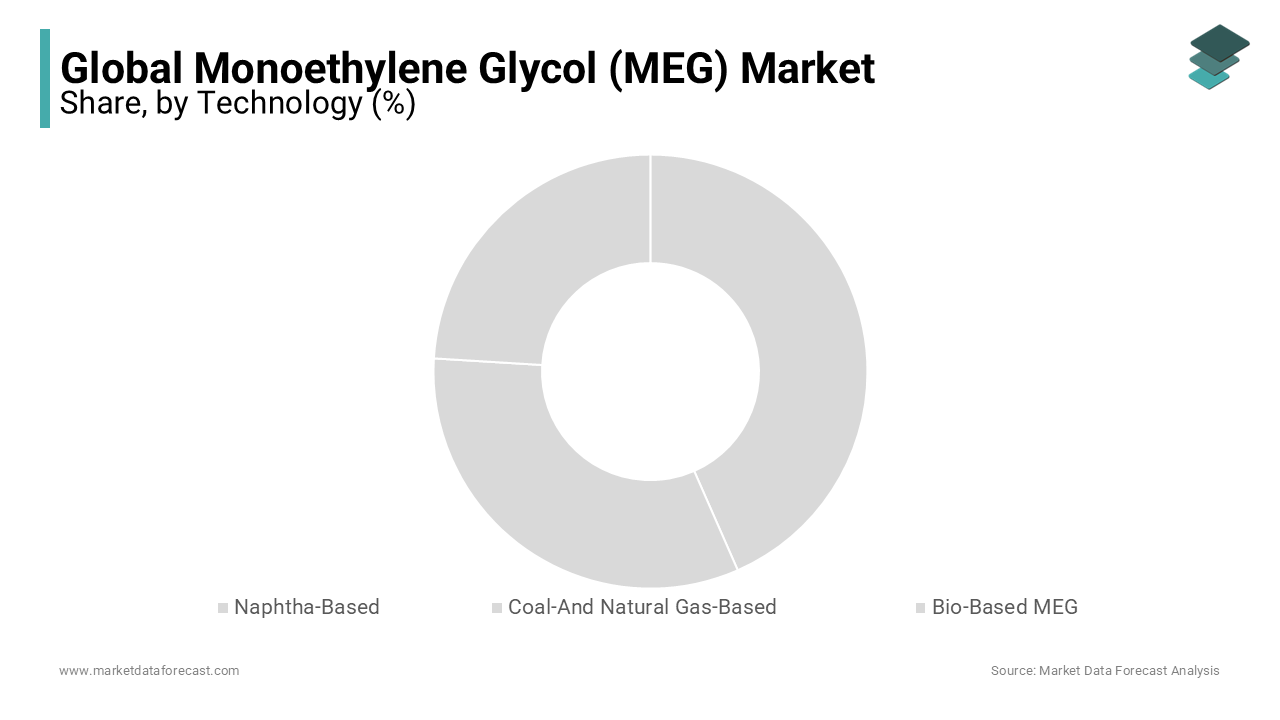
The bio-based MEG segment is likely to witness a fastest CAGR of 14.5% throughout the forecast period with the intensifying global demand for sustainable materials, corporate net-zero commitments, and regulatory incentives favoring renewable feedstocks over fossil fuels. The foremost driving factor is the ability of bio-MEG to offer a significantly reduced carbon footprint, with lifecycle assessments showing up to 70% lower greenhouse gas emissions compared to conventional petroleum-based MEG, appealing directly to brands aiming to meet sustainability targets. As per sustainability reports from the Bioplastics Council, major beverage and apparel companies have committed to sourcing over 2 million tons of bio-based PET by 2030 by creating a massive pull for bio-MEG. The second significant driver is the technological maturation of fermentation processes using sugarcane, corn, and cellulosic biomass, which has improved yields and reduced production costs, making bio-MEG increasingly cost-competitive. Additionally, government mandates in the European Union and North America requiring minimum recycled or bio-based content in packaging are accelerating adoption.
By Application Insights
The PET application segment was accounted in holding a dominant share of the monoethylene glycol (MEG) market in 2025 owing to the indispensable role of MEG as a primary monomer in the synthesis of PET resin, which is the material of choice for bottles, fibers, and films due to its clarity, strength, and recyclability. The primary driving factor is the explosive growth in the bottled water and soft drink industries, where PET bottles have largely replaced glass and metal due to their lightweight nature and logistical advantages. According to data from the Beverage Marketing Corporation, global bottled water consumption exceeded 1.6 trillion liters in 2024, directly translating into an insatiable demand for PET resin and consequently MEG. The pervasive use of PET fibers in the global textile industry, where polyester accounts for over half of all fiber production due to its durability and cost-effectiveness is another attribute prompting the growth of the segment. Furthermore, the versatility of PET in food packaging, including trays and blister packs, expands its application beyond beverages, ensuring steady consumption.
The antifreeze and coolant application segment is swiftly emerging at a fastest CAGR of 6.8% over the forecast period owing to the expanding global automotive fleet, the increasing complexity of thermal management systems in electric vehicles, and the rising demand for industrial heat transfer fluids. The surge in electric vehicle (EV) production, which requires sophisticated battery thermal management systems that utilize significantly larger volumes of coolant compared to internal combustion engine vehicles. As per data from the International Energy Agency, global EV sales reached 14 million units in 2024, with each vehicle requiring up to 30% more coolant than traditional cars, driving a substantial increase in MEG consumption. The rapid industrialization in emerging markets, which boosts the demand for heavy-duty machinery and power generation equipment that rely on glycol-based coolants for efficient operation is additionally to escalate the growth of segment. Additionally, the replacement cycle for engine coolants in the vast existing vehicle fleet ensures a consistent aftermarket demand.
REGIONAL ANALYSIS
Asia Pacific Monoethylene Glycol Market Analysis
Asia Pacific MEG market was the top performer by holding 24.3% of the share in 2025 with its massive manufacturing base for textiles and packaging in China, India, and Southeast Asia. The dominance of China as the global hub for polyester fiber and PET bottle production, which consumes the majority of the region's MEG output and imports significant volumes to meet domestic demand. According to data from the China Petroleum and Chemical Industry Federation, China's polyester production capacity exceeded 75 million metric tons in 2024, accounting for over 70% of global output. Furthermore, the region's aggressive expansion of coal-to-chemical technologies in China provides a unique feedstock advantage, diversifying the supply base beyond traditional naphtha routes. This combination of industrial scale, demographic dividends, and feedstock innovation cements Asia Pacific's position as the undisputed leader.
North America Monoethylene Glycol Market Analysis
North America monoethylene glycol (MEG) market was ranked second by holding 19.2% of share in 2025 with the robust shale gas advantage, advanced recycling infrastructure, and strong demand from the automotive and packaging sectors. The shift towards ethane-based MEG production, leveraging abundant and low-cost natural gas liquids from shale formations to achieve significant cost competitiveness against naphtha-based producers. The thriving shale gas industry in the United States, which provides a cheap and stable feedstock for ethylene and subsequent MEG production by attracting massive capital investment in new cracker facilities. Statistics from the Alliance for Automotive Innovation indicate that North American vehicle production remained stable at 17 million units in 2024, with EVs comprising a growing share. Additionally, the region leads in mechanical and chemical recycling initiatives, creating a burgeoning market for recycled MEG to meet corporate sustainability goals.
Middle East and Africa Monoethylene Glycol Market Analysis
Middle East and Africa monoethylene glycol (MEG) market is esteemed to have a prominent opportunities in coming years with its vast reserves of inexpensive natural gas and strategic location for exporting to Asian and European countries. The abundance of associated natural gas from oil production, which serves as a low-cost feedstock for ethylene crackers by enabling producers in Saudi Arabia, Qatar, and the UAE to compete aggressively on price. The strategic expansion of downstream petrochemical complexes aimed at value addition by moving beyond crude oil exports to high-value chemicals like MEG.
Europe Monoethylene Glycol Market Analysis
Europe monoethylene glycol (MEG) market gorwht is likely to grow with the stringent environmental regulations under the European Green Deal, which drive the transition towards bio-based MEG and advanced recycling technologies while constraining traditional fossil-based expansion. According to data from the European Commission, the Single-Use Plastics Directive requires 25% recycled content in PET bottles by 2025, driving significant investment in recycling infrastructure. The strong automotive industry in Germany and France, which demands high-specification coolants for both conventional and electric vehicles by supporting steady industrial demand. Statistics from the European Automobile Manufacturers Association show that Europe produced 18 million vehicles in 2024, maintaining a solid baseline for coolant consumption.
Latin America Monoethylene Glycol Market Analysis
Latin America monoethylene glycol (MEG) market growth is likely to grow with the growing population, expanding middle class, and increasing demand for packaged goods and automobiles in Brazil, Mexico, and Argentina. The rising consumption of bottled water and soft drinks, fueled by urbanization and health consciousness, which drives steady demand for PET packaging is eventually escalating the growth of the market. The recovering automotive sector in Mexico, which serves as a major export hub for the North American market by sustaining demand for antifreeze and coolants. Furthermore, the potential for bio-based MEG production using the region's abundant sugarcane resources presents a unique opportunity for future growth and differentiation.
COMPETITIVE LANDSCAPE
The competition in the MEG market is intensely fierce characterized by a rivalry between integrated oil majors and specialized chemical producers vying for dominance through cost leadership and innovation. Major players leverage their access to low-cost feedstocks like ethane and naphtha to offer competitive pricing while smaller firms focus on niche specialty grades or bio-based solutions. The landscape sees frequent investments in recycling infrastructure and bio-refineries as companies race to meet evolving environmental mandates and customer sustainability targets.
KEY MARKET PLAYERS
Some of the notable key players in the Europe monoethylene glycol (MEG) market are
- SABIC (Saudi Arabia)
- Formosa Plastic Group (Taiwan)
- The Dow Chemical Company (US)
- Sinopec (China)
- BASF
- MEGlobal
- Shell (Netherlands)
- Reliance Industries (India)
- SIBUR (Russia)
- ExxonMobil Corporation
- Royal Dutch
- Mitsubishi Chemical
- LyondellBasell
- AkzoNobel
- Honam Petrochemical Corporation
- Sinopec Zhenhai Refining and Chemical Company
- Others
Top Players in the Market
- Saudi Basic Industries Corporation stands as a global leader in the MEG market by leveraging vast natural gas reserves to produce ethylene and downstream glycols at highly competitive costs. The company contributes significantly to the international sector by supplying high-purity MEG for polyester and antifreeze applications across Asia and Europe. Recently, SABIC has strengthened its position by investing in advanced recycling technologies to produce circular MEG from plastic waste. They have also expanded their bio-based product portfolio through strategic partnerships to meet growing sustainability demands. These strategic moves ensure they remain a preferred supplier for major brands seeking low-carbon solutions.
- China Petroleum & Chemical Corporation operates as a dominant force in the MEG market with an extensive integrated supply chain spanning from crude oil refining to chemical manufacturing. Their global contribution involves meeting the massive domestic demand for polyester fibers and resins while exporting surplus volumes to neighboring regions. They have also launched initiatives to develop green MEG variants using renewable energy sources to align with national carbon neutrality goals. Furthermore, Sinopec has enhanced its logistics network to ensure reliable delivery to key textile hubs. These initiatives demonstrate their commitment to supply security and technological advancement ensuring they maintain a competitive edge in a rapidly evolving landscape.
- Shell plc maintains a formidable presence in the MEG market through its global network of world-scale cracker facilities and dedication to sustainable chemistry solutions. The company contributes to the global market by offering high-quality MEG products derived from both fossil and bio-based feedstocks to diverse industrial customers. Recent actions to strengthen their position include significant investments in chemical recycling plants capable of converting mixed plastic waste back into MEG feedstocks. They have also formed alliances with beverage companies to supply certified circular MEG for bottle production. Additionally, Shell has committed to reducing the carbon intensity of its manufacturing operations by adopting electrification and carbon capture technologies. This holistic approach to product quality and environmental responsibility solidifies their status as a top tier player capable of adapting to evolving market dynamics effectively.
Top Strategies Used by Key Market Participants
Key players in the MEG market primarily employ strategies focused on feedstock diversification and vertical integration to control costs and ensure supply stability. Companies are heavily investing in bio-based and circular production technologies to meet stringent sustainability regulations and appeal to eco-conscious customers. Another major strategy involves expanding production capacities in regions with cheap natural gas or coal advantages to maximize profit margins. Brands are also forming strategic partnerships with downstream users to secure long-term off-take agreements and stabilize revenue streams. Additionally, participants utilize advanced process optimization techniques to improve energy efficiency and reduce emissions.
MARKET SEGMENTATION
This research report on the global monoethylene glycol (meg) market has been segmented and sub-segmented based on application, technology, and region.
By Technology
- Naphtha-Based
- Coal-And Natural Gas-Based
- Bio-Based MEG
By Application
- Fiber
- PET
- Film
- Antifreeze & Coolant
- Others
By Region
- North America
- Europe
- Asia Pacific
- Latin America