- Product Description Description
- Table of Contents TOC
- List of Table & Figure LOT
- Get Free Sample PDF Sample PDF
Market Size, 2025
$6.40 BnMarket Estimate, 2026
$6.75 BnMarket Forecast, 2034
$10.35 BnCAGR, 2026–2034
5.49%Executive Summary: North America Apple Juice Market
- Market Scope: Comprehensive regional analysis of the North America apple juice market covering distribution channels (supermarkets/hypermarkets, specialty stores), and country-level developments across the United States, Canada, Mexico, and the rest of North America.
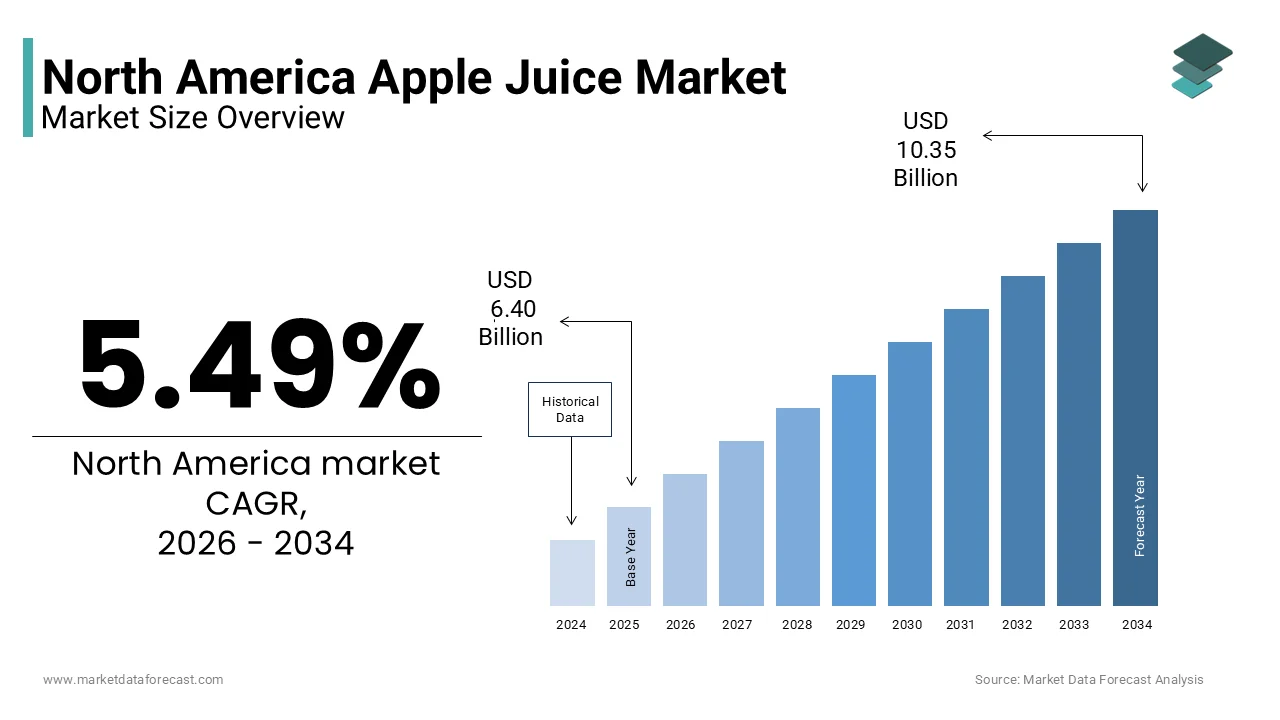
- Market Valuation: Valued at USD 6.40 billion in 2025, reaching USD 6.75 billion in 2026, and projected to hit USD 10.35 billion by 2034, registering a solid CAGR of 5.49% from 2026 to 2034.
- Primary Growth Drivers: Rising health consciousness and demand for natural, minimally processed beverages free from artificial additives, alongside a surge in organic and sustainably sourced product offerings. Key restraints include fluctuating raw material costs, supply chain volatility, and stringent regulatory compliance burdens.
Key Market Segment Metrics (2026–2034)
| Category | Leading Segment (2025 Position) | Fastest-Growing Segment |
|---|---|---|
| By Distribution Channel | Supermarkets and Hypermarkets (accounted for 54.3% market share in 2025 due to extensive reach and consumer convenience) | Specialty Stores (projected to exhibit a fastest CAGR of 6.8% driven by demand for premium, organic, and artisanal juice products) |
| By Country / Region | United States (largest contributor holding 82.3% share in 2025 backed by massive domestic apple production and entrenched consumption habits) | Canada (ranked second with 14.3% share in 2025, fueled by health-conscious preferences for locally sourced organic goods) |
Major Market Participants & Market Structure
Market Structure: Highly competitive landscape characterized by established multinational food and beverage corporations competing alongside regional brands and private-label options through product quality, organic innovation, and channel dominance.
Key Companies: The Coca-Cola Company, Del Monte Foods, Inc., Parle Agro Pvt Ltd, Tree Top Inc., PepsiCo, Inc., Britvic Plc, Manzana Products Co., The Kraft Heinz Company, Eden Foods Inc., Solana Gold Organics, and White House Company.
North America Apple Juice Market Size
The North America apple juice market size was valued at USD 6.40 billion in 2025 and is expected to reach USD 10.35 billion by 2034 from USD 6.75 billion in 2026. The market's promising CAGR for the predicted period is 5.49%.
Apple juice is a sweet liquid drink made by pressing or crushing fresh apples to extract their natural juices. The liquid is usually filtered to remove pulp, heated to kill germs, and sold in bottles or cartons as a common beverage. This market serves as a staple in the beverage industry, driven by the region's robust apple cultivation infrastructure, particularly in states like Washington, New York and Michigan, as well as provinces such as British Columbia and Ontario. The market is characterised by a strong preference for convenience and health-conscious choices, with consumers increasingly scrutinising ingredient labels for added sugars and artificial preservatives. According to the United States Department of Agriculture, domestic apple production continues to supply over 4.4 million metric tons of fresh fruit annually as processing facilities experience shifting regional crop volumes. Regulatory frameworks enforced by the Food and Drug Administration and Health Canada ensure strict quality standards regarding pasteurisation and labelling transparency. The industry operates within a competitive landscape where major brands compete with private label offerings and artisanal cold-pressed alternatives. Supply chains are highly integrated, connecting orchards, processing facilities and retail outlets across borders. Innovations in packaging technologies such as aseptic cartons and recyclable bottles address environmental concerns while maintaining product freshness. The integration of apple juice into school lunch programs and institutional food services further stabilises demand. Consumer trends toward functional beverages have prompted manufacturers to explore blends with other fruits and vegetables, enhancing nutritional profiles. This dynamic ecosystem balances traditional mass market appeal with emerging premium segments driven by evolving dietary preferences and sustainability mandates.
MARKET DRIVERS
Rising Health Consciousness and Demand for Natural Beverages
The increasing focus on health and wellness among North American consumers is a key driver of the North America apple juice market. Individuals are seeking natural alternatives to carbonated soft drinks and artificially flavoured beverages. According to the Centres for Disease Control and Prevention, long-term public tracking shows frequent sugar-sweetened beverage consumption correlates directly with chronic clinical weight gain, forcing families to evaluate dietary adjustments to maintain healthy nutrition. Apple juice is rich in antioxidants such as polyphenols and vitamin C, which support immune function and overall well-being, making it an attractive option for health-conscious families. The perception of apple juice as a natural source of hydration and energy drives its inclusion in daily diets, particularly for children and active adults. Manufacturers respond by launching products with no added sugar and non-GMO certifications to align with clean label trends. Retailers report higher sales volumes for organic and cold-pressed apple juice variants reflecting this shift in consumer preference. Nutritional education campaigns highlight the benefits of fruit consumption, further reinforcing demand. The versatility of apple juice as a base for smoothies and health shots also contributes to its popularity. This sustained interest in natural and nutritious beverages ensures steady growth for the apple juice segment as it positions itself as a wholesome and beneficial choice in the broader beverage category.
Convenience and Versatility in Household Consumption
The inherent convenience and culinary versatility of apple juice significantly propel its demand in the North America market. This caters to busy lifestyles and diverse usage occasions. As per the Bureau of Labour Statistics, comprehensive time use data shows over 80% of citizens allocate substantial daily hours toward critical home-based meal preparation and domestic activities. Apple juice requires no preparation and offers a ready-to-drink format that fits seamlessly into morning routines, school lunches, and on-the-go snacking. Its mild and universally appealing flavour profile makes it a safe choice for children, reducing resistance to healthy drinking habits. Beyond direct consumption, apple juice is widely used as an ingredient in cooking, baking and marinades, adding natural sweetness and moisture to dishes. This multifunctional utility expands its presence in household pantries beyond just a beverage. Bulk packaging options available in supermarkets provide cost-effective solutions for large families and institutional buyers. The availability of single-serve packs supports portability for commuters and students. Marketing efforts emphasise the ease of incorporation into daily life, reinforcing its status as a pantry staple. This combination of functional convenience and culinary adaptability ensures consistent purchase behaviour and brand loyalty among a broad demographic spectrum.
MARKET RESTRAINTS
Stringent Regulatory Standards and Labelling Requirements
Strict regulatory standards and complex labelling requirements are hampering the growth of the North America Apple Juice Market. This increases compliance costs and limits product formulation flexibility. According to the Food and Drug Administration, legal safety standards require manufacturing plants to integrate rigorous Hazard Analysis Critical Control Point (HACCP) frameworks to manage biological hazards like patulin levels below 50 micrograms per kilogram in commercial fruit juice products. Recent updates to labelling laws mandate clear declaration of added sugars and specific fruit content percentages, forcing companies to reformulate products or adjust marketing claims. These regulatory hurdles can delay product launches and increase operational expenses, particularly for smaller producers lacking dedicated compliance teams. The distinction between juice from concentrate and not from concentrate also requires precise documentation and supply chain tracking to avoid misbranding penalties. In Canada, Health Canada enforces similar strictures regarding fortification and additive usage, creating additional complexity for cross-border trade. Non-compliance can result in costly recalls and reputational damage, eroding consumer trust. The need for continuous monitoring of changing regulations diverts resources from innovation and marketing. Small and medium enterprises often struggle to navigate these bureaucratic landscapes effectively, limiting their ability to compete with larger established brands. These regulatory burdens create barriers to entry and restrict market agility, hindering the introduction of novel apple juice products.
Volatility in Raw Material Costs and Supply Chain Disruptions
Fluctuations in apple prices and supply chain disruptions also hinder the expansion of the North America apple juice market. This affects profit margins and production stability. As per the United States Department of Agriculture, shifting weather patterns and severe climate pressures threaten regional orchard longevity, driving significant annual volatility in domestic speciality crop output. Climate change exacerbates these risks, leading to unpredictable harvest volumes and price spikes for raw materials. Since apple juice production relies heavily on a consistent supply of specific apple varieties suitable for juicing, any shortage directly impacts manufacturing costs. Transportation bottlenecks and labour shortages further compound these issues, increasing logistics expenses and delivery times. Currency fluctuations between the United States and Canada affect the cost of imported concentrates and finished goods, disrupting pricing strategies. Manufacturers often face difficulties in passing increased costs to consumers due to intense competition and price sensitivity in the retail sector. Long-term contracts offer some protection but limit flexibility to capitalise on favourable market conditions. The dependence on seasonal harvests means that inventory management is critical yet challenging. These economic and logistical uncertainties force companies to prioritise cost containment over expansion, limiting their ability to invest in new product development and market penetration.
MARKET OPPORTUNITIES
Expansion into Premium Cold Pressed and Organic Segments
The growing demand for premium cold-pressed and organic apple juice unlocks potential for manufacturers in the North America apple juice market. This helps them to capture higher value market segments and differentiate their offerings. According to the U.S. Department of Agriculture, premium market shifts demonstrate a significant expansion rate in specialised production networks as consumer spending prioritises unpasteurized fruit yields. Cold pressing technology preserves enzymes and vitamins better than traditional thermal pasteurisation, appealing to health enthusiasts willing to pay a premium. Organic certification further enhances product appeal by assuring consumers of sustainable farming practices and absence of synthetic pesticides. Brands can leverage this trend by introducing small-batch artisanal juices with unique apple varieties such as Honeycrisp or Granny Smith to create distinct flavour profiles. Packaging innovations such as glass bottles and eco-friendly materials align with the premium positioning and environmental values of target consumers. Direct-to-consumer subscription models allow brands to build loyal customer bases and gather valuable feedback. Retailers are expanding shelf space for premium juice sections, recognising the higher margins associated with these products. This shift towards quality over quantity enables manufacturers to escape the commodity trap of standard apple juice and establish strong brand equity in a niche but rapidly growing segment.
Innovation in Functional Blends and Value Added Products
Innovation in functional blends and value-added products offers a lucrative opportunity for manufacturers to attract diverse consumer groups and expand usage occasions, which is anticipated to boost the expansion of the North America apple juice market. As per the U.S. Department of Agriculture, domestic beverage processors continuously engineer fortified commodities to align with shifting public dietary preferences across the North American food system. Manufacturers can blend apple juice with ingredients like ginger, turmeric, probiotics, or collagen to create functional drinks that address specific wellness needs. Apple juice serves as an excellent base due to its neutral sweetness and wide acceptance, allowing for creative flavour combinations without overwhelming the palate. Fortification with vitamins and minerals can position apple juice as a nutritional supplement rather than just a refreshment. Collaborations with health brands and influencers can drive awareness and trial of these innovative products. Ready-to-drink smoothies featuring apple juice as a primary ingredient cater to the on-the-go lifestyle of urban professionals. School and institutional programs may adopt fortified juices to improve child nutrition outcomes. By moving beyond traditional single-ingredient juice, manufacturers can tap into the booming functional beverage market. This strategy diversifies revenue streams and reduces reliance on standard juice sales, driving growth through product differentiation and enhanced consumer value propositions.
MARKET CHALLENGES
Intense Competition from Alternative Beverage Categories
Competition from alternative beverage categories inhibits the growth of the North American Apple Juice Market. These options, such as water-infused drinks, plant-based milks, and kombucha, are gaining popularity among health-conscious consumers. As per the U.S. Department of Agriculture, liquid fruit juice ingestion rates face persistent downturns due to escalating competition from alternative refreshment categories. Water enhancers and sparkling waters offer zero-calorie alternatives that appeal to individuals managing weight or diabetes. Plant-based milks like almond and oat milk provide creamy textures and nutritional benefits that compete with juice for breakfast and snack occasions. Kombucha and fermented teas offer probiotic benefits and unique flavours that attract adventurous drinkers seeking functional advantages. These alternatives often market themselves as more modern and sophisticated compared to traditional apple juice, which can be perceived as high in sugar. Retail shelf space is limited, and competitors with aggressive marketing budgets often secure prime placement. Price promotions by alternative beverage brands further erode apple juice market share. Manufacturers must invest heavily in reformulation and marketing to maintain relevance against these dynamic competitors. The fragmentation of the beverage landscape forces apple juice brands to constantly innovate and justify their place in the consumer diet amidst a sea of newer trending options.
Consumer Perception of High Sugar Content
Negative consumer perception regarding the high natural sugar content in apple juice is a significant challenge to the expansion of the North American market. This is true despite its natural origin. As per the U.S. Department of Agriculture, public health and nutrition guidelines encourage households to actively moderate single-serving beverage portions to reduce liquid caloric intake. Parents are increasingly cautious about giving juice to young children following updated dietary guidelines that recommend whole fruits over juice. This shift in advice has led to a decline in household purchases of large volume apple juice containers. Marketing claims of "100 per cent juice" do not fully mitigate concerns about glycemic impact, leading some consumers to choose whole fruits or vegetable juices instead. Social media and health blogs often highlight the sugar content of apple juice, comparing it unfavourably to soda, which damages brand image. Manufacturers struggle to communicate the difference between natural fructose and added sugars effectively. Reformulating to reduce sugar content often compromises taste, leading to consumer rejection. The need to balance nutritional benefits with sugar concerns requires careful messaging and product innovation. Until the industry can effectively address these health perceptions, apple juice will continue to face headwinds in retaining its position as a daily staple in health-focused households.
REPORT COVERAGE
| REPORT METRIC | DETAILS |
| Market Size Available | 2025 to 2034 |
| Base Year | 2025 |
| Forecast Period | 2026 to 2034 |
| CAGR | 5.49% |
| Segments Covered | By Distribution Channel, and Region |
| Various Analyses Covered | Regional & Country Level Analysis, Segment-Level Analysis, DROC, PESTLE Analysis, Porter’s Five Forces Analysis, Competitive Landscape, Analyst Overview on Investment Opportunities |
| Regions Covered | The United States, Canada, Mexico, and Rest of North America |
| Market Leaders Profiled | The Coca-Cola Company, Del Monte Food, Inc., Parle Agro Pvt Ltd, Tree Top Inc., PepsiCo. Inc., Britvic Plc, Manzana Products Co., The Kraft Heinz Company, Eden Foods Inc., Solana Gold Organics, and White House Company |
SEGMENTAL ANALYSIS
By Distribution Channel Insights
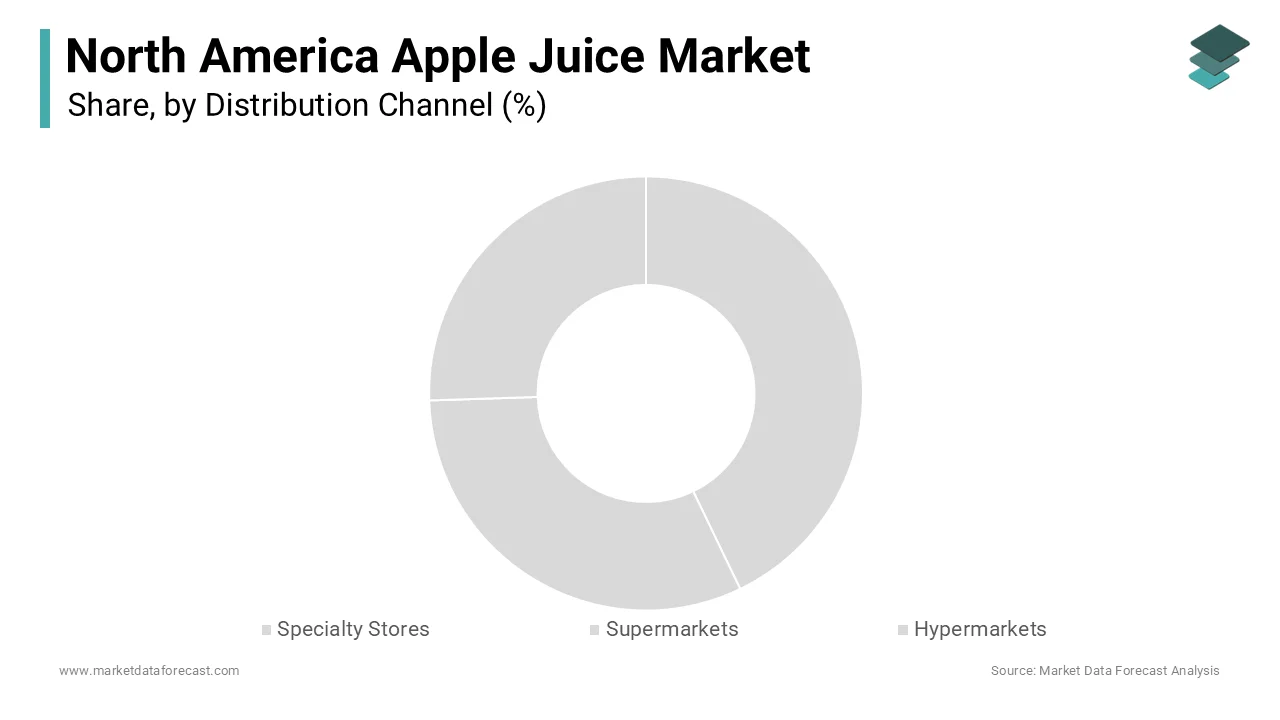
The supermarkets and hypermarkets segment dominated the North America Apple Juice Market and accounted for a 65.3% share in 2025. This dominance of the segment was driven by its extensive product availability and the convenience of one-stop shopping. According to the Food Industry Association, American grocery shoppers make an average of 2.2 store visits per week as families navigate competitive retail beverage channels. These retail giants offer a wide variety of apple juice brands ranging from national labels to private label options catering to diverse consumer preferences and budget levels. The ability to purchase apple juice alongside other household essentials reduces transaction time and effort, appealing to busy families. Promotional activities such as multi-buy offers and loyalty discounts drive volume sales and encourage stockpiling. Retailers strategically place apple juice in high-traffic aisles near breakfast cereals and snacks, increasing visibility and impulse purchases. The scale of supermarket operations allows for efficient inventory management, ensuring consistent stock levels of popular SKUs. Private label apple juices available exclusively at major chains provide affordable alternatives that drive traffic and increase basket size. This combination of variety, value and convenience makes supermarkets and hypermarkets the dominant channel for apple juice procurement. Manufacturers prioritise relationships with grocery buyers to secure optimal shelf placement and promotional support, ensuring their products remain accessible to the mass market.
The strong penetration of private label apple juice brands greatly supports the supremacy of supermarkets and hypermarkets in the North America distribution landscape. As per the U.S. Department of Agriculture, private label expansion captures major shelf allocations across large-format grocery stores to capture budget-conscious beverage shoppers. Major retailers leverage their purchasing power to source high-quality apple juice directly from processors offering competitive pricing that undercuts national brands. This strategy attracts price-sensitive shoppers, particularly during periods of economic uncertainty or inflation. Supermarkets invest in marketing campaigns that highlight the quality and origin of their private label juices, building consumer trust and loyalty. The higher profit margins associated with private labels allow retailers to reinvest in store improvements and customer experience enhancements. Exclusive availability of these brands creates a unique value proposition that drives foot traffic to specific chains. Bulk packaging options for private label juices appeal to large families and institutional buyers, further boosting volume sales. The consistency in quality and taste of store brands has improved significantly, reducing the perceived risk of switching from national brands. This strategic focus on private labels ensures that supermarkets maintain their leadership position by offering compelling value propositions that resonate with a broad demographic spectrum while maximising retailer profitability.
The speciality stores segment is predicted to witness the highest CAGR of 6.8% from 2026 to 2034 due to rising demand for premium organic and artisanal products. According to the Organic Trade Association, domestic organic food sales achieved an accelerated expansion to reach $76.6 billion as wellness demand reshapes traditional commercial grocery aisles. Speciality retailers such as Whole Foods Market and local co-ops cater to this niche by offering cold-pressed, unfiltered, and single-origin apple juices that are not available in mainstream supermarkets. These products appeal to discerning consumers who value transparency in sourcing and minimal processing. The expertise of staff in speciality stores allows for personalised recommendations and education about the benefits of different apple varieties and production methods. Consumers are willing to pay a premium for juices made from heirloom apples or those produced using sustainable farming practices. The curated selection in speciality stores creates an exclusive shopping experience that fosters brand loyalty. Marketing efforts emphasise the craftsmanship and story behind each bottle, connecting consumers with local orchards and producers. This focus on quality and authenticity drives rapid growth in the speciality segment as it aligns with evolving lifestyle trends toward mindful consumption and wellness.
The ability of speciality stores to engage directly with consumers through community-based marketing initiatives significantly boosts their growth in the apple juice sector. As per the Speciality Food Association, regional culinary exhibitions highlight upcoming artisanal products to foster entrepreneurship and brand engagement inside physical marketplace environments. The interactive experiences build strong emotional connections between brands and consumers, fostering advocacy and repeat purchases. Speciality stores collaborate with local farmers and producers to create limited-edition blends that reflect regional tastes and seasonal availability. This localisation strategy resonates with consumers who prefer to support their local economy and reduce carbon footprints. Social media campaigns featuring behind-the-scenes content and producer stories enhance brand visibility and attract younger demographics. Loyalty programs in speciality stores offer exclusive access to new launches and special discounts, encouraging retention. The personalised service and community focus differentiate speciality stores from impersonal big-box retailers. This direct engagement model allows for rapid feedback and adaptation to consumer preferences, driving innovation and product refinement. The alignment with values of sustainability and community support positions speciality stores as a dynamic growth engine in the North America apple juice market.
REGIONAL ANALYSIS
United States Market Analysis
The United States led the North America apple juice market and captured an 85.1% share in 2025. This leading position of the segment was attributed to its massive population, robust apple production and established retail infrastructure. According to the U.S. Department of Agriculture, Washington State accounts for more than 70% of the nation's fresh-market apple production as regional processing channels continuously adapt to crop yields. The market is characterised by high competition among major brands and private labels, with consumers increasingly seeking organic and non-GMO options. Health consciousness drives demand for cold-pressed and unsweetened variants, while school lunch programs ensure steady institutional demand. Regulatory oversight by the Food and Drug Administration ensures strict quality standards influencing formulation and labelling practices. The rise of e-commerce has expanded access to premium and artisanal juices, allowing niche brands to reach national audiences. Consumer trends toward functional beverages have prompted innovation in blends with ginger, turmeric, and other superfoods. Economic factors such as inflation influence purchasing behaviour, with some consumers trading down to private labels. The diversity of the US market requires manufacturers to adopt flexible strategies catering to both mass market and premium segments. Strategic partnerships with retailers and food service providers enhance distribution reach. The United States' position as a production and consumption hub ensures its continued dominance in the North America apple juice landscape through scale innovation and consumer engagement.
Canada Market Analysis
Canada holds a significant position in the North America Apple Juice Market owing to strong domestic production in provinces like Ontario, British Columbia, and Quebec. As per Statistics Canada, long-term food availability data tracks national beverage supply and per capita fruit volume trends to monitor shifting consumer choices across the country. The market is influenced by strict labelling regulations enforced by Health Canada, which mandate clear disclosure of ingredients and nutritional information, fostering transparency. Cold climate conditions limit the growing season but produce apples with high sugar content, ideal for juicing. Retail channels are dominated by major grocery chains that offer extensive private label selections competing with international brands. The trend toward health and wellness supports growth in premium segments such as cold-pressed and unfiltered juices. Government initiatives supporting sustainable agriculture encourage eco-friendly packaging and farming practices. Cross-border trade with the United States facilitates the exchange of apple varieties and processing technologies. Consumer awareness of environmental issues drives demand for brands with strong sustainability credentials. The mature nature of the Canadian market requires manufacturers to focus on differentiation through quality and innovation. Local pride in agricultural heritage strengthens brand loyalty for domestic producers. Canada's commitment to health and sustainability shapes a distinct market dynamic within the region.
COMPETITIVE LANDSCAPE
The North America Apple Juice Market features intense competition characterized by a mix of established multinational brands aggressive private label manufacturers and emerging artisanal producers. Major brands leverage strong brand equity extensive distribution networks and significant marketing budgets to dominate mainstream retail shelves. These players continuously invest in product reformulation and sustainability initiatives to address health concerns and environmental regulations. Private label competitors offer cost effective alternatives that appeal to price sensitive consumers driving retailers to expand their own brand portfolios. Small scale artisanal brands differentiate themselves through premium positioning unique flavor profiles and local sourcing narratives attracting niche demographics. The market sees frequent innovation in packaging formats and functional blends to capture consumer interest. Regulatory compliance regarding labeling and safety standards creates barriers to entry while ensuring quality consistency. Price wars and promotional activities are common as companies vie for shelf space and consumer loyalty. The competitive landscape demands constant adaptation to health trends sustainability goals and technological advancements. Companies must balance cost efficiency with premium positioning to succeed in this mature yet evolving market where consumer trust and product quality are paramount.
KEY MARKET PLAYERS
Some of the key players in the North America apple juice market are
- The Coca-Cola Company
- Del Monte Food, Inc.
- Parle Agro Pvt Ltd
- Tree Top Inc.
- PepsiCo. Inc.
- Britvic Plc
- Manzana Products Co.
- The Kraft Heinz Company
- Eden Foods Inc.
- Solana Gold Organics
- White House Company.
Top Players in the Market
- The Mott’s LLP maintains a dominant presence in the North America Apple Juice Market through its iconic brand recognition and extensive distribution network across retail channels. The company offers a diverse portfolio including classic apple juice blends and organic options catering to family consumption habits. Recent strategic initiatives focus on reformulating products to reduce sugar content and eliminate artificial additives aligning with clean label trends. Mott’s invests heavily in marketing campaigns that emphasize the natural origin and nutritional benefits of its juices to health conscious parents. The company actively collaborates with retailers to secure prime shelf placement and promotional visibility in supermarkets. Sustainability efforts include optimizing packaging materials to reduce environmental impact. These actions reinforce Mott’s position as a trusted household name while adapting to evolving consumer preferences for healthier and more transparent beverage options in the competitive North American landscape.
- TreeHouse Foods Inc contributes significantly to the North America Apple Juice Market primarily through its robust private label manufacturing capabilities serving major grocery chains. The company leverages its scale to produce high quality apple juice products that offer value to cost conscious consumers without compromising taste. Recent actions involve expanding production capacity and enhancing supply chain efficiency to ensure consistent product availability. TreeHouse focuses on innovation in packaging formats such as recyclable bottles and convenient pouches to meet modern lifestyle needs. The company engages in strategic partnerships with retailers to develop exclusive formulations that drive store loyalty. Investment in sustainable sourcing practices supports long term raw material security. These measures demonstrate TreeHouse commitment to operational excellence and customer centricity ensuring competitive advantage and steady growth in the private label segment of the North American market.
- Ocean Spray Cranberries Inc plays a notable role in the North America Apple Juice Market by leveraging its expertise in fruit blends and cooperative structure. While known for cranberries the company produces popular apple cranberry juice blends that appeal to consumers seeking unique flavor profiles and added health benefits. Recent strategies include launching new functional juice varieties infused with vitamins and antioxidants to target wellness oriented demographics. Ocean Spray emphasizes its farmer owned model which ensures high quality fruit sourcing and sustainable agricultural practices. The company invests in digital marketing and direct to consumer platforms to build brand engagement and loyalty. Collaborations with health influencers highlight the immune supporting properties of their blends. These initiatives underscore Ocean Spray dedication to innovation and quality reinforcing its distinctive position in the blended juice category within the North American beverage sector.
Top Strategies Used by Key Market Participants
Key players in the North America Apple Juice Market employ several strategic approaches to maintain competitiveness and drive growth. Product innovation focuses on developing low sugar organic and cold pressed variants to align with health trends. Expansion of sustainable packaging solutions addresses environmental concerns and regulatory expectations. Strategic partnerships with retailers enhance shelf visibility and promote private label growth. Marketing campaigns emphasize transparency sourcing and nutritional benefits to build consumer trust. Investment in supply chain resilience ensures consistent raw material availability and cost management. Digital engagement tools facilitate direct consumer interaction and personalized offerings. These multifaceted strategies enable companies to navigate changing preferences and maintain relevance in a dynamic market.
MARKET SEGMENTATION
This research report on the North America apple juice market has been segmented and sub-segmented based on the following categories.
By Distribution Channel
- specialty Stores
- Supermarkets
- Hypermarkets
By Country
- The United States
- Canada
- Rest of North America