- Product Description Description
- Table of Contents TOC
- List of Table & Figure LOT
- Get Free Sample PDF Sample PDF
Market Size, 2025
$5.29 BnMarket Estimate, 2026
$6.72 BnMarket Forecast, 2034
$45.87 BnCAGR, 2026–2034
27.13%Executive Summary: North America Biosimilars Market
- Market Scope: Comprehensive North American biosimilars market analysis covering biologic patent expirations, chronic disease treatments (cancer and autoimmune disorders), supportive regulatory frameworks, and government switching programs.
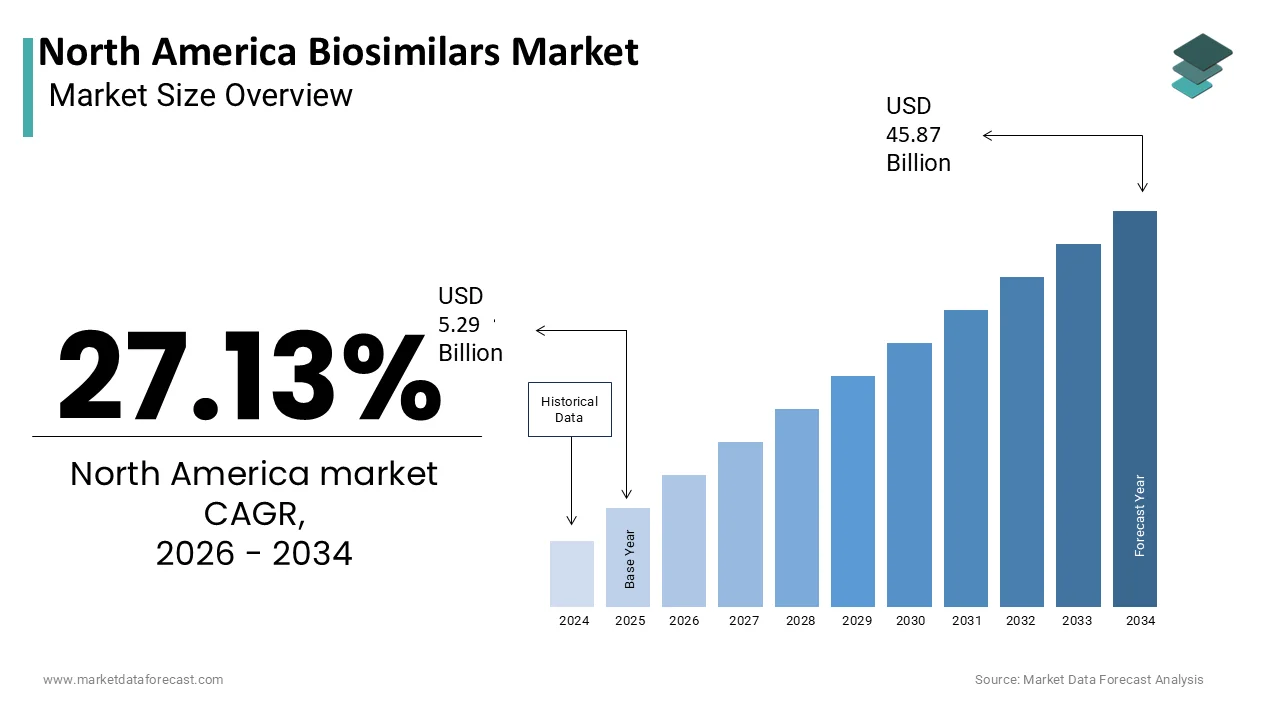
- Market Valuation: Valued at USD 5.29 billion (2025), estimated at USD 6.72 billion (2026), and projected to reach USD 45.87 billion by 2034, registering a robust CAGR of 27.13% (2026–2034).
- Primary Growth Drivers: High-cost biologic patent expirations, cost-effective treatment demand, payer pressures, supportive FDA/regulatory pathways, and policy-driven switching programs. Key challenges include physician skepticism, complex manufacturing, patent litigation, and interchangeability hurdles.
Key Market Segment Metrics (2026–2034)
| Category | Leading Segment (Position) | Fastest-Growing Segment |
|---|---|---|
| By Application & Region | Autoimmune diseases segment (held largest market share in the U.S. and continues to lead) & United States (dominates regional revenue due to FDA approvals and high biologic spending) | Oncology and immunology biosimilar adoption pathways driven by upcoming multi-billion dollar biologic patent expirations |
| By Regional Leadership | United States (captures highest share supported by disposable income, treatment demand, and FDA approvals) | Canada (emerges as second-largest market via government-mandated switching programs displacing reference drugs like Remicade) |
Major Market Players & Market Structure
Market Structure: Highly competitive biopharmaceutical landscape featuring global generic and biologic leaders leveraging extensive portfolios and strategic partnerships to navigate complex regulations and patent barriers.
Key Companies: Sandoz International GmbH, Wockhardt Ltd, Hospira Inc., Teva Pharmaceutical Industries Ltd., Dr. Reddy's Laboratories, Biocon Limited, Mylan Inc., Zydus Cadila, Celltrion Inc., Roche Diagnostics, Cipla Ltd., Amgen, Pfizer, Samsung Bioepis, and Viatris.
North America Biosimilars Market Size
The North America Biosimilars Market is projected to grow from USD 5.29 billion in 2025 to USD 6.72 billion in 2026 and reach USD 45.87 billion by 2034, registering a CAGR of 27.13% from 2026 to 2034.
Biosimilars are highly similar versions of existing, FDA-approved biologic medications (called reference products) that are made from living organisms. They have the same strength, dosage, and way of working in the body, offering equal safety and effectiveness at a lower cost. This therapeutic category operates within a distinct regulatory framework established by the Biologics Price Competition and Innovation Act, which created an abbreviated approval pathway to foster competition while maintaining stringent scientific standards. According to the United States Food and Drug Administration, the regulatory body authorized 18 new biosimilars in 2024 alone, breaking its annual record and further expanding market entry. As per Health Canada, the federal agency had authorized 52 biosimilars of 16 original-brand medicines for sale as of March 2024. According to the Medicare Payment Advisory Commission, brand-name drugs and biologics without a generic or biosimilar competitor account for over 83 percent of gross Part D spending despite constituting less than 10 percent of prescriptions. Unlike generic small molecule drugs, biosimilars require comprehensive characterization due to the inherent complexity of living cell-derived therapeutics. This market functions at the intersection of advanced biomanufacturing, intellectual property law,w and healthcare economics, serving as a critical mechanism for sustaining access to high-cost biologic therapies amid escalating expenditure pressures across both public and private payer systems.
MARKET DRIVERS
Patent Exclusivity Expirations Unlock Blockbuster Molecule Access
The wave of patent exclusivity expirations for several blockbuster reference biologics is fundamentally driving the landscape of the North American biosimilars market. As high-revenue molecules lose their market protection, it opens the floodgates for affordable, highly similar alternatives to enter the commercial space. This pivotal transition not only intensifies market competition but also drastically lowers healthcare costs while expanding patient access to critical, life-saving therapies across the region. According to sources, a wave of loss-of-exclusivity events will see approximately 236 billion dollars in global brand sales face potential generic or biosimilar entry between 2026 and 2029. According to the U.S. Food and Drug Administration, approved biosimilars lead to average savings of 30% per treatment course, while reference product market share erosion continues across major therapeutic categories. According to the Congressional Budget Office, the agency estimates that the drug price negotiation program enacted by the Inflation Reduction Act will save Medicare 98.5 billion dollars from 2026 to 2031. The structural release of pent-up demand transforms theoretical pipeline potential into realized commercial opportunity. Unlike gradual market evolution seen in small molecule generics, biologic patent cliffs create sudden massive openings where first movers capture disproportionate value before commoditization erodes margins.
Payer Mandated Switching Protocols Accelerate Volume Conversion
Payer-mandated switching protocols are accelerating the volume conversion from costly reference biologics to affordable biosimilars across the region, which further propels the North American biosimilars market. This overcomes clinical inertia. By enforcing strict formulary preferences, insurers are driving immediate and large-scale market adoption. According to an analysis by the Pharmaceutical Care Management Association, 78% of the analyzed biosimilars achieved preferential formulary coverage compared to their reference products by 2021. According to survey findings published by the Evernorth Research Institute, only 31% of patients living with a chronic condition are actively aware of biosimilars as a therapeutic alternative. These administrative mandates bypass physician inertia and patient hesitation that historically slowed organic adoption. Unlike voluntary substitution models dependent on individual prescriber comfort, systematic switching creates predictable volume trajectories enabling manufacturers to forecast demand and invest in supply capacity with greater confidence. Payers recognize that passive preference policies yield suboptimal savings, necessitating active intervention to realize the full economic potential of biosimilar competition.
MARKET RESTRAINTS
Interchangeability Designation Barriers Limit Pharmacy-Level Substitution
Stringent regulatory barriers to securing interchangeability designations significantly limit automatic, pharmacy-level substitution of biosimilars across the region, which hampers the growth of the North American biosimilars market. This restraint slows down widespread market penetration by keeping substitution decisions strictly in the hands of prescribing physicians. According to research, the Food and Drug Administration issued updated guidance to remove the automatic requirement for formal clinical switching trials in order to cut down biosimilar development costs. As per studies, 46 states across the United States permitted pharmacy-level biosimilar substitution without physician consent by 2024. Health Canada does not currently have an interchangeability regulatory category, forcing all substitution decisions to occur at the rescriber level rather than at the point of dispense, creating friction absent in European markets. Manufacturers face a strategic dilemma where pursuing interchangeability delays market entry, but forgoing it limits long-term volume potential. This regulatory bottleneck constrains realization of full competitive dynamics envisioned by the Biologics Price Competition and Innovation Act, particularly for complex molecules where switching studies present technical challenges beyond standard comparability exercises.
Physician Confidence Gaps Persist Despite Regulatory Assurance
Lingering physician confidence gaps regarding biosimilar efficacy and long-term safety, despite strong regulatory assurances, remain a major restraint in the North American biosimilars market. This persistent clinician hesitation slows down adoption rates and limits the regular prescription of these cost-effective alternatives. According to the Expert Review of Clinical Immunology, healthcare providers and patients universally recognize direct cost savings as the main driving benefit behind prescribing biosimilars. As per the official Canadian Association of Gastroenterology, the group strongly opposes mandatory, payer-led non-medical switching of biosimilars for inflammatory bowel disease patients. Unlike generic small molecules where therapeutic equivalence is assumed, biologics carry a historical legacy of complexity that requires continuous reinforcement through clinical experience and peer validation. Educational efforts have improved awareness but have not yet achieved the behavioral normalization necessary for seamless integration into routine practice patterns.
MARKET OPPORTUNITIES
Ophthalmology Therapeutic Expansion Opens Untapped Specialty Segment
The therapeutic expansion of biosimilars into ophthalmology unlocks a massive and untapped specialty segment within the North American market. By targeting high-revenue anti-VEGF reference biologics, this expansion offers a high-growth opportunity to lower retinal treatment costs and capture significant new market share. According to the Centers for Medicare & Medicaid Services, Part B fee-for-service drug expenditures represent a high-spending specialty category driven by the utilization of intravitreal anti-VEGF injections. As per the American Academy of Ophthalmology, the preferred practice patterns for retinal disorders mandate that the selection of reference or biosimilar biologic therapies remains at the clinical discretion of the treating ophthalmologist and the patient. Unlike hospital-infused biologics requiring institutional buy-in, ophthalmology biosimilars operate in a physician office setting where procurement decisions are more agile and price-sensitive. This segment represents a greenfield opportunity where first movers establish relationships with high-volume retina specialists who administer treatments directly, creating integrated service delivery models combining drug and procedure economics.
Government Procurement Leverage Creates Guaranteed Volume Channels
Strategic government procurement leverage is creating powerful, guaranteed volume channels for biosimilars within the regional public healthcare sector, which is anticipated to fuel the growth of the North American biosimilars market. By utilizing large-scale public tenders and centralized purchasing agreements, government agencies ensure rapid, predictable market access and steady revenue streams for biosimilar manufacturers. According to the Department of Veterans Affairs, national procurement contracts utilize standardized source selection models under the Federal Acquisition Regulation to manage therapeutic line items. As per the Defense Health Agency Uniform Formulary Beneficiary Advisory Panel, the Department of Defense maintains a uniform formulary with cost-sharing tiers optimized to manage clinical outcomes and fiscal requirements for military beneficiaries and dependents. These government channels provide de-risked commercialization pathways insulated from commercial payer variability and rebate wall dynamics. Manufacturers achieving federal contract awards secure baseline revenue streams enabling sustainable operations even during early market penetration phases when commercial volumes remain uncertain.
MARKET CHALLENGES
Rebate Wall Dynamics Distort True Economic Value Signals
Aggressive rebate wall dynamics deployed by brand manufacturers distort true economic value signals and block lower-cost biosimilars from fair competition in the North American biosimilars market. By leveraging bundled discounts on legacy products, reference drugmakers effectively lock in formulary exclusivity and artificially restrict patient access to more affordable alternatives. According to the Federal Trade Commission, major pharmacy benefit managers employ complex rebate systems on reference biologics that can obscure net price metrics and impact the commercial adoption of lower-cost biosimilar alternatives. As per the Congressional Budget Office, pharmacy benefit managers balance client-specific rebate pass-through arrangements and guaranteed revenue when establishing formulary placement tiering for biosimilars and reference biologics. These contracting opacity issues prevent market forces from functioning as intended by legislation. Biosimilar developers cannot compete on true economic merit when intermediary incentives are calibrated to preserve incumbent revenue streams rather than optimize total cost of care.
Manufacturing Scale-Up Complexity Constrains Supply Reliability
The inherent complexity of manufacturing scale-up severely constrains supply reliability within the North American biosimilars market. Because biologics are highly sensitive to minor production changes, scaling up requires intricate quality controls that frequently lead to yield variations and unexpected supply bottlenecks. According to the U.S. Food and Drug Administration, manufacturing scale-up for complex biosimilars requires extensive process validation and analytical characterisation to demonstrate product quality across diverse commercial lots. As per the United States Food and Drug Administration, Form 483 inspection observations list specific site deficiencies regarding quality control, procedural validation, or equipment sanitation that firms must address to ensure batch consistency. Unlike small molecule generics where synthesis chemistry is well characterized, biologic manufacturing involves living systems with inherent variability requiring extensive process optimization and regulatory revalidation after any change. This technical complexity creates supply vulnerability that undermines payer and provider confidence in biosimilar reliability as a sustainable alternative to reference products.
REPORT COVERAGE
| REPORT METRIC | DETAILS |
| Market Size Available | 2025 to 2034 |
| Base Year | 2025 |
| Forecast Period | 2026 to 2034 |
| Segments Covered | By Product Type, Technology, Disease, and Region. |
| Various Analyses Covered | Global, Regional, and Country-Level Analysis, Segment-Level Analysis, Drivers, Restraints, Opportunities, Challenges; PESTLE Analysis; Porter’s Five Forces Analysis, Competitive Landscape, Analyst Overview of Investment Opportunities |
| Countries Covered | The United States |
| Market Leaders Profiled |
|
SEGMENTAL ANALYSIS
By Product Type Insights
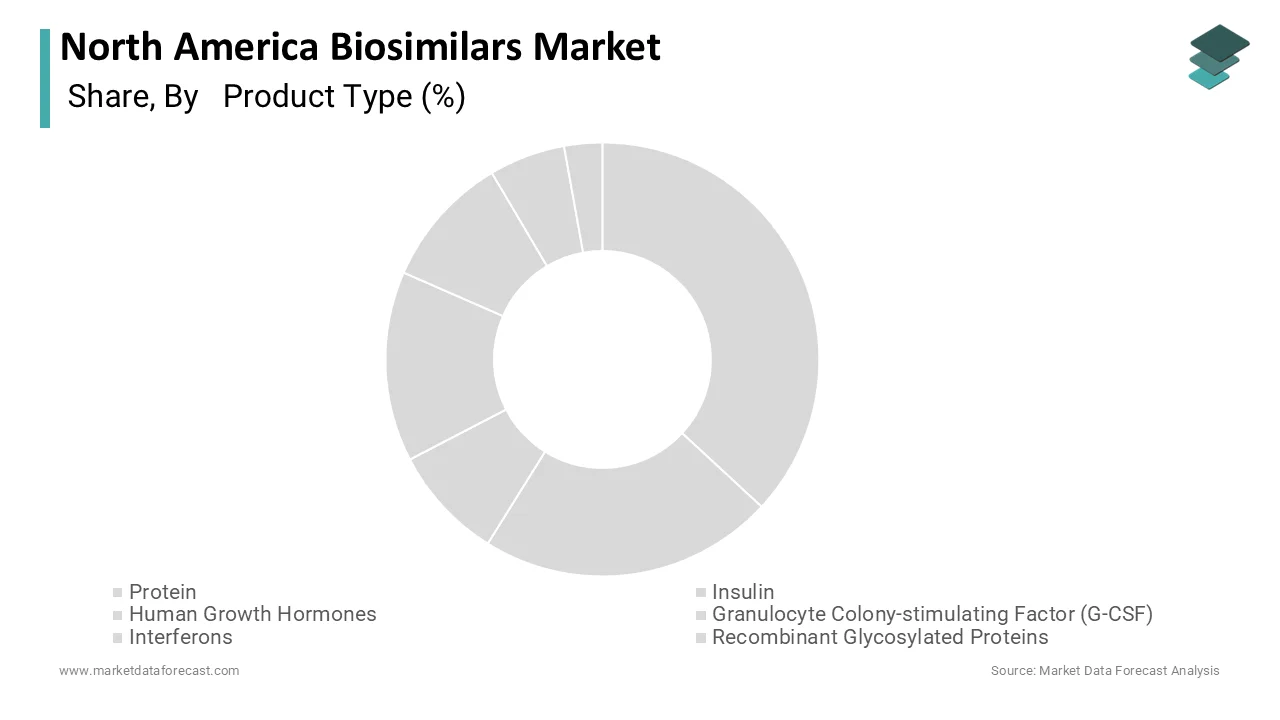
The recombinant glycosylated proteins segment dominated the North America biosimilars market and accounted for a 62.3% share in 2025. This dominance of the segment was driven by its concentration in high-expenditure therapeutic areas where patent expirations have recently occurred. According to the U.S. Food and Drug Administration, dozens of biosimilar products have been approved across multiple therapeutic categories, representing a significant regulatory expansion of lower-cost options for complex biological medicines. As per the Centers for Medicare & Medicaid Services, prescription drug expenditures under Medicare Part B represent a critical medical benefit cost center driven primarily by specialized physician-administered biological treatments. Unlike insulin or growth hormones, where unit volumes are high but dollar values moderate, monoclonal antibodies command premium pricing even post-competition due to treatment complexity and monitoring requirements, sustaining revenue leadership despite discounting. This convergence of expenditure magnitude,e approval velocity,, ty and therapeutic centrality makes recombinant glycosylated proteins structurally dominant within the North American biosimilar landscape.
The immense complexity of manufacturing recombinant glycosylated proteins serves as a powerful market driver by establishing sustainable competitive moats for advanced biosimilar developers in North America. Because replicating precise carbohydrate patterns requires highly sophisticated cell culture engineering, these steep technical and capital barriers effectively shield market leaders from low-cost, generic competition. According to the U.S. Food and Drug Administration, the development and regulatory submission of biosimilars involves multi-million dollar capital investments to demonstrate highly complex analytical similarity to reference biological products. As per the United States Pharmacopeia, general chapters on glycoprotein analysis establish standard scientific frameworks for checking oligosaccharide structures and structural micro-heterogeneity in complex biological matter. The manufacturing complexity translates into sustainable competitive advantages where only well-capitalized developers with proven platform capabilities can reliably supply the market. Consequently, segment leadership reflects not merely demand factors but also supply-side constraints that concentrate commercial success among fewer capable manufacturers maintaining value integrity despite biosimilar designation.
The insulin biosimilars segment is projected to grow at a CAGR of 24.8% between 2026 and 2034 due to escalating type 2 diabetes prevalence creating unprecedented demand volume across North America. As per the Centers for Disease Control and Prevention, tens of millions of Americans live with diagnosed or undiagnosed diabetes, representing a substantial public health burden across the national population. According to Health Canada, chronic disease metadata shows a steady rise in long-term diabetes incidence rates due to underlying demographic aging and shifting population health risk factors. Unlike oncology biosimilars, where patient populations are finite and treatment durations limited, insulin represents chronic lifelong therapy,y creating cumulative volume growth through incident case accumulation. This epidemiological expansion ensures sustained demand tailwinds that amplify biosimilar penetration effects, ts making insulin the fastest-growing segment regardless of competitive intensity or pricing pressure.
Regulatory pathway simplification acts as a major driver by significantly accelerating market entry velocity for insulin biosimilars in North America. Streamlined approval guidelines and reduced clinical trial requirements have slashed development timelines and lowered financial barriers. This increased velocity enables manufacturers to launch affordable insulin alternatives rapidly, intensifying retail competition and expanding access for patient populations. According to the U.S. Food and Drug Administration, insulin biosimilars are licensed under section 351(k) of the Public Health Service Act following analytical, structural, and clinical comparisons to an approved reference biological product. As per the U.S. Food and Drug Administration, multiple interchangeable and standard biosimilar insulin products have been approved to expand treatment competition for diabetes patients. The regulatory acceleration transforms insulin from a niche opportunity into a mainstream biosimilar category, attracting both specialized and diversified manufacturers. Faster approval cycles enable more responsive portfolio management and quicker capital recovery,y improving return profiles that sustain investment momentum, thus driving segment growth velocity.
By Technology Insights
The monoclonal antibody technology segment led the North America biosimilars market and captured a significant share in 2025. This leading position of the segment was attributed to its irreplaceable role in targeting specific disease pathways with precision that cannot be achieved through alternative modalities. According to the National Cancer Institute, therapeutic monoclonal antibodies form a cornerstone of modern targeted oncology regimens, driving significant clinical developer focus toward complex biosimilar substitutions. As per the American Society of Clinical Oncology, comparative therapeutic parameters for candidate oncology biosimilars are established using rigorous objective clinical evaluation endpoints such as pathologic complete response. Unlike platform technologies like chromatography or electrophoresis, which serve analytical functions, monoclonal antibody technology constitutes the therapeutic modality itself,f determining addressable indication scope and commercial value ceiling. This fundamental distinction ensures technology segment leadership derives from product economics rather than process utility, ty embedding it structurally at the apex of the biosimilar value chain.
Platform scalability serves as a core market driver by supporting multi-product portfolio economics within the North American monoclonal antibody biosimilars segment. By utilizing standardized manufacturing frameworks and flexible bioreactor systems, developers can efficiently produce multiple complex molecules on a single line. This operational flexibility spreads high fixed overhead costs across a broader product portfolio, significantly improving profit margins and allowing manufacturers to compete aggressively on price. According to the U.S. Food and Drug Administration, developers utilize standardized expression platforms like Chinese Hamster Ovary cell systems to streamline multi-product development pipelines for therapeutic proteins. According to the U.S. Food and Drug Administration, the deployment of modular processing systems and flexible manufacturing designs maximizes capital equipment utilization rates during multi-product biomanufacturing campaigns. The scalability advantage creates network effects where established platforms attract disproportionate deal flow, reinforcing technological leadership through accumulated operational expertise and validated regulatory precedents. New entrants facea catch-upp dilemma where building proprietary platforms requires prohibitive capital, while licensing existing ones cedes strategic control,ol ensuring incumbent dominance persists.
The mass spectrometry technology segment is predicted to witness the highest CAGR of 19.6% during the forecast period owing to intensifying regulatory demands for higher resolution comparability data supporting biosimilar approval submissions. As per the United States Pharmacopeia, standard compendial chapters outline multi-method analytical toolsets, including diverse mass spectrometry configurations, to resolve primary structures and post-translational changes in complex therapeutic proteins. According to the European Medicines Agency, joint regulatory discussions emphasize that state-of-the-art physicochemical characterisation should identify micro-heterogeneity profiles to verify high structural similarity to reference products. This analytical arms race transforms mass spectrometry from an optional characterization tool into a non-negotiable compliance requirement, driving procurement velocity independent of therapeutic area trends or product type mix.
The implementation of the Multi-Attribute Method (MAM) propels the mass spectrometry segment by replacing slow, traditional assays with a single automated workflow. This transition enables North American biosimilar developers to monitor multiple critical quality attributes simultaneously, drastically cutting analytical timelines and reducing overall development costs. According to the U.S. Food and Drug Administration, the implementation of multi-attribute methods using liquid chromatography-mass spectrometry allows for the concurrent tracking of diverse critical quality attributes in complex biological matrices. As per the American Chemical Society, validated multi-attribute method protocols for complex monoclonal antibody characterisation demonstrate strong statistical concordance with traditional standalone compendial assays. The operational efficiency gain creates compelling economic justification for technology adoption beyond regulatory compliance alone. Laboratories recognize thatmulti-attributee method implementation reduces ongoing cost of goods sold while improving data quality, creating a dual value proposition that sustains growth momentum even after the initial regulatory-driven procurement wave subsides.
By Disease Insights
In 2025, the oncology diseases segment held a 54.1% majority share of the North American biosimilars market because of a disproportionate share of biologic spending concentrated in cancer therapeutics. Single-agent annual costs frequently exceed significant amounts. According to the National Cancer Institute Surveillance, Epidemiology, and End Results Program, over two million new cancer cases are diagnosed annually in the United States, creating an active demand for complex targeted and biological therapies. As per the Centers for Medicare & Medicaid Services, physician-administered oncology biologics represent a substantial proportion of overall Part B medical benefit expenditures, driving ongoing commercial formulary adjustments. Unlike chronic disease categories where patient volumes are larger but per-capita spending is moderate, oncology combines high unit cost with intensive monitoring requirements, creating service delivery ecosystems that amplify biosimilar value capture across drug acquisition,n administration, and supportive care components.
The steady accumulation of real-world clinical evidence is a key factor in the oncology segment by systematically building prescriber confidence across North America. This growing body of safety and efficacy data successfully overcomes historical clinician hesitation, accelerating the transition to lower-cost cancer biosimilars in routine practice. As per the American Society of Clinical Oncology, peer-reviewed clinical trial meta-analyses confirm that oncology biosimilars achieve equivalent clinical efficacy and progression-free survival compared to reference products. According to the U.S. Food and Drug Administration, real-world data tracking for therapeutic oncology monoclonal antibodies demonstrates comparable long-term clinical safety profiles relative to reference counterparts. The evidence maturation transforms oncology biosimilars from experimental alternatives to standard-of-care components embedded in treatment algorithms. Unlike emerging therapeutic areas where evidence gaps persist, oncology benefits from a decade-long safety database enabling confident integration into complex multimodal regimens where therapeutic index margins are narrow, and stakes are highest.
The chronic and autoimmune diseases segment is estimated to register the fastest CAGR of 22.4% from 2026 to 2034. This rapid growth of the segment is propelled by label expansions and earlier intervention strategies,,s increasibiologic-eligibleble patient populations beyond historical severe disease cohorts. According to the American College of Rheumatology, clinical management recommendations dictate that biologic therapies are introduced to control persistent disease activity when conventional systemic medications prove insufficient. As per the Crohn’s & Colitis Foundation, active utilization of advanced biological therapies is expanding among inflammatory bowel disease cohorts to achieve objective, deep mucosal tissue healing. The guideline-driven expansions create structural demand growth that amplifies biosimilar penetration effects because newly eligible patients lack reference product loyalty and are more receptive to cost-effective alternatives. Unlike oncology, where patient pools are constrained by diagnosis rates, autoimmune diseases benefit from therapeutic boundary expansion, creating elastic demand responsive to access improvements.
The strategic pivot toward subcutaneous formulations transforms chronic and autoimmune disease management by unlocking the convenience of patient self-administration outside clinical settings. In the North American market, this formulation shift significantly improves long-term patient compliance while lowering healthcare delivery costs by reducing the reliance on costly outpatient infusion centers. According to the U.S. Food and Drug Administration, patient compliance and persistence are monitored across self-administered subcutaneous formulations to track long-term chronic treatment outcomes. As per the U.S. Food and Drug Administration, commercial launches of high-concentration, citrate-free subcutaneous biological alternatives expand patient product preferences within the competitive marketplace. The convenience advantage creates pull demand from patients and providers seeking reduced healthcare system burden,n particularly relevant as infusion center capacity constraints persispost-pandemicic. Subcutaneous formulations transform biosimilars from institutional products to retail pharmacy accessible therapies, expanding distribution channels and improving patient experience, driving segment growth beyond pure economic drivers.
COUNTRY LEVEL ANALYSIS
United States biosimilars market Analysis
The United States was the top performer in the North America biosimilars market and accounted for an 89.2% share in 2025. This dominance of the regional market was driven by its functioning as the primary innovation engine and commercial scale driver through a mature regulatory pathway and massive payer base. Market status is characterized by the highest absolute biosimilar adoption globally. According to the RAND Corporation, the widespread substitution of biosimilars for expensive reference biologics can potentially generate tens of billions of dollars in multi-year savings for the United States healthcare system. As per According to the Centers for Medicare & Medicaid Services, professional physician administration fees for biological drugs under traditional Medicare benefit options are routinely benchmarked against calculated Average Sales Price data. Private sector dynamics remain complex, with rebate walls distorting true economic signals,s but federal policy interventions increasingly counterbalance these distortions. This combination of regulatory maturity, ty payer scale, and policy support creates a gravitational pull, attracting global developer investment and establishing standards that propagate across regions.
Canada biosimilars market Analysis
Canada plays a key role in the North American biosimilars market. It serves as an experimentation ground, where provincial coordination mechanisms test models subsequently adopted or adapted by other jurisdictions. Market status is defined by public payer leadership. According to provincial health departments, Canadian public drug plans expand non-medical switching policies to transition patients from originator reference biologics to approved lower-cost biosimilar options. As per the pan-Canadian Pharmaceutical Alliance, centralized joint pricing negotiations establish standard price reductions for biosimilars relative to reference brand therapies across participating public plans. Health Canada aligned regulatory expectations with FDA through a joint scientific consultation framework, enabling simultaneous North American filings,s reducing duplicative studies, and accelerating market entry by several months. However, private insurance coverage remains inconsistent. Despite this gap,p Canada’s coordinated public payer approach provides proof of concept for systematic biosimilar integration, informing policy debates across the continent.
COMPETITIVE LANDSCAPE
Competition in the North American biosimilars market is characterized by intensifying rivalry among multinational pharmaceutical companies, specialized biosimilar developers, and emerging biotechs navigating complex regulatory,ry intellectual property, and reimbursement landscapes simultaneously. Established players leverage integrated manufacturing capabilities and existing commercial infrastructure, but face margin compression as competitor counts increase for blockbuster molecules like adalimumab and trastuzumab. Specialized developers differentiate through interchangeability designations, novel formulations,s or niche therapeutic focus, avoiding head-to-head competition in crowded categories. Generic manufacturers enter the biosimilar space leveraging small molecule expertise but struggle with biological complexity, requiring significant capability upgrades. Competition increasingly occurs at the system level through bundled contracting, value-added services, and real-world evidence generation rather than unit price alone, as payers seek total cost optimization. Regulatory approval velocity accelerates, compressing first-mover advantages and rewarding operational excellence over speed alone. Future competition will favor organizations balancing technical manufacturing mastery, regulatory navigation skills, and commercial adaptability across fragmented payer environments. Winners will be those treating North American complexity as an opportunity for differentiated value creation through localized adaptation rather than an obstacle requiring standardized global deployment strategies that fail to address structural market realities.
KEY MARKET PLAYERS
Some of the companies that are playing a dominant role in the North American Biosimilars Market include:
- Sandoz International GmbH
- Wockhardt Ltd.
- Hospira, Inc.
- Teva Pharmaceutical Industries Ltd.
- Dr. Reddy's Laboratories Ltd.
- Biocon Limited
- Mylan, Inc.
- Zydus Cadila
- Celltrion Inc.
- Roche Diagnostics
- Cipla Ltd.
TOP LEADING PLAYERS IN THE MARKET
- Amgen Inc maintains extensive involvement across North America through the broadest biosimilar portfolio spanning oncology,y immunology, and bone health therapeutic areas. The company launched several biosimilars between 2023 and 2024 addressing high expenditure categories with significant patent expirations. Strategic litigation settlements resolved patent disputes for key molecules,s enabling predictable launch timelines without prolonged uncertainty. Patient support programs provide copay assistance and nurse navigation services, easing access barriers in Medicare Part B settings. These integrated efforts strengthen commercialization infrastructure while ensuring supply reliability critical for payer confidence and sustained formulary inclusion across diverse healthcare systems throughout the region.
- Sandoz Group AG contributes significantly to the North American biosimilars market through a specialized focus on complex injectables and ophthalmology therapeutics where technical barriers limit competitive intensity. Regulatory strategy emphasizes pursuing interchangeability designations systematically across the portfolio, differentiating products from non-interchangeable competitors. These actions demonstrate commitment to overcoming structural adoption barriers through regulatory differentiation and patient-centric formulation development rather than competing solely on price in commoditized segments.
- Pfizer Inc strengthens its North American biosimilars presence through a diversified portfolio combining internal development and strategic partnerships spanning immunology, oncology,y and rare disease categories. The company launched infliximab and trastuzumab biosimilars, leveraging established hospital relationships from the reference product franchise, facilitating seamless formulary transitions. Real-world evidence generation initiatives collaborate with academic centers, publishing comparative effectiveness data addressing residual prescriber concerns about switching safety. Commercial team integration with legacy Pfizer hospital accounts enablescross-sellingg opportunities and bundled contracting arrangements. These multifaceted strategies leverage existing institutional relationships and risk-sharing partnerships to accelerate market penetration while building an evidentiary foundation for long-term competitive positioning beyond the initial launch phase.
TOP STRATEGIES USED BY KEY MARKET PARTICIPANTS
Key players prioritize interchangeable designation pursuit, enablingpharmacy-levell substitution and bypassing physician inertia that historically constrained biosimilar adoption velocity across retail channels. Companies invest heavily in domestic manufacturing capacity expansion, reducing supply chain vulnerability and qualifying for federal procurement preferences under Buy American provisions. Strategic litigation settlements resolve patent uncertainties,s enabling predictable launch timing while avoiding costly,l y protracted court battles that delay revenue realization. Portfolio diversification across therapeutic classes spreads development risk and creates cross-selling opportunities within established hospital and specialty pharmacy relationships. Real-world evidence generation addresses residual prescriber concerns through post-marketing comparative effectiveness studies published in peer-reviewed journals, building clinical confidence beyond regulatory approval data. Patient support programs provide copay assistance and nurse navigation services, improving adherence and reducing discontinuation rates, particularly for self-administered subcutaneous formulations. Public-private partnerships leverage government procurement channels, providing guaranteed volume baselines during early market penetration phases when commercial demand remains uncertain. These interconnected strategies address structural barriers unique to the North American ecosystem rather than applying uniform global commercialization approaches, recognizing the regional specificity of reimbursement dynamics and stakeholder incentives.
MARKET SEGMENTATION
This research report on the North American Biosimilars Market has segmented and sub-segmented the market into the following categories.
By Product Type
- Protein
- Insulin
- Human Growth Hormones
- Granulocyte Colony-stimulating Factor (G-CSF)
- Interferons
- Recombinant Glycosylated Proteins
- Erythropoietin
- Follitropin
- Recombinant Peptides
- Glucagon
By Technology
- Mass Spectroscopy
- Chromatography
- Monoclonal Antibody Technology
- Recombinant DNA Technology
- Nuclear Magnetic Resonance (NMR) technology
- Electrophoresis
- Bioassay
By Disease
- Oncology Diseases
- Blood Disorders
- Growth hormone deficiencies
- Chronic and autoimmune diseases
- Others
By Region
- United States
- Canada
- Rest of North America