- Product Description Description
- Table of Contents TOC
- List of Table & Figure LOT
- Get Free Sample PDF Sample PDF
Market Size, 2025
$1.58 BnMarket Estimate, 2026
$1.72 BnMarket Forecast, 2034
$3.3 BnCAGR, 2026–2034
8.5%North America Breast Imaging Market Report Summary
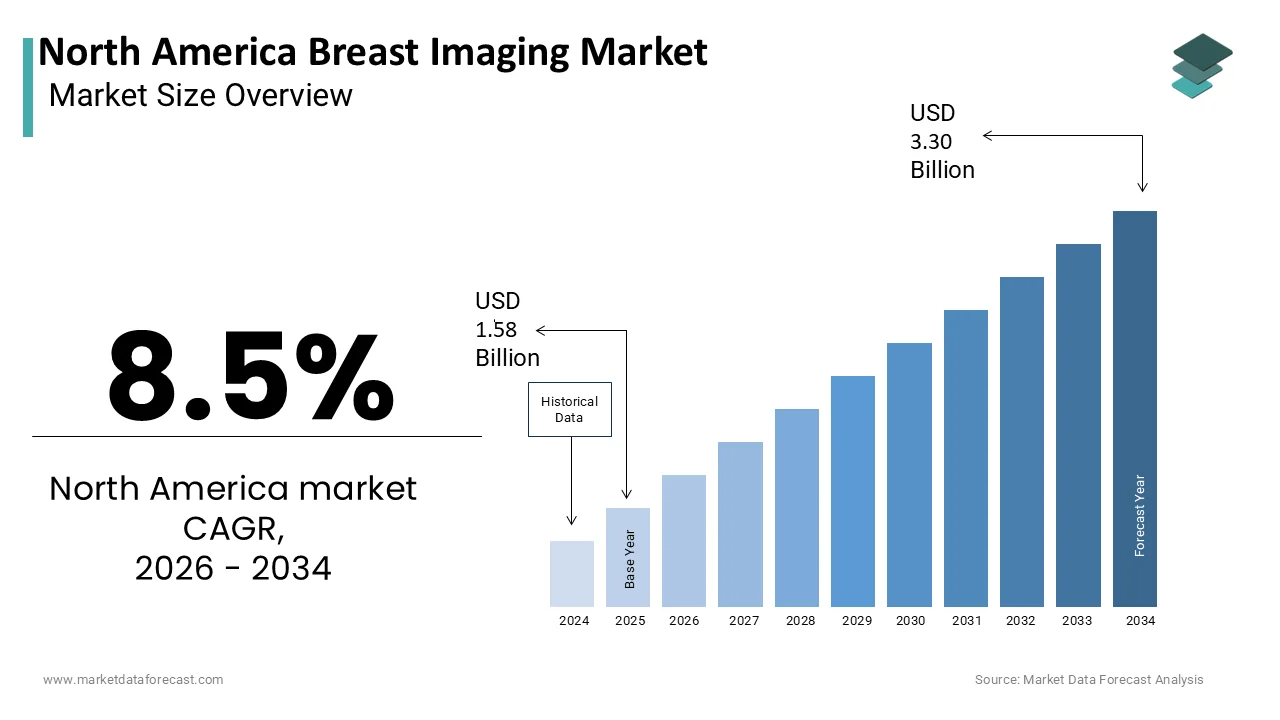
The North America Breast Imaging Market was valued at USD 1.58 billion in 2025 and is projected to reach USD 3.30 billion by 2034, growing from USD 1.72 billion in 2026 at a CAGR of 8.50% during the forecast period. Growth is driven by expanded breast cancer screening guidelines, increasing adoption of advanced imaging technologies, and rising awareness of early breast cancer detection. However, reimbursement uncertainties for supplemental imaging, radiologist workforce shortages, and high equipment replacement costs continue to restrain market growth.
Key Market Trends
- Increasing integration of artificial intelligence into breast imaging workflows to improve diagnostic accuracy and efficiency.
- Growing adoption of risk-stratified screening approaches beyond age-based screening protocols.
- Rising implementation of dense breast notification legislation, driving demand for supplemental imaging modalities.
- Expansion of automated whole breast ultrasound (AWBU) to improve workflow efficiency and address workforce shortages.
- Increasing focus on workflow automation and software-enabled imaging platforms to enhance productivity.
Segmental Insights
- Based on technology, 3D mammography (digital breast tomosynthesis) held the largest market share in 2025, driven by its superior cancer detection rates, reduced patient recalls, widespread reimbursement support, and established position as the standard of care across North America.
- Automated Whole Breast Ultrasound (AWBU) is the fastest-growing technology segment, projected to register a CAGR of 18.4%, driven by increasing breast density notification mandates, demand for supplemental screening, and improved operational efficiency.
Regional Insights
- United States led the market in 2025, accounting for 88.4% of the North American market, supported by expanded screening guidelines, advanced healthcare infrastructure, widespread AI adoption, and favorable reimbursement policies.
- Canada holds a significant share, driven by its publicly funded healthcare system, coordinated provincial screening programs, increasing adoption of advanced imaging technologies, and growing focus on workflow automation.
- Canada is expected to witness steady growth, supported by expanding screening eligibility, public healthcare investments, and increasing implementation of AI-enabled breast imaging solutions.
Competitive Landscape
The market is highly competitive, with leading medical imaging companies competing through AI-enabled imaging platforms, workflow automation, advanced breast imaging technologies, and integrated enterprise imaging solutions. Companies are investing in software innovation, strategic partnerships, regulatory alignment, automated imaging systems, and public-sector collaborations to strengthen their market position across North America.Prominent players in the market include Hologic, Inc., GE HealthCare Technologies Inc., Siemens Healthineers AG, Philips Healthcare, Fujifilm Holdings Corporation, Gamma Medica, Inc., Toshiba Corporation, Sonociné, Inc., Aurora Imaging Technology, Inc., and Dilon Technologies, Inc.
North America Breast Imaging Market Size
The North America Breast Imaging Market is projected to grow from USD 1.58 billion in 2025 to USD 1.72 billion in 2026 and reach USD 3.30 billion by 2034, registering a CAGR of 8.5% from 2026 to 2034.
Breast imaging means using medical tests to take pictures of the inside of the breasts. Doctors use these pictures to screen for health problems like cancer, check a lump, or look at changes in the tissue. This domain is fundamentally defined by the integration of digital mammography, digital breast tomosynthesis, automated whole breast ultrasound, contrast-enhanced spectral imaging, and molecular breast imaging into comprehensive cancer care pathways guided by evidence-based risk stratification protocols. According to the American Cancer Society, approximately 310720 new cases of invasive breast cancer were diagnosed in women across the United States in 2024, underscoring the critical volume of imaging examinations required for initial detection and staging. As per the Canadian Task Force on Preventive Health Care, public health models projected that an estimated 30,500 women would be diagnosed with breast cancer nationwide in 2024, expanding clinical demand for diagnostic and screening imaging infrastructure. Consequently, this market functions as the primary technological interface between population-level public health mandates and individualized precision oncology, requiring continuous adaptation to evolving clinical evidence, reimbursement policies, and patient-centered care expectations across two distinct national healthcare systems.
MARKET DRIVERS
Expanded Screening Guidelines Increase Eligible Population Volume
The revision of federal screening recommendations serves as the most immediate structural driver of imaging utilization across the region, which propels the North America breast imaging market. This updated policy lowers the recommended starting age for routine mammography. According to clinical screening infrastructure frameworks, expanding biennial mammography protocols to include average-risk women in their 40s significantly broadens the domestic screening base and increases long-term healthcare utilization volumes. As per the U.S. Preventive Services Task Force, official recommendations issued in April 2024 lower the baseline screening initiation threshold to age 40, removing cost barriers for medical diagnostic programs across major preventive healthcare networks. According to the Canadian Task Force on Preventive Health Care, modernized breast cancer screening review frameworks establish updated medical observation guidelines to evaluate preventative intervention parameters across regional healthcare systems. This synchronized policy shift across both nations transforms what was previously discretionary or risk-based screening for younger women into standard population-level practice, creating sustained baseline demand growth independent of technological innovation cycles or marketing efforts.
Dense Breast Notification Legislation Mandates Supplemental Imaging Discussions
State and provincial legislative mandates requiring disclosure of breast density information to patients following mammography have institutionalized supplemental imaging conversations that fuel the growth of the North American breast imaging market. This drives the adoption of adjunctive modalities beyond standard mammography. According to sources, state-level health mandates historically dictated fragmented tissue identification and notification laws across regional primary care frameworks. As per Radiology, direct communication workflows concerning tissue density increase consumer intent to seek secondary screening procedures like automated breast ultrasound and abbreviated MRI. According to studies, the federal policy was enacted as part of the Fiscal Year 2020 Consolidated Appropriations Act, directing standard reporting language in mammography reports nationwide. The regulatory infrastructure transforms breast density from incidental radiological observation into an actionable clinical variable triggering downstream imaging utilization regardless of payer coverage policies, as informed patient demand creates pressure on providers to offer supplemental options even when reimbursement remains uncertain.
MARKET RESTRAINTS
Reimbursement Uncertainty Suppresses Supplemental Modality Adoption
Inconsistent and often absent insurance coverage creates significant financial barriers limiting widespread adoption of advanced imaging modalities across the region, which impedes the expansion of the North America breast imaging market. This is despite clinical evidence supporting supplemental screening for dense breasts. According to the U.S. Food and Drug Administration (FDA) Mammography Quality Standards Act (MQSA) final rule implemented in September 2024, facilities nationwide must provide standardized breast density notifications to patients, while private insurance mandates for supplemental screening ultrasound continue to vary state by state. As per Centers for Medicare & Medicaid Services (CMS) policy, Medicare covers diagnostic breast ultrasounds when medically necessary to evaluate a mammogram abnormality. In Canada, provincial health plans vary dramatically in coverage. The reimbursement fragmentation means that technological capability and clinical indication frequently fail to translate into actual utilization, constraining market realization to affluent populations and well-insured cohorts while perpetuating disparities in early detection outcomes across socioeconomic strata.
Radiologist Workforce Shortage Limits Interpretation Capacity
A shortage of certified breast imaging experts inhibits the growth of the North American breast imaging market. It also stops the market from handling higher screening volumes caused by new guidelines and density rules. According to American College of Radiology and Society of Breast Imaging workforce data, expanding clinical demands from population aging and rising screening compliance drive the active demand for breast imaging subspecialists across major healthcare systems. As per According to Canadian Institute for Health Information (CIHI) and Canadian Association of Radiologists reports, medical imaging staff shortages and rising service volumes contribute to extended wait times across provincial diagnostic networks. Training pipeline constraints exacerbate the shortage. Burnout accelerates attrition as existing specialists face unsustainable reading loads. Unlike equipment procurement, which can be accelerated through capital investment, physician training requires decade-long lead times, meaning supply cannot elastically respond to demand shocks created by policy changes, creating a persistent bottleneck constraining market growth regardless of technological availability or patient willingness to undergo screening.
MARKET OPPORTUNITIES
Artificial Intelligence Integration Enhances Workflow Efficiency and Diagnostic Accuracy
Machine learning algorithms embedded within breast imaging platforms offer a transformative opportunity for the North American breast imaging market. This helps to simultaneously address workforce shortages and improve detection performance through computer-aided triage and interpretation support. According to Nature Medicine, artificial intelligence tools are actively being integrated into clinical workflows to optimize case-reading efficiency and safely manage radiologist workloads. As per clinical deployment data published in Radiology: Artificial Intelligence, healthcare networks utilize artificial intelligence algorithms to triage normal screening mammograms, accelerating overall case processing timelines and improving workflow throughput. As algorithms mature from standalone decision support to integrated workflow orchestration tools, they enable existing radiologists to handle higher volumes with maintained or improved accuracy, converting workforce constraint from an absolute barrier into a manageable operational challenge while simultaneously enhancing the value proposition for healthcare systems seeking productivity gains alongside quality improvements.
Risk Stratified Screening Personalizes Resource Allocation Beyond Age-Based Protocols
The transition from uniform age-based screening toward individualized risk-adapted protocols unlocks the potential of imaging technologies, which are likely to accelerate the expansion of the North America breast imaging market. These technologies align with precision prevention paradigms gaining traction across regional health systems. As per the National Cancer Institute, clinicians utilize the Breast Cancer Risk Assessment Tool to calculate a woman's individual risk based on personal, reproductive, and medical histories to guide customized imaging strategies. According to results from the WISDOM 1.0 trial presented at the San Antonio Breast Cancer Symposium, a personalized, risk-based screening approach is safe and as effective at detecting tumors as annual screening while reducing screening burdens for average-risk women. According to Ontario Health, the Ontario Breast Screening Program expanded its eligibility criteria in October 2024 to allow average-risk individuals aged 40 to 49 to self-refer for publicly funded screening mammograms. This paradigm shift repositions breast imaging from a commodity service delivered uniformly to a differentiated intervention calibrated to individual biology, enabling premium pricing for risk-appropriate advanced modalities while reducing wasteful overscreeningin low-riskopulations. Vendors developing integrated risk assessment and imaging recommendation platforms are positioned to capture value from this transition toward precision prevention.
MARKET CHALLENGES
False Positive Rates Generate Patient Harm and System Costs
Persistent false positive findings in screening mammography create substantial downstream consequences, including unnecessary biopsies, psychological distress, and avoidable healthcare expenditures, which challenge the expansion of the North America breast imaging market. These consequences undermine confidence in screening programs and constrain market acceptance. According to the Breast Cancer Surveillance Consortium data published in JAMA Network Open, the 10-year cumulative probability of experiencing at least one false-positive screening recall remains over 49% for women undergoing annual digital breast tomosynthesis. As per Health Affairs, follow-up examinations and biopsies from false-positive mammograms represent significant healthcare expenditures that influence capital resource allocation across North American diagnostic clinics. Psychological impact compounds economic burden. According to the Canadian Partnership Against Cancer, provincial screening initiatives actively monitor screen-detected recall metrics to refine quality indicators and optimize institutional throughput within regional imaging networks. Reducing false positives without sacrificing sensitivity remains an unsolved technical challenge limiting broader screening acceptance and creating vulnerability to criticism from advocacy groups questioning the net benefit of population-level screening despite mortality reduction evidence.
Technological Obsolescence Accelerates Capital Replacement Pressure
The rapid evolution of breast imaging technology creates perpetual upgrade cycles, which forces facilities to replace functional equipment prematurely and thereby limits the growth of the North America breast imaging market. This constant need to maintain competitive parity and meet evolving accreditation standards strains capital budgets, particularly in community and rural settings. According to ECRI clinical technology guidelines, healthcare facilities face replacement demands as hardware lifecycles for complex digital breast tomosynthesis systems require structured capital planning to sustain advanced diagnostic applications. Rural hospitals face a disproportionate burden. As per the U.S. Government Accountability Office, geographical disparities persist in rural healthcare networks where equipment distribution balances demographic demand profiles. According to sources, clinical facilities increasingly employ lease structures to preserve operational capital and hedge against rapid technological obsolescence. The acceleration of obsolescence cycles transforms breast imaging from a stable capital asset into a recurring technology subscription, challenging financial sustainability for lower-volume providers serving medically underserved populations where return on investment horizons exceed equipment refresh timelines.
REPORT COVERAGE
| REPORT METRIC | DETAILS |
| Market Size Available | 2025 to 2034 |
| Base Year | 2025 |
| Forecast Period | 2026 to 2034 |
| Segments Covered | By Technology and Region. |
| Various Analyses Covered | Global, Regional and Country-Level Analysis, Segment-Level Analysis, Drivers, Restraints, Opportunities, Challenges; PESTLE Analysis; Porter’s Five Forces Analysis, Competitive Landscape, Analyst Overview of Investment Opportunities |
| Countries Covered | United States, Canada |
| Market Leaders Profiled | Hologic, Inc., GE HealthCare Technologies Inc., Siemens Healthineers AG, Philips Healthcare, Fujifilm Holdings Corporation, Gamma Medica, Inc., Toshiba Corporation, Sonociné, Inc., Aurora Imaging Technology, Inc., Dilon Technologies, Inc. |
SEGMENTAL ANALYSIS
By Technology Insights
The 3D mammography segment dominated the North American breast imaging market and accounted for a substantial share in 2025. It became the standard of care for screening and diagnostic exams in the United States and Canada. Also known as digital breast tomosynthesis, 3D mammography continues to grow. According to the Breast Cancer Surveillance Consortium benchmark updates, digital breast tomosynthesis continues to shift standard radiology practices by expanding its presence as the baseline screening modality at accredited U.S. facilities. This dominance is driven by robust clinical evidence demonstrating superior cancer detection and reduced recall rates. As per clinical outcome data published in Radiology, digital breast tomosynthesis improves overall cancer detection profiles and reduces patient recall rates relative to traditional full-field digital mammography alone. Furthermore, according to the Centers for Medicare & Medicaid Services, established procedural reimbursement codes allow medical centers to submit billing for screening and diagnostic digital breast tomosynthesis. As per facility evaluation standards, advanced medical imaging centers integrate modern tomosynthesis units to align with rigorous clinical quality and national healthcare performance metrics.
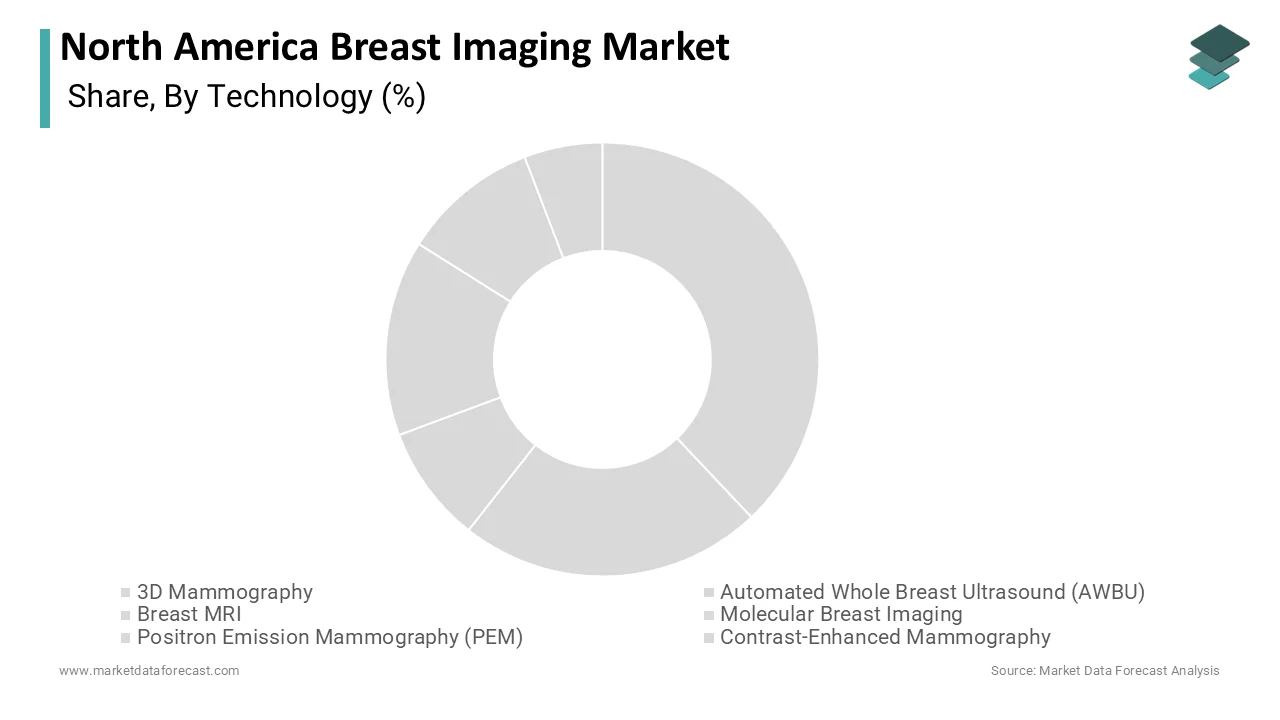
The near-universal installation base of digital breast tomosynthesis systems across North American imaging centers creates self-reinforcing market leadership through installed base momentum and mandatory technology refresh cycles. According to studies, independent clinics and major medical institutions actively upgrade equipment fleets to replace aging first-generation digital mammography systems. As per the U.S. Food and Drug Administration (FDA) Mammography Quality Standards Act final rule implemented in September 2024, screening providers must issue standardized, clear breast density notifications directly to patients. Vendor business models have adapted to this mature market reality by offering trade-in programs and software subscription packages that lower upgrade barriers while locking customers into proprietary ecosystems. According to IndexBox, major provincial ministries face steady capital equipment replacement demands to modernise breast imaging resources across public clinical networks. The infrastructure ubiquity means that tomosynthesis volume dominance reflects irreversible structural transformation rather than temporary competitive advantage, with future market dynamics centered on software-enabled differentiation including AI integration and risk stratification tools rather than hardware displacement by alternative modalities.
The automated whole breast ultrasound (AWBU) segment is predicted to witness the highest CAGR of 18.4% between 2026 and 2034, due to legislative mandates requiring breast density notification and subsequent supplemental screening discussions for millions of women across North America. AWBU addresses critical workflow limitations of handheld ultrasound by standardizing image acquisition through operator-independent automated scanning, enabling technologist-performed examinations that do not require real-time radiologist presence during acquisition. According to the American Journal of Roentgenology, automated breast ultrasound matches manual handheld examinations in cancer screening sensitivity while mitigating scan variability. As per the American College of Radiology (ACR) Appropriateness Criteria, secondary supplemental modalities are evaluated for average, intermediate, and high-risk patients who possess dense breast tissue. As state-level insurance coverage mandates expand and federal density reporting requirements take effect, AWBU captures a disproportionate share of supplemental screening volume due to scalability advantages over labor-intensive handheld alternatives constrained by radiologist availability.
Healthcare systems facing chronic sonographer and radiologist shortages increasingly adopt automated whole breast ultrasound as an operational solution enabling supplemental screening capacity expansion without proportional staffing increases. According to research, imaging facilities navigate widespread staffing shortfalls that influence operational capacity for diagnostic and supplemental ultrasound procedures. AWBU systems decouple image acquisition from interpretation expertise, allowing general radiology technologists to perform standardized scans after brief cross-training while preserving limited breast imaging specialist time for complex diagnostic cases and biopsy procedures. As per sources, health networks adopt automated ultrasound arrays to scale up patient screening capacity and optimize existing clinical support personnel. Workforce shortages persist, and supplemental screening demand grows after density notification implementation. Because of this, AWBU's operational efficiency advantages lead directly to market share gains over modalities that need scarce specialized personnel.
COUNTRY LEVEL ANALYSIS
United States breast imaging market Analysis
The United States led the North America breast imaging market and captured an 88.4% share in 2025. This leading position of the US market was attributed to its functioning as the undisputed regional leader through a combination of population scale, advanced reimbursement infrastructure, and concentrated technological innovation activity. According to the Centers for Medicare and Medicaid Services, contractors process over one billion Medicare claims annually, establishing extensive medical volume benchmarks that influence vendor production pipelines for preventive health systems. As per the U.S. Preventive Services Task Force, finalized clinical guidelines updated in April 2024 advise all women to begin biennial breast cancer screening at age 40, expanding medical service eligibility under preventive care insurance coverages. According to the U.S. Food and Drug Administration, domestic regulatory pathways clearance databases reflect that radiology maintains a leading share of all AI-enabled medical device authorizations, accelerating software commercialization trends across clinical care markets. However, significant geographic disparities persist. As per the U.S. Food and Drug Administration, nationwide mammography facility oversight updates enforce enhanced clinical quality standards across the medical infrastructure to optimize diagnostic screening protocols. Federal density reporting mandates effective September 2024 harmonized previously fragmented state requirements, creating a uniform national framework for supplemental imaging utilization that further consolidates U.S. market leadership through regulatory standardization.
Canada breast imaging market Analysis
Canada is also a key player in the North America breast imaging market and accounted for an 11.7% share in 2025. It operates as a sophisticated secondary market distinguished by publicly funded universal healthcare delivery and coordinated provincial procurement strategies that differ fundamentally from U.S. commercial dynamics. As per regulatory guidance from Health Canada, national action plans enforce optimal health outcomes by strengthening medical device regulations and monitoring strategies across all provincial healthcare jurisdictions. Wait time challenges define Canadian market dynamics differently than U.S. capacity constraints. According to the Canadian Institute for Health Information, clinical data frameworks track the exact number of days from clinical agreement to surgical intervention, monitoring medical workflow access across regional health providers. Screening eligibility expansion followed U.S. precedent. As per draft guidance from the Canadian Task Force on Preventive Health Care, public review frameworks evaluate clinical evidence regarding breast cancer screening to establish updated national clinical guidelines for preventative primary care. Despite smaller absolute scale, Canada serves as a critical validation market for technologies addressing public system efficiency needs, influencing global product development toward workflow automation and AI triage solutions applicable to resource-constrained environments worldwide.
TOP LEADING PLAYERS IN THE MARKET
- Hologic Inc maintains foundational influence across North America breast imaging through its comprehensive digital breast tomosynthesis portfolio that established clinical and operational standards for 3D mammography adoption. The company strengthened its position by launching Genius AI Detection software with FDA clearance in early 2024, integrating computer-aided detection directly into tomosynthesis workflow to address radiologist shortage challenges while maintaining diagnostic accuracy benchmarks. Hologic actively participates in U.S. Preventive Services Task Force evidence review processes, ensuring alignment between product capabilities and evolving screening guidelines that drive reimbursement eligibility. Its installed base exceeding 15000 systems across North America creates ecosystem lock-in through proprietary synthetic reconstruction technology and service contracts. Recent partnerships with major health systems including Kaiser Permanente enable real-world validation of AI triage workflows demonstrating throughput improvements that justify premium pricing amid hospital capital constraints. This combination of regulatory engagement, clinical evidence generation, and workflow integration sustains leadership through structural advantages beyond hardware specifications alone.
- GE HealthCare contributes significantly to North America breast imaging through a diversified modality portfolio spanning mammography, ultrasound, and molecular imaging platforms serving diverse facility types from academic centers to community hospitals. The company reinforced market presence by introducing the Senographe Pristina Via system in late 2023, featuring enhanced patient comfort design and integratedAI-assistedd positioning that reduces technologist workload and examination retake rates according to multi-site clinical evaluations. GE HealthCare leverages existing enterprise imaging infrastructure relationships to cross-sell breast imaging upgrades within broader PACS and RIS modernization projects, creating bundled value propositions competitors cannot replicate. Strategic focus on automated whole breast ultrasound addresses supplemental screening demand driven by density notification mandates while mitigating sonographer shortage constraints through standardized acquisition protocols. Partnerships with Canadian provincial health authorities facilitated coordinated tomosynthesis deployments, achieving 95 percent public sector penetration by 202,3 according to Canadian Association of Radiologists equipment surveys. This enterprise integration strategy combined with public sector procurement expertise enables sustained relevance across both commercial and government-funded segments despite intense specialization pressure from focused competitors.
- Siemens Healthineers advances North America breast imaging through technological differentiation in contrast-enhanced spectral mammography and molecular breast imaging modalities targeting complex diagnostic cases beyond standard screening applications. The company strengthened its position by obtaining FDA approval for an updated Somatom On Site CT platform in mid-2024, enabling dedicated breast cone beam computed tomography with reduced radiation dose and improved soft tissue contrast for preoperative staging and implant evaluation. Siemens Healthineers invests heavily in artificial intelligence research through partnerships with Memorial Sloan Kettering Cancer Center and Mayo Clinic, generating peer-validated algorithms addressing specific clinical pain points, including axillary lymph node assessment and treatment response monitoring. Focus on multimodality integration allows seamless data flow between MRI, PET CT, and mammography systems,s supporting multidisciplinary tumor board workflows increasingly required for personalized treatment planning. Expansion of U.S. based R&D facilities in Massachusetts and California accelerates regulatory submission timelines and ensures product development reflects North American clinical priorities rather than global platform adaptation. This innovation-led positioning captures premium segment demand where clinical complexity justifies advanced technology investment despite higher acquisition costs relative to commodity screening equipment.
TOP STRATEGIES USED BY KEY MARKET PARTICIPANTS
Key players pursue regulatory alignment strategies, actively participating in guideline development processes to ensure product capabilities match evolving screening recommendations and reimbursement criteria. Companies increasingly integrate artificial intelligence directly into acquisition and interpretation workflows rather than offering standalone tools, embedding value propositions within mandatory upgrade cycles and reducing adoption friction. Vendors develop modular upgrade pathways enabling legacy system enhancement without full replacement, addressing capital budget constraints while maintaining recurring revenue streams through software subscriptions and service contracts. Strategic partnerships with academic medical centers generatereal-worldd evidence publications validating clinical utility and supporting regulatory submissions for novel indications. Market leaders expand automated and technologist-operated modalities to mitigate workforce shortages, repositioning products as operational solutions rather than purely diagnostic instruments. Public sector procurement engagement, particularly in Canada, enables volume commitments offsetting lower unit margins through predictable demand visibility. Cross-modality integration strategies leverage existing enterprise imaging relationships to bundle breast imaging within broader system modernization projects, creating competitive moats against specialized single-modality vendors lacking infrastructure connectivity.
COMPETITIVE LANDSCAPE
Competition in the North America breast imaging market is characterized by oligopolistic dynamics among three dominant manufacturers controlling the vast majority of the installed base alongside emerging niche players targeting underserved clinical segments. Incumbent advantage stems from regulatory approvals, clinical evidence libraries, and service networks, creating substantial entry barriers for new entrants despite technological innovation opportunities. Competitive differentiation increasingly centers onsoftware-enabledd workflow efficiency and AI integration rather than hardware specifications as core tomosynthesis technology matures toward commoditization. Reimbursement policy changes serve as primary competitive catalysts, with vendors aligning product development and marketing to USPSTF updates and CMS coverage determinations that dictate market access. Workforce shortage pressures reshape competition toward automation and task-shifting capabilities, enabling facilities to maintain throughput despite staffing constraints. Canadian public procurement creates a distinct competitive arena where price negotiation and provincial relationship management outweigh commercial marketing effectiveness. Emerging modalities including contrast-enhanced mammography and molecular imaging create battlegrounds for premium segment share where clinical differentiation remains possible before standardization erodes margins. Success requires balancing technological innovation with regulatory compliance, reimbursement alignment, and operational integration; pure technical superiority no longer guarantees commercial viability in a mature market environment governed by systemic healthcare delivery constraints.
KEY MARKET PLAYERS
Some of the companies that are playing a dominating role in the North America Breast Imaging Market include:
- Hologic, Inc.
- GE HealthCare Technologies Inc.
- Siemens Healthineers AG
- Philips Healthcare
- Fujifilm Holdings Corporation
- Gamma Medica, Inc.
- Toshiba Corporation
- Sonociné, Inc.
- Aurora Imaging Technology, Inc.
- Dilon Technologies, Inc.
MARKET SEGMENTATION
This research report on the North America breast imaging market is segmented and sub-segmented into the following categories.
By Technology
- 3D Mammography
- Automated Whole Breast Ultrasound (AWBU)
- Breast MRI
- Molecular Breast Imaging
- Positron Emission Mammography (PEM)
- Contrast-Enhanced Mammography
- Others
By Country
- United States
- Canada