- Product Description Description
- Table of Contents TOC
- List of Table & Figure LOT
- Get Free Sample PDF Sample PDF
Market Size, 2025
$1.47 BnMarket Estimate, 2026
$1.53 BnMarket Forecast, 2034
$2.14 BnCAGR, 2026–2034
4.26%North America Cage Free Eggs Market Size
The North America cage free eggs market size was valued at USD 1.47 billion in 2025 and is projected to reach USD 2.14 billion by 2034 from USD 1.53 billion in 2026, growing at a CAGR of 4.26%.
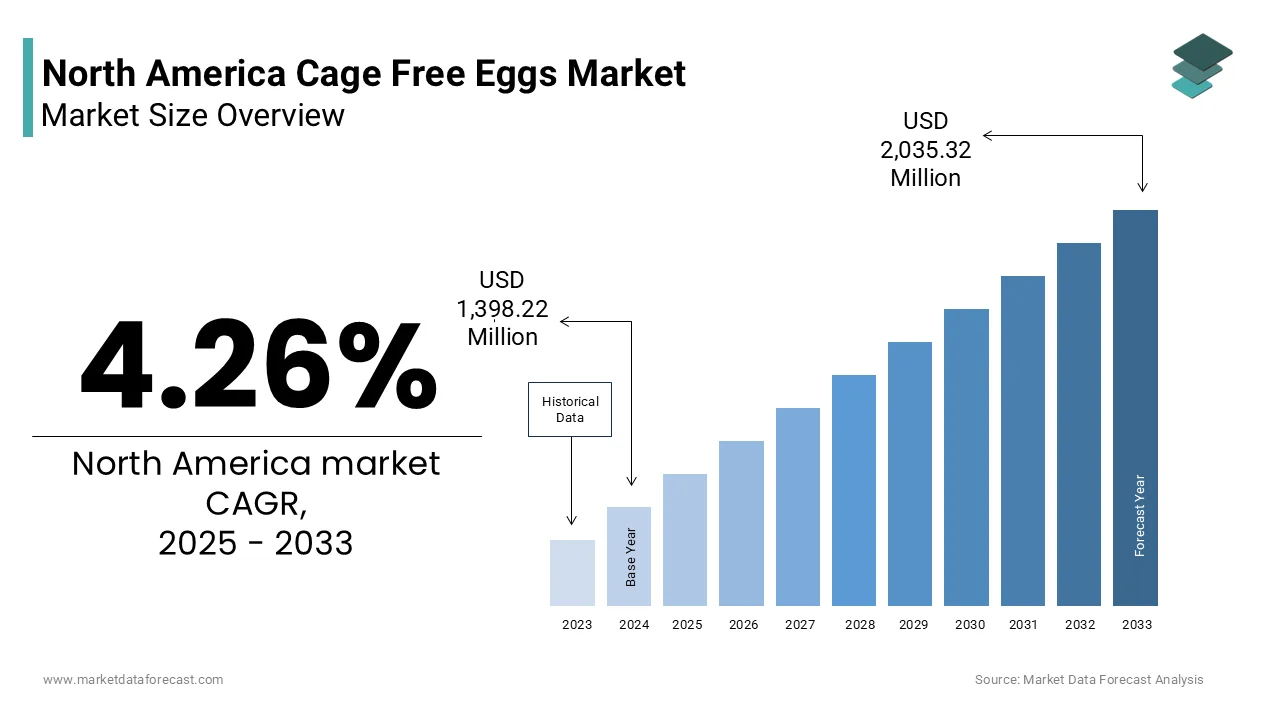
The cage-free eggs are raised in open barn systems or free-range environments where they can move freely within a controlled space. According to the United States Department of Agriculture (USDA), cage-free egg production in the U.S. accounted for over 35% of total egg output in 2024 by marking a substantial increase from just 8% in 2016. According to the Canadian Food Inspection Agency (CFIA) report, over 25% of laying hens in Canada were kept in cage-free settings, which reflects a comparable transition in the country by early 2024. This transition is being driven by evolving retail commitments and regulatory changes. Moreover, the growing presence of ethical consumers and rising influence of social advocacy groups have contributed to a broader cultural shift toward humane food sourcing.
MARKET DRIVERS
Consumer Demand for Ethical and Sustainable Food Choices
The growing consumer preference for ethically produced, and transparently sourced food products is propelling the growth of the North America cage-free egg market share in 2024. According to a 2024 survey conducted by NielsenIQ, nearly 68% of U.S. consumers indicated that they actively seek out cage-free egg labels when making purchasing decisions. According to a 2023 survey by the University of Guelph's Animal Welfare Research Centre, more over 60% of Canadians believed cage-free systems offered hens better living circumstances than conventional caged settings. Furthermore, according to the Center for a Humane Economy, cage-free egg sales in the United States increased by 12% annually in 2024, surpassing the growth of the overall egg market.
Regulatory Mandates and Retailer Commitments Accelerating Industry Transition
The implementation of regulatory mandates and strong commitments from major food retailers and restaurant chains to phase out cage-based egg sourcing are propelling the growth of the North America cage-free eggs market. According to the California Department of Food and Agriculture, the state's cage-free egg output increased by 20% as a result of this law's implementation. The Egg Farmers of Canada indicated an intentional attempt to follow international patterns in late 2023 when they revealed a nationwide strategy to convert 50% of their hen houses to cage-free systems by 2027. These policy shifts and corporate pledges are compelling producers to invest in infrastructure upgrades and alternative housing models, which is significantly accelerating the transition toward cage-free production across North America.
MARKET RESTRAINTS
Higher Production Costs Associated with Cage-Free Farming Systems
The high production costs associated with transitioning from conventional caged systems to cage-free operations is a significant factor restricting the growth of the North American cage-free egg market. According to the U.S. Poultry & Egg Association, cage-free egg production incurs an average cost increase of 15–20% per dozen eggs compared to traditional caged systems. Increased labor requirements, bigger facility footprints, higher feed efficiency requirements, and heightened vulnerability to disease outbreaks in open-environment settings are the causes of these higher costs. According to 2024 research by the University of California Agricultural Issues Center, operational expenses for California egg farmers increased by $1.2 billion year. These financial pressures are often passed on to consumers in the form of higher retail prices, which can limit market penetration among budget-conscious shoppers. Furthermore, the American Farm Bureau Federation noted that small-scale egg producers struggle disproportionately with the capital investment required to retrofit existing facilities for cage-free compliance. Many independent farmers have either exited the industry or consolidated into larger cooperatives, which has reduced market diversity and slowing the pace of adoption in certain regions.
Supply Chain Disruptions Impacting Cage-Free Egg Availability and Distribution
The supply chain instability is another significant factor slowing down the North American cage-free egg market. According to the U.S. Department of Agriculture (USDA), cage-free hen placements in 2023 fell short of projected demand by approximately 12%, primarily due to limited pullet supply and breeding constraints at major hatcheries. According to the National Chicken Council, in 2024, a number of large cage-free egg producers had difficulties in the delivery of young hens, which disrupted with scheduled flock transforms and delayed market readiness. Feed shortages exacerbated the situation with corn and soybean price volatility affecting feed formulation and availability, especially in Midwestern egg-producing states. According to the Canadian Livestock Transport Association, long delivery times for cage-free eggs were caused by regional trucking shortages and traffic jams at border crossings, especially during the busiest times of the year. These disruptions not only hindered consistent product availability but also affected retailer confidence in relying solely on cage-free supplies.
MARKET OPPORTUNITIES
Expansion of Plant-Based and Alternative Protein Partnerships Enhancing Market Reach
The integration of cage-free eggs into plant-based and alternative protein formulations is prompting new opportunities for the North American cage-free eggs market. In order to cater to both vegan and flexitarian customers, companies such as Just Egg and Follow Your Heart have started introducing cage-free liquid egg products into their hybrid offers. According to 2024 research by the Canadian Agri-Food Automation and Intelligence Network (CAAIN), a number of businesses in British Columbia and Ontario were creating prototypes of cultured and blended eggs utilizing cage-free sources in order to satisfy sustainability and clean-label requirements. This convergence between traditional and alternative proteins opens new revenue streams for cage-free egg producers seeking diversified markets beyond retail and foodservice. Additionally, partnerships between cage-free egg suppliers and major food tech firms have facilitated co-branding initiatives that promotes ethical sourcing.
Institutional Procurement Programs Driving Large-Scale Adoption
The increasing participation of institutional procurement programs in schools, hospitals, and government agencies that are implementing cage-free egg policies to support ethical sourcing and public health objectives is another major an opportunity in the North American cage-free egg market. According to the Healthcare Sustainability Purchasing Coalition report, more than 40% of U.S. hospital networks had updated their procurement policies to include cage-free egg requirements in 2024, which helps in recognizing the link between ethical sourcing and patient well-being. Institutions such as Harvard University and Kaiser Permanente have been vocal leaders in this movement, which have influenced broader supplier commitments across the food service sector. These large-scale procurement initiatives offer a reliable outlet for cage-free egg producers and signal a structural shift in how institutional food buyers evaluate sourcing criteria, which provides the market a potent growth driver.
MARKET CHALLENGES
Disease Outbreaks and Biosecurity Concerns in Cage-Free Housing Systems
The increasing the risk of disease transmission and biosecurity threats associated with non-caged hen housing systems are the two major challenges facing by the North America cage-free market. Hens in cage-free barns are more susceptible to diseases like Salmonella and avian influenza since they are free to roam around. According to the Canadian Food Inspection Agency (CFIA), cage-free egg farms in British Columbia and Alberta had twice as many illness incidences in 2023 than conventional farms. This was mostly because cage-free farms had more interaction with wild birds and polluted surfaces. These outbreaks not only result in significant financial losses for producers but also lead to temporary supply shortages and regulatory scrutiny. To mitigate these risks, farmers must invest in advanced ventilation systems, pest control measures, and stricter hygiene protocols, all of which add to operational complexity and costs. These biosecurity concerns continue to pose a major hurdle to the scalability and reliability of cage-free egg production across North America.
Consumer Price Sensitivity Limiting Mass Market Penetration
The high cost of cage-free eggs prevents their wide adoption, especially among lower-income households, and price sensitivity among consumers continues to be an issue for the North American cage-free egg market. According to a 2024 study conducted by the Economic Research Service (ERS) of the USDA, cage-free eggs typically retail at 25–35% higher prices than conventional caged eggs which creates a barrier to entry for budget-conscious consumers. Additionally, according to the Consumer Reports National Research Center, almost 60% of respondents said they would choose cage-free eggs if the price difference was lowered by 10% or less.
REPORT COVERAGE
| REPORT METRIC | DETAILS |
| Market Size Available | 2025 to 2034 |
| Base Year | 2025 |
| Forecast Period | 2026 to 2034 |
| CAGR | 4.26% |
| Segments Covered | By Color, Size, and Region |
|
Various Analyses Covered | Regional & Country Level Analysis, Segment-Level Analysis, DROC, PESTLE Analysis, Porter’s Five Forces Analysis, Competitive Landscape, Analyst Overview on Investment Opportunities |
| Regions Covered | The United States, Canada, Mexico, and Rest of North America |
| Market Leaders Profiled | Eggland’s Best LLC, Cal Maine Foods, Inc, Herbruck’s Poultry Ranch, Inc, Rembrandt Enterprises, Rose Acre Farms, Hillandale Farms, Trillium Farm Holdings, LLC, Midwest Poultry Services, L.P, Hickman’s Family Farms, Sparboe Farms, and others |
SEGMENTAL ANALYSIS
By Color Insights
The white cage-free egg segment dominated the market by capturing 58.4% of North America Cage-free Egg market share in 2024 with the longstanding consumer familiarity and preference for white eggs in major U.S. markets such as California, New York, and Florida. According to data from the American Egg Board, white-shelled eggs have historically been more prevalent in U.S. grocery stores due to the widespread use of White Leghorn hens, which are known for their high feed efficiency and consistent egg production.
The brown cage-free egg segment is predicted to witness a CAGR of 9.7% from 2025 and 2033 owing to the shifting consumer perceptions linking brown eggs with organic, natural, or ethically produced food products. This association has grown as a result of marketing campaigns and social media impact. According to a 2024 study published by Dalhousie University’s Agri-Food Analytics Lab, 68% of Canadian consumers believed brown eggs were healthier than white eggs, even though there is no nutritional difference between the two. This perception has translated into increased demand, particularly in urban centers like Toronto and Vancouver. According to the Center for Food Integrity, brown egg sales rose by 14% year-on-year in 2024, which is driven by driven by premium branding strategies and retailer promotions positioning them as "farm-fresh" or "naturally raised."
By Size Insights
The large cage-free egg size segment dominated and held 42.8% of the North America Cage-Free Eggs market share in 2024. Large eggs remain the standard in most retail packaging, recipes, and foodservice applications making them the most commonly purchased size across both household and commercial buyers. According to the USDA’s Economic Research Service (ERS), large eggs accounted for nearly half of all shell egg purchases in the United States in 2023, with cage-free versions following a similar distribution pattern. Versatility in baking, breakfast meals, and ready-to-eat formats makes them a staple choice for consumers and manufacturers alike. Furthermore, according to a 2024 report by the Canadian Food Inspection Agency (CFIA), large-sized eggs were found in more than 60% of cage-free egg cartons sold in Canadian supermarkets. This suggests a good acceptance of recipe standards and portion control regulations in institutional settings, including restaurants and schools.
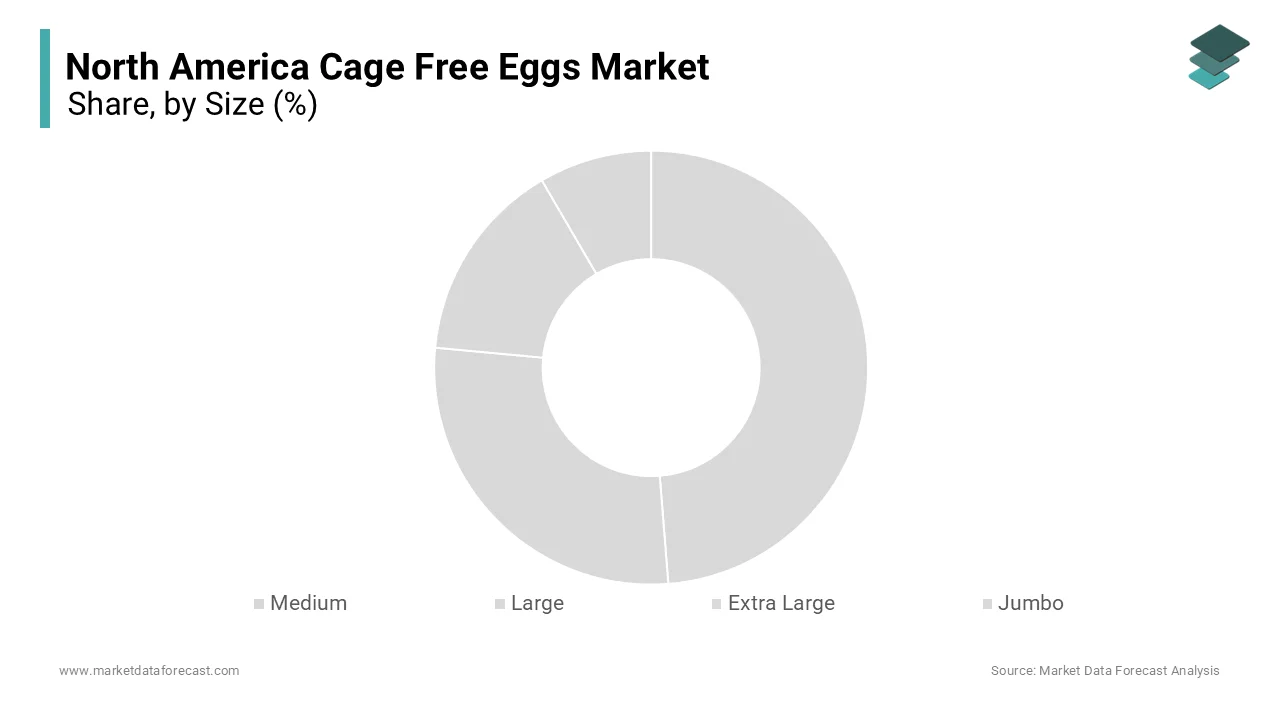
The extra-large cage-free egg segment is swiftly emerging with a CAGR of 10.1% throughout the forecast period. The growth of the segment is driven by increasing consumer interest in protein-rich diets and the rising popularity of specialty cooking methods where larger egg sizes offer distinct advantages. Fitness enthusiasts and health-conscious consumers often prefer extra-large eggs for their higher yolk-to-white ratio, which contributes to richer flavor and better texture in dishes like poached eggs, hollandaise sauce, and artisanal baked goods. According to the Egg Farmers of Canada, premium bakeries and restaurants in 2024 increased their demand for extra-large cage-free eggs, noting the eggs' exceptional results in professional kitchens where presentation and consistency are essential.
REGIONAL ANALYSIS
United States was the top performer in the region and held 82.6% of North America Cage Free Eggs market share in 2024. The U.S., the region's largest producer and consumer of eggs, has seen a dramatic change in its egg business as a result of retailer commitments, consumer advocacy, and regulatory requirements. By mandating that all eggs sold in the state originate from cage-free sources by January 2024, California's Proposition 12 significantly accelerated the country's shift to cage-free systems. According to the California Department of Food and Agriculture, this law prompted a 20% increase in cage-free hen housing across the state alone. Major U.S. foodservice operators including McDonald's, Starbucks, and Unilever have also reinforced this shift by pledging to source 100% cage-free eggs by 2025 or earlier. According to the Humane Society of the United States, more than 90% of the leading restaurant chains in the country have formally committed to being cage-free, which strengthens the market's trend toward widespread adoption.
Canada was positioned next in the North America Cage-Free Eggs market with a share of 15.4% in 2024. The country’s structured agricultural policy framework and proactive animal welfare initiatives have facilitated a measured but deliberate shift toward cage-free egg production. The national supply management organization, Egg Farmers of Canada (EFC), declared in late 2023 that it will switch to cage-free hen housing for 50% of its hens by 2027. This commitment aligns with broader international trends and reflects growing consumer demand for ethically sourced food products. Additionally, provincial governments in Ontario and Quebec introduced procurement guidelines requiring public institutions to use cage-free eggs by 2025.
KEY MARKET PLAYERS AND COMPETITIVE LANDSCAPE
key market players of North America Cage Free Eggs Market are Eggland’s Best LLC, Cal Maine Foods, Inc, Herbruck’s Poultry Ranch, Inc, Rembrandt Enterprises, Rose Acre Farms, Hillandale Farms, Trillium Farm Holdings, LLC, Midwest Poultry Services, L.P, Hickman’s Family Farms, Sparboe Farms.
The market for cage-free eggs in North America is becoming more competitive as established egg producers, new cage-free experts, and vertically integrated agribusinesses compete for market leadership in a rapidly evolving market. Established players are leveraging economies of scale and extensive distribution networks to maintain their foothold, while newer entrants are differentiating themselves through innovation, transparency, and niche positioning in premium and organic segments.
The competitive landscape has changed due to retailer commitments and legislative changes, forcing even the biggest egg producers to reconsider their business strategies. As a result, several businesses are increasing their expenditures in cage-free infrastructure, improving their traceability systems, and refining their advertising strategies to appeal to conscious customers.
Collaboration and consolidation are also becoming more prevalent as firms seek to mitigate financial risks associated with transitioning from conventional systems. Joint ventures between producers and processors along with strategic acquisitions are helping consolidate supply chain efficiencies and strengthen market presence.
Simultaneously, rising consumer awareness around animal welfare and sustainability is creating pressure not only to adopt cage-free practices but also to communicate them effectively. The competitive climate is therefore becoming more and more defined by a combination of brand integrity, operational agility, and conformity to wider cultural expectations. These factors will continue to influence the future course of the North American cage-free egg market.
TOP PLAYERS IN THE MARKET
Cal-Maine Foods
Cal-Maine Foods is the largest supplier and distributor of cage-free eggs in the United States. The company has played a pivotal role in scaling up cage-free production to meet growing consumer demand and retailer mandates.
Egg Farmers of Canada (EFC)
Egg Farmers of Canada (EFC) oversees national egg production and has been instrumental in guiding Canada’s transition toward cage-free systems. Through structured supply management and collaborative partnerships with animal welfare organizations, EFC has facilitated a balanced approach to industry transformation that aligns with both ethical standards and economic sustainability.
United Liquid Egg
United Liquid Egg, a leading processor and distributor has emerged as a key player by supplying cage-free liquid egg products to foodservice chains, manufacturers, and retailers across North America. The company supports large-scale adoption of cage-free ingredients by integrating them into ready-to-use formulations for commercial kitchens and packaged food brands by ensuring consistency and compliance at scale.
TOP STRATEGIES USED BY KEY PLAYERS
One major strategy employed by key players in the North America Cage-Free Eggs Market is strategic infrastructure investment aimed at upgrading hen housing systems and increasing cage-free production capacity. Companies are allocating significant capital to convert conventional facilities or build new cage-free barns to meet evolving retail and regulatory requirements.
Another key approach is partnering with animal welfare organizations and certification bodies to enhance credibility and ensure transparency in sourcing practices. These collaborations help companies align with industry best practices and communicate their commitment to humane treatment effectively to consumers.
The market participants are focusing on consumer education and brand positioning through targeted marketing campaigns that promotes the benefits of cage-free eggs. Companies are increasing brand loyalty and promoting wider acceptability across various customer categories by placing an intense focus on ethical sourcing, food safety, and quality.
RECENT HAPPENINGS IN THE MARKET
- In February 2024, Cal-Maine Foods announced a multi-phase expansion of its cage-free egg production facilities in Iowa and Texas which aims to increase supply availability for major grocery chains and fast-food partners committed to cage-free sourcing.
- In May 2024, McDonald's Corporation completed the nationwide rollout of cage-free eggs in all U.S. breakfast menu items ahead of its 2025 target, reinforcing its leadership in sustainable sourcing and setting an industry benchmark for others to follow.
- In July 2024, Egg Farmers of Canada (EFC) launched a public awareness campaign titled “Raised Right,” designed to educate Canadian consumers about the country’s progressive hen housing reforms and promote the growth of cage-free egg consumption.
- In September 2024, United Liquid Egg partnered with several Midwest-based cage-free egg producers to streamline logistics and improve processing efficiency which enabled faster delivery of high-quality liquid egg products to institutional and food manufacturing clients.
- In November 2024, Nestlé USA introduced a new line of frozen breakfast meals featuring exclusively cage-free eggs which align with its global sustainability goals and responding to increased consumer demand for ethically sourced ingredients.
MARKET SEGMENTATION
This research report on the North America cage free eggs market has been segmented and sub-segmented based on the following categories.
By Color
- Brown
- White
By Size
- Medium
- Large
- Extra Large
- Jumbo
By Country
- The United States
- Canada
- Rest of North America