- Product Description Description
- Table of Contents TOC
- List of Table & Figure LOT
- Get Free Sample PDF Sample PDF
Market Size, 2025
$3.44 BnMarket Estimate, 2026
$3.62 BnMarket Forecast, 2034
$5.38 BnCAGR, 2026–2034
5.10%Executive Summary: North America Industrial Dryers Market Analysis & Forecast (2026–2034)
- Market Scope: Comprehensive market analysis of the North American industrial dryers industry covering product mechanisms (direct, indirect, specialty), application sectors (chemicals, pharmaceuticals, food, cement, fertilizer), equipment types (rotary, fluidized bed, spray), and country-level frameworks (United States, Canada, Mexico).
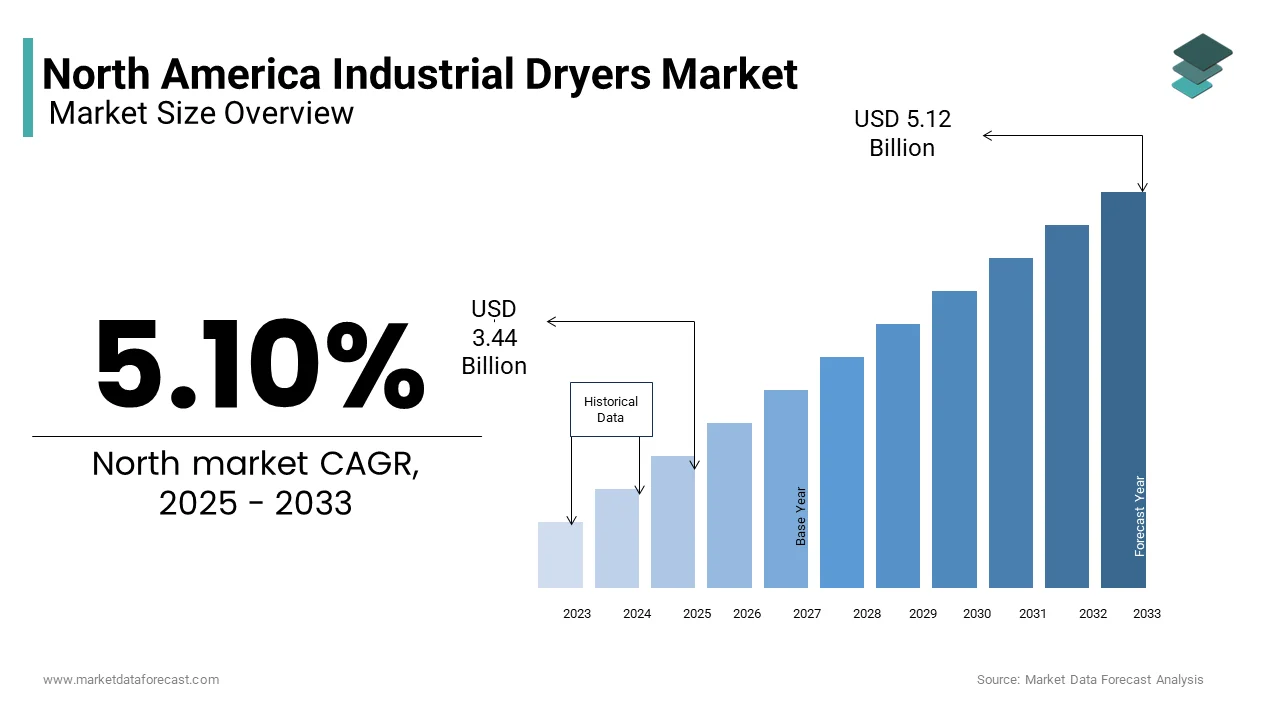
- Market Valuation: Valued at USD 3.44 billion in 2025, estimated at USD 3.62 billion in 2026, and projected to reach USD 5.38 billion by 2034, registering a compound annual growth rate (CAGR) of 5.10% (2026–2034).
- Primary Growth Drivers: Rapid expansion of agro-processing and chemical manufacturing sectors, increasing demand for pharmaceutical and precision drying technologies, and rising investments in energy-efficient, sustainable drying solutions.
Key Market Segment Metrics (2026–2034)
| Category | Leading Segment (2025 Position) | Fastest-Growing / High-Growth Segment |
|---|---|---|
| By Type | Rotary Dryers (held 38.1% market share due to high-volume adaptability) | Fluidized Bed Dryers (projected at a CAGR of 7.2%) |
| By Application | Chemicals Segment (captured 35.2% share backed by polymer & resin output) | Pharmaceuticals Segment (projected at a CAGR of 8.1%) |
| By Product | Direct Dryers (dominant share for rapid moisture evaporation in minerals & grains) | Specialty Dryers (projected at a CAGR of 9.1%) |
| By Region / Country | United States (accounted for 74.3% market share, driven by industrial scale) | Canada (expanding via agro-processing and pharmaceutical modernization) |
Major Market Players & Industry Structure
Market Structure: Highly competitive landscape comprising global engineering powerhouses and specialized manufacturers competing through energy efficiency, digital integration, customized localization, and expanded service networks.
Key Companies: ThyssenKrupp AG, Andritz AG, GEA Group, Metso Corporation, FLSmidth & Co. A/S, Buhler Holding AG, ANIVI Ingeniería SA, Carrier Vibrating Equipment, Inc., COMESSA, and Mitchell Dryers Ltd.
 Download Free Sample Report
North America Industrial Dryers Market Size
The North America Industrial dryers market size was valued at USD 3.44 billion in 2025 and is anticipated to reach a valuation of USD 3.62 billion in 2026 and USD 5.38 billion by 2034, growing at a CAGR of 5.10%, from 2026 to 2034.
The industrial dryers are essential for removing moisture from raw materials or end products, ensuring product stability, purity, and compliance with stringent regulatory standards. The market has seen steady development in recent years, driven by increasing industrialization, automation, and demand for high-quality processed goods across key economies such as the United States, Canada, and Mexico. In particular, states like California and Florida have expanded their dried fruit and vegetable export markets, necessitating advanced drying infrastructure. Additionally, as per Natural Resources Canada, the country’s industrial energy use is expected to grow at a rate of approximately 1.8% annually through 2030, influencing the adoption of more energy-efficient drying solutions.
MARKET DRIVERS
Growth in Agro-Processing Industries
One of the primary drivers of the North American industrial dryers market is the rapid growth of agro-processing industries in the United States and Canada. According to the United States Department of Agriculture (USDA), investments in agro-industrial infrastructure have risen by over 5% annually since 2020, with drying technology playing a central role in preserving perishable crops and enhancing export readiness. North America is a major exporter of agricultural commodities, including corn, soybeans, fruits, and dairy powders. However, post-harvest losses remain a persistent challenge. In response to this need, governments and private investors are increasingly funding modern drying facilities.
Expansion of the Chemical and Pharmaceutical Sectors
Another significant driver of the North American industrial dryers market is the expanding chemical and pharmaceutical industries, which require precision drying equipment to maintain product consistency and regulatory compliance. Countries such as the United States and Canada have been investing heavily in local drug production and specialty chemical manufacturing to reduce import dependency and meet rising domestic demand. According to the American Chemistry Council (ACC), the U.S. chemical sector grew by 4.7% in 2023, with a particular emphasis on polymers, coatings, and agrochemicals, all of which require industrial drying at various stages of production. Rotary and flash dryers are extensively used in the dehydration of resins, pigments, and fertilizers, supporting downstream applications in agriculture and construction. Simultaneously, the pharmaceutical industry is gaining momentum.
MARKET RESTRAINTS
High Capital and Operational Costs
One of the most pressing constraints affecting the North American industrial dryers market is the high initial capital required for acquiring advanced drying systems, along with elevated operational costs. Many small and medium-sized enterprises (SMEs) in the region lack access to sufficient financing and often operate under tight budgetary constraints, which makes it difficult to adopt modern, energy-efficient drying technologies. According to the U.S. Small Business Administration (SBA), less than 30% of SMEs in the U.S. have access to formal credit lines, severely limiting their ability to invest in capital-intensive equipment. Additionally, energy prices in the region remain relatively high compared to global averages. Even in larger corporations, the payback period for high-efficiency dryers can extend beyond five years. These financial barriers hinder the widespread integration of modern drying technologies, especially in rural and semi-industrialized zones where infrastructure limitations already pose operational challenges.
Limited Technical Expertise and After-Sales Support
The scarcity of technical expertise and inadequate after-sales service networks are limiting the growth of the North American industrial dryers market. According to Statistics Canada, only about 28% of tertiary graduates in Canada specialize in science, technology, engineering, and mathematics (STEM) fields, contributing to a skills gap in industrial maintenance and automation. This shortage extends to specialized roles in process engineering, which are vital for optimizing dryer performance and ensuring system longevity. Additionally, multinational dryer manufacturers often face logistical difficulties in providing timely support services across remote locations in Canada and rural U.S. regions.
MARKET OPPORTUNITIES
Adoption of Renewable Energy for Sustainable Drying Solutions
The integration of renewable energy sources into industrial drying processes presents a compelling opportunity for the North American market. According to the National Renewable Energy Laboratory (NREL, the U.S. receives an average of 4.5–6.5 kWh/m²/day of solar radiation, making solar-assisted drying systems highly viable. Several states, including Arizona, California, and Texas, have launched initiatives to promote clean energy projects, including solar-powered drying units in food processing plants. As per a study conducted by the United Nations Industrial Development Organization (UNIDO), transitioning to solar-assisted drying systems could reduce energy costs by up to 40% in selected agro-processing applications across North America.
Increasing Demand for Processed Foods in Urban Centers
Urbanization trends in North America are driving a surge in demand for packaged and processed foods, presenting a lucrative opportunity for the industrial dryers market. As per the United Nations Department of Economic and Social Affairs (UN DESA), the urban population in North America is expected to reach over 320 million by 2030, representing nearly 85% of the total population. This demographic shift is reshaping consumer preferences toward convenience foods, requiring advanced drying technologies to ensure longer shelf life and enhanced food safety. Dried fruits, instant noodles, powdered milk, and dehydrated spices are among the fastest-growing product categories, all of which rely heavily on industrial dryers during production.
MARKET CHALLENGES
Inconsistent Power Supply and Infrastructure Deficits
An ongoing challenge in the North American industrial dryers market is the inconsistent power supply and aging infrastructure in rural and semi-urban areas. Industrial dryers, especially those used in large-scale operations, require stable and continuous energy inputs to function efficiently. However, frequent power outages and grid instability hinder consistent production cycles and increase maintenance costs. According to the U.S. Department of Energy (DOE), the U.S. experiences an average of 1.5 power outages per year per utility customer, leading to significant disruptions in industrial operations. In states like Texas and California, extreme weather events have led to rolling blackouts, forcing industries to rely on costly diesel generators, which escalate operational expenses and carbon footprint. Even in more developed markets such as Canada, distribution inefficiencies persist. Such infrastructural deficiencies deter foreign investment and slow down the adoption of automated drying systems. Manufacturers are hesitant to install high-capacity dryers without assurance of uninterrupted power supply, thereby stalling technological advancements in the sector.
Stringent Regulatory Compliance and Quality Standards
The enforcement of stringent regulatory requirements and evolving quality standards poses a significant challenge for manufacturers and users of industrial dryers in North America. As global trade expands and food safety regulations become more rigorous, local producers must align their drying processes with international benchmarks, which is adding complexity and cost to operations. According to a Deloitte white paper, compliance with these evolving standards has increased capital expenditure for small-scale processors by up to 15%, which is limiting their competitive edge. Furthermore, cross-border trade agreements such as USMCA impose additional scrutiny on drying practices, complicating standardization efforts.
REPORT COVERAGE
| REPORT METRIC | DETAILS |
| Market Size Available | 2025 to 2034 |
| Base Year | 2025 |
| Forecast Period | 2026 to 2034 |
| CAGR | 5.10% |
| Segments Covered | By Type, Application, Product, and By Country |
| Various Analyses Covered | Global, Regional & Country Level Analysis, Segment-Level Analysis, DROC, PESTLE Analysis, Porter’s Five Forces Analysis, Competitive Landscape, Analyst Overview on Investment Opportunities |
| Regions Covered | The USA, Canada, Mexico, nd Country |
| Market Leaders Profiled | ThyssenKrupp AG (Germany), Andritz AG (Austria), GEA Group (Germany), Metso Corporation (Finland), FLSmidth & Co. A/S (Denmark), Buhler Holding AG (Switzerland), ANIVI Ingeniería SA (Spain), Carrier Vibrating Equipment, Inc. (U.S.), COMESSA (France), and Mitchell Dryers Ltd. (U.K.), among others. |
SEGMENTAL ANALYSIS
By Type Insights
The Rotary Dryers segment accounted for holding 38.1% of the North America industrial dryers market share in 2025. One key driver behind the prominence of rotary dryers is their adaptability to high-volume operations. According to the U.S. Geological Survey (USGS), mineral extraction activities in the United States have expanded at an annual rate of nearly 5.1% since 2020, which is necessitating robust drying solutions for ores and aggregates. Rotary dryers are particularly suited for handling large quantities of materials with varying moisture content, making them ideal for such applications. Another critical factor is cost-effectiveness in operation and maintenance. Unlike more complex systems, rotary dryers offer relatively straightforward mechanical designs that reduce downtime and repair costs. Furthermore, in the cement industry, where raw materials must be dried before entering kilns, rotary dryers remain the preferred choice. As per the Portland Cement Association, cement production in the U.S. alone reached 90 million metric tons in 2023, which is reinforcing the demand for rotary dryers in this energy-intensive process.
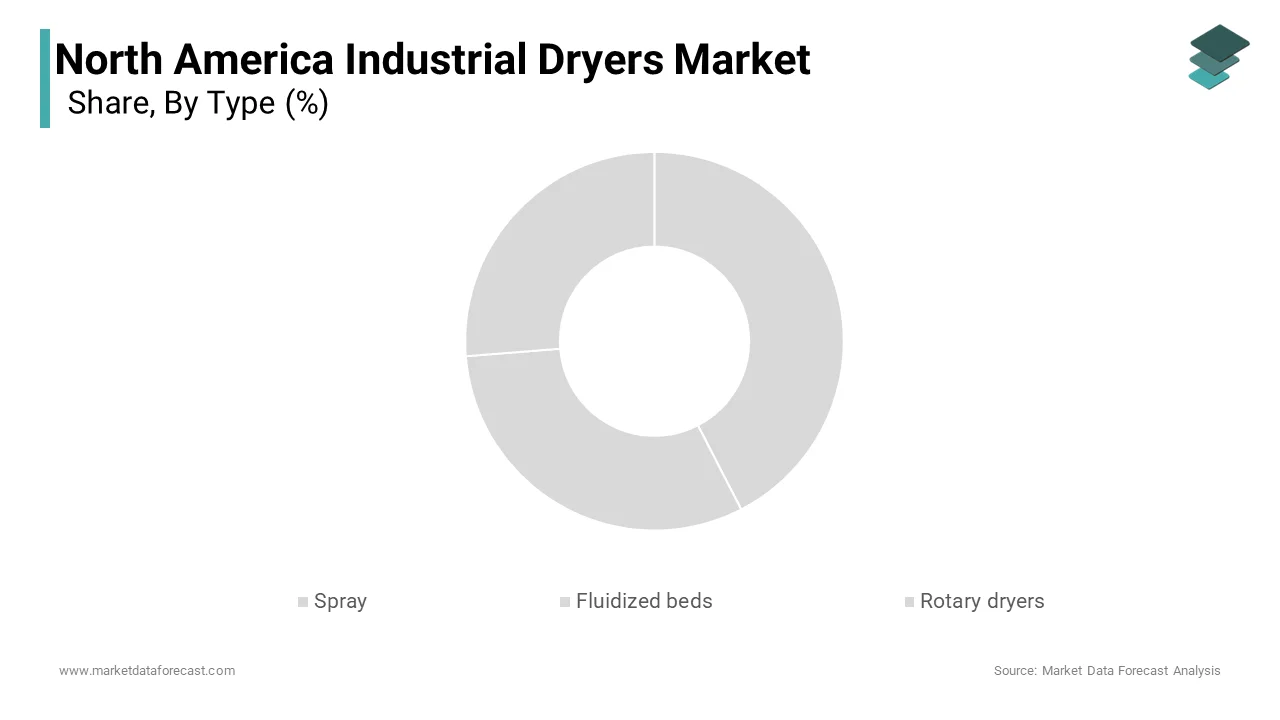
The fluidized Bed Dryers segment is projected to grow with a CAGR of 7.2% in the next years. One of the primary growth drivers is the rising investment in the pharmaceutical industry, particularly in the U.S. According to the U.S. Food and Drug Administration (FDA), domestic pharmaceutical production in the United States increased by 5.8% in 2023, supported by government incentives aimed at reducing reliance on imports. Fluidized bed dryers are extensively used in API and tablet granulation processes due to their ability to provide controlled, gentle drying without compromising product quality. Additionally, the food processing industry's shift toward value-added products is fueling demand for fluidized bed technology. Fluidized bed dryers are widely employed in drying instant coffee, powdered milk, and dehydrated vegetables, which align well with this trend. Moreover, advancements in modular and compact fluidized bed dryer designs have made them increasingly accessible to small and mid-sized processors. Companies like Glatt and Hosokawa Micron have expanded their presence in Canada and the Midwest U.S., offering tailored solutions that cater to local production needs.
By Application Insights
The chemicals segment was the largest by capturing 35.2% of the North America industrial dryers market share in 2025. A major driver behind the chemicals segment’s leading position is the strategic diversification of economies away from oil dependency in the U.S. According to the American Chemistry Council (ACC), chemical output in the country grew by 4.7% in 2023, with significant investments in downstream processing. Drying plays a crucial role in ensuring product consistency and reducing moisture content, especially in coatings, agrochemicals, and synthetic resins.
Another contributing factor is the increased production of polymers and specialty chemicals, which require precise drying conditions to maintain product stability. Additionally, regional export ambitions are pushing manufacturers to adopt standardized drying methods to meet international quality benchmarks.
The pharmaceuticals segment is expected to grow with a CAGR of 8.1% in the coming years. One of the key growth enablers is the expansion of domestic pharmaceutical production capacity, particularly in the U.S. Drying plays a crucial role in the formulation of solid dosage forms, including tablets and capsules, where moisture control is essential for stability and efficacy. In addition, the Pan American Health Organization (PAHO) has been advocating for regional self-sufficiency in healthcare, encouraging greater investment in compliant production facilities equipped with modern drying equipment. Regulatory bodies such as the FDA and Health Canada are enforcing stricter Good Manufacturing Practice (GMP) standards, which are prompting pharmaceutical firms to upgrade their drying infrastructure. Furthermore, global pharmaceutical companies are establishing partnerships with local firms to enhance production capabilities. For instance, Novartis and Sanofi have entered joint ventures in Canada and the U.S., respectively, to develop cost-effective drug formulations tailored to regional health needs.
By Product Insights
The direct dryers segment held a dominant share of the North American industrial dryers market in 2025. Direct dryers typically utilize hot gases generated from combustion sources, making them highly suitable for industries requiring rapid evaporation of moisture. Additionally, the agro-industrial sector in North America continues to rely heavily on direct dryers for processing commodities such as corn, soybeans, and dairy powders. As reported by the U.S. Department of Agriculture (USDA), post-harvest losses in grain storage amount to nearly 10–15%, which is prompting governments and private investors to fund large-scale drying infrastructure. Direct dryers, being relatively simple to operate and maintain, are favored in rural agro-processing hubs. Moreover, in the mining industry, direct dryers are extensively used for dewatering and conditioning ores before transportation or refining. The U.S. Geological Survey (USGS) notes that mineral processing output in states like Nevada and Arizona grew by 5.3% annually between 2019 and 2023, further supporting the demand for direct drying systems.
The specialty dryers segment is expected to grow with a CAGR of 9.1% during the forecast period. One of the primary growth drivers is the expansion of the pharmaceutical and biotechnology sectors in the U.S. According to the U.S. Food and Drug Administration (FDA), the country’s pharmaceutical exports increased by 6.3% in 2023, supported by the adoption of advanced drying technologies for active pharmaceutical ingredients (APIs). Specialty dryers play a crucial role in preserving heat-sensitive compounds during lyophilization and sterile processing. Another contributing factor is the growing demand for premium food products such as freeze-dried fruits, instant soups, and functional ingredients. Furthermore, the adoption of green drying technologies is accelerating in response to sustainability mandates. As per a report by the United Nations Industrial Development Organization (UNIDO), transitioning to energy-efficient specialty dryers can reduce carbon emissions by up to 30% in selected food and pharma applications, which aligns with regional climate goals.
COUNTRY ANALYSIS
United States
The United States was the largest contributor with 74.3% of the North American industrial dryers market share in 2025. One of the key contributors to the U.S. market's strength is the rapid expansion of its chemical and petrochemical industries. Industrial dryers are integral to polymer, resin, and fertilizer manufacturing processes, where moisture removal is essential for product consistency and quality. Additionally, the pharmaceutical sector is witnessing significant investment, supported by the U.S. Food and Drug Administration (FDA), which recorded a 5.9% increase in domestic drug production in 2023. Drying technologies such as fluidized bed and vacuum dryers are increasingly adopted in API manufacturing and tablet formulation to meet international quality standards. Moreover, the agro-processing industry remains a major user of industrial dryers, particularly in dairy, fruit dehydration, and grain processing.
Canada
Canada was positioned second with 12.1% of the North American industrial dryers market share in 2025. One of the primary drivers of Canada’s industrial dryers market is the expansion of its chemical and pharmaceutical manufacturing sectors. Additionally, the Canadian pharmaceutical industry is growing rapidly, supported by Health Canada, which reported a 5.6% increase in domestic drug production in 2023. Fluidized bed and freeze dryers are increasingly deployed to enhance product stability and shelf life. Moreover, the agro-processing industry is expanding, particularly in Ontario and British Columbia, where organized food parks and export-oriented production units are emerging.
KEY MARKET PLAYERS
ThyssenKrupp AG (Germany), Andritz AG (Austria), GEA Group (Germany), Metso Corporation (Finland), FLSmidth & Co. A/S (Denmark), Buhler Holding AG (Switzerland), ANIVI Ingeniería SA (Spain), Carrier Vibrating Equipment, Inc. (U.S.), COMESSA (France), and Mitchell Dryers Ltd. (U.K.), among others. Are the market players that are dominating the North American industrial dryers market?
Top Players in the Market
One of the leading players in the North American industrial dryers market is GEA Group, a Germany-based engineering company specializing in process technology across food, pharmaceuticals, and chemicals. GEA has a strong global presence and offers a wide range of drying solutions, including spray, fluidized bed, and vacuum dryers. In North America, GEA is recognized for its customized systems tailored to local industries such as dairy processing, mineral extraction, and pharmaceutical manufacturing. Its emphasis on energy efficiency, automation, and sustainability makes it a preferred partner for large-scale industrial clients seeking reliable drying technologies.
Another major player is Bühler AG, a Swiss multinational known for its innovative solutions in food processing and advanced materials. Bühler plays a crucial role in supplying industrial dryers tailored to agricultural commodities, particularly in the U.S. and Canada, where grain and legume drying are essential for reducing post-harvest losses. The company’s integration of digital monitoring and precision drying techniques enhances performance and product quality. In North America, Bühler supports the etrochemical and cement industries with robust rotary and flash drying systems, reinforcing its strategic position in the regional market.
Glatt GmbH is a German leader in fluid bed and spouted bed drying technologies, and is another key participant shaping the North American industrial dryers landscape. With expertise in pharmaceutical, food, and chemical applications, Glatt delivers high-precision drying systems that ensure product consistency and compliance with international standards. The company’s expansion into North America includes partnerships and localized support services aimed at improving accessibility for manufacturers.
Top Strategies Used by Key Market Participants
Key players in the North American industrial dryers market employ several strategies to strengthen their competitive edge. One major approach is strategic partnerships and collaborations with local distributors and engineering firms, which help global manufacturers better understand regional needs and streamline after-sales service. These alliances facilitate technology transfer and improve customer support networks across remote locations.
Another critical strategy is product customization and localization, where companies design drying solutions tailored to the specific requirements of North American industries. This includes adapting equipment for local raw materials, climatic conditions, and regulatory standards, thereby enhancing adoption among small and medium enterprises.
The expanding digital integration and after-sales service capabilities allow key players to differentiate themselves in a fragmented market. Companies ensure long-term customer engagement and operational reliability, which reinforces their market positions.
COMPETITION OVERVIEW
The competition in the North American industrial dryers market is shaped by a combination of global leaders and regional specialists striving to meet the diverse needs of various industries. Multinational corporations dominate due to their technological expertise, broad product portfolios, and established distribution networks. However, growing demand from mid-sized enterprises has led to the emergence of domestic manufacturers offering cost-effective and simplified drying solutions tailored to niche sectors. Market participants are increasingly focusing on differentiation through innovation, sustainability, and service excellence. As industries evolve, there is a rising emphasis on energy-efficient and digitally integrated drying systems. Companies are also investing in capacity-building initiatives, technical training, and localized service centers to enhance customer retention. Despite the dominance of global firms, the market remains dynamic, which is offering opportunities for both international and regional players willing to adapt to the unique challenges and opportunities present across North America.
RECENT HAPPENINGS IN THE MARKET
- In February 2024, GEA Group launched a dedicated regional service center in Chicago to provide enhanced technical support and maintenance solutions for its industrial dryer customers across the United States and Canada, which is aiming to improve response times and strengthen after-sales service delivery.
- In May 2024, Bühler AG partnered with a Canadian agro-processing firm to deploy an integrated drying and storage system for canola production, supporting efforts to reduce post-harvest losses and improve export quality in North America.
- In September 2023, Glatt GmbH signed a collaboration agreement with a U.S.-based biopharmaceutical manufacturer to supply a state-of-the-art fluidized bed drying system by ensuring compliance with FDA standards and boosting domestic API manufacturing capabilities.
- In January 2024, Thermopac Industries, a U.S. industrial dryer manufacturer, expanded its production facility in Wisconsin to meet rising demand from the dairy and food sectors, which is emphasizing localized production and faster delivery cycles.
- In July 2023, ANDRITZ GROUP entered into a joint venture with a Texas-based mining company to install high-capacity rotary dryers by enhancing mineral dewatering and processing efficiency in copper and lithium operations across North America.
MARKET SEGMENTATION
This research report on the North America Industrial Dryers market is segmented and sub-segmented into the following categories.
By Product
- Direct
- Indirect
- Specialty dryers
By Application
- Pharmaceutical
- Fertilizer
- Food
- Cement
- Chemicals
By Type
- Spray
- Fluidized beds
- Rotary dryers
By Country
- US
- Canada
- Rest of North America