- Product Description Description
- Table of Contents TOC
- List of Table & Figure LOT
- Get Free Sample PDF Sample PDF
Market Size, 2025
$599.34 MnMarket Estimate, 2026
$623.19 MnMarket Forecast, 2034
$851.57 MnCAGR, 2026–2034
3.98%North America Industrial Vegetation Management Market Report Summary
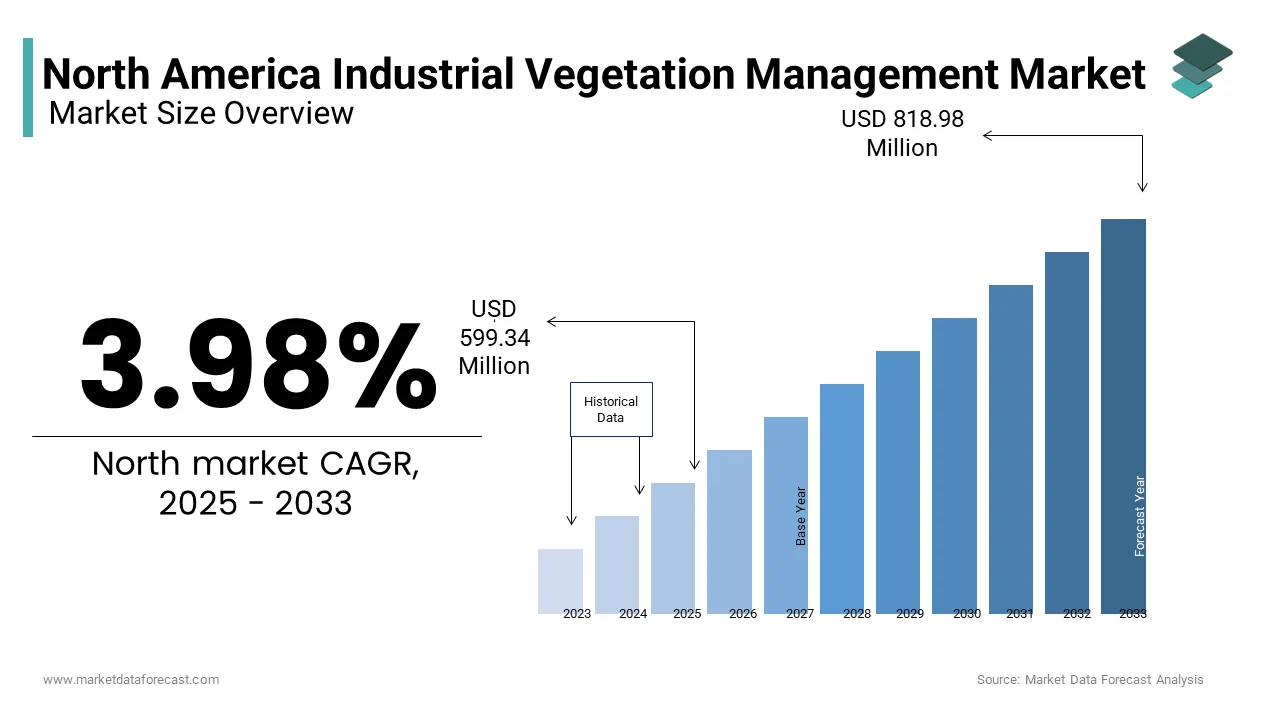
The North America industrial vegetation management market was valued at USD 599.34 million in 2025, is estimated to reach USD 623.19 million in 2026, and is projected to reach USD 851.57 million by 2034, growing at a CAGR of 3.98% during the forecast period from 2026 to 2034. The growth of the North America industrial vegetation management market is driven by increasing investments in utility infrastructure maintenance, rising emphasis on wildfire prevention, and stringent vegetation control regulations across power transmission corridors, railways, highways, and industrial facilities. Growing adoption of integrated vegetation management (IVM) practices, coupled with advancements in selective herbicides and precision application technologies, is further supporting market expansion. Additionally, the increasing need to minimize power outages, enhance public safety, protect critical infrastructure, and reduce long-term maintenance costs is encouraging utilities and industrial operators to invest in efficient vegetation management solutions across North America.
Key Market Trends
- Increasing adoption of integrated vegetation management (IVM) programs to improve long-term ecosystem health and infrastructure reliability.
- Growing demand for selective herbicides and precision application technologies to enhance vegetation control while minimizing environmental impact.
- Rising investments by utility companies in vegetation management to reduce wildfire risks and improve power grid resilience.
- Expanding use of GIS, drones, remote sensing, and AI-powered monitoring systems for vegetation inspection and maintenance planning.
- Strong focus on sustainable vegetation management practices that comply with evolving environmental regulations and biodiversity conservation goals.
Segmental Insights
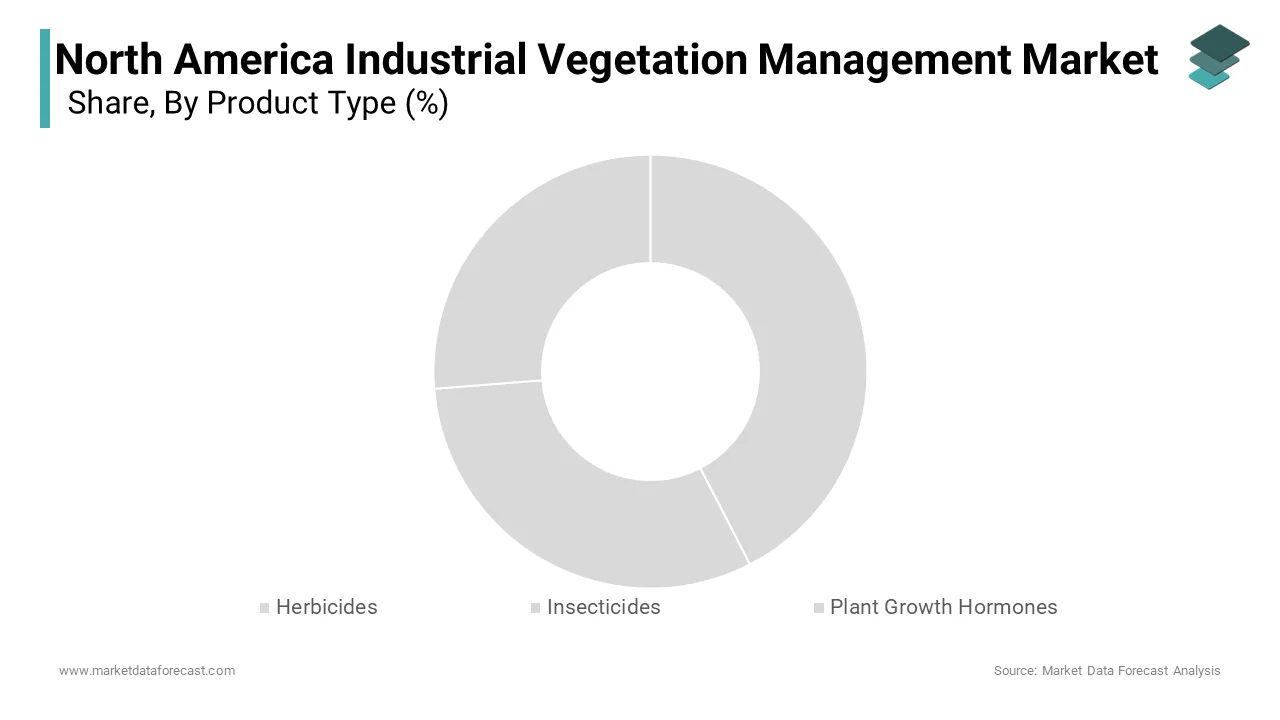
Based on product, the herbicides segment dominated the North America industrial vegetation management market and accounted for 58.4% of the market share in 2025. The segment's leadership is attributed to the widespread use of herbicides for efficient, cost-effective, and long-lasting vegetation control across utility corridors, transportation networks, industrial sites, and public infrastructure.
Based on end use, the utilities segment led the North America industrial vegetation management market and captured 52.6% of the market share in 2025. The segment continues to dominate due to increasing investments in transmission and distribution infrastructure, strict vegetation clearance requirements, and proactive maintenance programs aimed at reducing service disruptions and wildfire risks.
Regional Insights
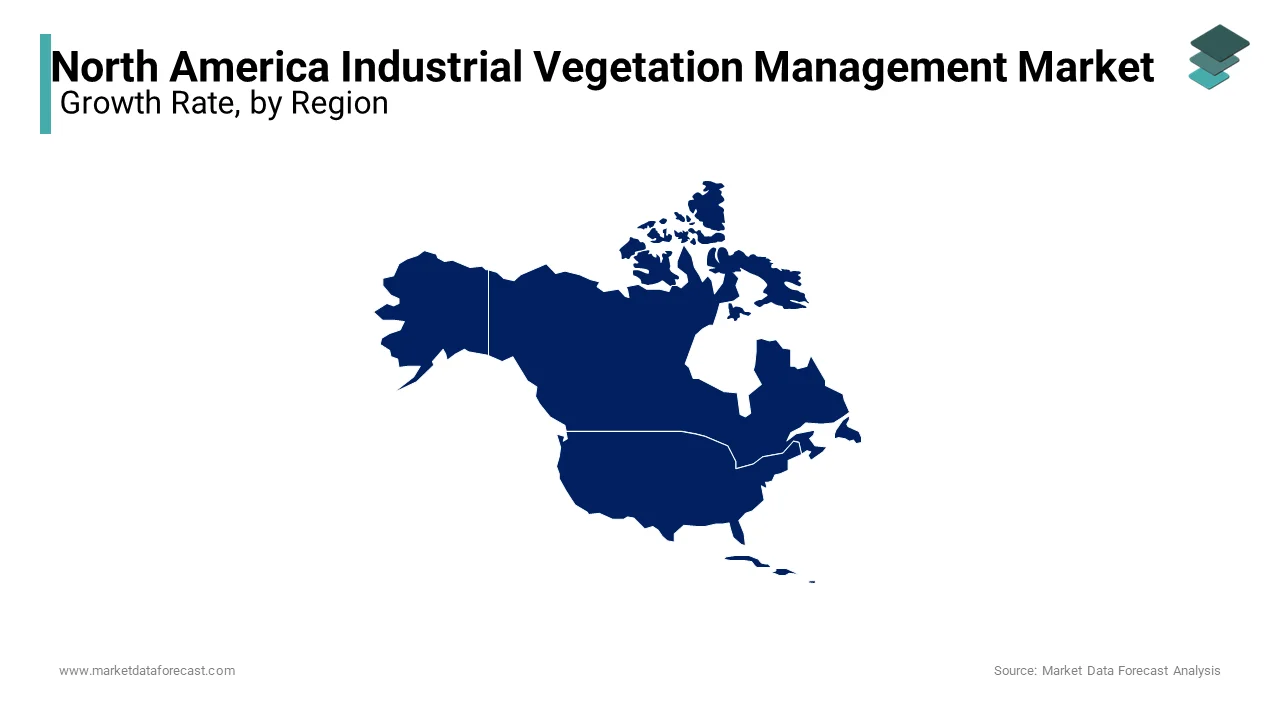
The United States dominated the North America industrial vegetation management market, accounting for 78.5% of the regional market share in 2025. The country's leadership is driven by its extensive electric transmission and distribution networks, stringent utility vegetation management regulations, and significant investments in wildfire mitigation and grid reliability initiatives. Utility companies across the U.S. continue to adopt advanced vegetation management technologies to improve operational efficiency and infrastructure resilience. Canada ranked second in the regional market, supported by its vast forested landscapes, extensive utility corridors, and challenging climatic conditions that require continuous vegetation maintenance. Growing investments in infrastructure protection and sustainable land management are further strengthening the market across both countries.
Competitive Landscape
The North America industrial vegetation management market is characterized by the presence of global agrochemical manufacturers, specialized vegetation management service providers, and infrastructure maintenance companies competing through innovation, sustainability, and service expansion. Leading market participants are investing in advanced herbicide formulations, precision application technologies, drone-assisted vegetation monitoring, and integrated vegetation management solutions to improve operational efficiency and environmental performance. Strategic partnerships with utility companies, acquisitions, regional expansion, and investments in digital vegetation assessment tools remain key competitive strategies. Companies are also focusing on developing environmentally responsible products that comply with evolving regulatory standards while supporting long-term ecosystem management. As demand for resilient utility infrastructure and wildfire prevention continues to increase, market participants are strengthening their portfolios through innovation, customer-centric service offerings, and technology-driven vegetation management solutions.
Prominent players in the North America industrial vegetation management market include BASF, DuPont, Dow AgroSciences, Monsanto, Nufarm, Helena, Boultbee Vegetation Management, DBI Services, Ferrosafe, Lewis Services, Corteva Canada, VegClear, and Aquatic Vegetation Control Inc.
North America Industrial Vegetation Management Market Size
The North American industrial vegetation management market size was valued at USD 599.34 million in 2025 and is anticipated to reach USD 623.19 million in 2026, from USD 851.57 million by 2034, growing at a compound annual growth rate (CAGR) of 3.98% during the forecast period from 2026 to 2034.
Industrial Vegetation Management (IVM) is the planned, targeted control of unwanted plant growth in commercial, operational, and infrastructural environments. This market ensures operational safety, regulatory compliance, and asset longevity by preventing vegetation interference with essential utilities. The geographic scope covers the United States, Canada, and Mexico, where diverse climatic conditions necessitate tailored vegetation control strategies. According to the United States Department of Agriculture (USDA) Forest Service, approximately 34% to 36% of the land mass in the conterminous United States is forested, creating extensive areas that require routine vegetation management near infrastructure corridors and industrial zones. The Federal Energy Regulatory Commission mandates strict clearance standards for transmission lines, compelling utility providers to maintain specific distances between conductors and surrounding foliage. According to federal and provincial monitoring groups, invasive plant species significantly disrupt Canada's natural ecosystems and industrial right-of-ways, resulting in billions of dollars in cumulative economic damages and management expenditures annually. The North American railroad network spans more than 140000 miles as per the Association of American Railroads, with vegetation encroachment posing significant derailment risks if left unmanaged. These infrastructural realities drive continuous demand for integrated vegetation management programs that combine mechanical clearing, chemical treatments, and ecological monitoring. The market operates within a framework of environmental regulations that balance industrial safety with ecosystem preservation, requiring service providers to adopt sustainable practices while meeting rigorous performance benchmarks across varied terrains and weather patterns throughout the continent.
MARKET DRIVERS
Stringent Regulatory Compliance Mandates Drive Service Adoption
Regulatory frameworks governing industrial safety and environmental protection are driving the growth of the North America industrial vegetation management market. The North American Electric Reliability Corporation enforces FAC 003 standards that require transmission operators to maintain minimum clearance distances between power lines and vegetation, with noncompliance resulting in substantial financial penalties exceeding 1 million dollars per violation. According to Pipeline and Hazardous Materials Safety Administration (PHMSA) regulations, hazardous liquid pipeline operators are required to patrol right-of-way corridors at least 26 times per year at intervals not exceeding three weeks to monitor surface conditions and ensure pipeline access. The Federal Railroad Administration (FRA) mandates that railroads control foliage along track beds to maintain signal visibility and prevent structural hazards, though vegetation-related incidents represent a small single-digit fraction of annual rail accidents. Utility companies operating in California face additional requirements under Senate Bill 901, which obligates them to implement enhanced vegetation management plans in high fire threat districts covering over 6 million acres. The Canadian National Railway Company invests heavily in systematic corridor herbicide application and tree canopy trimming to maintain compliance with Transport Canada's strict track safety standards. These legal obligations compel industrial asset owners to engage professional vegetation management firms rather than relying on internal maintenance teams. The complexity of navigating federal, state, and provincial regulations creates sustained demand for specialized service providers who possess regulatory expertise alongside technical capabilities. This compliance driven demand ensures consistent revenue streams for market participants regardless of broader economic fluctuations, as regulatory adherence remains nonnegotiable for industrial operations.
Expanding Renewable Energy Infrastructure Increases Vegetation Control Needs
The rapid expansion of renewable energy installations across the region generates substantial new demand for IVM services, which further propels the expansion of the North America industrial vegetation management market. Solar farms require extensive land clearance and ongoing maintenance to prevent shading losses from growing vegetation. Because utility-scale solar generation demands roughly 5 to 10 acres of land footprint per megawatt, the addition of 32 gigawatts of capacity introduces hundreds of thousands of acres to the national footprint requiring long-term vegetation suppression. Wind energy projects similarly demand vegetation management around turbine bases and access roads. Clean energy associations reveals that while wind energy projects are distributed across wide geographic boundaries, their actual structural footprint occupies a minimal percentage of land, allowing surrounding acreage to remain used for farming or natural habitat. Offshore wind developments along the Atlantic coast require terrestrial substation vegetation control, adding another layer of service demand. Clean energy growth in North America continues to set new annual deployment records, while international markets like India are pacing toward specific, legally established national targets of 500 gigawatts of non-fossil capacity by 2030. Biomass energy facilities depend on controlled vegetation harvesting for fuel supply chains, creating symbiotic relationships between energy producers and vegetation managers. The Interstate Renewable Energy Council notes that community solar projects increased by 45 percent year over year, vegetation management needs across numerous smaller sites rather than concentrated utility scale installations. This decentralized growth pattern requires vegetation management companies to adapt their service models while benefiting from expanded total addressable markets driven by clean energy transition policies and corporate sustainability commitments across industrial sectors.
MARKET RESTRAINTS
High Operational Costs Constrain Market Penetration in Price Sensitive Segments
Elevated operational expenses associated with professional vegetation management create significant barriers to the North America industrial vegetation management market. Cost-conscious industrial clients are consequently left searching for affordable solutions. Labor costs constitute approximately 40 to 50 percent of total service expenditures according to the Bureau of Labor Statistics, with specialized arborists and equipment operators commanding hourly wages exceeding 25 dollars in many regions. Fuel prices for heavy machinery fluctuate considerably, with U.S. retail diesel costs averaging $3.76 per gallon in 2024 according to the Energy Information Administration, compressing profit margins for contractors deploying utility trucks and woodchippers. Equipment acquisition and maintenance represent another substantial financial burden, with modern forestry mulchers costing between 150000 and 300000 dollars each. Small and medium sized industrial facility owners often lack capital budgets for comprehensive vegetation management contracts, opting instead for reactive approaches that prove less effective but appear cheaper initially. The National Association of Landscape Professionals indicates that commercial landscaping and vegetation control expenses have risen by 18 percent since 2020 due to inflationary pressures on materials and labor. Insurance premiums for vegetation management contractors have increased by 22 percent over three years as per industry risk assessments, reflecting heightened liability concerns around property damage and worker safety. These cumulative cost factors force some industrial clients to delay necessary vegetation control work, leading to accumulated backlogs that eventually require more expensive emergency interventions. Budget constrained municipalities managing public industrial parks frequently reduce vegetation management allocations during fiscal shortfalls, creating inconsistent demand patterns that challenge service provider planning and resource allocation strategies across the North American market landscape.
Environmental Concerns Limit Chemical Treatment Application Methods
Growing environmental awareness and restrictive regulations concerning herbicide usage constrain the expansion of the North America industrial vegetation management market. Consequently, traditional approaches are severely limited across the region. The Environmental Protection Agency has tightened registration requirements for several widely used herbicides, with glyphosate facing renewed scrutiny despite remaining approved for industrial applications under specific conditions. According to federal chemical tracking databases, hundreds of millions of pounds of herbicides are applied annually across the United States, with industrial right-of-way and utility corridor maintenance representing a small but vital percentage of total national usage. While local jurisdictions increasingly restrict certain pesticide applications in sensitive public spaces, utility and industrial vegetation managers are permitted to use targeted chemical applications to maintain infrastructure safety and control invasive growth. Public opposition to chemical applications frequently results in localized pushback near residential corridors, though state preemption laws generally protect standard utility herbicide applications within industrial rights-of-way. Water contamination concerns drive additional limitations, particularly in watersheds supplying drinking water to major metropolitan areas. The Canadian Pest Management Regulatory Agency has cancelled registrations for multiple active ingredients previously common in industrial vegetation control, reducing available chemical options for service providers. Organic certification requirements for certain industrial facilities further prohibit synthetic herbicide use entirely. These environmental constraints compel vegetation management companies to invest in research and development of biological controls and mechanical alternatives, yet these methods often require more frequent applications and higher labor inputs. The tension between effective vegetation suppression and environmental stewardship creates operational complexities that limit market growth potential for conventional chemical based service offerings while increasing compliance burdens for industry participants.
MARKET OPPORTUNITIES
Integration of Drone Technology Creates Precision Management Opportunities
Advanced drone technology integration offers transformative opportunities for enhancing efficiency and accuracy in operations, which is likely to boost the growth of the North America industrial vegetation management market. Unmanned aerial vehicles equipped with multispectral cameras and LiDAR sensors enable precise vegetation height measurement and health assessment across vast industrial corridors without requiring ground crews to traverse difficult terrain. According to the Federal Aviation Administration (FAA), the total U.S. drone registry tracks over 800,000 units, with commercial operations accounting for more than a third of this total as industrial inspection applications expand. Drone based surveys can cover 500 acres per day compared to approximately 50 acres using traditional ground methods as per industry productivity studies, generating substantial time and cost savings for large scale projects. Machine learning algorithms process aerial imagery to identify specific weed species and predict growth patterns, allowing vegetation managers to apply targeted treatments only where needed rather than blanket applications. Utility industry analysis indicates that adopting drone-assisted vegetation management can reduce routine right-of-way inspection expenses by roughly 30% while dramatically improving data accuracy compared to traditional ground patrols. Thermal imaging capabilities detect stressed vegetation before visible symptoms appear, enabling proactive intervention that prevents costly emergency clearing operations. Drone technology also enhances safety by eliminating the need for workers to climb towers or navigate steep embankments near transmission lines and pipelines. As battery technology improves flight times beyond 45 minutes per charge, coverage capabilities continue expanding. Regulatory frameworks increasingly accommodate beyond visual line of sight operations, further unlocking efficiency gains. Early adopters of drone-integrated vegetation management systems gain competitive advantages through superior data analytics and faster response times, positioning this technological advancement as a significant growth opportunity for forward-thinking market participants seeking differentiation in an increasingly sophisticated service landscape.
Sustainable Ecological Restoration Services Expand Revenue Streams
Emerging demand for ecologically balanced vegetation management approaches creates a pathway for service providers offering habitat restoration and biodiversity enhancement alongside traditional clearing services, which is expected to fuel the North America industrial vegetation management market. Industrial clients increasingly seek vegetation management partners who can demonstrate environmental stewardship credentials while maintaining operational safety standards. International environmental finance reports indicate that billions of dollars are directed annually toward the global ecological restoration market, with North America representing a major share of international public and private conservation funding. Utilities participating in voluntary certification programs like the Right of Way Stewardship Council require vegetation managers to implement native plant propagation and pollinator friendly maintenance protocols. Conservation guidelines from groups like the Xerces Society show that integrating native wildflower meadows into transmission line corridors significantly improves pollinator habitat quality while naturally suppressing invasive woody growth that threatens utility lines. Pipeline companies operating under voluntary environmental agreements invest in riparian buffer restoration projects that improve water quality while maintaining required clearance zones. Collaborative land management partnerships between infrastructure operators and conservation groups have scaled up across North America, restoring millions of cumulative acres of degraded habitats through selective utility right-of-way management. Carbon credit markets offer additional revenue potential, with verified vegetation management practices that enhance soil carbon sequestration qualifying for offset credits trading at 15 to 25 dollars per ton as per sources. Industrial clients pursuing environmental social and governance reporting benefits from partnering with vegetation managers who document biodiversity improvements and ecosystem service enhancements. This shift toward holistic land stewardship transforms vegetation management from a purely cost center into a value creating function that supports corporate sustainability objectives while opening new billing structures based on ecological outcomes rather than simple acreage cleared.
MARKET CHALLENGES
Workforce Shortages Impede Service Delivery Capacity Expansion
Chronic labor shortages in skilled vegetation management professions severely restrict the ability of service providers to scale operations and meet growing demand across the region, which challenges the growth of the North America industrial vegetation management market. The National Association of Landscape Professionals identifies workforce recruitment and retention as the number one challenge facing the industry, with 78 percent of companies reporting difficulty finding qualified employees. Arborist positions remain particularly hard to fill, requiring specialized training and International Society of Arboriculture certification that takes years to obtain. According to the Bureau of Labor Statistics, employment in grounds maintenance occupations is projected to grow by 5 percent through 2032, yet turnover rates exceed 40 percent annually due to physically demanding work conditions and seasonal employment patterns. The aging workforce compounds this issue, with median ages for certified arborists exceeding 45 years as per industry demographic surveys. Training programs struggle to attract younger workers who perceive vegetation management as low prestige labor despite competitive compensation packages offering starting salaries above 40000 dollars. Immigration policy restrictions limit access to foreign labor pools that historically supplemented domestic workforce gaps in agricultural and landscaping sectors. Rural locations where much industrial vegetation management occurs face additional recruitment challenges due to limited housing availability and fewer amenities. Equipment operator positions requiring commercial drivers licenses and specialized machinery certifications experience even more acute shortages. These workforce constraints force companies to decline new contracts or extend project timelines, damaging client relationships and limiting revenue growth potential. Investment in automation and technology partially offsets labor gaps but cannot fully replace human judgment required for complex vegetation assessment tasks. The persistent workforce crisis represents a fundamental structural challenge that threatens long term market expansion unless industry stakeholders collaborate on improved training pathways and career development initiatives.
Climate Change Induced Weather Volatility Disrupts Operational Planning
Increasingly unpredictable weather patterns driven by climate change create substantial operational disruptions for service providers across the region, which holds back the expansion of the North America industrial vegetation management market. Extreme precipitation events cause soil saturation that prevents heavy equipment access to work sites, with the National Oceanic and Atmospheric Administration reporting a 20 percent increase in heavy rainfall occurrences since 1958. Drought conditions accelerate vegetation stress and mortality, leading to unexpected tree falls that require emergency response resources diverted from scheduled maintenance programs. The United States Drought Monitor indicated that over 40 percent of continental United States experienced moderate to exceptional drought conditions during portions of 2024, affecting vegetation growth cycles and treatment efficacy. Wildfire seasons extending beyond traditional summer months compress available working windows for preventive vegetation clearing in high risk zones. According to the National Interagency Fire Center, wildfire seasons now last 75 days longer on average than they did two decades ago, forcing vegetation managers to prioritize emergency fuel reduction over routine maintenance. Increased hurricane intensity along coastal regions causes severe damage to grid infrastructure and utility fleets, with the highly active 2024 Atlantic hurricane season generating 11 hurricanes according to National Hurricane Center records. Unseasonable temperature fluctuations disrupt herbicide application timing, as most chemicals require specific temperature ranges between 50 and 85 degrees Fahrenheit for optimal effectiveness. Snow and ice events in traditionally mild regions catch service providers unprepared, requiring rapid equipment mobilization that strains logistical capacities. These climate induced uncertainties complicate long term contract pricing and resource allocation decisions, as historical weather patterns no longer reliably predict future conditions. Insurance costs rise in response to increased weather related claims, further squeezing profit margins. Adaptation strategies require flexible scheduling systems and diversified geographic service areas to mitigate localized weather impacts, yet these adjustments increase operational complexity and overhead costs for vegetation management firms navigating an increasingly volatile climatic environment.
REPORT COVERAGE
| REPORT METRIC | DETAILS |
| Market Size Available | 2025 to 2034 |
| Base Year | 2025 |
| Forecast Period | 2026 to 2034 |
| CAGR | 3.98% |
| Segments Covered | By Product, End Use, and Country |
| Various Analyses Covered | Global, Regional, and Country-Level Analysis; Segment-Level Analysis; DROC, PESTLE Analysis; Porter’s Five Forces Analysis, Competitive Landscape; Analyst Overview of Investment Opportunities |
| Regions Covered | USA, Canada, Mexico, Rest of North America |
| Market Leaders Profiled | BASF, DuPont, Dow Agro Sciences, Monsanto, Nufarm, Helena, Boultbee Vegetation Management, DBI Services, Ferrosafe, Lewis Services, Corteva Canada, VegClear, and Aquatic Vegetation Control Inc |
SEGMENTAL ANALYSIS
By Product Insights
The herbicides segment dominated the North America Industrial Vegetation Management Market and accounted for a 58.4% share in 2025. This dominance of the segment was mainly driven by its cost effectiveness and broad-spectrum efficacy in controlling unwanted plant growth across vast industrial corridors. Moreover, the dominance of this segment is also due to the sheer scale of infrastructure requiring maintenance where mechanical removal proves prohibitively expensive and labor intensive. Major utility companies prefer selective herbicides that target woody species while preserving desirable grasses that stabilize soil and prevent erosion. The American Public Power Association notes that integrated vegetation management programs relying heavily on herbicides reduce lifecycle costs by up to 40 percent compared to cyclic cutting methods over a ten year period. Regulatory approvals for new active ingredients with lower environmental toxicity profiles have sustained market confidence despite public scrutiny. Large scale pipeline operators managing thousands of miles of right of way depend on aerial and ground based herbicide applications to maintain clearance standards efficiently. The economic advantage of treating hundreds of acres per day with chemical solutions versus clearing mere acres mechanically ensures herbicides remain the preferred choice for budget conscious infrastructure managers seeking reliable and predictable vegetation control outcomes across diverse geographic regions.
The main driver behind herbicide dominance is the unparalleled cost efficiency and operational scalability these chemical solutions offer for large scale industrial applications. Mechanical vegetation removal requires heavy equipment deployment, skilled operators, and extensive labor hours, resulting in costs that can exceed 500 dollars per acre for initial clearing as per industry benchmarking studies conducted by the Utility Arborist Association. In contrast, herbicide applications typically cost between 50 and 150 dollars per acre while providing control durations extending three to five years depending on species and formulation. This substantial cost differential makes herbicides the only viable option for utilities managing over 1 million miles of transmission lines across North America. Chemical treatments allow single crews to treat vast areas rapidly, reducing traffic disruptions and safety risks associated with prolonged roadside operations. Fuel consumption for herbicide application equipment remains significantly lower than for forestry mulchers and chippers, aligning with corporate sustainability goals to reduce carbon footprints. The ability to schedule herbicide applications during optimal weather windows without coordinating large workforce teams provides logistical flexibility that mechanical methods cannot match. These economic and operational benefits ensure that despite growing environmental concerns, herbicides remain the cornerstone of industrial vegetation management strategies for cost sensitive infrastructure owners prioritizing budget predictability and service reliability.
The plant growth hormones segment is anticipated to witness the fastest CAGR of 8.5% from 2026 to 2034. This swift growth of the segment is propelled by increasing adoption of integrated vegetation management strategies that combine chemical suppression with biological regulation to achieve sustainable long term results. Unlike traditional herbicides that kill target plants, growth regulators modify plant physiology to suppress vertical growth while maintaining plant health and soil stabilization benefits. The Electric Power Research Institute highlights that utilities utilizing growth regulators report 30 percent reductions in total vegetation management costs over ten year periods due to decreased frequency of required interventions. Environmental regulations favoring non lethal vegetation control methods drive demand for these innovative products as stakeholders seek alternatives to conventional herbicides facing public opposition. The Society of American Foresters supports Integrated Vegetation Management (IVM) on rights-of-way, noting that selective maintenance strategies, which may include chemical controls, can enhance biodiversity by creating stable, early-successional wildlife habitats. Technological advancements in formulation stability and application precision have enhanced product reliability, encouraging broader adoption among risk averse infrastructure managers. Corporate sustainability commitments push companies toward solutions demonstrating measurable environmental benefits, positioning growth regulators as premium offerings aligned with environmental social and governance reporting requirements. As awareness of these benefits spreads through industry networks and pilot programs demonstrate successful outcomes, adoption rates accelerate particularly among progressive utilities and government agencies prioritizing ecological compatibility alongside operational safety in their vegetation management portfolios.
By End Use Insights
The utilities segment led the North America Industrial Vegetation Management Market and captured a 52.6% share in 2025. This leading position of the segment was attributed to mandatory regulatory requirements for maintaining clearances around electrical transmission and distribution infrastructure. Power outages caused by vegetation contact with lines result in billions of dollars in economic losses annually, compelling utilities to invest heavily in proactive vegetation management programs. According to utility industry assessments, vegetation-related incidents account for approximately 20% to 23% of power outages in the United States, positioning vegetation control as a fundamental grid reliability imperative rather than optional maintenance. The Federal Energy Regulatory Commission imposes strict enforcement of FAC 003 standards requiring utilities to maintain specific clearance distances between conductors and surrounding vegetation, with violations resulting in penalties exceeding 1 million dollars per occurrence. Investor owned utilities serving over 75 percent of American electricity customers spend collectively more than 8 billion dollars annually on vegetation management as per the Edison Electric Institute financial disclosures. The expanding aging grid infrastructure requires intensified management efforts as older trees grow into clearance zones originally established decades ago. Extreme weather events exacerbated by climate change increase tree fall risks, necessitating more frequent inspection and trimming cycles. Utility vegetation management contracts typically span multi year periods providing stable revenue streams for service providers. The critical nature of electrical reliability ensures that vegetation management remains a non discretionary expenditure for utilities regardless of economic conditions, securing the utilities segment position as the dominant end use category commanding majority market share across North America.
The oil and gas segment is likely to experience the fastest CAGR of 7.2% during the forecast period due to extensive pipeline infrastructure expansion driven by shale production increases and liquefied natural gas export facility development requiring new right of way corridors across diverse terrains. PHMSA oversees nearly 3.3 million miles of pipeline infrastructure, while Department of Energy studies estimate that reaching net-zero targets may require constructing up to 50,000 miles of specialized CO2 transport pipelines. Each new pipeline mile requires perpetual vegetation management to ensure leak detection visibility, access route maintenance, and corrosion prevention by controlling moisture retaining plant growth near pipe surfaces. Regulatory mandates under federal pipeline safety laws require operators to inspect rights of way at specified intervals and maintain clearance for aerial surveillance and emergency response access. The shale revolution has concentrated pipeline development in previously undeveloped regions requiring establishment of vegetation management programs from scratch rather than inheriting existing maintenance regimes. LNG export terminals along Gulf Coast and Atlantic shores demand extensive perimeter vegetation control for security and safety compliance. Increasing focus on methane emission detection drives adoption of aerial monitoring technologies requiring clear sight lines unobstructed by vegetation. These factors combine to create robust growth momentum for vegetation management services within the oil and gas sector outpacing mature utility markets as infrastructure expansion accelerates across North America.
COUNTRY LEVEL ANALYSIS
United States Market Analysis
The United States was the top performer in the North America Industrial Vegetation Management Market and held a 78.5% share in 2025. This supremacy of the US in the regional market was supported by its vast infrastructure network and stringent regulatory environment. The country possesses over 140000 miles of high-voltage transmission lines managed by thousands of utility entities subject to North American Electric Reliability Corporation enforcement authority. Investor-owned utilities spend billions of dollars annually on utility vegetation management to strengthen grid resilience and mitigate wildfire risks, representing one of the largest operational infrastructure maintenance costs in the power sector. The Federal Energy Regulatory Commission actively penalizes noncompliance with vegetation clearance standards creating powerful financial incentives for thorough program implementation. The United States maintains the world's most expansive energy pipeline network, encompassing over 2.6 million miles of oil and gas pipelines that require consistent right-of-way maintenance according to Pipeline and Hazardous Materials Safety Administration (PHMSA) records. Renewable energy expansion accelerates demand with the Solar Energy Industries Association reporting 32 gigawatts of new solar installations in 2023 each requiring land clearance and ongoing vegetation control. The Environmental Protection Agency regulates herbicide usage while encouraging integrated pest management approaches driving innovation in sustainable vegetation control methods. Labor availability constraints persist across the infrastructure sector, with the Bureau of Labor Statistics projecting an approximate 4% to 5% employment growth in grounds maintenance occupations through 2032, a rate falling short of rising commercial and utility demands. Climate change impacts including extended wildfire seasons in western states and increased hurricane intensity along coastal regions compress maintenance windows and elevate emergency response requirements. The United States market benefits from advanced technology adoption including drone based inspection systems and predictive analytics platforms that enhance operational efficiency. Strong private sector investment in grid modernization funded through the Bipartisan Infrastructure Law ensures continued capital allocation toward vegetation management as critical infrastructure reliability component securing sustained market leadership.
Canada Market Analysis
Canada was positioned second in the North America Industrial Vegetation Management Market because of its vast geographic coverage and unique climatic challenges. The country manages extensive hydroelectric transmission networks connecting remote generation facilities to urban centers across provinces. Federal and provincial authorities coordinate invasive species management across Canada, where hundreds of non-native plant species impact agricultural yields and forest biodiversity, incurring billions of dollars in management and damage costs annually. Transport Canada enforces railway vegetation management standards for the Canadian National Railway and Canadian Pacific Kansas City networks spanning more than 25000 miles of track where vegetation encroachment poses derailment risks. The Canada Energy Regulator oversees pipeline vegetation management for interprovincial infrastructure, including the recently completed Trans Mountain Expansion Project, which added approximately 608 miles of new pipeline requiring perpetual right-of-way maintenance. Provincial regulations vary significantly with British Columbia implementing strict wildfire mitigation vegetation clearing requirements in interface zones while Quebec emphasizes hydro corridor management for its extensive hydropower system generating over 200 terawatt hours annually. The Canadian Pest Management Regulatory Agency maintains rigorous herbicide registration processes limiting available chemical options and driving adoption of mechanical and biological control methods. Labor shortages prove acute in rural northern regions where much infrastructure exists with limited local workforce availability requiring fly in fly out service models that increase operational costs. Climate change manifests through earlier spring thaws and later fall freezes extending growing seasons and increasing vegetation growth rates requiring more frequent management cycles. Indigenous community consultation requirements add procedural complexity to vegetation management projects on traditional territories necessitating culturally sensitive engagement approaches. Despite these challenges Canada maintains robust demand driven by critical infrastructure protection needs and regulatory compliance obligations ensuring steady market growth.
COMPETITIVE LANDSCAPE
The competitive landscape of the North America Industrial Vegetation Management Market features a mix of large national contractors and specialized regional providers vying for contracts with utility companies and infrastructure owners. Market participants differentiate themselves through technical expertise regulatory compliance capabilities and adoption of advanced technologies such as drone inspections and predictive analytics. Price competition remains intense particularly for standardized mechanical clearing services prompting many firms to emphasize value added offerings like ecological consulting and integrated vegetation management planning. Barriers to entry include significant capital requirements for specialized equipment and the need for certified personnel with extensive training. Established players leverage their scale to negotiate favorable supply contracts for herbicides and fuel while smaller firms compete on localized knowledge and personalized customer service. Regulatory complexity creates opportunities for companies with strong compliance track records to secure long term agreements with risk averse utility clients. Innovation in sustainable practices serves as a key differentiator as environmental concerns influence procurement decisions. The market exhibits moderate consolidation trends as larger entities acquire smaller competitors to expand service territories and enhance technological capabilities ensuring continued evolution of competitive dynamics across the region.
KEY MARKET PLAYERS
These are some major key players involved in the industrial vegetation management market.
- BASF
- DuPont
- Dow Agro Sciences
- ACRT Inc
- Asplundh Tree Expert LLC
- The Davey Tree Expert Company
- Monsanto
- Nufarm,
- Helena
- Boultbee Vegetation Management
- DBI Services
- Ferrosafe
- Lewis Services
- Corteva Canada
- VegClear
- Aquatic Vegetation Control Inc
Top Players In The Market
- Asplundh Tree Expert LLC stands as a premier provider of utility vegetation management services across North America with extensive operational reach. The company specializes in maintaining clearance around electrical transmission and distribution lines ensuring grid reliability and regulatory compliance. Asplundh employs advanced aerial inspection technologies including drone based surveys to enhance efficiency and accuracy in identifying potential hazards. Recent initiatives focus on integrating sustainable practices such as selective herbicide application and habitat restoration to meet evolving environmental standards. The organization invests heavily in workforce training programs to address labor shortages while maintaining high safety standards for its field crews. Asplundh continues to expand its service offerings by incorporating data analytics for predictive maintenance planning allowing utilities to optimize their vegetation management budgets effectively.
- ACRT Inc delivers comprehensive vegetation management solutions tailored specifically for electric utilities and pipeline operators throughout the continent. The company leverages proprietary software platforms to manage complex right of way data enabling clients to track compliance and schedule maintenance activities efficiently. ACRT emphasizes integrated vegetation management strategies that combine mechanical clearing with targeted chemical treatments to achieve long term cost savings. Recent efforts include expanding its team of certified arborists and foresters to provide expert consultation on ecological balance and regulatory adherence. The firm actively participates in industry working groups to shape best practices for vegetation control near critical infrastructure. ACRT strengthens its market position by offering customized reporting tools that help utilities demonstrate compliance with North American Electric Reliability Corporation standards effectively.
- The Davey Tree Expert Company provides specialized industrial vegetation management services focusing on safety and environmental stewardship for utility clients. With a strong presence in both urban and rural settings Davey utilizes skilled arborists to perform precise trimming and removal operations near power lines. The company has recently invested in electric powered equipment to reduce carbon emissions during field operations aligning with corporate sustainability goals. Davey offers innovative growth regulator applications that suppress vertical tree growth while preserving root systems for soil stability. Their commitment to research and development leads to improved techniques for managing invasive species without harming native biodiversity. Davey strengthens its competitive edge through strategic partnerships with technology firms to deploy artificial intelligence driven analytics for optimizing vegetation management schedules and resource allocation.
Top Strategies Used By Key Market Participants
Key players in the North America Industrial Vegetation Management Market employ several strategic approaches to maintain competitive advantages and drive growth. Companies increasingly adopt technological integration by utilizing drones and artificial intelligence for precise vegetation assessment and monitoring. This enhances operational efficiency and reduces manual labor requirements significantly. Strategic acquisitions allow established firms to expand geographic reach and acquire specialized expertise in niche service areas. Investment in sustainable practices such as biological controls and eco-friendly herbicides helps companies comply with stringent environmental regulations while appealing to environmentally conscious clients. Workforce development initiatives focus on training certified arborists and equipment operators to address chronic labor shortages and ensure high quality service delivery. Diversification of service portfolios to include ecological restoration and carbon sequestration projects creates new revenue streams beyond traditional clearing activities. Long term contractual agreements with major utilities provide revenue stability and facilitate better resource planning for service providers navigating seasonal demand fluctuations effectively.
MARKET SEGMENTATION
This market research report on the North American industrial vegetation management market is segmented and sub-segmented into the following categories.
By Product Type
- Herbicides
- Insecticides
- Plant Growth Hormones
By End Use
- Utilities
- Transportation
- Oil & Gas
- Industrial Areas
By Country
- The U.S.
- Canada
- Mexico
- Rest of North America