- Product Description Description
- Table of Contents TOC
- List of Table & Figure LOT
- Get Free Sample PDF Sample PDF
Market Size, 2025
$290.1 MnMarket Estimate, 2026
$305.2 MnMarket Forecast, 2034
$458.2 MnCAGR, 2026–2034
5.21%Executive Summary: North America Kefir Market
- Market Scope: Comprehensive market assessment of the North American kefir sector covering composition types, product sub-types, flavor variations, distribution channels, regional performance, and key industry players.
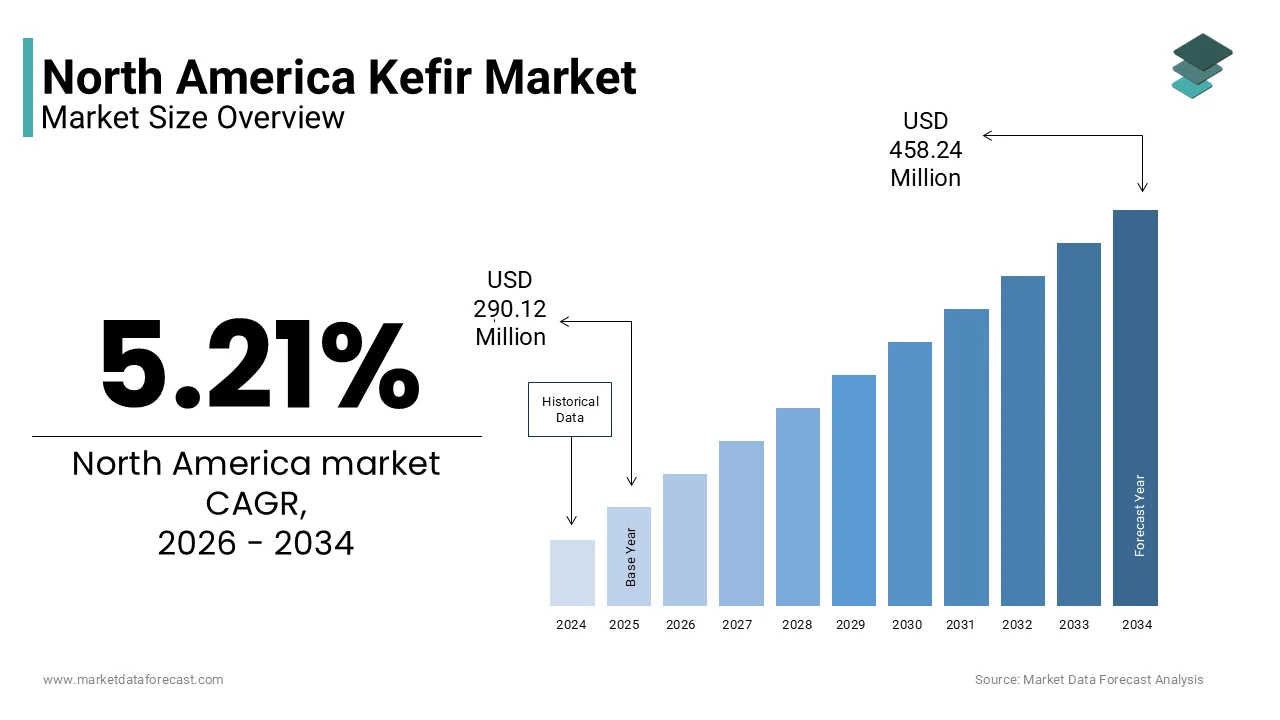
- Market Valuation: Valued at USD 290.12 million in 2025, estimated at USD 305.24 million in 2026, and projected to reach USD 458.24 million by 2034, expanding at a compound annual growth rate (CAGR) of 5.21% during the forecast period from 2026 to 2034.
- Primary Growth Drivers: Rising consumer popularity of kefir products, well-documented nutritional and health advantages (rich in vitamins, minerals, essential amino acids, and conjugated linoleic acid), and heightened awareness regarding healthy diets, functional beverages, and probiotic bacteria.
Key Market Segment Metrics (2026–2034)
| Category | Leading Segment Focus | Fastest-Growing / High-Impact Focus |
|---|---|---|
| By Composition & Type | Milk Kefir (major share) & Greek-style Kefir (leading type) | Water Kefir & Organic/Low-fat options |
| By Flavour | Flavored Kefir (holds major revenue share) | Regular / Unflavored Kefir (fastest-growing due to natural preferences) |
| By Distribution Channel | Supermarkets, Grocery Stores, and Convenience Stores | Online Retailers |
| Regional Analysis | United States (market leader due to key players and health awareness) | United States (fastest-growing region owing to rising disposable income and functional beverage adoption) |
Major Market Players & Market Structure
Market Structure: Competitive regional ecosystem featuring major dairy brands and functional health food enterprises navigating production costs and cold-chain/storage hurdles through product innovation and portfolio diversification.
Key Companies: Lifeway Foods Inc., The Greek Gods, Helios Ingredients, Fresh Made Inc., Groupe Danone, Krasnystaw OSM, Nestle SA, Danisco, Danlac Canada Inc, and The KEFIR Company.
North America Kefir Market Size
The North America Kefir Market size was valued at USD 290.12 million in 2025 and is expected to reach USD 458.24 million by 2034 from USD 305.24 million in 2026. The market's promising CAGR for the predicted period is 5.21%.
The kefir is fermented dairy and non-dairy beverages characterized by a complex symbiotic culture of bacteria and yeasts that offer distinct probiotic benefits. As per the Centers for Disease Control and Prevention, 48 million people in the United States suffer from foodborne illnesses annually driving demand for products with beneficial microbes that promote gut barrier integrity. As per the International Dairy Foods Association, sales of cultured dairy products grew by 6% in 2023 with kefir emerging as a high growth category due to its superior probiotic diversity. Manufacturers are responding by expanding flavor profiles and introducing plant based variants to cater to lactose intolerant and vegan demographics. The unique effervescent texture and tangy flavor profile of kefir differentiate it from other fermented drinks creating a niche yet expanding consumer base. Regulatory bodies such as the Food and Drug Administration continue to evaluate health claims associated with specific probiotic strains influencing product labeling and marketing strategies.
MARKET DRIVERS
Rising Prevalence of Gastrointestinal Disorders Fuels Demand
The increasing incidence of gastrointestinal disorders, as a therapeutic dietary intervention is escalating the growth of the North America kefir market. According to the American Gastroenterological Association, irritable bowel syndrome affects approximately 10 to 15% of the population in the United States and Canada by creating a substantial addressable market for probiotic rich beverages. Kefir contains up to 61 different strains of bacteria and yeasts, which is significantly higher than most yogurts offering broader spectrum microbial support. This scientific backing encourages healthcare providers to recommend kefir for patients suffering from dysbiosis and antibiotic associated diarrhea. The ability of kefir to modulate gut microbiota composition appeals to health conscious consumers seeking natural remedies. Dairy processors are leveraging these health benefits in marketing campaigns to differentiate kefir from standard milk products. The growing awareness of the gut brain axis further amplifies interest in kefir for its potential mental health benefits. This medical and wellness convergence drives sustained volume growth in the retail and clinical nutrition sectors.
Expansion of Plant Based Dietary Trends Supports Innovation
The rapid expansion of plant based dietary trends to innovate with non-dairy bases, which is additionally levelling up the growth of the North America kefir market. Traditional dairy kefir excludes lactose intolerant and vegan consumers who represent approximately 68 million people in North America according to the Lactose Intolerance Foundation estimates. Coconut water kefir has gained popularity for its natural electrolyte content and lower calorie profile appealing to fitness oriented demographics. The Good Food Institute states that investment in alternative protein fermentation technologies reached 1.5 billion dollars in 2023 enabling the development of robust starter cultures for nut and seed based milks. Almond and cashew kefir variants offer rich mouthfeel and neutral flavor profiles that accept fruit infusions well. Retailers are dedicating more shelf space to plant based fermented beverages as consumer demand shifts away from animal derived products. These innovations allow brands to capture new customer segments while maintaining the core probiotic value proposition. The versatility of kefir grains to ferment various sugar sources facilitates diverse product development.
MARKET RESTRAINTS
Sensory Acceptance Barriers Limit Mass Adoption
The distinct sensory characteristics of kefir, including its tangy flavor and effervescent texture create barriers to mass adoption among conventional consumers that is declining the growth of the North America kefir market. The first-time kefir consumers reject the product due to its sour taste and carbonated mouthfeel which differs significantly from smooth yogurt or milk. Traditional kefir fermentation produces small amounts of alcohol and carbon dioxide which can be perceived as spoilage by unfamiliar users. High acidity levels can also cause separation in certain formulations affecting visual appeal on retail shelves. Manufacturers often add significant amounts of sugar or fruit purees to improve palatability, which contradicts the health-conscious positioning of the product. This formulation challenge limits the ability to market kefir as a low sugar health drink. Educational efforts are required to acclimate consumers to the authentic taste profile but these are costly and slow. The narrow window of acceptable flavor balance restricts innovation in savory or unsweetened categories. Negative initial experiences lead to low repeat purchase rates hindering long term market penetration.
Supply Chain Volatility for Raw Materials Impacts Production
The fluctuating availability and pricing of high-quality milk and plant bases create operational uncertainties for kefir manufacturers, which is additionally limiting the growth of the North America kefir market. As per the United States Department of Agriculture, milk prices varied by 18% between 2022 and 2023 due to feed cost inflation and weather related disruptions in major dairy states. Organic milk which is preferred for premium kefir brands faces even greater volatility with supply shortages occurring frequently during peak demand seasons. Plant based alternatives such as oat and coconut milk also face supply constraints due to crop failures and logistical bottlenecks in importing regions. These supply chain instabilities force manufacturers to maintain larger inventory buffers increasing working capital requirements. Inconsistent raw material quality can affect fermentation consistency leading to batch variability and potential waste. Long term contracts with suppliers help mitigate some risks but limit flexibility to switch sources. Price increases are often passed to consumers potentially dampening demand in price sensitive segments.
MARKET OPPORTUNITIES
Functional Beverage Integration Creates New Categories
The integrating kefir into functional beverage categories such as sports recovery and immunity boosting drinks opens new revenue streams is likely to pose as new opportunities for the growth of the North America kefir market. As per the Council for Responsible Nutrition, 75% of American adults use dietary supplements indicating a strong market for functional ingredients delivered through convenient formats. Kefir serves as an ideal carrier for added vitamins minerals and adaptogens due to its liquid form and existing health halo. Adding collagen peptides or electrolytes to kefir enhances its appeal to fitness enthusiasts seeking multifunctional benefits. Ready to drink shots with concentrated kefir cultures offer high potency options for busy consumers. Partnerships with wellness brands allow for co-branded products that leverage established trust and distribution channels. The convenience of single serve packaging aligns with on the go consumption habits prevalent in urban areas. Innovations in shelf stable kefir technologies could expand distribution to convenience stores and vending machines. This diversification reduces reliance on traditional refrigerated dairy aisles. The ability to position kefir as a performance enhancing ingredient elevates its perceived value. These strategic extensions tap into adjacent high growth markets while reinforcing core health benefits.
Personalized Nutrition Trends Drive Customization
The rise of personalized nutrition trends to offer customized probiotic blends tailored to individual health needs, which is also to escalate the expansion of the North America kefir market.According to tThe Precision Nutrition Coalition, 60% of consumers are interested in personalized food recommendations based on their genetic makeup and microbiome data. Companies can leverage direct to consumer models to offer subscription services with kefir variants containing specific strains targeted for sleep stress or skin health. Digital health platforms can integrate with keir brands to provide real time feedback on gut health improvements. Small batch production technologies enable cost effective customization without compromising efficiency. Collaborations with telehealth providers allow for prescription grade kefir recommendations for specific medical conditions. This approach transforms kefir from a commodity product into a personalized health solution commanding premium pricing. Data driven insights help refine formulations based on aggregate user responses improving efficacy. The transparency of strain specific labeling builds trust and educational engagement.
MARKET CHALLENGES
Regulatory Ambiguity Around Health Claims Restricts Marketing
The ambiguous regulatory guidelines regarding probiotic health claims restrict the ability of kefir manufacturers to communicate benefits effectively. This is a major challenge for the growth of the North America kefir market. The Food and Drug Administration maintains strict standards for structure function claims requiring substantial scientific evidence for each specific strain used. The Federal Trade Commission has issued warning letters to several supplement and food companies for unsubstantiated probiotic claims creating a cautious legal environment. This lack of approved claims forces marketers to use vague language such as supports digestive health which lacks impact. European regulations are even stricter limiting cross border marketing consistency for multinational brands. The cost of conducting human clinical trials for each strain combination can exceed 1 million dollars posing a barrier for smaller players. Inconsistent enforcement across states creates confusion for national distributors. Retailers may hesitate to stock products with aggressive health messaging due to liability concerns. This regulatory uncertainty stifles innovation in claim substantiation and slows consumer education. Companies must navigate a complex legal landscape while trying to differentiate their products.
Competition from Established Probiotic Supplements Dilutes Focus
The intense competition from established probiotic supplement manufacturers dilutes consumer focus and spending away from kefir beverages. The competition from established probiotic supplements dilutes focus is also to impede the growth of the North America kefir market. As per the Consumer Healthcare Products Association, probiotic supplement sales reached 1.2 billion dollars in 2023 offering higher colony forming unit counts in convenient pill forms. Many consumers perceive pills as more potent and easier to incorporate into daily routines than perishable dairy drinks. Supplement brands invest heavily in medical endorsements and clinical studies creating a perception of superior efficacy. Kefir manufacturers struggle to compete with the concentrated dosage and stability of freeze-dried strains. The convenience factor of supplements appeals to travelers and those with limited refrigeration access. Price per dose is often lower for supplements making them attractive for budget conscious consumers. Kefir brands must emphasize the synergistic benefits of whole food nutrition and live culture diversity to justify their position. The fragmentation of the probiotic market means kefir competes for share not just with yogurt but with an entire supplement industry. This competitive pressure limits pricing power and market expansion.
REPORT COVERAGE
| REPORT METRIC | DETAILS |
| Market Size Available | 2025 to 2034 |
| Base Year | 2025 |
| Forecast Period | 2026 to 2034 |
| CAGR | 5.21% |
| Segments Covered | By Composition, Type, Flavour, Distribution Channel, and Region |
| Various Analyses Covered | Regional & Country Level Analysis, Segment-Level Analysis, DROC, PESTLE Analysis, Porter’s Five Forces Analysis, Competitive Landscape, Analyst Overview on Investment Opportunities |
| Regions Covered | The United States, Canada, Mexico, and Rest of North America |
| Market Leaders Profiled | Lifeway Foods Inc., The Greek Gods, Helios Ingredients, Fresh Made Inc., Groupe Danone, Krasnystaw OSM, Nestle SA, Danisco, Danlac Canada Inc, and The KEFIR Company |
SEGMENTAL ANALYSIS
By Composition Insights
The milk kefir segment was the largest by accounting for 38.2% of the North America Kefir Market share in 2025 due to its established consumer base and superior probiotic density derived from lactose fermentation. The high protein content and creamy texture of milk kefir align with consumer preferences for satiating snacks and meal replacements. As per the United States Department of Agriculture, per capita consumption of fluid milk products declined by 2% annually while cultured products like kefir grew by 8% indicating a shift toward functional dairy. Milk kefir grains produce a broader spectrum of lactic acid bacteria compared to water-based variants offering enhanced digestive benefits that appeal to health conscious demographics. Canadian dairy processors utilize standardized milk kefir cultures to ensure consistent viscosity and flavor profiles across large scale production runs. The familiarity of dairy formats reduces the educational barrier for new consumers who are already accustomed to yogurt and buttermilk. Retailers allocate prime refrigerated shelf space to milk kefir due to its higher turnover rates and brand recognition. Major dairy cooperatives invest in dedicated fermentation facilities to meet rising demand without compromising quality.
The water kefir segment is attributed to witness a fastest CAGR of 9.4% from 2026 to 2034 with the demand for dairy free and low sugar alternatives. Water kefir is naturally lower in calories and carbohydrates making it attractive to fitness enthusiasts and individuals managing blood sugar levels. As per the American Diabetes Association, 37 million Americans have diabetes creating a substantial market for low glycemic index beverages that still offer probiotic benefits. Water kefir grains ferment sucrose or fruit juices producing a lightly effervescent drink that serves as a healthy alternative to soda. Craft beverage makers in California and Oregon have popularized artisanal water kefir flavors using indigenous fruits and herbs. The ease of home brewing water kefir has also contributed to market awareness with online communities sharing recipes and starter cultures. Retailers are expanding their natural food sections to include bottled water kefir brands that emphasize organic and non GMO ingredients.
By Type Insights
The organic segment was the largest by holding 44.3% of the North America Kefir Market share in 2025 with the stringent consumer preferences for clean label and sustainably sourced ingredients. Consumers associate organic certification with higher animal welfare standards and absence of synthetic pesticides in feed crops. Organic milk kefir commands a price premium of 20 to 30% compared to conventional variants reflecting the higher cost of certified raw materials. Major retailers such as Whole Foods Market and Trader Joe’s have expanded their private label organic kefir offerings to capture value conscious shoppers. Regulatory standards for organic labeling in the United States and Canada ensure consistency and trust in product claims. Farmers supplying organic milk often engage in direct partnerships with kefir manufacturers ensuring traceability and quality control. This transparency resonates with millennials and Gen Z consumers who scrutinize supply chain ethics.
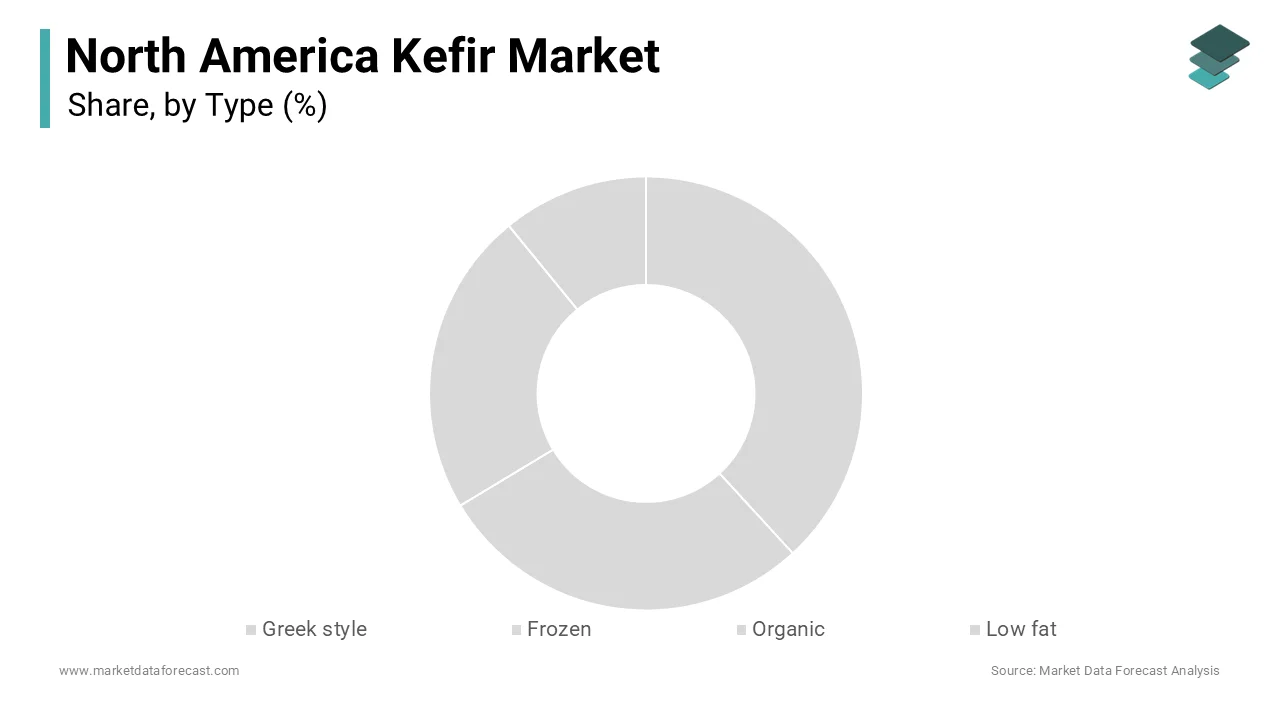
The low-fat segment is likely to grow at a fastest CAGR of 12.4% during the forecast period with the increasing awareness of cardiovascular health and weight management goals. The American Heart Association recommends limiting saturated fat intake to reduce risk of heart disease prompting many consumers to choose low fat dairy options. Low fat kefir provides essential proteins and probiotics with fewer calories appealing to dieters and fitness enthusiasts. Dairy processors utilize skim milk or partially skimmed milk to produce low fat kefir maintaining probiotic efficacy, while reducing lipid content. The National Weight Control Registry notes that successful weight maintainers frequently consume low fat dairy products as part of balanced diets. Marketing campaigns emphasize the light texture and refreshing taste of low fat kefir positioning it as a guilt free indulgence. Schools and institutional cafeterias increasingly include low fat kefir in meal plans to meet nutritional guidelines. This segment benefits from broad demographic appeal ranging from children to seniors. Innovation in flavor masking techniques ensures that low fat variants remain palatable despite reduced mouthfeel.
By Flavour Insights
The flavoured segment was the largest by accounting for a significant share of the North America Kefir Market in 2025, as manufacturers use fruit and herbal infusions to mask the natural tanginess of fermented milk. As per the Flavor and Extract Manufacturers Association, berry and tropical fruit flavors accounted for 60% of new kefir launches in 2023, appealing to younger consumers seeking familiar taste profiles. Sweetened flavoured kefir bridges the gap between dessert and health drink encouraging trial among plain fermented products. Strawberry blueberry and mango are top selling flavors because they complement the acidic notes of kefir without overpowering them. Manufacturers use real fruit purees rather than artificial essences to maintain clean label status and add nutritional value. Convenience stores and vending machines stock single serve flavoured kefir bottles catering to on the go consumption habits. Seasonal limited edition flavors create urgency and drive repeat purchases during specific times of the year.
The regular or plain segment is likely to exhibit a fastest CAGR of 5.2% from 2026 to 2034 with the culinary applications and purist health trends. The chefs increasingly use plain kefir as a base for marinades dressings and dips due to its tenderizing enzymes and tangy profile. Home cooks appreciate the versatility of plain kefir in baking smoothies and overnight oats where added sugars are undesirable. Plain kefir offers the highest probiotic potency per serving since no ingredients dilute the culture concentration. Fitness influencers promote plain kefir as a post workout recovery drink for its protein and electrolyte content without empty calories. Bulk packaging of plain kefir appeals to families and institutions looking for cost effective nutritional solutions. Educational campaigns by dairy councils highlight the simplicity and authenticity of plain kefir fermentation.
By Distribution Channel Insights
The supermarkets segment was the largest by holding a significant share of the North America Kefir Market in 2025 due to their extensive reach and ability to offer wide product variety under one roof. As per the Food Marketing Institute, 85% of grocery shopping trips include purchases of refrigerated dairy products making supermarkets the primary touchpoint for kefir consumers. Large retail chains negotiate favorable terms with suppliers enabling competitive pricing and promotional displays that drive volume. The presence of dedicated health food aisles in mainstream supermarkets has normalized kefir as a staple item rather than a niche product. Store brands offer affordable alternatives to national brands capturing price sensitive shoppers while maintaining quality standards. Supermarkets provide the necessary cold chain infrastructure to preserve kefir freshness and probiotic viability throughout the supply chain. In store sampling events introduce new flavors and educate customers about benefits directly at the point of purchase. The convenience of one stop shopping encourages impulse buys of multi pack kefir bundles.
The online retailers segment is lucratively growing at a fastest CAGR of 11.5% from 2026 to 2034 with the subscription models and direct to consumer brands. The online grocery sales grew by 25% in 2023 with perishable items like kefir benefiting from improved last mile delivery logistics, according to the study. Subscription services allow consumers to receive regular shipments of kefir ensuring consistent intake without frequent store visits. Direct to consumer brands leverage social media marketing to reach niche audiences interested in specific probiotic strains or dietary requirements. Amazon Fresh and Instacart have expanded their refrigerated delivery capabilities enabling same day access to fresh kefir products. Online platforms provide detailed product information and customer reviews helping educated consumers make informed choices. The ability to bundle kefir with complementary health products increases average order value for online retailers. Digital natives prefer the convenience of home delivery especially for bulk purchases of water kefir or specialty flavors.
REGIONAL ANALYSIS
United States Market Analysis
The United States was the top performer in the North America Kefir Market by holding 89.4% of the share in 2025 with the high consumer awareness and diverse product availability. As per the International Dairy Foods Association, the US accounted for 88% of regional kefir sales in 2023 driven by strong demand in coastal and urban centers. California Texas and New York are leading states in consumption due to high concentrations of health conscious populations and ethnic diversity. The presence of major dairy processors such as Lifeway and Green Valley Creamery ensures widespread distribution and innovation in flavors. The Food and Drug Administration regulatory framework supports clear labeling of probiotic contents enhancing consumer trust. Rising prevalence of digestive issues has led to increased recommendation of kefir by healthcare providers. The craft beverage movement has spurred interest in artisanal water kefir brands in Pacific Northwest regions. Supermarket chains have expanded shelf space for kefir reflecting its transition from niche to mainstream. Investment in marketing campaigns by industry associations continues to educate consumers on benefits.
Canada Market Analysis
Canada kefir market was next by holding 11.2% of share in 2025 with the strong dairy traditions and government support for functional foods. The kefir production increased by 10% in 2023, as processors responded to growing demand for probiotic rich products. Quebec and Ontario are primary consumption hubs due to cultural familiarity with fermented dairy items. Health Canada permits specific health claims for probiotics which helps manufacturers differentiate products based on strain efficacy. The Canadian population’s high literacy rate regarding nutrition labels drives preference for organic and non-GMO kefir variants. Retailers such as Loblaws and Metro have introduced private label kefir lines to compete with national brands. Winter climates encourage consumption of nutrient dense foods boosting kefir sales during colder months. Indigenous communities are exploring traditional fermentation methods combined with modern kefir cultures creating unique local products. Cross border trade with the US facilitates exchange of innovative flavors and technologies.
COMPETITIVE LANDSCAPE
The North America kefir market features intense competition among established dairy giants and agile niche brands vying for consumer attention across diverse segments. Large corporations leverage economies of scale and extensive distribution networks to dominate mainstream retail shelves, while smaller players compete on specialization and authentic storytelling. Product innovation serves as a key differentiator with companies investing heavily in novel flavors textures and functional enhancements like added collagen or adaptogens. Regulatory compliance and third-party certifications increasingly influence purchasing decisions especially among health-conscious demographics driving consolidation among suppliers who can meet stringent standards. Price sensitivity varies significantly between mass market and premium segments forcing manufacturers to balance cost efficiency with quality perception. Strategic collaborations with retailers for exclusive launches create temporary competitive advantages but require continuous renewal.
KEY MARKET PLAYERS
Some of the key players in the North America kefir market are
- Lifeway Foods Inc.
- The Greek Gods
- Helios Ingredients
- Fresh Made Inc.
- Groupe Danone
- Krasnystaw OSM
- Nestle SA
- Danisco
- Danlac Canada Inc
- The KEFIR Company
Key Players in the Market
- Lifeway Foods maintains a prominent presence in the North America Kefir Market through its extensive portfolio of cultured dairy beverages and probiotic supplements. The company recently expanded its manufacturing facility in Illinois to increase production capacity for organic and plant-based kefir variants. This strategic investment supports growing consumer demand for clean label functional foods while improving supply chain resilience. Lifeway collaborates with major retailers to secure premium shelf placement and conducts educational campaigns highlighting strain specific health benefits. Their innovation team continuously develops new flavors and formats including single serve shots and frozen kefirs to attract younger demographics.
- Green Valley Creamery strengthens its market position by specializing in lactose free and organic kefir products tailored to sensitive digestive systems. The company recently launched a line of Greek style kefirs with higher protein content to appeal to fitness oriented consumers seeking functional nutrition. They partner with certified organic dairy farms to ensure sustainable sourcing and traceability which resonates with environmentally conscious buyers. Green Valley invests in digital marketing strategies targeting health communities on social media platforms to drive brand awareness and trial. Their focus on allergen friendly formulations addresses unmet needs in the specialty diet segment. These actions demonstrate a commitment to niche differentiation and quality assurance that builds trust among loyal customer bases seeking safe and effective probiotic solutions.
- Maple Hill Creamery leverages its 100% grass fed dairy positioning to offer premium kefir products with superior nutritional profiles. The company recently introduced regenerative agriculture certified kefirs to align with emerging sustainability trends and consumer values regarding soil health. They collaborate with independent grocers and natural food cooperatives to expand distribution beyond conventional supermarkets into specialty retail environments. Maple Hill emphasizes transparency in farming practices through farm tours and storytelling content that educates consumers about grass fed benefits. Their product development focuses on minimal processing and simple ingredient lists to maintain clean label integrity.
Top Strategies Used by Key Market Participants
Key players in the North America Kefir Market employ several strategic approaches to maintain competitive advantage and drive growth. Companies focus heavily on expanding organic and lactose free product lines to address specific dietary restrictions and wellness trends. Strategic partnerships with sustainable dairy farms ensure consistent supply of high-quality raw materials, while supporting regenerative agriculture narratives. Investment in manufacturing capacity allows firms to meet rising demand without compromising product freshness or probiotic viability. Innovation in packaging formats such as single serve bottles and resealable containers enhances convenience for on-the-go consumption. Marketing campaigns emphasize scientific validation of probiotic strains to build credibility and differentiate from generic alternatives. Expansion into e commerce channels enables direct consumer engagement and subscription revenue streams. Educational initiatives targeting healthcare providers encourage professional recommendations for digestive health management.
MARKET SEGMENTATION
This research report on the North America kefir market has been segmented and sub-segmented based on the following categories.
By Composition
- Water Kefir
- Milk Kefir
By Type
- Greek style
- Frozen
- Organic
- Low fat
By Flavour
- Regular Kefir
- Flavoured Kefir
By Distribution Channel
- Supermarkets
- Convenience Stores
- Grocery Stores
- Online Retailers
By Country
- The United States
- Canada
- Rest of North America