- Product Description Description
- Table of Contents TOC
- List of Table & Figure LOT
- Get Free Sample PDF Sample PDF
Market Size, 2025
$34.42 BnMarket Estimate, 2026
$38.52 BnMarket Forecast, 2034
$94.63 BnCAGR, 2026–2034
11.89%North America Liver Disease Treatment Market Size, Growth, Trends & Forecast (2026–2034)
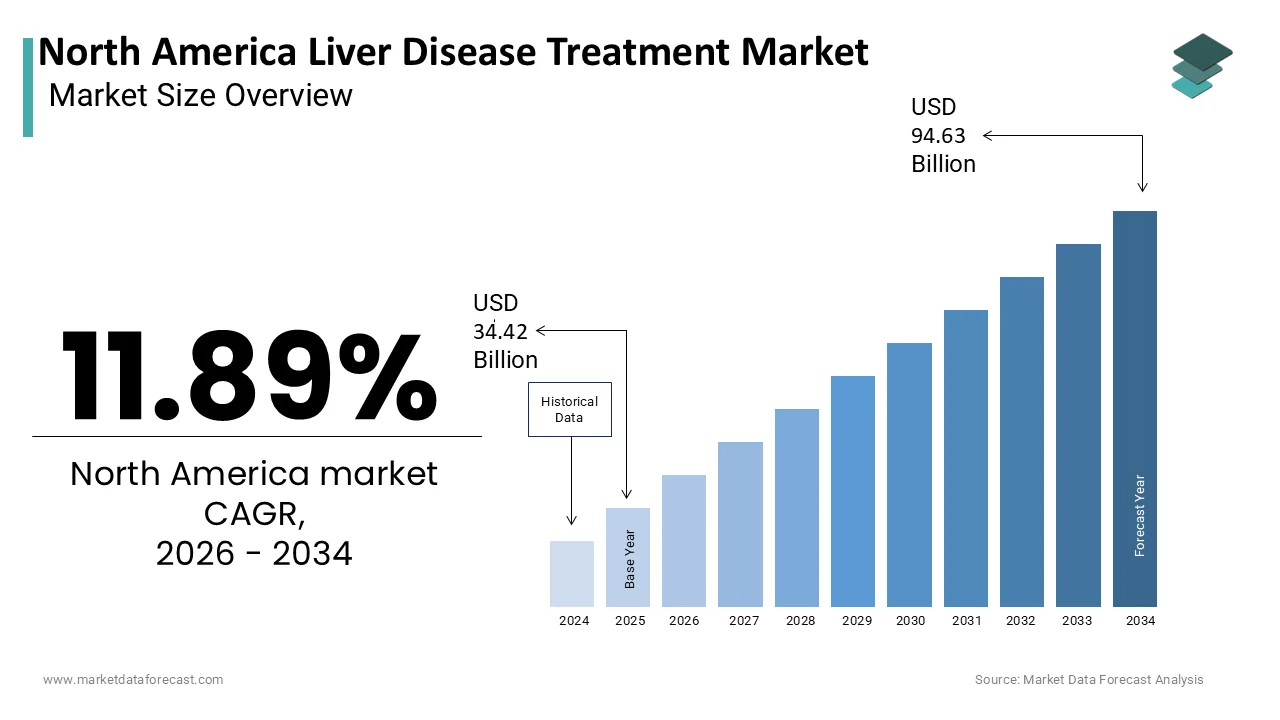
The North America liver disease treatment market size was valued at USD 34.42 billion in 2025, is anticipated to reach USD 38.52 billion in 2026, and is projected to scale to USD 94.63 billion by 2034, expanding at a compound annual growth rate (CAGR) of 11.89% during the forecast period from 2026 to 2034. Market expansion is primarily propelled by the rising prevalence of obesity and type 2 diabetes fueling metabolic dysfunction-associated liver disease, the widespread adoption of non-invasive diagnostics, and an influx of novel therapeutic approvals.
Key Executive Metrics (At-a-Glance)
- 2025 Base Valuation: USD 34.42 Billion
- 2026 Current Valuation: USD 38.52 Billion
- 2034 Forecast Valuation: USD 94.63 Billion
- Compound Annual Growth Rate (CAGR): 11.89% (2026–2034)
- Leading Country Market: United States (holding the highest regional share due to extensive healthcare spending and high metabolic disease incidence)
- Key Geographic Regions: United States, Canada, and Rest of North America
Core Market Drivers & Opportunities
- Obesity & Diabetes Epidemic: Surging metabolic dysfunction-associated steatotic liver disease (MASLD) becoming the fastest-growing hepatology indication.
- Non-Invasive Diagnostics: Universal use of FIB-4 scoring and vibration-controlled transient elastography replacing invasive biopsies for earlier detection.
- Combination Therapies & Digital Health: Multi-target pipeline regimens and prescription digital therapeutics enhancing patient compliance and therapeutic efficacy.
Primary Market Restraints & Challenges
- Reimbursement Barriers: Restrictive payer coverage policies and prior authorization delays limiting patient access to novel metabolic medications.
- Specialist Workforce Shortages: Severe deficits in practicing hepatologists creating long wait times and diagnostic bottlenecks.
Market Segmentation: Largest and Fastest-Growing Sectors
| Segment Category | Largest Segment | Fastest-Growing Segment |
|---|---|---|
| By Treatment Modality | Antiviral Therapies (Entrenched standard of care for chronic hepatitis B & C) | Immunosuppressive Agents (CAGR of 14.4%, driven by autoimmune hepatitis diagnostics) |
| By Disease Type | Non-Alcoholic Fatty Liver Disease / MASLD (Driven by continental obesity epidemic) | Liver Cancer / HCC (CAGR of 17.9%, driven by intensified surveillance & systemic therapies) |
| By Country | United States (Dominant regional market share) | United States & Canada (Driven by centralized coverage and screening adoption) |
Major Industry Players Profiled
Key industry participants shaping the North American liver disease treatment landscape include Gilead Sciences, Inc., Pfizer Inc., Merck & Co., Inc., Johnson & Johnson, Novartis AG, Roche Holding AG, Sanofi, Abbott Laboratories, Bayer Schering AG, AstraZeneca plc, and Madrigal Pharmaceuticals Inc.
North America Liver Disease Treatment Market Size
The North America Liver Disease Treatment Market is projected to grow from USD 34.42 billion in 2025 to USD 38.52 billion in 2026 and reach USD 94.63 billion by 2034, registering a CAGR of 11.89% during the forecast period from 2026 to 2034.
According to the American Liver Foundation, approximately 100 million Americans are estimated to have some form of liver disease, with metabolic dysfunction-associated steatotic liver disease affecting nearly 30% of the adult population in the United States. As per the Centers for Disease Control and Prevention, chronic liver disease and cirrhosis accounted for over 54,000 deaths in the United States in 2022, making it a leading cause of mortality among adults aged 45 to 64. According to the Canadian Liver Foundation, 1 in 4 Canadians is at risk of developing liver disease,e highlighting the transnational burden across the continent. Treatment paradigms are shifting from reactive management of end-stage disease toward early intervention driven by non-invasive diagnostics and novel therapeutics targeting fibrosis regression. Regulatory oversight by the US Food and Drug Administration and Health Canada continues to evolve with expedited pathways for breakthrough therapies addressing unmet needs in fibrotic liver disease where historically few approved options existed beyond lifestyle modification and transplant eligibility management.
MARKET DRIVERS
Metabolic Dysfunction Associated Steatotic Liver Disease Prevalence Expansion Obesity Epidemic Fuels Unprecedented Patient Volume Growth
The rising prevalence of obesity and type 2 diabetes across North America is a major factor driving the North American liver disease treatment market as metabolic dysfunction associated steatotic liver disease becomes the fastest-growing indication for hepatology care. According to the National Health and Nutrition Examination Survey data published in 2024, 42% of US adults meet criteria for obesity, while 11% have diagnosed diabetes,s creating a massive at-risk population for progressive liver injury. As per the American Association for the Study of Liver Diseases, 25% to 30% of these individuals develop steatohepatitis with fibrosis, representing over 20 million potential treatment candidates in the United States alone. As per the Public Health Agency of Canada, 36% of Canadian adults were classified as obese in 20,,23 with metabolic liver disease now surpassing viral hepatitis as the leading cause of chronic liver disease in both countries. Unlike viral indications where cure rates reduce prevalent cases over time, metabolic liver disease incidence tracks directly with worsening cardiometabolic health trends, showing no signs of plateau. This structural demographic shift transforms hepatology from a niche specialty focused on rare diseases into a high-volume chronic care discipline requiring scalable therapeutic solutions. As per clinical trial registries, over 40 phase 2 and 3 clinical trials active in 2024 specifically target metabolic steatohepatitis, reflecting recognition that this single indication will dominate treatment volumes for decades.
Non-invasive Diagnostic Adoption Accelerates Early Treatment Initiation
Widespread implementation of non-invasive fibrosis assessment technologies removes historical barriers to diagnosis,s enabling earlier therapeutic intervention before irreversible decompensation occurs, which is further favouring the expansion of the North American liver disease treatment market. According to the American Gastroenterological Association Clinical Care Pathway updated in 2024, primary care providers are now recommended to usFIB-4 4 scoring universally for patients with metabolic risk factors, followed by vibration-controlled transient elastography for indeterminate scores, creating systematic case-finding infrastructure absent previously. As per Centers for Medicare and Medicaid Services claims data analysis published in early 2024, Medicare expanded coverage for elastography procedures in 2023, resulting in a 35% year-over-year increase in utilization. As per the Canadian Association of Hepatology guidelines released in January 2024, non-invasive testing is now a first-line recommendation, replacing biopsy for staging fibrosis in most clinical scenarios,s reducing patient reluctance and specialist referral bottlenecks. Historically, diagnosis required invasive liver biopsy, limiting identification to advanced cases where therapeutic options were exhausted. Non-invasive tools enable detection at F2 or F3 fibrosis stages when antifibrotic and metabolic therapies demonstrate greatest efficacy, improving trial enrolment and real-world treatment eligibility. This diagnostic democratization expands addressable patient populations by orders of magnitude compared to biopsy-era constraints, transforming latent disease burden into active treatment demand across community and academic practice settings throughout North America.
MARKET RESTRAINTS
Reimbursement Uncertainty for Novel Metabolic Therapies:s Payer Coverage Restrictions Limit Patient Access Despite Approval
Ambiguous reimbursement policies for newly approved metabolic liver disease medications create significant access barriers even after regulatory authorization, limiting realized market potential below epidemiological capacity, which is a major impediment to the North American liver disease treatment market. According to specialty pharmacy data from 2024, only 38% of commercial health plans had established positive coverage policies for resmetirom within six months of FDA approval,l with many requiring documented F3 fibrosis via biopsy despite the label permitting non-invasive staging. Medicare Administrative Contractors issued conflicting local coverage determinations in late 2023, creating geographic variability where beneficiaries in certain regions face automatic denials while others receive approval,l generating inequitable access based solely on residence. As per the Patient Advocate Foundation Co Pay Assistance Report, average out-of-pocket costs for uninsured or underinsured patients exceed 800 dollars monthly for novel metabolic agents, forcing discontinuation or non-initiation in 45% of prescribed cases during 2024. Unlike oncology or rare disease drugs where precedent supports premium pricing, metabolic liver disease occupies an uncertain middle ground between chronic condition management and specialty therapy, confusing payer medical directors accustomed to binary categorizations. As per clinical workflow reports, prior authorization requirements average a 14-day delay in treatment initiation, during which disease progression may occur, undermining therapeutic benefit. These administrative frictions function as de facto rationing mechanisms,s suppressing demand regardless of clinical need or regulatory status until standardized national coverage policies emerge,ge providing clarity for prescribers and patients navigating fragmented insurance landscapes.
High Cost of Curative Viral Hepatitis Regimens: Budget Impact Concerns Restrict Universal Screening and Treatment
Despite the availability of highly effective direct-acting antivirals for hepatitis C virus, high acquisition costs continue limiting universal test-and-treat implementation, particularly in publicly funded healthcare systems and safety-net settings, which is further hindering regional market expansion. According to the Centers for Disease Control and Prevention Hepatitis C Surveillance Report 2023, an estimated 2.2 million Americans remain chronically infected, yet only 34% received treatment between 2019 and 202,3 with cost cited as the primary barrier in state health department assessments. As per the Canadian Agency for Drugs and Technologies in Health, pan-Canadian pricing agreements were negotiated, but provincial formulary restrictions still require fibrosis staging thresholds before approving therapy, delaying treatment for early-stage patients who would benefit most from cure preventing transmission. As per the Medicaid Budget and Expenditure System data, hepatitis C drug spending consumed 8% to 12% of total pharmacy budgets in 15 states during fiscal year 2023, forcing caps on monthly new starts despite federal matching funds availability. While list prices have declined through competition, net costs remain substantial for cash-strapped public programs serving disproportionate shares of affected populations, including people who inject drugs and incarcerated individuals. Budget neutrality requirements compel tradeoffs between hepatitis C treatment and other priorities,s creating artificial scarcity in systems designed to provide comprehensive care. Value-based contracting models align payment with long term savings from prevented cirrhosis and transplantation; fiscal constraints will continue suppressing treatment volumes below epidemiological need.
MARKET OPPORTUNITIES
Combination Therapy Development for Fibrosis Regression: Multi-Target Approaches Unlock Synergistic Efficacy Potential
Strategic pivot toward combination regimens targeting complementary pathophysiological pathways represents a promising opportunity for the North American liver disease treatment market. According to the Journal of Hepatology Pipeline Review published in March 2024, over 25 phase 2 combination trials are currently enrolling patients pairing metabolic modulators with antifibrotics, anti-inflammatories, or gut-targeted agents, recognizing that single-mechanism interventions insufficiently address multifactorial disease biology. Intercept Pharmaceuticals and Viking Therapeutics announced collaborative development agreements in early 2024 combining thyroid hormone receptor beta agonists with GLP 1 receptor agonists, leveraging complementary effects on hepatic fat reduction and insulin sensitivity to enhance histological outcomes. As per consensus market forecasts, combination therapies are projected to capture 60% of metabolic liver disease market revenue by 2028 as clinicians recognize superior response rates versus sequential monotherapy switching strategies. Regulatory agencies,s including the FDA and Health Canada,ada have signaled openness to adaptive trial designs and surrogate endpoints, ints accelerating development timelines for rational combinations demonstrating mechanistic synergy. Unlike oncology, where combination standards emerged through empirical testing, hepatology benefits from deeper pathway understanding, enabling hypothesis-driven regimen design and reducing attrition risk. This scientific maturation creates first-mover advantages for sponsors establishing intellectual property positions around specific combinations rather than individual molecules,s positioning them to dominate next-generation treatment algorithms as the field evolves beyond the single-target paradigm.
Digital Therapeutics Integration for Lifestyle Modification Support Behavioral Intervention Platforms Enhance Pharmacological Outcomes
Integration of prescription digital therapeutics with pharmacological treatment creates an opportunity to amplify drug efficacy through sustained behavioral change, addressing root causes of metabolic liver disease. According to the Digital Therapeutics Alliance Outcomes Database 2024, FDA-authorized digital programs for weight management demonstrated an additional 5% to 7% body weight loss beyond medication alone in randomized trials, translating to clinically meaningful improvements in liver enzymes and fibrosis markers when combined with metabolic agents. As per clinical study data, LivaNova and Noom received Breakthrough Device Designation in February 2024 for an integrated platform combining cognitive behavioral therapy modules with GLP 1 prescribing protocols specifically validated in metabolic liver disease populations, showing 40% higher adherence rates versus standard care. As per the American Medical Association Digital Medicine Payment Advisory Group, 28 payers now reimburse prescription digital therapeutics as adjunctive therapy for metabolic conditions,s creating viable commercial pathways beyond direct-to-consumer models. Unlike standalone apps, these integrated platforms generate real-world adherence and outcome data supporting value-based contracting arrangements where payment links to measurable biomarker improvement. Payers increasingly view digital therapeutics as cost containment tools, reducing long-term complication expenses and justifying coverage despite upfront software costs. This convergence of behavioral science, pharmacology, and health economics creates differentiated value propositions enabling premium positioning for bundled offerings addressing holistic disease management beyond pill dispensing alone.
MARKET CHALLENGES
Diagnostic Algorithm Implementation Variability across Practice Settings Inconsistent Adherence Density Creates Care Fragmentation
Despite publication of standardized diagnostic pathways, significant variation persists in clinical adoption, creating missed opportunities for timely treatment initiation and equitable care delivery. According to the American College of Gastroenterology Quality Registry Analysis 2024, only 42% of eligible patients with elevated liver enzymes received recommendedFIB-44 calculations in primary care settings, with rural and community practices showing a 30 percentage point deficit versus academic centers. As per Veterans Health Administration Hepatitis Innovation Team documentation, protocol adherence varied from 28% to 89% across facilities despite identical electronic health record prompts and training resources,s indicating cultural and workflow barriers beyond technical capability. As per the Canadian Primary Care Sentinel Surveillance Network, family physicians correctly interpreted non-invasive fibrosis scores in only 55% of cases, resulting in inappropriate reassurance or unnecessary specialist referrals depending on misclassification direction. Guideline dissemination alone proves insufficient without embedded decision support, performance feedback, and specialist mentorship,p particularly in resource-constrained environments where hepatology consultation access is limited. This implementation gap means millions of patients remain undiagnosed or misstaged despite available tools suppressing treatment demand artificially. Addressing this requires sustained quality improvement infrastructure investment beyond guideline publication,n creating dependency on health system priorities and funding cycles independent of therapeutic innovation velocity.
Workforce Shortages in Hepatology and Advanced Practice Providers: Specialist Capacity Constraints Bottleneck Diagnosis and Management
Critical shortages of trained hepatologists and advanced practice providers limit system capacity to absorb growing patient volumes identified through expanded screening efforts, which is a significant challenge to the North American liver disease treatment market. According to the Association of American Medical Colleges Physician Specialty Data Report 2024, there are only 1.8 practicing hepatologists per 100,000 US population,n with projections indicating a 25% shortfall by 2030 as retirements accelerate and fellowship positions fail to expand proportionally to disease burden. As per the American Association for the Study of Liver Diseases Workforce Survey, the median wait time for a new patient appointment exceeds 14 weeks in metropolitan areas and 22 weeks in rural regions, ns forcing disease progression during delay periods. As per the Canadian Medical Association Specialist Supply Report, 6 provinces have fewer than 5 full-time equivalent hepatologists serving entire populations, creating geographic deserts where diagnosis depends entirely on generalist competence without specialist backup. Task shifting to nurse practitioners and physician assistants offers partial solutions, but training programs lack standardized hepatology curricula, producing graduates uncomfortable managing complex fibrotic disease independently. Telehealth expansion mitigates geographic barriers, but cannot substitute for hands-on assessment in decompensated cases requiring procedural expertise. Without workforce expansion through increased fellowship slots, loan repayment incentives, and scope of practice optimization, therapeutic innovations will reach only a fraction of eligible patients constrained by human capital rather than drug availability or payer coverage limitations.
REPORT COVERAGE
| REPORT METRIC | DETAILS |
| Market Size Available | 2025 to 2034 |
| Base Year | 2025 |
| Forecast Period | 2026 to 2034 |
| Segments Covered | By Treatment Modality, Disease Type, and Region. |
| Various Analyses Covered | Global, Regional, and Country-Level Analysis, Segment-Level Analysis, Drivers, Restraints, Opportunities, Challenges; PESTLE Analysis; Porter’s Five Forces Analysis, Competitive Landscape, Analyst Overview of Investment Opportunities |
| Countries Covered | The United States, Canada, Rest of North America |
| Market Leaders Profiled | Gilead Sciences, Inc.; Pfizer Inc.; Merck & Co., Inc.; Johnson & JohnsonNovartis AGRoche Holding AGSanofiAbbott LaboratoriesBayer Schering AG; AstraZeneca plc |
SEGMENTAL ANALYSIS
By Treatment Modality Insights
The antiviral therapies segment dominated the market by capturing the largest share of the regional market in 2025. The growth of the antiviral therapies segment in the North American market is attributed to the entrenched standard of care for chronic hepatitis B and C virus infections, where direct-acting antivirals represent high-value curative interventions. According to the Centers for Disease Control and Prevention Hepatitis Surveillance Report 2024, approximately 2.2 million Americans live with chronic hepatitis C infection, generating sustained demand for pan-genotypic regimens despite declining incident cases. As per the Canadian Liver Foundation, 250,000 Canadians are chronically infected with hepatitis C, with provincial drug plans covering indirect-acting antivirals as first-line therapy, creating stable publicly funded revenue streams across all provinces. As per national prescription audit data from 2023, antiviral prescriptions generated 4.8 billion dollars in North American sales during 2023, representing 38% of total liver disease pharmaceutical spending, reflecting premium pricing for finite-duration curative courses versus chronic maintenance therapies. Unlike immunosuppressants or corticosteroids requiring indefinite dosing with cumulative toxicity concerns, antivirals offer defined 8- to 12-week treatment episodes with over 95% sustained virologic response rates, justifying value-based pricing models accepted by payers. This combination of clinical efficacy, finite treatment duration, and established reimbursement infrastructure creates revenue stability independent of new patient incidence trends as backlogs of prevalent undiagnosed cases continue entering treatment cascades through expanded screening initiatives.
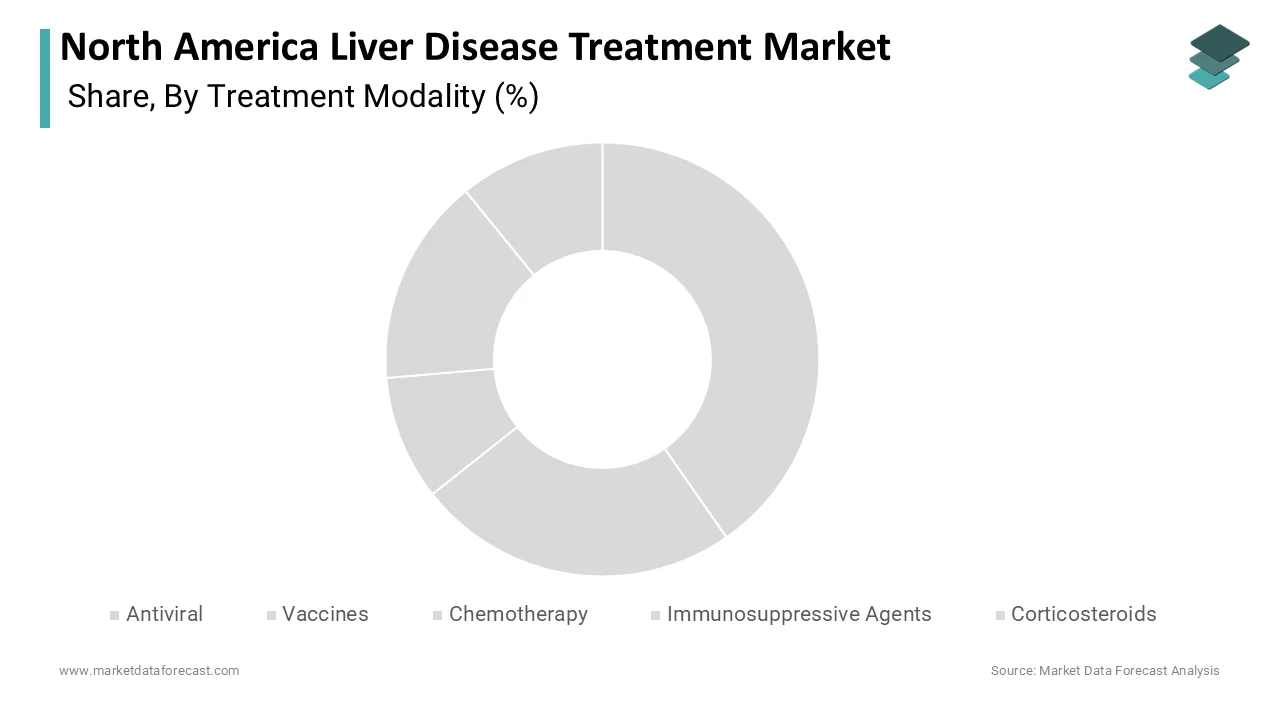
However, the immunosuppressive agents segment is anticipated to register a promising CAGR of 14.4% over the forecast period in this regional market owing to the increased recognition and diagnosis of autoimmune hepatitis and overlap syndromes previously misclassified as cryptogenic liver disease. According to the Autoimmune Hepatitis Association Epidemiology Study published in March 2024, diagnosed prevalence increased 32% between 2019 and 2023 as noninvasive biomarker panels and standardized diagnostic scoring systems improved detection sensitivity in community practice settings. The American College of Gastroenterology Clinical Guidelines updated in February 2024 recommend lower thresholds for initiating azathioprine and mycophenolate mofetil therapy in patients with interface hepatitis on biopsy, expanding eligible treatment populations beyond advanced fibrosis stages. As per Optum Clinformatics Data Mart analysis, new starts for autoimmune hepatitis specific immunosuppression grew 28% year over year in 202,3 reflecting both true incidence increases and reduced diagnostic latency from heightened clinician awareness. Unlike metabolic liver disease,se where lifestyle modification remains the first-line intervention, autoimmune hepatitis requires prompt pharmacologic suppression to prevent irreversible damage, creating immediate treatment imperatives upon diagnosis. Novel steroid-sparing agents, including budesonide formulations and calcineurin inhibitors,s gain traction as second-line options for intolerant patients, adding premium-priced alternatives to traditional azathioprine backbones. This diagnostic awakening combined with therapeutic diversification drives segment expansion exceeding mature antiviral categories despite smaller absolute patient volumes.
By Disease Type Insights
The non-alcoholic fatty liver disease segment held the major share of the regional market in 2025 and is expected to continue holding the dominant position in this regional market during the forecast period due to its direct correlation with continental obesity and diabetes epidemics affecting tens of millions. According to the National Health and Nutrition Examination Survey 2024 data release, 38% of US adults meet criteria for metabolic steatotic liver disease, representing over 100 million affected individuals,s dwarfing viral or autoimmune etiologies by orders of magnitude. As per the Public Health Agency of Canada Chronic Disease Surveillance System reports, 33% of Canadian adults have imaging or biomarker evidence of steatosis, with progression to steatohepatitis occurring in 20% to 25%, creating substantial treatable subpopulations. As per the American Liver Foundation Economic Burden Study, metabolic liver disease accounts for 58% of all hepatology clinic visits and 45% of liver-related hospitalizations in North America, reflecting healthcare utilization dominance translating directly to treatment demand. Unlike hepatitis, where cure reduces prevalent cases, or alcohol induced diseas,e where behavioral change may reverse pathology, metabolic liver disease tracks inexorably with worsening cardiometabolic health trends, showing no epidemiological inflection points. This structural prevalence advantage ensures segment leadership regardless of therapeutic innovation velocity, as even modest treatment penetration rates generate absolute patient volumes exceeding entire viral hepatitis treated populations. Payer formulary committees increasingly recognize metabolic liver disease as the highest priority indication given scale driving coverage decisions that reinforce segment dominance through access facilitation.
On the other hand, the liver cancer segment is estimated to grow at the fastest CAGR of 17.9% during the forecast period in the North American market owing to the intensified surveillance in at-risk populations and proliferation of approved systemic therapy options. According to the American Cancer Society Cancer Facts and Figures 2024, hepatocellular carcinoma incidence increased 3.1% annually from 2018 to 2023, contrasting with declining rates for most other malignancies,s reflecting aging hepatitis C cohorts and rising metabolic liver disease-related carcinogenesis. The National Comprehensive Cancer Network Guidelines Version 2.2024 expanded surveillance recommendations to include patients with metabolic dysfunction-associated steatotic liver disease and F3 fibrosis, adding an estimated 4 million persons to eligible screening pools beyond traditional viral and alcoholic cirrhosis criteria. As per oncology pipeline reviews, 14 novel systemic therapies received FDA approval for hepatocellular carcinoma between 2020 and 202,4 including immunotherapy combinations and tyrosine kinase inhibitors, rs transforming previously limited treatment landscapes and extending median survival from 11 to 19 months in pivotal trials. Unlike early-stage disease amenable to curative resection or ablation, advanced hepatocellular carcinoma now offers multiple lines of sequential therapy, increasing treatment duration and cumulative drug exposure per patient. Surveillance expansion detects more cases at treatable stages, while therapeutic innovation extends survival,l creating multiplicative effects on prevalent treated populations. This convergence of earlier detection and longer treatment courses explains superior growth velocities despite smaller absolute case numbers versus metabolic or viral segments.
COUNTRY LEVEL ANALYSIS
United States Liver Disease Treatment Market Analysis
The United States dominated the market by capturing the highest share of the North American market in 2025 and is likely to maintain its overwhelming dominance in the North America liver disease treatment market, driven by expanding healthcare expenditures and surging metabolic disease prevalence. As per Centers for Medicare and Medicaid Services National Health Expenditure Accounts, the world's largest healthcare expenditure base reached 4.9 trillion dollars in 202,3 supporting premium pricing for novel therapeutics unavailable in single-payer systems. The country hosts the headquarters of major hepatology pharmaceutical companies, including Gilead, Intercept, and Madrigal, concentrating R&D investment, clinical trial activity, and early access programs domestically, creating innovation feedback loops accelerating therapeutic adoption. As per national market data, Medicare Part D and commercial plan coverage for direct-acting antivirals and emerging metabolic agents generated 12.8 billion dollars in liver disease pharmaceutical spending in 2023, representing the single largest national market globally. According to health data surveys, obesity prevalence exceeding 42% of the adult population creates unmatched metabolic liver disease patient volume, driving demand for next-generation antifibrotics and metabolic modulators. However, Inflation Reduction Act Medicare price negotiation provisions targeting drugs after 9 years on the market create long term revenue uncertainty for chronic therapies, potentially constraining future investment despite current volume strength. Private insurance fragmentation complicates uniform access, but enables premium tier positioning for innovative products absent in centralized procurement systems characterizing neighboring markets.
Canada Liver Disease Treatment Market Analysis
In the coming years, Canada is expected to experience steady growth in its liver disease treatment market, supported by universal public payer systems and coordinated national strategies. According to Statistics Canada Health Spending Data 2024, national pharmaceutical expenditure reached 42 billion Canadian dollars,s with liver disease therapies comprising 3.2% of specialty drug spend distributed through provincial drug plans exercising monopsony purchasing power. As per the Canadian Agency for Drugs and Technologies in Health, 18 liver disease therapeutics were evaluated in 20,23 with positive recommendations averaging 11 months post Health Canada approval versus immediate US launches,hes reflecting systematic delays inherent to health technology assessment processes. As per public health reports, publicly funded hepatitis C elimination programs achieved 78% treatment coverage among diagnosed cases by 2023, demonstrating the success of coordinated national strategies despite budget constraints limiting simultaneous metabolic liver disease therapeutic access. Patented Medicine Prices Review Board ceiling regulations cap list prices at the median of comparator countries, suppressing revenue per unit versus US benchmarks,s though volume stability offsets margin compression. Recent federal pharmacare legislation proposes national formulary harmonization, potentially reducing interprovincial variation, but introducing additional negotiation layers that may further delay novel metabolic agent access. Universal coverage ensures equitable baseline access, but caps upside potential relative to US market dynamics where premium pricing sustains higher per capita spending.
COMPETITIVE LANDSCAPE
Competition within the North American liver disease treatment market exhibits bifurcated intensity characterized by mature rivalry in antiviral segments versus emerging land grab dynamics in metabolic liver disease therapeutics. Antiviral categories feature an oligopolistic structure among established players competing primarily on formulary positioning and patient support services rather than clinical differentiation, given comparable cure rates. Barriers to entry remain substantial due to patent protection and generic competition compressing margins for late entrants without meaningful therapeutic advantage. The metabolic steatohepatitis segment displays intense innovation competition, with over 40 phase 2 and 3 programs pursuing first-in-class orbest-in-class positioning through superior histological outcomes, safety profiles, or combination potential. Regulatory expedited pathways enable faster market entry but also accelerate competitive timelines, compressing exclusivity windows and intensifying the race for payer coverage. Diagnostic companies exert indirect competitive influence by shaping treatment eligibility through staging algorithm adoption, favoring therapies aligned with noninvasive assessment capabilities. Payer consolidation enhances buyer leverage,e enabling aggressive prior authorization requirements and outcome-based contracting demanding robust evidence generation infrastructure. Competitive intensity varies significantly by disease type, with viral hepatitis experiencing commoditization pressure while autoimmune and metabolic segments reward clinical differentiation and access excellence. This dynamic landscape rewards companies balancing innovation velocity with commercial execution capabilities while punishing those unable to adapt to value-driven procurement paradigms reshaping hepatology therapeutics through 2030.
KEY MARKET PLAYERS
Some of the companies that are playing a dominating role in the North America Liver Disease Treatment Market include:
- Gilead Sciences, Inc.
- Pfizer Inc.
- Merck & Co., Inc.
- Johnson & Johnson
- Novartis AG
- Roche Holding AG
- Sanofi
- Abbott Laboratories
- Bayer Schering AG
- AstraZeneca plc
TOP LEADING PLAYERS IN THE MARKET
- Gilead Sciences Inc maintains profound influence across the North American liver disease treatment landscape through its foundational direct-acting antiviral portfolio that established curative standards for hepatitis C virus infection. The company contributes extensively by sustaining viral suppression therapy access for chronic hepatitis B patients through tenofovir alafenamide and emtricitabine formulations serving over one million treated individuals annually across the United States and Canada. Gilead recently strengthened its position by expanding Biktarvy indications to include pediatric populations in February 2024, addressing underserved segments while investing heavily in metabolic dysfunction-associated steatotic liver disease pipeline candidates targeting fibrosis regression. Their patient assistance programs ensure continuity of care for uninsured populations, reducing treatment abandonment rates. Strategic partnerships with diagnostic companies integrate noninvasive fibrosis assessment into prescribing workflows,s facilitating earlier intervention. These initiatives reinforce clinical leadership and access infrastructure without relying on market share metrics to demonstrate sustained competitive advantage in antiviral therapeutics and emerging metabolic liver disease innovation throughout North American healthcare systems.
- Madrigal Pharmaceuticals Inc plays a pivotal role in the North American liver disease treatment ecosystem as a first mover in metabolic dysfunction-associated steatotic liver disease pharmacotherapy following resmetirom regulatory approval. The company contributes regionally by establishing a treatment paradigm for F2 to F3 fibrosis stages previously lacking approved pharmacologic options, creating a new therapeutic category serving millions of eligible patients. Madrigal recently enhanced its market position by launching a comprehensive payer engagement strategy in March 2024, securing positive coverage decisions from 38 commercial plans within six months of FDA authorization,n accelerating patient access. Their real-world evidence generation program tracks histological outcomes in community practice settings, validating trial efficacy and supporting formulary expansion beyond restrictive criteria. Collaboration with hepatology societies develops standardized monitoring protocols integrating drug therapy with noninvasive diagnostics. Manufacturing scale-up ensures supply reliability amid anticipated demand surge. These platform-centric strategies differentiate offerings through first-mover advantage and evidence generation while creating switching costs via integrated care pathways, strengthening long-term positioning in the nascent metabolic liver disease segment before competitors achieve approval.
- Intercept Pharmaceuticals Inc has established a substantial presence in the North American liver disease treatment market through its obeticholic acid franchise, serving primary biliary cholangitis patients as the only approved second-line therapy for ursodeoxycholic acid inadequate responders. The company contributes uniquely by maintaining orphan disease expertise and specialized commercial infrastructure supporting rare liver condition management requiring complex dosing and monitoring protocols. Intercept recently strengthened its position by advancing combination development programs pairing obeticholic acid with fibrates and GLP-1 agonists targeting metabolic steatohepatitis, leveraging an existing safety database to accelerate regulatory pathways for expanded indications. Their patient support programs provide nursing education and laboratory monitoring coordination, addressing safety concerns that historically limited adoption. Strategic collaborations with academic centers generate real-world effectiveness data supporting label expansions and payer coverage justifications. Regulatory engagement focuses on adaptive trial designs enabling faster validation of combination regimens versus traditional monotherapy endpoints. This niche specialization creates defensible positioning in rare disease while building a bridge to a larger metabolic liver disease opportunity through rational combination strategies exploiting complementary mechanisms of action.
TOP STRATEGIES USED BY KEY MARKET PARTICIPANTS
Key players in the North America liver disease treatment market employ multifaceted strategic approaches to navigate regulatory complexity, reimbursement uncertainty,y and evolving diagnostic paradigms. First-mover advantage in novel indications like metabolic steatohepatitis enables establishment of treatment standards and payer relationships before competitive entry, creating durable positioning through early evidence generation and guideline integration. Diagnostic therapeutic integration partnerships embed drug prescribing within noninvasive fibrosis assessment workflows,s ensuring appropriate patient selection and reducing prior authorization friction through aligned staging criteria. Real-world evidence generation post-approval validates trial outcomes in diverse populations, supporting label expansions and formulary inclusion beyond restrictive initial coverage policies. Combination therapy development targets complementary pathways,s achieving synergistic efficacy unattainable with monotherapy, creating intellectual property moats around specific regimens rather than individual molecules. Patient support infrastructure,e including adherence monitoring, nursing education,n and financial assistance,ce reduces discontinuation rates and improves outcomes,mes justifying premium pricing through demonstrated value. Payer engagement strategies focus on value-based contracting, linking reimbursement to measurable biomarker improvement and aligning economic incentives with clinical success. Geographic diversification through Canadian provincial negotiations and Mexican private sector partnerships balances US commercial dependency while leveraging cross-border care coordination opportunities. These interconnected strategies collectively address fundamental market dynamics where diagnostic alignment, evidence generation, and access facilitation determine competitive success beyond regulatory approval alone.
MARKET SEGMENTATION
This research report on the North American liver disease treatment market has been segmented and sub-segmented into the following categories.
By Treatment Modality
- Antiviral
- Vaccines
- Chemotherapy
- Immunosuppressive Agents
- Corticosteroids
By Disease Type
- Hepatitis
- Non-Alcoholic Fatty Liver Disease
- Alcohol-Induced
- Liver Cancer
By Country
- The United States
- Canada
- Rest of North America