- Product Description Description
- Table of Contents TOC
- List of Table & Figure LOT
- Get Free Sample PDF Sample PDF
Market Size, 2025
$235 MnMarket Estimate, 2026
$251 MnMarket Forecast, 2034
$421 MnCAGR, 2026–2034
6.67%North America Prenatal Vitamins Supplements Market Report Summary
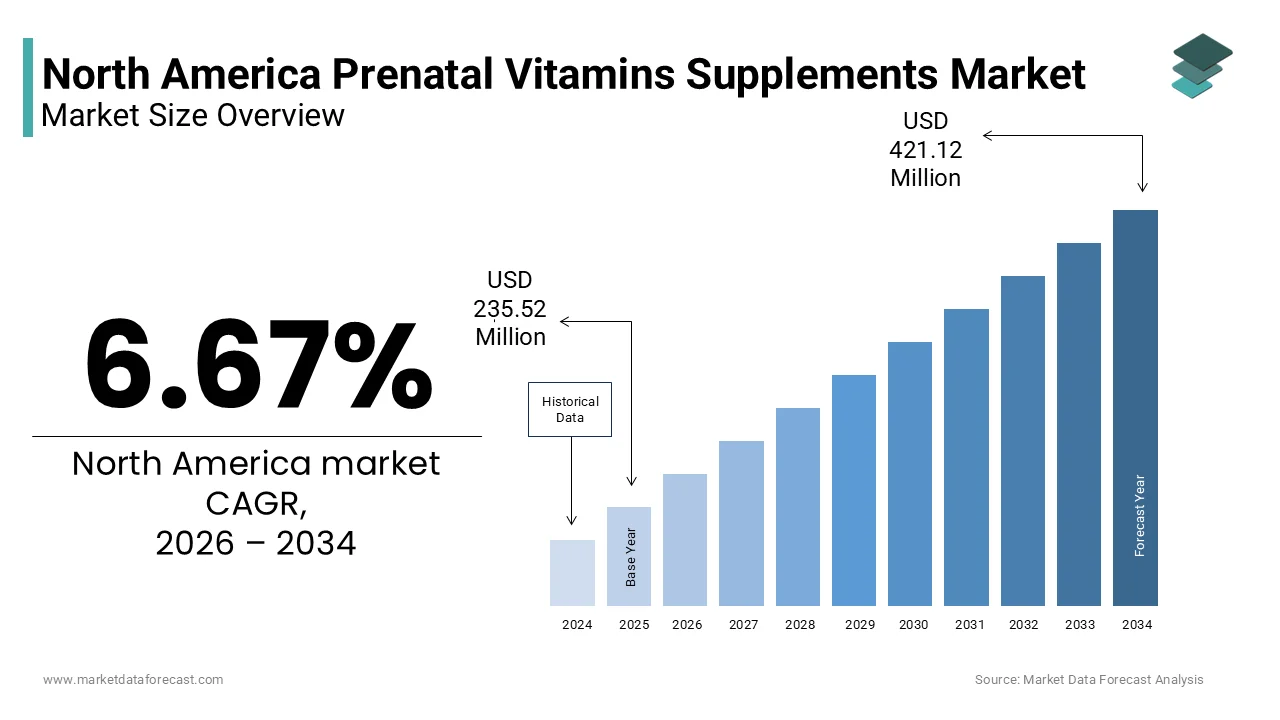
The North America prenatal vitamins supplements market was valued at USD 235.52 million in 2025, is estimated to reach USD 251.23 million in 2026, and is projected to reach USD 421.12 million by 2034, growing at a CAGR of 6.67% during the forecast period. Market growth is driven by increasing awareness of maternal health, rising demand for nutritional supplementation during pregnancy, and expanding healthcare access. Prenatal vitamins are widely used to support fetal development and maternal well being. The growing focus on preventive healthcare and medical guidance is further supporting steady market expansion across North America.
Key Market Trends
- Rising awareness of maternal and fetal health is driving market growth.
- Increasing adoption of prenatal supplements is boosting demand.
- Growing expansion of retail distribution channels is supporting market development.
- Rising healthcare access and professional recommendations are enhancing product usage.
- Innovation in supplement formulations is improving product effectiveness.
Segmental Insights
- Based on type, the folic acid segment was the largest and led the North America prenatal vitamins supplements market in 2025. This dominance is attributed to its essential role in preventing neural tube defects and supporting fetal development.
- Based on sales channel, the retail segment held the largest share of the North America prenatal vitamins supplements market in 2025, driven by widespread availability and consumer accessibility.
Regional Insights
- The North America prenatal vitamins supplements market is experiencing steady growth across key countries, supported by healthcare awareness and consumption trends.
- The United States was the largest contributor, accounting for 85.8% of the North America prenatal vitamins supplements market share in 2025, driven by high awareness, advanced healthcare infrastructure, and strong demand for maternal nutrition products.
Competitive Landscape
The North America prenatal vitamins supplements market is moderately competitive, with key players focusing on product quality, formulation innovation, and expansion of distribution networks to strengthen their market position. Companies are investing in advanced nutritional formulations, branding, and healthcare partnerships. Prominent players in the North America prenatal vitamins supplements market include Church & Dwight Co Inc., Country Life, Garden of Life, Rainbow Light, Biotics Research Corporation, MegaFood, Metagenics, Nutramark, New Chapter, Pharmavite, and Twinlab.
North America Prenatal Vitamins Supplements Market Size
The North America Prenatal Vitamins Supplements market size was valued at USD 235.52 million in 2025. and the market size is expected to reach USD 421.12 million by 2034 from USD 251.23 million in 2026. The market's promising CAGR for the predicted period is 6.67%.
Prenatal vitamins are daily multivitamin and mineral supplements specifically designed to meet the increased nutritional demands of people who are pregnant, breastfeeding, or trying to conceive. These formulations typically include essential nutrients such as folic acid iron calcium vitamin D and omega 3 fatty acids which are critical for preventing neural tube defects and supporting overall growth. The market definition extends beyond traditional synthetic tablets to encompass gummies softgels powders and organic whole food based variants that cater to diverse consumer preferences. According to the Centers for Disease Control and Prevention, approximately 41.6 percent of pregnancies in the United States are unintended, highlighting the importance of preconception nutrition awareness among women of childbearing age. This statistic underscores the need for accessible and appealing supplement options that encourage early adoption. The regulatory landscape in North America is governed by the Food and Drug Administration which classifies these products as dietary supplements requiring strict adherence to labeling and safety standards. As per the National Institutes of Health nearly 70 percent of pregnant women in the region consume some form of prenatal supplement indicating high market penetration and cultural acceptance. The shift towards personalized nutrition has also influenced product development with brands offering customized blends based on individual health profiles. Consumer education initiatives by healthcare providers play a pivotal role in driving demand as expectant mothers seek evidence based solutions to ensure optimal outcomes. The market operates within a highly competitive environment where brand trust ingredient transparency and formulation efficacy are key differentiators for manufacturers aiming to capture loyalty in this sensitive health segment.
MARKET DRIVERS
Increasing Maternal Age and Rising Awareness of Nutritional Deficiencies
The trend of delayed childbirth and increasing maternal age is a key driver for the North America Prenatal Vitamins Supplements Market. This elevates the risk profile for nutritional deficiencies and pregnancy complications. Women who conceive later in life often face higher risks of conditions such as gestational diabetes hypertension and chromosomal abnormalities necessitating rigorous nutritional support. According to the National Center for Health Statistics (NCHS), the average age at which women have their first child has reached an all-time high, continuing a consistent upward trajectory. This demographic shift drives demand for high potency prenatal vitamins that address age related nutritional gaps. Older mothers are more likely to consult healthcare providers who recommend specific supplements to mitigate risks associated with advanced maternal age. Guidelines from the American College of Obstetricians and Gynecologists (ACOG) state that all pregnant individuals require increased amounts of folic acid and iron compared to their pre-pregnancy needs to ensure healthy development and prevent maternal anemia. The awareness of these requirements is amplified through prenatal care programs and digital health platforms that educate consumers on the importance of early supplementation. The Society for Maternal-Fetal Medicine (SMFM) notes that while advanced maternal age is a risk factor for certain obstetric complications, nutritional status is a critical factor for healthy outcomes regardless of the mother's age. This statistical reality prompts proactive consumption of prenatal vitamins even before conception. Manufacturers respond by formulating products with enhanced bioavailability and targeted nutrients such as Coenzyme Q10 which supports egg quality. The psychological aspect of ensuring a healthy pregnancy at an older age also motivates women to invest in premium supplement brands. This demographic dynamic creates a sustained demand base driven by medical necessity and heightened health consciousness among older expectant mothers.
Shift Towards Clean Label and Organic Product Formulations
The growing consumer preference for clean label and organic product formulations significantly propels the North America Prenatal Vitamins Supplements Market. Expectant mothers are increasingly prioritizing natural and safe ingredients. Modern consumers are increasingly skeptical of synthetic additives artificial colors and preservatives commonly found in traditional supplements. They seek products derived from whole foods and certified organic sources that align with their holistic health values. The Organic Trade Association (OTA) show that the organic sector is expanding significantly faster than the conventional market, reaching record-breaking total sales. This growth is driven by millennial and Gen Z parents who prioritize transparency and sustainability in their purchasing decisions. The Natural Products Association (NPA) highlights that consumers increasingly seek transparency through third-party certifications and ingredient labels to verify the purity of health products like prenatals. Brands that offer third party testing and clear sourcing information gain a competitive advantage by building trust with health conscious buyers. The demand for vegan and allergen free options further expands the market as consumers seek inclusive formulations that accommodate dietary restrictions. A study indicates that premium segments featuring clean-label attributes are seeing robust value growth as shoppers prioritize health-conscious and sustainable brands. This divergence highlights the strategic importance of clean label positioning. Manufacturers are innovating with plant based capsules and natural flavorings to enhance appeal without compromising efficacy. The emphasis on environmental sustainability also resonates with consumers who prefer brands with eco friendly packaging and ethical sourcing practices. This shift towards purity and transparency drives innovation and differentiation in a crowded market.
MARKET RESTRAINTS
Regulatory Ambiguity and Lack of Standardized Dosage Guidelines
Regulatory ambiguity and the lack of standardized dosage guidelines are obstructing the growth of the North America Prenatal Vitamins Supplements Market. This creates confusion among consumers and healthcare providers. Unlike prescription drugs dietary supplements are not subject to the same rigorous pre market approval processes by the Food and Drug Administration. This regulatory framework allows for significant variation in ingredient quality potency and bioavailability across different brands. According to the Government Accountability Office, approximately 92 percent (11 out of 12) of prenatal supplements tested in a 2024 study contained nutrient levels, such as folic acid and iodine, that were inconsistent with their labels, potentially leading to overconsumption or underconsumption of key nutrients. This inconsistency makes it difficult for consumers to choose reliable products and for doctors to recommend specific brands with confidence. The absence of uniform dosage standards for certain nutrients such as choline and iodine further complicates formulation strategies. Data highlighted by medical authorities indicates that most prenatal vitamins on the market contain little to no choline, with studies of top-selling brands showing that none provided the full daily recommended intake of 450 mg required for fetal brain development. This gap in standardization leads to suboptimal nutrient intake for many pregnant women. As per the Journal of the American Medical Association variations in supplement quality can result in either insufficient protection against birth defects or excessive intake leading to toxicity. Healthcare providers often hesitate to endorse specific over the counter products due to this uncertainty. The lack of clear regulatory guidance also hinders innovation as manufacturers struggle to navigate compliance requirements. This environment fosters consumer skepticism and limits market growth as buyers seek safer alternatives such as prescription prenatal vitamins or whole food sources.
High Cost of Premium Formulations and Insurance Coverage Limitations
The high cost of premium prenatal vitamin formulations and limited insurance coverage are negatively impacting the North America Prenatal Vitamins Supplements Market. This restricts access for lower income populations. High quality supplements featuring organic ingredients advanced delivery systems and third party testing often command premium prices that are prohibitive for many consumers. According to the Kaiser Family Foundation most private insurance plans in the United States do not cover over the counter prenatal vitamins leaving patients to bear the full out of pocket cost. This financial barrier disproportionately affects low income households who may prioritize other essential expenses over supplemental nutrition. Data from the Supplement Business Report indicates that the average monthly cost of premium prenatal vitamins ranges from 30 to 60 dollars which can be a significant burden for families on tight budgets. As per the Centers for Disease Control and Prevention women with lower socioeconomic status are less likely to consume adequate prenatal nutrients due to cost constraints. This disparity contributes to health inequities and adverse pregnancy outcomes in vulnerable populations. While some government programs like WIC provide vouchers for specific vitamins the selection is often limited to basic generic brands that may not meet the preferences of modern consumers. The lack of reimbursement options discourages trial of newer and more effective formulations. Manufacturers face pressure to balance quality with affordability which can compromise profit margins. This economic constraint limits market expansion and reinforces reliance on lower cost but potentially less effective alternatives. Addressing affordability remains a critical challenge for broader market penetration.
MARKET OPPORTUNITIES
Expansion into Personalized and Digital Health Integration
The integration of prenatal vitamins with personalized nutrition platforms and digital health tools offers a significant opportunity for the North America Prenatal Vitamins Supplements Market. This enhances user engagement and adherence. Consumers are increasingly seeking tailored solutions that address their unique genetic metabolic and lifestyle needs rather than one size fits all formulations. According to The Business Research Company, the market for customized supplements is projected to grow by 18.8 percent annually through 2026, driven by advances in genetic testing and data analytics. Prenatal vitamin brands are leveraging this trend by offering online assessments that analyze dietary habits blood work and health history to create bespoke supplement packs. Digital health studies published in Nature indicates that 72 percent of pregnant women use mobile apps to track their nutrition and pregnancy progress, providing a valuable channel for integrated supplement services. As per McKinsey and Company, personalized health engagement can help address the 30 percent of hospital readmissions that are considered avoidable, largely by improving how patients follow recommended care guidelines. This improvement is crucial for prenatal care where consistent nutrient intake is vital for fetal development. Brands that partner with telehealth providers and obstetricians can embed their products into comprehensive care plans enhancing credibility and convenience. Subscription models ensure regular delivery and reduce the risk of missed doses. The ability to adjust formulations throughout different trimesters based on changing physiological needs adds further value. This digital integration transforms prenatal vitamins from a commodity into a service fostering long term customer loyalty. The convergence of technology and nutrition opens new revenue streams and differentiates brands in a competitive landscape.
Growth in Male Fertility and Preconception Health Segments
The expanding focus on male fertility and preconception health unlocks potential for the North America Prenatal Vitamins Supplements Market. This broadens the target audience beyond pregnant women. Emerging research highlights the critical role of paternal nutrition in sperm quality and fetal health encouraging couples to adopt joint supplementation routines. According to the American Society for Reproductive Medicine (ASRM) , male factors contribute to approximately 50 percent of infertility cases, underscoring the need for targeted nutritional support. Prenatal vitamin brands are launching complementary male fertility supplements containing antioxidants zinc selenium and folate to enhance sperm health. The National Survey of Family Growth indicates that 12 percent of couples in the United States experience difficulty conceiving driving demand for preconception solutions. As per clinical reviews in the Journal of Urology and ASRM, studies suggest that antioxidant supplementation in men may improve live birth and pregnancy rates, though robust evidence for a specific 25 percent increase is lacking. This scientific evidence supports the marketing of couple focused wellness packages that promote shared responsibility in reproductive health. Retailers are responding by creating dedicated sections for male preconception care increasing visibility and accessibility. The trend towards holistic family planning resonates with modern couples who view fertility as a joint journey. Brands that educate consumers on the importance of paternal nutrition can capture a new and underserved segment. This expansion diversifies revenue sources and reduces dependence on the traditional female centric market. The growing awareness of epigenetic factors further validates the need for comprehensive preconception care for both partners.
MARKET CHALLENGES
Supply Chain Volatility and Raw Material Sourcing Issues
Supply chain volatility and raw material sourcing issues are major hurdles for the North America Prenatal Vitamins Supplements Market. This affects product availability and consistency. The production of high quality prenatal vitamins relies on a complex global supply chain for ingredients such as folic acid iron and omega 3 fatty acids. Disruptions due to geopolitical tensions natural disasters or trade restrictions can lead to shortages and price fluctuations. The instability forces companies to seek alternative suppliers which may compromise ingredient quality or certification standards. These cost increases are often passed on to consumers reducing affordability and competitiveness. The reliance on single source suppliers for critical ingredients like methylated folate creates vulnerability to disruptions. Companies must invest in diversified sourcing strategies and inventory management to mitigate risks. However these measures add operational complexity and expense. The lack of transparency in upstream supply chains makes it difficult to verify ethical and sustainable practices. This challenge tests the resilience of manufacturers and requires strategic planning to ensure consistent product supply.
Consumer Skepticism and Misinformation Regarding Efficacy
Consumer skepticism and misinformation regarding the efficacy and necessity of prenatal vitamins are major challenges for the North America Prenatal Vitamins Supplements Market. This hinders adoption and adherence. The abundance of conflicting information online and on social media creates confusion about which nutrients are essential and which brands are trustworthy. This digital noise undermines the authority of healthcare providers and established scientific consensus. Influencers and non expert sources often promote unproven alternatives or discourage supplementation altogether creating safety risks. Manufacturers struggle to counteract these narratives with evidence based marketing that reaches skeptical audiences. The lack of standardized education campaigns exacerbates the problem leaving consumers to navigate complex information landscapes alone. Trust deficits are further widened by occasional recalls or negative publicity surrounding specific brands. Overcoming this skepticism requires transparent communication and collaboration with trusted medical professionals. The challenge of combating misinformation demands continuous investment in consumer education and digital literacy initiatives.
REPORT COVERAGE
| REPORT METRIC | DETAILS |
| Market Size Available | 2025 to 2034 |
| Base Year | 2025 |
| Forecast Period | 2026 to 2034 |
| CAGR | 6.67% |
| Segments Covered | By Type, Sales Channel, and Region. |
| Various Analyses Covered | Global, Regional & Country Level Analysis, Segment-Level Analysis, DROC, PESTLE Analysis, Porter’s Five Forces Analysis, Competitive Landscape, Analyst Overview of Investment Opportunities |
| Regions Covered | United States, Canada and Rest of North America |
| Market Leaders Profiled | Church & Dwight Co Inc., Country Life, Garden of Life, Rainbow Light, Biotics Research Corporation, MegaFood, Metagenics, Nutramark, New Chapter, Pharmavite and Twinlab |
SEGMENTAL ANALYSIS
By Type Insights
The folic Acid segment led the North America Prenatal Vitamins Supplements Market in 2025. This leading position of the segment is attributed to its critical role in preventing neural tube defects and its universal recommendation by healthcare providers during preconception and early pregnancy. The segment benefits from strong public health mandates and widespread consumer awareness regarding its necessity for fetal brain and spine development. Apart from this, the dominance of folic acid is mainly driven by unequivocal medical guidelines that mandate its supplementation for all women of childbearing age to prevent severe birth defects. Healthcare providers universally prescribe or recommend folic acid starting at least one month before conception and continuing through the first trimester. The compelling evidence underpins public health campaigns and clinical protocols across North America. Also, the high level of professional endorsement ensures consistent demand regardless of economic fluctuations. The US Preventive Services Task Force also recommends daily supplementation for all women who are planning or capable of pregnancy reinforcing its status as a non negotiable nutrient. This dual approach of fortification and supplementation creates a robust market foundation. The low cost and high availability of folic acid further support its widespread adoption. Manufacturers prioritize this ingredient in almost all prenatal formulations ensuring it remains the cornerstone of the market. The established trust in folic acid efficacy sustains its leadership position. High consumer awareness and early adoption rates significantly contribute to the market leadership of folic acid as expectant mothers prioritize preventive health measures from the earliest stages of pregnancy planning. Educational initiatives by government agencies and nonprofit organizations have successfully disseminated information about the importance of folic acid in preventing conditions like spina bifida. The high awareness level drives proactive purchasing behavior even before confirmation of pregnancy. This early initiation ensures sustained consumption throughout the critical developmental window. The integration of folic acid into multivitamin formats simplifies adherence for consumers who prefer comprehensive solutions. The simplicity of the message take folic acid to protect your baby resonates strongly with diverse demographic groups. Social media influencers and parenting blogs further amplify this message reaching younger audiences effectively. The perceived safety and long history of use also reduce hesitation among first time mothers. This combination of education accessibility and trust solidifies the dominance of folic acid in the prenatal supplement landscape.
The Essential Fatty Acids segment is likely to experience the fastest CAGR of 8.5% from 2026 to 2034 owing to increasing scientific evidence supporting their role in fetal brain and eye development. Consumers are increasingly seeking specialized nutrients that offer cognitive benefits beyond basic structural health. The rapid growth of the essential fatty acids segment is fueled by robust scientific evidence linking omega 3 fatty acids particularly DHA and EPA to improved cognitive and visual outcomes in infants. Research consistently demonstrates that adequate intake of these fats during pregnancy supports neural development and may enhance long learning abilities. The longitudinal data strongly influences parental purchasing decisions as they seek to optimize their child's potential. Manufacturers are responding by highlighting DHA content prominently on labels and marketing products specifically for brain health. The inclusion of algae based omega 3s appeals to vegan consumers expanding the addressable market. Clinical studies published in reputable journals continue to validate these benefits reinforcing consumer confidence. Healthcare providers are increasingly incorporating omega 3 recommendations into prenatal care protocols. This scientific backing transforms essential fatty acids from optional additives to essential components of prenatal nutrition. The focus on long term developmental benefits justifies the premium pricing of these supplements. This value proposition drives sustained growth in the segment. Furthermore, the trend towards premiumization and clean label preferences significantly accelerates the growth of the essential fatty acids segment as consumers seek high quality sustainable and pure sources of omega 3s. Modern parents are willing to pay more for supplements that guarantee purity from heavy metals and contaminants which are common concerns with fish oil. Consumers prefer algae derived DHA which is free from ocean pollutants and aligns with plant based diets. The demand for transparency drives manufacturers to invest in rigorous testing and certification processes. The availability of odorless and easy to swallow softgels enhances user experience addressing common complaints about fishy aftertaste. Brands are leveraging storytelling about sourcing origins and environmental impact to connect with conscious consumers. The integration of essential fatty acids into gummy formats also appeals to those who struggle with pills. This innovation expands the consumer base and increases adherence. The combination of quality assurance convenience and ethical sourcing creates a compelling value proposition. This strategic positioning drives robust expansion in the essential fatty acids segment.
By Sales Channel Insights
The retail sales segment was the largest segment in the North America Prenatal Vitamins Supplements Market in 2025 because of the immediate availability of products trusted brand presence and the ability for consumers to physically inspect items before purchase. Pharmacies supermarkets and health food stores serve as primary touchpoints for prenatal supplement acquisition. The growth of retail sales is anchored in the immediate accessibility of prenatal vitamins through established physical channels such as pharmacies and grocery stores where consumers can obtain products instantly upon recommendation. This immediacy is crucial for pregnant women who often start supplementation urgently after confirming pregnancy. According to CHPA data, 81% of U.S. adults use OTC medicines as a first response to minor ailments, and while many are purchased in pharmacies. This high foot traffic ensures consistent visibility and impulse purchases. The physical presence of well known brands on shelves builds trust through familiarity and recognized packaging. Pharmacists play a vital role in guiding consumers to appropriate products providing professional advice that online platforms may lack. The ability to read labels and check expiration dates in person also reassures buyers about product quality. Retailers frequently offer promotions and bundle deals that attract price sensitive customers. The integration of wellness sections in mainstream retailers further normalizes the purchase of prenatal supplements. This widespread distribution network ensures that products are available in both urban and rural areas. The tactile experience of shopping allows consumers to compare options directly. This convenience and trust factor sustains the leadership of retail sales. Professional recommendation and in store consultation significantly drive retail sales as healthcare providers often direct patients to local pharmacies for immediate access to prescribed or recommended prenatal vitamins. The interaction with pharmacists provides an opportunity for personalized advice and clarification on dosage and ingredients. According to the American Pharmacists Association 80 percent of patients trust their pharmacist for advice on over the counter medications and supplements. This trust translates into higher conversion rates for retailer exclusive brands or pharmacist recommended products. Pharmacists can address specific concerns such as nausea or difficulty swallowing by suggesting alternative forms like gummies or liquids. As per the National Community Pharmacists Association independent pharmacies often carry niche or premium brands that cater to specific dietary needs enhancing their appeal. The ability to ask questions and receive immediate answers reduces anxiety for first time mothers. Retailers also host health workshops and prenatal classes that educate consumers and promote product sales. Loyalty programs offered by major chains encourage repeat purchases and brand retention. The integration of digital tools such as app based refills with in store pickup combines convenience with personal service. This hybrid model strengthens the position of retail channels. The human element of retail shopping remains a key differentiator in the health and wellness sector.
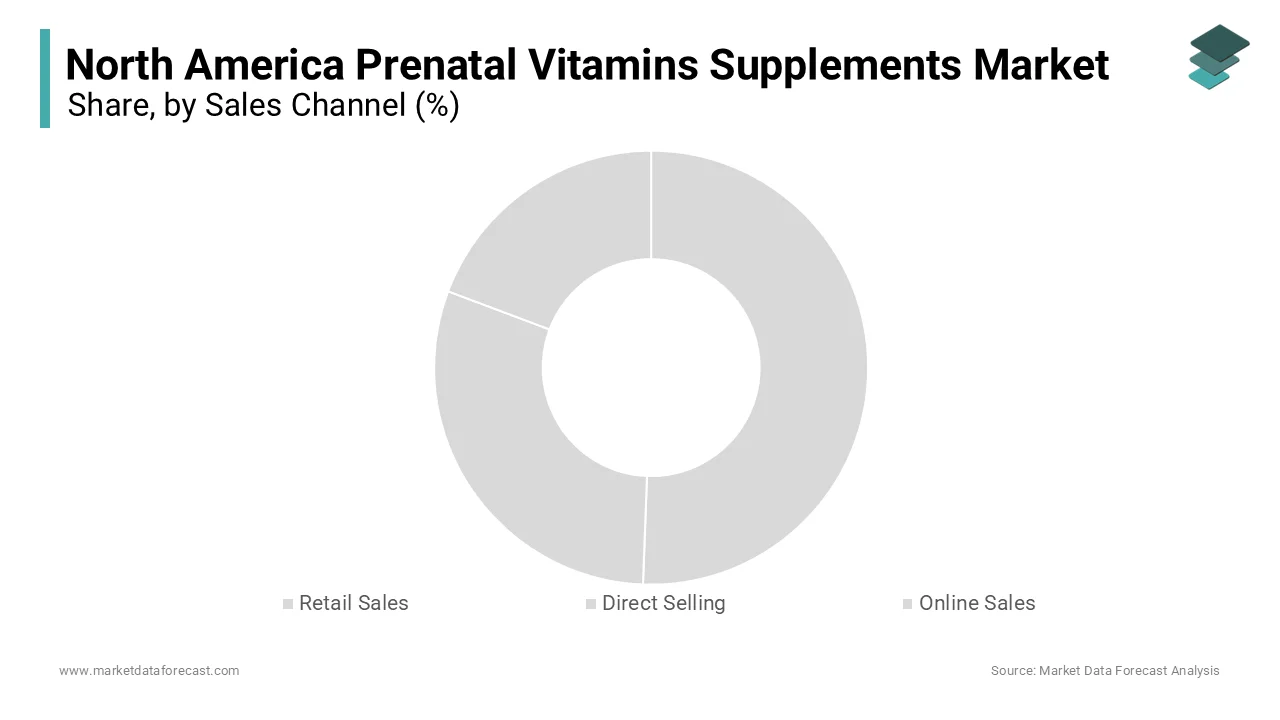
The online sales segment is on the rise and is expected to be the fastest growing segment in the market by witnessing a CAGR of 10.2% over the forecast period due to the convenience of home delivery access to a wider variety of brands and the ability to subscribe for regular replenishment. Digital platforms enable personalized shopping experiences and discreet purchasing. The rapid expansion of online sales is fueled by the unparalleled convenience of home delivery and the popularity of subscription models that ensure consistent supply without the need for frequent store visits. Pregnant women often face fatigue and mobility challenges making online shopping an attractive alternative. According to sources, online sales in the health, beauty, and personal care sector in the US grew by 18.9 percent in 2024, with health supplements, including prenatal vitamins, remaining a high-growth category. Subscription services offered by brands and retailers automate replenishment reducing the risk of missed doses. Online platforms allow consumers to compare prices read reviews and access detailed product information easily. The ability to purchase niche or international brands not available locally expands consumer choice. Discreet packaging and delivery also appeal to those who prefer privacy. Mobile apps facilitate easy reordering and tracking enhancing user experience. Retailers leverage data analytics to offer personalized recommendations and discounts. The integration of telehealth services with online pharmacies further streamlines the purchasing process. This seamless and efficient shopping experience drives sustained growth in the online channel. The shift towards digital-first habits among younger demographics ensures long term viability. Access to niche and specialized products significantly accelerates the growth of online sales as digital platforms offer a vast array of formulations that cater to specific dietary restrictions and health needs. Consumers seeking organic vegan gluten free or non GMO prenatal vitamins often find limited options in physical stores but extensive selections online. According to Nutritional Products International, over 70 percent of consumers now prefer natural and plant-based ingredients over synthetic alternatives, often seeking these specialty options through digital channels for better selection. Online marketplaces aggregate brands from around the world providing unprecedented variety. Data from Amazon indicates that searches for vegan prenatal vitamins increased in 2024 highlighting demand for specialized options. Independent brands that lack retail distribution rely on e commerce to reach customers directly. Online platforms enable detailed product descriptions and ingredient transparency which are crucial for informed decision making. Customer reviews and ratings provide social proof and build trust in new brands. Influencer marketing on social media drives traffic to online stores where consumers can purchase endorsed products immediately. The ability to filter search results by specific attributes simplifies the discovery process. This breadth of choice and ease of access makes online sales the preferred channel for discerning consumers. The digital ecosystem supports innovation and diversity in the prenatal supplement market.
REGIONAL ANALYSIS
United States Prenatal Vitamins Supplements Market Analysis
The United States dominated the North America Prenatal Vitamins Supplements Market and accounted for a 85.8% share in 2025. The supremacy of the US market is propelled by a large population high healthcare expenditure and advanced retail infrastructure. Also, the US market is distinguished by high prevalence of prenatal vitamin usage supported by extensive public health initiatives and insurance coverage for preventive care. According to the Centers for Disease Control and Prevention, approximately 77% to 78% of pregnant women in the U.S. report using a supplement in the previous 30 days, with intake becoming nearly universal (97%–98%) as pregnancy progresses into the third trimester. This high adoption rate is facilitated by widespread availability in pharmacies supermarkets and online platforms. The Food and Drug Administration regulates dietary supplements ensuring safety and labeling accuracy which builds consumer trust. Data from the National Institutes of Health indicates that the US spends over 40 billion dollars annually on dietary supplements with prenatal vitamins representing a significant portion. The trend towards personalized nutrition is particularly strong in the US with many startups offering customized prenatal packs. As per the Supplement Business Report the US market for prenatal vitamins is projected to grow steadily driven by increasing maternal age and demand for organic products. Major retailers like CVS Walgreens and Walmart dominate distribution offering a wide range of brands. The presence of leading manufacturers such as Pfizer and Bayer ensures continuous innovation and marketing. Telehealth integration with supplement delivery is gaining traction enhancing convenience. The diverse demographic landscape drives demand for varied formulations including vegan and allergen free options. High disposable income allows consumers to purchase premium products. The robust e commerce sector further expands access to specialized brands. These factors collectively sustain the US leadership in the regional market.
Canada Prenatal Vitamins Supplements Market Analysis
Canada occupies a significant share of the North America prenatal vitamins supplements market due to universal healthcare coverage and strong government recommendations for prenatal nutrition. This position is further supported by high health consciousness and regulatory standards. The Canadian market is characterized by strong adherence to Health Canada guidelines which recommend daily folic acid and multivitamin supplementation for pregnant women. According to Statistics Canada over 80 percent of pregnant women in the country take prenatal vitamins as advised by healthcare providers. The public healthcare system supports prenatal care visits where supplements are often discussed and recommended. Data from the Canadian Institute for Health Information indicates that prenatal care utilization is high with most women receiving early and regular checkups. This consistent medical engagement drives steady demand for prenatal supplements. The preference for natural and organic products is prominent in Canada with many consumers choosing brands certified by organizations like Ecocert. As per the Natural Health Products Directorate strict regulations ensure product quality and safety fostering consumer confidence. Retail chains such as Shoppers Drug Mart and Loblaws play a key role in distribution offering both national and private label brands. The growing immigrant population contributes to market diversity with demand for culturally specific formulations. E commerce adoption is rising with online retailers expanding their health supplement offerings. Government funded programs like the Canada Prenatal Nutrition Program support low income families improving access to essential nutrients. The emphasis on preventive health and wellness sustains market growth. These structural and cultural factors maintain Canada's strong position in the regional market.
KEY MARKET PLAYERS
Some of the key players in the North America prenatal vitamins supplements market are
- Church & Dwight Co Inc.
- Country Life
- Garden of Life
- Rainbow Light
- Biotics Research Corporation
- MegaFood
- Metagenics
- Nutramark
- New Chapter
- Pharmavite
- Twinlab
Top Players in the Market
- Pfizer Inc maintains a strong presence in the North America Prenatal Vitamins Supplements Market through its widely recognized Centrum brand which offers comprehensive prenatal formulations. The company leverages its extensive pharmaceutical expertise to ensure high quality and bioavailability of essential nutrients like folic acid and iron. Pfizer recently invested in digital health platforms to provide personalized nutrition advice to expectant mothers enhancing customer engagement. The corporation focuses on scientific validation of its products collaborating with healthcare providers to build trust. Pfizer also expanded its distribution channels by partnering with major online retailers to improve accessibility. Its commitment to research and development drives innovation in tablet technology making supplements easier to swallow. These strategic initiatives strengthen its position as a trusted leader in maternal health solutions globally while addressing evolving consumer needs for convenience and efficacy in prenatal care.
- Bayer AG contributes significantly to the market with its One A Day and Elevit brands which are staples in prenatal care across North America. The company emphasizes evidence based formulations that meet the specific nutritional needs of pregnant women. Bayer recently launched new gummy variants catering to consumers who struggle with traditional pills thereby expanding its user base. The corporation actively engages in educational campaigns to raise awareness about the importance of early supplementation. Bayer also strengthened its supply chain resilience by diversifying sourcing strategies for key ingredients. Its focus on sustainability includes adopting eco friendly packaging materials to appeal to environmentally conscious consumers. These actions reinforce its reputation for reliability and innovation. Bayer continues to collaborate with obstetricians to promote its products as part of standard prenatal care protocols ensuring sustained demand and brand loyalty in the competitive supplement landscape.
- Nestlé S.A. plays a vital role in the market through its Garden of Life brand which offers organic and whole food based prenatal vitamins. The company capitalizes on the growing demand for clean label and natural products among modern parents. Nestlé recently expanded its portfolio by introducing vegan prenatal options derived from organic fruits and vegetables. The corporation invests heavily in sustainable sourcing practices ensuring that ingredients are ethically obtained and free from contaminants. Nestlé also enhances its digital presence by offering subscription services that ensure regular delivery of supplements. Its commitment to transparency includes third party testing and clear labeling which builds consumer trust. These strategies align with current health trends and differentiate its offerings in a crowded market. Nestlé continues to innovate by incorporating probiotics into its formulations supporting overall maternal wellness and digestive health.
MARKET SEGMENTATION
This Research Report on the North America prenatal vitamins supplements market is segmented and sub segmented into following categories
By Type
- Folic Acid
- Iron
- Calcium
- Essential
- Fatty Acids
- Others
By Sales Channel
- Retail Sales
- Direct Selling
- Online Sales
By Region
- United States
- Canada
- Mexico