- Product Description Description
- Table of Contents TOC
- List of Table & Figure LOT
- Get Free Sample PDF Sample PDF
Market Size, 2025
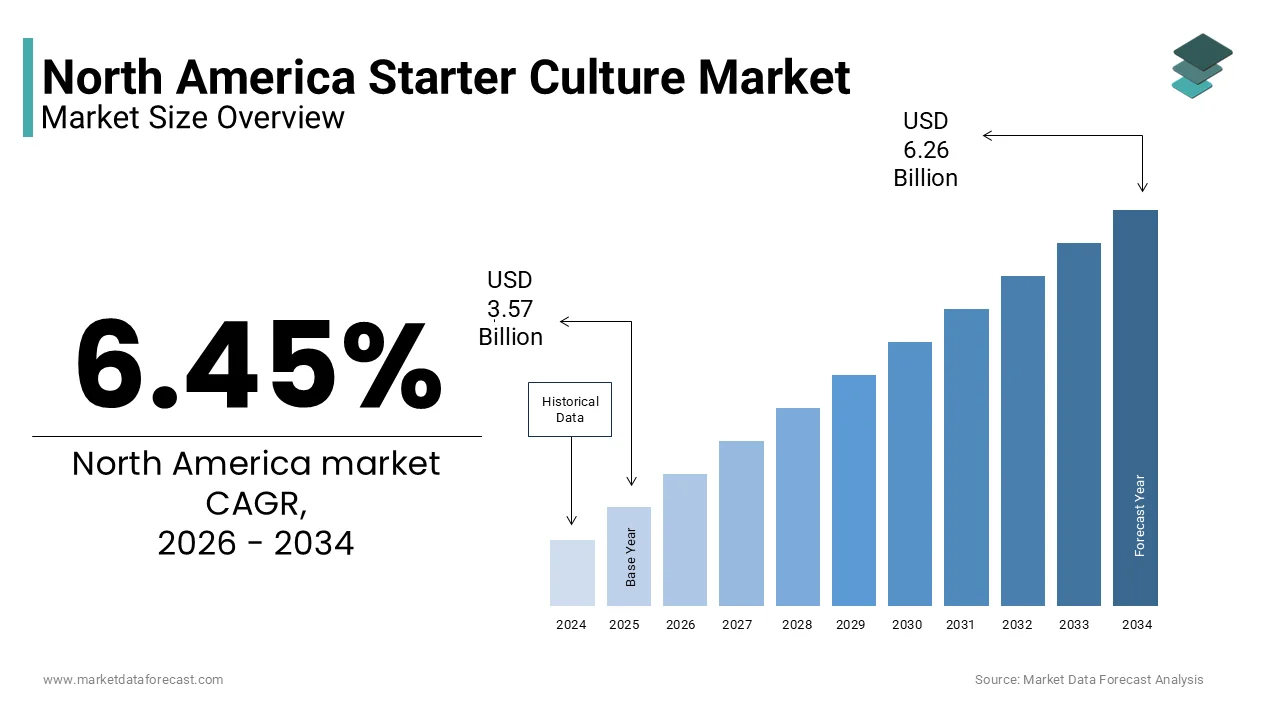
$3.57 BnMarket Estimate, 2026
$3.80 BnMarket Forecast, 2034
$6.26 BnCAGR, 2026–2034
6.45%North America Starter Culture Market Size
The North America starter culture market size was valued at USD 3.57 billion in 2025 and is expected to reach USD 6.26 billion by 2034 from USD 3.80 billion in 2026. The market is projected to grow at a CAGR of 6.45%.
A starter culture is a prepared group of live microorganisms added to raw food to start and control the fermentation process. These biological agents are essential for developing flavour, texture, and preservation in products such as cheese, yoghurt, sourdough bread, and fermented sausages. According to the International Dairy Federation, the organisation manages and publishes an inventory of safe microbial food cultures used globally in the dairy sector. As per the United States Department of Agriculture, cheese consumption in the United States has reached record levels, with per capita intake exceeding 41 pounds annually, driving sustained demand for robust lactic acid bacteria strains. These consumption patterns establish a strong foundation for market growth as manufacturers seek reliable fermentation solutions. Regulatory frameworks enforced by the Food and Drug Administration ensure strict safety standards for microbial strains used in food processing. The market thrives on advancements in strain selection and freeze-drying technologies that enhance viability and performance. As consumer preferences shift toward artisanal and probiotic-rich foods, the industry adapts by offering diverse and functional culture blends. This evolution reflects a mature sector where microbiological precision meets culinary tradition to satisfy the evolving nutritional and sensory expectations of North American consumers.
MARKET DRIVERS
Surging Consumer Preference for Probiotic-Rich and Functional Foods Fuels Demand
The growing consumer awareness of gut health and the benefits of probiotics is a primary factor propelling the North America Starter Culture Market forward. Individuals increasingly seek foods that offer digestive and immune support, driving manufacturers to incorporate specific probiotic strains into yoghurt, kefir, and fermented beverages. According to the International Scientific Association for Probiotics and Prebiotics (ISAPP), scientific and clinical evidence supporting the role of probiotics and prebiotics continues to progress rapidly alongside growing consumer interest in these products. This scientific backing drives demand for starter cultures that survive processing and deliver viable cells to the gut. According to the Centres for Disease Control and Prevention, chronic diseases affect millions of Americans; the agency notes that more than 3 million Americans live with Inflammatory Bowel Disease (IBD), an example of a chronic gastrointestinal condition. Food and beverage companies reformulate products to include multi-strain cultures that offer enhanced health benefits beyond basic fermentation. Retailers expand their refrigerated sections to feature premium probiotic drinks and yoghurts highlighting specific bacterial strains. The versatility of starter cultures allows for the creation of novel functional foods that appeal to health-conscious demographics. This sustained focus on preventive health ensures long-term growth stability for culture suppliers who can provide scientifically validated and robust microbial strains.
Expansion Of Artisanal and Speciality Food Production Drives Diversity In Culture Usage
The rise of artisanal food movements and consumer demand for authentic, traditional flavours are also powerful drivers of the North American starter culture market. This compels manufacturers to adopt diverse and specialised starter cultures. Shoppers increasingly reject mass-produced items in favour of handcrafted cheeses, sourdough breads, and cured meats that offer unique sensory profiles. According to the Speciality Food Association, total sales of speciality food and beverages in the United States grew 15% between 2014 and 2016. The trend drives artisans and small-scale producers to use non-standardised starter cultures that impart distinct characteristics to their offerings. As per the American Cheese Society, membership within the professional organisation has nearly doubled over its last decade of operation. Bakeries utilise wild yeast and lactic acid bacteria blends to create complex sourdough flavours that cannot be replicated with commercial yeast alone. Butchers employ specific mould cultures for dry curing sausages to ensure safety and develop traditional tastes. Retailers dedicate shelf space to these premium products, increasing visibility for brands using specialised cultures. The alignment of cultural appreciation for craftsmanship with culinary innovation creates a robust environment for market expansion in niche segments.
MARKET RESTRAINTS
Strict Regulatory Compliance and Safety Standards Increase Operational Costs
Stringent regulatory requirements and safety standards significantly hinder the growth of the North America Starter Culture Market. This is due to the complex approval processes for new microbial strains. Manufacturers must demonstrate the safety and efficacy of each culture through extensive testing and documentation before it can be used in food production. Under the Federal Food, Drug, and Cosmetic Act, the U.S. Food and Drug Administration rules state that a substance can achieve Generally Recognised as Safe (GRAS) status through common use in food prior to 1958 or through scientific procedures and evaluations that demonstrate safety under the conditions of its intended use. This regulatory burden increases time to market and operational costs for companies seeking to innovate with new bacterial or yeast varieties. The Canadian Food Inspection Agency maintains import requirements and phytosanitary controls for microorganisms under directive D-12-02, which regulates potentially injurious organisms to prevent the importation of plant pests into Canada. Compliance with Good Manufacturing Practices requires specialised facilities and quality control measures that add to production expenses. Small and medium enterprises struggle to afford the resources needed for regulatory approvals, limiting their ability to introduce new products. Consumers face limited choices as fewer new strains enter the market due to high barriers to entry. The lack of harmonised regulations across different jurisdictions leads to duplication of efforts and increased administrative overhead. Streamlined approval pathways are not yet established. Until then, the market will remain constrained by high compliance costs and slow innovation cycles.
High Sensitivity To Storage Conditions and Supply Chain Vulnerabilities Limit Accessibility
The biological nature of starter cultures makes them highly sensitive to temperature fluctuations and storage conditions, which creates significant logistical hurdles for manufacturers and distributors in the North American starter culture market. Maintaining viability during transportation and storage requires expensive cold chain infrastructure that is not always available in all regions. According to studies, keeping temperature-controlled environments uninterrupted across the cold chain protects the safety and viability of perishable products and limits the proliferation of harmful microbes or premature spoilage. This vulnerability forces manufacturers to invest in advanced freeze-drying and packaging technologies to enhance stability, adding to production costs. Power outages or equipment failures in retail or industrial settings can render batches of cultures useless, disrupting production schedules. The complexity of handling live organisms requires trained personnel and strict protocols, increasing operational burdens for small-scale producers. Retailers hesitate to stock perishable culture products due to the risk of spoilage and returns. Consumers in remote areas face limited access to high-quality fresh cultures due to distribution constraints. The resulting supply chain fragility restricts market expansion and increases prices for end users. Managing these biological risks requires sophisticated logistics and contingency planning that many smaller players cannot afford.
MARKET OPPORTUNITIES
Innovation In Plant-Based Fermentation Creates New Application Avenues
The rapid growth of the plant-based food sector presents a substantial opportunity for manufacturers in the North American starter culture market. This paves the way for manufacturers to develop specialised strains for fermenting non-dairy substrates. Consumers seeking vegan alternatives demand products like plant-based yoghurts, cheeses, and meats that mimic the taste and texture of animal-derived counterparts through fermentation. According to the Plant Based Foods Association and The Good Food Institute, U.S. retail sales of plant-based foods grew 6.6% in 2022 to reach a total market value of $8 billion. Traditional dairy cultures often fail to perform optimally on plant substrates, driving the need for tailored microbial solutions. As per the Good Food Institute, investment in fermentation technology for alternative proteins has increased substantially, fueling innovation in culture development. Manufacturers collaborate with biotech firms to identify strains that produce desirable flavours and textures in plant matrices. Retailers expand their vegan sections to include fermented plant-based products, increasing visibility for these innovations. The versatility of starter cultures allows for the creation of novel plant-based cheeses and yoghurts with improved mouthfeel. This alignment with ethical and environmental values positions plant-based fermentation as a key growth engine for the market. Strategic partnerships with plant-based brands enable culture suppliers to capture share in this expanding segment.
Development of Next-Generation Probiotics and Postbiotics Enhances Product Value
Advancements in microbiome science offer transformative prospects for players in the North America starter culture market. They can use these advancements to develop next-generation probiotics and postbiotics with targeted health benefits. Researchers are identifying specific bacterial strains and their metabolic byproducts that offer therapeutic effects for conditions such as inflammation and mental health. According to the National Institutes of Health, the Human Microbiome Project has provided data to characterise human-associated microbial communities, helping researchers identify individual subgroups for precision probiotic therapies. This scientific progress enables manufacturers to create specialised culture blends that address specific health concerns beyond general digestion. Food and beverage companies incorporate these advanced cultures into functional foods and beverages to differentiate their products in crowded markets. Retailers promote these science-backed products as premium wellness solutions, commanding higher price points. Subscription models enabled by digital platforms ensure a consistent supply of fresh cultures for home fermentation enthusiasts. Data analytics allow manufacturers to tailor culture offerings to emerging health trends and consumer preferences. This integration of cutting-edge science and nutrition transforms starter cultures from simple processing aids into valuable health ingredients. Early adopters gain competitive advantages by leveraging proprietary strains and clinical data. Digital health thus bridges the gap between microbial science and consumer wellness, creating tangible value propositions.
MARKET CHALLENGES
Consumer Scepticism Regarding Live Microorganisms And Safety Concerns Hinders Adoption
Persistent scepticism regarding the safety and necessity of consuming live microorganisms remains a significant challenge for growth among certain consumer segments in the North America starter culture market. Some individuals associate fermentation with spoilage or fear potential contamination from wild strains, leading to hesitation in purchasing cultured products. According to research, while fermentation is a traditional method for improving food preservation and safety, processing practices and environmental contamination upstream in the supply chain can lead to product spoilage, recalls, and economic losses for producers. This fear is amplified by misinformation on social media regarding the risks of homemade fermentation and unpasteurized dairy. Many consumers lack understanding of the difference between harmful pathogens and beneficial starter cultures, leading to confusion and avoidance. Healthcare providers may hesitate to recommend fermented foods to immunocompromised patients due to theoretical risks. The resulting uncertainty undermines consumer confidence and reduces willingness to experiment with new cultured products. Bridging this knowledge gap requires sustained investment in public education and transparent communication about safety protocols. Improved scientific literacy among consumers is lacking. Without it, the market risks stagnation as cautious shoppers prioritise sterile and processed options over live cultured foods.
Supply Chain Disruptions and Raw Material Volatility Impact Production Stability
Fluctuations in the availability and cost of raw materials required for culture production are persistent obstacles for manufacturers in the North America Starter Culture Market. The growth media used to cultivate bacteria and yeasts rely on agricultural inputs such as sugars and proteins that are subject to price volatility. According to the United States Department of Agriculture, increased weather extremes predicted with climate change may increase crop yield variability. This volatility forces manufacturers to absorb margin pressures or pass costs onto customers, limiting affordability for small-scale producers. Logistics bottlenecks and labour shortages in processing plants can lead to delays in culture delivery, affecting downstream manufacturers who rely on just-in-time inventory systems. The reliance on specialised equipment for freeze-drying and packaging creates vulnerabilities if maintenance or parts are delayed. Small and medium-sized culture producers struggle to hedge against price risks effectively, making them vulnerable to market shocks. Retailers and food manufacturers seek stable pricing agreements, pressuring suppliers to maintain consistency despite external volatility. Managing these economic and logistical uncertainties requires sophisticated risk management strategies and diversified sourcing options to ensure business continuity.
REPORT COVERAGE
| REPORT METRIC | DETAILS |
| Market Size Available | 2025 to 2034 |
| Base Year | 2025 |
| Forecast Period | 2026 to 2034 |
| CAGR | 6.45% |
| Segments Covered | By Product, Application, Form, and Region |
| Various Analyses Covered | Regional & Country Level Analysis, Segment-Level Analysis, DROC, PESTLE Analysis, Porter’s Five Forces Analysis, Competitive Landscape, Analyst Overview on Investment Opportunities |
| Regions Covered | The United States, Canada, Mexico, and Rest of North America |
| Market Leaders Profiled | Chr. Hansen Holding A/S, Lallemand Inc., Danisco Animal Nutrition & Health (now part of IFF), International Flavors & Fragrances Inc. (IFF), DSM-Firmenich AG, Kerry Group plc, Sacco System, Lesaffre International, CSK Food Enrichment B.V., Bioprox Ingredients SAS, Döhler Group, LB Bulgaricum PLC, THT S.A., and Dalton Biotecnologie S.r.l. |
SEGMENTAL ANALYSIS
By Product Insights
The bacteria segment was the largest in 2025 and occupied a commanding share of the North America Starter Culture Market. This supremacy of the segment was supported by its indispensable role in the production of yoghurt, cheese, and other fermented dairy products, which constitute the bulk of the regional fermentation industry. Lactic acid bacteria such as Lactobacillus and Streptococcus are essential for acidification, flavour development, and texture formation in these staple foods. According to sources, millions of tonnes of milk produced worldwide are processed annually into fermented dairy products like yoghurt and cheese to extend shelf life and satisfy high consumer demand for functional starter cultures. This widespread utilisation makes bacteria the foundational component of the starter culture market. As per the Centres for Disease Control and Prevention, chronic diseases affect millions of Americans, and the agency separately tracks specific chronic gut disorders like Inflammatory Bowel Disease (IBD), which affects over 3 million Americans. This health consciousness drives manufacturers to incorporate specific probiotic strains into their products, further boosting demand for specialised bacterial blends. Retailers expand their refrigerated sections to feature premium probiotic drinks and yoghurts highlighting specific bacterial strains. The versatility of bacteria allows for the creation of novel functional foods that appeal to health-conscious demographics. Regulatory frameworks enforced by the Food and Drug Administration ensure strict safety standards for microbial strains used in food processing. These factors combine to maintain bacteria as the dominant product segment in the North American market.
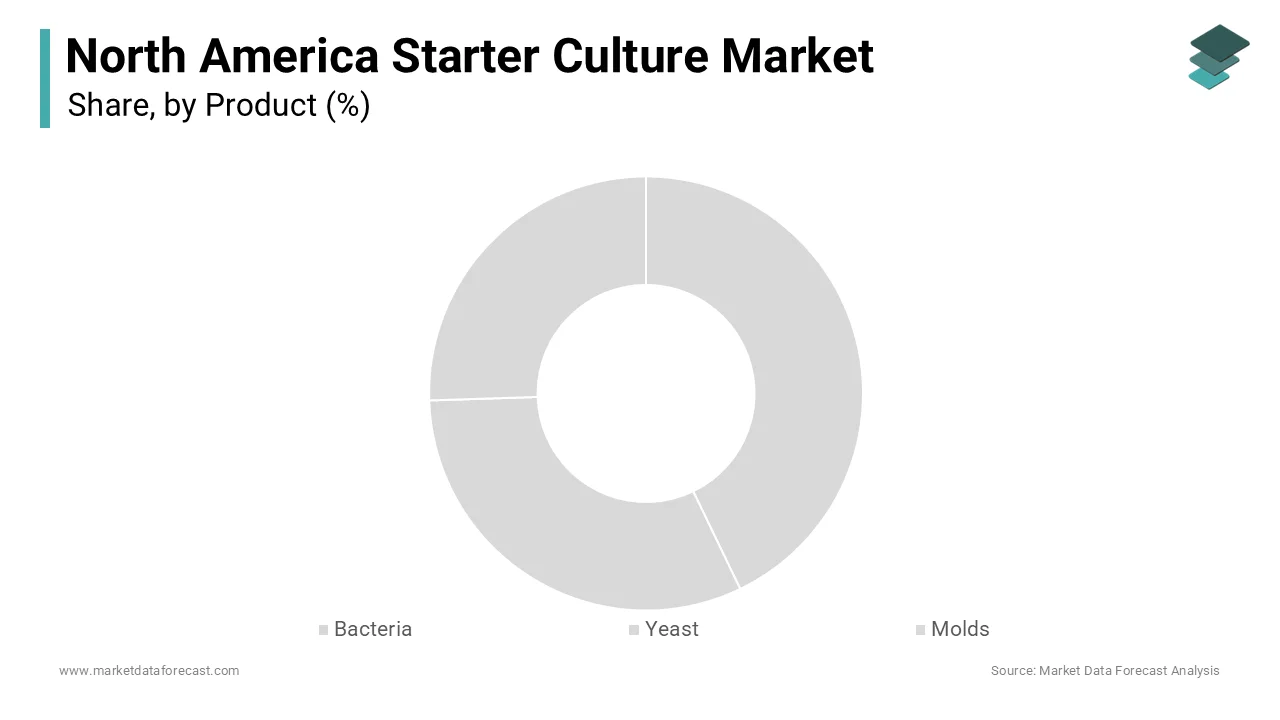
The yeast segment exhibits the highest CAGR of 7.5 per cent in the North America Starter Culture Market due to the explosive growth of the craft brewing industry and the resurgence of artisanal baking. Consumers increasingly seek unique flavour profiles in beer and bread, driving brewers and bakers to experiment with diverse yeast strains, including wild yeasts and speciality ale yeasts. According to the Brewers Association, the number of operating breweries in the United States reached a record-breaking count exceeding 9,000 in late 2021, establishing a highly competitive industry landscape where craft breweries dominate total facility numbers. This expansion drives innovation in yeast propagation and preservation technologies. As per the American Society of Baking, sourdough bread-making requires fermentation by lactic acid bacteria and wild yeast, a natural process that improves the bread's texture, flavour, and digestibility over commercial options. The trend prompts bakeries to adopt complex yeast and bacteria blends for authentic sourdough production. Retailers dedicate shelf space to home brewing and baking kits featuring diverse yeast strains, increasing accessibility for hobbyists. The versatility of yeast in producing alcoholic beverages and leavened baked goods ensures broad application across multiple food categories. This alignment with culinary craftsmanship and consumer preference for authentic tastes positions yeast as the fastest-expanding product category in the market.
By Application Insights
The non-alcoholic beverages segment led the North America Starter Culture Market and captured a significant share in 2025. This leading position of the segment was attributed to the surging popularity of probiotic drinks, kombucha, and fermented dairy beverages that align with preventive health trends. Consumers actively seek functional drinks that support gut health and immunity, driving manufacturers to utilise diverse starter cultures for fermentation. According to the International Scientific Association for Probiotics and Prebiotics (ISAPP), scientific and clinical evidence supporting the role of probiotics and prebiotics continues to progress rapidly alongside growing consumer interest in these products. This scientific backing drives demand for starter cultures that survive processing and deliver viable cells to the gut. As per studies, clean-label and health-conscious food and beverage options saw an 8% increase in sales over the prior year. This trend drives brands to incorporate hydrolysed collagen and probiotic cultures into popular formats like kombucha and kefir. Retailers promote these products as premium lifestyle choices appealing to young professionals and fitness enthusiasts. The convenience of ready-to-drink formats supports consumption in offices and gyms. Innovation in flavour profiles masks any potential aftertaste, improving sensory appeal. This alignment with convenience and wellness trends propels the non-alcoholic beverage segment to the leading position in the market.
The alcoholic beverages segment is on the rise and is expected to be the fastest-growing segment in the market, witnessing a CAGR of 8.2% during the forecast period. Consumers are prioritising quality, authenticity, and unique flavour experiences in their drinking choices. The craft brewing and distilling movements have transformed the landscape, with small batch producers relying on specialised yeast and bacterial cultures to create distinct taste profiles. According to the Brewers Association, total craft brewer volume sales declined by 4%, though independent craft brewer production share of the contracting U.S. beer market remained stable at 13.4% by volume. This demand drives innovation in yeast strain development for varied alcohol styles. As per the Distilled Spirits Council of the United States (DISCUS), consumer premiumization choices have driven strong growth in the super-premium segments, allowing spirits to gain steady market share over competing beverage alcohol categories. Distillers use specific yeast strains to influence ester production and flavour complexity in whisky and gin. Retailers expand their selections of craft beers and spirits, increasing visibility for brands using unique fermentation processes. Social media influencers showcase these beverages as part of sophisticated lifestyles, amplifying awareness. The portability of craft cans and bottles supports consumption in diverse settings. This alignment with premiumization and craftsmanship propels the alcoholic beverage segment to the highest growth rates in the market.
REGIONAL ANALYSIS
The United States dominated the North America Starter Culture Market and accounted for a substantial share in 2025. This dominance of the segment was driven by its massive food and beverage industry, high consumer awareness of probiotics, and vibrant craft production sector. While the United States is the world's largest individual producer of cheese, global corporations such as Danone are recognised as the top global producers of yoghurt. According to data from the United States Department of Agriculture Economic Research Service, per capita cheese consumption in the United States reached record highs with intake exceeding 42 pounds per person, driving a strong baseline of demand for dairy processing cultures. This consumption pattern ensures steady growth for culture suppliers. As per the Brewers Association, the total number of operating breweries in the United States grew to exceed 9,000, establishing a massive marketplace for independent craft beer and specialised yeast strains. The Food and Drug Administration enforces strict safety standards that build global trust in US microbial products. Major food corporations headquartered in the US lead global trends in fermented food innovation. The presence of leading probiotic brands further amplifies demand for premium bacterial strains. Government support for agricultural biotechnology fosters innovation in culture development. These factors combine to maintain the United States as the primary revenue generator and innovation hub for the regional market.
Canada occupies a significant share of the North America Starter Culture Market owing to high-quality standards, strong dairy cooperatives, and a growing interest in artisanal foods. The Canadian dairy sector operates under a supply management system that ensures stable prices and consistent quality for farmers and processors, supporting reliable culture usage. The Canadian Food Inspection Agency acts as Canada's science-based regulator, administering a National Microbiological Monitoring Program to test foods, production facilities, and imported shipments against national safety standards. This regulatory environment builds high consumer trust in certified fermented products. According to the Canadian Craft Brewers Association, the organisation represents nearly 1,200 small and independent craft breweries and brewpubs operating across Canadian provinces and territories. Local manufacturers leverage traditional expertise in cheese making to develop high-quality bacterial cultures for export. Retailers emphasise transparency in sourcing, showcasing origin stories and ethical practices. The rise of clean label trends encourages brands to minimise additives and use natural fermentation processes. Government initiatives promoting healthy eating further support market growth. These cultural and regulatory factors sustain Canada as a key market for premium and sustainable starter cultures in the region.
COMPETITIVE LANDSCAPE
The competition in the North America Starter Culture Market is characterized by intense rivalry among established multinational corporations and specialized regional laboratories. Large conglomerates leverage their global scale and integrated R&D capabilities to dominate commodity segments while niche players focus on artisanal and bespoke culture solutions. Product differentiation relies heavily on proprietary strain libraries and clinical validation that enhance functional performance and health benefits. Supply chain resilience becomes a critical competitive factor as companies navigate biological sensitivities and logistical disruptions in cold chain distribution. Innovation cycles accelerate as manufacturers race to develop cultures for plant based substrates and next generation probiotics that align with consumer preferences for transparency and wellness. Regulatory compliance serves as both a barrier to entry and a mark of quality for brands that adhere to strict safety and labeling standards. Consumer trust shifts rapidly based on scientific credibility and ethical sourcing practices among educated demographics. Strategic alliances between culture suppliers and end user brands foster exclusive partnerships that secure long term volume commitments. Intellectual property protection around proprietary strains creates sustainable advantages for innovators in the sector. The market witnesses increasing consolidation as larger firms acquire smaller entities to expand their portfolios and geographic reach. This dynamic environment demands continuous investment in science and customer engagement to maintain relevance.
Key Players in the Market
- Chr. Hansen Holding A/S
- Lallemand Inc.
- Danisco Animal Nutrition & Health (now part of IFF)
- International Flavors & Fragrances Inc. (IFF)
- DSM-Firmenich AG
- Kerry Group plc
- Sacco System
- Lesaffre International
- CSK Food Enrichment B.V.
- Bioprox Ingredients SAS
- Döhler Group
- LB Bulgaricum PLC
- Sacco S.r.l.
- THT S.A.
- Dalton Biotecnologie S.r.l.
Top Players in the Market
- Chr Hansen Holding A/S serves as a global leader in microbial solutions with extensive expertise in bacterial cultures for dairy and probiotic applications across North America. The company focuses on developing scientifically validated strains that enhance gut health and product functionality. Chr Hansen recently expanded its production capacity in Wisconsin to meet rising demand for premium starter cultures. Their innovation centers collaborate with food manufacturers to create customized fermentation solutions for yogurt and cheese. The company emphasizes sustainability through carbon neutral manufacturing processes and ethical sourcing practices. Chr Hansen actively publishes clinical research to substantiate health claims for their proprietary bacterial strains. This commitment to scientific validation strengthens their reputation among health conscious consumers and industrial clients. Their portfolio includes specialized cultures for plant based alternatives and functional beverages. These strategic initiatives position Chr Hansen as a key enabler of innovation in the regional starter culture sector.
- Lallemand Inc distinguishes itself through comprehensive yeast and bacteria solutions tailored for baking, brewing, and wine production in North America. The company leverages over a century of fermentation expertise to develop strains that deliver consistent performance and unique flavor profiles. Lallemand recently launched new sourdough culture blends designed specifically for artisanal bakers seeking authentic taste and texture. Their technical teams provide on site support to help producers optimize fermentation parameters and troubleshoot issues. The company invests heavily in research partnerships with universities to advance understanding of microbial ecology. Lallemand collaborates with craft brewers to co develop yeast strains for novel beer styles. They offer extensive educational resources and training programs for home fermenters and professionals alike. This combination of technical excellence and community engagement enhances customer loyalty. Their focus on traditional and innovative fermentation methods aligns with current culinary trends. These efforts solidify Lallemand’s position as a trusted partner for diverse fermentation applications.
- Danisco Animal Nutrition & Health, now part of IFF, plays a pivotal role in the North America Starter Culture Market by supplying high quality bacterial cultures for dairy and meat fermentation. The company is renowned for its stringent quality control standards and robust strain libraries that ensure product safety and consistency. Danisco recently upgraded its facilities to increase output of probiotic cultures for functional foods and supplements. They specialize in protective cultures that extend shelf life naturally without chemical preservatives. The company maintains long term partnerships with major dairy processors to secure consistent supply chains. Danisco emphasizes innovation in phage resistance to prevent fermentation failures in industrial settings. Their commitment to reliability and food safety builds strong relationships with downstream manufacturers. The company actively participates in industry forums to share insights on microbial safety and regulation. This dedication to quality and collaboration makes them a preferred supplier for discerning buyers across the continent.
Top Strategies Used By Key Market Participants
Key players in the North America starter culture market employ vertical integration strategies to secure stable raw material supplies and control production costs effectively. Companies actively invest in research and development to create novel high value strains such as next generation probiotics and specialized fermentation microbes. Strategic partnerships with food and beverage manufacturers enable co development of customized solutions that address specific functional and sensory requirements. Manufacturers focus on sustainability initiatives including carbon neutral processing and waste reduction to meet evolving regulatory and consumer expectations. Digital transformation efforts utilize data analytics to optimize fermentation processes and predict market demand trends accurately. Companies also prioritize obtaining certifications for organic non GMO and clean label status to differentiate their products in competitive segments. Expansion into emerging application areas like plant based fermentation and postbiotics allows firms to diversify revenue streams. Cost optimization through advanced propagation technologies helps improve yield and reduce waste during culture production. These multifaceted strategies collectively strengthen market positions and drive sustained growth in the dynamic industry landscape.
MARKET SEGMENTATION
This research report on the North America starter culture market has been segmented and sub-segmented based on the following categories.
By Product
- Bacteria
- Yeast
- Molds
By Application
- Alcoholic beverages
- Dairy products
- Non-Alcoholic beverages
- Others
By Form
- Frozen starters
- Liquid Starters
- Dried Starters
By Country
- The United States
- Canada
- Rest of North America