- Product Description Description
- Table of Contents TOC
- List of Table & Figure LOT
- Get Free Sample PDF Sample PDF
Market Size, 2025
$1.44 BnMarket Estimate, 2026
$1.52 BnMarket Forecast, 2034
$2.37 BnCAGR, 2026–2034
5.69%Executive Summary: Global Natural Antioxidants Market
- Market Scope: Comprehensive global natural antioxidants market analysis covering product types, end-use applications, regional leadership frameworks, and key market drivers and restraints.
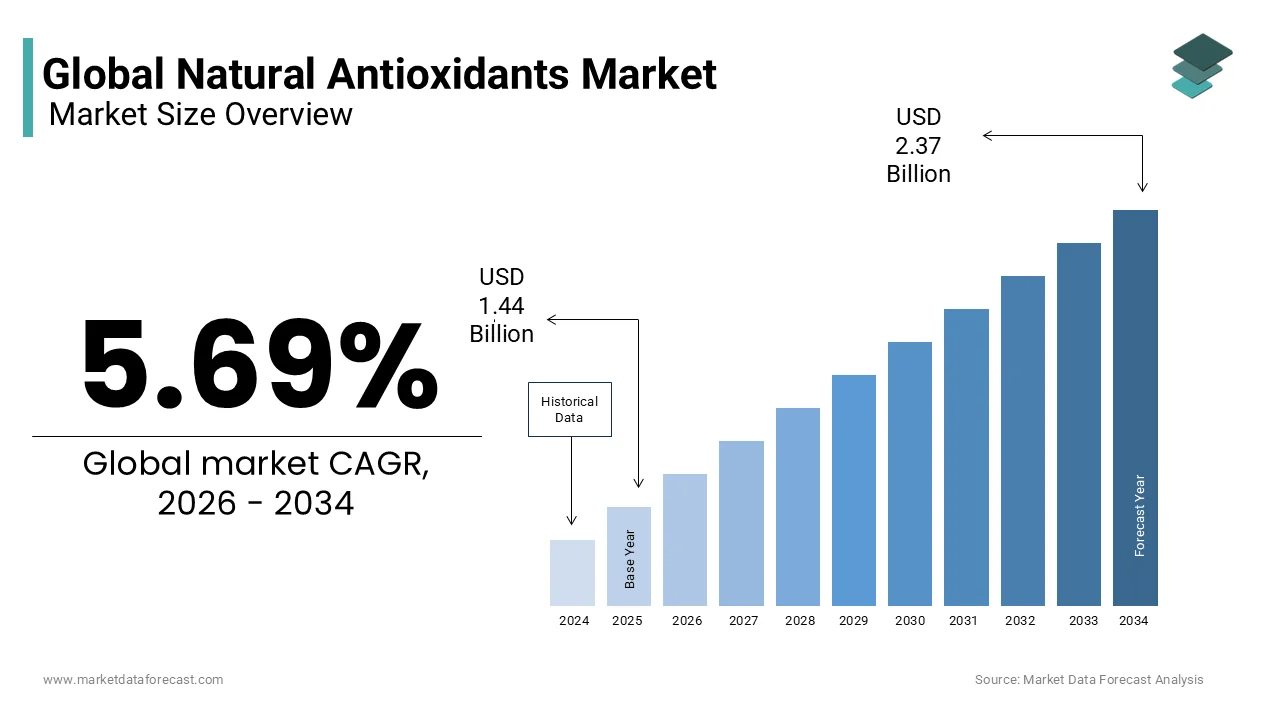
- Market Valuation: Valued at USD 1.44 billion (2025), estimated at USD 1.52 billion (2026), and projected to reach USD 2.37 billion by 2034, registering a robust CAGR of 5.69% (2026–2034).
- Primary Growth Drivers: Increasing demand for fortified foods and beverages due to healthy lifestyles, rising utilization of vitamin C, vitamin E, and polyphenols in cosmetics for skin health, and growing demand for high-quality animal feed. Key market restraints include the abundant availability of synthetic antioxidants such as BHA, BHT, and EDTA.
Key Market Segment Metrics (2026–2034)
| Category | Leading Segment (2025 Position) | Fastest-Growing Segment |
|---|---|---|
| By Product | Vitamin C-Base (dominated the market due to widespread non-toxic pharmaceutical, food, and feed applications) | Polyphenol-Based (driven heavily by functional foods, beverages, and cosmetic applications) |
| By Application | Pharmaceuticals (remains the largest application segment, particularly for vitamin C supplements) | Food and Beverage (surging due to trends toward healthy living and fortified products) |
| By Region | North America (ruled the market driven by strong organic and natural product demand in the USA) | Asia-Pacific (expected to register the highest growth rate due to rising consumer awareness and food/beverage developments) |
Major Market Players & Market Structure
Market Structure: Competitive global natural antioxidants market featuring key players expanding through strategic acquisitions, portfolio enhancements, and product innovations across food, cosmetic, and pharmaceutical industries.
Key Companies: Ajinomoto, DSM, Anjin Jianfeng Natural Products Co. Ltd., Indena S.P.A, DuPont, Danisco, Archer Daniels Midland, and Prinova.
 Download Free Sample Report
Global Natural Antioxidants Market Size
The global natural antioxidants market size was valued at USD 1.44 billion in 2025 and is expected to reach USD 2.37 billion by 2034 from USD 1.52 billion in 2026, growing at a CAGR of 5.69%.
The natural antioxidants market encompasses bioactive compounds derived from plant and microbial sources that inhibit oxidation in food systems and biological environments without synthetic intervention. According to the European Food Safety Authority, over 65% of new functional food launches in Europe during 2024 incorporated rosemary extract or tocopherols as primary stabilization agents to meet clean label demands. This sector is distinct from general additives because it directly addresses consumer anxiety regarding synthetic preservatives like BHT and BHA while extending shelf life through radical scavenging mechanisms. According to the Institute of Food Technologists, clinical studies published in the Journal of Food Science demonstrate that natural polyphenols can reduce lipid peroxidation by up to 40% in meat products compared to untreated controls. These substances serve dual purposes by preserving nutritional integrity and satisfying regulatory shifts toward safer ingredient profiles across global supply chains. The definition continues to expand beyond preservation into nutraceutical applications where oxidative stress mitigation drives formulation strategies for aging populations seeking preventive health solutions through dietary intake rather than pharmaceutical intervention alone.
MARKET DRIVERS
Clean Label Preferences Accelerate Ingredient Substitution
Consumer preference for transparent ingredient lists fundamentally reshapes procurement strategies within the natural antioxidants market as manufacturers replace synthetic stabilizers with recognizable botanical extracts. According to the International Food Information Council Foundation, 73% of surveyed consumers in 2024 stated they actively avoid artificial preservatives when purchasing packaged foods, which directly increases demand for rosemary and green tea extracts. This behavioural shift forces formulators to prioritize ingredients that appear familiar on packaging while maintaining technical efficacy against rancidity and spoilage. According to the European Commission Directorate General for Health and Food Safety, regulatory updates in 2023 reclassified several synthetic antioxidants under stricter labeling requirements, which further incentivize industry migration toward naturally derived alternatives. Manufacturers now invest heavily in extraction technologies that yield high-purity concentrates capable of matching synthetic performance metrics without compromising clean label claims. The correlation between consumer trust and ingredient simplicity creates a sustained commercial pull for natural variants across bakery and beverage categories where visual appeal and freshness perception are paramount to purchase decisions and brand loyalty in competitive retail environments.
Functional Nutrition Growth Stimulates Bioactive Integration
The proliferation of functional foods significantly propels the natural antioxidants market expansion as brands fortify products with polyphenols to deliver specific health benefits beyond basic nutrition. According to the Global Organization for EPA and DHA Omega 3s, sales of omega-3-fortified beverages grew by 18% in 2024, necessitating robust natural antioxidant systems to prevent fish oil oxidation and maintain sensory acceptability. This expansion transforms antioxidants from mere preservatives into active functional ingredients that support cardiovascular and cognitive health claims on product labels. According to the American Society for Nutrition, research published in the American Journal of Clinical Nutrition confirms that coadministration of vitamin E with polyunsaturated fats enhances bioavailability by 25%, which validates their inclusion in premium supplement formulations. Food scientists increasingly utilize synergistic blends of acerola cherry and mixed tocopherols to stabilize sensitive nutrients during processing and storage. The direct relationship between functional claim substantiation and oxidative stability ensures that natural antioxidants remain indispensable components in sports nutrition and medical food segments where nutrient degradation would invalidate therapeutic promises and erode consumer confidence in efficacy statements printed on packaging.
MARKET RESTRAINTS
Agricultural Variability Disrupts Consistent Sourcing
Agricultural unpredictability severely hampers the natural antioxidants market growth because botanical raw materials exhibit significant potency fluctuations based on climate and harvest conditions. According to the United States Department of Agriculture Economic Research Service, drought conditions in major rosemary-growing regions reduced crop yields by 22% in 2024, causing spot prices for standardized extracts to surge unexpectedly. This volatility makes long-term contract pricing difficult for buyers who require consistent carnosic acid concentrations for regulatory compliance and product uniformity. According to the Food and Agriculture Organization of the United Nations, extreme weather events have increased the coefficient of variation in polyphenol content by 15% across key sourcing geographies over the last decade. Manufacturers face constant reformulation challenges when incoming batches fail specification tests due to environmental stress factors affecting secondary metabolite production. Unlike synthetic counterparts produced in controlled reactors, natural sources depend entirely on biological systems vulnerable to pests and temperature swings. This inherent instability forces companies to maintain expensive buffer inventories or develop costly blending protocols to standardize output, which ultimately compresses margins and limits accessibility for smaller food producers operating with tight budget constraints.
Efficacy Limitations Restrict Widespread Industrial Use
Technical performance deficiencies substantially restrict the natural antioxidants market expansion because many botanical extracts lack the thermal stability required for high-temperature industrial processing. According to the American Oil Chemists Society, unmodified green tea catechins degrade by up to 50% during extrusion cooking at temperatures exceeding 180 degrees Celsius, which renders them ineffective for expanded snack manufacturing. This limitation forces processors to either abandon natural options or invest in expensive encapsulation technologies that protect active compounds until release. According to the Journal of Agricultural and Food Chemistry, comparative oxidation studies show that synthetic BHT maintains 90% activity after frying, while equivalent doses of oregano extract retain only 45% efficacy under identical conditions. Such disparities create hesitation among quality assurance teams responsible for guaranteeing shelf life targets in aggressive distribution channels. The gap between laboratory potential and factory floor reality means natural antioxidants often require higher dosage rates to achieve parity, which introduces off-flavors and color changes unacceptable to consumers. Until novel delivery systems or bred cultivars bridge this performance divide, adoption will remain confined to low-heat applications despite strong marketing incentives for clean label positioning.
MARKET OPPORTUNITIES
Circular Economy Models Generate Novel Ingredient Sources
Utilization of agricultural byproducts presents a promising opportunity for the natural antioxidants market as processors extract valuable polyphenols from waste streams previously destined for landfill. According to the United Nations Environment Programme, the fruit juice industry generates approximately 30 million tons of pomace annually worldwide, which contains recoverable flavonoids worth an estimated 2 billion dollars if valorized effectively. This circular approach reduces raw material costs while simultaneously addressing corporate sustainability targets and reducing environmental footprint metrics reported to stakeholders. According to the Journal of Cleaner Production, techno-economic analyses demonstrate that extracting antioxidants from grape marc can lower production costs by 35% compared to cultivating dedicated crops solely for extraction purposes. Wineries and juice processors are increasingly partnering with ingredient suppliers to establish integrated biorefineries that convert liabilities into revenue streams. The alignment of economic viability with ecological responsibility creates compelling narratives for brands targeting environmentally conscious demographics who value waste reduction as much as product functionality. This convergence opens new supply channels independent of traditional agriculture and insulates the market from some climate-related volatility affecting primary crop production.
Biotechnological Advancement Facilitates Consistent Manufacturing
Precision fermentation technology offers a groundbreaking opportunity for the natural antioxidants market expansion by enabling microbial production of complex phytochemicals independent of seasonal agriculture. According to the Good Food Institute, investment in precision fermentation startups reached 1.2 billion dollars in 2024, signaling strong capital confidence in bioengineered ingredient scalability. This method produces molecules identical to plant-derived versions but with guaranteed purity and concentration levels unaffected by weather or soil variability. According to Nature Biotechnology, recent metabolic engineering breakthroughs have increased titers of resveratrol in yeast strains by 300%, making commercial production economically viable for mass-market applications. Brands can now source nature-identical antioxidants with full non-GMO and vegan certifications while avoiding pesticide residues associated with conventional farming. The decoupling of ingredient supply from land use also appeals to investors focused on ESG criteria and resource efficiency. This technological pathway resolves historical tensions between natural positioning and industrial reliability, creating a hybrid category that satisfies both purist consumers and pragmatic manufacturers seeking predictable specifications and stable pricing structures for long-term product planning.
MARKET CHALLENGES
Divergent Approval Standards Complicate Global Trade
Regulatory fragmentation is a persistent challenge to the natural antioxidants market expansion because approval statuses and usage limits vary drastically across jurisdictions, creating barriers to international commerce. According to the World Trade Organization, discrepancies in permitted antioxidant levels between the European Union and United States affect over 40% of cross-border food trade flows, requiring separate formulations for each destination. A compound approved as natural in one region may be classified as synthetic or unauthorized in another due to differing definitions of acceptable extraction solvents and processing aids. According to the Codex Alimentarius Commission, ongoing harmonization efforts have stalled on 12 key antioxidant substances, leaving manufacturers in legal limbo regarding global label claims. Companies must maintain parallel inventory systems and conduct redundant safety testing to satisfy multiple agencies, which inflates operational overhead and delays time to market. The absence of mutual recognition agreements means that even well-established ingredients face reevaluation whenever entering new territories. This regulatory maze disproportionately burdens small and medium enterprises lacking dedicated compliance teams, thereby consolidating market power among multinational corporations with resources to navigate complex bureaucratic landscapes across diverse geopolitical zones.
Authenticity Concerns Undermine Value Proposition Credibility
Growing consumer skepticism regarding greenwashing claims challenges the natural antioxidants market expansion as shoppers increasingly question whether premium-priced natural ingredients deliver genuine benefits or merely marketing theater. According to the Consumer Reports National Research Center, 58% of respondents in 2024 expressed doubt about the authenticity of natural labels, citing inconsistent enforcement and vague terminology as primary reasons for distrust. This cynicism threatens the price premiums that sustain natural antioxidant economics since buyers refuse to pay more for perceived deception. According to the Journal of Business Ethics, academic investigations reveal that up to 30% of products marketed as containing natural antioxidants actually use synthetic equivalents disguised through misleading nomenclature or insufficient disclosure. Such practices damage the entire category reputation and invite regulatory crackdowns that could impose stricter verification standards. Brands investing in genuine sustainable sourcing struggle to differentiate themselves from bad actors exploiting loose definitions. Restoring faith requires third-party certifications and transparent supply chain tracing, which add cost and complexity. Until the industry establishes credible verification frameworks that consumers recognize and trust, the value proposition remains vulnerable to erosion by cynical media coverage and activist campaigns highlighting inconsistencies between marketing promises and actual product composition.
REPORT COVERAGE
| REPORT METRIC | DETAILS |
| Market Size Available | 2025 to 2034 |
| Base Year | 2025 |
| Forecast Period | 2026 to 2034 |
| CAGR | 5.69% |
| Segments Covered | By Product, Application, and Region |
| Various Analyses Covered | Global, Regional and Country Level Analysis; Segment-Level Analysis; DROC; PESTLE Analysis; Porter’s Five Forces Analysis; Competitive Landscape; Analyst Overview of Investment Opportunities |
| Regions Covered | North America, Europe, APAC, Latin America, Middle East & Africa |
| Market Leaders Profiled | Ajinomoto, DSM, Kemin Industries, Anjin Jianfeng Natural Products Co. Ltd., Indena S.P.A., BASF SE, DuPont, Danisco, Archer Daniels Midland, and Prinova |
SEGMENTAL ANALYSIS
By Product Insights
The vitamin E base antioxidants segment commanded for the largest share of the global market in 2025. The dominance of vitamin E base antioxidants segment in the global market is primarily driven by their unparalleled efficacy in preventing lipid oxidation in edible oils and fat-based products. According to the American Oil Chemists Society, mixed tocopherols prevent rancidity in soybean oil for up to 12 months longer than untreated controls, which makes them indispensable for global vegetable oil refineries. This technical superiority ensures that manufacturers prioritize vitamin E formulations to meet stringent shelf life requirements in bulk commodity trading. According to the United States Department of Agriculture, over 80% of commercial salad dressings produced in North America utilize alpha-tocopherol as the primary stabilizer to maintain flavor integrity during distribution. The widespread adoption stems from its regulatory acceptance as a natural nutrient rather than a chemical additive, which simplifies labeling compliance across multiple jurisdictions. Furthermore, the cosmetic industry drives substantial demand because vitamin E protects skin care emulsions from degradation while offering moisturizing benefits that appeal to premium beauty consumers. The dual functionality in food preservation and personal care creates a robust revenue stream that sustains market leadership despite higher raw material costs compared to synthetic alternatives. Supply chain integration with major oilseed processors also provides cost advantages that smaller competitors cannot easily replicate.
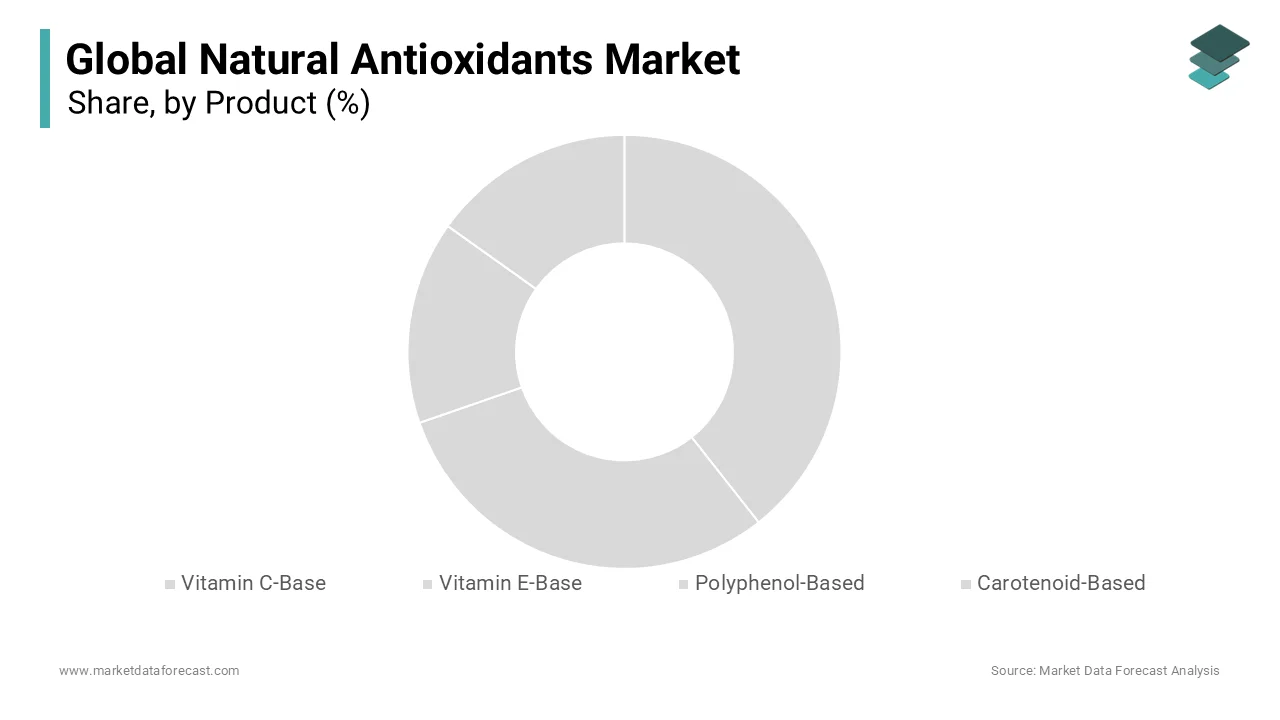
On the other end, the polyphenol-based antioxidants segment is anticipated to register a prominent CAGR of 9.4% over the forecast period owing to the intense consumer interest in plant-derived bioactive compounds. According to the Journal of Agricultural and Food Chemistry, sales of green tea extract containing epigallocatechin gallate increased by 25% in 2024 as beverage manufacturers sought natural ingredients with proven metabolic health benefits. This surge reflects a broader shift toward ingredients that offer dual preservation and therapeutic value, which appeals to health-conscious demographics seeking preventive nutrition solutions. According to the International Tea Committee, global production of black and green tea rose by 4% annually, providing abundant raw material for polyphenol extraction at competitive prices. The availability of scalable sourcing options enables manufacturers to meet rising demand without facing the supply constraints that plague other botanical extracts. Furthermore, advancements in membrane filtration technology have improved purity levels of polyphenol concentrates, making them suitable for high-end pharmaceutical and nutraceutical applications where consistency is critical. The versatility of polyphenols across diverse matrices, including beverages, snacks, and supplements, ensures broad market penetration and sustained growth momentum.
By Application Insights
The food and beverage segment led the market with the largest share of the global market in 2025 because extending shelf life is critical for minimizing waste and ensuring product safety in global supply chains. According to the Food and Agriculture Organization of the United Nations, approximately 14% of all food produced globally is lost post-harvest due to oxidation and spoilage, which creates urgent demand for effective natural preservatives. Manufacturers rely heavily on natural antioxidants to protect sensitive lipids in dairy, meat, and bakery products from rancidity during extended storage and transportation periods. According to the Institute of Food Technologists, the use of rosemary extract in processed meats reduces lipid oxidation by 60% compared to untreated samples, thereby maintaining color and flavor quality for retailers. This technical capability directly impacts profitability by reducing return rates and enhancing brand reputation for freshness. The sheer volume of processed food production worldwide ensures that even small percentage increases in antioxidant usage translate into massive absolute demand growth. Regulatory pressures to eliminate synthetic additives further compel large multinational food corporations to reformulate existing portfolios with natural alternatives, securing the sector's leading position.
However, the pharmaceutical segment exhibits the fastest growth in the global natural antioxidants market and is estimated to record a notable CAGR over the forecast period due to the increasing prevalence of chronic diseases linked to oxidative stress and cellular damage. According to the World Health Organization, noncommunicable diseases account for 74% of all deaths globally, creating immense pressure on healthcare systems to develop preventive therapeutic interventions. Natural antioxidants such as resveratrol and curcumin are increasingly incorporated into drug formulations and supplements to mitigate inflammation and support cellular repair mechanisms. According to the National Institutes of Health, clinical research funding for polyphenol-based therapies increased by 20% in 2024, reflecting growing scientific confidence in their adjunctive treatment potential. Pharmaceutical companies leverage the favorable safety profiles of natural antioxidants to develop long-term maintenance therapies for conditions like diabetes and cardiovascular disease. The ability to combine conventional drugs with natural antioxidants enhances efficacy while reducing side effects, which appeals to both clinicians and patients. This therapeutic integration opens high-value revenue streams distinct from commodity food applications, driving rapid segment expansion.
REGIONAL ANALYSIS
North America Natural Antioxidants Market Analysis
North America held a prominent position in the global natural antioxidants market in 2025. The dominance of North America in the global market is majorly driven by advanced food processing infrastructure and stringent regulatory standards favoring natural ingredients. According to the United States Department of Agriculture, the region accounts for 35% of global clean label food sales, which directly correlates with high demand for natural preservatives like rosemary and green tea extracts. Consumers in this region exhibit high awareness of ingredient safety, prompting manufacturers to rapidly replace synthetic antioxidants with botanical alternatives to maintain brand trust. According to Health Canada, updated labeling requirements mandate clear identification of synthetic additives, which has accelerated the transition to natural options in Canadian packaged food products. The presence of major ingredient suppliers and research institutions fosters innovation in extraction technologies that improve yield and purity of natural antioxidants. High disposable income enables consumers to pay premiums for organic and non-GMO products fortified with natural antioxidants, sustaining robust market growth. The integration of natural antioxidants into sports nutrition and functional beverages further expands application scope beyond traditional food preservation.
Europe Natural Antioxidants Market Analysis
Europe maintains a leading role in the natural antioxidants market characterized by rigorous food safety regulations and strong consumer preference for sustainable sourcing. According to the European Food Safety Authority, over 60% of new product launches in the European Union feature natural preservatives, reflecting deep market penetration of clean label trends. The region’s strict restrictions on synthetic additives like BHT force manufacturers to adopt natural alternatives such as tocopherols and ascorbic acid to comply with legal standards. According to the European Commission, the Farm to Fork Strategy promotes the use of natural ingredients to reduce environmental impact, which aligns with corporate sustainability goals of major food producers. Consumer activism against artificial ingredients drives retailers to prioritize natural antioxidant formulations in private label products. The well-established organic farming sector provides reliable supplies of raw materials for antioxidant extraction, supporting local value chains. High literacy rates regarding nutrition empower consumers to make informed choices that favor natural products, ensuring steady demand growth across member states.
Asia Pacific Natural Antioxidants Market Analysis
Asia Pacific emerges as a high-growth region in the natural antioxidants market fueled by rapid urbanization and rising middle-class consumption of processed foods. According to the Food and Agriculture Organization of the United Nations, packaged food sales in Southeast Asia grew by 12% annually as changing lifestyles increase reliance on convenient meal solutions requiring preservation. Manufacturers incorporate natural antioxidants to extend shelf life in tropical climates where heat and humidity accelerate spoilage of edible oils and snacks. According to the Chinese Center for Disease Control and Prevention, growing awareness of chronic disease prevention drives demand for functional foods fortified with natural polyphenols and vitamins. Local traditions of using herbal ingredients facilitate acceptance of natural antioxidants in both food and traditional medicine applications. Government initiatives promoting food security encourage investment in preservation technologies that reduce post-harvest losses. The expanding retail infrastructure in India and China provides wider distribution channels for products featuring natural antioxidants, catering to health-conscious urban consumers.
Latin America Natural Antioxidants Market Analysis
Latin America demonstrates significant potential in the Natural Antioxidants Market supported by abundant agricultural resources and growing export-oriented food industries. According to the Inter-American Institute for Cooperation on Agriculture, the region produces over 40% of the world’s coffee and fruits, which serve as rich sources of polyphenols for antioxidant extraction. Local manufacturers increasingly utilize these byproducts to create value-added ingredients for domestic and international markets, reducing waste and enhancing profitability. According to the Brazilian Ministry of Agriculture, exports of natural fruit extracts increased by 18% in 2024 driven by global demand for clean label preservatives in bakery and beverage sectors. Economic stabilization in key markets like Chile and Argentina encourages foreign investment in food processing facilities that adopt natural preservation methods. Rising health consciousness among urban populations drives local consumption of functional beverages fortified with native antioxidant-rich berries. Government support for agro-industrial development facilitates infrastructure improvements that enhance extraction capabilities and product quality.
Middle East and Africa Natural Antioxidants Market Analysis
The Middle East and Africa region shows gradual adoption of Natural Antioxidants influenced by increasing food imports and modernization of retail sectors. According to the Gulf Standardization Organization, harmonized food safety standards across Gulf Cooperation Council countries encourage the use of approved natural preservatives to ensure product quality in hot climates. Importers of packaged foods from Europe and North America bring clean label trends that influence local manufacturing practices and consumer expectations. According to the African Union Commission, initiatives to reduce post-harvest losses in perishable goods drive interest in natural preservation technologies that extend shelf life without chemical residues. Growing urbanization in Nigeria and South Africa increases demand for processed snacks and beverages where natural antioxidants help maintain freshness. Religious preferences for halal-certified products favor natural ingredients over synthetic additives, which may lack clear certification protocols. Limited local production capacity means the region relies heavily on imports, creating opportunities for global suppliers to introduce innovative natural antioxidant solutions.
COMPETITIVE LANDSCAPE
The competition in the Natural Antioxidants Market is characterized by a mix of large multinational corporations and specialized regional players who compete on technology and sourcing capabilities. Large firms leverage economies of scale and extensive distribution networks to offer consistent quality and reliable supply to global food manufacturers. They invest significantly in research to develop proprietary extraction methods that enhance product performance and differentiate their offerings from generic alternatives. Smaller niche players often compete by focusing on unique botanical sources or organic certifications that appeal to premium market segments seeking distinctive ingredients. Price competition remains intense due to the availability of synthetic alternatives which forces natural ingredient suppliers to continuously demonstrate value through superior efficacy and safety profiles. Innovation in formulation techniques allows companies to overcome technical limitations such as heat instability thereby expanding application possibilities in processed foods. Regulatory compliance serves as a significant barrier to entry requiring substantial investment in testing and documentation which favors established players with dedicated legal and scientific teams. Collaborative relationships with end users drive customization and long term contracts that stabilize revenue streams amidst fluctuating raw material costs.
KEY MARKET PLAYERS
Some of the key players in the global natural antioxidants market are
- Ajinomoto
- DSM
- Kemin Industries
- Anjin Jianfeng Natural Products Co. Ltd.
- Indena S.P.A
- BASF SE
- DuPont
- Danisco
- Archer Daniels Midland
- Prinova
Top Players in the Market
- Kemin Industries maintains a strong presence through its extensive portfolio of plant based extracts including rosemary and green tea variants. The company focuses on scientific validation to prove efficacy which builds trust among food manufacturers seeking reliable preservation solutions. Recent investments in extraction technology have improved yield and purity levels allowing for more competitive pricing structures. Kemin actively collaborates with academic institutions to publish peer reviewed studies that support health claims associated with their natural ingredients. This evidence based approach differentiates their offerings in a crowded marketplace where performance consistency is critical. Their global supply chain ensures stable availability of raw materials despite agricultural volatility. By prioritizing sustainability in sourcing practices Kemin appeals to environmentally conscious brands looking to enhance their corporate responsibility profiles while maintaining product quality standards across diverse geographic regions.
- BASF SE leverages its chemical engineering expertise to develop high purity natural antioxidant formulations suitable for industrial scale applications. The company integrates biotechnology with traditional extraction methods to create innovative solutions that address thermal stability challenges in processed foods. Recent expansions in production capacity enable BASF to meet growing global demand without compromising on quality or delivery timelines. They focus on creating synergistic blends that enhance the performance of individual compounds thereby offering superior protection against oxidation. BASF engages in strategic partnerships with local suppliers to secure sustainable sources of raw materials while supporting community development initiatives. Their comprehensive regulatory support helps customers navigate complex compliance requirements in multiple jurisdictions. This holistic service model strengthens customer loyalty and positions BASF as a trusted partner for long term product development strategies in the natural ingredients sector.
- Archer Daniels Midland Company utilizes its vast agricultural network to source high quality botanicals for natural antioxidant production. The company emphasizes vertical integration which provides control over quality from farm to finished product ensuring consistency and traceability. Recent acquisitions of specialized ingredient firms have expanded their technical capabilities in extraction and formulation technologies. ADM focuses on developing custom solutions tailored to specific customer needs such as flavor neutral extracts for sensitive applications. Their research teams work closely with clients to optimize usage levels and achieve desired shelf life extensions cost effectively. The company promotes transparency in its supply chain which resonates with brands committed to ethical sourcing practices. By combining scale with specialized knowledge ADM delivers reliable volumes of natural antioxidants that meet stringent industry standards while supporting sustainable agricultural practices globally.
Top Strategies Used by Key Market Participants
Key players in the Natural Antioxidants Market primarily employ vertical integration strategies to secure stable supplies of raw materials and control quality from source to finish. Companies invest heavily in research and development to innovate extraction technologies that improve yield and purity while reducing environmental impact. Strategic partnerships with agricultural cooperatives ensure consistent access to high potency botanicals despite climate variability affecting crop yields. Mergers and acquisitions allow larger firms to expand their product portfolios and enter new geographic markets rapidly without building infrastructure from scratch. Marketing efforts focus on educating consumers and manufacturers about the benefits of natural preservatives through scientific publications and industry conferences. Diversification into adjacent sectors like personal care and animal feed creates additional revenue streams and reduces dependency on single application areas. Sustainability initiatives are central to brand positioning as companies highlight eco friendly sourcing and waste reduction practices to appeal to environmentally conscious stakeholders and comply with evolving regulatory frameworks globally.
MARKET SEGMENTATION
This research report on the global natural antioxidants market has been segmented and sub-segmented based on product, application, & region.
By Product
- Vitamin C-Base
- Vitamin E-Base
- Polyphenol-Based
- Carotenoid-Based
By Application
- Food And Beverage
- Pharmaceuticals
- Animal Feed
- Others
By Region
- North America
- Europe
- Asia Pacific
- Latin America
- Middle East and Africa