- Product Description Description
- Table of Contents TOC
- List of Table & Figure LOT
- Get Free Sample PDF Sample PDF
Market Size, 2025
$6.32 BnMarket Estimate, 2026
$6.86 BnMarket Forecast, 2034
$13.19 BnCAGR, 2026–2034
8.52%Global Neuromodulation Devices Market Size
The global neuromodulation devices market was valued at USD 6.32 billion in 2025, is estimated to reach USD 6.86 billion in 2026, and is projected to reach USD 13.19 billion by 2034, growing at a CAGR of 8.52% from 2026 to 2034.

MARKET DRIVERS
The growing awareness regarding the benefits of neuromodulation therapies majorly drives global market growth.
As awareness regarding neuromodulation therapy is increasing among people, the number of patients opting for consultation and therapy for nerve injuries and chronic disorders has been rising.Technological advancements in the neuromodulation devices market in the form of non-invasive types of devices have fuelled market growth and have been expanding to unpenetrated regions. As the risk associated with surgery in the non-invasive type of devices is very low, a greater number of people are opting for neuromodulation surgeries. Non-invasive devices have changed the market completely as the biggest market for neuromodulation devices in the United States, which is based on the use of non-invasive devices. The prevalence of nerve injuries and chronic pain and conditions such as cancer has been rising worldwide as the population of aged citizens is increasing and the rate of obesity is rising at an alarming rate. Neuromodulation devices offer a safe and effective way to manage chronic pain. These devices work by stimulating nerves or the spinal cord, which can help to reduce pain.
Therefore, rising awareness regarding neuromodulation therapy and surgery, technological advancements in the market, and the prevalence of conditions causing disorders are the major factors driving the growth of the neuromodulation devices market.
MARKET RESTRAINTS
The high cost of neuromodulation devices leads to a higher cost of treatment of nerve injuries and chronic disorders. The installation and setup as well as the maintenance cost for the neuromodulation devices, is very high.
This restricts the growth of the neuromodulation devices market in developed and underdeveloped countries like Nepal and many African countries. Due to the high cost of the treatment, many people cannot afford neuromodulation therapy. Risk is associated with neuromodulation therapy or surgery. Risk of side effects like bleeding, infection, or pain are associated with the surgery. In certain severe cases, stroke or death can also happen. This restricts the patients from considering the option of surgery for chronic disorders. In many European countries, reimbursement is given for the treatment using neuromodulation devices. But the countries where the cost of treatment is not reimbursed, the number of patients considering the neuromodulation devices treatment is very low.
Hence, the high initial as well as maintenance costs of neuromodulation devices, the risk associated with the treatment, and limited or no reimbursement of the cost of treatment are the major limitations for the growth of the neuromodulation devices market.
REPORT COVERAGE
| REPORT METRIC | DETAILS |
| Market Size Available | 2025 to 2034 |
| Base Year | 2025 |
| Forecast Period | 2026 to 2034 |
| Segments Covered | By Type, Application, End-User, and Region. |
| Various Analyses Covered | Global, Regional, and Country-Level Analysis, Segment-Level Analysis, Drivers, Restraints, Opportunities, Challenges; PESTLE Analysis; Porter’s Five Forces Analysis, Competitive Landscape, Analyst Overview of Investment Opportunities |
| Regions Covered | North America, Europe, Asia Pacific, Latin America, Middle East & Africa |
| Market Leaders Profiled | LivaNova PLC, Abbott, Medtronic, Neuronetics and NeuroPace Inc. |
SEGMENTAL ANALYSIS
By Type Insights
The non-invasive segment is predicted to account for the largest share of the global neuromodulation devices market during the forecast period. As the demand for minimally invasive procedures is increasing, the requirement for non-invasive neuromodulation devices is also increasing. The non-invasive segment includes devices such as transcranial magnetic stimulation (TMS) devices, Vagus nerve stimulators (VNS) devices, and peripheral nerve stimulators (PNS) devices. These devices are not surgically implanted and can be used at home. Thus, they are nowadays preferred by patients.
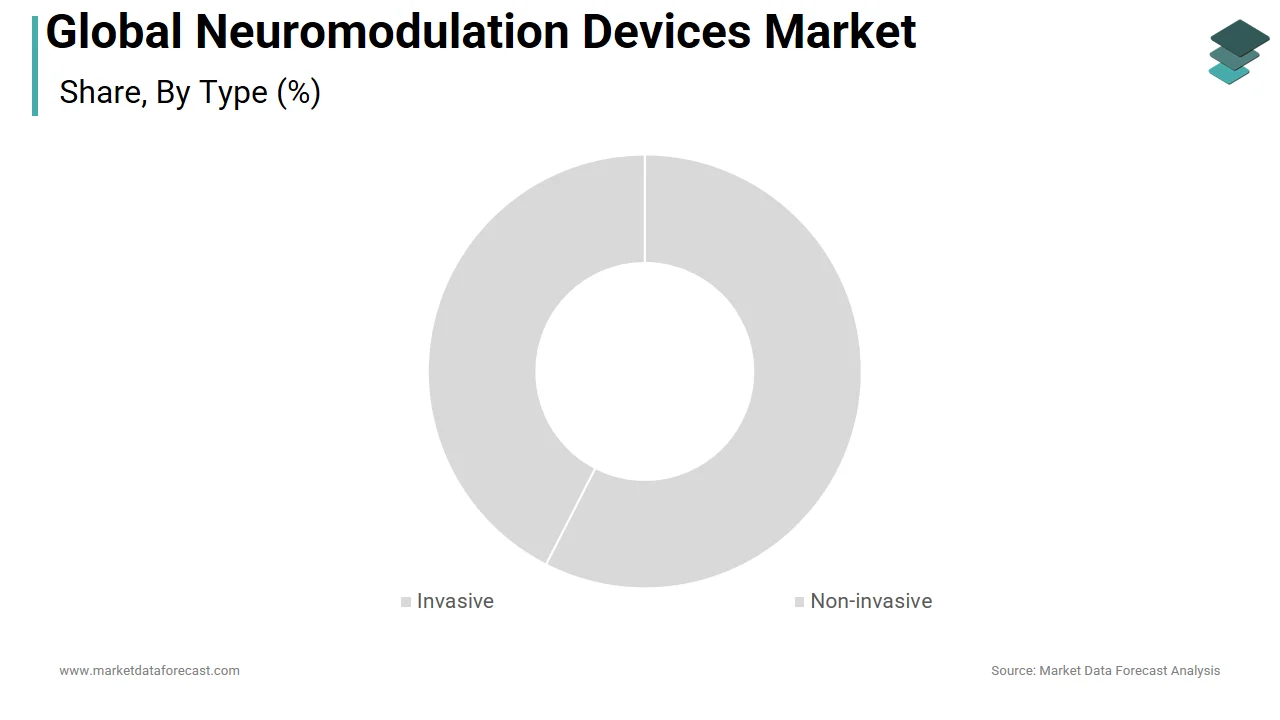
The invasive devices segment is expected to register a healthy CAGR in the global neuromodulation devices market during the forecast period. Invasive segment includes devices such as deep brain stimulators, spinal cord stimulators, and sacral nerve stimulators. These devices need to be surgically implanted in the body and require a longer recovery time as compared to non-invasive. The invasive devices are mostly used for treating Parkinson’s disease and other disorders associated with movement.
By Application Insights
The pain management segment is estimated to account for the major share of the global neuromodulation devices market during the forecast period. As the number of patients suffering from chronic pain is increasing and neuromodulation pain management devices are an effective option for relief, the demand is rising on a Y-O-Y basis.
The neurological disorders segment is predicted to hold the second-largest share of the worldwide market during the forecast period. Neuromodulation devices are used for the treatment of neurological disorders like Parkinson’s disease, epilepsy, and depression.
The respiratory disorders segment is projected to occupy a considerable share of the global neuromodulation devices market in the coming years. Respiratory disorders such as (COPD) Chronic Obstructive Pulmonary Disease and Asthma are being treated using neuromodulation devices.
By End-users Insights
The hospitals segment is predicted to account for the largest share of the global neuromodulation devices market during the forecast period. Hospitals provide neuromodulation therapies which include spinal cord stimulation and deep brain stimulation therapy. Along with other surgeries, patients require therapy sessions which increases the demand for neuromodulation devices in hospitals.
The specialty clinics are more focused on providing treatment for neuromodulation therapy. The specialty clinics segment accounts for around 30% of the global neuromodulation devices market, as there are a smaller number of specialty clinics specialized in neuromodulation therapy. The advantage of these clinics is that the patient gets personalized treatment without any time restriction.
REGIONAL ANALYSIS
North America is the largest regional segment in the global neuromodulation devices market and is expected to continue its domination in the worldwide market throughout the forecast period. The growing awareness about the disorders and easy availability of treatment primarily drive the growth of the North American market. The non-invasive type of neuromodulation device is in more demand in the North American region. The U.S. is the biggest regional segment for neuromodulation devices, followed by Canada in the North American region.
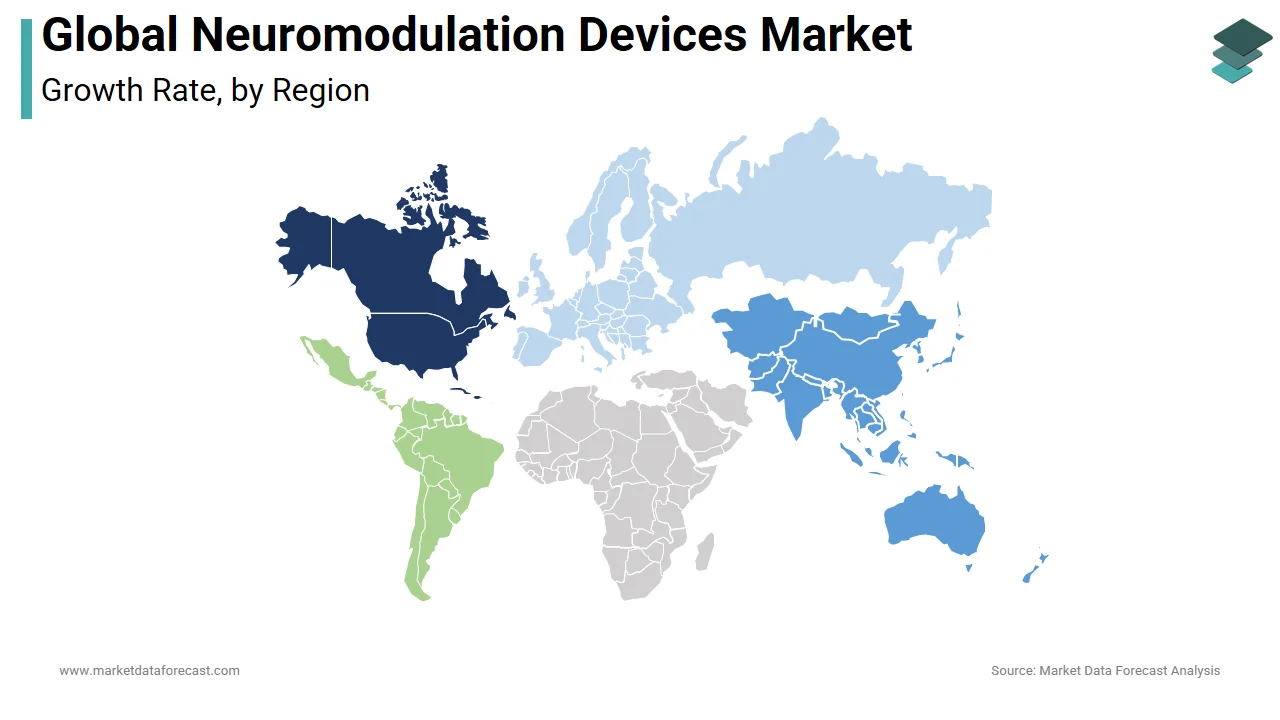
Europe holds the second-largest share of the global neuromodulation devices market during the forecast period. The healthcare system in all the European countries is strengthened by the government policies that back the patients by providing treatments at affordable costs and the healthcare infrastructure is developed and well-planned. The number of patients suffering from nerve injuries is also on the rise in the European region, which is driving the European market growth.
The Asia Pacific region is predicted to witness the fastest CAGR in the global neuromodulation devices market among all the regions. The growing number of patients with cancer and chronic disorders is the prominent reason for the rise in demand for neuromodulation devices in the Asia Pacific region.
The Latin American region holds a considerable share of the global market during the forecast period. Mexico is expected to capture the largest share of the Latin American market in the coming years.
Middle East & Africa is estimated to register a steady CAGR during the forecast period.
KEY MARKET PLAYERS
Some of the companies that are playing a dominating role in the global neuromodulation devices market include
- LivaNova PLC
- Abbott
- Medtronic
- Neuronetics
- NeuroPace Inc.
GLOBAL NEUROMODULATION DEVICES MARKET NEWS
- SenTiva, a nerve stimulation device launched by LivaNova Plc, got approval from the US FDA for the treatment of Epilepsy.
- electroCore Inc. received approval from the US FDA for its non-invasive neuromodulation device named gammaCore. In the U.S., it is used for the treatment of various kinds of headaches.
MARKET SEGMENTATION
The research report on the neuromodulation devices market has been segmented and sub-segmented into treatment, route of administration, distribution channel and region.
By Type
- Invasive
- Non-invasive
By Application
-
Pain Management
- Neurological Disorders
- Respiratory Disorders
By End-users
-
Hospitals
- Specialty Clinics
By Region
-
North America
- Asia Pacific
- Europe
- Latin America
- Middle East & Africa