- Product Description Description
- Table of Contents TOC
- List of Table & Figure LOT
- Get Free Sample PDF Sample PDF
Market Size, 2025
$19.15 BnMarket Estimate, 2026
$20.22 BnMarket Forecast, 2034
$31.27 BnCAGR, 2026–2034
5.6%Global Non-Insulin Diabetes Therapies Market Size, Growth, Trends & Forecast (2026–2034)
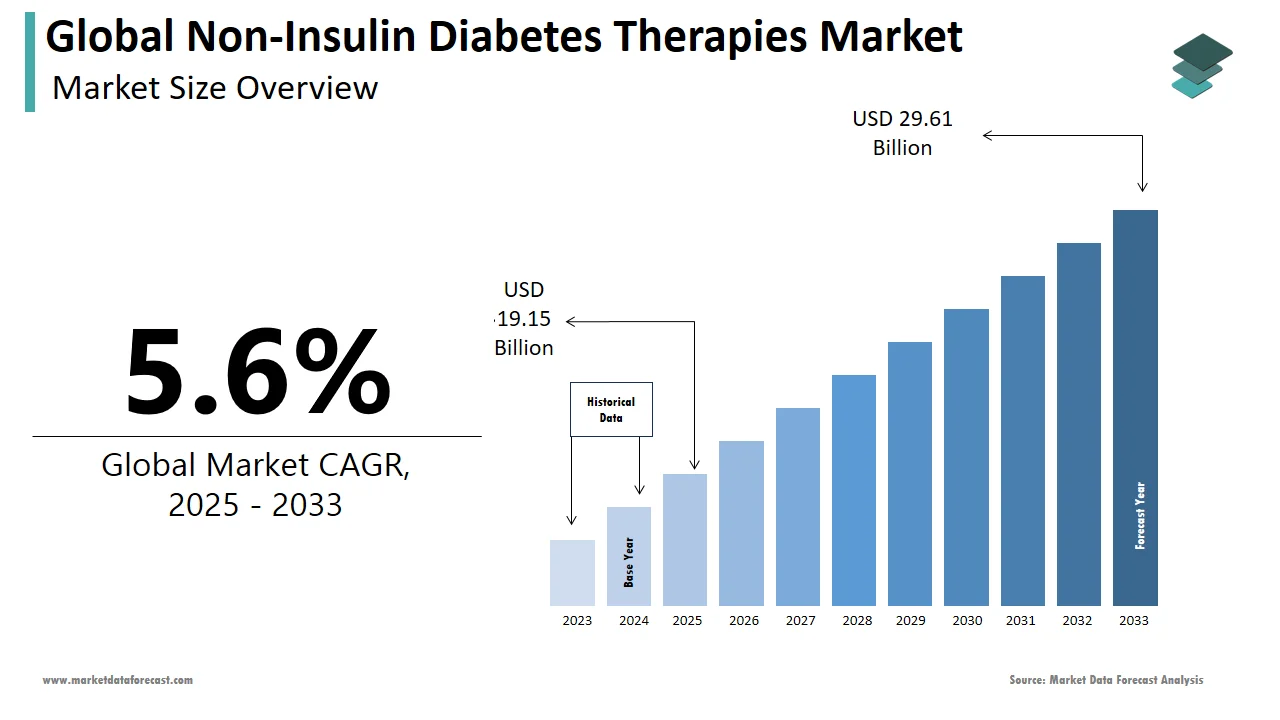
The global non-insulin diabetes therapies market was valued at USD 19.15 billion in 2025, is anticipated to reach USD 20.22 billion in 2026, and is projected to scale up to USD 31.27 billion by 2034, registering a compound annual growth rate (CAGR) of 5.6% during the forecast period from 2026 to 2034. Driven by increasing prevalence of type 2 diabetes, changing lifestyles, food habits, and continuous pharmaceutical innovations focused on developing fewer side effects, the industry continues to expand steadily worldwide.
Key Executive Metrics (At-a-Glance)
- 2025 Base Valuation: USD 19.15 Billion
- 2026 Current Valuation: USD 20.22 Billion
- 2034 Forecast Valuation: USD 31.27 Billion
- Compound Annual Growth Rate (CAGR): 5.6% (2026–2034)
- Dominant Product Type: GLP-1 Agonists & Analogs / SGLT-2 Inhibitors (backed by high efficacy and minimal side effects profile)
- Dominant Region: North America (holding the major market share supported by healthcare infrastructure and high prevalence)
- Fastest-Growing Region: Asia-Pacific (propelled by high patient volumes in countries like China and India)
Core Market Drivers
- Rising Type 2 Diabetes Prevalence: Surging numbers of affected individuals globally, projected to reach 642 million by 2040 due to changing lifestyles and food habits.
- Pharmaceutical R&D Engagement: Active company involvement in discovering medicines with fewer side effects that assist the liver in producing insulin naturally.
Primary Market Restraints & Challenges
- Efficacy and Safety Profiles: The primary challenge to produce drugs with fewer side effects while maintaining high therapeutic effectiveness.
- Low Awareness and Accessibility: Lack of consumer awareness about drug functions, limited market penetration by leaders concentrated in a few regions, and scarce government initiatives.
Global Non-Insulin Diabetes Therapies Market Segmentation Breakdown
| Segment Category | Leading Sub-Segment (2025 Base) | Fastest-Growing Sub-Segment (2026–2034) |
|---|---|---|
| By Drug Type | GLP-1 Agonists & Analogs (dominant therapeutic category) | Sodium-Glucose Cotransporter 2 (SGLT2) Inhibitors (driven by minimal side effects and robust clinical pipelines) |
| By Region | North America (major market share supported by healthcare infrastructure and clinical trials) | Asia-Pacific (fastest-growing regional market driven by heavy patient loads in China and India) |
Major Industry Players Profiled
Key enterprises shaping the competitive global non-insulin diabetes therapies market include Tobira, Eli Lilly and Sumitomo Dainippon Pharma, Novo Nordisk, Takeda, Sanofi, Mannkind, Bristol-Myers Squibb, AstraZeneca, Boehringer Ingelheim, and Bayer.
Global Non-Insulin Diabetes Therapies Market Size
The global non-insulin diabetes therapies market was worth US$ 19.15 billion in 2025 and is anticipated to reach a valuation of US$ 31.27 billion by 2034 from US$ 20.22 billion in 2026, and it is predicted to register a CAGR of 5.6% during the forecast period 2026 to 2034.
MARKET DRIVERS
The major factor driving the growth of the market is the increase in the number of people affected by type 2 diabetes. The figure for people with diabetes is expected to rise to 642 million by 2040. The engagement of companies to find medicines with fewer side effects has contributed a lot to the growth of the market. Non-Insulin drugs, when injected into the body, help the liver to produce Insulin. The Insulin market dominated previously, but the type of Non-Insulin drugs will soon be at the same level as Insulin Type drugs. The change in lifestyle and food habits is the cause of diabetes, and thus, they will push forward market growth.
MARKET RESTRAINTS
The primary challenge for this market is to produce drugs that have fewer side effects and are more effective than the currently used drugs. The benefits of these drugs are still unknown to many, so less awareness is also a challenge. The availability of these drugs to all people classes is also a big challenge as diabetes is a common disease. The general awareness about the functioning and uses of drugs is not known to many, making people more aware is another challenge for this market. The market leaders in this segment are based in a few regions only, and thus the market penetration of the drugs is not so much, which results in low sales and less awareness. The government initiatives about increasing people’s attention are not in huge numbers and thus restrict the growth of the market.
REPORT COVERAGE
| REPORT METRIC | DETAILS |
| Market Size Available | 2025 to 2034 |
| Base Year | 2025 |
| Forecast Period | 2026 to 2034 |
| Segments Covered | By Drug Type and Region. |
| Various Analyses Covered | Global, Regional, and Country-Level Analysis, Segment-Level Analysis, Drivers, Restraints, Opportunities, Challenges; PESTLE Analysis; Porter’s Five Forces Analysis, Competitive Landscape, Analyst Overview of Investment Opportunities |
| Regions Covered | North America, Europe, Asia Pacific, Latin America, Middle East & Africa |
| Market Leaders Profiled | Tobira (New Jersey), Eli Lilly and Sumitomo Dainippon Pharma (Japan), Novo Nordisk (Denmark), Takeda (Japan), Sanofi (China), Mannkind (California), Bristol-Myers Squibb (New York), AstraZeneca (U.K), Boehringer Ingelheim (Germany) and Bayer (Germany). |
SEGMENTAL ANALYSIS
By Drug Type Insights
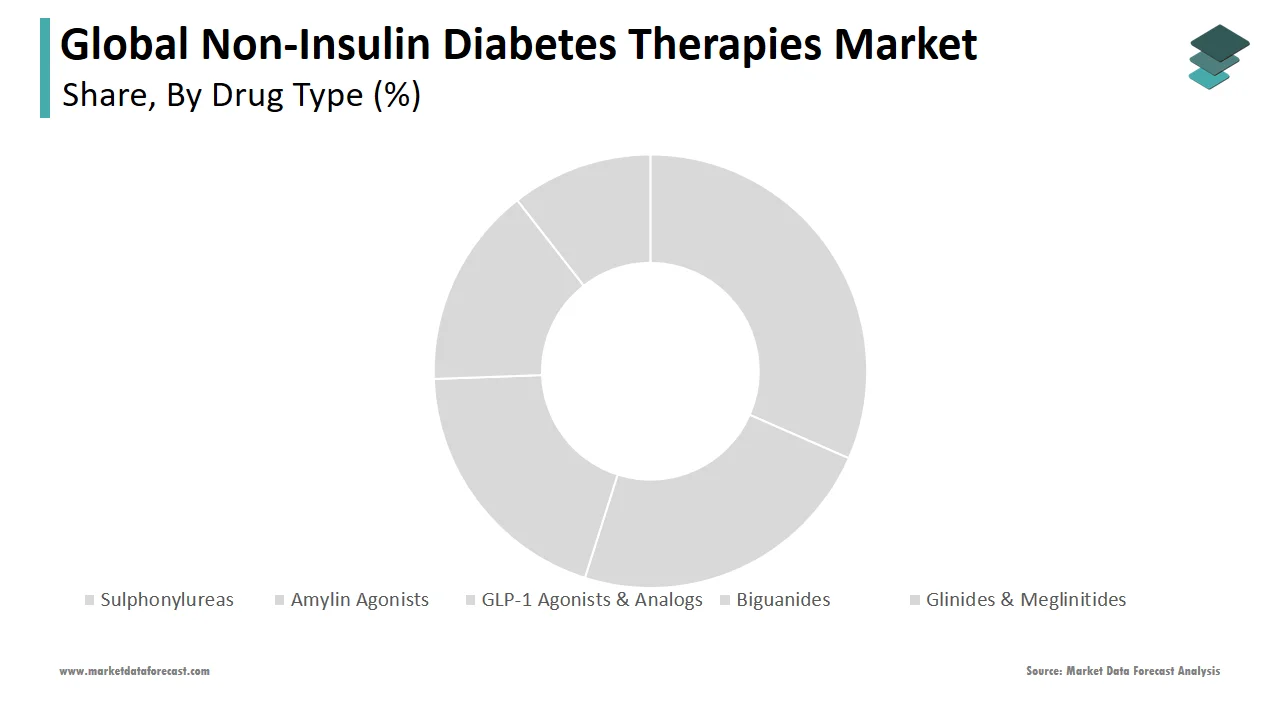
The SGLT-2 inhibitors segment is expected to witness robust growth during the forecast period based on the drug type. The main reason contributing to growth is the minimum side effects of these drugs. These drug types are also very efficient as monotherapy or combination therapy. More detailed research is being carried out to find a new and efficient type of molecule. During the forecast period, Novartis and Ionis Pharmaceuticals products are the significant pipelines SGLT 2 inhibitors are in the process of a clinical study and are expected to launch during the forecast period.Biguanides drug type is currently in a shallow position in terms of market share but is expected to grow at a reasonable rate during the forecast period. These drugs work by reducing the production of glucose that occurs during digestion. Metformin is the only biguanide currently available in most countries for diabetes treatment. Thus set up of new companies and an effective supply chain will ensure the growth of this sub-segment.
REGIONAL ANALYSIS
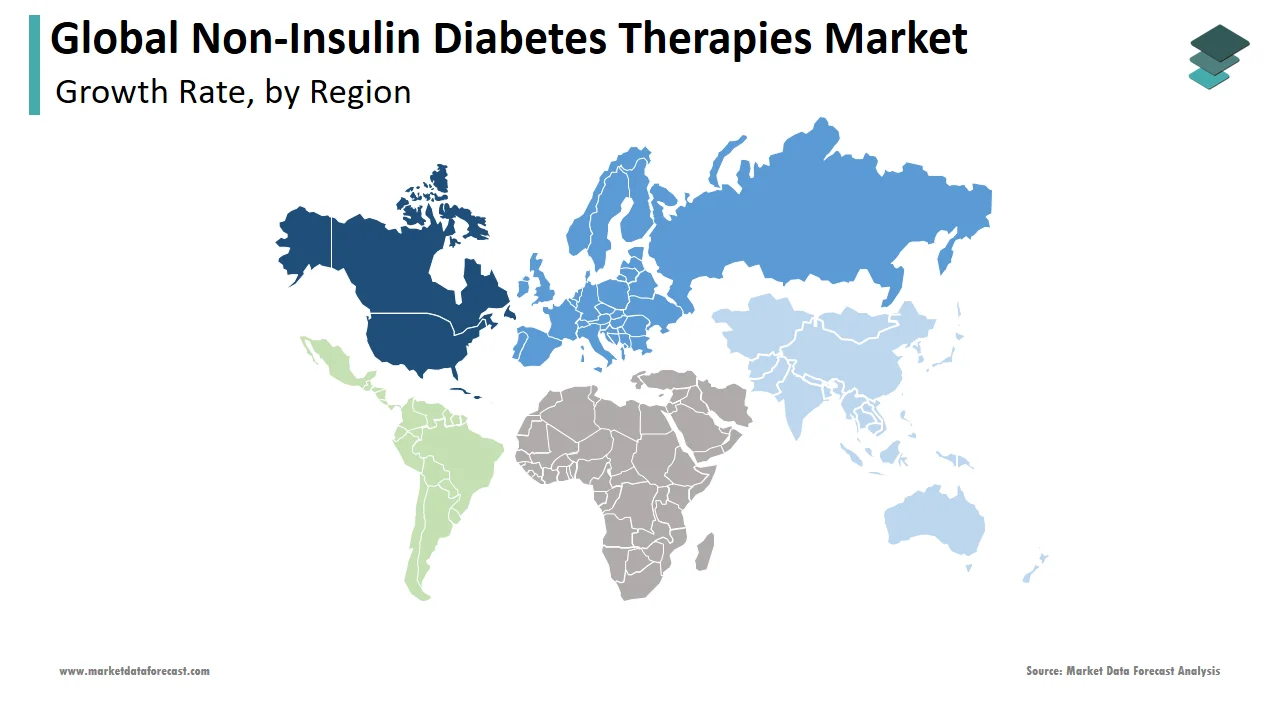
Geographically, North America had the largest market share in 2024 and is expected to grow at a healthy rate during the forecast period. The increasing prevalence of diabetes is the primary factor supporting the growth rate. The other reasons propelling the market are many ongoing clinical trials and the availability of improved treatment options and healthcare infrastructure. The presence of global players is going to affect the market positively.
Europe had the second-largest market share in 2024 and is expected to grow at a healthy future rate. The increasing number of diabetes cases due to the prevalence of unhealthy lifestyles and the rising quality of healthcare facilities will support the positive growth of this region.
The Asia Pacific market is expected to grow at the fastest rate among other regions. China has more diabetic patients than any other country globally, surpassing India in the recent past. In India, about 62 million people are facing problems related to Diabetics. About 80 thousand deaths are expected to occur in America because of diabetes, and recent studies show us that around 1.4 million people have been diagnosed and treated for Type-2 Diabetes. The market is expected to increase exponentially in the coming years due to the rise in the number of people facing diabetic problems.
KEY MARKET PLAYERS
Some of the key competitors participating in the global non-insulin diabetes therapies Market profiled in this report are
- Tobira
- Eli Lilly
- Sumitomo Dainippon Pharma
- Novo Nordisk
- Takeda
- Sanofi
- Mannkind
- Bristol-Myers Squibb
- AstraZeneca
- Boehringer Ingelheim
MARKET SEGMENTATION
This research report on the Global Non-Insulin Diabetes Therapies Market has been segmented and sub-segmented into the following categories.
By Drug Type
- Sulphonylureas
- Amylin Agonists
- GLP-1 Agonists & Analogs
- Biguanides
- Glinides & Meglinitides
- Sodium-Glucose cotransporter 2 (SGLT2) Inhibitors
- Thiazolidinediones (or Glitazones or TZDs
- Alpha-Glucosidase Inhibitors
- Dipeptidyl Peptidase-4 (DPP4) Inhibitors
By Region
- North America
- Europe
- Asia Pacific
- Latin America
- The Middle East and Africa