- Product Description Description
- Table of Contents TOC
- List of Table & Figure LOT
- Get Free Sample PDF Sample PDF
Market Size, 2025
$21.09 BnMarket Estimate, 2026
$23.83 BnMarket Forecast, 2034
$63.36 BnCAGR, 2026–2034
13%Global Normal Superphosphate Market Size, Growth, Trends & Forecast (2026–2034)
The global normal superphosphate market size was valued at USD 21.09 billion in 2025, is anticipated to reach USD 23.83 billion in 2026, and is projected to scale up to USD 63.36 billion by 2034, registering a compound annual growth rate (CAGR) of 13% during the forecast period from 2026 to 2034. Driven by rising global food demand, surging populations, shifting dietary preferences toward plant-based diets, and the need for effective phosphorus-rich fertilizers, the industry continues to expand rapidly worldwide.
Key Executive Metrics (At-a-Glance)
- 2025 Base Valuation: USD 21.09 Billion
- 2026 Current Valuation: USD 23.83 Billion
- 2034 Forecast Valuation: USD 63.36 Billion
- Compound Annual Growth Rate (CAGR): 13% (2026–2034)
- Dominant Form Segment: Powder Form (holding a major share due to affordability, strong plant absorption properties, and productivity enhancement)
- Fastest-Growing Form Segment: Granular Form (projected to gain prominent growth opportunities driven by customized agricultural requirements)
- Dominant Crop Type Segment: Grains & Cereals (leading due to their status as staple food products globally)
- Dominant Application Segment: Base Fertilization (accounting for the largest share via essential tillage and soil nutrient operations)
- Fastest-Growing Application Segment: Seed Treatment (anticipated to record the highest CAGR as an emerging trend for crop protection)
- Dominant Region: Asia-Pacific (accounting for the highest market share backed by major agricultural producers like India and China)
Core Market Drivers
- Rising Food Demand & Population Growth: Growing need to maximize crop production yields to mitigate global food insecurity and undernourishment.
- Shift Toward Plant-Based Diets: Increasing health consciousness and global trends favoring organic fruit and vegetable production over meat-based products.
- Sustainable Agriculture Focus: Rising adoption of eco-friendly farming practices and soil health improvement initiatives.
Primary Market Restraints & Challenges
- Climate Change & Environmental Factors: Unfavorable weather patterns, heatwaves, and droughts limiting agricultural productivity.
- Soil Acidification Risks: Potential adverse effects from the overuse of normal superphosphate altering pH levels, presenting operational challenges for key market players.
Global Normal Superphosphate Market Segmentation Breakdown
| Segment Category | Leading Sub-Segment (2025 Base) | Fastest-Growing Sub-Segment (2026–2034) |
|---|---|---|
| By Form | Powder (dominant market share due to cost efficiency and rapid water solubility) | Granular (fastest-growing category driven by user flexibility and advanced handling) |
| By Crop Type | Grains & Cereals (dominant segment as primary worldwide staple crops) | Fruits & Vegetables (fastest-growing segment propelled by plant-based diet adoption) |
| By Application | Base Fertilization (dominant share supporting essential soil nutrient delivery) | Seed Treatment (fastest-growing application trend providing early crop protection) |
| By Region | Asia-Pacific (dominant regional market backed by high production in India and China) | North America & Europe (steadily growing markets emphasizing sustainable fertilizers) |
Major Industry Players Profiled
Key enterprises shaping the competitive global normal superphosphate market include Mosaic (U.S.), OCP (Morocco), Yara International ASA (Norway), Phosagro (Russia), Agrium Inc. (Canada), C.F. Industries Holdings Inc. (U.S.), Coromandel International Ltd. (India), Potash Corporation of Saskatchewan (Canada), ICL (Israel), and Eurochem (Russia).
 Download Free Sample Report
Global Normal Superphosphate Market Size
The global normal superphosphate market size was valued at USD 21.09 billion in 2025 and it is anticipated to reach a valuation of USD 23.83 billion in 2026 and USD 63.36 billion by 2034, growing at a CAGR of 13%, from 2026 to 2034.
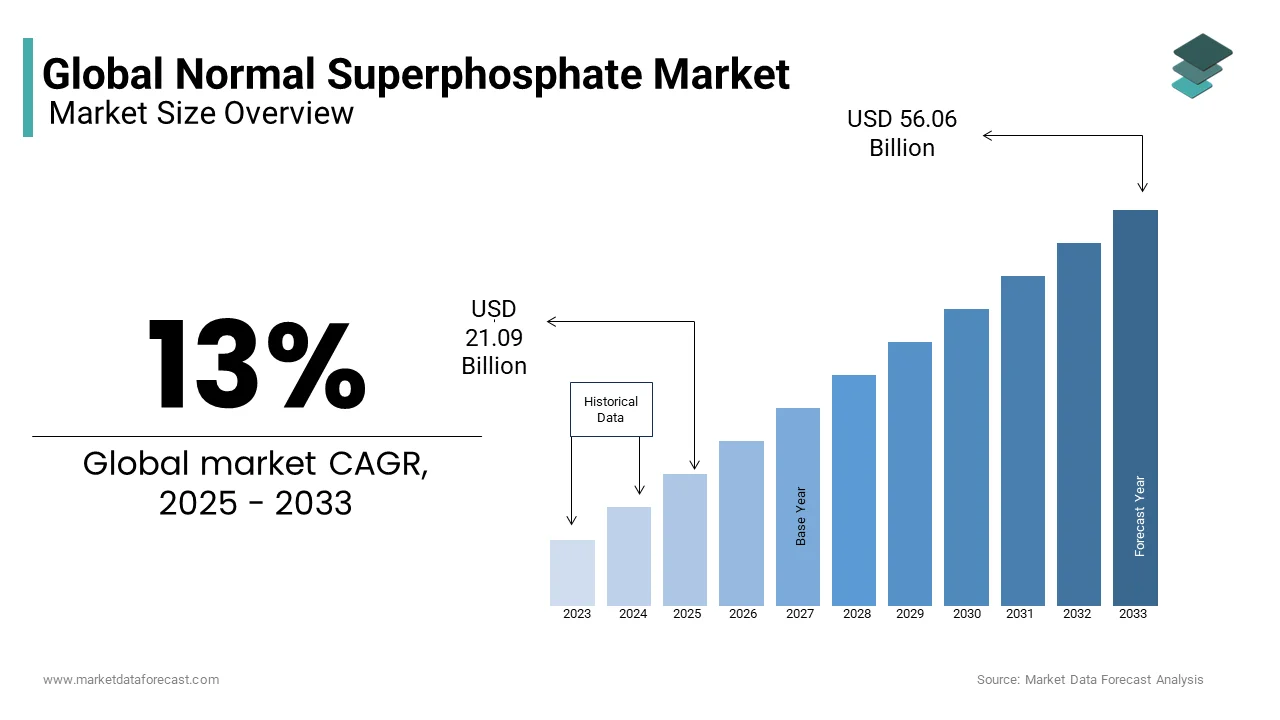
Normal Superphosphate (NSP), also known as Single Superphosphate (SSP) or ordinary superphosphate, is a standard chemical fertilizer used to supply crops with essential nutrients like phosphorus, sulfur, and calcium. This agricultural input is manufactured by treating phosphate rock with sulfuric acid resulting in a granular or powdered product essential for correcting nutrient deficiencies in diverse soil types. According to the Food and Agriculture Organization, global agricultural use of inorganic fertilizers reached 195 million tonnes in 2021. The World Bank indicates that agricultural value added as a percentage of GDP exceeds 20 % in many low income nations underscoring the reliance on affordable inputs like normal superphosphate to sustain food security. As per studies, normal superphosphate remains an important crop nutrient source due to its dual provision of phosphorus and sulfur, which support protein synthesis and enzyme activity in crops. Regulatory frameworks governing cadmium limits in phosphate fertilizers are increasingly shaping production standards and trade flows across international borders. This market definition extends beyond simple commodity trading to encompass soil health management and sustainable nutrient stewardship in modern agronomy.
MARKET DRIVERS
Essential Sulfur Supplementation for Crop Quality
The unique chemical composition of normal superphosphate is a primary driver of the normal superphosphate market. This is because it simultaneously addresses phosphorus and sulfur deficiencies, which are increasingly prevalent in intensive farming systems. As per research, sulfur deficiency is a widespread soil nutrient limitation across multiple global farming regions, directly affecting the nitrogen use efficiency and protein synthesis of major field crops. According to the U.S. Environmental Protection Agency, sulfur dioxide emissions in the eastern United States have declined by more than 80% since 1970 due to clean air regulations, leading to a widespread decline in atmospheric sulfate deposition. Normal superphosphate contains 10 to 12 % sulfur making it a cost effective dual nutrient solution compared to purchasing separate phosphate and sulfur products. This economic advantage drives preference among farmers managing tight input budgets while needing to maintain crop quality parameters such as oil content in seeds or gluten in grains. The agronomic synergy between phosphorus and sulfur enhances overall nutrient uptake efficiency ensuring that applied fertilizers translate directly into yield improvements. Consequently the demand for normal superphosphate remains robust in regions where soil testing confirms multi nutrient limitations requiring balanced supplementation strategies.
Affordability and Accessibility in Developing Agricultural Economies
The lower production cost and simpler manufacturing requirements of NSP fuel sustained demand in the normal superphosphate market. This is especially true in price-sensitive agricultural markets, where NSP is often preferred over high-analysis fertilizers. As per the World Bank fertilizer affordability indices in Sub Saharan Africa remain significantly below global averages making low cost nutrient sources essential for smallholder farmers who produce 80% of the region's food supply. According to the African Union, average fertilizer application rates on the continent are less than 20 kilograms per hectare, far below the recommended 50 kilograms, highlighting the need for accessible, entry-level products to boost productivity. Normal superphosphate can be produced using lower grade phosphate rock and simpler acidulation processes reducing capital expenditure for local manufacturers and minimizing import dependency. This localized production capability ensures supply chain resilience against global price volatility and logistical disruptions that frequently affect imported complex fertilizers. Government subsidy programs in nations like India and Brazil often prioritize this traditional fertilizer to support staple crop production for domestic food security. The combination of economic accessibility and strategic importance for national agriculture secures its continued relevance despite the availability of higher concentration alternatives.
MARKET RESTRAINTS
Low Nutrient Concentration Increasing Logistics Costs
The relatively low phosphorus content of NSP imposes significant logistical and economic penalties, which constrains the growth of the normal superphosphate market. These drawbacks restrain its competitiveness against high-analysis alternatives in large-scale commercial farming. According to the study, freight costs for bulk commodities fluctuate based on global trade dynamics and regulations, making the transportation of low-concentration fertilizers more expensive per unit of nutrient delivered. As per research, lower-analysis phosphorus fertilizers like normal superphosphate require transporting significantly more bulk weight per unit of nutrient compared to high-analysis alternatives like triple superphosphate. This volumetric disadvantage translates directly into higher landed costs for farmers located far from production facilities limiting the geographic radius of economic viability. Large scale mechanized farms prefer concentrated formulations to reduce storage space requirements and application passes saving both time and fuel during critical planting windows. The physical bulk also complicates handling and blending operations in modern fertilizer distribution terminals designed for high throughput granular products. These structural inefficiencies create a natural ceiling on market expansion particularly in export oriented regions where freight margins determine commercial feasibility.
Environmental Regulations Limiting Heavy Metal Content
Stringent environmental regulations regarding cadmium and other heavy metal accumulation in soils are significant restraints to production and trade in the normal superphosphate market. As per European Commission Regulation 2019/1009, the cadmium limit in phosphate fertilizers with a total phosphorus content of 5% P2O5 or more is set at 60 milligrams per kilogram of phosphorus pentoxide. As per sources, a notable portion of global sedimentary phosphate rock deposits contains varying concentrations of cadmium, posing potential raw material compliance challenges under strict regional thresholds. Normal superphosphate production typically utilizes lower grade rock which often correlates with higher impurity levels making compliance more challenging than for purified phosphoric acid based products. Farmers face increasing pressure from food retailers and certification bodies to demonstrate low heavy metal footprints driving preference for refined fertilizer sources. Non compliant products risk being excluded from premium markets and facing border rejections reducing their commercial value. This regulatory tightening forces manufacturers to either upgrade processing capabilities at significant capital expense or accept shrinking market access in environmentally conscious jurisdictions.
MARKET OPPORTUNITIES
Integration into Organic and Regenerative Farming Systems
The resurgence of regenerative agriculture and organic farming practices presents substantial opportunities for the normal superphosphate market. This potential is largely due to NSP's compatibility with soil biology enhancement goals. According to the Research Institute of Organic Agriculture, global organic farmland stood at 76.4 million hectares at the end of 2021 before expanding significantly to 96.4 million hectares in 2022. As per sources, regenerative organic practices utilizing targeted mineral amendments can improve soil health and increase long-term soil organic carbon sequestration compared to input-heavy conventional farming systems. Normal superphosphate provides readily available calcium and sulfur which support microbial activity and soil structure improvement aligning perfectly with regenerative principles focused on ecosystem health rather than mere nutrient delivery. Its lower acidification potential compared to ammoniated phosphates makes it preferable for maintaining optimal soil pH in biological farming systems. Certification standards in many regions permit naturally derived mineral fertilizers opening premium market channels unavailable to synthetic alternatives. Manufacturers can position this traditional product as a bridge between conventional productivity and ecological stewardship capturing value from the rapidly expanding sustainable agriculture sector.
Revitalization of Degraded Soils in Tropical Regions
Extensive soil degradation in tropical and subtropical regions provides a massive remediation opportunity for the normal superphosphate market. In these areas, NSP offers unique agronomic advantages. As per the Food and Agriculture Organization, severe phosphorus fixation is prevalent in only 5% of global agricultural lands, though it remains a localized concern within tropical zones of Latin America and Southeast Asia. According to studies, applying specialized phosphate and balanced macronutrient fertilizers can substantially increase pasture productivity and forage yield on highly weathered, degraded tropical soils. Normal superphosphate supplies calcium which helps displace aluminum toxicity in acidic tropical soils while providing the sulfur necessary for legume establishment in pasture renovation projects. The gradual release characteristics match the nutrient uptake patterns of perennial tropical crops reducing leaching losses common with highly soluble alternatives. Government land rehabilitation programs in countries like Indonesia and Colombia increasingly incorporate this fertilizer into restoration protocols recognizing its dual role in productivity recovery and soil conditioning. This vast untapped acreage represents a long term growth vector independent of mature market saturation dynamics.
MARKET CHALLENGES
Volatility in Phosphate Rock Supply Chains
Geopolitical concentration of phosphate rock reserves creates persistent supply insecurity that destabilizes production and pricing in the normal superphosphate market. According to the United States Geological Survey Morocco and Western Sahara control approximately 70 % of global phosphate rock reserves creating single point vulnerability for international fertilizer supply chains. As per sources, global phosphate rock and fertilizer prices experienced massive volatility between 2021 and 2023, driven by export restrictions, supply shocks, and trade tensions. Normal superphosphate producers lacking integrated mining operations face existential risks during supply shocks as they cannot absorb raw material cost increases without losing market share to vertically integrated competitors. Transportation bottlenecks at key export ports further amplify supply uncertainty causing production curtailments even when rock is theoretically available. Strategic stockpiling becomes financially burdensome given the bulky nature of raw materials tying up working capital. This dependency forces manufacturers to maintain diversified sourcing strategies often at premium costs eroding the very affordability advantage that defines the product’s market position. Long term contracts offer limited protection during force majeure events leaving producers exposed to systemic supply chain fragility.
Competition from High Analysis Fertilizer Blends
Technological advancement in fertilizer formulation continues to marginalize NSP through superior nutrient density and customized precision nutrition offerings, which impedes the expansion of the normal superphosphate market. According to studies, the demand for specialty blended fertilizers and site-specific nutrient management solutions has seen steady adoption as farmers attempt to manage field variability. As per research, customized NPK fertilizer formulations can enhance localized nutrient use efficiency compared to generic straight fertilizer applications, optimizing crop yields. Modern blending facilities can incorporate micronutrients and biostimulants creating multifunctional products that address multiple constraints simultaneously something normal superphosphate cannot achieve alone. Digital agriculture platforms recommend precise formulations based on soil test data further entrenching preference for engineered solutions over traditional commodities. Retailers favor high margin specialty products pushing shelf space allocation away from basic fertilizers. This technological displacement accelerates in commercial farming segments where return on investment calculations dominate purchasing decisions. Normal superphosphate struggles to compete on performance metrics despite cost advantages requiring repositioning toward niche applications where simplicity remains valued over sophistication.
REPORT COVERAGE
| REPORT METRIC | DETAILS |
| Market Size Available | 2025 to 2034 |
| Base Year | 2025 |
| Forecast Period | 2026 to 2034 |
| CAGR | 13% |
| Segments Covered | By Form, Crop Type, Application and Region |
| Various Analyses Covered | Global, Regional & Country Level Analysis, Segment-Level Analysis, DROC, PESTLE Analysis, Porter’s Five Forces Analysis, Competitive Landscape, Analyst Overview on Investment Opportunities |
| Regions Covered | North America, Europe, APAC, Latin America, Middle East & Africa |
| Market Leaders Profiled | Key players in the market include Mosaic(U.S.), OCP (Morocco), Yara International ASA (Norway), Phosagro (Russia), Agrium Inc. (Canada), C.F. Industries Holdings Inc. (U.S.), Coromandel International Ltd. (India), Potash Corporation of Saskatchewan (Canada), ICL (Israel), and Eurochem (Russia) among others. |
SEGMENT ANALYSIS
By Form Insights
Granular Form
The granular foam segment dominated the normal superphosphate market and accounted for a substantial share in 2025. This dominance of the segment was driven by its superior handling characteristics reduced dust generation and compatibility with modern mechanized application equipment which are essential for large scale agricultural operations.
The physical properties of granular fertilizers significantly improve application uniformity and reduce nutrient losses during spreading compared to powdered alternatives. According to sources, granular formulations are often preferred for large-scale agricultural applications because their physical size minimizes wind drift and product segregation during handling compared to fine powders. As per research, granular fertilizers offer a more controlled distribution pattern that helps reduce un-uniform scattering and surface runoff losses under field conditions. This precision is critical for maximizing yield potential in commercial farming where input costs are high. The larger particle size also minimizes caking and bridging in storage silos and spreader hoppers reducing operational downtime and maintenance requirements for farmers. Modern pneumatic and mechanical spreaders are specifically calibrated for granular materials making them the default choice for efficient field operations. The ease of handling reduces labor intensity and safety risks associated with inhaling fine phosphate dust. These operational advantages drive widespread adoption among professional growers who prioritize efficiency and consistency in their nutrient management programs.

Granular normal superphosphate is highly compatible with bulk blending processes allowing it to be mixed seamlessly with other granular nutrients such as urea and potash to create customized NPK formulations. As per The Fertilizer Institute, dry fertilizer bulk blending operations require careful management of raw material particle sizes to prevent the segregation of nutrients during transit and application. According to studies, granular fertilizer components are widely utilized in dry blending setups due to their reliable storage flowability and structural stability. This compatibility enables distributors to offer tailored nutrient solutions to farmers based on specific soil test results without requiring complex manufacturing infrastructure. The ability to blend on demand reduces inventory costs and allows for just in time delivery during peak planting seasons. Granular forms maintain structural integrity during mixing preventing the formation of fines that can clog application equipment. This versatility supports the growing trend toward precision agriculture where site specific nutrient management is increasingly adopted. Consequently granular normal superphosphate remains the preferred form for integrated nutrient supply chains.
Powder Form
The powder foam segment is predicted to witness the highest CAGR of 4.5% from 2026 to 2034 due to its suitability for direct soil incorporation and use in small holder farming systems.
The lower production cost of powder normal superphosphate makes it an accessible option for small holder farmers in developing regions who prioritize affordability over application convenience. According to the Food and Agriculture Organization, smallholder farms operating on plots under two hectares produce roughly 30 percent of the world's food supply. As per sources, powder or crystalline fertilizers are often less expensive than granulated equivalents because they do not require the specialized equipment or energy inputs used in the granulation stage. This price differential is significant for subsistence farmers operating on thin margins who apply fertilizers manually or with simple tools. Powder forms can be easily mixed with organic manure or compost enhancing nutrient availability through synergistic effects while improving soil structure. The lack of need for specialized spreading equipment lowers the barrier to entry for resource constrained farmers. Local production facilities often focus on powder forms to serve domestic markets reducing import dependency. This economic accessibility ensures sustained demand in rural economies where mechanization levels remain low.
Powder normal superphosphate is increasingly used as a soil amendment ingredient in potting mixes and specialized horticultural substrates where rapid dissolution and uniform distribution are required. According to sources, the global potting mix and substrate markets are seeing growth due to urban gardening trends that utilize customized soilless media formulations. As per studies, finely divided or crystalline powder fertilizers dissolve rapidly in solution, providing highly uniform nutrient availability for controlled substrate integration. The fine particle size allows for thorough mixing with peat perlite and other components ensuring homogeneous nutrient content throughout the growing medium. This application is critical for nursery operations producing seedlings and ornamental plants where precise nutrient control influences plant quality and marketability. Powder forms are also used in industrial composting facilities to balance carbon nitrogen ratios and accelerate decomposition. This diverse utility in non field applications drives growth in the powder segment beyond traditional agriculture.
By Crop Insights
Grains and Cereals
The grains and cereals segment led the normal superphosphate market and captured a significant share in 2025. This top position of the segment was attributed to its vast cultivation area and fundamental role in global food security. The segment includes wheat, rice, maize, and barley.
The sheer scale of grain production globally creates massive aggregate demand for phosphate fertilizers to sustain yields and meet rising food consumption needs. According to research, global cereal production exceeded 2.8 billion metric tons in 2023, while grains and cereals remain among the most dominant crop categories globally. As per sources, phosphorus availability is a key limiting factor for optimal grain development in prominent wheat and corn producing regions, requiring active nutrient management to maximize crop yields. Normal superphosphate provides the essential phosphorus required for root development and energy transfer during critical growth stages such as tillering and grain filling. The widespread adoption of high yielding varieties further increases nutrient removal rates requiring proportional fertilizer inputs to maintain soil fertility. Government policies prioritizing staple crop self sufficiency in countries like India China and Russia drive consistent procurement of affordable phosphate fertilizers. The strategic importance of grains ensures that fertilizer subsidies often target this segment sustaining high usage volumes. This foundational role in human nutrition secures the dominance of grains in the normal superphosphate market.
The sulfur content in normal superphosphate offers specific agronomic benefits for cereal crops by enhancing protein synthesis and grain quality parameters. According to studies, sulfur application can support protein synthesis and enhance quality metrics in cereal crops like wheat, influencing final baking properties. As per research, severe sulfur deficiencies in agricultural soil can negatively impact the physical development, kernel traits, and milling outcomes of harvested grains. Normal superphosphate addresses this dual nutrient need efficiently providing both phosphorus for yield and sulfur for quality in a single application. This is particularly valuable in regions where atmospheric sulfur deposition has declined due to environmental regulations removing a historical free source of this nutrient. Farmers recognize the economic advantage of improving grain grade premiums through targeted sulfur nutrition. The synergy between phosphorus and sulfur supports robust plant health and stress tolerance during drought or disease pressure. These quality driven benefits reinforce the preference for normal superphosphate in cereal production systems.
Oilseeds
The oilseeds segment is estimated to register the fastest CAGR of 5.2% during the forecast period, owing to rising demand for vegetable oils and biodiesel. This segment includes soybeans, canola, sunflowers, and rapeseed.
Oilseed crops have exceptionally high sulfur requirements compared to cereals because sulfur is a key component of the amino acids cysteine and methionine which are essential for oil biosynthesis. According to research, a severe lack of plant-available sulfur during growth stages can disrupt lipid synthesis and depress final oil concentration levels in canola crops. As per studies, optimizing both sulfur and phosphorus applications can create positive nutrient interactions that enhance localized soybean productivity and yield. Normal superphosphate is uniquely positioned to meet this demand by supplying readily available sulfur in addition to phosphorus supporting optimal enzyme activity and metabolic processes. As atmospheric sulfur levels decline the reliance on fertilizer sourced sulfur becomes critical for maintaining oil quality and yield. The expansion of oilseed acreage to meet biofuel mandates further amplifies this nutrient demand. Farmers are increasingly adopting soil testing protocols that identify sulfur deficits driving targeted use of sulfur containing phosphates. This specific physiological need drives rapid adoption in oilseed producing regions.
Global policy mandates promoting renewable energy sources are driving significant expansion in oilseed cultivation thereby increasing fertilizer consumption in this segment. According to Chatham House and the Forest Stewardship Council, global biofuel production is expected to rise by approximately 70% by 2030 compared to 2025 levels, driven by expanded blending mandates across major economies. As per the U.S. Department of Agriculture, approximately 60% of the vegetable oil consumed globally is traded internationally, with domestic palm oil usage expanding within producing countries. This expansion often occurs on marginal lands where phosphorus and sulfur deficiencies are common requiring intensive fertilization to achieve economic yields. Normal superphosphate offers a cost effective solution for establishing productive oilseed crops on newly cultivated or degraded soils. Government subsidies for biofuel crops often include support for input purchases further stimulating demand. The strategic push for energy independence links agricultural productivity directly to energy policy ensuring sustained growth for oilseed related fertilizer consumption.
By Application Insights
Base Fertilization
In 2025, the base fertilization segment held the majority share in the normal superphosphate market as it ensures phosphorus availability during early root development stages when crops are most sensitive to deficiency. Base fertilization is also known as basal application.
Phosphorus is immobile in soil and must be placed near the seed zone or root system before planting to ensure uptake during the critical early growth stages. According to sources, applying phosphorus as a basal or base fertilizer enhances early-season root development and seedling vigor due to the nutrient's limited mobility in soil solutions. As per studies, proper basal phosphorus applications promote deeper early root establishment, which can improve a crop's ability to access subsoil moisture during dry periods. Normal superphosphate is ideal for this purpose as it can be broadcast and incorporated into the soil prior to sowing ensuring uniform distribution in the root zone. This method aligns with standard agronomic practices for most row crops and cereals where pre plant nutrition is foundational. The slow release nature of some phosphate fractions in normal superphosphate provides sustained availability throughout the vegetative phase. Farmers prioritize base fertilization to mitigate risk of early season stress which can permanently limit yield potential. This agronomic necessity secures the leading position of base fertilization in the market.
Base fertilization integrates seamlessly with conventional and conservation tillage operations allowing for efficient one pass application during seedbed preparation. According to studies, modern agricultural seeding and tillage equipment is engineered to place bulk dry fertilizers precisely within the soil profile during field preparation to optimize labor efficiency. Normal superphosphate’s physical stability allows it to withstand mechanical incorporation without excessive breakdown or dust generation. This operational efficiency is crucial during narrow planting windows when weather conditions dictate rapid field work. Broadcasting before tillage ensures that phosphorus is placed below the surface reducing fixation by surface soil minerals and protecting it from runoff losses. The simplicity of this method makes it accessible to farmers with varying levels of mechanization. This practical advantage reinforces the dominance of base fertilization as the primary application mode.
Seed Treatment
The seed treatment segment is anticipated to witness the fastest CAGR of 6.8% between 2026 and 2034. This rapid expansion is propelled by precision agriculture and resource efficiency goals. Seed treatment involves the coating of seeds with powdered normal superphosphate or phosphate suspensions.
In addition, seed treatment places nutrients directly in contact with the emerging root system maximizing uptake efficiency and minimizing waste compared to broadcast applications. According to research, utilizing seed-applied nutrient technologies can place crucial macronutrients in close proximity to the germinating seed, mitigating localized soil fixation risks. As per research published in the Agronomy Journal, coating seeds with starter phosphorus configurations can enhance early biomass accumulation in young field crops grown under phosphorus-restricted soil conditions. This targeted approach is particularly valuable in high pH or calcareous soils where phosphorus fixation is severe limiting availability from bulk applications. Normal superphosphate powder can be formulated into slurries or coatings that adhere well to seeds providing an immediate phosphorus source for germination. The reduced quantity of fertilizer required per hectare lowers input costs and environmental footprint. As farmers adopt precision planting equipment capable of handling treated seeds this method gains traction. The ability to combine phosphorus with other seed treatments such as inoculants or fungicides creates multifunctional products enhancing value proposition.
The rise of no till and conservation agriculture systems drives demand for seed treatments as alternative placement methods for phosphorus when soil incorporation is not possible. According to sources, a substantial percentage of total cropland across North and South America is managed using no-till methods, where surface-broadcast phosphorus may become highly stratified in upper residue layers. As per studies, placing starter phosphorus close to or with the seed ensures reliable nutrient availability during early spring growth in cool, damp soils where natural microbial mineralization is constrained. Normal superphosphate based seed coatings provide a localized nutrient reserve that supports seedling establishment before roots explore the bulk soil. This method reduces dependency on deep banding equipment which may not be available to all farmers. It also minimizes soil disturbance preserving soil structure and organic matter. The alignment with sustainable farming principles accelerates adoption among environmentally conscious producers. This technological shift supports the rapid growth of seed treatment applications.
REGIONAL ANALYSIS
North America Market Analysis
North America holds a mature but stable position in the Normal Superphosphate Market characterized by advanced agronomic practices and high adoption of precision application technologies. According to the U.S. Environmental Protection Agency, approximately 4 million tons of phosphorus fertilizer are applied annually to crops in the continental United States. As per sources, while high-analysis formulations dominate bulk blending, lower-analysis products like normal superphosphate retain target usage in sulfur-deficient cropping regions and organic farming sectors. Strict environmental regulations regarding runoff and water quality drive interest in efficient application methods such as seed treatments where normal superphosphate plays a role. The presence of large integrated fertilizer producers ensures stable supply but competition from imported high concentration products limits volume growth. Farmers prioritize return on investment leading to selective use based on soil test recommendations. The market is driven by replacement demand rather than expansion due to saturated arable land. Technological innovation in formulation keeps the product relevant in specialized applications.

Europe Market Analysis
Europe represents a regulated market where normal superphosphate usage is influenced by stringent environmental directives and sustainability goals. According to reports, regional phosphate application levels show long-term structural stabilization, with evolving eco-schemes driving selective interest in traditional mineral nutrient sources. The Common Agricultural Policy promotes soil health initiatives that favor amendments providing calcium and sulfur alongside phosphorus. Western European countries rely heavily on imports while Eastern European nations maintain some local production capacity. The market is fragmented by national regulations but harmonization efforts are progressing. Demand is driven by quality focused agriculture rather than volume growth. Environmental compliance is the primary determinant of market access and competitiveness.
Asia Pacific Market Analysis
Asia Pacific was the largest region for the normal superphosphate market and accounted for a substantial share in 2025. This standing of the APAC market was driven by massive agricultural populations and government food security initiatives. According to studies, the broader Asia-Pacific region accounts for the leading share of global fertilizer consumption, with major agricultural economies like China and India acting as primary drivers. As per research, single or normal superphosphate is highly utilized in specific cultivation areas for oilseed, pulse, and grain varieties due to its low baseline cost and secondary macronutrient values. Rapid urbanization is reducing arable land per capita intensifying the need for yield enhancing inputs. Local production capacity is expanding to reduce import dependency particularly in Southeast Asia. Small holder farmers dominate the landscape preferring cost effective solutions over premium products. Government policies actively promote balanced fertilization to correct multi nutrient deficiencies. The sheer scale of agricultural activity ensures robust and sustained demand growth outpacing other regions.
Latin America Market Analysis
Latin America holds the second-largest share in the normal superphosphate market due to agricultural expansion and export-oriented crop production. As per the Inter American Institute for Cooperation on Agriculture the region has added millions of hectares of arable land in recent decades particularly in Brazil and Argentina for soybean and corn production. As per sources, normal superphosphate is highly valued for its sulfur and calcium content in weathered tropical soils, which are naturally constrained by these nutrient deficiencies. The expansion of biofuel crops drives intense nutrient demand requiring efficient and cost-effective inputs. Local manufacturing is limited leading to reliance on imports from North Africa and the Middle East. Logistics infrastructure improvements are reducing inland transportation costs making fertilizers more accessible to remote farming areas. The market is sensitive to global price fluctuations and currency exchange rates. Government support for agribusiness sustains investment in productivity enhancing technologies.
Middle East and Africa Market Analysis
The Middle East and Africa region is rapidly expanding in the normal superphosphate market. Rapid regional investment in agricultural extension, combined with the transformation of indigenous, low-grade phosphate rock into cost-effective soil treatments (especially in Sub-Saharan Africa to treat sulfur-deficient tropical soils), drives this high momentum. This region has significant unmet nutrient needs and infrastructure challenges. According to studies, lower-analysis straight fertilizers like normal superphosphate remain highly suitable for smallholder farming systems due to their dual nutrient components and lower baseline costs compared to complex blended formulations. Local production exists in countries like Morocco and Egypt leveraging domestic phosphate rock reserves but distribution networks are weak. Government initiatives aim to improve access through subsidy programs and dealer training. Soil degradation and acidity in many areas require calcium containing fertilizers making normal superphosphate agronomically appropriate. The market is driven by development aid and public sector interventions rather than commercial dynamics alone. Long term growth depends on infrastructure investment and farmer education.
COMPETITIVE LANDSCAPE
The competitive landscape of the Normal Superphosphate Market is characterized by intense rivalry among large integrated producers and regional manufacturers striving for cost leadership and supply reliability. Major participants continuously invest in process optimization and technology upgrades to improve production efficiency and reduce environmental footprints. This drive for operational excellence results in consistent product quality and competitive pricing structures. Companies also compete through strategic alliances with local distributors aiming to enhance last mile delivery and technical support for farmers. Regulatory compliance regarding heavy metal content remains a significant differentiator with companies navigating strict environmental standards to maintain market access. Price competition is moderate due to the commodity nature of the product but intensifies in price sensitive emerging markets. Brand reputation and agronomic support significantly influence purchasing decisions creating loyalty among professional growers. The market sees continuous consolidation as larger entities acquire smaller producers to broaden their geographic reach and resource base ensuring comprehensive coverage of global agricultural needs.
KEY MARKET PLAYERS
Key players in the market include
- Mosaic(U.S.)
- OCP (Morocco)
- Yara International ASA (Norway)
- Phosagro (Russia)
- Agrium Inc. (Canada)
- C.F. Industries Holdings Inc. (U.S.)
- Coromandel International Ltd. (India)
- Potash Corporation of Saskatchewan (Canada)
- ICL (Israel)
- Eurochem (Russia) among others.
Top Players In The Market
- OCP Group stands as a global leader in phosphate solutions leveraging its vast reserves in Morocco to supply high quality normal superphosphate to international markets. The company actively invests in sustainable mining practices and advanced processing technologies to enhance product purity and reduce environmental impact. Recent initiatives include expanding production capacity in Africa and establishing strategic partnerships with local distributors in Asia and Latin America to improve market accessibility. OCP focuses on customized fertilizer blends that address specific soil deficiencies driving adoption among smallholder farmers. Their commitment to food security and agricultural development solidifies their reputation as a reliable partner for global agronomy needs.
- Mosaic Company plays a pivotal role in the normal superphosphate sector through its integrated operations spanning mining processing and distribution across key agricultural regions. The company emphasizes operational excellence and cost efficiency to deliver competitive pricing while maintaining rigorous quality standards. Recent actions involve optimizing supply chain logistics in North America and Brazil to ensure timely delivery during peak planting seasons. Mosaic has launched educational programs for farmers on balanced nutrient management highlighting the benefits of sulfur enriched phosphates. Their focus on sustainability and innovation strengthens their position as a preferred supplier for commercial and subsistence farming communities worldwide.
- PhosAgro JSC contributes significantly to the market by producing high grade phosphate fertilizers including normal superphosphate tailored for diverse climatic conditions. The company leverages its vertical integration from rock mining to final product manufacturing to ensure consistent supply and quality control. Recent developments include modernizing production facilities in Russia to increase output and meet growing domestic and export demand. PhosAgro actively participates in international agricultural exhibitions to showcase product efficacy and build relationships with global buyers. Their dedication to technological advancement and customer support enhances their competitiveness in the evolving global fertilizer landscape.
Top Strategies Used By Key Market Participants
Key players in the Normal Superphosphate Market primarily employ vertical integration and geographic diversification to maintain competitive advantage. Companies invest heavily in securing upstream phosphate rock reserves to mitigate raw material volatility and ensure consistent production costs. This control over supply chains allows them to offer stable pricing to customers despite global market fluctuations. Simultaneously firms expand distribution networks in emerging economies to capture growth opportunities in regions with rising fertilizer demand. These investments facilitate better market penetration and customer engagement. Additionally manufacturers prioritize product customization by developing formulations with enhanced sulfur content or improved solubility to address specific soil needs. Such multifaceted strategies enable companies to navigate regulatory challenges effectively while strengthening brand loyalty among farmers and distributors across diverse agricultural sectors.
MARKET SEGMENTATION
This market research report on the global normal superphosphate market is segmented and sub-segmented into the following categories.
By Form
- Powder
- Granular
- Others
By Crop Type
- Grains & Cereals
- Oilseeds
- Fruits and Vegetables
- Non-Crop Based
- Turf & Ornamental Grass
- Plantation Crop
- Others
By Application
- Base Fertilization
- Top Dressing
- Seed Treatment
By Region
- North America
- Europe
- Asia-Pacific
- Latin America
- Middle East and Africa