- Product Description Description
- Table of Contents TOC
- List of Table & Figure LOT
- Get Free Sample PDF Sample PDF
Market Size, 2025
$580 MnMarket Estimate, 2026
$647 MnMarket Forecast, 2034
$1,543 MnCAGR, 2026–2034
11.47%North America Almond Oil Market Report Summary
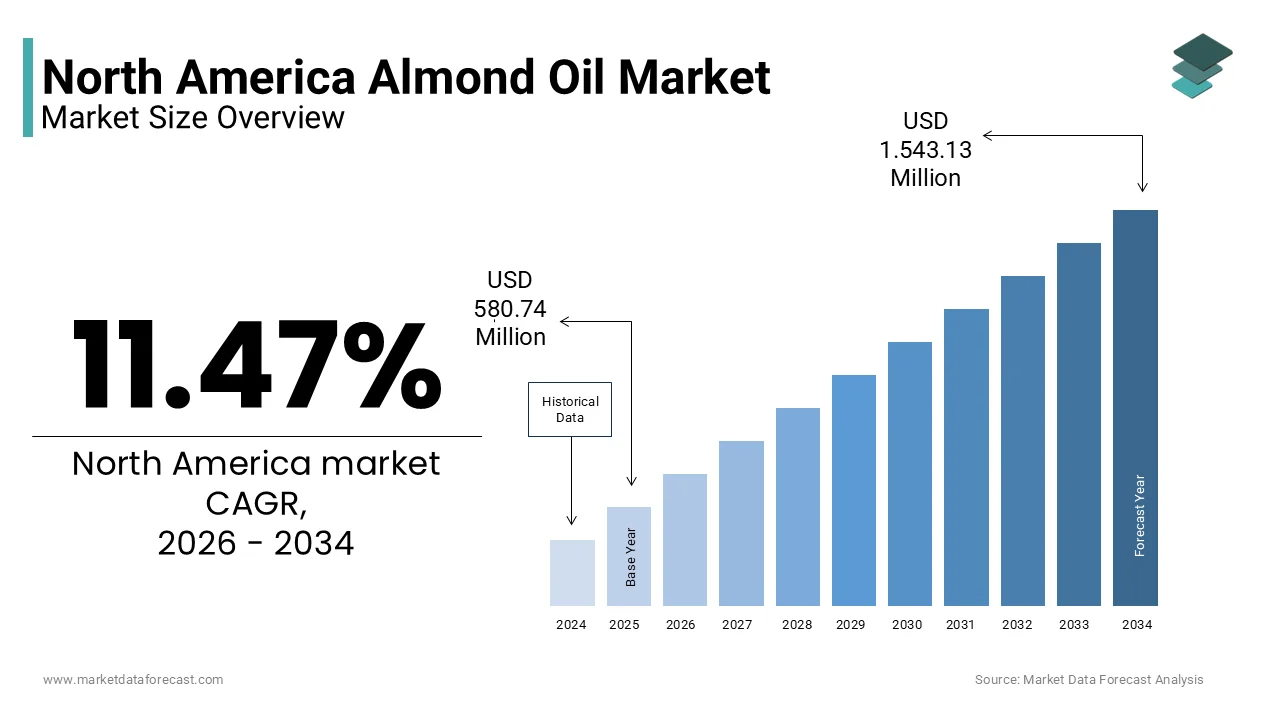
The North America almond oil market was valued at USD 580.74 million in 2025, is estimated to reach USD 647.35 million in 2026, and is projected to reach USD 1,543.13 million by 2034, growing at a CAGR of 11.47% during the forecast period. The growth of the North America almond oil market is driven by increasing consumer demand for natural and plant-based personal care products, rising awareness of the nutritional and therapeutic benefits of almond oil, and the expanding use of almond oil across cosmetics, pharmaceuticals, and food applications. The growing preference for clean-label and organic ingredients, coupled with increasing disposable incomes and innovations in skincare formulations, is further supporting market expansion. Additionally, the rising popularity of aromatherapy and wellness products is creating new growth opportunities for almond oil manufacturers across the region.
Key Market Trends
-
Rising consumer preference for natural, organic, and plant-based ingredients in skincare and personal care products.
-
Increasing use of sweet almond oil in premium cosmetics, hair care, and wellness formulations due to its moisturizing and nourishing properties.
-
Growing demand for almond oil in pharmaceutical and nutraceutical applications, supported by its therapeutic and antioxidant benefits.
-
Expansion of e-commerce and specialty retail channels, improving the availability of almond oil-based products across North America.
-
Rising focus on sustainable sourcing and clean-label product development to meet evolving consumer preferences.
Segmental Insights
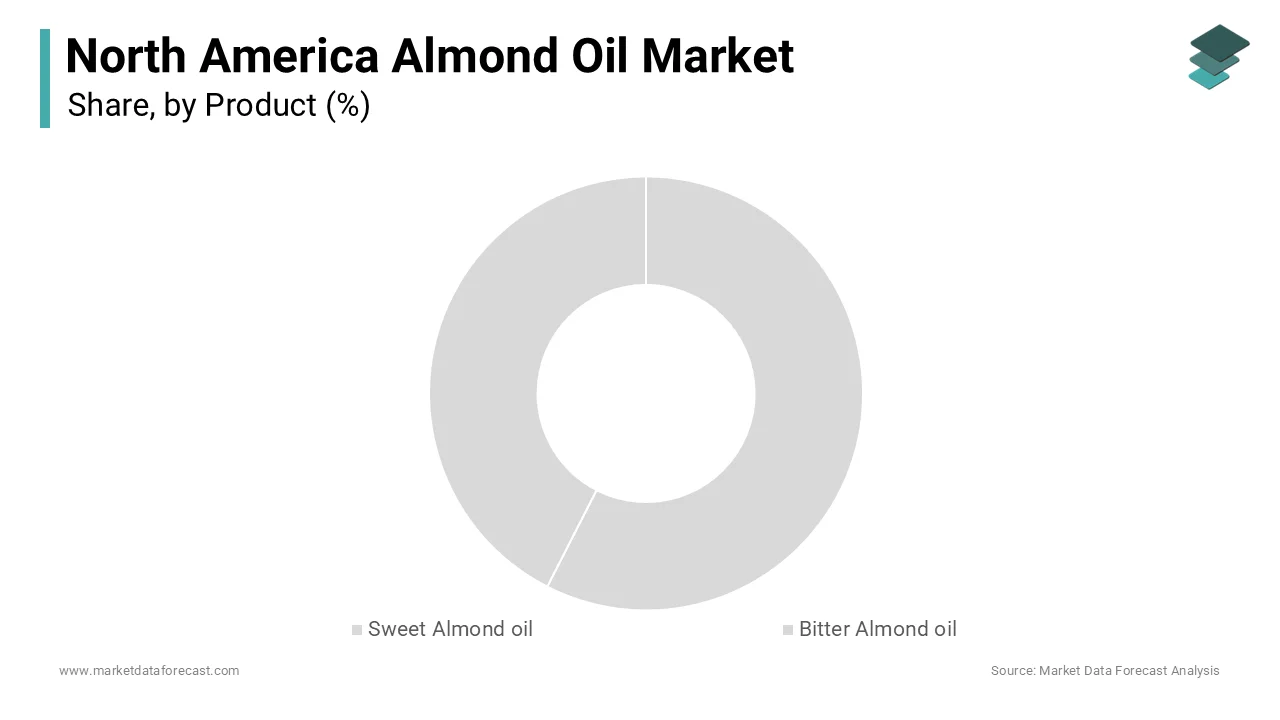
- Based on product, the sweet almond oil segment dominated the North America almond oil market in 2025. The segment's leadership is attributed to its extensive use in skincare, hair care, massage oils, and cosmetic formulations due to its excellent emollient properties, mild nature, and rich nutrient profile.
- Based on application, the cosmetics segment held the largest share of the North America almond oil market in 2025. The segment's dominance is driven by the increasing demand for natural beauty products, growing consumer preference for chemical-free skincare solutions, and the widespread use of almond oil in moisturizers, creams, lotions, and hair care products.
Country Insights
- The United States dominated the North America almond oil market, accounting for 85% of the regional market share in 2025. The country's leadership is supported by its strong cosmetics and personal care industry, high consumer awareness of natural wellness products, robust almond production, and increasing demand for premium plant-based ingredients across beauty, healthcare, and food applications.
Competitive Landscape
The North America almond oil market is highly competitive, with leading companies focusing on product innovation, sustainable sourcing, portfolio expansion, and strengthening their distribution networks to meet the growing demand for natural and organic products. Manufacturers are investing in high-quality extraction processes, clean-label formulations, and strategic partnerships to enhance their market presence across personal care, food, and pharmaceutical applications. Prominent players in the North America almond oil market include AAK, Frontier Natural Products, Flora, Blue Diamond, Oil Seed Extractions, NOW Foods, Proteco, Bajaj, Dabur, Caloy, and Jedwards International Inc.
North America Almond Oil Market Size
The North America almond oil market size was valued at USD 580.74 million in 2025 and is expected to reach USD 1,543.13 million by 2034 from USD 647.35 million in 2026, growing at a CAGR of 11.47%.
Almond oil is a natural liquid extracted from the kernels of almond trees (Prunus dulcis). This sector is distinctively characterized by a dual demand structure where cold-pressed virgin oil commands premium pricing in the beauty and wellness sectors, while refined oil serves as a stable ingredient in food processing and industrial manufacturing. According to the Almond Board of California, the state accounts for over 80% of global almond supply and 100% of the commercial domestic supply in the United States. As per the United States Department of Agriculture, California produced approximately 2.60 billion pounds of almond meat in the 2023 harvest season to feed global and domestic retail networks. As per data from the Food and Drug Administration, almond hulls received official Generally Recognized As Safe status under GRN No. 1046 for use as a livestock feed ingredient. The market is further influenced by stringent quality standards set by organizations such as the American Society for Testing and Materials, which define purity levels for cosmetic-grade oils. Consumer awareness regarding the benefits of monounsaturated fats and vitamin E has shifted purchasing behavior toward natural plant-based oils. The integration of sustainable farming practices and water conservation technologies in almond orchards also impacts the ethical sourcing narratives that drive brand preference in this competitive landscape.
MARKET DRIVERS
Surging Demand for Natural and Clean Label Personal Care Ingredients
The escalating consumer preference for natural and clean-label personal care products is a primary driver of the North America Almond oil Market. Individuals are seeking to avoid synthetic chemicals and parabens in skincare routines. Almond oil is rich in vitamin E fatty acids and antioxidants, making it an ideal emollient for lotions, creams, and hair care formulations. According to the Personal Care Products Council, the domestic cosmetic industry generates a multi-billion dollar economic footprint across the United States while supplying regulated personal grooming goods to global retail channels. This shift is particularly pronounced among the millennial and Gen Z demographics, who prioritize transparency and sustainability in their buying decisions. As per sources, the 2024 global beauty landscape shifted heavily toward a "quiet beauty" trend that emphasizes high-quality formulations, ingredient transparency, and the mind-body wellness connection. Almond oil’s non-comedogenic properties allow it to moisturize without clogging pores, appealing to users with sensitive or acne-prone skin. Major cosmetic brands are reformulating their product lines to include cold-pressed almond oil as a hero ingredient, leveraging its reputation for safety and efficacy. The rise of DIY beauty trends on social media platforms further amplifies demand as consumers purchase bulk almond oil for homemade masks and serums. This cultural movement toward holistic wellness ensures sustained growth for almond oil in the personal care sector.
Expansion of Plant-Based Diets and Culinary Applications
The rapid expansion of plant-based diets and the increasing adoption of healthy cooking practices further contribute to the expansion of the North America almond oil market. This significantly boosts the demand for almond oil in the culinary sector across the region. Consumers are replacing saturated fats such as butter and lard with heart-healthy unsaturated fats found in nut oils to improve cardiovascular health. According to the American Heart Association, replacing saturated fats with polyunsaturated vegetable oils reduces the risk of cardiovascular disease by approximately 30%. Almond oil offers a mild nutty flavor and high smoke point, making it versatile for sautéing, baking, and salad dressings. As per the Plant-Based Foods Association, United States retail sales for plant-based foods held steady at 8.1 billion dollars despite ongoing macroeconomic challenges facing the marketplace. Chefs and home cooks utilize almond oil to enhance the nutritional profile of meals while maintaining desirable textures and tastes. The keto and paleo diet trends further propel consumption as adherents seek high-fat, low-carbohydrate options that align with their metabolic goals. Retailers respond by expanding shelf space for specialty cooking oils, including organic and cold-pressed almond variants. This dietary transformation creates a robust and expanding customer base for culinary-grade almond oil.
MARKET RESTRAINTS
High Volatility in Raw Material Prices Due To Climate Factors
High volatility in raw material prices driven by climatic uncertainties and water scarcity issues is a major restraint to the North American almond oil market. This affects production costs and profit margins. Almond trees require substantial amounts of water and specific climatic conditions to thrive, making them vulnerable to droughts and extreme weather events. According to the National Oceanic and Atmospheric Administration, multi-year fluctuations in California's precipitation levels directly influence statewide agricultural outputs and irrigation strategies in primary farming valleys. These supply constraints lead to fluctuating almond prices, which directly impact the cost of oil extraction. As per the USDA Economic Research Service, real inflation-adjusted domestic almond prices dropped to a multi-decade low of 1.10 dollars per pound due to global supply accumulations. Small and medium-sized oil producers often lack the financial reserves to absorb these price shocks, forcing them to pass increased costs onto consumers. This price instability can dampen demand, particularly in price-sensitive segments such as mass market food processing. Additionally, competition for water resources between agricultural and urban users leads to stricter regulatory limits on irrigation, further threatening long-term supply stability. These environmental and economic pressures create an unpredictable operating environment that discourages investment in capacity expansion.
Stringent Regulatory Compliance and Labeling Requirements
Stringent regulatory compliance and labeling requirements are also a substantial barrier to the North America almond oil market. This increases operational complexity and costs for manufacturers. The Food and Drug Administration enforces rigorous standards for food safety, allergen labeling, and health claims, which necessitate extensive testing and documentation. According to the Food and Drug Administration, packaged food manufacturers must explicitly identify the specific name of the tree nut, such as almond, cashew, or pecan, on product labels to satisfy federal allergen declaration mandates. Compliance with these regulations requires specialized packaging and printing processes, which increase production expenses. As per the Almond Board of California, localized industry processors adjust to rising operational constraints by integrating automated packaging systems and implementing stricter food safety control plans across regional manufacturing facilities. Recent updates to nutrition labeling laws mandate detailed disclosure of fatty acid profiles and added sugars, requiring manufacturers to redesign labels and update marketing materials. The distinction between cosmetic and food-grade oils also involves different regulatory pathways, adding administrative burdens for companies operating in both sectors. Noncompliance can result in product recalls, fines, and reputational damage, making adherence critical yet costly. The constant evolution of food laws means that companies must remain agile and informed to avoid legal pitfalls. This regulatory burden disproportionately affects smaller players who may lack dedicated compliance teams.
MARKET OPPORTUNITIES
Innovation in Cold-Pressed and Organic Product Lines
Innovation in cold-pressed and organic product lines offers a significant opportunity for the North America almond oil market. This helps to capture premium market segments and differentiate from conventional offerings. Cold pressing preserves the natural nutrients, flavor, and aroma of almonds, appealing to health-conscious consumers who value minimal processing. According to the Organic Trade Association, retail sales for the domestic organic food market expanded past 60 billion dollars as produce, grocery, and beverage categories continued to lead customer purchasing trends. Manufacturers can leverage organic certification to justify higher price points and build brand loyalty among discerning buyers. The development of flavored almond oils infused with herbs, spices, or citrus offers unique culinary experiences that attract gourmet shoppers. As per the Almond Board of California, global distributors adapt to changing agricultural market conditions by adjusting pricing structures for premium culinary and cooking oils across regional trade networks. Companies can also explore eco friendly packaging solutions such as glass bottles and biodegradable labels to enhance sustainability credentials. Collaborations with celebrity chefs and nutritionists can validate product quality and drive trial among new customers. Brands can focus on purity and innovation. This approach helps them transform almond oil from a commodity into a luxury lifestyle product.
Growth In Aromatherapy and Wellness Tourism Sectors
The growth in aromatherapy and wellness tourism sectors offers a lucrative prospect for the North America almond oil market. This sets the stage to expand beyond traditional retail channels into experiential markets. Almond oil is widely used as a carrier oil in massage therapy and aromatherapy due to its smooth texture and neutral scent. According to the Global Wellness Institute, the overall regional wellness economy in North America expanded to reach a record market valuation of 2.3 trillion dollars due to strong multi-sector growth. Spas and wellness centers prefer high-quality almond oil for treatments promoting relaxation and skin health. The rise of wellness tourism encourages travelers to seek authentic and rejuvenating experiences, driving demand for premium spa products. As per data from the International Spa Association, total spa visits in the United States reached 191 million in 2025 to represent a 1.8 percent volume increase over the preceding year. Manufacturers can partner with luxury hotels and retreats to supply bulk almond oil for professional use. Private label opportunities allow spas to offer branded massage oils, enhancing customer retention. This alignment with the broader wellness trend creates new revenue streams and strengthens brand presence in the hospitality industry.
MARKET CHALLENGES
Intense Competition from Substitute Nut and Seed Oils
Intense competition from substitute nut and seed oils is a significant challenge to the North America almond oil market. Consumers have access to a wide variety of alternative healthy fats. Oils such as avocado, coconut, walnut, and jojoba offer similar nutritional and cosmetic benefits often at lower price points or with distinct marketing advantages. According to research, regional consumer spending on premium edible oils expanded as diverse culinary and dietary preferences shaped retail grocery distributions across North America. Avocado oil is perceived as having a higher smoke point for cooking, while jojoba oil is favored in skincare for its similarity to human sebum. Price-sensitive consumers may switch to sunflower or canola oil, which are significantly cheaper despite lower nutritional value. As per the Almond Board of California, large-scale global food processors adjust production formulations by combining multi-nut ingredient inputs to balance changing commercial wholesale commodity values. Marketing budgets for established competitors like olive oil are substantially larger, making it difficult for almond oil brands to gain visibility. The saturation of the healthy oil segment forces almond oil producers to constantly innovate and justify premium pricing. Without clear differentiation, almond oil risks becoming commoditized in a crowded marketplace.
Water Scarcity and Environmental Sustainability Concerns
Water scarcity and environmental sustainability concerns pose a formidable constraint to the North America almond oil market. This happens because almond cultivation is heavily criticized for its high water footprint. According to the Almond Board of California, localized orchards leverage micro-irrigation and precision agriculture to reduce the average lifecycle footprint of individual almond kernels. As per the Public Policy Institute of California, agricultural irrigation accounts for approximately 80 percent of all regional water diverted for human and corporate usage throughout the state. Activist groups and media outlets frequently highlight the environmental impact of monoculture cropping systems, prompting some buyers to boycott almond products. According to the California Department of Water Resources, state regulators monitor localized basin levels while implementing long-term regional structural adjustments mandated under the Sustainable Groundwater Management Act. This negative perception can damage brand reputation and reduce consumer willingness to purchase almond oil despite its health benefits. Manufacturers face pressure to source from farms implementing regenerative agriculture and water recycling technologies, which increases procurement costs. Certifications such as Water Footprint Network verification are expensive and complex to obtain. Balancing economic viability with environmental stewardship remains a critical hurdle for the industry. Failure to address these concerns may lead to stricter regulations and reduced market acceptance.
REPORT COVERAGE
| REPORT METRIC | DETAILS |
| Market Size Available | 2025 to 2034 |
| Base Year | 2025 |
| Forecast Period | 2026 to 2034 |
| CAGR | 11.47% |
| Segments Covered | By Product, Application, and Region |
| Various Analyses Covered | Regional & Country Level Analysis, Segment-Level Analysis, DROC, PESTLE Analysis, Porter’s Five Forces Analysis, Competitive Landscape, Analyst Overview on Investment Opportunities |
| Regions Covered | The United States, Canada, Mexico, and Rest of North America |
| Market Leaders Profiled | AAK, Frontier Natural Products, Flora, Blue Diamond, Oil Seed Extractions, NOW Foods, Proteco, Bajaj, Dabur, Caloy, and Jedwards International Inc. |
SEGMENTAL ANALYSIS
By Product Insights
The sweet almond oil segment dominated the North America almond oil market and accounted for a substantial share in 2025. This dominance of the segment was driven by its exceptional versatility across both personal care and culinary sectors. Unlike bitter almond oil, which contains toxic compounds requiring rigorous processing, sweet almond oil is safe for direct consumption and topical application, making it a preferred choice for manufacturers and consumers alike. According to the United States Department of Agriculture, regional agricultural forecasts represent total combined almond crop deliveries without segregating historical metrics into exclusive sub-percentage counts for sweet almond genetic variations. The oil’s rich content of oleic acid and vitamin E makes it an ideal emollient for lotions, creams, and hair conditioners appealing to the growing natural beauty market. As per the Personal Care Products Council, the domestic personal care sector drives broad commercial growth across global retail networks by supplying scientifically regulated and standardized botanical oil formulations. In the culinary sector, its mild flavor and high smoke point allow for diverse uses in baking, sautéing, and salad dressings. The absence of cyanide compounds eliminates the need for complex detoxification processes, reducing production costs and regulatory hurdles. This dual utility ensures steady demand from multiple industries, solidifying its market leadership through broad applicability and consumer safety.
The dominance of sweet almond oil is further reinforced by strong consumer preference for safe and non-toxic ingredients in daily wellness routines. Modern shoppers are increasingly educated about the potential risks associated with synthetic additives and toxic substances, leading them to favor naturally derived and benign options. According to the Environmental Working Group, consumer exposure to household chemical ingredients has risen substantially due to a near doubling of daily product applications among male demographics. Sweet almond oil is widely recognized as hypoallergenic and gentle, making it suitable for sensitive skin, infants, and individuals with dermatological conditions. The Food and Drug Administration classifies sweet almond oil as Generally Recognized As Safe, which facilitates its use in food and pharmaceutical applications without extensive regulatory barriers. As per the Almond Board of California, global food and cosmetic ingredient distributors modify their supply chain strategies to leverage clean label branding trends across major retail sectors. Parents frequently choose sweet almond oil for baby massage and skin care due to its mild nature and moisturizing benefits. The trust established through decades of safe usage creates a loyal customer base that prioritizes reliability over novelty. This entrenched perception of safety ensures that sweet almond oil remains the default choice for health-conscious buyers.
The bitter almond oil segment is the fastest growing in the North America almond oil market due to its unique aromatic properties and essential role in the aromatherapy and specialty fragrance industries. Although toxic in its raw form, processed bitter almond oil contains benzaldehyde, which imparts a distinct marzipan-like scent highly valued in perfumery and flavoring. According to the Global Wellness Institute, the physical wellness economy in North America achieved an updated regional market valuation of 2.3 trillion dollars across multiple commercial sectors. Perfumers utilize bitter almond oil as a base note to add depth and warmth to complex fragrance compositions. The demand for niche and artisanal scents has surged, with independent brands seeking unique olfactory profiles that differentiate them from mass-market products. As per the International Fragrance Association, industrial safety standards restrict specific chemical concentrations within commercial formulations to enforce uniform ingredient safety guidelines among global fragrance houses. Strict purification processes remove hydrocyanic acid, ensuring safety while retaining the desirable aroma. This specialized application commands premium pricing and attracts high-end cosmetic and home fragrance manufacturers. The exclusivity and sensory appeal of bitter almond oil drive its rapid adoption in luxury segments.
The expansion of pharmaceutical and flavoring applications significantly contributes to the accelerated growth of the bitter almond oil segment. In the pharmaceutical industry, bitter almond oil is used as a flavoring agent to mask the unpleasant taste of certain medications, particularly in pediatric formulations. According to the United States Pharmacopeia, official compendia define exactly forty distinct categories of pharmaceutical additives to standardize organoleptic compliance, color, and stability in manufactured medicines. The confectionery industry also relies on bitter almond oil to create authentic marzipan and amaretto flavors, which cannot be fully replicated by synthetic alternatives. As per International Flavors & Fragrances, natural sources represent over 70 percent of all colored food and beverage market launches generated across international consumer product sectors. Manufacturers invest in advanced distillation technologies to produce high-purity bitter almond oil that meets stringent safety standards. Regulatory compliance ensures that only detoxified versions reach the market, mitigating health risks. The niche nature of this product allows for higher profit margins compared to commodity sweet almond oil. As the demand for authentic and natural flavors continues to rise, bitter almond oil captures value in specialized industrial sectors.
By Application Insights
The cosmetics segment led the North America almond oil market and captured a significant share in 2025. This leading position of the segment was attributed to the surge in demand for natural skincare and anti-aging products. Almond oil is prized for its ability to improve skin elasticity, reduce dark circles, and hydrate dry skin without leaving a greasy residue. According to the Personal Care Products Council, the domestic personal care sector drives broad commercial growth across global retail networks by introducing over 1,100 new standardized ingredient naming classifications to stimulate laboratory formulation innovations. Consumers are increasingly replacing synthetic moisturizers with plant-based alternatives that offer multifunctional benefits. Almond oil’s high vitamin E content acts as a powerful antioxidant protecting skin from environmental damage and premature aging. As per research, premium beauty brand spending remains disproportionately led by younger Millennial and Generation Z consumers who integrate active botanical skincare routines into their daily grooming regimens. Major beauty brands incorporate almond oil into serums, night creams, and body lotions, leveraging its reputation for gentleness and effectiveness. The rise of social media influencers promoting DIY skincare routines further amplifies demand for pure almond oil. Retailers respond by expanding their natural beauty sections, providing greater visibility and accessibility. This cultural shift toward holistic self-care ensures that cosmetics remain the primary application for almond oil.
The dominance of the cosmetics segment is further supported by the widespread integration of almond oil into hair care and scalp treatment formulations. Almond oil is effective in reducing hair breakage, soothing scalp irritation, and adding shine to dull hair, making it a staple ingredient in shampoos, conditioners, and hair masks. According to the Professional Beauty Association, specialized in-salon hair services and advanced cosmetic treatments rank among the absolute fastest-growing commercial categories throughout the professional beauty sector. Consumers are seeking solutions for damage caused by heat styling chemical treatments and environmental stressors. Almond oil’s lightweight texture allows it to penetrate hair shafts easily without weighing hair down, appealing to users with fine or thin hair. As per studies, clean beauty consumer demand triggers a broad industry manufacturing pivot toward highly concentrated, waterless formulas and bio-based raw hair care components. Salons and stylists recommend almond oil treatments for clients with dry or brittle hair, enhancing its professional endorsement. The versatility of almond oil allows it to be used as a pre-wash treatment, leave-in conditioner, or finishing serum. This broad utility in hair care sustains high volume consumption and reinforces the leadership of the cosmetics application segment.
The food segment is expanding rapidly in the North America almond oil market owing to the adoption of heart-healthy cooking oils and the popularity of ketogenic diets. Consumers are actively replacing saturated fats with monounsaturated fats found in nut oils to improve cardiovascular health and manage weight. Almond oil’s neutral flavor and high smoke point make it suitable for various cooking methods, including frying and baking. According to the Plant-Based Foods Association, specialized dietary retail brands sustain a combined marketplace footprint valued at over 8 billion dollars despite challenging macroeconomic pressures. Almond oil fits perfectly into this dietary framework, providing essential fatty acids without carbohydrates. Chefs and home cooks utilize almond oil to enhance the nutritional profile of meals while maintaining desirable textures. Retailers expand their specialty oil sections to include cold-pressed and organic almond variants, catering to health-conscious shoppers. The alignment with major dietary trends drives rapid adoption and volume growth in the food sector.
The growth in gourmet and artisanal food production significantly contributes to the accelerated expansion of the food application segment. High-end restaurants and specialty food manufacturers use almond oil to create sophisticated flavors in salads, desserts, and marinades. According to the National Restaurant Association, professional foodservice operators expand their procurement of premium culinary items to drive menu distinction as the commercial hospitality sector outpaces traditional grocery retail growth. Almond oil adds a subtle nutty richness that elevates simple dishes, appealing to discerning palates. As per the Specialty Food Association, multi-category market expansion is led primarily by the rebounding foodservice channel while retail grocery categories adapt to changing customer household spending profiles. Artisanal bakeries use almond oil in pastries and breads to enhance moisture and flavor complexity. The trend toward clean label eating encourages manufacturers to replace synthetic additives with natural oils. Collaborations between oil producers and celebrity chefs promote culinary innovation and consumer education. This focus on quality and authenticity drives sustained demand for premium food-grade almond oil in the culinary landscape.
COUNTRY LEVEL ANALYSIS
The United States was the top performer in the North America almond oil market and held an 85% share in 2025. This leadership of the U.S. market was propelled by its massive almond production base in California. According to the Almond Board of California, the state produces exactly 80% of the global almond supply to meet expanding agricultural export demands. The presence of major cosmetic and food manufacturers in the US creates substantial downstream demand for almond oil. Consumer awareness regarding natural ingredients is highest in the US, driving sales in both retail and professional sectors. Regulatory frameworks such as FDA guidelines ensure product safety and quality, fostering consumer trust. The strong e-commerce infrastructure facilitates direct-to-consumer sales of premium almond oil brands. Investment in sustainable farming practices addresses environmental concerns and enhances brand reputation. The combination of production capacity, market size, and innovation capability solidifies the US position as the regional leader.
Canada grew steadily in the North America almond oil market because of a highly health-conscious consumer base and strong regulatory standards. Canadian consumers prioritize organic and non-GMO products, leading to increased demand for certified almond oil. According to Statistics Canada, the farm-gate value of certified organic fruits and vegetables expanded by 2.9% in 2024 due to varying provincial climate conditions. The country imports most of its almonds from the US but has developed a sophisticated processing sector for value-added oils. Retailers such as Loblaws and Sobeys dedicate significant shelf space to natural beauty and gourmet food products. Government initiatives promoting healthy eating encourage the use of plant-based oils in home cooking. The cold climate increases demand for intensive moisturizers, boosting sales in the personal care sector. Strict labeling laws ensure transparency building consumer confidence in product claims. Canada’s focus on quality and sustainability supports consistent market expansion.
COMPETITIVE LANDSCAPE
The competition in the North America Almond oil Market is characterized by a mix of large agricultural cooperatives and specialized ingredient suppliers who compete on quality price and sustainability. Major players leverage their control over almond supply chains to offer consistent volumes and competitive pricing which are critical for industrial buyers. The market exhibits moderate fragmentation with key participants continuously seeking to expand their product portfolios through innovation and certification. Competitive intensity is driven by the need to differentiate products based on extraction methods such as cold pressed versus refined and organic status. Regulatory compliance regarding food safety and labeling standards serves as a significant barrier to entry protecting established players with robust quality assurance systems. The rise of clean beauty and healthy eating trends forces all participants to invest in transparent sourcing and eco friendly packaging. Price volatility of raw almonds creates a dynamic environment where risk management and long term contracts become crucial for maintaining profitability. Local producers compete with imports by emphasizing freshness and domestic origin. Overall success depends on balancing cost efficiency with premium positioning and sustainability commitments to retain customer loyalty in a dynamic and regulated environment.
KEY MARKET PLAYERS
Some of the notable companies in the North America almond oil market are
- AAK
- Frontier Natural Products
- Flora
- Blue Diamond
- Oil Seed Extractions
- NOW Foods
- Proteco, Bajaj
- Dabur
- Caloy
- Jedwards International Inc
Top Players in the Market
- Blue Diamond Growers maintains a formidable presence in the North America Almond oil Market leveraging its position as the world’s largest almond processor and exporter. The company utilizes its extensive supply chain to produce high quality cold pressed and refined almond oils for culinary and cosmetic applications. Recent strategic initiatives include expanding its value added product portfolio to include organic and specialty oil variants that cater to health conscious consumers. Blue Diamond has invested in advanced extraction technologies to improve yield and preserve nutritional integrity. The company actively promotes sustainable farming practices among its grower members ensuring long term raw material security. By focusing on brand recognition and vertical integration Blue Diamond strengthens its reputation as a reliable supplier. Its ability to offer consistent quality and volume ensures it remains a preferred partner for major food and personal care manufacturers across the region.
- NOW Foods contributes significantly to the North America Almond oil Market through its commitment to natural products and rigorous quality standards. The company offers a wide range of almond oil products including certified organic and non GMO options for retail and industrial clients. NOW Foods has recently strengthened its market position by enhancing its manufacturing capabilities with state of the art filtration and bottling equipment. The firm emphasizes transparency by providing detailed sourcing information and third party testing results for all its oil products. Strategic partnerships with local distributors have expanded its reach into health food stores and online platforms. The company also invests in educational content to inform consumers about the benefits of almond oil for skin and hair care. By prioritizing purity and customer trust NOW Foods reinforces its leadership in the natural wellness sector.
- Jedwards International Inc plays a pivotal role in the North America Almond oil Market as a leading supplier of bulk ingredients to the cosmetic and pharmaceutical industries. The company specializes in high purity sweet almond oil that meets stringent regulatory requirements for safety and efficacy. Jedwards has recently enhanced its logistics network to ensure timely delivery and reduce lead times for industrial customers. The firm focuses on sustainable sourcing by partnering with growers who adhere to environmentally responsible practices. Collaborations with formulation chemists enable the development of customized oil blends tailored to specific client needs. Jedwards also invests in research to explore new applications for almond oil in premium skincare formulations. By combining technical expertise with reliable supply chain management Jedwards maintains its competitive edge and supports the growth of the regional almond oil industry.
Top Strategies Used by Key Market Participants
Key players in the North America Almond oil Market primarily focus on product differentiation and sustainability to maintain competitive advantage. Companies invest in organic certification and non GMO verification to appeal to health conscious consumers seeking clean label ingredients. Strategic partnerships with almond growers ensure stable raw material supplies and support regenerative agriculture practices. Expansion into e commerce channels facilitates direct to consumer sales and broader market reach. Investment in advanced extraction technologies improves oil quality and production efficiency while reducing environmental impact. Marketing campaigns emphasize the multifunctional benefits of almond oil for skin hair and culinary use to drive consumer engagement. Compliance with strict food and cosmetic safety regulations is prioritized to build brand credibility. These strategies collectively strengthen market positions by addressing evolving consumer preferences operational efficiencies and sustainability goals in the North American landscape.
MARKET SEGMENTATION
This research report on the North America almond oil market has been segmented and sub-segmented into the following categories.
By Product
- Sweet Almond oil
- Bitter Almond oil
By Application
- Cosmetics
- Food
By Country
- The U.S.
- Canada
- Mexico
- Rest of North America