- Product Description Description
- Table of Contents TOC
- List of Table & Figure LOT
- Get Free Sample PDF Sample PDF
Market Size, 2025
$1.09 BnMarket Estimate, 2026
$1.15 BnMarket Forecast, 2034
$1.81 BnCAGR, 2026–2034
5.81%Executive Summary: North America Anti-Microbial Additives Market
- Market Scope: Comprehensive regional analysis of the North America anti-microbial additives market covering agent types (inorganic, organic), applications (plastics, paints and coatings), end-user verticals (healthcare, packaging), and country-level breakdowns across the United States, Canada, Mexico, and the rest of North America.
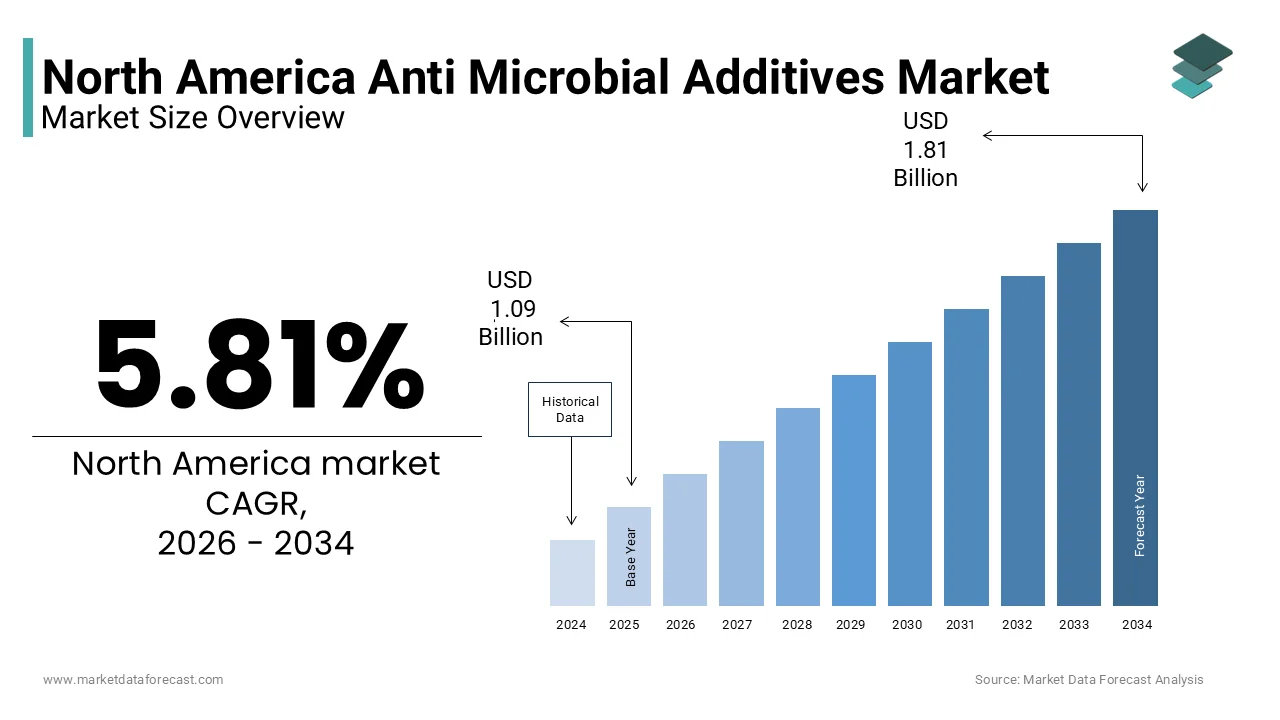
- Market Valuation: Valued at USD 1.09 billion in 2025, reaching USD 1.15 billion in 2026, and projected to hit USD 1.81 billion by 2034, registering a solid CAGR of 5.81% from 2026 to 2034.
- Primary Growth Drivers: Stringent regulatory frameworks and hygiene standards in healthcare (reducing hospital-acquired infections) and food industries, coupled with rising consumer awareness regarding product longevity and post-pandemic hygiene consciousness. Key restraints include intense regulatory scrutiny/approval delays for chemical compounds and high R&D/formulation integration complexity.
Key Market Segment Metrics (2026–2034)
| Category | Leading Segment (2025 Position) | Fastest-Growing Segment |
|---|---|---|
| By Type | Inorganic Additives (dominant due to superior thermal stability, broad-spectrum efficacy, and long-lasting silver/copper/zinc protection) | Organic Additives (fastest CAGR of 7.8% driven by bio-based plant extracts, essential oils, and chitosan demand) |
| By Application | Plastics (held a 34.55% share in 2025 across consumer goods, medical devices, and automotive components) | Paints and Coatings (fastest CAGR of 8.2% propelled by mold/mildew resistance needs in residential and commercial construction) |
| By End User | Healthcare (prominent share owing to strict hygiene mandates to prevent hospital-acquired infections) | Packaging (fastest CAGR of 9.5% driven by e-commerce expansion and shelf-life extension requirements for food safety) |
| By Country / Region | United States (largest contributor with an 85.5% share backed by advanced healthcare infrastructure and innovation hubs) | Canada (capturing 10.2% share with a strong focus on green chemistry, environmental regulations, and sustainable building solutions) |
Major Market Participants & Market Structure
Market Structure: Moderately consolidated landscape featuring major multinational chemical corporations competing alongside specialized technology providers. Competitive intensity focuses on sustainability credentials, regulatory compliance, and performance-critical applications.
Key Companies: BASF SE, King Plastic Corporation, The Dow Chemical Company, Clariant AG, A. Schulman, Inc., Microban International, Sanitized AG, Biocote Limited, Steritouch Ltd., and PolyOne Corporation.
North America Anti Microbial Additives Market Size
The North America anti-microbial additives market size was valued at USD 1.09 billion in 2025 and is expected to reach USD 1.81 billion by 2034 from USD 1.15 billion in 2026, growing at a CAGR of 5.81%.
The anti-microbial additives are agents that inhibit the growth of bacteria fungi and algae within various industrial and consumer products. These additives are crucial in extending product shelf life ensuring material integrity and safeguarding public health across applications ranging from plastics and coatings to textiles and healthcare devices. According to the Centers for Disease Control and Prevention, foodborne illnesses affect approximately 48 million people annually in the United States, amplifying the vital role of antimicrobial protection in packaging and food contact materials. Furthermore, the rise in hospital acquired infections, which account for 1 in 31 hospital patients on any given day, as per CDC data has intensified demand for antimicrobial surfaces in medical facilities. The construction industry also contributes significantly with the American Society for Testing and Materials reporting that microbial degradation causes billions of dollars in damage to building materials annually. This convergence of health safety and material preservation needs establishes a robust foundation for the market. As manufacturers seek to enhance product durability and comply with evolving health standards, the adoption of advanced antimicrobial technologies continues to expand across diverse sectors in North America.
MARKET DRIVERS
Stringent Regulatory Frameworks And Hygiene Standards In Healthcare And Food Industries
The implementation of rigorous regulatory standards and hygiene protocols in the healthcare and food sectors is primary factor accelerating the growth of the North America Anti Microbial Additives Market. Regulatory bodies, such as the Food and Drug Administration and the Environmental Protection Agency enforce strict guidelines to prevent microbial contamination in medical devices and food packaging. In the healthcare sector, the push to reduce hospital acquired infections has led to mandatory hygiene standards that require antimicrobial treated surfaces in high touch areas. As per the study, hospitals implementing antimicrobial surface technologies reported a 25% reduction in pathogen transmission rates. These regulatory mandates compel manufacturers to integrate certified antimicrobial additives into their products to ensure compliance and avoid legal liabilities. Antimicrobial additives help mitigate this loss by inhibiting bacterial growth on packaging and processing equipment.
Rising Consumer Awareness Regarding Health And Product Longevity
The increasing consumer awareness regarding health risks associated with microbial contamination and the desire for longer lasting products, significantly drives the growth of the North America Anti-Microbial Additives Market. Modern consumers are more informed about the dangers of bacteria mold and mildew leading to a preference for products that offer built in protection. This trend is particularly evident in the textile industry where activewear and bedding with antimicrobial finishes are gaining popularity. In the home care segment, the demand for antimicrobial coatings on kitchenware and bathroom fixtures has surged following heightened hygiene consciousness post pandemic. Consumers associate these additives with improved product longevity and reduced maintenance costs. This shift in consumer behavior forces manufacturers to incorporate antimicrobial additives to remain competitive and meet market expectations for safer and more durable goods.
MARKET RESTRAINTS
Strict Regulatory Scrutiny And Safety Concerns Regarding Chemical Additives
The intense regulatory scrutiny and growing safety concerns regarding the long term effects of chemical additives is inhibiting the growth of the North America anti-microbial additives market. Agencies, such as the Environmental Protection Agency and the Food and Drug Administration continuously evaluate the safety profiles of antimicrobial agents leading to potential bans or restrictions on certain substances. According to the Environmental Protection Agency, the review process for new antimicrobial active ingredients can take up to 3 years involving extensive toxicological testing, which delays entry and increases development costs. Recent studies have raised concerns about the potential endocrine disrupting effects of triclosan and other common antimicrobials prompting regulatory re-evaluations. Manufacturers face the challenge of reformulating products to comply with changing regulations, while maintaining efficacy. Additionally, consumer advocacy groups are increasingly vocal about the risks of chemical exposure leading to brand reputation damage for companies using controversial additives.
High Development Costs And Complexity Of Formulation Integration
The high costs associated with research and development and the technical complexity of integrating antimicrobial additives into various matrices is also declining the growth of the North America Anti-Microbial Additives Market. Developing effective and safe antimicrobial formulations requires substantial investment in laboratory testing clinical trials and regulatory compliance. Small and medium sized enterprises often lack the financial resources to undertake, such extensive development processes limiting competition and innovation. Furthermore, integrating these additives into polymers textiles and coatings without compromising the mechanical properties or aesthetic qualities of the base material presents significant technical challenges. Manufacturers must also ensure that the additives remain effective over the product’s lifespan, which requires advanced encapsulation and release mechanisms.
MARKET OPPORTUNITIES
Expansion Into Bio Based And Natural Antimicrobial Solutions
The growing demand for sustainable and eco-friendly products through the development of bio-based and natural antimicrobial solutions is elevating the growth of the North America anti microbial additives market. Consumers and regulators are increasingly favoring additives derived from natural sources, such as plant extracts essential oils and chitosan over synthetic chemicals. Natural additives like silver nanoparticles derived from biological processes and organic acids from fermentation are gaining traction in food packaging and personal care products. Manufacturers are investing in research to enhance the efficacy and stability of these natural alternatives making them viable replacements for traditional synthetics. The agricultural sector also offers opportunities with bio-based antimicrobials being used to protect crops and extend the shelf life of produce. Government incentives for sustainable manufacturing practices further support this transition. By focusing on renewable resources and biodegradable options, companies can capture a growing segment of environmentally conscious consumers while complying with stricter regulatory standards for chemical safety.
Technological Advancements In Nanotechnology And Smart Packaging
Technological advancements in nanotechnology and smart packaging systems by enhancing the precision and effectiveness of antimicrobial protection, which is also to elevate the growth of the North America anti-microbial additives market. Nanomaterials, such as zinc oxide, titanium dioxide, and silver nanoparticles provide superior antimicrobial activity at lower concentrations due to their high surface area to volume ratio. Smart packaging technologies that incorporate antimicrobial sensors can detect microbial growth and release agents only when needed improving efficiency and reducing waste. These technologies are particularly valuable in the pharmaceutical and medical device sectors, where sterility is important. The integration of Internet of Things capabilities allows for real time monitoring of product conditions enabling proactive intervention. Manufacturers are collaborating with tech firms to develop intelligent packaging solutions that combine antimicrobial protection with data tracking.
MARKET CHALLENGES
Risk Of Antimicrobial Resistance And Emerging Superbugs
The emergence of antimicrobial resistance and superbugs, as widespread use of these agents may contribute to the development of resistant microbial strains that is a major challenge for the growth of the North America anti-microbial additives market. The overuse of antimicrobials in consumer products and agriculture has been linked to the evolution of bacteria that are no longer susceptible to standard treatments. According to the Centers for Disease Control and Prevention, antibiotic resistant bacteria cause at least 2.8 million infections and 35000 deaths annually in the United States raising concerns about the efficacy of current antimicrobial additives. Regulatory bodies are increasingly cautious about approving new antimicrobial agents due to the potential public health risks associated with resistance. Manufacturers face the challenge of developing additives that are effective against resistant strains without contributing to the problem. This requires complex and costly research into novel mechanisms of action that do not rely on traditional antibiotic pathways. The negative public perception surrounding antimicrobial resistance also affects consumer trust and demand for these products. Companies must navigate this delicate balance by promoting responsible use and investing in non-resistance forming technologies.
Supply Chain Disruptions And Raw Material Volatility
The supply chain disruptions and volatility in raw material prices by affecting production stability and profitability is also to decline the growth of the North America anti-microbial additives market. Geopolitical tensions and trade policies further exacerbate supply chain vulnerabilities leading to delays and shortages of key ingredients. Transportation hurdles and labor shortages also contribute to increased logistics costs and longer lead times. Manufacturers struggle to maintain consistent pricing and availability in such an unpredictable environment. Small suppliers are particularly vulnerable to these shocks, as they lack the bargaining power and inventory buffers of larger corporations. The reliance on imported raw materials from regions with unstable political or economic conditions adds another layer of risk.
REPORT COVERAGE
| REPORT METRIC | DETAILS |
| Market Size Available | 2025 to 2034 |
| Base Year | 2025 |
| Forecast Period | 2026 to 2034 |
| CAGR | 5.81% |
| Segments Covered | By Type, Application, End User, and Region |
| Various Analyses Covered | Regional & Country Level Analysis, Segment-Level Analysis, DROC, PESTLE Analysis, Porter’s Five Forces Analysis, Competitive Landscape, Analyst Overview on Investment Opportunities |
| Regions Covered | The United States, Canada, Mexico, and Rest of North America |
| Market Leaders Profiled | BASF SE, King Plastic Corporation, The Dow Chemical Company, Clariant AG, A. Schulman, Inc., Microban International, Sanitized AG, Biocote Limited, Steritouch Ltd., and Polyone Corporation. |
SEGMENTAL ANALYSIS
By Type Insights
The inorganic additives segment was accounted in holding holds the dominant position in the North America Anti Microbial Additives Market driven by their superior thermal stability broad spectrum efficacy and long lasting protection compared to organic alternatives. Silver copper and zinc based additives are widely utilized across various industries including plastics textiles and coatings due to their ability to withstand high processing temperatures without degradation. The silver ions are among the most extensively studied and registered antimicrobial agents in the United States with over 300 registered products utilizing silver technology. The durability of inorganic additives ensures that they remain effective throughout the lifecycle of the product, which is important for applications, such as medical devices and construction materials. Their non leaching properties when properly formulated reduce environmental impact and enhance safety profiles making them preferred choices for consumer goods. Regulatory acceptance of specific inorganic compounds like zinc pyrithione and copper oxide in various applications also facilitates their widespread adoption.
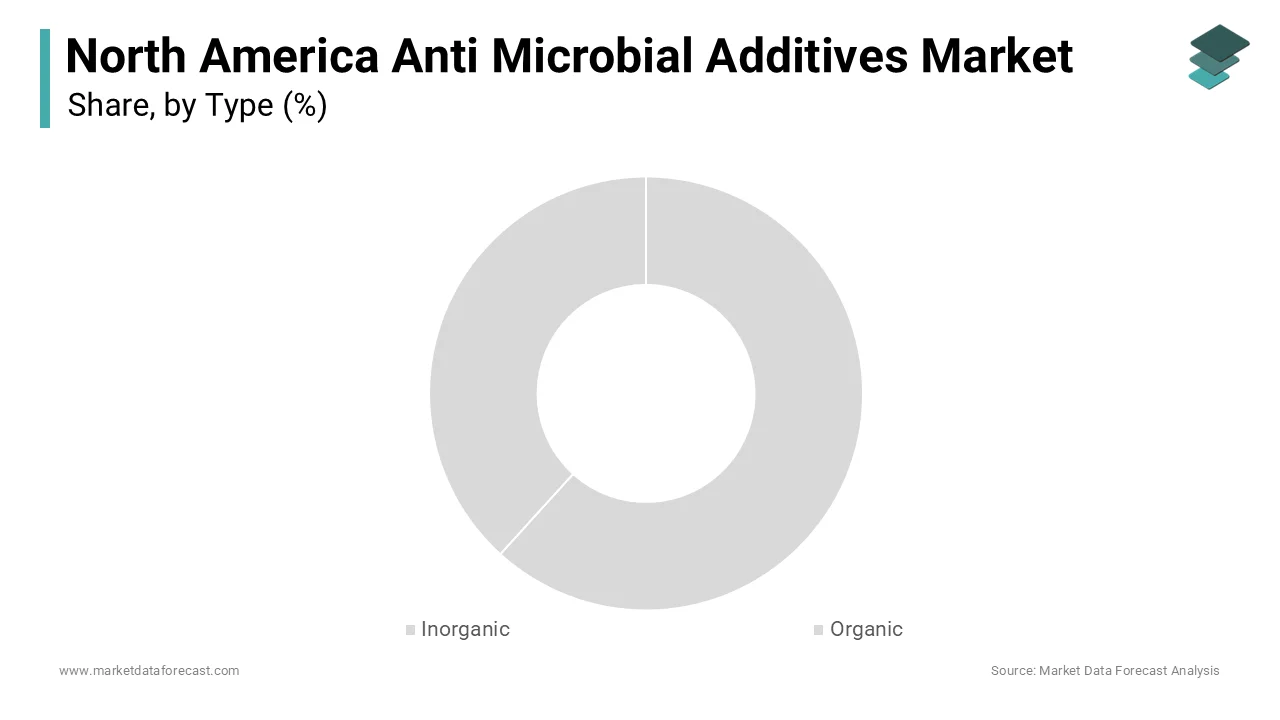
The organic additives segment is likely to grow at a fastest CAGR of 7.8% during the forecast period owing to the increasing demand for bio based and environmentally friendly antimicrobial solutions. Organic additives derived from natural sources, such as plant extracts essential oils and chitosan are gaining popularity due to their biodegradability and lower toxicity profiles. Regulatory pressures to reduce the use of heavy metals like silver and copper are also accelerating the adoption of organic alternatives. These additives are particularly favored in personal care food packaging and textile applications, where direct human contact occurs. The flexibility in chemical structure allows for customization of organic additives to target specific pathogens by enhancing their appeal in specialized applications. Advances in encapsulation technologies have improved the stability and efficacy of organic antimicrobials addressing previous limitations.
By Application Insights
The plastics segment was the largest by holding 34.55 of the North America Anti-Microbial Additives Market share in 2025 due to the extensive use of antimicrobial treated polymers in consumer goods medical devices and automotive components. Antimicrobial additives are integrated into plastic matrices to prevent bacterial growth odor formation and material degradation. The versatility of plastics allows for the incorporation of various antimicrobial agents without compromising mechanical properties. The durability and cost effectiveness of antimicrobial plastics make them ideal for high touch items such as keyboards phone cases and kitchenware. Manufacturers benefit from the ability to mold antimicrobial protection directly into products eliminating the need for surface treatments. This integration ensures long lasting efficacy and reduces maintenance requirements. The widespread adoption of plastics in various sectors ensures a consistent and substantial demand for antimicrobial additives.
The paints and coatings segment is likely to grow at a fastest CAGR of 8.2% during the forecast period driven by the increasing demand for mold and mildew resistant surfaces in residential and commercial construction. Antimicrobial additives in paints prevent the growth of fungi and bacteria on walls ceilings and exterior surfaces enhancing aesthetic appeal and structural integrity. The rise in remote work has led to increased home renovation activities, where homeowners prioritize healthy living environments. Antimicrobial coatings are also gaining traction in healthcare facilities schools and hospitals, where hygiene is important. Technological advancements have improved the durability and effectiveness of these additives allowing for longer lasting protection. Regulatory support for low volatile organic compound paints with antimicrobial properties further boosts market growth.
By End User Insights
The healthcare segment held a prominent share of the North America Anti-Microbial Additives Market in 2025 with the need to prevent hospital acquired infections and ensure patient safety. Antimicrobial additives are used in medical devices hospital surfaces textiles and equipment to inhibit pathogen growth. The regulatory environment mandates strict hygiene standards in healthcare facilities compelling the adoption of advanced antimicrobial technologies. The aging population and increase in surgical procedures further drive demand for antimicrobial medical devices and implants. Manufacturers are developing innovative additives that offer long lasting protection without compromising biocompatibility. The high value placed on patient outcomes ensures that healthcare providers prioritize effective antimicrobial solutions.
The packaging segment is anticipated to grow at a fastest CAGR of 9.5% during the forecast period with the need to extend shelf life and ensure food safety. Antimicrobial additives in packaging materials inhibit the growth of spoilage organisms and pathogens protecting consumer health. The rise in e-commerce and ready to eat meals has increased demand for packaging that maintains freshness during transport and storage. Regulatory approvals for food contact antimicrobials have facilitated market entry for new products. Consumers are willing to pay a premium for packaged foods with extended freshness guarantees. As supply chains become more complex, the role of antimicrobial packaging in ensuring safety and quality will continue to grow rapidly.
REGIONAL ANALYSIS
United States Market Analysis
The United States was the largest contributor in the North America Anti Microbial Additives Market by holding 85.5% of the share in 2025 with its advanced healthcare infrastructure stringent regulatory framework and large consumer base. The country is a hub for innovation in antimicrobial technologies with significant investments in research and development. The focus on reducing hospital acquired infections has led to widespread adoption of antimicrobial surfaces in healthcare facilities. The rigorous approval process ensures high safety standards fostering consumer trust in antimicrobial products. The United States registers the highest number of antimicrobial pesticide products globally, reflecting extensive industrial use. The presence of major chemical manufacturers and technology providers supports a robust supply chain. Consumer awareness regarding hygiene and health has surged post pandemic driving demand in retail and home care sectors. Government initiatives promoting food safety and waste reduction, further boost the packaging segment.
Canada Market Analysis
Canada anti-microbial additives market was ranked second by capturing 10.2% of share in 2025 with the strict environmental regulations and a focus on sustainable solutions. The country has a well-developed healthcare system that prioritizes infection control driving demand for antimicrobial medical devices and surfaces. The Canadian government’s commitment to green chemistry encourages the adoption of bio based and organic antimicrobials. The construction industry is also a key contributor with increasing use of antimicrobial coatings in residential and commercial buildings. Consumer preference for eco-friendly products drives innovation in natural antimicrobial solutions. The proximity to the United States facilitates trade and technology transfer enhancing market growth. As Canada continues to emphasize sustainability and public health, the demand for advanced antimicrobial additives is expected to rise steadily.
COMPETITIVE LANDSCAPE
The North America anti microbial additives market exhibits moderate consolidation with a mix of multinational chemical corporations and specialized technology providers competing across various segments. Large players leverage broad product portfolios global supply chains and extensive R&D resources to dominate high volume industrial applications. Niche specialists differentiate through proprietary technologies superior technical support and focus on specific verticals like medical devices or food packaging. Competition intensifies around sustainability credentials as buyers increasingly demand eco-friendly and regulatory compliant solutions. Price competition exists in commoditized segments but value-based differentiation prevails in performance critical applications. Barriers to entry include stringent regulatory approvals, complex formulation expertise, and established customer relationships. Innovation cycles are rapid requiring continuous investment in new chemistries and delivery systems. Customer loyalty depends heavily on technical reliability and regulatory support rather than brand alone.
KEY MARKET PLAYERS
Some of the major players dominating the North America anti microbial additives market are
- BASF SE
- King Plastic Corporation
- The Dow Chemical Company
- Clariant AG
- A. Schulman, Inc.
- Microban International
- Sanitized AG
- Biocote Limited
- Steritouch Ltd.
- Polyone Corporation
Top Players in the Market
- Microban International maintains a prominent position in the North America Anti-Microbial Additives Market through its extensive portfolio of built in antimicrobial technologies for consumer and industrial products. The company specializes in integrating silver zinc and organic additives into plastics textiles and coatings to provide durable protection against microbial growth. Recent actions include launching next generation bio based antimicrobial solutions aligned with sustainability trends and expanding partnerships with major appliance manufacturers. Microban also invests heavily in regulatory compliance and efficacy testing to ensure product safety across diverse applications.
- Sanitized AG contributes significantly to the North America Anti Microbial Additives Market by offering advanced antimicrobial solutions for textiles plastics and building materials. The company emphasizes safety and environmental responsibility through its development of non-leaching and biodegradable additive technologies. Recently Sanitized AG introduced new silver free antimicrobial agents for sensitive applications such as food packaging and personal care products to address regulatory concerns. They have also expanded their technical service capabilities in the United States to support local manufacturers with formulation optimization and regulatory guidance. Collaborations with research institutions enable continuous improvement in efficacy and safety profiles.
- Avient Corporation plays a vital role in the North America Anti Microbial Additives Market by providing specialized polymer compounds and colorants integrated with antimicrobial functionality. The company leverages its expertise in material science to deliver customized solutions for healthcare packaging and consumer goods. Recent efforts include acquiring niche additive suppliers to broaden their technology portfolio and investing in production capacity for high performance antimicrobial masterbatches. Avient also focuses on digital tools to help customers simulate additive performance during product design reducing development time. Their emphasis on integrated solutions and operational efficiency enables faster response to market demands.
Top Strategies Used by Key Market Participants
Key players in the North America Anti Microbial Additives Market employ several strategic approaches to maintain competitiveness and drive growth. Product innovation remains central with companies developing bio-based and metal free alternatives to meet sustainability goals and regulatory requirements. Strategic acquisitions allow firms to expand technological capabilities and enter new application segments quickly. Partnerships with raw material suppliers ensure stable access to ingredients amid supply chain volatility. Investment in regulatory affairs teams accelerates approval processes for new additives, across multiple jurisdictions. Technical support services including formulation assistance and efficacy testing strengthen customer relationships and reduce adoption barriers. Digitalization initiatives, such as online platforms for product selection and performance simulation enhance user experience.
MARKET SEGMENTATION
This research report on the North America anti microbial additives market has been segmented and sub-segmented based on the following categories.
By Type
- Inorganic
- Silver
- Copper
- Zinc
- Organic
- OBPA
- DCOIT
By Application
- Plastics
- Paint and Coating
- Pulp and Paper
By End User
- Healthcare
- Construction
- Food and Beverages
- Packaging
By Country
- The United States
- Canada
- Rest of North America