- Product Description Description
- Table of Contents TOC
- List of Table & Figure LOT
- Get Free Sample PDF Sample PDF
Market Size, 2025
$122.16 MnMarket Estimate, 2026
$132.19 MnMarket Forecast, 2034
$248.51 MnCAGR, 2026–2034
8.21%Executive Summary: North America Aquaculture Vaccines Market
- Market Scope: Comprehensive North American aquaculture vaccines market analysis covering vaccine types, administration routes, pathogen application segments, regional leadership frameworks, and antibiotic-free aquaculture trends.
- Market Valuation: Valued at USD 122.16 million (2025), estimated at USD 132.19 million (2026), and projected to reach USD 248.51 million by 2034, expanding at a robust CAGR of 8.21% (2026–2034).
- Primary Growth Drivers: Rising infectious disease incidence (ISAV, Vibrio), FDA and Health Canada mandates for sustainable/antibiotic-free practices, recirculating aquaculture systems (RAS) expansion, and advanced DNA/oral vaccination technologies.
Key Market Segment Metrics (2026–2034)
| Category | Leading Segment Position | Fastest-Growing Segment |
|---|---|---|
| By Vaccine Type & Route | Inactivated vaccines (held the largest share in 2025) & Injected vaccines (dominated administration routes) | DNA vaccines (projected at 11.4% CAGR) & Oral vaccines (anticipated at 10.8% CAGR) |
| By Application / Pathogen | Bacterial vaccines segment (accounted for 57.4% of the market share in 2025) | Viral vaccines segment (expected to grow at a CAGR of 12.1%) |
| By Region / Country | United States (top performer holding a 54.3% market share in 2025, followed by Canada) | Canada (shows significant growth potential due to high salmonid disease incidence) |
Major Market Players & Market Structure
Market Structure: Highly strategic North American animal health ecosystem driven by next-generation DNA vaccine launches, Canadian innovation center establishments, oral delivery partnerships, and AI-driven disease analytics integration.
Key Companies: Zoetis, Phibro Animal Health Corporation, Elanco, Merck & Co., Inc., KBNP, CAVAC, Kyoto Biken Laboratories, Inc., Nisseiken Co., Ltd., Vaxxinova International BV, and HIPRA.
North America Aquaculture Vaccines Market Size
The North America aquaculture vaccines market size was valued at USD 122.16 million in 2025 and is anticipated to reach a valuation of USD 132.19 million in 2026 and USD 248.51 million by 2034, growing at a CAGR of 8.21% from 2026 to 2034.
Aquaculture vaccines are biological preparations designed to prevent infectious diseases in aquatic species such as fish, shellfish, and crustaceans. These vaccines play a crucial role in enhancing the health and survival rates of farmed aquatic organisms, particularly in intensive aquaculture systems where disease outbreaks can cause significant economic losses. The growing emphasis on food safety, animal welfare, and regulatory compliance has driven the demand for effective and environmentally friendly disease prevention strategies. According to the United Nations Food and Agriculture Organization (FAO), aquaculture contributes over 50% of the global seafood supply intended for human consumption, reinforcing the need for robust health management practices. As per the National Oceanic and Atmospheric Administration (NOAA), the U.S. aquaculture sector produced approximately 620 million pounds of seafood in 2023, with salmon, trout, catfish, and shellfish dominating production volumes.
MARKET DRIVERS
Rising Incidence of Infectious Diseases in Aquaculture Species
One of the primary drivers of the North American aquaculture vaccines market is the increasing prevalence of infectious diseases that threaten fish and shellfish populations in both freshwater and marine environments. Outbreaks of pathogens such as Aeromonas salmonicida, Vibrio anguillarum, and Infectious Salmon Anemia Virus (ISAV) have caused significant mortality in farmed fish stocks, leading to substantial economic losses. According to the U.S. Department of Agriculture (USDA), fish disease-related losses in the U.S. aquaculture industry exceeded $100 million annually in recent years, prompting greater adoption of preventive healthcare measures like vaccination. In Canada, the Department of Fisheries and Oceans (DFO) reported that bacterial and viral infections were responsible for over 40% of production setbacks in salmon farming operations along the British Columbia coast. The highly contagious nature of these diseases, combined with dense stocking conditions in aquaculture farms, necessitates the use of targeted immunization strategies to mitigate transmission risks. Furthermore, climate change and shifting ocean temperatures have contributed to the emergence of new pathogens, making disease control more challenging.
Increasing Demand for Sustainable and Antibiotic-Free Aquaculture Practices
Another key factor fueling the growth of the North American aquaculture vaccines market is the growing shift toward sustainable and antibiotic-free aquaculture practices. Overuse of antibiotics in fish farming has led to concerns regarding antimicrobial resistance (AMR), environmental contamination, and residues in seafood products. According to the Centers for Disease Control and Prevention (CDC), AMR poses a serious threat to public health, with drug-resistant infections causing over 2.8 million illnesses annually in the U.S. alone. Recognizing these risks, regulatory agencies such as the U.S. Food and Drug Administration (FDA) and Health Canada have implemented stricter guidelines on antibiotic usage in aquaculture. The FDA’s Guidance for Industry #213 mandated the phasing out of medically important antibiotics for growth promotion purposes, compelling producers to seek alternative disease prevention strategies. Additionally, consumer preferences are increasingly favoring sustainably sourced seafood, with certification programs such as the Aquaculture Stewardship Council (ASC) promoting responsible farming practices that include immunization programs. A survey by Seafood Watch found that over 60% of consumers consider disease prevention methods when purchasing seafood, reinforcing the market incentive for vaccine adoption.
MARKET RESTRAINTS
High Cost and Limited Availability of Effective Aquaculture Vaccines
A major restraint affecting the North American aquaculture vaccines market is the high cost associated with vaccine development, production, and administration, coupled with the limited availability of efficacious formulations for certain aquatic species. Unlike terrestrial livestock vaccines, aquaculture vaccines often require specialized delivery mechanisms such as injection, immersion, or oral administration, which can be labor-intensive and costly, especially for small-scale producers. Additionally, many existing vaccines are only approved for use in a few high-value species such as Atlantic salmon and rainbow trout, leaving gaps in protection for other commercially important fish and shellfish. Research conducted by the University of Prince Edward Island indicates that less than 30% of available vaccines cover non-salmonid species, limiting their applicability across diverse aquaculture operations.
Complex Regulatory Framework and Approval Delays
Another critical constraint impeding the growth of the North American aquaculture vaccines market is the complex and time-consuming regulatory framework governing vaccine registration and deployment. Both the U.S. and Canada impose rigorous requirements for vaccine efficacy, safety, and environmental impact assessments before granting market authorization. As per the USDA Animal and Plant Health Inspection Service (APHIS), the approval process for a new aquaculture vaccine can take anywhere from three to seven years, which discourages smaller biotech firms from entering the space. Delays in regulatory approvals hinder the timely introduction of innovative vaccines, particularly those targeting emerging pathogens. Moreover, inconsistent regional regulations across U.S. states and Canadian provinces complicate the nationwide distribution and application of vaccines. For example, some jurisdictions mandate specific administration methods or restrict the use of certain adjuvants, forcing manufacturers to tailor products to local requirements.
MARKET OPPORTUNITIES
Expansion of Recirculating Aquaculture Systems (RAS) and Land-Based Farming
A significant opportunity emerging in the North American aquaculture vaccines market is the rapid expansion of recirculating aquaculture systems (RAS) and land-based fish farming. Unlike traditional open-net pen systems, RAS facilities operate in controlled environments with higher biosecurity standards, making them ideal candidates for comprehensive vaccination programs. According to the Global Seafood Alliance, RAS production capacity in North America increased by over 40% between 2020 and 2023, reflecting strong investor interest and consumer demand for locally grown seafood. Land-based aquaculture allows for precise disease management due to reduced exposure to wild pathogens and enhanced monitoring capabilities. As a result, producers are increasingly integrating vaccines into their health management protocols to maintain high survival rates and optimize growth performance. Additionally, urban aquaculture initiatives in cities such as Chicago, Denver, and Toronto are gaining traction, offering proximity to markets and minimizing transportation-related stress on fish. These closed-loop systems inherently support vaccine-driven disease prevention strategies, creating a favorable environment for sustained market growth and innovation in vaccine formulation and delivery techniques tailored to RAS applications.
Development of Multivalent and Oral Vaccination Technologies
An expanding opportunity in the North American aquaculture vaccines market is the advancement of multivalent and oral vaccination technologies designed to enhance efficiency, reduce labor costs, and improve ease of administration. Traditional injectable vaccines, while effective, require handling and sedation of fish, which can be stressful and impractical for large-scale operations. Oral vaccines, administered through feed, offer a less invasive and scalable alternative that aligns with modern aquaculture practices. According to research published by the Journal of Fish Diseases, oral vaccines have demonstrated up to 80% efficacy in protecting against common bacterial infections such as Yersinia ruckeri and Flavobacterium psychrophilum. Companies like Elanco Animal Health and MSD Animal Health are investing heavily in next-generation oral formulations that utilize microencapsulation and mucosal immune stimulation to enhance uptake and immune response.
MARKET CHALLENGES
Variability in Vaccine Efficacy Across Different Aquatic Species
One of the most pressing challenges facing the North American aquaculture vaccines market is the variability in vaccine efficacy across different aquatic species. Unlike mammals, fish possess an adaptive immune system that is highly influenced by factors such as water temperature, salinity, life stage, and species-specific physiology. This variability complicates the development of universally effective vaccines and necessitates customized formulations for each target species. According to the Atlantic Veterinary College, vaccine-induced immunity in cold-water species like Atlantic salmon tends to be stronger and longer-lasting compared to warm-water species such as tilapia and shrimp. Additionally, shellfish such as oysters, mussels, and shrimp lack an adaptive immune system altogether, making traditional vaccination approaches ineffective. Research efforts are underway to explore alternative strategies such as RNA interference and probiotics, but these remain in early developmental stages.
Logistical and Technical Barriers in Vaccine Administration
Another significant challenge in the North American aquaculture vaccines market is the logistical and technical complexity involved in administering vaccines effectively across large-scale operations. Immersion and bath vaccination techniques offer alternatives for fry and fingerlings, yet they present challenges related to dosage consistency and antigen uptake. According to a study by the University of Maine, immersion vaccines achieve variable success rates depending on exposure duration, water chemistry, and species-specific absorption rates by making standardization difficult. Oral vaccines, though promising, face hurdles in ensuring uniform antigen distribution in feed and maintaining stability under varying storage and digestive conditions. The USDA reports that improper storage or handling can reduce vaccine potency by up to 40%, diminishing protection levels.
REPORT COVERAGE
| REPORT METRIC | DETAILS |
| Market Size Available | 2025 to 2034 |
| Base Year | 2025 |
| Forecast Period | 2026 to 2034 |
| CAGR | 8.21% |
| Segments Covered | By Product, Route of Administration, Application, And By Region |
| Various Analyses Covered | Global, Regional & Country Level Analysis, Segment-Level Analysis, DROC, PESTLE Analysis, Porter’s Five Forces Analysis, Competitive Landscape, Analyst Overview on Investment Opportunities |
| Regions Covered | U.S.A, Canada |
| Market Leaders Profiled | Zoetis, Phibro Animal Health Corporation, Elanco, Merck & Co., Inc., KBNP, CAVAC, Kyoto Biken Laboratories, Inc., Nisseiken Co., Ltd., Vaxxinova International BV, HIPRA. |
SEGMENTAL ANALYSIS
By Product Insights
The inactivated vaccines segment held the largest share of the North America aquaculture vaccines market in 2025. One key factor driving this segment’s dominant position is the proven efficacy and regulatory approval status of inactivated vaccines. According to the USDA Center for Veterinary Biologics, over 75% of commercially available fish vaccines in the U.S. are inactivated formulations due to their stability, safety, and ability to induce strong immune responses without posing live pathogen risks. These vaccines are particularly effective against bacterial diseases like furunculosis, vibriosis, and enteric redmouth disease, which have historically caused major losses in fish farms. Additionally, inactivated vaccines are compatible with traditional administration methods such as injection, which remains the gold standard for vaccine delivery in large-scale aquaculture operations.
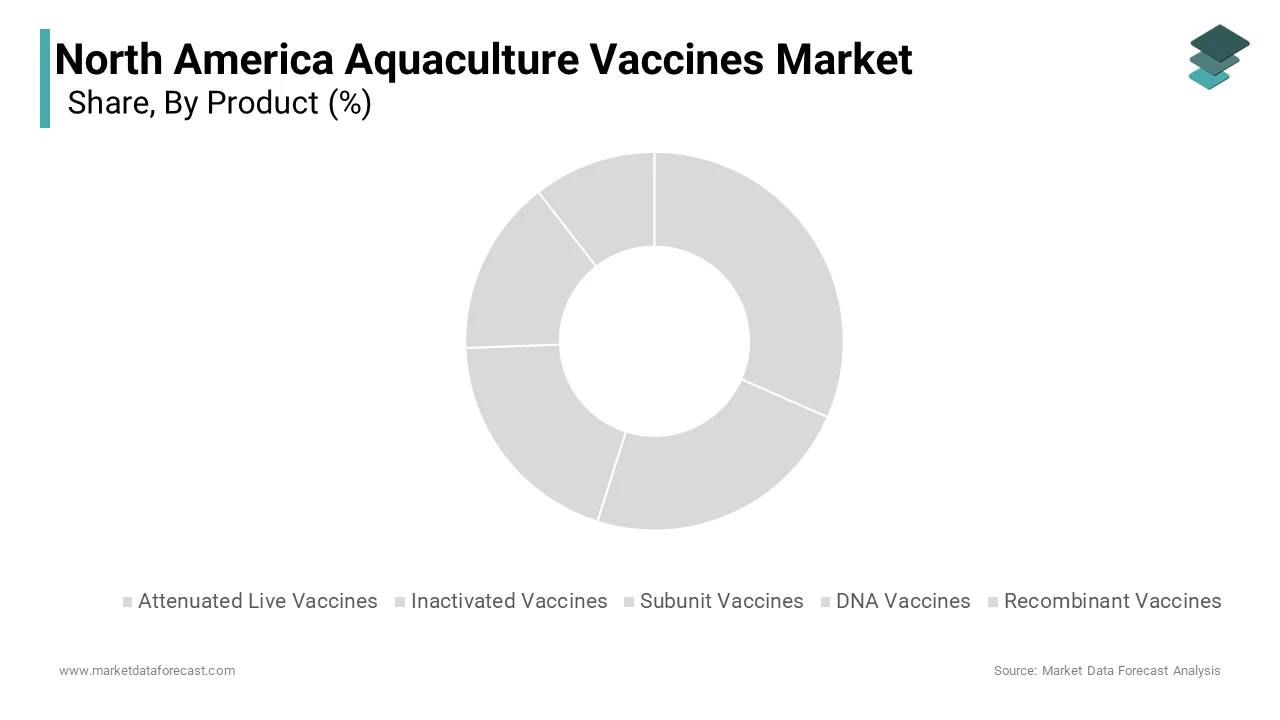
The DNA vaccines segment is projected to grow at a CAGR of 11.4% in txt coming years. A major growth catalyst is the development of plasmid-based vaccines that offer broad-spectrum protection with a single dose. As per research published by the Journal of Fish Diseases, DNA vaccines have demonstrated superior protection against viral pathogens such as Infectious Hematopoietic Necrosis Virus (IHNV) and Viral Hemorrhagic Septicemia Virus (VHSV), which have been responsible for mass mortalities in farmed fish populations. Moreover, DNA vaccines do not require cold chain storage and can be administered through immersion or oral routes, reducing logistical complexities compared to traditional injectables. The Canadian government, through initiatives supported by Genome British Columbia and the University of Victoria, has funded several projects aimed at commercializing DNA vaccine platforms for aquaculture use.
By Route of Administration Insights
The injected vaccines segment is expected to hold a dominant share of the North America aquaculture vaccines market in 2025. One primary driver behind this segment’s dominance is the superior immune response generated through intraperitoneal injection, which ensures direct antigen delivery into the body cavity of fish. According to the Atlantic Veterinary College, injected vaccines provide up to 95% protection against bacterial infections such as Yersinia ruckeri and Aeromonas salmonicida, which makes them the preferred method for high-value species like Atlantic salmon. Furthermore, automation in vaccination technology has enhanced the efficiency of injection processes. Companies like Skretting and MSD Animal Health have introduced robotic injectors capable of vaccinating thousands of fish per hour, significantly improving throughput while minimizing stress on aquatic animals.
The oral vaccines segment is anticipated to exhibit a CAGR of 10.8% from 2025 to 2033. A key growth enabler is the development of microencapsulated feed-based vaccines that enhance antigen delivery and stimulate mucosal immunity. Additionally, the rising adoption of recirculating aquaculture systems (RAS) and land-based farming models has created an environment conducive to oral vaccine deployment. Unlike traditional open-net pens, RAS facilities allow for better control over feeding schedules and water quality, ensuring consistent vaccine intake. As per the Global Seafood Alliance, over 50% of new RAS startups in North America have integrated oral vaccination protocols into their health management strategies by signaling a paradigm shift toward more efficient and humane immunization practices.
By Application Insights
The bacterial vaccines segment held 57.4% of the North America aquaculture vaccines market share in 2025. One of the main factors contributing to this segment’s dominance is the high incidence of bacterial infections in intensively farmed species like Atlantic salmon, tilapia, and catfish. According to the U.S. Department of Agriculture (USDA), bacterial diseases account for nearly 60% of all aquaculture-related losses in the United States, prompting producers to prioritize preventive measures such as vaccination. Moreover, bacterial vaccines have benefited from well-established regulatory pathways and decades of research, enabling broader commercial availability compared to viral counterparts. A report by the Canadian Food Inspection Agency (CFIA) notes that over 40 approved bacterial vaccines are currently in circulation across North America, offering protection against conditions like furunculosis, columnaris, and yersiniosis.
The viral vaccines segment is expected to grow with a CAGR of 12.1% in the coming years. A significant growth driver is the emergence of novel DNA and recombinant vaccine technologies that offer higher specificity and longer-lasting immunity against viral pathogens. According to the Journal of Virology, DNA vaccines targeting IHNV have demonstrated over 90% survival rates in vaccinated fish populations, outperforming traditional inactivated alternatives. Additionally, the rise in international trade of live aquatic organisms has heightened the risk of cross-border disease transmission, necessitating stronger biosecurity measures. As per the World Organisation for Animal Health (WOAH), over 30% of global fish exports now require proof of viral disease resistance, further boosting demand for advanced vaccination solutions.
COUNTRY-LEVEL ANALYSIS
United States Aquaculture Vaccines Market Analysis
The United States was the top performer in the North American aquaculture vaccines market by accounting for 54.3% the share in 2025. A key growth driver is the increasing focus on sustainable seafood production and the reduction of antibiotic use in aquaculture. According to the National Oceanic and Atmospheric Administration (NOAA), U.S. aquaculture production reached over 620 million pounds in 2023, with states like Washington, Maine, and Alaska leading in marine finfish farming. Additionally, the U.S. benefits from strong federal support through agencies such as the USDA and FDA, which regulate and promote the development of safe and effective aquaculture vaccines. Collaborative initiatives involving academic institutions like Cornell University and Auburn University are advancing next-generation vaccine technologies, positioning the U.S. as a leader in innovation and application within the regional market.
Canada Aquaculture Vaccines Market Analysis
The Canadian aquaculture vaccines market is likely to have significant growth opportunities in the coming years. One of the primary growth factors is the high incidence of infectious diseases in salmonid populations, necessitating proactive immunization strategies. According to Fisheries and Oceans Canada, outbreaks of Infectious Salmon Anemia (ISA) and sea lice infestations have led to substantial financial losses, which is prompting widespread adoption of vaccines in both open-net pen and land-based aquaculture systems. Furthermore, Canada has emerged as a hub for aquaculture vaccine research and development, with government-backed initiatives supporting innovation in DNA and oral vaccine technologies. Institutions such as the University of Prince Edward Island and Genome British Columbia are actively engaged in developing targeted immunization solutions for native and farmed species.
COMPETITIVE LANDSCAPE
The competitive landscape of the North American aquaculture vaccines market is shaped by a mix of established multinational corporations and emerging biotech firms striving to meet the growing demand for sustainable disease prevention in aquatic species. While global leaders such as Elanco, Zoetis, and Merck dominate due to their extensive product portfolios and robust R&D capabilities, smaller players are carving out niche opportunities through innovative vaccine delivery methods and targeted immunization strategies. The market is witnessing increasing collaboration between industry stakeholders and academic institutions to accelerate the development of novel vaccine technologies, particularly DNA and oral vaccines. Regulatory bodies play a critical role in shaping competition by setting approval timelines and efficacy benchmarks, which can either hinder or expedite market entry for new products. Additionally, the rising emphasis on antibiotic reduction and biosecurity in aquaculture production has intensified the focus on preventive healthcare, prompting companies to differentiate themselves through specialized formulations, scalable deployment options, and integrated disease management services tailored to regional farming practices.
KEY MARKET PLAYERS
These are the market players that are dominating the North American aquaculture vaccines market include are
- Zoetis
- Phibro Animal Health Corporation
- Elanco
- Merck & Co., Inc.
- KBNP
- CAVAC
- Kyoto Biken Laboratories, Inc.
- Nisseiken Co., Ltd.
- Vaxxinova International BV
- HIPRA.
Top Players In The Market
- One of the leading players in the North American aquaculture vaccines market is Elanco Animal Health, a global innovator in animal health solutions. Elanco has been at the forefront of developing and commercializing fish vaccines targeting bacterial and viral diseases affecting salmon, trout, and other commercially farmed species. The company contributes significantly to the global market by integrating advanced biotechnology with sustainable aquaculture practices by ensuring improved disease prevention and enhanced fish welfare.
- Another key player is Zoetis Inc. i a renowned name in veterinary medicine with a strong presence in aquatic health. Zoetis offers a diverse portfolio of aquaculture vaccines that support large-scale fish farming operations, particularly in North America. Through strategic collaborations and continuous R&D investments, the company plays a pivotal role in advancing vaccine delivery technologies and expanding access to effective immunization programs across different aquatic species.
- Merck Animal Health (a division of MSD) is also a major contributor to the North American aquaculture vaccines market. Known for its robust pipeline of aquatic vaccines, Merck focuses on innovation in DNA-based and multivalent formulations tailored for both freshwater and marine environments. Its commitment to improving biosecurity and reducing antibiotic dependency positions it as a leader in shaping the future of sustainable aquaculture globally.
Top Strategies Used By Key Market Participants
A primary strategy adopted by key players in the North American aquaculture vaccines market is expanding research and development initiatives to introduce next-generation vaccines. Companies are investing heavily in molecular biology, recombinant technology, and DNA vaccine platforms to enhance protection against emerging pathogens while improving ease of administration.
Another crucial approach is strategic partnerships and collaborations with academic institutions, government agencies, and aquaculture producers. These alliances facilitate field testing, regulatory approvals, and customized vaccine development tailored to regional disease profiles and target species, strengthening market penetration and product relevance.
Enhancing global distribution networks and offering integrated health management solutions is gaining prominence. Leading firms are bundling vaccines with diagnostics, nutrition, and digital monitoring tools to provide comprehensive disease prevention strategies that align with modern aquaculture practices and customer needs.
RECENT MARKET NEWS
- In February 2025, Elanco launched a next-generation DNA vaccine targeting Infectious Hematopoietic Necrosis Virus (IHNV), which aimed at enhancing immune response and reducing mortality rates in salmonid populations across North America.
- In May 2023, Zoetis expanded its partnership with a leading U.S. aquaculture research institute to co-develop oral vaccine delivery systems designed for juvenile fish, which is improving scalability and ease of administration without compromising efficacy.
- In September 2023, Merck Animal Health introduced an updated multivalent vaccine formulation that provides simultaneous protection against multiple bacterial pathogens commonly found in freshwater and marine aquaculture environments, streamlining disease management for farmers.
- In November 2025, Elanco announced the establishment of a dedicated aquaculture vaccine innovation center in Canada by focusing on accelerating the development of temperature-stable and immersion-administered vaccines suitable for cold-water species.
- In March 2025, Zoetis collaborated with a Canadian biotech startup to integrate AI-driven analytics into vaccine efficacy monitoring, which is enabling real-time performance tracking and adaptive immunization planning for large-scale aquaculture operations.
MARKET SEGMENTATION
This research report on the North American aquaculture vaccine market is segmented and sub-segmented into the following categories.
By Product
- Attenuated Live Vaccines
- Inactivated Vaccines
- Subunit Vaccines
- DNA Vaccines
- Recombinant Vaccines
By Route of Administration
- Oral
- Injected
- Immersion & Spray
By Application
- Bacterial
- Viral
- Parasitic
By Country
- The United States
- Canada
- Mexico
- Rest of North America