- Product Description Description
- Table of Contents TOC
- List of Table & Figure LOT
- Get Free Sample PDF Sample PDF
Market Size, 2025
$55.71 BnMarket Estimate, 2026
$61.17 BnMarket Forecast, 2034
$129.23 BnCAGR, 2026–2034
9.80%Executive Summary: North America Aquafeed Market
- Market Scope: Comprehensive regional analysis of the North American aquafeed market covering animal types (fish, crustaceans, mollusks), ingredient formats, additives, country-level adoption frameworks (US, Canada, Mexico), and evolving sustainable aquaculture practices.
- Market Valuation & Forecast: Valued at USD 55.71 billion in 2025, estimated at USD 61.17 billion in 2026, and projected to reach USD 129.23 billion by 2034, registering a compound annual growth rate (CAGR) of 9.80% from 2026 to 2034.
- Primary Growth Drivers: Rising consumer demand for seafood and lean proteins, rapid expansion of land-based Recirculating Aquaculture Systems (RAS), and continuous advancements in sustainable, alternative feed formulations (plant proteins, insect meal, single-cell proteins). Counterbalancing restraints include the high cost of raw feed materials and stringent regulatory compliance frameworks enforced by agencies like the FDA and CFIA.
Key North America Aquafeed Market Segment Metrics (2026–2034)
| Category | Leading Segment Focus | Strategic Growth Vectors |
|---|---|---|
| By Animal Type | Fish Feed (held a dominant share in 2024 anchored by extensive salmon, trout, and tilapia farming operations in the US and Canada) | Crustacean Feed (growing at a notable CAGR driven by indoor shrimp farming expansion in southern US states like Texas and Florida) |
| By Ingredient / Additive | Fishmeal & Plant Proteins (fishmeal captured 35.3% share in 2024 to support carnivorous species like salmon) | Supplements & Functional Additives (projected to expand at an 8.1% CAGR fueled by antibiotic-free initiatives and immune-boosting feed demands) |
| By Country / Region | United States (largest contributor with a 58.4% share in 2024 backed by RAS growth and government-backed domestic aquaculture pushes) | Canada (secured 32.4% market share anchored by a highly developed, high-volume salmon aquaculture sector and strict environmental standards) |
Major North America Aquafeed Market Players & Competitive Landscape
Market Structure: Highly competitive landscape comprising global aquaculture giants and specialized feed manufacturers focusing on sustainability, digital feed formulation technologies, alternative protein development, and localized supply chain enhancements.
Key Industry Companies: Cargill, Nutreco N.V. (Skretting), Alltech Inc., AllerAqua A/S, Beneo GmbH, BioMar A/S, Charoen Pokphand Foods Public Company Limited, and Coppens International B.V.
North America Aquafeed Market Size
The North America aquafeed market was valued at USD 55.71 billion in 2025 and is anticipated to reach USD 61.17 billion in 2026 to reach USD 129.23 billion by 2034, growing at a CAGR of 9.80%, during the forecast period from 2026 to 2034.
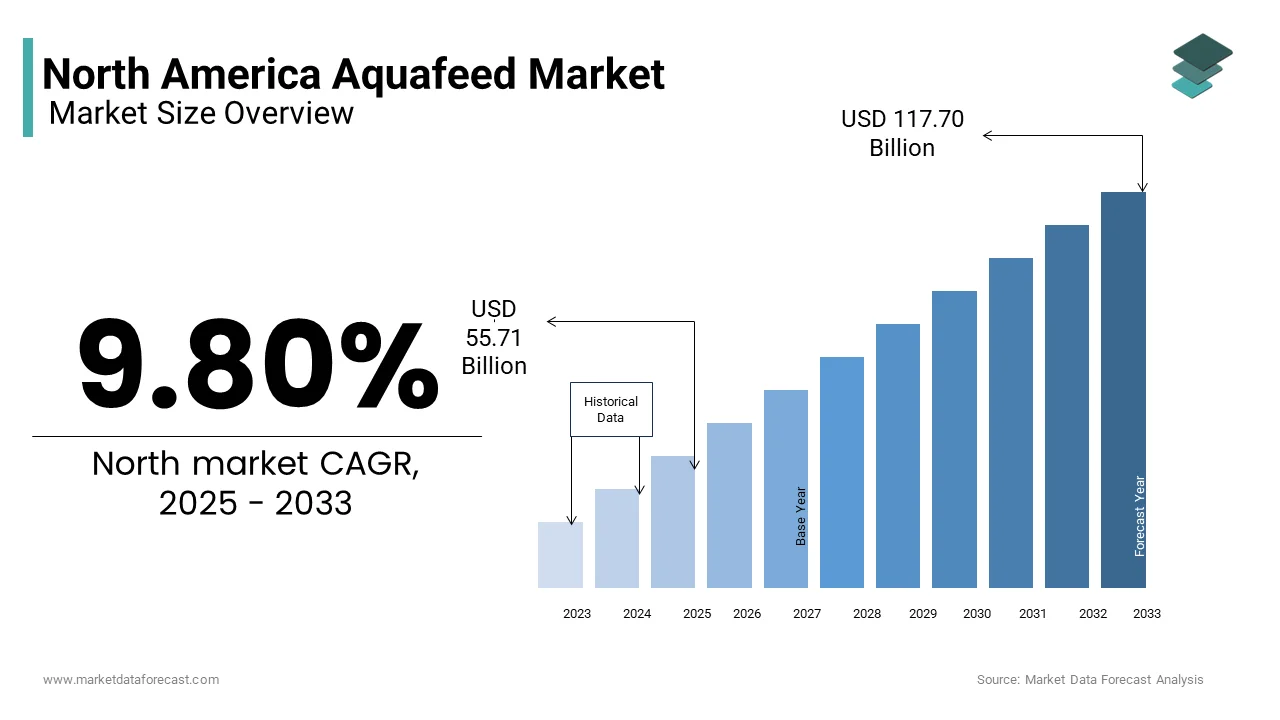
The aquafeed plays a critical role in supporting the region's aquaculture industry by ensuring optimal growth, health, and productivity of farmed aquatic organisms. Aquafeed formulations are designed to meet the specific nutritional requirements of various aquatic species at different life stages, incorporating ingredients like fishmeal, plant-based proteins, oils, vitamins, and minerals.
North America is one of the leading regions in adopting sustainable aquaculture practices, with Canada and the United States being key contributors. As per the Food and Agriculture Organization (FAO), aquaculture contributes significantly to seafood supply in North America, with over 20% of total seafood consumed originating from aquaculture operations. Additionally, regulatory frameworks such as those set by the U.S. Food and Drug Administration (FDA) and Environment Canada ensure that aquafeed products meet stringent safety and environmental standards. Technological advancements in feed formulation and growing investments by major players further support the development of this sector across North America.
MARKET DRIVERS
Rising Consumer Demand for Seafood in North America
The rising consumer demand for seafood, which has been steadily increasing due to growing awareness of its health benefits, is driving the growth of the North American aquafeed market. According to the National Oceanic and Atmospheric Administration (NOAA), per capita seafood consumption in the United States reached approximately 16.9 pounds in 2022, up from 14.5 pounds in 2010. This surge in demand has led to increased pressure on aquaculture producers to scale up their output, which is necessitating greater volumes of aquafeed to sustain farmed aquatic species. Moreover, shifting dietary preferences toward lean protein sources, especially among health-conscious consumers, have further supported seafood consumption trends.
Advancements in Sustainable Feed Formulations
The rapid advancement in sustainable feed formulations with the development of alternatives to traditional marine-based ingredients such as fishmeal and fish oil is additionally to fuel the growth of the North American aquafeed market. These alternatives include plant-based proteins, insect meal, single-cell proteins, and algae-derived oils, which are increasingly being incorporated into aquafeed to reduce dependency on finite ocean resources. According to data from the Global Aquaculture Alliance, approximately 70% of aquafeed produced in North America now includes plant-based ingredients, reflecting a shift toward more sustainable and cost-effective feed solutions. Companies like Cargill Aqua Nutrition and Ridley Inc. have invested heavily in research and development to enhance the nutritional profile and digestibility of these alternative ingredients. In addition, government initiatives promoting sustainable aquaculture practices have played a pivotal role. For example, the U.S. Department of Agriculture (USDA) has funded several research projects aimed at improving aquafeed efficiency and reducing environmental impacts.
MARKET RESTRAINTS
High Cost of Raw Materials for Aquafeed Production
The high cost of raw materials used in feed formulation is restricting the growth of the North American aquafeed market. Ingredients such as fishmeal, fish oil, soybean meal, and specialty additives constitute a substantial portion of production expenses. This volatility in raw material pricing poses financial challenges for aquafeed manufacturers, particularly smaller players who may lack the economies of scale to absorb cost increases. Furthermore, trade dynamics play a crucial role. The United States and Canada rely on imports for certain feedstock inputs, including high-protein plant meals and specialty oils.
Stringent Regulatory Frameworks and Compliance Burdens
The presence of stringent regulatory frameworks governing feed safety, environmental impact, and ingredient sourcing is hindering the growth of the North American aquafeed market. Both the United States and Canada enforce rigorous standards through agencies such as the U.S. Food and Drug Administration (FDA) and the Canadian Food Inspection Agency (CFIA). These regulations aim to ensure feed quality, prevent contamination, and minimize ecological footprints, but they also impose compliance burdens on manufacturers. For instance, the FDA’s Current Good Manufacturing Practice (cGMP) regulations require aquafeed producers to maintain strict quality control protocols throughout the production process. Compliance often necessitates costly facility upgrades, advanced testing infrastructure, and extensive documentation for companies producing novel feed ingredients or functional feeds.
MARKET OPPORTUNITIES
Growth of Recirculating Aquaculture Systems (RAS)
The rapid expansion of recirculating aquaculture systems (RAS), which enable land-based, highly controlled fish farming operations, is setting up new opportunities in the coming years. Unlike traditional open-water aquaculture, RAS facilities use advanced water filtration and treatment technologies to recycle up to 99% of water, making them ideal for urban and inland environments. This shift presents a unique opportunity for aquafeed manufacturers to tailor feed formulations specifically for RAS conditions, where nutrient precision, digestibility, and waste minimization are critical. Customized aquafeeds help optimize fish performance while reducing nitrogen discharge, aligning with environmental sustainability goals. Major players such as Skretting and BioMar have already introduced specialized RAS feed lines to cater to this niche yet rapidly expanding segment. Moreover, the rise of RAS supports local seafood production, reducing reliance on imports and enhancing food security.
Increasing Adoption of Functional Aquafeeds
The growing adoption of functional aquafeeds is amplifying the growth of the North American aquafeed market. Functional feeds are specially formulated to enhance fish immunity, improve gut health, and reduce disease susceptibility, offering benefits beyond basic nutrition. Aquaculture producers are increasingly turning to functional ingredients such as probiotics, prebiotics, organic acids, and immunostimulants to support fish health and performance. In response, aquafeed manufacturers are investing in research and product development. For example, Cargill Aqua Nutrition launched a line of immune-boosting feeds in 2022 tailored for North American trout and salmon farms.
MARKET CHALLENGES
Supply Chain Disruptions and Ingredient Availability
The vulnerability of its supply chain to disruptions and the inconsistent availability of key feed ingredients are likely to restrict the growth of the North American aquafeed market. Aquafeed production relies on a diverse array of raw materials, many of which are sourced globally. Events such as extreme weather, geopolitical conflicts, and logistical bottlenecks can severely impact the timely procurement of essential components like fishmeal, soybean meal, and specialty oils. Additionally, fluctuations in agricultural yields due to climate change pose another layer of risk. Drought conditions in key soy-producing regions such as the Midwest have historically affected supply stability. These supply-side challenges complicate feed formulation strategies and increase operational uncertainties, which is making it difficult for aquafeed companies to maintain consistent product quality and competitive pricing in the North American market.
Environmental and Sustainability Pressures
The environmental concerns and sustainability pressures also impede the growth of the North American aquafeed market. Issues such as deforestation linked to soy cultivation, overfishing for fishmeal and fish oil, and greenhouse gas emissions from feed manufacturing processes are under intense public and regulatory focus. According to the World Resources Institute, soy production remains a leading cause of tropical deforestation, with indirect implications even for North American feed producers who source imported soybean meal. Moreover, carbon footprint regulations are tightening across the region. Balancing economic viability with environmental responsibility remains a complex challenge.
REPORT COVERAGE
| REPORT METRIC | DETAILS |
| Market Size Available | 2025 to 2034 |
| Base Year | 2025 |
| Forecast Period | 2026 to 2034 |
| CAGR | 9.80% |
| Segments Covered | By Animal Type, Ingredient, and Region. |
| Various Analyses Covered | Global, Regional, & Country Level Analysis, Segment-Level Analysis, DROC, PESTLE Analysis, Porter’s Five Forces Analysis, Competitive Landscape, Analyst Overview on Investment Opportunities |
| Regions Covered | India, China, Japan, South Korea, Australia, New Zealand, Thailand, Malaysia, Vietnam, Philippines, Indonesia, Singapore, and the Rest of APAC |
| Market Leaders Profiled | Cargill, Nutreco N.V., VV.V.V, Alltech Inc., AllerAqua A/S, Beneo GmbH, Biomar A/S, Charoen Pokphand Foods Public Company Limited, Coppens International B.V. |
SEGMENTAL ANALYSIS
By Animal Insights
The fish feed segment held a dominant share of the North America aquafeed market in 2024, with the region's extensive fish farming industry, particularly in salmon, trout, and tilapia production. The United States and Canada are major contributors to this trend, with aquaculture operations expanding to meet rising seafood consumption. Additionally, technological advancements in fish feed formulation have enhanced nutrient efficiency and reduced environmental impact. Companies like Skretting and Cargill Aqua Nutrition have introduced high-performance feeds tailored for species-specific growth requirements. The adoption of land-based recirculating aquaculture systems (RAS) is also expected to promote the growth of the segment. These systems require precise feeding strategies to optimize water quality and fish health, increasing demand for specialized aquafeeds.
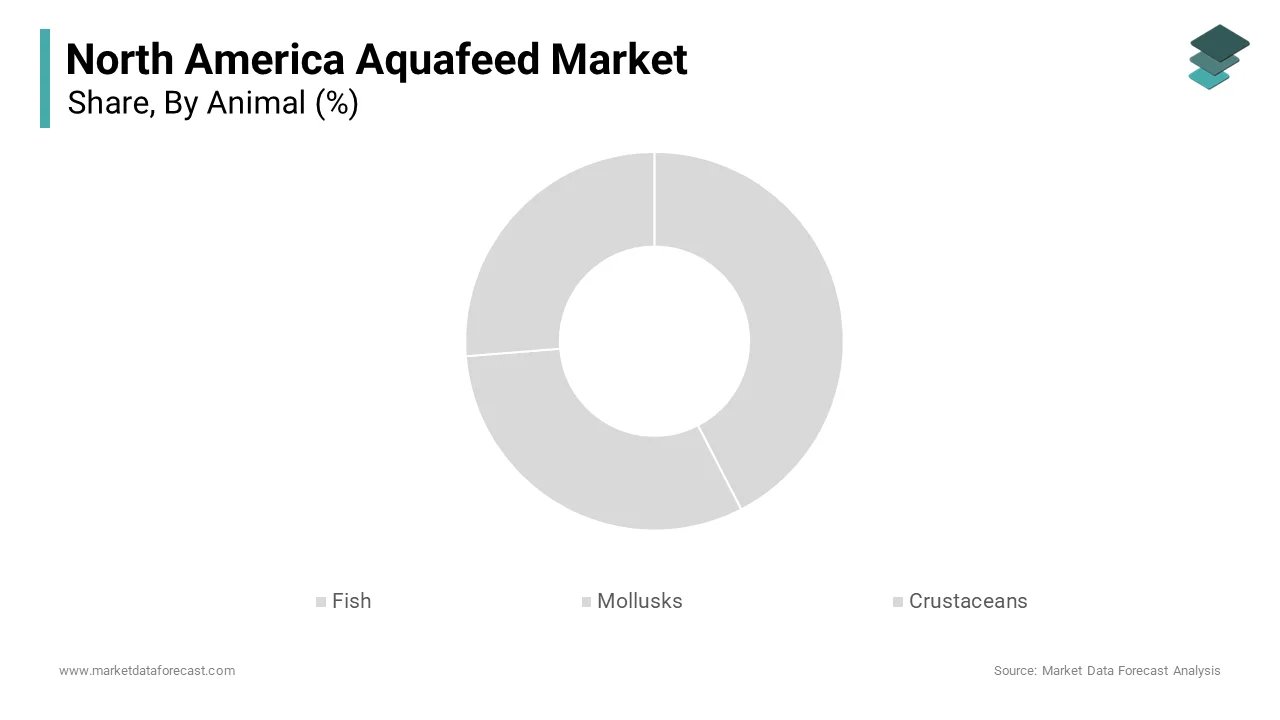
The crustacean feed segment is expected to grow with a CAGR of 7.2% from 2025 to 2033. Shrimp farming has gained traction in recent years, particularly in southern U.S. states such as Texas and Florida, where controlled aquaculture environments enable year-round production. According to the U.S. Department of Agriculture (USDA), domestic shrimp production increased by nearly 18% between 2020 and 2022, contributing to higher crustacean feed consumption. The expansion of indoor shrimp farming facilities using biosecure systems is driving the growth of the segment. These advanced systems rely heavily on high-protein, pathogen-free feeds to ensure optimal growth rates and disease prevention. Furthermore, innovations in crustacean nutrition have led to the development of functional feeds designed to enhance shell strength, immune response, and growth performance.
By Ingredients Insights
The fishmeal segment held 35.3% of the North America aquafeed market share in 2024, with the nutritional demands of carnivorous fish species like salmon and trout, which require high levels of marine proteins to thrive. In Canada, salmon farming accounts for over 80% of aquaculture exports, necessitating large volumes of fishmeal-enriched feeds. Statistics from Fisheries and Oceans Canada indicate that the country imported more than 40,000 metric tons of fishmeal in 2022 to support its aquaculture sector.
Additionally, the continued use of fishmeal in premium aquafeed formulations contributes to its leading market position. The growing emphasis on feed safety and nutritional integrity in aquaculture is also fueling the growth of the segment. Moreover, advancements in sustainable fishmeal sourcing have mitigated concerns about overfishing. The IFFO reports that over 50% of global fishmeal production now comes from by-products of seafood processing, reducing pressure on wild fish stocks.
The supplements segment is expected to grow with a CAGR of 8.1% in the coming years, with the shift toward antibiotic-free aquaculture practices. Regulatory bodies such as the U.S. Food and Drug Administration (FDA) have imposed restrictions on the use of antibiotics in animal feed, prompting aquafeed manufacturers to incorporate natural supplements like probiotics, prebiotics, enzymes, and organic acids. Additionally, rising consumer awareness regarding sustainable and clean-label seafood products has encouraged producers to adopt supplement-rich feed formulations. According to the Global Aquaculture Alliance, over 65% of U.S. consumers consider sustainability certifications when purchasing seafood, pushing aquafeed suppliers to invest in cleaner feed solutions. Moreover, government funding for aquafeed innovation has played a crucial role in accelerating supplement adoption.
COUNTRY ANALYSIS
United States Market Analysis
The United States was the largest contributor with 58.4% of the North American aquafee9.80d market share in 2024, with the expansion of land-based aquaculture systems, particularly recirculating aquaculture systems (RAS). According to the U.S. Department of Commerce, there were over 200 operational RAS farms in the U.S. in 2023, producing species such as Atlantic salmon, tilapia, and trout. Additionally, rising seafood imports and domestic supply constraints have prompted government-backed initiatives to boost local aquaculture output. According to the National Oceanic and Atmospheric Administration (NOAA), the U.S. imports nearly 85% of its seafood with the strategic push to increase domestic production and, consequently, aquafeed consumption.
Canada Market Analysis
Canada was positioned next by capturing 32.4% of the North America aquafeed market share in 2024, with a well-developed salmon aquaculture industry, which produced over 170,000 metric tons of farmed salmon in 2022. This high-volume production necessitates a large-scale aquafeed supply for high-protein diets required by carnivorous fish species. Furthermore, supportive government policies and sustainability mandates have reinforced aquafeed demand. Environment Canada enforces strict guidelines on feed composition and environmental impact, encouraging the use of responsibly sourced ingredients.
COMPETITIVE LANDSCAPE
The competition in the North American aquafeed market is characterized by a mix of established multinational corporations and emerging regional players striving to capture a larger share of the growing industry. Market leaders maintain dominance through continuous innovation, strategic expansions, and a strong focus on sustainability. This has led to intensified R&D activities and product differentiation strategies. Additionally, the integration of digital technologies in feed formulation and production processes is becoming a key differentiator among competitors. Smaller firms often leverage niche expertise or localized production advantages to carve out market space. The evolving regulatory landscape and increasing emphasis on traceability further shape the competitive dynamics by encouraging companies to align with global best practices and strengthen their market positioning.
KEY MARKET PLAYERS
These are some of the market players dominating the North America aquafeed market.
- Cargill
- Nutreco N.V.
- VV.V.V
- Alltech Inc.
- AllerAqua A/S
- Beneo GmbH
- Biomar A/S
- Charoen Pokphand Foods Public Company Limited
- Coppens International B.V.
Top Players In The Market
- Skretting is a global aquafeed manufacturer owned by Nutreco. The company has a strong presence across the U.S. and Canada, supplying high-quality, species-specific feeds for salmon, trout, shrimp, and other farmed aquatic species. Skretting is known for its innovation in feed formulation, emphasizing sustainability and nutritional precision. Its research-driven approach and strategic partnerships with aquaculture producers have significantly contributed to shaping industry standards worldwide.
- Cargill Aqua Nutrition is a division of Cargill Incorporated. With an extensive distribution network and advanced feed production facilities, Cargill plays a pivotal role in meeting the growing demand for sustainable aquafeed solutions in North America. The company focuses on developing alternative protein sources and functional feeds that enhance fish health and performance. Its global reach and commitment to responsible sourcing have reinforced its influence in both regional and international aquafeed markets.
- BioMar Group is another key participant with a growing footprint in North America. BioMar emphasizes reducing environmental impact while maintaining high feed efficiency is known for its eco-conscious feed formulations. The company has invested heavily in expanding its production capabilities and tailoring feeds for local aquaculture needs.
Top Strategies Used By Key Market Participants
Key players in the North American aquafeed market employ several strategies to consolidate their market positions and drive long-term growth. One major strategy is product innovation and formulation advancement, where companies focus on developing high-performance, functional, and sustainable feed solutions tailored to specific aquatic species and farming conditions.
Another crucial approach is strategic partnerships and collaborations with research institutions, government bodies, and aquaculture farms that aim to enhance feed efficiency, promote sustainable practices, and align with evolving consumer preferences for responsibly sourced seafood.
The expansion of production facilities and localized supply chains allows leading manufacturers to improve feed availability, reduce delivery times, and better serve regional aquaculture operators, thereby strengthening their competitive edge in the North American market.
RECENT MARKET NEWS
- In February 2024, Skretting announced the launch of a new line of functional aquafeeds designed specifically for recirculating aquaculture systems (RAS) in North America, which is aiming to support the region’s growing land-based fish farming sector with highly digestible and low-waste formulations.
- In June 2023, Cargill Aqua Nutrition expanded its production capacity at its Wisconsin facility to better serve Midwest aquaculture operations, which is reflecting its commitment to improving regional supply chain efficiency and supporting domestic aquaculture growth.
- In October 2023, BioMar opened a dedicated innovation center in Canada focused on developing alternative protein sources and climate-resilient feed solutions tailored to North American aquaculture needs with its sustainability-driven business model.
- In March 2024, Ridley Inc. entered into a strategic partnership with a U.S.-based biotech firm to incorporate novel microbial proteins into its aquafeed formulations by enhancing nutritional value while reducing reliance on marine-based ingredients.
- In September 2023, NutraBlend introduced a new line of organic-certified aquafeed products targeting premium seafood producers in the U.S., positioning itself as a provider of clean-label, high-quality feed options aligned with evolving consumer preferences.
MARKET SEGMENTATION
This research report on the aquafeed market is segmented and sub-segmented into the following categories.
By End Use
- Fish
- Carp
- Salmon
- Tilapia
- Catfish
- others
- Mollusks
- Shrimp
- Crab
- Others
- Crustaceans
- Oyster
- Mussel
- others
By Additives
- Vitamins
- Minerals
- Antioxidants
- Amino Acids
- Enzymes
- Acidifiers
- Binders
By Country
- US
- Canada
- Mexico