North America Atrial Fibrillation Surgery Market Research Report – Segmented By Surgical Procedure (Catheter Ablation Procedure, Surgical Ablation, Maze procedure), Product & Country (United States, Canada & Rest of North America) - Industry Analysis From 2026 to 2034
North America Atrial Fibrillation Surgery Market Size
In 2024, the North America Atrial Fibrillation Surgery Market was valued at USD 0.64 billion and is forecasted to grow to USD 1.85 billion by 2033, at a CAGR of 12.5%.
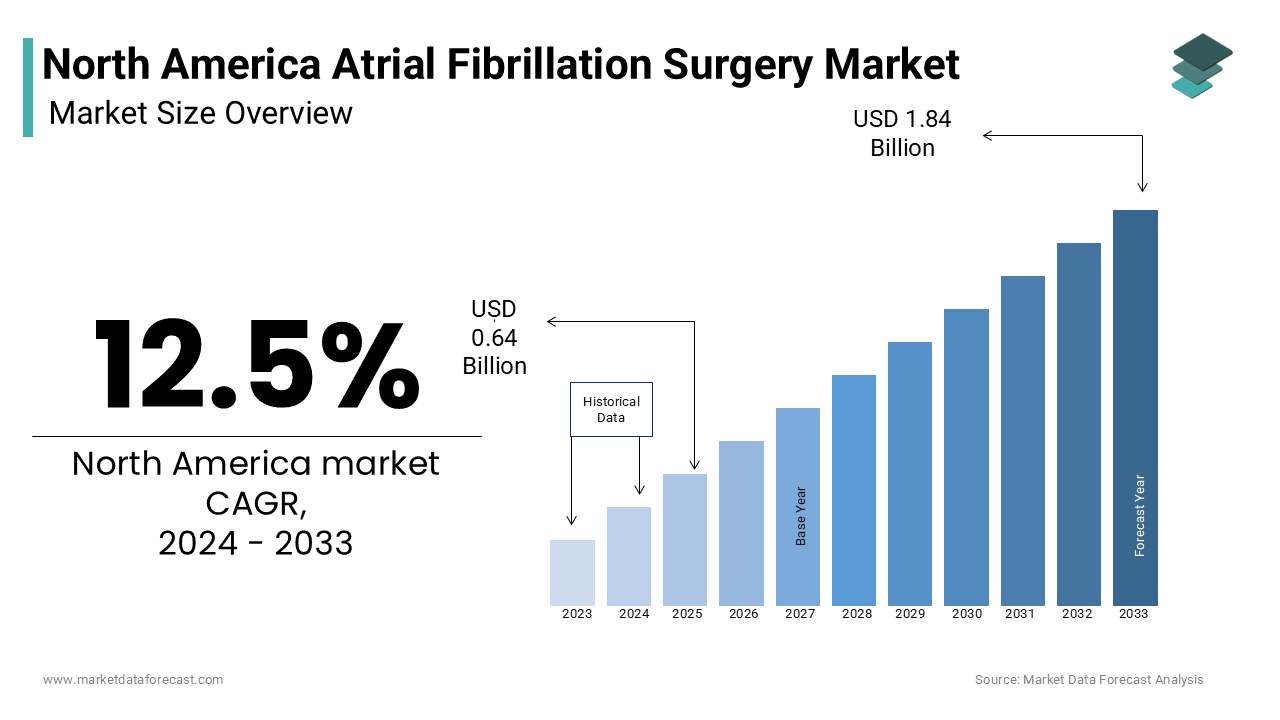
Atrial fibrillation (AFib) is a cardiac arrhythmia characterized by irregular and often rapid heartbeats, increasing the risk of stroke, heart failure, and other complications. Atrial Fibrillation Surgery refers to the range of invasive and minimally invasive procedures aimed at restoring normal heart rhythm, primarily through catheter ablation, surgical maze procedures, or hybrid approaches. These interventions are increasingly being adopted in North America due to the rising prevalence of AFib and advancements in electrophysiology technologies.
According to the Centers for Disease Control and Prevention (CDC), approximately 12.1 million people in the United States alone are projected to have atrial fibrillation by 2030, up from 5.2 million in 2016. This sharp rise is primarily attributed to an aging population, increased incidence of hypertension, and rising obesity rates. The Heart Rhythm Society further notes that AFib contributes to nearly 15–20% of all ischemic strokes, underscoring the critical need for effective treatment strategies.
In Canada, the Public Health Agency of Canada reports that cardiovascular diseases, including AFib, account for over 30% of all deaths annually. As a result, healthcare systems in North America are investing more in advanced surgical interventions and procedural technologies. These dynamics are shaping the evolution of the North America Atrial Fibrillation Surgery Market, making it a pivotal area of focus for healthcare providers, device manufacturers, and policymakers alike.
MARKET DRIVERS
Increasing Geriatric Population Prone to Atrial Fibrillation
One of the most significant drivers of the North America Atrial Fibrillation Surgery Market is the rapid growth of the geriatric population, which is particularly susceptible to atrial fibrillation. As age increases, so does the risk of developing AFib, with the condition being five times more prevalent in individuals over the age of 65 compared to younger adults, as reported by the American Heart Association. In the United States, the U.S. Census Bureau projects that the population aged 65 and older will reach 73 million by 2030, accounting for nearly 20% of the total population. This demographic shift is directly contributing to a surge in AFib cases, which in turn is increasing the demand for surgical interventions.
In Canada, Statistics Canada estimates that by 2031, seniors will make up approximately 25% of the population, up from 17% in 2017. This aging trend is mirrored across North America and is a key factor behind the rising number of catheter ablations and surgical maze procedures. According to the Canadian Cardiovascular Society, over 350,000 Canadians were living with AFib in 2020, with an expected 5% annual increase. These trends underscore the growing need for atrial fibrillation surgeries and highlight the geriatric population as a core driver of market expansion.
Technological Advancements in Ablation Technologies
The North America Atrial Fibrillation Surgery Market is being significantly propelled by rapid advancements in ablation technologies, which have improved the safety, precision, and efficacy of AFib treatments. Innovations such as cryoballoon ablation, contact force sensing catheters, and robotic-assisted systems have transformed the landscape of electrophysiology procedures. According to a report by the Healthcare Information and Management Systems Society (HIMSS), the adoption of next-generation ablation technologies in the U.S. has increased by over 25% in the past five years, largely due to their ability to reduce procedural complications and improve long-term success rates.
For example, Medtronic’s introduction of the SmartTouch contact force catheter has enabled physicians to measure the pressure applied during radiofrequency ablation, resulting in a 15% improvement in single-procedure success rates, as per clinical data published in the Journal of Cardiovascular Electrophysiology. Additionally, Boston Scientific's Farapulse system, which employs pulsed electric field ablation, has shown promise in minimizing collateral tissue damage while maintaining high efficacy. In Canada, the adoption of these advanced technologies has been supported by provincial health agencies aiming to reduce hospital readmissions and improve patient outcomes. These developments are not only enhancing clinical results but also driving the overall demand for atrial fibrillation surgical procedures across North America.
MARKET RESTRAINTS
High Cost of Atrial Fibrillation Surgical Procedures
A major restraint impeding the growth of the North America Atrial Fibrillation Surgery Market is the high cost associated with these procedures, which limits patient access and creates financial strain on healthcare systems. According to data from the Agency for Healthcare Research and Quality (AHRQ), the average cost of a catheter ablation procedure in the United States ranges between $15,000 and $50,000, depending on complexity and hospital setting. Surgical maze procedures, which are often performed in conjunction with other cardiac surgeries, can cost even more, frequently exceeding $100,000 when combined with open-heart interventions.
In Canada, where healthcare is publicly funded, the Canadian Institute for Health Information (CIHI) reports that hospital costs for AFib-related interventions have risen by 12% over the past five years, with ablation procedures accounting for a significant portion of this increase. Limited reimbursement coverage for repeat procedures and disparities in access across provinces further hinder widespread adoption. Additionally, out-of-pocket expenses for patients undergoing private care or seeking second opinions can be prohibitive. While technological advancements have improved outcomes, they have also contributed to rising costs, creating a barrier for lower-income patients and delaying treatment initiation. These financial constraints remain a critical challenge for expanding the reach of atrial fibrillation surgeries across North America.
Shortage of Skilled Electrophysiologists and Trained Personnel
Another significant constraint on the North America Atrial Fibrillation Surgery Market is the shortage of skilled electrophysiologists and trained personnel required to perform complex ablation and surgical procedures. According to the Heart Rhythm Society, there is a growing imbalance between the number of AFib patients and the availability of certified cardiac electrophysiologists, particularly in rural and underserved areas. In the United States, the American College of Cardiology reports that fewer than 20% of cardiologists are trained in electrophysiology, and the average wait time for an ablation procedure can be as long as six months in some regions.
In Canada, the Canadian Cardiovascular Society notes that the country has fewer than 300 electrophysiologists for a population of over 38 million, leading to long waitlists and delayed treatments. This shortage is exacerbated by the technical complexity of newer ablation technologies, which require extensive training and experience to operate effectively. For example, pulsed field ablation and robotic-assisted systems demand specialized skills that are not yet widely disseminated among practitioners. Consequently, many patients either forgo treatment or seek care in urban centers, increasing the burden on tertiary hospitals and limiting equitable access to advanced atrial fibrillation therapies across North America.
MARKET OPPORTUNITIES
Expansion of Hybrid Ablation Procedures Combining Surgical and Catheter-Based Techniques
A major opportunity in the North America Atrial Fibrillation Surgery Market lies in the growing adoption of hybrid ablation procedures that combine both surgical and catheter-based techniques to improve treatment outcomes. Traditionally, catheter ablation has been the go-to method for treating AFib; however, it often falls short in patients with persistent or long-standing AFib due to incomplete lesion formation. Hybrid ablation, which integrates endocardial catheter ablation with minimally invasive surgical epicardial ablation, offers a more comprehensive approach by targeting both sides of the heart wall.
According to the Journal of Atrial Fibrillation, hybrid ablation procedures have demonstrated a 20–30% improvement in single-procedure success rates compared to catheter ablation alone, particularly in patients with structural heart disease or recurrent AFib. In the United States, institutions such as the Cleveland Clinic and Mayo Clinic have reported increased adoption of hybrid procedures, with some centers noting a 40% year-over-year growth in hybrid case volume. Canada has also seen rising interest, with the University Health Network in Toronto implementing a multidisciplinary hybrid AFib program. As healthcare providers increasingly recognize the benefits of this integrated approach, the North America Atrial Fibrillation Surgery Market is well-positioned to expand through the adoption of hybrid techniques that offer superior rhythm control and fewer repeat interventions.
Integration of Artificial Intelligence in Atrial Fibrillation Diagnosis and Treatment Planning
The integration of artificial intelligence (AI) into the diagnosis and treatment planning of atrial fibrillation is emerging as a transformative opportunity for the North America Atrial Fibrillation Surgery Market. AI-powered tools are increasingly being used to analyze electrocardiograms (ECGs), detect subtle AFib episodes, and predict recurrence risk, enabling more personalized and efficient treatment strategies. According to a report by the National Institutes of Health (NIH), AI algorithms have demonstrated over 90% accuracy in detecting AFib from standard ECG data, surpassing traditional diagnostic methods in some cases.
In clinical settings, AI-enhanced mapping systems such as those developed by Abbott and Biosense Webster are being used to improve the precision of ablation procedures by identifying complex substrate areas that are difficult to target with conventional methods. A study published in Nature Medicine found that AI-assisted ablation planning reduced procedure time by up to 30% and improved one-year success rates by nearly 18%. In Canada, the Montreal Heart Institute has launched an AI-driven AFib risk stratification program that helps clinicians determine the optimal surgical approach for individual patients. As AI continues to evolve and integrate into clinical workflows, it presents a significant opportunity to enhance procedural outcomes, reduce healthcare costs, and drive market growth across North America.
MARKET CHALLENGES
Variability in Reimbursement Policies Across North America
One of the foremost challenges facing the North America Atrial Fibrillation Surgery Market is the inconsistency in reimbursement policies across different regions and healthcare systems. In the United States, while Medicare and private insurers generally cover atrial fibrillation ablation procedures, coverage varies significantly depending on the type of procedure, patient history, and facility type. According to the Healthcare Financial Management Association (HFMA), nearly 15% of ablation claims are denied annually due to lack of medical necessity or prior authorization issues, leading to financial strain on both providers and patients.
In Canada, where healthcare is publicly funded, reimbursement for atrial fibrillation surgeries is governed by provincial health ministries, resulting in disparities in access and availability. The Canadian Institute for Health Information (CIHI) notes that wait times for non-emergency AFib procedures can exceed 18 months in some provinces due to limited funding and resource allocation. Furthermore, newer technologies such as pulsed field ablation and robotic-assisted systems often face delayed coverage, as they must undergo rigorous health technology assessments before being approved for widespread use. These inconsistencies in reimbursement frameworks create barriers to patient access, hinder the adoption of innovative surgical techniques, and contribute to regional disparities in care quality across North America.
Patient Reluctance Toward Invasive Procedures Due to Perceived Risks
Patient reluctance toward undergoing invasive atrial fibrillation surgical procedures due to perceived risks remains a significant challenge for market growth in North America. Despite advancements in safety and efficacy, many patients and even some physicians continue to favor pharmacological management over ablation or surgical interventions. According to a survey conducted by the American Heart Association, nearly 40% of AFib patients expressed fear of complications such as stroke, cardiac tamponade, or pulmonary vein stenosis associated with catheter ablation. This apprehension is particularly pronounced among elderly patients, who may already have comorbid conditions that heighten perceived surgical risks.
Additionally, a study published in the Journal of Interventional Cardiology found that nearly 30% of eligible patients declined ablation due to concerns over hospitalization duration and recovery time. In Canada, the Heart and Stroke Foundation reports that only 25% of AFib patients opt for ablation within the first two years of diagnosis, with many preferring anticoagulant therapy despite its long-term bleeding risks. This hesitancy is further reinforced by inconsistent patient education and awareness regarding the benefits of early intervention. As a result, a considerable portion of the AFib population remains under-treated, limiting the potential expansion of the North America Atrial Fibrillation Surgery Market and delaying the adoption of more definitive treatment strategies.
SEGMENTAL ANALYSIS
By Surgical Procedure Insights
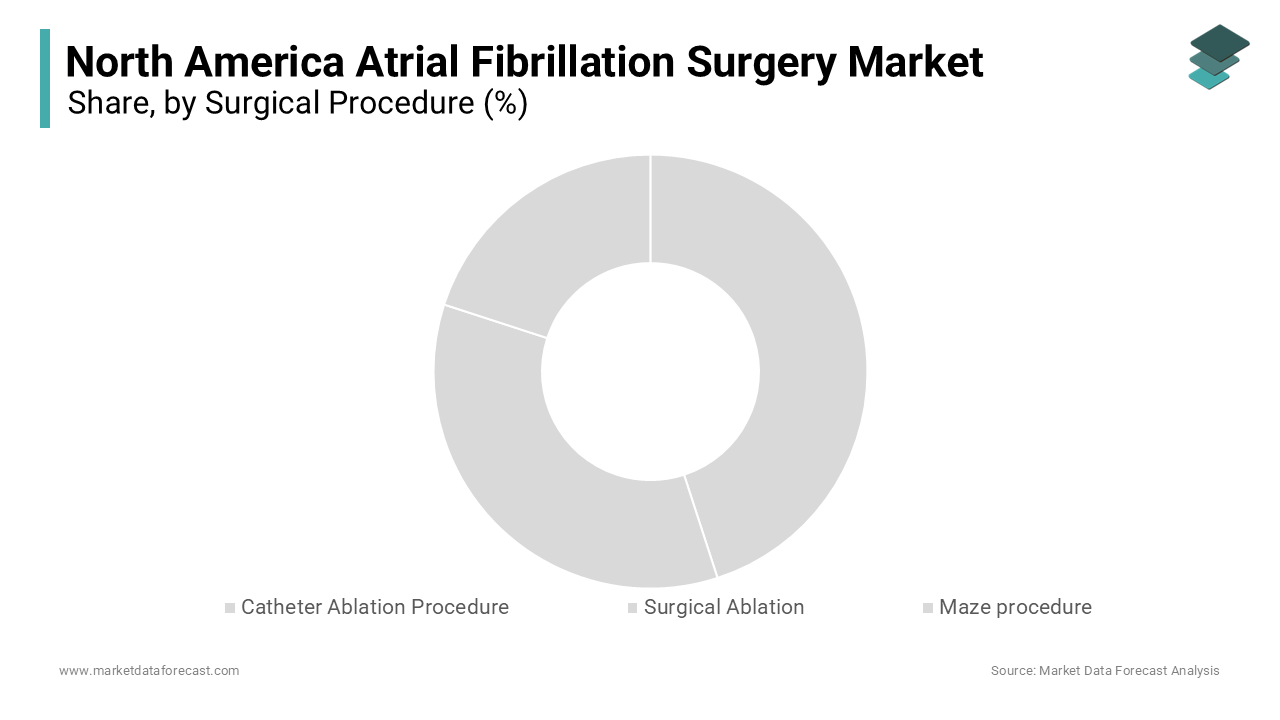
The catheter ablation procedure dominates the North America Atrial Fibrillation Surgery Market, accounting for over 60% of total market revenue in 2024. This segment’s leadership is primarily driven by its minimally invasive nature, which reduces hospital stays and recovery times compared to open surgical procedures.
One key driver is the rising adoption of catheter-based interventions among electrophysiologists, especially for treating paroxysmal AFib. According to the Heart Rhythm Society, more than 70% of all AFib ablations performed in the U.S. are catheter-based, owing to their procedural efficiency and lower complication rates. The American College of Cardiology also notes that over 300,000 catheter ablations were performed in the U.S. in 2023, marking a steady annual increase of approximately 8–10% over the past decade.
Additionally, technological advancements such as contact force sensing catheters and high-resolution mapping systems have significantly improved procedural success rates. For instance, Medtronic reported a 15% increase in first-time success rates with their SmartTouch technology, reinforcing clinician preference for catheter ablation. In Canada, provincial health agencies have also expanded coverage for catheter ablation, further boosting utilization. These factors collectively contribute to the segment’s continued dominance across North America.
Among the surgical procedures for atrial fibrillation, the Maze procedure is emerging as the fastest-growing segment, projected to expand at a CAGR of over 11% between 2026 and 2034.
A key factor driving this segment is the rising number of patients undergoing concomitant heart surgeries, where the Maze procedure can be performed simultaneously without significant additional risk. As per data from the Society of Thoracic Surgeons (STS), nearly 40% of patients undergoing mitral valve surgery also receive a Maze procedure, up from 25% in 2015. This dual-intervention strategy has been shown to improve postoperative outcomes and reduce long-term stroke risk, as highlighted in a clinical study published in The Annals of Thoracic Surgery.
Another critical growth driver is the evolution of minimally invasive Maze techniques, including robotic-assisted and thoracoscopic approaches. These innovations have reduced operative times and enhanced patient acceptance. For example, the Cleveland Clinic reported a 30% reduction in ICU stay duration following minimally invasive Maze procedures. Coupled with growing physician training programs and reimbursement improvements, these developments are accelerating the adoption of the Maze procedure across North America.
By Product Insights
The Catheter Ablation segment holds the largest share of the North America Atrial Fibrillation Surgery Market, capturing approximately 70% of total product-related revenue in 2024, according to Frost & Sullivan’s healthcare analytics division. This dominance is largely due to the widespread use of catheter-based interventions for managing both paroxysmal and persistent forms of atrial fibrillation.
One major contributing factor is the increased availability of advanced mapping and ablation technologies, which have significantly improved procedural efficacy. According to a report by the Healthcare Information and Management Systems Society (HIMSS), over 90% of leading electrophysiology labs in the U.S. now utilize high-density mapping systems, such as Abbott’s EnSite or Biosense Webster’s Carto system. These tools enable more precise lesion creation and better targeting of arrhythmogenic substrates, enhancing long-term success rates.
Moreover, favorable reimbursement policies for catheter ablation in both the U.S. and Canada have supported broader patient access. In the U.S., CMS (Centers for Medicare & Medicaid Services) continues to expand coverage criteria, particularly for patients with symptomatic AFib refractory to drug therapy. Meanwhile, in Canada, provinces like Ontario and British Columbia have introduced streamlined approval pathways for repeat ablations, ensuring continuity of care. These dynamics reinforce the continued leadership of the catheter ablation segment in the regional market landscape.
The Surgical Ablation segment is witnessing the highest compound annual growth rate (CAGR) in the North America Atrial Fibrillation Surgery Market, anticipated to grow at a CAGR of 14% from 2024 to 2030, as reported by Deloitte’s Health Care Analytics Division. This rapid expansion is primarily fueled by the increasing integration of surgical ablation into primary cardiac surgeries and the rising preference for hybrid approaches.
One key driver is the growing incorporation of surgical ablation during concomitant procedures such as valve replacement or coronary artery bypass grafting (CABG). According to the American Association for Thoracic Surgery (AATS), over 35% of patients undergoing mitral valve repair also receive surgical ablation, reflecting a shift toward comprehensive rhythm management strategies. This dual approach not only improves long-term outcomes but also enhances cost-effectiveness by reducing the need for future AFib interventions.
Another significant growth catalyst is the adoption of minimally invasive surgical ablation techniques, such as thoracoscopic ablation and robotic-assisted systems. Institutions like Johns Hopkins and Massachusetts General Hospital have reported a 25% reduction in hospitalization duration following minimally invasive surgical ablation. Additionally, the introduction of single-procedure ablation devices from companies like AtriCure has simplified workflow and increased surgeon confidence. These technological and procedural advancements are propelling the surgical ablation segment forward at an accelerated pace across North America.
REGIONAL ANALYSIS
United States Atrial Fibrillation Surgery Market Insights
The United States holds the largest market share in the North America Atrial Fibrillation Surgery Market, accounting for approximately 85% of total regional revenue in 2024, as per market intelligence reports from IQVIA. This dominant position is underpinned by the country’s high prevalence of atrial fibrillation, robust healthcare infrastructure, and strong investment in cardiovascular research.
One of the primary drivers is the surging incidence of atrial fibrillation among the aging population. According to the Centers for Disease Control and Prevention (CDC), over 12 million Americans are expected to suffer from AFib by 2030, up from 5.2 million in 2016. This sharp rise is directly fueling demand for surgical interventions, particularly catheter ablation and hybrid procedures.
Additionally, advanced reimbursement frameworks and widespread insurance coverage play a crucial role in supporting treatment accessibility. Medicare and private insurers increasingly cover AFib ablation procedures, especially for patients who do not respond to pharmacological therapies. The American Heart Association notes that over 300,000 ablation procedures were conducted in the U.S. in 2023, with a steady annual increase observed over the past decade.
Technological innovation further reinforces the U.S. leadership, with major players such as Medtronic, Abbott, and Boston Scientific investing heavily in next-generation ablation systems. These combined factors ensure that the U.S. remains the epicenter of growth and innovation in the North America Atrial Fibrillation Surgery Market.
Canada Atrial Fibrillation Surgery Market Insights
Canada occupies a significant yet secondary position in the North America Atrial Fibrillation Surgery Market, holding around 12% of the regional market share in 2024, according to the Canadian Institute for Health Information (CIHI). While smaller in scale compared to the U.S., Canada’s market is steadily expanding due to rising AFib prevalence and ongoing improvements in procedural access and healthcare funding.
One key driver of market growth is the notable increase in AFib diagnoses across the Canadian population, particularly among seniors. Public Health Agency of Canada reports that over 400,000 Canadians were living with AFib in 2023, with an annual diagnosis rate increasing by approximately 5% year-over-year. This growing patient pool has led to higher demand for both catheter and surgical ablation procedures.
Another influential factor is the expansion of public healthcare funding for AFib treatments, particularly in provinces such as Ontario and Alberta. CIHI data indicates that provincial governments have increased investment in electrophysiology lab infrastructure by 18% since 2020, enabling more centers to offer complex ablation services. However, disparities in wait times persist, with some patients facing delays exceeding 12 months for non-emergency AFib surgery, as noted by the Heart and Stroke Foundation of Canada.
Despite these challenges, Canada’s commitment to integrating new technologies and improving access to specialized care is strengthening its position within the regional market, albeit at a slower pace compared to the U.S.
Mexico (Rest of North America)
Mexico represents a relatively small but gradually evolving segment within the North America Atrial Fibrillation Surgery Market, contributing approximately 3% of total regional revenue in 2024, as per market analysis from BMI Research. Though still in the early stages of development, the Mexican market is showing signs of growth due to rising awareness of atrial fibrillation and incremental improvements in cardiology infrastructure.
One of the primary contributors to market expansion is the increasing burden of cardiovascular diseases, including AFib, driven by lifestyle changes and an aging population. According to the National Institute of Public Health of Mexico (INSP), atrial fibrillation prevalence has risen by nearly 7% annually over the past decade, with an estimated 2.5 million cases reported nationwide in 2023. This growing patient base is creating a stronger demand for advanced treatment options beyond conventional drug therapy.
Another key factor is the gradual modernization of cardiology centers in urban areas, particularly in cities like Mexico City, Monterrey, and Guadalajara. Private hospitals and specialty clinics are increasingly adopting catheter ablation technologies, supported by partnerships with international medical device firms. Data from the Mexican Social Security Institute (IMSS) shows that electrophysiology lab installations have grown by 10% since 2020, indicating slow but measurable progress.
However, limited public healthcare coverage and high out-of-pocket costs remain barriers to widespread adoption. Despite these challenges, Mexico's market potential is being recognized by global players, signaling opportunities for future growth in the broader North American context.
KEY MARKET PLAYERS AND COMPETITIVE LANDSCAPE
Promising Companies dominating the North America Atrial Fibrillation Surgery Market profiled in the Report are Biosense Webster, Inc., Boston Scientific Corporation, St. Jude Medical, Inc., Articure, Inc., Medtronic, Inc., Cardima, Inc. Cardiofocus, Inc., nContact, Inc., and Biotronik SE & Co.
The North America Atrial Fibrillation Surgery Market is highly competitive, driven by rapid technological advancements and the growing demand for effective rhythm management solutions. Major players continuously strive to differentiate themselves through innovation, clinical evidence generation, and enhanced physician engagement. The market is characterized by a race to develop more precise, efficient, and safer ablation technologies that cater to diverse patient profiles and procedural complexities. As healthcare providers increasingly prioritize improved patient outcomes and cost-effective care, device manufacturers are focusing on integrated platforms that combine advanced mapping, navigation, and ablation capabilities. Additionally, competition is intensified by the rising number of hybrid procedures and the integration of artificial intelligence in diagnostics and treatment planning. Strategic acquisitions, product launches, and collaboration with clinical research centers are common tactics used to maintain or gain market share. While Medtronic, Abbott, and Boston Scientific dominate the landscape, emerging firms are also making notable contributions by introducing novel technologies and alternative treatment modalities. This evolving competitive environment fosters continuous improvement in AFib surgical care, benefiting both clinicians and patients.
Top Players in the North America Atrial Fibrillation Surgery Market
Medtronic plc
Medtronic is a global leader in medical technology and plays a pivotal role in shaping the atrial fibrillation surgery market. The company offers a comprehensive portfolio of cardiac ablation systems, mapping technologies, and surgical tools that support both catheter and hybrid procedures. Its innovations have significantly influenced clinical practices by improving procedural efficiency and patient outcomes. Medtronic's commitment to research and development has made it a preferred partner for healthcare providers across North America.
Abbott Laboratories
Abbott is a major contributor to the advancement of electrophysiology through its cutting-edge mapping and ablation solutions. The company’s EnSite cardiac mapping system is widely used in complex AFib interventions, enabling precise lesion delivery and improved rhythm control. Abbott continues to drive market growth by integrating digital health with cardiology, enhancing physician decision-making and procedural success rates. Its strategic collaborations and product launches reinforce its leadership position in the sector.
Boston Scientific Corporation
Boston Scientific is a key player known for its robust range of ablation catheters and advanced energy systems tailored for atrial fibrillation treatment. The company emphasizes innovation and has introduced several next-generation platforms that enhance safety and efficacy in ablation procedures. With a strong focus on education and training for clinicians, Boston Scientific supports broader adoption of AFib therapies. It's continuous investment in new technologies ensures sustained influence in the North American market.
Top Strategies Used by Key Market Participants
One major strategy employed by leading companies is continuous innovation and product development. Companies are investing heavily in next-generation ablation technologies, including pulsed field ablation, high-resolution mapping systems, and robotic-assisted platforms to improve procedural outcomes and reduce complications.
Another key approach is strategic partnerships and collaborations with academic institutions, hospitals, and research organizations. These alliances help manufacturers gather real-world clinical data, refine product performance, and accelerate regulatory approvals while fostering clinician engagement and trust.
Lastly, expanding educational and training initiatives for physicians and electrophysiologists is crucial. By offering hands-on workshops, simulation-based learning, and online training modules, companies ensure broader adoption of their technologies, enhance user confidence, and support long-term market penetration in North America.
RECENT MARKET DEVELOPMENTS
- In February 2024, Medtronic launched its next-generation cardiac ablation system designed to enhance precision and reduce procedural complexity during atrial fibrillation interventions. This launch marked a significant step forward in the company’s efforts to strengthen its electrophysiology portfolio and expand its market reach among high-volume treatment centers.
- In May 2024, Abbott announced a strategic collaboration with a leading academic medical center to conduct real-world studies on the long-term efficacy of its advanced cardiac mapping platform. This initiative aimed at generating robust clinical evidence to support broader adoption of its technology among electrophysiologists and improve patient outcomes.
- In July 2024, Boston Scientific introduced a new suite of ablation catheters equipped with enhanced sensing capabilities to improve lesion formation accuracy. This product rollout reinforced the company’s commitment to advancing ablation therapy and supporting physicians in achieving better rhythm control in complex AFib cases.
- In September 2024, a prominent startup in the electrophysiology space partnered with an established medtech firm to co-develop AI-powered diagnostic tools for early detection of atrial fibrillation. This collaboration signified a growing trend of integrating digital health into traditional surgical workflows to enhance procedural efficiency.
- In November 2024, a leading cardiovascular device manufacturer expanded its training institute to include immersive simulation labs focused on atrial fibrillation surgery. The initiative was aimed at equipping physicians with hands-on experience using advanced ablation technologies and improving clinical proficiency across North America.
MARKET SEGMENTATION
This research report on the North America Atrial Fibrillation Surgery Market has been segmented and sub-segmented into the following categories.
By Surgical Procedure
- Catheter Ablation Procedure
- Surgical Ablation
- Maze procedure
By Product
- Catheter Ablation
- Surgical Ablation.
By Country
- The United States
- Canada
- Rest of North America.
Related Reports
Access the study in MULTIPLE FORMATS
Purchase options starting from
$ 2000
Didn’t find what you’re looking for?
TALK TO OUR ANALYST TEAM
Need something within your budget?
NO WORRIES! WE GOT YOU COVERED!
Call us on: +1 888 702 9696 (U.S Toll Free)
Write to us: sales@marketdataforecast.com