- Product Description Description
- Table of Contents TOC
- List of Table & Figure LOT
- Get Free Sample PDF Sample PDF
Market Size, 2025
$75.56 BnMarket Estimate, 2026
$78.00 BnMarket Forecast, 2034
$100.59 BnCAGR, 2026–2034
3.23%Executive Summary: North America Bath Remodeling Market
- Market Scope: Comprehensive North American bathroom remodeling industry analysis covering product segments (shower systems, smart bathtubs), material categories (ceramic, natural stone), end-use sectors (residential, commercial), regional leadership frameworks, strategic corporate developments, and competitive landscapes.
- Market Valuation: Valued at USD 75.56 billion (2025), estimated at USD 78.00 billion (2026), and projected to reach USD 100.59 billion by 2034, registering a steady CAGR of 3.23% (2026–2034).
- Primary Growth Drivers: Aging population requiring age-friendly modifications, rising homeownership rates among millennials and Gen X modernizing outdated properties, spa-like wellness preferences, smart bathroom IoT integration, and water-saving fixture sustainability upgrades. Restraints include high renovation costs, skilled labor shortages, and supply chain volatility.
Key Market Segment Metrics (2026–2034)
| Category | Leading Segment / Region (Position) | Fastest-Growing Segment |
|---|---|---|
| By Product & Material Type | Shower systems (captured 35.6% share in 2025) & Ceramic materials (led with 4.8% share for flooring and wall surfaces) | Smart bathtubs (fastest CAGR of 14.8% driven by hydrotherapy and digital connectivity integration) & Natural stone options |
| By End-Use Sector | Residential end-use segment (accounted for a substantial majority share in 2025 via home improvement trends) | Commercial bath remodeling (fastest CAGR of 6.2% through 2034 driven by hospitality and healthcare modernization) |
| By Region / Country | United States (top performer with 89.5% share in 2025 via vast housing stock) & Canada (second prominent player with progressive building codes) | Urban housing markets experiencing peak millennial and Gen X homeownership remodeling surges |
Major Market Players & Market Structure
Market Structure: Highly competitive North American bath fixture and remodeling services ecosystem characterized by multi-brand portfolios spanning value to luxury segments, strategic partnerships with design professionals, and regional acquisitions providing immediate scale.
Key Companies: American Bath Remodeling, Builders FirstSource, Case Design/Remodeling, Dreamstyle Remodeling, Neil Kelly Company, Statewide Remodeling, West Shore Home, Kohler Co., Delta Faucet Company, Moen Incorporated, American Standard Brands, Jacuzzi, Masco Corporation, Ferguson Enterprises, Roca, and TOTO.
North America Bath Remodeling Market Size
The North America bath remodeling market size was valued at USD 75.56 billion in 2025 and is anticipated to reach USD 78.00 billion in 2026 from USD 100.59 billion by 2034, growing at a CAGR of 3.23% during the forecast period from 2026 to 2034.
Bath remodeling is the process of transforming a bathroom's functionality, layout, or style, going beyond simple cosmetic updates to potentially involve structural changes, moving fixtures, or reconfiguring the space for better use, adding value and modernizing the home. Homeowners commonly choose bathroom improvements when planning renovations for their residences. A considerable number of homes across the country exhibit a need for bathroom updates, often due to aging infrastructure or requirements for improved accessibility. The frequency of bathroom renovation projects correlates with the significant portion of the overall housing inventory that consists of older residences. These aging properties often require modernization to meet current safety standards, aesthetic expectations, and functional demands. Furthermore, rising disposable incomes and increased awareness about water-efficient fixtures have amplified investment in premium bathroom upgrades across metropolitan areas such as Los Angeles, New York, and Toronto. Consumer behavior is also being reshaped by technological advancements in smart bathroom systems, including voice-activated showers and digital mirrors, which are gaining traction among younger demographics.
MARKET DRIVERS
Aging Population and Accessibility Needs
The increasing elderly population that necessitates age-friendly bathroom modifications is a primary driver of the North American bath remodeling market. An increasing proportion of older individuals within the general population is influencing residential housing trends. Homeowners are increasingly modifying bathroom spaces to prioritize accessibility and personal autonomy, and a heightened awareness of household safety risks contributes to the demand for specialized interior updates. This trend is further supported by an increase in universal design principles being adopted in both new constructions and remodels. Consequently, contractors and manufacturers are aligning offerings with ADA-compliant products, enhancing both functionality and market appeal. The emphasis on independent living and preventive care is transforming traditional bathroom layouts into safer, more adaptable spaces, ensuring sustained demand in the remodeling industry.
Rising Homeownership and Residential Investment
The sustained rise in homeownership rates and the corresponding increase in residential investment is another factor fuelling the North American bath remodeling market expansion. The national homeownership rate in the U.S. continued a gradual increase in 2023, reflecting a period of sustained demand for housing amidst evolving market conditions and an aging demographic of homeowners. Homeowners are increasingly viewing bathrooms as spaces for personal wellness and luxury, prompting higher spending on aesthetic and functional upgrades. Bathroom renovations are widely observed to enhance a property's appeal and value for potential future sale. Projects focusing on key areas of the home, such as the bathroom, are generally seen as reliable strategies for improving market desirability. Across the market, significant financial resources are being consistently allocated toward various residential upgrades and remodeling projects, and renovations represent a substantial category of discretionary expenditure for many homeowners. An increasing focus on home improvement activities has been noted across diverse housing markets. Millennials and Gen X consumers, now entering peak homeownership years, are particularly active in modernizing outdated bathrooms. Their preference for spa-like experiences, including rainfall showers and heated flooring, is driving innovation and product diversification. This consumer-driven transformation underscores the importance of strategic investment in high-quality materials and smart technologies, which positions the bath remodeling market for continued expansion.
MARKET RESTRAINTS
High Renovation Costs and Economic Uncertainty
The escalating cost of renovation projects, compounded by broader economic uncertainties, is one of the restraints affecting the North American bath remodeling market growth. Undertaking a typical bathroom renovation project can require a substantial investment for homeowners. Projects using higher-end materials and custom designs are often significantly more expensive than modest upgrades. Costs associated with residential improvement projects have shown an upward trend. Disruptions in building material availability have contributed to changing project pricing patterns, and the availability of skilled professionals influences overall remodel costs. The volatility in material prices, especially for fixtures, tiles, and plumbing components, has made budget planning challenging for consumers. Besides, the Federal Reserve's fluctuating interest rate policies have impacted mortgage refinancing activity, reducing available capital for home improvement projects. Economic instability, including inflationary pressures and concerns over recession, has led to cautious spending behaviors, particularly among middle-income households who form the core of the remodeling market. Labor costs have also surged. These combined factors contribute to project delays, reduced scope of work, and lower overall demand for extensive bathroom upgrades, which constrains market growth despite strong underlying interest.
Regulatory and Permitting Challenges
Regulatory complexities and stringent permitting requirements pose a major obstacle to the North American bath remodeling market. Local building codes vary widely across jurisdictions, often requiring specialized knowledge and compliance checks that can delay project timelines and increase costs. Regulatory frameworks establish standardized requirements for essential infrastructure, ensuring that modernized living spaces meet safety and functional expectations. Compliance with building codes often necessitates specific modifications to mechanical and structural systems, especially when working within complex or older architectural contexts. The administrative process of obtaining official authorizations can introduce significant pauses in the workflow of a renovation project. Extended project timelines resulting from procedural wait times often lead to a general increase in the overall costs associated with professional services and site management. In some metropolitan areas, such as New York City and San Francisco, obtaining permits involves multiple inspections and approval stages, deterring homeowners from pursuing major renovations. Additionally, zoning restrictions and environmental regulations, such as those governing water usage and waste disposal, add layers of complexity that may discourage investment. The bureaucratic hurdles disproportionately affect independent remodelers and DIY enthusiasts by limiting the market’s potential for organic growth. The lack of standardized procedures across states and municipalities further exacerbates inefficiencies, creating barriers to scalability and innovation in the remodeling sector.
MARKET OPPORTUNITIES
Smart Bathroom Technologies and IoT Integration
The integration of smart bathroom technologies and Internet of Things (IoT) solutions is an emerging opportunity in the North American bath remodeling market. Innovations such as intelligent toilets, digital shower systems, and voice-controlled mirrors are rapidly gaining traction, particularly among tech-savvy demographics. In North America, companies like Kohler and Lixil are introducing AI-enabled fixtures that offer personalized settings, energy efficiency, and remote monitoring capabilities. These advancements not only enhance user experience but also align with broader sustainability goals, appealing to environmentally conscious consumers. The proliferation of 5G networks and smart home ecosystems, such as Amazon Alexa and Google Nest, is further accelerating adoption. In addition, government incentives for energy-efficient appliances are encouraging homeowners to opt for smart alternatives during renovations. This technological evolution presents manufacturers and contractors with opportunities to differentiate offerings, command premium pricing, and cater to the growing demand for convenience and personalization in residential spaces.
Sustainable and Eco-Friendly Remodeling Solutions
The increasing emphasis on sustainability offers a fresh prospect for the North American bath remodeling market. Consumers are prioritizing eco-friendly materials, water-saving fixtures, and energy-efficient systems, driven by environmental awareness and long-term cost savings. The growing popularity of recycled glass tiles, bamboo vanities, and low-flow toilets reflects this shift in consumer behavior. As per research, a portion of home renovation projects in North America now incorporate green building practices, with bathrooms being a key focus area. Besides, certifications such as LEED for Homes and ENERGY STAR are becoming influential in guiding purchasing decisions. Manufacturers are responding with innovative solutions like greywater recycling systems and solar-powered water heaters, enhancing the appeal of sustainable remodels. In Canada, Natural Resources Canada offers rebates for water-efficient appliances, further stimulating demand. This trend toward environmental responsibility not only supports regulatory compliance but also aligns with the values of younger homeowners, particularly millennials and Gen Z, who are increasingly entering the housing market. The shift to sustainability as a standard consumer expectation is set to boost the remodeling industry, driven by expanded offerings and increased customer interest.
MARKET CHALLENGES
Skilled Labor Shortage and Workforce Constraints
The persistent shortage of skilled labor, which affects project delivery and quality outcomes, is a serious challenge for the North American bath remodeling market. According to sources, a notable share of construction firms struggle to fill craft positions, including plumbers, electricians, and tile setters essential for bathroom renovations. This labor gap has been exacerbated by an aging workforce, with many experienced professionals nearing retirement and insufficient new entrants to replace them. In regions like Ontario and California, where demand for remodeling services is high, wait times for qualified contractors can stretch several months, delaying project initiation and completion. Furthermore, training programs for specialized trades are underfunded and underutilized, limiting workforce development. The lack of diversity in the labor pool also constrains innovation and service accessibility. Hence, the labor shortage will continue to impede market expansion and customer satisfaction, which creates a barrier in an otherwise thriving sector.
Supply Chain Volatility and Material Availability
Supply chain disruptions have emerged as a major constraint in the North American bath remodeling market. They are significantly affecting material availability and pricing stability. The pandemic-induced shocks, coupled with geopolitical tensions and logistical bottlenecks, have led to prolonged lead times and erratic inventory levels. Import dependencies, particularly from Asia, expose the market to port congestion, tariff fluctuations, and manufacturing shutdowns. Moreover, just-in-time delivery models adopted by many suppliers leave little buffer for unexpected delays, forcing contractors to either postpone projects or source inferior alternatives. Regional disparities in material access are also evident, with rural areas experiencing longer wait times compared to urban centers. Manufacturers are increasingly turning to localized sourcing and digital procurement platforms to mitigate risks, but these adaptations require time and capital investment. The unpredictability of raw material flows not only impacts operational efficiency but also erodes consumer confidence, as project timelines become uncertain and costs escalate. Addressing these vulnerabilities demands enhanced resilience strategies, collaborative planning, and diversified supplier networks to ensure continuity and competitiveness in the remodeling landscape.
REPORT COVERAGE
| REPORT METRIC | DETAILS |
| Market Size Available | 20245 to 2034 |
| Base Year | 2025 |
| Forecast Period | 2026 to 2034 |
| CAGR | 3.23% |
| Segments Covered | By Product Type, Material, End-Use and Region. |
| Various Analyses Covered | Global, Regional & Country Level Analysis, Segment-Level Analysis, DROC, PESTLE Analysis, Porter’s Five Forces Analysis, Competitive Landscape, Analyst Overview of Investment Opportunities |
| Regions Covered | U.S., Canada, Rest of North America |
| Market Leaders Profiled | American Bath Remodeling, Builders FirstSource, Case Design/Remodeling, Dreamstyle Remodeling, Neil Kelly Company, Statewide Remodeling, West Shore Home, Kohler Co., Delta Faucet Company, Moen Incorporated, American Standard Brands, Jacuzzi, Masco Corporation, Ferguson Enterprises, Roca, and TOTO |
SEGMENTAL ANALYSIS
By Product Type Insights
The shower systems segment was the largest segment in the North American bath remodeling market by capturing a share of 35.6% in 2025. The prominence of the shower systems segment is attributed to fundamental shifts in consumer preferences and evolving bathroom design philosophies that prioritize functionality and spatial efficiency. The transformation of bathrooms into personal wellness sanctuaries has fundamentally altered shower system demand dynamics. Homeowners are increasingly focusing on transforming bathrooms into restorative, tranquil spaces, with the shower often serving as the primary design element. A significant portion of the real estate market is currently driven by younger and middle-aged generations who are influencing modern renovation trends. The preference for larger, multi-functional shower spaces has driven adoption of advanced systems featuring rainfall heads, body jets, and steam capabilities. There is a growing preference for high-end shower features and premium materials in residential updates. A larger share of bathroom remodeling budgets is being directed toward enhancing the shower area rather than other traditional fixtures. This behavioral shift represents a fundamental reimagining of bathroom utility, where showers transcend basic functionality to become wellness destinations that justify premium pricing and sophisticated design integration. Environmental awareness and regulatory compliance have emerged as powerful catalysts propelling shower system market dominance. Numerous shower designs now meet specific conservation standards aimed at decreasing typical water usage. The availability of these efficient fixtures reflects an industry-wide shift toward managing household resource consumption. A growing number of consumers in the region appear to prioritize plumbing options that emphasize utility efficiency. The convergence of utility savings and environmental stewardship has created unprecedented demand for low-flow shower technologies. Water-efficient shower technology now represents the majority of the market share, showing a shift towards the adoption of these systems over time. Regional governmental regulations, especially in areas with water scarcity, mandate lower flow rates for new installations and renovations, contributing to this trend. Widespread adoption of these efficient systems could significantly reduce overall water consumption across the continent, creating financial benefits for consumers and utility providers. These environmental drivers have transformed shower systems from simple functional components into strategic sustainability investments.
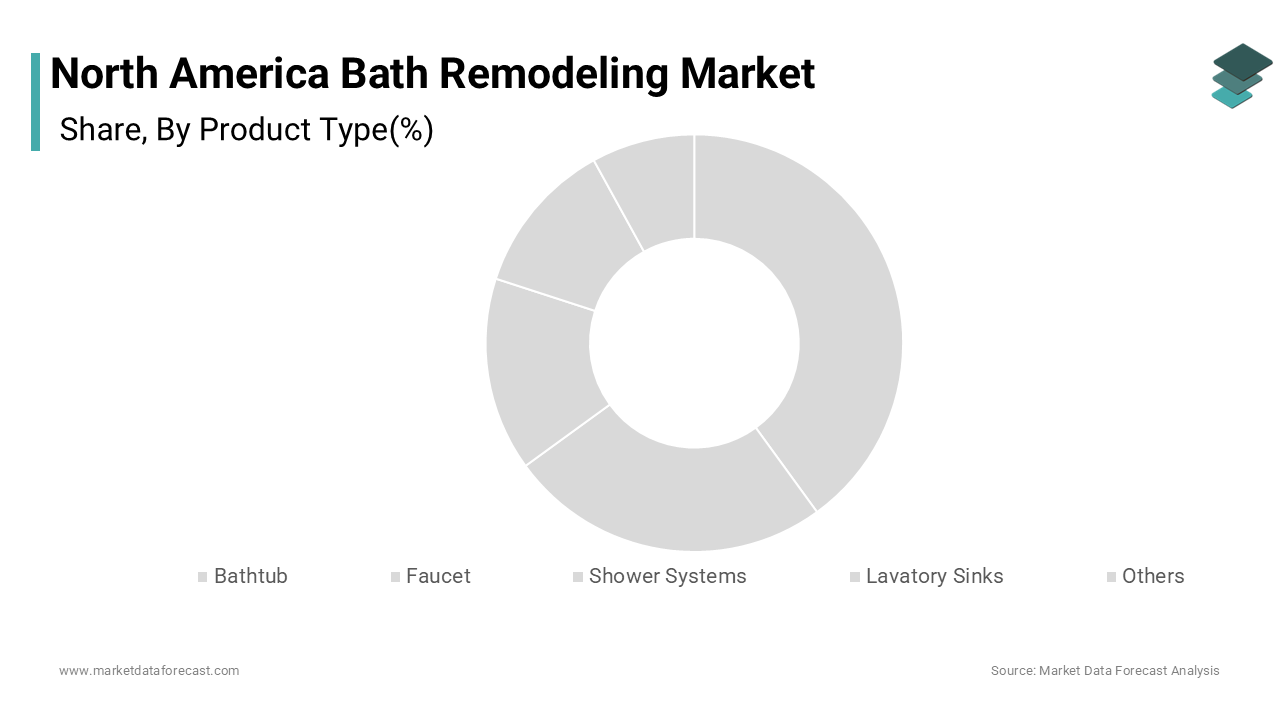
The smart bathtub segment is estimated to register the fastest CAGR of 14.8% from 2026 to 2034. The rapid proliferation of smart bathtub technology segment is propelled by consumers' increasing demand for integrated wellness solutions that combine hydrotherapy with digital connectivity. This explosive expansion reflects the convergence of luxury lifestyle expectations, technological innovation, and health-conscious consumer behavior that characterizes contemporary North American market dynamics. According to sources, smart bathroom fixtures experienced year-over-year growth, with intelligent bathtubs representing the fastest-growing subcategory. These advanced systems incorporate features such as chromotherapy lighting, aromatherapy dispensers, and temperature-controlled water circulation that appeal to health-conscious demographics. The integration of IoT connectivity enables remote temperature control, automated filling systems, and personalized setting configurations that align with modern lifestyle expectations. There is an observable pattern integrating hydrotherapy-based therapeutic methods into home environments. A shift in healthcare suggests clinical effectiveness for water-based treatments in managing certain discomforts. In the residential real estate sector, a trend shows high-end homes increasingly include advanced bathroom installations and wellness amenities like smart bathtubs as standard features. This medical-wellness convergence has transformed bathtubs from passive fixtures into active health management tools, creating substantial market momentum. The smart bathtub segment's exceptional growth trajectory is also fueled by premium pricing strategies and the expanding luxury residential market that readily absorbs high-value bathroom solutions. Installations of technologically integrated bathing fixtures in homes are priced significantly higher than standard alternatives. This premium pricing for sophisticated bathroom technologies corresponds with spending patterns seen in the luxury renovation sector. Households with high spending power tend to allocate a considerable portion of their renovation budgets towards advanced home enhancement projects, including upgraded bathroom technology. The aspirational nature of smart bathtub ownership creates cascading demand effects throughout adjacent market segments, as middle-income consumers seek entry-level smart features. Properties featuring advanced bathroom technologies tend to achieve higher resale values compared to those with traditional fixtures. The integration of intelligent bathtub systems into a growing number of high-end hotel developments suggests a broader trend toward the normalization of smart amenities in personal care spaces. This combination of luxury positioning, investment returns, and aspirational consumption patterns creates sustainable growth momentum that differentiates smart bathtubs from traditional market segments
By Material Insights
The ceramic materials segment led the North American bath remodeling market by holding a 4.8% share in 2025. The main reason behind ceramic's dominance is its exceptional cost-performance ratio that makes high-quality bathroom solutions accessible to broad consumer demographics. Moreover, this enduring supremacy reflects ceramic's optimal balance of affordability, durability, and aesthetic versatility that continues to resonate with diverse consumer segments across residential and commercial applications. Ceramic materials consistently show a lower upfront cost than natural stone alternatives while maintaining comparable aesthetic appeal and functional performance. This price difference has led to ceramic materials being adopted by a large segment of homeowners. Ceramic production is versatile, with diverse product lines catering to various budgets, and their use is common in renovation projects. The established infrastructure for producing and distributing ceramic ensures reliable availability and competitive pricing, and existing installation methods for ceramic generally result in lower labor costs compared to specialized materials. These economic advantages create a self-reinforcing cycle of market accessibility that sustains ceramic's leadership position. This segment is also supported by its unparalleled design flexibility and continuous aesthetic innovation that meets evolving consumer preferences for personalized bathroom environments. Also, the design diversity enables ceramic to serve both classic and modern aesthetic preferences, with digital printing technologies allowing custom artwork and photographic reproductions that command premium pricing. The material's ability to mimic expensive natural materials like marble and granite at fraction of the cost has particularly resonated with budget-conscious consumers seeking luxury appearances. Furthermore, the introduction of large-format ceramic panels, measuring up to 60x120 inches, has eliminated traditional grout line concerns while enabling seamless wall and floor installations. This continuous innovation in design capabilities ensures ceramic's relevance across all market segments and design philosophies.
The natural stone materials segment is anticipated to witness the fastest CAGR of 8.9% during the forecast period. The exceptional growth rate of natural stone segment is fuelled by its association with luxury living and premium market positioning that appeals to affluent consumer segments. This accelerated expansion reflects evolving consumer preferences for authentic luxury materials and the successful positioning of stone as a premium differentiator in competitive bathroom design markets. A majority of residential projects with high material specifications are integrating natural stone into bathroom renovations. This trend marks a noticeable increase compared to previous observation periods. The rise in using natural materials within these renovation projects aligns with a broader pattern observed in the luxury home market. Across this market segment, a significant portion of renovations prioritize the incorporation of natural materials. Stone's inherent uniqueness, characterized by distinctive veining patterns and organic color variations, provides irreplaceable aesthetic value that synthetic alternatives cannot replicate. Homeowners frequently encounter a significant difference in the initial cost of materials when choosing between natural stone and ceramic for bathroom installations. There is a sustained demand for natural stone, indicating consumers perceive its high investment value in a home. The material's durability and longevity, when properly maintained, suggest long-term value. Properties featuring natural stone in bathrooms often realize a higher resale value, offering an economic incentive for homeowners to invest in premium materials. Aspirational ownership of luxury materials, especially within certain demographic groups, supports strong demand despite the higher initial cost of natural stone. Advanced manufacturing technologies and improved installation methodologies have significantly enhanced natural stone's commercial viability, driving rapid market expansion through increased accessibility and reduced project complexity. The technological improvements have enabled complex design executions, including curved surfaces, integrated drainage systems, and custom-fit installations that were previously cost-prohibitive. Digital templating systems have reduced measurement errors, significantly decreasing rework requirements and associated costs. Installation efficiency gains, with experienced contractors now completing stone bathroom projects 30% faster than five years ago, have made the material more attractive to time-sensitive renovation schedules. The development of thinner stone panels, measuring just 6-12 millimeters thick, has eliminated traditional structural reinforcement requirements while maintaining aesthetic impact. These technological and professional development advances have transformed natural stone from a niche luxury material into a mainstream premium option, expanding market reach beyond traditional high-end applications.
By End Use Insights
The residential segment dominated the North American bath remodeling market by accounting for a substantial share in 2025. The dominance of te residential segment is driven by North America's extensive aging housing inventory that requires systematic modernization to meet contemporary safety, efficiency, and aesthetic standards. This shows the fundamental role that bathroom renovations play in residential property enhancement and the consistent demand generated by aging housing stock requiring modernization. According to sources, a portion of American homes were constructed before 1980, with many featuring outdated bathroom infrastructure that necessitates comprehensive renovation. These properties often lack modern amenities such as adequate electrical systems, updated plumbing codes compliance, and accessibility features required by contemporary living standards. Regional variations are particularly pronounced, with the Northeast and Midwest regions containing the highest concentration of pre-1980 housing stock, according to Department of Housing and Urban Development data. Additionally, the American Society of Home Inspectors identifies bathroom-related infrastructure as the second most common deficiency in home inspections, following only roofing issues. This systematic need for modernization creates a perpetual demand cycle that sustains residential market dominance. Residential market dominance is further reinforced by prevailing homeownership patterns and the strategic role that bathroom renovations play in property value optimization. These homeowners increasingly view bathroom renovations as essential investments that deliver substantial return on investment. The psychological impact of bathroom quality on property perception cannot be understated, with real estate market analysis indicating that homes with updated bathrooms sell faster than those with outdated facilities. Multi-generational housing trends create additional demand for bathroom modifications that accommodate diverse age groups and accessibility requirements. First-time homebuyers often inherit properties requiring immediate bathroom upgrades to meet basic livability standards. The strategic importance of bathroom quality in real estate transactions ensures consistent residential demand that transcends economic cycles, with homeowners prioritizing bathroom investments even during periods of economic uncertainty.
The commercial bath remodeling segment is likely to experience the fastest CAGR of 6.2% from 2026 to 2034 due to evolving hospitality standards, healthcare facility modernization, and corporate wellness initiatives that prioritize user experience and operational efficiency. The commercial bath remodeling’s rapid expansion is also propelled by the hospitality industry's intensive focus on guest experience optimization and competitive differentiation through sophisticated bathroom environments. Luxury hotel developments consistently feature premium bathroom installations that incorporate spa-like amenities and smart technologies. The rise of boutique hotel concepts has intensified competition for distinctive guest experiences, with bathroom quality serving as a key differentiator that influences booking decisions and online reviews. The millennial travel demographic demonstrates particular sensitivity to bathroom quality and modern amenities when evaluating accommodation options. Corporate hospitality facilities, including conference centers and executive suites, are increasingly adopting residential-style bathroom designs that reflect premium service standards. This hospitality-driven demand creates substantial commercial market opportunities. Healthcare facility modernization is another major growth enabler for commercial bath remodeling, driven by stringent regulatory requirements and evolving patient-centered care philosophies that emphasize dignity, safety, and therapeutic environments. Healthcare regulations drive the need for facilities to update restroom facilities to meet modern standards for accessibility and hygiene. Modernization of bathrooms represents a significant portion of the capital budgets allocated for facility infrastructure. The emphasis on patient-centered care has increased the focus on bathroom design as a factor in overall patient satisfaction. Specialized clinical environments, such as those for behavioral health, necessitate restroom configurations that prioritize patient safety and therapeutic goals. An aging demographic creates a sustained need for bathroom modifications that address the specific physical requirements of older adults. Investment in healthcare construction continues to prioritize restroom infrastructure to align with evolving clinical expectations and patient needs. These healthcare-driven requirements ensure sustained commercial market growth that aligns with broader demographic and regulatory trends.
REGIONAL ANALYSIS
United States Bath Remodeling Market Analysis
The United States was the top performer in the North American bath remodeling market by capturing a share of 89.5% in 2025. This overwhelming market leadership reflects the country's vast residential housing stock, robust construction industry, and sophisticated consumer demand for premium bathroom solutions that drive both volume and value growth. The growth of the U.S. market is also because of its massive housing inventory and consistent renovation activity that creates perpetual demand for bathroom modernization services. A substantial number of dwelling places exist across the country, with a majority inhabited by property owners who consistently allocate financial resources towards enhancing and maintaining their residences. An average amount is spent each year on these upkeep and upgrade activities, and among various types of enhancements, certain indoor space renovations represent one of the more significant categories of expense, though not the largest. Regional market dynamics vary significantly, with states like California, Florida, and Texas generating disproportionate market activity due to large populations and active real estate markets. As per sources, bathroom renovations account for a portion of all residential improvement projects, translating to millions of bathroom remodels annually. Economic factors, including historically low mortgage rates and rising home equity values, have enabled homeowners to access capital for premium bathroom upgrades. The presence of sophisticated distribution networks, including Home Depot, Lowe's, and numerous specialty suppliers, ensures comprehensive market coverage and product availability. Additionally, the United States hosts the majority of North American bathroom fixture manufacturers, including Kohler, American Standard, and Moen, creating integrated supply chains that support both domestic and export markets. This combination of market scale, consumer sophistication, and industrial infrastructure establishes the United States as the uncontested leader in North American bath remodeling activities.
Canada Bath Remodeling Market Analysis
Canada was the next prominent player in the North American bath remodeling market. The expansion of the Canadian market is credited to the country's concentrated urban population and ongoing housing modernization requirements that create consistent demand for bathroom renovation services. This exhibits Canada's developed housing sector, progressive building codes, and consumer preferences for high-quality bathroom solutions that align with North American market standards. A significant majority of occupied residences across the country are owned, leading to consistent demand for home improvement services. Homeowners demonstrate a reliable pattern of investing funds annually in maintaining and enhancing their properties. Discretionary spending within the renovation sector shows a notable focus on bathroom upgrades. Renovation activity is not uniformly distributed across the nation; specific regional markets consistently contribute a disproportionately large share of total remodeling projects. Canadian building codes, particularly in provinces like Ontario and Quebec, mandate accessibility standards that drive demand for modern bathroom configurations and safety features. Economic factors, including government incentives for energy-efficient renovations and rising home values in major metropolitan areas, support continued market growth. The presence of major North American manufacturers and specialized Canadian distributors ensures product availability and competitive pricing. Additionally, Canada's climate considerations necessitate specific bathroom solutions that address humidity control and energy efficiency, creating niche market opportunities for specialized products. These factors combine to establish Canada as a significant but distinct component of the broader North American bath remodeling landscape.
COMPETITIVE LANDSCAPE
The North America bath remodeling market exhibits intense competitive dynamics characterized by the presence of established multinational corporations, regional specialists, and emerging technology-focused companies. Market leaders leverage brand recognition, extensive distribution networks, and comprehensive product portfolios to maintain dominant positions, while smaller players differentiate through niche specialization and localized service excellence. The competitive landscape is increasingly influenced by technological innovation, with smart bathroom solutions and sustainable products becoming key differentiators. Price competition remains significant across value segments, though premium brands successfully command higher margins through design excellence and advanced functionality. Distribution channel evolution, including e-commerce growth and direct-to-consumer models, has altered traditional competitive dynamics and created new market access opportunities. Regional variations in competitive intensity reflect local market conditions, regulatory requirements, and consumer preferences. Contractor relationships and professional specification influence play crucial roles in determining market share, particularly in commercial segments. The market's fragmented nature allows specialized players to compete effectively against larger corporations through superior customer service and localized expertise. Innovation cycles accelerate competitive pressure, requiring continuous investment in research and development to maintain relevance. Brand loyalty remains strong among established customers, though younger demographics demonstrate greater willingness to explore emerging brands and technologies.
KEY MARKET PLAYERS
Some of the companies that are playing a dominating role in the North America bath remodeling market include
- American Bath Remodeling
- Builders FirstSource
- Case Design/Remodeling
- Dreamstyle Remodeling
- Neil Kelly Company
- Statewide Remodeling
- West Shore Home
- Kohler Co.
- Delta Faucet Company
- Moen Incorporated
- American Standard Brands
- Jacuzzi
- Masco Corporation
- Ferguson Enterprises
- Roca
- TOTO
Top Players in the North America Bath Remodeling Market
Kohler Co.
Kohler Co. stands as a preeminent force in the North American bath remodeling market, leveraging over 145 years of manufacturing excellence and design innovation. The company's comprehensive portfolio spans luxury fixtures, smart bathroom technologies, and complete renovation solutions that cater to both residential and commercial segments. Kohler's commitment to craftsmanship and technological advancement has established it as a preferred choice among architects, designers, and discerning homeowners. The company's extensive distribution network, encompassing authorized dealers, home improvement retailers, and specialty showrooms, ensures widespread market penetration. Kohler's investment in research and development has yielded breakthrough innovations in water efficiency, accessibility features, and smart connectivity that align with contemporary consumer preferences. Their holistic approach to bathroom design, offering everything from conceptual planning to installation support, differentiates them from competitors and reinforces their market leadership position.
LIXIL Corporation
LIXIL Corporation maintains a formidable presence in the North American bath remodeling market through its diverse brand portfolio and global innovation capabilities. The company's American Standard, DXV, and GROHE brands collectively address varied market segments, from value-conscious consumers to luxury market enthusiasts. LIXIL's strategic focus on sustainable solutions and water conservation technologies positions them favorably in environmentally conscious market segments. Their commitment to universal design principles ensures accessibility compliance while maintaining aesthetic appeal across product lines. The corporation's integrated approach combines manufacturing excellence with comprehensive customer support services, including design consultation and professional installation networks. LIXIL's global research capabilities enable rapid adaptation of international design trends and technological innovations to North American market preferences. Their emphasis on digital transformation and e-commerce integration has strengthened customer engagement and streamlined purchasing processes, enhancing overall market competitiveness.
Masco Corporation
Masco Corporation commands significant influence in the North American bath remodeling market through its diversified portfolio of renowned brands including Delta, Hansgrohe, and KraftMaid. The company's market strength derives from its ability to address multiple consumer segments through distinct brand positioning strategies that span value, mid-tier, and luxury market categories. Masco's commitment to innovation is evident in their development of smart bathroom technologies, water-efficient fixtures, and contemporary design solutions that resonate with evolving consumer preferences. Their extensive manufacturing capabilities ensure consistent product availability and quality control across diverse product categories. The corporation's strategic investments in digital platforms and customer experience enhancement have modernized traditional distribution channels while expanding direct-to-consumer engagement opportunities. Masco's focus on sustainability and environmental responsibility aligns with regulatory requirements and consumer expectations, strengthening brand loyalty and market positioning. Their comprehensive service ecosystem, encompassing design support, installation services, and warranty programs, creates customer retention and market differentiation.
Top Strategies Used by Key Market Participants
Strategic Partnerships and Collaborations
Leading players in the North American bath remodeling market actively pursue strategic partnerships with design professionals, contractors, and technology companies to expand their market reach and enhance service offerings. These collaborations enable manufacturers to integrate complementary capabilities, access new customer segments, and develop innovative solutions that address evolving market demands. Partnerships with interior designers and architects facilitate early specification influence, ensuring brand consideration during project planning phases. Technology collaborations with smart home platform providers enable seamless integration of bathroom fixtures with broader home automation systems. These strategic alliances also encompass supply chain optimization initiatives that improve delivery efficiency and reduce costs. Joint marketing efforts with complementary businesses expand brand visibility and customer engagement opportunities. Additionally, partnerships with installation professionals ensure quality execution and customer satisfaction, reinforcing brand reputation and loyalty.
Product Innovation and Technology Integration
Market leaders consistently invest in research and development to introduce innovative products that differentiate their offerings and capture premium market segments. This strategy encompasses the development of smart bathroom technologies, sustainable materials, and ergonomic designs that address contemporary consumer preferences. Companies focus on integrating Internet of Things connectivity, voice control capabilities, and automated features that enhance user experience and convenience. Innovation efforts also target water efficiency improvements, accessibility enhancements, and health-monitoring functionalities that align with regulatory requirements and social responsibility initiatives. The development of customizable solutions allows manufacturers to address diverse aesthetic preferences and design requirements. Advanced materials research enables the creation of durable, low-maintenance products that reduce lifecycle costs for consumers. These innovation strategies not only command premium pricing but also establish technological leadership positions that create competitive advantages.
Market Expansion and Geographic Penetration
Key players actively pursue market expansion strategies that include geographic penetration, channel diversification, and segment targeting to maximize revenue opportunities. Companies establish regional distribution centers and localized service networks to improve customer accessibility and response times. Geographic expansion efforts focus on emerging markets with growing renovation demand and increasing disposable incomes. Channel diversification includes e-commerce platform development, direct-to-consumer sales models, and specialty retail partnerships that complement traditional distribution networks. Market leaders also pursue segment expansion by developing product lines that address previously underserved market categories, including budget-conscious consumers and luxury market enthusiasts. International expansion strategies leverage existing brand recognition and manufacturing capabilities to enter adjacent markets. Strategic acquisitions of regional players provide immediate market presence and established customer relationships. These expansion initiatives enable companies to achieve economies of scale while reducing market concentration risks.
MARKET SEGMENTATION
This research report on the North America bath remodeling market has been segmented and sub–segmented into the following categories.
By Product Type
- Bathtub
- Faucet
- Shower Systems
- Lavatory Sinks
- Others
By Material
- Stone
- Ceramic
- Glass
- Metal
- Others
By End Use
- Residential
- Commercial
By Country
- U.S.
- Canada
- Rest of North America