- Product Description Description
- Table of Contents TOC
- List of Table & Figure LOT
- Get Free Sample PDF Sample PDF
Market Size, 2025
$341.36 MnMarket Estimate, 2026
$390.17 MnMarket Forecast, 2034
$1,136 MnCAGR, 2026–2034
14.30%Executive Summary: North America Bioherbicides Market
- Market Scope: Comprehensive North America bioherbicides market analysis covering organic food demand, synthetic herbicide regulations, glyphosate-resistant weed management, microbial formulations, and regenerative agriculture trends.
- Market Valuation: Valued at USD 341.36 million (2025), estimated at USD 390.17 million (2026), and projected to reach USD 1,136.66 million by 2034, registering a strong CAGR of 14.3% (2026–2034).
- Primary Growth Drivers: Escalating consumer demand for organic foods, stringent regulatory restrictions on synthetic chemicals, glyphosates resistance management, microbial integration into pest management, and digital procurement growth. Key challenges include field efficacy variance and high raw material costs.
Key Market Segment Metrics (2026–2034)
| Category | Leading Segment (Position) | Fastest-Growing Segment |
|---|---|---|
| By Application, Type & Mode | Grains and cereals (held largest application share at 38.2% in 2024) & Microbial-based bioherbicides (dominate product types) & Foliar spraying (accounts for over 60% of applications) | Fruits and vegetables (fastest-growing category with a projected CAGR of 12.7% through 2033) & Digital procurement channels (growing over 32% annually) |
| By Region / Country | United States (captured 78.7% of regional revenue in 2025, leading adoption particularly in California, Iowa, and Nebraska) | North American specialized specialty crops and non-GMO row crop production sectors |
Major Market Players & Market Structure
Market Structure: Highly competitive North American agricultural biotechnology landscape featuring biological innovators, chemical giants, and research-driven startups driving microbial enhancements, gene-editing partnerships, and botanical formulations.
Key Companies: Marrone Bio Innovations Inc., BASF SE, Corteva Agriscience, Emery Oleochemicals, Deer Creek Holdings, Verdesian Life Sciences LLC, EcoPesticides International Inc., MycoLogic Inc., Innovative Biologicals, Certified Organics Australia Pty Ltd, Bioherbicides Australia Pty Ltd., Hindustan Bio-tech, Special Biochem Pvt. Ltd., Certis USA, and UPL Limited.
North America Bioherbicides Market Size
The North American bioherbicides market size was valued at USD 341.36 million in 2025 and is anticipated to reach a valuation of USD 390.17 million in 2026 and USD 1,136.66 million by 2034, growing at a CAGR of 14.3%, from 2026 to 2034.
The North American bioherbicides market refers to the segment of agricultural biotechnology that focuses on developing naturally derived, eco-friendly herbicidal products designed to control weeds without the use of synthetic chemicals. These bioherbicides are primarily based on microbial agents such as bacteria, fungi, or plant extracts and essential oils that inhibit weed germination, growth, or seed production. The market spans across the United States, Canada, and Mexico, with applications in both conventional and organic farming systems.
As per the U.S. Department of Agriculture (USDA), over 22,000 certified organic farms were operating in the U.S. in 2023, reflecting a growing shift toward sustainable crop management practices that avoid synthetic herbicides. With rising concerns about environmental pollution, soil degradation, and regulatory restrictions on chemical herbicides, bioherbicides are gaining traction as a viable solution for integrated pest management strategies.
MARKET DRIVERS
Increasing Consumer Demand for Organic Food Products
One of the primary drivers fueling the growth of the North American bioherbicides market is the rising consumer demand for organic food products. This behavioral shift has prompted farmers and agribusinesses to transition from conventional to organic farming systems, which inherently rely on natural inputs like bioherbicides for weed control.
This robust growth incentivizes agricultural producers to adopt compliant crop protection methods, including microbial and biochemical herbicides. Furthermore, major retailers such as Whole Foods and Kroger have expanded their private-label organic product lines, increasing supply chain pressure on growers to eliminate synthetic herbicides.
Regulatory Support and Environmental Policy Frameworks
Another significant driver of the North American bioherbicides market is the presence of favorable regulatory frameworks aimed at reducing reliance on synthetic herbicides and promoting sustainable agricultural practices. Governments in both the U.S. and Canada have implemented policies that encourage the use of biological crop protection products through subsidies, research funding, and certification assistance. For instance, the U.S. Department of Agriculture's (USDA) National Organic Program (NOP) mandates that organic-certified farms refrain from using synthetic herbicides, directly boosting the demand for bioherbicides.
Additionally, Environment and Climate Change Canada reported a reduction in water contamination levels linked to herbicides between 2018 and 2023, partially attributed to the substitution of synthetic herbicides with bio-based alternatives. These policy interventions not only reduce the environmental footprint of farming but also create a conducive environment for the proliferation of bioherbicide manufacturers and suppliers across North America.
MARKET RESTRAINTS
High Cost and Limited Availability of Raw Materials
A key restraint affecting the North American bioherbicides market is the relatively high cost associated with raw material sourcing and production processes. Unlike synthetic herbicides, bioherbicides are typically derived from living organisms, plant extracts, or fermentation-based compounds, which can be expensive to cultivate, harvest, and formulate at scale.
Additionally, the availability of high-quality raw materials is often inconsistent, particularly in regions where microbial strains or botanical sources may be limited or seasonally variable. These constraints hinder the large-scale production of bioherbicides and slow down their adoption in mainstream agriculture, especially among budget-conscious commercial growers who prioritize cost efficiency over sustainability.
Lack of Awareness and Technical Knowledge Among Farmers
Another notable challenge impeding the growth of the North American bioherbicides market is the insufficient awareness and technical understanding among traditional farmers regarding the benefits and application methods of bioherbicides. While organic farming practices are gaining traction, many conventional farmers remain hesitant due to misconceptions about efficacy, consistency, and weed control performance compared to synthetic alternatives.
Moreover, extension services and educational programs focused on biological crop protection remain underdeveloped in certain regions. This knowledge gap contributes to slower adoption rates and restricts the broader integration of bioherbicides within mainstream agricultural operations across North America.
MARKET OPPORTUNITY
Expansion of Regenerative Agriculture Practices
One of the most promising opportunities for the North American bioherbicides market lies in the rapid expansion of regenerative agriculture, a holistic farming approach aimed at restoring soil health, enhancing biodiversity, and sequestering carbon. Given that bioherbicides align with the principles of regenerative farming, they are increasingly being integrated into soil conservation and weed management strategies. This trend underscores a growing alignment between corporate sustainability goals and biological input adoption, creating a fertile ground for bioherbicide producers to expand their market reach.
Urban Farming and Green Infrastructure Development
Urban farming and green infrastructure projects represent a burgeoning opportunity for the North American bioherbicides market, driven by rising city-based agriculture initiatives and landscape sustainability efforts. Rooftop gardens, vertical farms, and community gardens are increasingly relying on bioherbicides to ensure safe, chemical-free produce in densely populated areas.
In 2023, New York City’s Department of Sanitation expanded its curbside organics collection program to serve over 3.5 million residents, diverting food scraps for composting and bioherbicide formulation. Similarly, Toronto’s Green Roof Bylaw mandates that new buildings above a certain size incorporate vegetated roofs, which often utilize bioherbicides for weed suppression in low-maintenance environments. These developments provide a consistent and expanding customer base for bioherbicide providers beyond traditional rural agriculture.
MARKET CHALLENGES
Inconsistent Performance and Field Efficacy
One of the critical challenges facing the North American bioherbicides market is the inconsistency in field performance and weed control efficacy compared to synthetic herbicides. Unlike conventional herbicides, which offer immediate and broad-spectrum action, bioherbicides often depend on environmental conditions such as temperature, humidity, and soil composition to function optimally.
This variability complicates adoption among commercial farmers who require reliable and predictable weed management outcomes. Moreover, the mode of action for many bioherbicides—such as fungal spore germination or bacterial toxin release—is slower and more targeted than synthetic alternatives, making them less suitable for large-scale, fast-acting weed control. These performance limitations continue to pose a barrier to widespread acceptance despite growing interest in sustainable farming.
Supply Chain Disruptions and Logistics Constraints
Another pressing challenge confronting the North American bioherbicides market is the vulnerability of its supply chain to disruptions and logistical inefficiencies. Bioherbicides, particularly those based on live microbial cultures or perishable plant extracts, require specialized storage, transportation, and handling to maintain viability.
In addition, sourcing raw materials for bioherbicides is highly dependent on seasonal availability and regional agricultural output. For example, in 2023, extreme weather events in California disrupted the supply of botanical ingredients used in several bioherbicide formulations. These logistical hurdles, coupled with limited warehousing facilities equipped for biological products, pose significant operational risks and constrain market scalability, especially for small and mid-sized players aiming to serve a wider geographic area.
REPORT COVERAGE
| REPORT METRIC | DETAILS |
| Market Size Available | 2025 to 2034 |
| Base Year | 2025 |
| Forecast Period | 2026 to 2034 |
| CAGR | 14.3% |
| Segments Covered | By Source, Application Mode, Formulation, Mode of Action, Application, and Country |
| Various Analyses Covered | Regional & Country Level Analysis, Segment-Level Analysis, DROC, PESTLE Analysis, Porter’s Five Forces Analysis, Competitive Landscape, Analyst Overview of Investment Opportunities |
| Regions Covered | United States, Canada, Mexico, Rest of North America |
| Market Leaders Profiled | Emery Oleochemicals, Deer Creek Holdings, Verdesian Life Sciences, LLC, EcoPesticides International, Inc., MycoLogic Inc., Innovative Biologicals, Certified Organics Australia Pty Ltd, Marrone Bio Innovations Inc., Bioherbicides Australia Pty Ltd., Hindustan Bio-tech, and Special Biochem Pvt. Ltd |
SEGMENTAL ANALYSIS
By Application Insights
The Grains & Cereals had the largest market share, accounting for 38.2% of total demand in 2025. This dominance is primarily attributed to the vast cultivated area under staple crops such as corn, wheat, and rice, which are increasingly being managed with sustainable inputs due to growing consumer and regulatory pressure.
According to USDA’s National Agricultural Statistics Service (NASS), over 95 million acres of corn and more than 45 million acres of wheat were planted in the U.S. in 2025, making these two grains major contributors to the demand for alternative weed control solutions. As synthetic herbicide resistance becomes more prevalent among weeds, bioherbicides offer an environmentally friendly alternative that aligns with integrated weed management strategies.
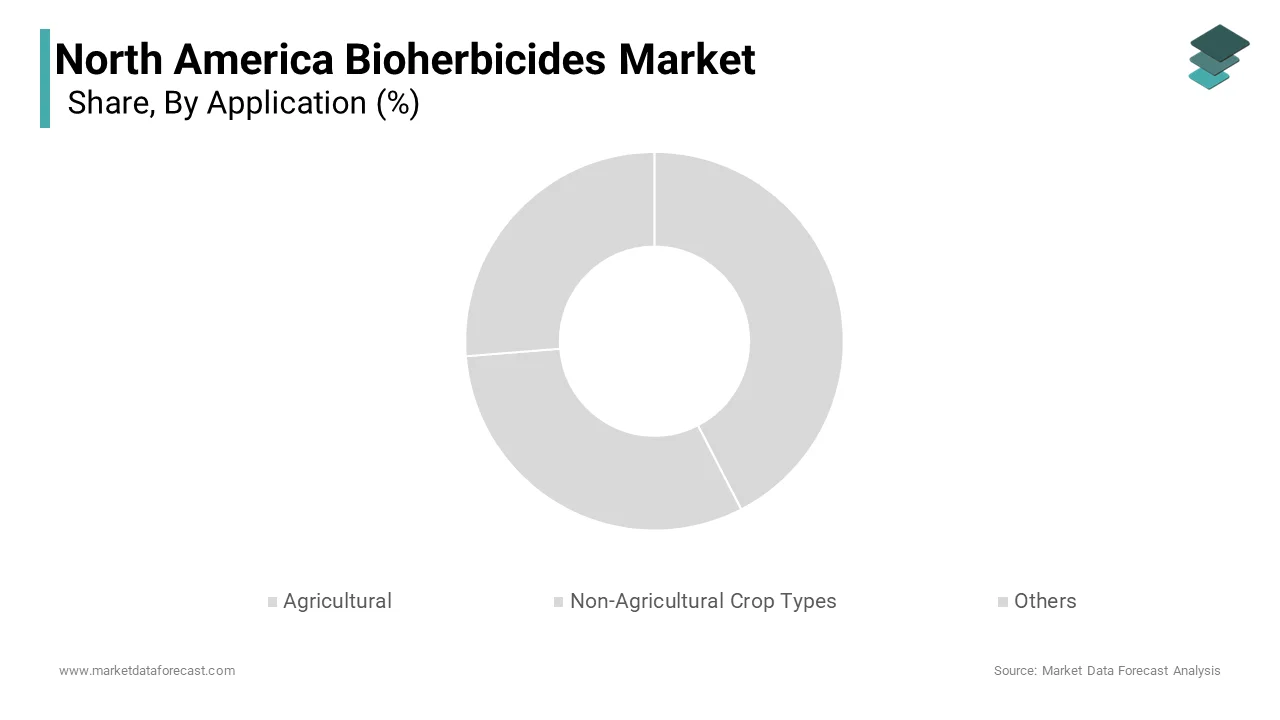
The Fruits & Vegetables segment is experiencing the fastest growth in bioherbicide adoption, projected to expand at a CAGR of 12.7% through 2033. This acceleration is fueled by the rising demand for chemical-free produce, particularly among health-conscious consumers and premium retail chains that prioritize clean-label products. These high-value crops require meticulous weed management without compromising food safety, making bioherbicides an attractive option. The U.S. Department of Agriculture recorded an increase in certified organic vegetable acreage between 2020 and 2023, reinforcing the need for compliant crop protection tools. These factors, combined with favorable government incentives for biological input usage, position the fruits and vegetables segment as the fastest-growing application area in the North American bioherbicides market.
COUNTRY ANALYSIS
The United States had the dominant position in the North American bioherbicides market, capturing 78.7% of regional revenue in 2025. As the world’s largest agricultural producer, the U.S. benefits from a well-established network of research institutions, agrochemical companies, and regulatory frameworks that promote the development and adoption of biological crop protection products.
Additionally, the Environmental Protection Agency (EPA) has expedited the registration process for bio-based pesticides under its Biopesticides and Pollution Prevention Division, encouraging innovation and market entry.
Canada is positioning itself as a key player in the region due to its progressive agricultural policies and growing emphasis on sustainable land management.
The Canadian government supports this shift through programs such as the Agricultural Climate Solutions (ACS) initiative, which allocates a substantial amount over ten years to promote climate-resilient farming techniques. These developments, supported by academic research and industry collaboration, contribute to Canada’s steady growth trajectory within the North American bioherbicides market.
The remaining North American countries, including Mexico and select Caribbean territories, collectively account for a small share of the regional bioherbicides market in 2025. While relatively smaller in scale, this segment is showing potential for future growth due to improving agricultural sustainability policies and increasing awareness of biological crop protection methods.
Mexico's proximity to the U.S. also makes it an attractive location for testing and deploying new bioherbicide formulations before broader North American rollout. Meanwhile, in the Caribbean, countries like Jamaica and the Dominican Republic are integrating bioherbicides into smallholder farming systems to enhance productivity while reducing environmental impact.
KEY MARKET PLAYERS
Some of the key players in the market are Emery Oleochemicals, Deer Creek Holdings, Verdesian Life Sciences, LLC, EcoPesticides International, Inc., MycoLogic Inc., Innovative Biologicals, Certified Organics Australia Pty Ltd, Marrone Bio Innovations Inc., Bioherbicides Australia Pty Ltd., Hindustan Bio-tech, and Special Biochem Pvt. Ltd.
Top Players in the Market
Marrone Bio Innovations
Marrone Bio Innovations is a leading developer and marketer of sustainable, biologically based pest management and plant health products. The company plays a pivotal role in advancing bioherbicide solutions that offer effective, eco-friendly alternatives to synthetic herbicides. With a strong focus on microbial technology, Marrone has introduced several bio-based weed control products tailored for both conventional and organic farming systems across North America.
Its contributions extend beyond product development into strategic partnerships with agricultural stakeholders, helping drive adoption through education and field trials. By emphasizing performance, regulatory compliance, and environmental safety, Marrone continues to shape the future of biological crop protection globally.
BASF SE (BASF Agricultural Solutions)
BASF, a global leader in the agrochemical industry, has been actively expanding its portfolio of biological solutions, including bioherbicides, to meet growing demand for sustainable agriculture. The company integrates its deep expertise in crop science with innovative microbial technologies to develop next-generation bioherbicides that align with integrated weed management strategies.
BASF collaborates extensively with research institutions and seed companies to enhance compatibility and efficacy across major crops. Its investment in fermentation technology and formulation sciences enables scalable production of high-performance biologicals. As a result, BASF plays a crucial role in bridging the gap between traditional chemical herbicides and environmentally responsible alternatives in North America and beyond.
Corteva Agriscience
Corteva Agriscience is at the forefront of developing biological crop protection tools, including bioherbicides designed to support regenerative and organic farming practices. Leveraging its heritage in agricultural innovation, Corteva combines advanced biotechnology with precision agriculture to create targeted, low-residue weed control solutions.
The company's commitment to sustainability is evident through its investment in microbial discovery programs and partnerships aimed at enhancing soil health and biodiversity. Corteva’s extensive distribution network ensures broad access to bioherbicides across North America, making it a key player in shaping the transition toward biological inputs in mainstream agriculture.
Top Strategies Used by Key Market Participants
One major strategy employed by leading players in the North American bioherbicides market is strategic acquisitions and partnerships to expand biological R&D capabilities. Companies are actively acquiring biotech startups and forming alliances with academic institutions to accelerate the discovery and commercialization of novel microbial strains and biochemical compounds for weed control.
Another key approach is product diversification and portfolio expansion, where firms introduce a wide range of bioherbicide formulations tailored for different crops and application methods. This includes liquid concentrates, granular forms, and tank-mix compatible solutions that cater to varying grower preferences and regional conditions.
Lastly, companies are investing heavily in farmer education and field demonstration programs to build trust and improve adoption rates. Through agronomic support, trial data sharing, and extension services, key players are addressing skepticism among conventional farmers and reinforcing the value of bioherbicides in sustainable crop management.
COMPETITION OVERVIEW
The competition in the North American bioherbicides market is intensifying as more agrochemical and biotechnology firms recognize the growing demand for sustainable weed control solutions. Established multinational corporations such as BASF, Corteva, and Bayer are increasingly integrating biologicals into their portfolios alongside traditional herbicides, while specialized biotech firms like Marrone Bio Innovations continue to drive innovation through niche product development and microbial discovery.
Market participants are differentiating themselves through technological advancements, regulatory expertise, and strategic positioning within organic and regenerative agriculture movements. While large players leverage their global reach and R&D infrastructure to scale up production and distribution, smaller firms emphasize agility, rapid product iteration, and close collaboration with organic growers and environmental organizations.
Additionally, competition is being shaped by evolving government policies, consumer preferences, and the increasing prevalence of herbicide-resistant weeds. These dynamics encourage continuous investment in research, field testing, and farmer engagement initiatives, ensuring that bioherbicides remain a critical component of modern, environmentally conscious agricultural practices across North America.
RECENT HAPPENINGS IN THE MARKET
- In January 2024, Marrone Bio Innovations launched a new line of microbial-based bioherbicides specifically formulated for row crops, targeting corn and soybean growers seeking non-synthetic weed control options that integrate well with existing farm management practices.
- In March 2024, Corteva Agriscience announced a multi-million-dollar investment in a dedicated bioherbicide research facility in Johnston, Iowa, aiming to accelerate the discovery of novel microbial strains and enhance product efficacy under diverse field conditions.
- In June 2024, BASF expanded its partnership with a U.S.-based biotech firm specializing in gene-editing applications for microbial enhancement, strengthening its pipeline of next-generation bioherbicides tailored for precision agriculture and integrated weed management systems.
- In September 2024, Certis USA acquired a boutique bioherbicide startup focused on botanical extract formulations, broadening its product portfolio and enhancing its presence in the specialty crop segment, particularly fruits and vegetables.
- In November 2024, UPL Limited introduced an educational outreach initiative in collaboration with land-grant universities across the Midwest, offering training sessions and on-farm demonstrations to promote the benefits and practical use of bioherbicides among conventional and transitioning organic farmers.
MARKET SEGMENTATION
This research report on the North American bioherbicides market is segmented and sub-segmented into the following categories.
By Source
- Microbials
- Biochemicals
- Others
By Application Mode
- Seed
- Soil
- Foliar
- Post-harvest
- others
By Formulation
- Granular
- Liquid
- Others
By Mode of Action
- MOA involving Photosynthesis
- MOA Targeting Enzymes
- Others
By Application
- Agricultural
- Cereals & Grains
- Oilseeds & Pulses
- Fruits & Vegetables
- others
- Non-Agricultural Crop Types
- Turf & Ornamentals
- Plantation Crops
By Country
- The USA
- Canada
- Mexico
- Rest of North America