- Product Description Description
- Table of Contents TOC
- List of Table & Figure LOT
- Get Free Sample PDF Sample PDF
Market Size, 2025
$0.43 BnMarket Estimate, 2026
$0.46 BnMarket Forecast, 2034
$0.70 BnCAGR, 2026–2034
5.5%North America Bone Growth Stimulators Market Summary
Market Size & Growth
- The North America Bone Growth Stimulators Market was valued at USD 0.43 billion in 2025.
- Expected to reach USD 0.70 billion by 2034, growing at a CAGR of 5.5% from 2026 to 2034.
- The United States accounted for 85.6% of the regional market share in 2025.
Key Market Segments
- By Product: External bone growth stimulators (55.8% share in 2025), Implanted stimulators, Ultrasonic stimulators (fastest growing at CAGR of 9.2% from 2026 to 2034), Bone Morphogenetic Proteins (BMP), Platelet-rich Plasma (PRP)
- By Application: Spinal Fusion Surgeries (48.4% share in 2025), Delayed Union and Non-union Bone Fractures (fastest growing at CAGR of 8.7%), Oral and Maxillofacial Surgeries
- By End User: Hospitals and Clinics (60.8% share in 2025); Home Care is the fastest growing at a CAGR of 10.5% from 2026 to 2034
- By Country: The United States leads; Canada is a key secondary market
Key Drivers
- Approximately 1.5 million osteoporotic fractures occur annually in the United States, sustained by a population aging toward 22% aged 65 and older by 2040
- Spinal fusion procedures exceed 500,000 cases annually in the United States, with bone growth stimulation shown to double the odds of successful fusion
- Low-intensity pulsed ultrasound technology accelerates tibial fracture healing time by 38% to 40%, expanding adoption in acute fracture management
Key Players
DJO LLC, Orthofix Medical Inc., Zimmer Biomet Holdings Inc., Bioventus LLC, Medtronic plc, Elizur Corporation, IGEA S.p.A., Ossatec Benelux BV, Arthrex Inc., Stimulate Health LLC.
North America Bone Growth Stimulators Market Size
The North America Bone Growth Stimulators Market is projected to grow from USD 0.43 billion in 2025 to USD 0.46 billion in 2026 and reach USD 0.70 billion by 2034, registering a CAGR of 5.5% during the forecast period from 2026 to 2034.
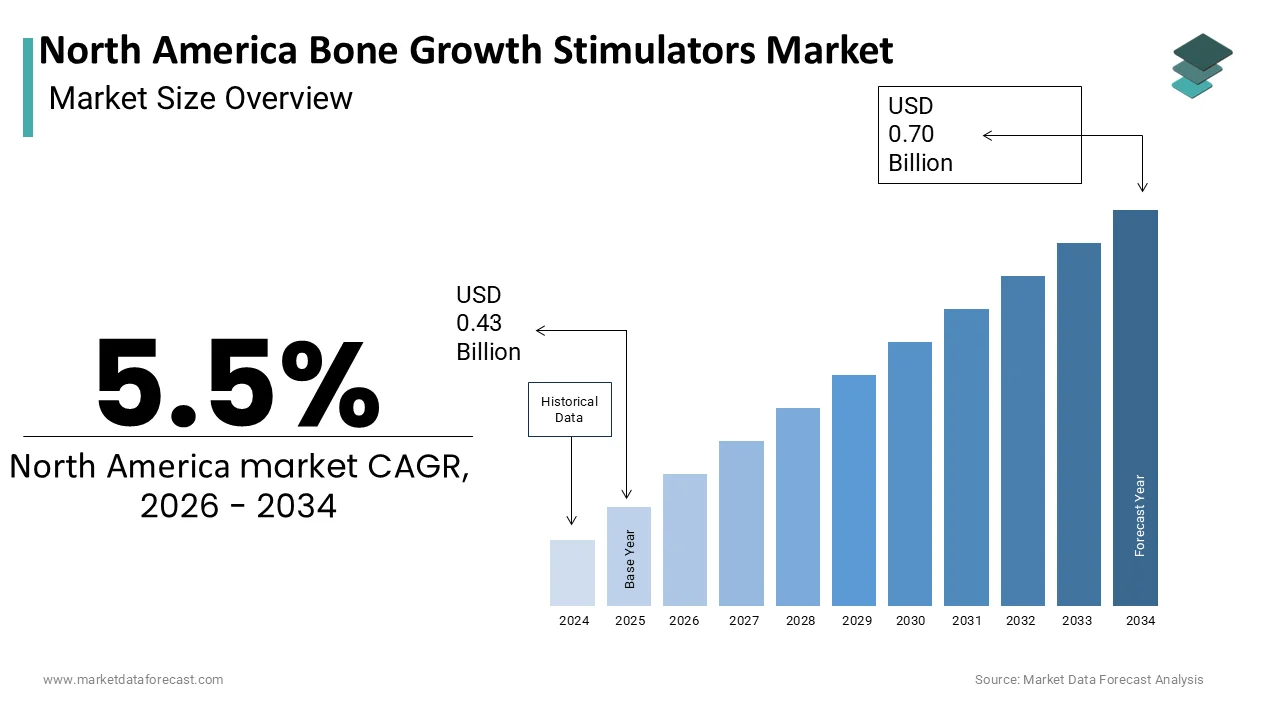
Bone growth stimulators are a specialized class of medical devices that utilize electromagnetic fields, ultrasound, or capacitive coupling to accelerate the healing process of fractured bones and facilitate spinal fusion. These non-invasive therapeutic tools are critical for treating nonunion fractures where natural healing has stalled due to biological or mechanical factors. According to the Bone Health and Osteoporosis Foundation, approximately 1.5 million people in the United States sustain osteoporotic fractures annually, with a significant portion requiring surgical intervention. The aging demographic profile exacerbates this demand, as the Administration for Community Living projects that individuals aged 65 and older will comprise 22% of the population by 2040, increasing osteoporosis-related fracture risks. As per data from the Agency for Healthcare Research and Quality, spinal fusion procedures exceed 500,000 cases annually in the United States, creating a substantial patient pool eligible for adjunctive bone growth stimulation therapy. Regulatory oversight by the Food and Drug Administration ensures rigorous safety and efficacy standards for these Class III medical devices, which influences adoption rates among healthcare providers. The integration of these devices into postoperative care protocols is driven by the need to reduce recovery times and minimize the risk of revision surgeries. Technological advancements have led to the development of portable wearable units that enhance patient compliance by allowing treatment during daily activities rather than confining patients to clinical settings. This shift supports outpatient care models and reduces the overall burden on hospital resources while improving the quality of life for patients undergoing complex orthopedic repairs.
MARKET DRIVERS
Rising Prevalence of Osteoporosis and Age-Related Fractures
The escalating incidence of osteoporosis and associated fragility fractures is driving the growth of the North America bone growth stimulators market. According to the International Osteoporosis Foundation, one in three women and one in five men over 50 will experience a fragility fracture. In the U.S., the Bone Health and Osteoporosis Foundation reports that 10 million Americans have osteoporosis and 44 million have low bone mass. These conditions predominantly affect the hip, spine,e and wrist, st requiring complex surgical repairs that often face challenges in achieving solid bony union. As per data from the Centers for Disease Control and Prevention, hip fractures account for roughly 300,000 hospitalizations annually among older adults. Bone growth stimulators offer a non-invasive solution to enhance callus formation and reduce the time to union, particularly in elderly patients with compromised healing capabilities. The economic burden of these fractures exceeds $30 billion annually in direct healthcare costs. This demographic trend is irreversible in the short term, ensuring a steady pipeline of patients who require adjunctive therapies to support successful orthopedic outcomes.
Expansion of Minimally Invasive Spinal Fusion Procedures
The widespread adoption of minimally invasive spinal fusion techniques accelerates demand for the stimulators as surgeons seek to optimize fusion rates without extensive hardware implantation, which in turn propels the expansion of the North America bone growth stimulators market. Data published in NASS Open Access indicates that outpatient spine surgery utilization grew dramatically over the last decade, with ambulatory surgical centers seeing a compound annual growth rate of 15.7%. However,r these procedures often involve smaller bone graft volumes, which can compromise the biological environment necessary for robust fusion. The Food and Drug Administration demonstrates that electrical bone growth stimulation can double the odds of successful spinal fusion, particularly in patients at high risk for nonunion. This evidence base encourages surgeons to prescribe stimulators as a standard component of post-operative care, particularly for patients with risk factors such as smoking, diabetes, es or obesity. The Centers for Medicare & Medicaid Services outlines strict reimbursement criteria for these devices, restricting coverage to specific medical necessities such as a nonunion fracture or a multi-level spinal fusion. Additionally,lly the rise in degenerative disc disease among the working age population due to sedentary lifestyles contributes to the growing volume of spinal interventions. Manufacturers are responding by developing compact wearable devices that integrate seamlessly with minimally invasive recovery protocols, allowing patients to resume normal activities while receiving continuous therapeutic stimulation. This alignment with modern surgical trends ensures sustained market growth as spinal care becomes increasingly outpatient-focused.
MARKET RESTRAINTS
High Cost of Devices and Limited Reimbursement Coverage
The substantial cost of these stimulators and inconsistent reimbursement policies create significant barriers to widespread adoption across the region and to the growth of the North American bone growth stimulators market. According to Durable Medical Equipment commercial tracking data, the average retail cost of a commercial bone growth stimulator ranges from $3,000 to $5,000, presenting a notable out-of-pocket expense for high-deductible plans. While Medicare provides coverage for specific indications such as nonunion fractures and spinal fusions, private insurers often impose strict prior authorization requirements that delay access or result in the denial of claims. While Medicare covers specific indications, private insurers utilize strict prior authorizations. Data from the Kaiser Family Foundation notes that over 25 million Americans remain uninsured, hindering their ability to afford advanced medical hardware. This financial uncertainty discourages both patients and providers from pursuing stimulator therapy even when clinically indicated. Hospitals and ambulatory surgical centers may hesitate to stock these devices due to inventory costs and the risk of non-payment, leading to limited availability in certain regions. The administrative burden associated with securing reimbursement further strains healthcare resources,s requiring dedicated staff to navigate complex coding and documentation requirements. These economic constraints disproportionately affect lower-income populations who are also at higher risk for poor bone healing due to nutritional deficiencies and comorbidities. The market potential for bone growth stimulators will remain constrained by affordability issues. This will continue until reimbursement structures become more uniform and predictable.
Patient Non-Compliance Due to Treatment Duration and Convenience Issues
Patient adherence to prescribed bone growth stimulation protocols remains a critical hurdle for the North American market. This hurdle is due to the extended duration of treatment and the potential inconvenience of device usage. According to compliance data reviewed by the Food and Drug Administration, external device compliance rates vary significantly, where fusion success rates drop from 80% down to 35% if daily hour requirements are not strictly maintained. Many patients find it difficult to integrate large, cumbersome devices into their daily routine, es especially if they need to wear them continuously while sleeping or working. The psychological burden of managing a chronic medical device also contributes to dropout rate, particularly among younger patients who may feel stigmatized by visible equipment. Manufacturers have attempted to address these issues through design improvement,nt,s but legacy devices still dominate many hospital formularies. Lack of real-time monitoring capabilities in older models prevents clinicians from verifying actual usage, leaving them unable to intervene when compliance wanes. This behavioral barrier limits the real-world effectiveness of bone growth stimulators and creates skepticism among payers regarding their cost-effectiveness. The full therapeutic potential of these devices will remain unrealized. This realization requires solutions that enhance user experience and provide objective adherence data.
MARKET OPPORTUNITIES
Integration of Digital Health and Remote Monitoring Technologies
The incorporation of digital health features into these stimulators offers a significant opportunity for the North American bone growth stimulators market. This paves the way to improve patient compliance and clinical outcomes through remote monitoring. In addition, the National Institutes of Health demonstrates that digital health technologies, such as smart electronic pillboxes and interactive patient monitoring systems, significantly enhance treatment adherence by providing automated tracking and behavioral cues. Modern bone growth stimulators equipped with Bluetooth connectivity and smartphone applications allow clinicians to track usage patterns, duration, and intensity of therapy remotely. As per data from the Food and Drug Administration, several manufacturers have received clearance for smart bone stimulators that track usage compliance via mobile apps, allowing patients to share detailed adherence records directly with their physicians. This technology transforms the device from a passive tool into an active participant in the care continuum, facilitating personalized adjustments to treatment plans. Payers are increasingly interested in value-based care models that reward improved outcomes and reduced complications, making digitally enabled devices more attractive for reimbursement. The ability to demonstrate objective proof of usage also strengthens the case for coverage by reducing disputes over whether the device was used correctly. Furthermore, re telehealth integration allows for virtual follow-up visits, reducing the need for in-person appointments and lowering overall healthcare costs. This digital transformation aligns with broader industry trends toward patient-centered care and data-driven decision-making, positioning early adopters for long-term competitive advantage.
Development of Portable and Wearable Device Form Factors
Innovation in device miniaturization and ergonomic design opens the door to enhancing patient comfort and acceptance of bone growth stimulation therapy, which is expected to fuel the expansion of the North American market. Studies show that healthcare consumer expectations now align closely with consumer electronics, driving a critical demand for ultra-lightweight, aesthetic, and non-intrusive wearable medical devices. Next-generation bone growth stimulators are being developed as discreet wearable patches or bands that can be easily concealed under clothing, reducing social stigma and improving quality of life. Device manufacturers indicate that next-generation bone growth stimulators utilize advanced micro-battery technology and optimized waveform delivery systems to maintain full therapeutic efficacy while drastically reducing device weight. The shift toward portable formats enables patients to continue treatment while engaging in work, exercise,se and social activities,ies thereby improving adherence rates. Manufacturers are also exploring flexible electronics that conform to body contours, minimizing skin irritation and discomfort during prolonged use. This design evolution opens new market segments, including active adults and athletes who require rapid recovery from sports injuries without compromising mobility. Regulatory pathways for these novel form factors are becoming clearer as precedents are established, encouraging investment in research and development. Companies can differentiate their products in a crowded market by prioritizing user experience alongside clinical performance. Doing so drives higher patient satisfaction and retention.
MARKET CHALLENGES
Stringent Regulatory Requirements and Lengthy Approval Processes
Navigating the complex regulatory landscape for Class III medical devices poses a significant challenge for manufacturers seeking to introduce new stimulators in the region, which impedes the growth of the North American bone growth stimulators market. According to the Food and Drug Administration, high-risk medical devices requiring the Premarket Approval (PMA) pathway must undergo extensive clinical trials and stringent regulatory scrutiny, which can extend product development timelines by several years. The agency requires substantial evidence demonstrating both safety and efficacy, which often involves multi-center randomized controlled trials with long follow-up periods to assess bone healing outcomes. Research highlights that evolving global regulatory frameworks and heightened post-market clinical surveillance requirements have prolonged the developmental timeline for introducing new orthopedic hardware to the market. This prolonged timeline delays revenue generation and increases financial risk for developers, particularly small and medium-sized enterprises with limited capital reserves. Changes in regulatory guidelines or requests for additional data can further extend approval periods, creating uncertainty in product launch planning. Additionally, post-market surveillance requirements mandate ongoing monitoring of adverse events, which adds to operational costs and liability exposure. The high barrier to entry limits competition and innovation,n as only well-funded corporations can afford the regulatory burden. This environment discourages startups from entering the market, potentially stifling the development of breakthrough technologies that could benefit patients.
Lack of Standardized Clinical Guidelines and Physician Awareness
The absence of universally accepted clinical guidelines for the use of these stimulators creates variability in prescribing practices and limits penetration of the North American bone growth stimulators market. While clinical evidence supports the efficacy of bone growth stimulators, American Academy of Orthopaedic Surgeons guidelines highlight varying clinical consensus regarding optimal patient selection criteria and specific device modalities across diverse fracture types. This ambiguity leads to inconsistent adoption among surgeons,s some of whom may rely on traditional methods or personal experience rather than the evidence-based protocols. Studies indicate that despite advancements in bioelectrical and ultrasonic technologies, a distinct awareness gap exists among a subset of clinicians regarding the distinct healing capabilities of modern bone growth stimulators. Educational efforts by manufacturers are often viewed with skepticism due to perceived commercial bias, further complicating knowledge dissemination. The lack of standardized training in residency programs means that new surgeons may graduate without adequate exposure to these therapies. This knowledge deficit results in underutilization of available technologies even when they are reimbursed and indicated. Furthermore, variations in hospital protocols and formulary decisions create fragmented access for patients depending on their provider. Addressing this challenge requires coordinated efforts from professional societies,s academic institutions, ns and industry stakeholders to develop evidence-based recommendations and integrate them into medical education curricula.
REPORT COVERAGE
| REPORT METRIC | DETAILS |
| Market Size Available | 2025 to 2034 |
| Base Year | 2025 |
| Forecast Period | 2026 to 2034 |
| Segments Covered | By Product, Application, End User, and Region |
| Various Analyses Covered | Global, Regional and Country-Level Analysis, Segment-Level Analysis, Drivers, Restraints, Opportunities, Challenges; PESTLE Analysis; Porter’s Five Forces Analysis, Competitive Landscape, Analyst Overview of Investment Opportunities |
| Countries Covered | The U.S., Canada, and the rest of North America |
| Market Leaders Profiled | DJO, LLC, Orthofix Medical Inc., Zimmer Biomet Holdings, Inc., Bioventus LLC, Medtronic plc, Elizur Corporation, IGEA S.p.A., Ossatec Benelux BV, Arthrex, Inc., Stimulate Health LLC. |
SEGMENTAL ANALYSIS
By Product Insights
The external bone growth stimulators segment dominated the North American market and accounted for a 55.8% share in 2025. This dominance was mainly driven by the preference among orthopedic surgeons and patients for treatments that avoid the risks associated with surgical implantation, such as infection, hardware failure, and anesthesia complications. Moreover, this market share is also due to the segment's non-invasive nature and established clinical efficacy for treating nonunion fractures. Clinical evidence highlights that external bone growth stimulation serves as an effective non-invasive adjunct for long bone nonunions, particularly in tibia and scaphoid fractures, where historical healing rates can be compromised. The Food and Drug Administration regulates non-invasive external bone growth stimulators for clinical safety and performance, while independent payer policies establish specific medical criteria for reimbursement. The Centers for Medicare & Medicaid Services provides structured reimbursement for durable medical equipment (DME) bone growth stimulators for home use, provided the patient meets strict indications,s such as an established nonunion. The technological maturity of capacitive coupling and pulsed electromagnetic field systems ensures reliable performance with minimal side effects, making them suitable for a broad patient demograph, ic including elderly individuals with comorbidities. Manufacturers have improved device portability and battery life, enhancing patient compliance, which is critical for successful outcomes. The widespread availability of these devices through major medical supply distributors ensures easy access for healthcare providers across urban and rural settings. This segment’s leadership is reinforced by decades of clinical data demonstrating safety and effectiveness, creating a high barrier to entry for newer, unproven technologies.
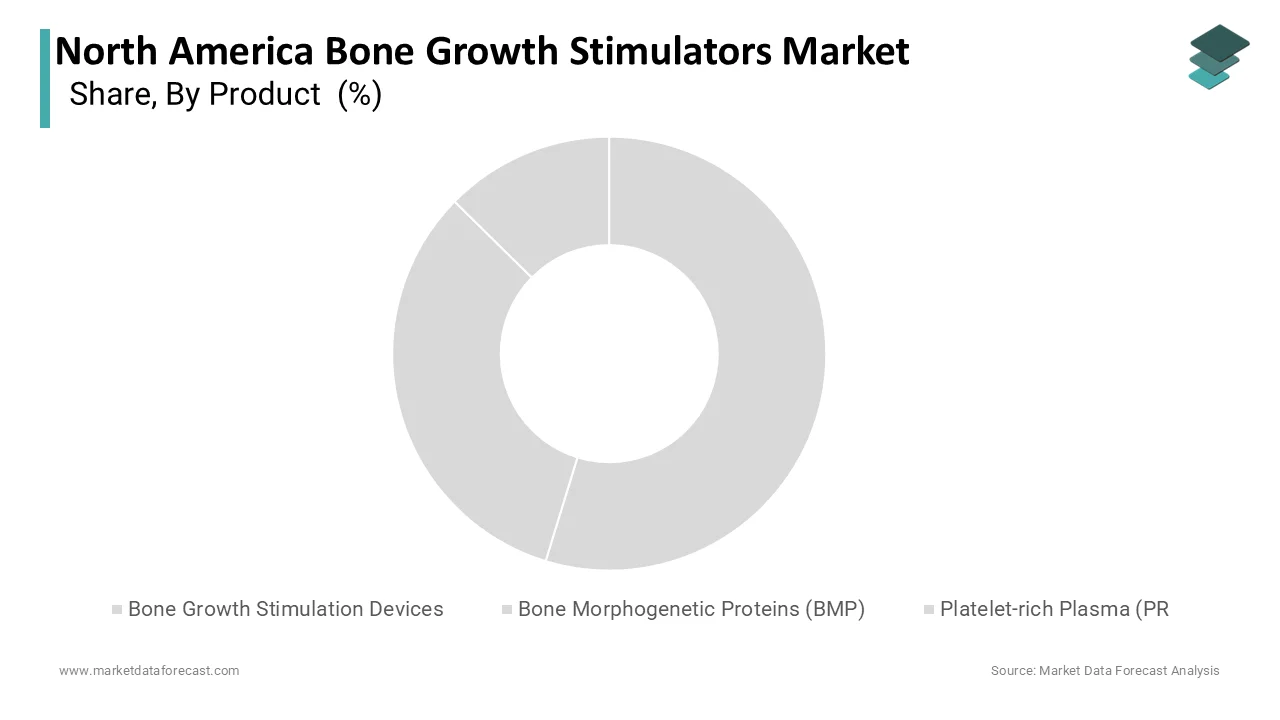
On the other hand, the ultrasonic bone growth stimulators segment is predicted to witness the highest CAGR of 9.2% from 2026 to 2034 due to advancements in low-intensity pulsed ultrasound technology and expanding indications for acute fracture healing. A key growth enabler is the ability of ultrasonic devices to accelerate healing in fresh fractures, thereby reducing recovery time and enabling earlier return to work and physical activity. Pivotal randomized clinical trials published in The Journal of Bone and Joint Surgery have demonstrated that low-intensity pulsed ultrasound can accelerate the healing time in fresh tibial fractures by up to 38% to 40%. This compelling value proposition appeals to active patients and employers seeking to minimize disability periods and associated economic losses. The Food and Drug Administration initially approved low-intensity pulsed ultrasound devices for fresh fractures in 1994 and later expanded the indications to include the treatment of established nonunions. The National Institutes of Health demonstrates that the mechanotransduction mechanisms of ultrasound physically stimulate osteoblast differentiation and microvascular angiogenesis to enhance bone healing. Manufacturers are developing smaller wearable patches that integrate seamlessly with casts or braces, improving user experience and adherence. The convenience of daily 20-minute treatment sessions fits easily into patient routines, unlike continuous wear external stimulators. Insurance coverage is expanding as health economists recognize the cost savings from reduced complication rates and faster functional recovery. This segment benefits from strong intellectual property protection and limited competition, allowing early movers to capture premium pricing and establish brand loyalty among leading trauma centers.
By Application Insights
The spinal fusion surgeries segment led the North America bone growth stimulators market, capturing a 48.4% share in 2025. Factors such as the high volume of procedures performed to treat degenerative disc disease, scoliosis, and spinal instability have contributed to the segment's leading position. Furthermore, primary drivers sustaining this segment include an aging population and an increasing prevalence of chronic back pain, which together fuel significant demand for surgical intervention. Bone growth stimulators are frequently prescribed postoperatively to enhance fusion rates, particularly in patients with risk factors such as smoking,g obesity, or diabetes who are prone to pseudoarthrosis. The Spine Journal indicates that surgical revisions for failed lumbar fusions impose a significant financial burden on health systems, justifying the use of adjunctive therapies to minimize nonunion risk. Medicare and private insurers generally cover bone growth stimulators for spinal fusion when specific clinical criteria are met, facilitating patient access. The integration of stimulators into standard care pathways for complex multi-level fusions further solidifies their role in spine surgery. Manufacturers collaborate closely with spine surgeons to develop protocols that optimize device placement and usage duration, maximizing fusion success. This segment’s leadership is supported by extensive clinical literature validating the efficacy of electrical and ultrasonic stimulation in promoting bone growth across the spinal column.
However, the delayed union and non-union bone fractures segment is estimated to register the fastest CAGR of 8.7% during the forecast period, owing to rising trauma rates and the limitations of traditional surgical revision options. The quick expansion of this segment is also powered by the increasing incidence of complex fractures resulting from high-energy trauma, sports injuries, and motor vehicle accidents,s which are difficult to heal due to poor blood supply or soft tissue damage. Data compiled by national trauma registries shows a steady volume of complex lower extremity fractures resulting from high-energy trauma, which often present a heightened risk of impaired bone healing. Bone growth stimulators offer a non-invasive alternative to repeat surgery, which carries higher risks of infection and prolonged recovery. The Journal of Bone and Joint Surgery shows that non-invasive external stimulation serves as an effective therapeutic option, helping a high percentage of patients achieve solid bone union. The economic burden of an established nonunion is substantial, frequently exceeding $20,000 per case in direct medical costs, which drives healthcare payers to cover bone stimulators once the lack of fracture progression is verified. Patient awareness of these alternatives is growing through digital health platforms and surgeon education campaigns. The development of portable devices allows for immediate initiation of therapy upon diagnosis of delayed healing, preventing progression to full nonunion. This segment benefits from clear clinical guidelines and strong reimbursement structures that recognize the cost-effectiveness of preventing surgical revisions.
By End-User Insights
In 2025, the hospitals and clinics segment held a 60.8% majority share of the North American market because of their role as primary sites for orthopedic surgery and post-operative care management. This supremacy is also sustained by the concentration of specialized orthopedic surgeons and trauma specialists who prescribe bone growth stimulators as part of comprehensive treatment plans. According to the American Hospital Association, there are over 6,000 hospitals in the United States, many of which house specialized orthopedic units performing complex spinal and fracture interventions. These facilities have established procurement contracts with major device manufacturers, ensuring consistent supply and integration into electronic health records for seamless ordering and tracking. Under bundled payment frameworks established by the Centers for Medicare & Medicaid Services, hospitals are financially incentivized to utilize cost-effective clinical pathways that prevent surgical failures and secondary readmissions. Clinical staff in hospitals are trained in device setup and patient education,n ensuring proper usage and compliance from the outset. The presence of multidisciplinary teams,ams including physiatrists and physical therapists, ists facilitates holistic care where stimulators are integrated into rehabilitation protocols. Academic medical centers within hospital systems also drive adoption through clinical trials and research that validate new indications and technologies. The centralized nature of hospital purchasing allows for bulk negotiations and standardized formulary inclusion, which limits the influence of smaller outpatient competitors.
But the home care segment is anticipated to witness the fastest CAGR of 10.5% between 2026 and 2034. This quick surge of the segment is fuelled by the shift toward outpatient surgery and patient preference for convenient home-based therapy. The primary growth factor is the increasing adoption of ambulatory surgical centers for spinal and orthopedic procedures, which discharge patients on the same day or within24 hourss, requiring self-managed recovery tools. Also, the Ambulatory Surgery Center Association highlights an ongoing migration of select orthopedic procedures to outpatient settings, which shifts subsequent long-term recovery and bone healing management to the home. Bone growth stimulators are ideally suited for this environment as they are designed for patient use without professional supervision after initial training. To support home-based recovery, medical device manufacturers increasingly integrate remote compliance monitoring directly into bone growth stimulators, allowing patients to track usage and upload adherence logs for clinical review. The rise of telehealth enables clinicians to monitor patient progress and adjust treatment plans without requiring frequent office visits, reducing healthcare costs and patient burden. Portable and wearable device designs enhance usability in domestic settings, encouraging higher adherence rates. Insurance providers support home care usage as it reduces the need for expensive skilled nursing facility stays. This segment benefits from direct-to-consumer marketing strategies by manufacturers who educate patients on the benefits of home-based stimulation, empowering them to take an active role in their recovery process.
COUNTRY LEVEL ANALYSIS
United States Bone Growth Stimulators Market Analysis
The United States was the top performer in the North America Bone Growth Stimulators Market and accounted for an 85.6% share in 2025. This dominance of the segment was driven by its advanced healthcare infrastructure, high procedural volumes, and favorable reimbursement landscape. The country is home to the largest number of orthopedic surgeons and specialized spine centers globally, creating a robust demand for adjunctive healing technologies. According to the United States Bone and Joint Initiative, musculoskeletal conditions affect over 126 million Americans, driving significant utilization of therapeutic services, es including bone growth stimulation. The Food and Drug Administration provides a clear regulatory pathway for device approval while fostering innovation and competition among manufacturers. As per National Coverage Determinations from the Centers for Medicare & Medicaid Services, Medicare covers non-invasive bone growth stimulators for specific indications like nonunion of long bones, ensuring access for the elderly population. The presence of major medical device companies such as Zimmer Biomet and Medtronic in the US ensures continuous product development and marketing support. High healthcare spending per capita allows for the adoption of premium technologies despite higher costs. Private insurance plans generally follow Medicare coverage guidelines,s expanding access to employed individuals. The strong emphasis on value-based care encourages hospitals to adopt technologies that reduce complications and readmissions, further supporting market growth. Research funding from the National Institutes of Health supports clinical trials that expand indications and improve device efficacy.
Canada Bone Growth Stimulators Market Analysis
Canada plays a key role in the regional market due to an aging population and increasing rates of osteoporosis-related fractures, particularly in provinces like Ontario and Quebec. The country’s market is known for a publicly funded healthcare system that prioritizes cost-effectiveness and evidence-based medicine. According to the Government of Canada’s Action for Seniors report, the number of seniors aged 65 and older is projected to reach 9.5 million by 2030, increasing the burden on orthopedic services. Provincial health plans such as OHIP in Ontario provide coverage for bone growth stimulators when deemed medically necessary,y although prior authorization processes can be stringent. Also, the Canadian Joint Replacement Registry shows hip and knee replacement volumes remain high, with a complex subset requiring revision surgeries due to joint instability, infection, or failed fixation. The Canadian Orthopaedic Association promotes guidelines that include bone growth stimulation for difficult nonunions, ensuring consistent clinical practice across the country. A limited number of domestic manufacturers means the market relies heavily on imports from the United States and Europe. Government initiatives to reduce wait times for surgery encourage the use of technologies that can accelerate recovery and free up hospital beds. Rural healthcare challenges drive interest in home-based therapies that reduce the need for travel to urban centers. Awareness campaigns by osteoporosis societies help educate patients and providers about available treatment options.
COMPETITIVE LANDSCAPE
The North America Bone Growth Stimulators Market exhibits a moderately consolidated competitive landscape characterized by established medical device giants and specialized niche manufacturers. Major corporations leverage their extensive distribution networks, brand recognition, and financial resources to dominate hospital and surgical center channels. These entities compete primarily on clinical efficacy data, technological sophistication, and comprehensive service support rather than price alone. Smaller specialized firms differentiate themselves through innovative device designs focused on specific anatomical regions or unique stimulation modalities such as low-intensity pulsed ultrasound. Intense competition drives continuous improvement in device portability, battery life, and user interface design to enhance patient adherence. Regulatory compliance and reimbursement coverage serve as significant barriers to entr,y, ensuring that only companies with robust clinical evidence can sustain market presence. Mergers and acquisitions are common strategies employed by larger players to acquire novel technologies and expand their product portfolios. The market remains dynamic with participants constantly adapting to evolving clinical guidelines and healthcare payment models. Collaboration with key opinion leaders and academic institutions helps validate new indications and build trust among prescribing physicians.
KEY MARKET PLAYERS
Some of the companies that are playing a dominating role in the North America Bone Growth Stimulators Market include
- DJO, LLC
- Orthofix Medical Inc.
- Zimmer Biomet Holdings, Inc.
- Bioventus LLC
- Medtronic plc
- Elizur Corporation
- IGEA S.p.A.
- Ossatec Benelux BV
- Arthrex, Inc.
- Stimulate Health LLC
TOP LEADING PLAYERS IN THE MARKET
- Zimmer Biomet is a global leader in musculoskeletal healthcare with a strong portfolio of bone growth stimulation technologies, including the Exogen ultrasound bone healing system. The company focuses on providing evidence-based solutions for fracture nonunions and spinal fusions across North America. Zimmer Biomet recently expanded its digital health capabilities by integrating remote monitoring features into its stimulator devices,ces allowing clinicians to track patient compliance in real time. This innovation enhances clinical outcomes and supports value-based care models. The firm collaborates extensively with orthopedic surgeons to develop standardized protocols for device usage, ensuring optimal therapeutic results. Its robust distribution network ensures widespread availability in hospitals and ambulatory surgical centers. Zimmer Biomet continues to invest in clinical research to validate the efficacy of its technologies in complex trauma cases,s strengthening its reputation as a trusted partner in orthopedic recovery.
- Medtronic operates as a major player in the medical technology sector, offering advanced bone growth stimulation solutions such as the Infuse bone graft and electrical stimulation devices. The company leverages its extensive experience in spinal care to provide comprehensive treatment options for degenerative conditions and traumatic injuries. Medtronic recently launched updated versions of its implantable stimulators featuring improved battery life and miniaturized designs that reduce surgical invasiveness. These enhancements address patient concerns regarding comfort and long-term usability. The organization actively engages in educational programs for spine surgeons, promoting best practices for integrating stimulation therapy into fusion procedures. Medtronic also partners with payers to demonstrate cost effectiveness through reduced revision rates. Its global scale allows for significant investment in regulatory affairs,s ensuring timely approvals for new indications. The company remains committed to innovation in biologics and device combinations to drive superior fusion success rates.
- Orthofix specializes in extremity fixation and bone growth stimulation with a focus on external devices for treating delayed union and nonunion fractures. The company offers the PhysioStim and Assure systems, which utilize pulsed electromagnetic field technology to accelerate healing. Orthofix recently strengthened its market position by acquiring complementary technologies that expand its product portfolio in foot and ankle care. This strategic move allows the firm to offer integrated solutions for complex lower extremity injuries. The organization emphasizes direct sales and clinical support teams that provide hands-on training to physicians and patients. Orthofix actively participates in multicenter clinical trials to generate robust data supporting reimbursement claims. Its agile business model enables rapid response to emerging clinical needs and regulatory changes. The company focuses on building strong relationships with trauma centers and community hospitals, ensuring consistent adoption of its therapies across diverse healthcare settings.
TOP STRATEGIES USED BY KEY MARKET PARTICIPANTS
Key players in the North America Bone Growth Stimulators Market primarily focus on technological innovation and clinical evidence generation to maintain competitive advantagege. Companies invest heavily in developing portable and wearable devices that enhance patient compliance and convenience. Strategic partnerships with healthcare providers and payers help establish standardized treatment protocols and secure favorable reimbursement terms. Digital health integration allows for remote monitoring of usage data, improving clinical outcomes and reducing administrative burdens. Manufacturers prioritize education and training programs for surgeons to ensure proper device selection and application. Expansion into outpatient and home care settings addresses the shift toward value-based care models. Regulatory engagement ensures timely approvals for new indications and device iterations. These strategies collectively drive market growth and improve patient access to effective bone healing therapies while addressing economic pressures within the healthcare system.
NORTH AMERICA BONE GROWTH STIMULATORS MARKET
- In May 2021, Bioventus rolled out the next generation of its market-leading EXOGEN® Ultrasound Bone Healing System, featuring advanced compliance capabilities and a smartphone tracking app. This launch allows Bioventus to improve patient compliance tracking and strengthen its presence in the North American bone growth stimulation market. In September 2023, HippoFi and its subsidiary PUR Biologics entered into a joint commercialization research agreement utilizing a global license from Zimmer Biomet to launch advanced synthetic biomaterials for bone growth.
MARKET SEGMENTATION
This research report on the North American bone growth stimulators market has been segmented and sub-segmented into the following categories.
By Product
-
Bone Growth Stimulation Devices
-
External
- Implanted
- Ultrasonic
-
- Bone Morphogenetic Proteins (BMP)
- Platelet-rich Plasma (PRP)
By Application
- Spinal Fusion Surgeries
- Delayed Union & Non-union Bone Fractures
- Oral and Maxillofacial Surgeries
- Other Applications
By End User
- Hospitals and Clinics
- Home Care
- Academic & Research Institutes
- CROs
By Country
- The U.S.
- Canada
- Rest of North America