- Product Description Description
- Table of Contents TOC
- List of Table & Figure LOT
- Get Free Sample PDF Sample PDF
Market Size, 2025
$14.34 BnMarket Estimate, 2026
$15.85 BnMarket Forecast, 2034
$35.23 BnCAGR, 2026–2034
10.5%Executive Summary: North America Cancer Monoclonal Antibodies Market
- Market Scope: Comprehensive analysis of the North American cancer monoclonal antibodies market covering production methods, sources, routes of administration, therapy areas (oncology, hematology), and key country hubs (United States, Canada).
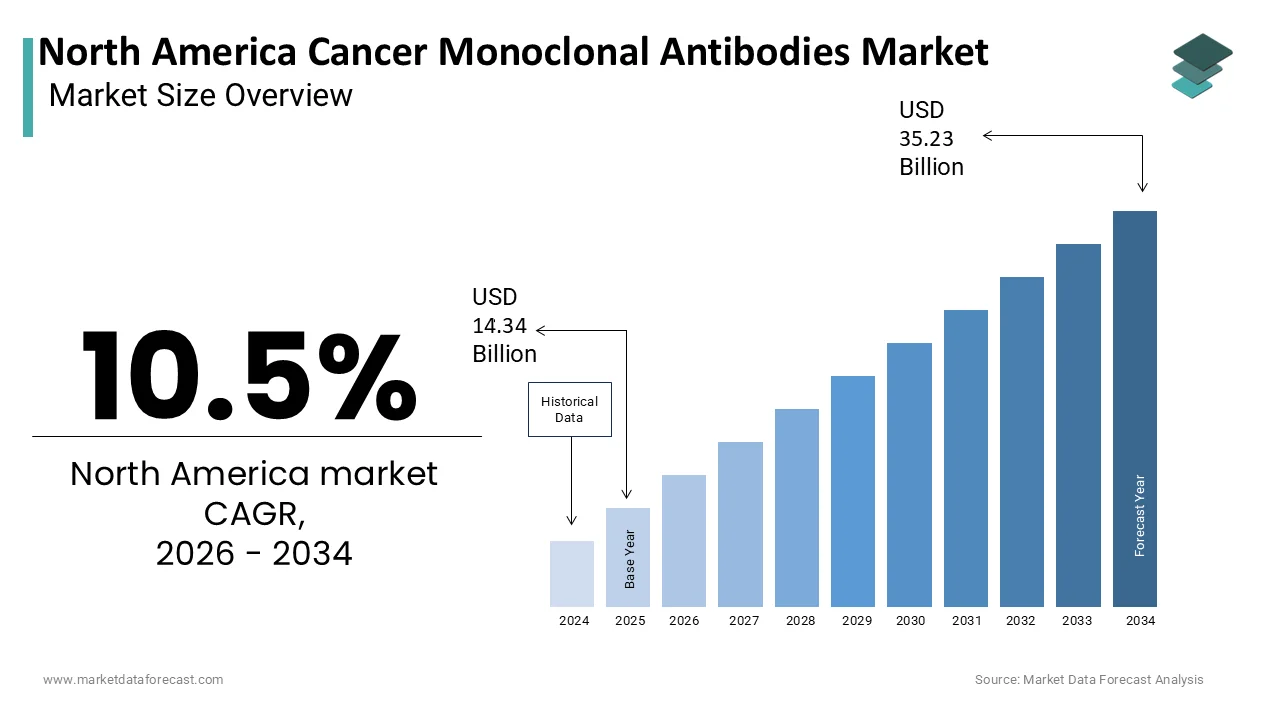
- Market Valuation: Valued at USD 14.34 billion in 2025, estimated at USD 15.85 billion in 2026, and projected to reach USD 35.23 billion by 2034, registering a robust CAGR of 10.5% over the forecast period from 2026 to 2034.
- Primary Growth Drivers: Rising prevalence of biomarker-defined malignancies accelerating targeted therapy utilization through genomic profiling; aging demographic profiles increasing the incidence of antibody-responsive cancers. Key restraints include payer prior authorization barriers and step therapy protocols, alongside complex mammalian manufacturing constraints causing supply gaps.
Key Market Segment Metrics (2026–2034)
| Category | Leading Segment (Base Position) | Fastest-Growing Segment |
|---|---|---|
| By Production Method | In-Vitro (captures over 95% market share backed by mammalian cell culture reproducibility and strict FDA regulatory compliance) | In-Vivo (projected at a fastest CAGR of 13.8% fueled by transgenic platforms in preclinical discovery and fully human antibody candidates) |
| By Source | Humanized Monoclonal Antibodies (leads the market with 58% of approved oncology mAbs due to high target specificity and reduced immunogenicity) | Fully Human Monoclonal Antibodies (projected at a fastest CAGR of 17.5% driven by advanced transgenic and phage display platforms) |
| By Therapy Area | Oncology (commands dominant leadership capturing 78% of biologic spending driven by the overwhelming disease burden of solid tumors) | Hematology (projected at a fastest CAGR of 21.9% propelled by revolutionary bispecific T-cell engagers and CAR-T adjunctive antibodies) |
| By Country | United States (holds an overwhelming 81.2% regional market share in 2025 supported by massive healthcare expenditures and R&D density) | Canada (steady, publicly managed growth navigating health technology assessments and provincial drug plan harmonization) |
Major Market Players & Market Structure
Market Structure: Oligopolistic and highly competitive landscape characterized by dominant multinational pharmaceutical corporations, emerging biotech innovators, and biosimilar market entrants.
Key Companies: Amgen Inc., Genmab A/S, Bristol Myers Squibb Company, GlaxoSmithKline plc, Eli Lilly and Company, Roche Holding AG, Merck & Co. Inc., Seagen Inc., Novartis AG, and Spectrum Pharmaceuticals, Inc.
North America Cancer Monoclonal Antibodies Market Size
The North America Cancer Monoclonal Antibodies Market is projected to grow from USD 14.34 billion in 2025 to USD 15.85 billion in 2026 and reach USD 35.23 billion by 2034, registering a CAGR of 10.5% from 2026 to 2034.
According to the American Cancer Society, approximately 2,001,140 new cancer cases were projected for diagnosis in the United States in 2024, creating a substantial and continuous patient pool requiring advanced biologic interventions. According to the National Cancer Institute Surveillance, Epidemiology,,gy and End Results program, the five-year relative survival rate for all cancers combined has risen to 69%, largely attributable to the integration of targeted immunotherapies, including checkpoint inhibitors and antibody-drug conjugates, into standard care protocols. The market definition extends beyond simple drug sales to encompass companion diagnostic ecosystems, infusion center infrastructure, and specialized pharmacy benefit management services required to administer these complex biologics safely. Regulatory oversight by Health Canada and the US Food and Drug Administration ensures rigorous validation of efficacy and safety profiles before commercialization. This ecosystem operates at the intersection of genomic science, manufacturing complexity, and value-based healthcare reimbursement, distinguishing it from traditional chemotherapy markets through its dependence on personalized medicine infrastructure and long-term survivorship care models.
MARKET DRIVERS
Rising Prevalence of Biomarker-Defined Malignancies; Molecular Profiling Expansion Accelerates Targeted Therapy Utilization
The widespread adoption of comprehensive genomic profiling in clinical practice is a key factor propelling the North American cancer monoclonal antibodies market forward. According to the Foundation Medicine Clinical Genomic Database analysis published in 2024, over 65% of metastatic solid tumor samples tested now reveal at least one actionable genomic alteration matching an approved targeted therapy or clinical trial, compared to only 30% a decade ago. The National Comprehensive Cancer Network guidelines updated in January 2024 recommend broad molecular testing for 18 distinct cancer types, making biomarker assessment a mandatory step before treatment selection rather than an optional reflex test. As per industry data, prescription volumes forHER2-positivee breast cancer therapies increased 22% between 2021 and 2023, directly correlating with expanded insurance coverage for next-generation sequencing panels that detect low expression levels previously missed by older assays. Unlike traditional cytotoxic agents administered empirically, monoclonal antibodies require confirmed target presence, creating a direct linkage between diagnostic testing rates and therapeutic demand. This diagnostic therapeutic coupling transforms cancer care from population-based protocols to individualized treatment plans, ensuring sustained market growth as testing penetration deepens across community oncology settings beyond academic centers.
Aging Demographic Profile Increases Incidence of Antibody-Responsive Cancers
Demographic shifts toward older populations across North America generate structural demand increases for monoclonal antibodies as cancer incidence rises exponentially with age and newer immunotherapies show particular efficacy in elderly cohorts, which is further aiding the regional market expansion. According to the US Census Bureau Population Estimates Program, the number of Americans aged 65 and older reached 58 million in 2023, representing 17% of the total population and accounting for 58% of all new cancer diagnoses, per American Cancer Society statistics. According to the Public Health Agency of Canada, cancer incidence rates among Canadians over 70 are 12 times higher than those under 40, which is creating concentrated demand in geriatric oncology where tolerability concerns favor targeted biologics over harsh chemotherapies. According to healthcare analytics reports, utilization ofPD-11 and PD-L1 inhibitors among beneficiaries over 75 grew 34% annually from 2020 to 2023, reflecting clinician confidence in safety profiles for frail patients. Unlike younger patients who may tolerate aggressive combination regimens, elderly populations often receive monotherapy antibody treatments as first-line standard, extending treatment duration and lifetime drug exposure per patient. This demographic inevitability creates a non-cyclical demand floor independent of economic conditions as biological aging processes continue driving case volumes regardless of healthcare policy fluctuations or payer restrictions.
MARKET RESTRAINTS
Payer Prior Authorization and Step Therapy Protocols: Administrative Burdens Delay Treatment Initiation and Limit Access
Intensifying utilization management strategies by public and private payers create significant friction points,s restricting timely patient access to high-cost monoclonal antibody therapies despite regulatory approval, which is a significant impediment to the North American market. According to the American Medical Association Physician Benchmarking Survey 2024, 94% of oncologists report care delays due to prior authorization requirements, with average wait times reaching 7 business days for novel biologics, during which disease progression can occur in aggressive malignancies. According to healthcare data analysis, 78% of plans imposed step therapy mandates for cancer drugs in 2024, requiring patients to fail cheaper alternatives before accessing preferred monoclonal antibodies even when clinical guidelines recommend upfront targeted therapy. As per specialty pharmacy data, initial denial rates for oncology biologics averaged 32% in 2023, necessitating lengthy appeals processes that consume clinical staff time and delay revenue recognition for providers. These administrative barriers function as de facto rationing mechanisms, particularly affecting community oncology practices lacking dedicated navigation teams to manage complex paperwork. While intended to control spending, these protocols often contradict evidence-based guidelines, creating misalignment between regulatory approval labeling and actual reimbursable indications, suppressing realized market potential below epidemiological capacity.
Manufacturing Complexity and Supply Chain Vulnerabilities: Biologic Production Constraints Create Intermittent Availability Gaps
Inherent complexities in mammalian cell culture manufacturing and sterile fill-finish operations create supply instability that periodically constrains market fulfillment despite robust demand signals, which is further hampering the North American cancer monoclonal antibodies market expansion. According to the US Food and Drug Administration Drug Shortages Database, 14 distinct monoclonal antibody products experienced active shortage status at some point during 2023 due to quality control failures, capacity constraints, or raw material unavailability affecting thousands of patients. The Bioprocess Technology Institute reports that average batch failure rates for complex biologics range from 5% to 10%, with each failed lot representing millions of dollars in lost product and months of replacement lead time due to lengthy cell culture cycles. As per supply chain risk monitoring data, geopolitical tensions and trade restrictions impacted availability of single-use bioreactor bags and chromatography resins critical for mAb production, causing 20% longer lead times in 2023 versus pre-pandemic baselines. Unlike small molecule drugs with redundant generic suppliers, monoclonal antibodies typically have single manufacturer sources due to patent protection and process specificity, eliminating buffer capacity during disruptions. These supply vulnerabilities force clinicians to switch therapies mid-course, compromising treatment continuity and eroding confidence in specific brands despite superior clinical profiles, creating artificial demand suppression unrelated to therapeutic value.
MARKET OPPORTUNITIES
Antibody Drug Conjugate Platform Maturation: Next-Generation Bioconjugates Unlock New Indications and Premium Pricing
Technological advances in linker chemistry, payload potency, and site-specific conjugation enable antibody-drug conjugates to overcome historical toxicity limitations, which is expanding addressable patient populations beyond traditional chemotherapy candidates and a notable opportunity for the North American market. For instance, over 45 antibody-drug conjugates are currently in late-stage clinical development targeting solid tumors previously resistant to standalone biologics, including pancreatic, ovarian, and colorectal cancers, representing multibillion-dollar expansion opportunities. The US Food and Drug Administration approved 6 novel antibody-drug conjugates between 2022 and 2024, each commanding annual list prices exceeding 150,000 dollars reflecting premium valuation for enhanced therapeutic index versus conventional chemotherapy. As per industry commercialization insights, prescriber adoption of newer-generation conjugates reached 40% of eligible patient share within 18 months of launch, significantly faster than earlier-generation products, demonstrating improved risk-benefit perception among oncologists. Manufacturing partnerships between biotech innovators and large pharmaceutical companies accelerate scale-up, reducing time to commercial availability. This platform evolution transforms monoclonal antibodies from pure targeting vehicles into potent cytotoxic delivery systems, justifying premium reimbursement and creating differentiation pathways in crowded therapeutic classes where naked antibodies face biosimilar competition and price erosion pressure.
Subcutaneous Formulation Development Improves Administration Efficiency
Reformulation of intravenous monoclonal antibodies into subcutaneous injections is another prominent opportunity for the North American cancer monoclonal antibodies market. According to the Journal of Clinical Oncology Practice Management study published in March 2024, subcutaneous rituximab administration reduced chair time by 75% versus intravenous infusion, enabling clinics to treat 3 additional patients daily without capital investment in new infusion bays. Patient preference surveys conducted by CancerCare indicate that 89% of respondents prefer subcutaneous delivery when offered, citing reduced travel time, lower infection risk, and greater scheduling flexibility as decisive factors. As per actuarial analysis, health plans achieve net savings of 2,800 dollars per patient annually through subcutaneous formulations despite equivalent drug acquisition costs due to eliminated facility fees, nursing labor, and supportive medication expenses. Regulatory agencies including FDA and Health Canada have established streamlined approval pathways for reformulations leveraging existing safety databases, accelerating commercialization timelines versus novel entities. This administration route transformation aligns stakeholder incentives across payers, providers, and patients, creating rare win-win scenarios where convenience gains translate directly to economic value, supporting premium positioning and formulary preference in value-conscious procurement environments.
MARKET CHALLENGES
Biosimilar Entry and Reference Product Erosion Patent Exclusivity Losses Trigger Revenue Declines Despite Volume Growth
Accelerated biosimilar approvals for foundational monoclonal antibodies create pricing pressure that outpaces volume expansion, which is threatening revenue sustainability for originator companies and challenging the North American cancer monoclonal antibodies market. For instance, cumulative savings from oncology biosimilars reached 12 billion dollars in North America since 2019, with average discounted price differential versus reference products widening to 35% as multiple entrants compete for formulary placement. The US Food and Drug Administration approved 9 new oncology biosimilars in 2023 alone, including first interchangeables for bevacizumab and trastuzumab, enabling pharmacy-level substitution without prescriber intervention and accelerating market share transfer. As per consensus forecast data, originator revenues for key franchises like rituximab and adalimumab declined 40% to 60% within 24 months of first biosimilar entry despite stable or growing prescription volumes, demonstrating severe margin compression dynamics. Payer mandates requiring biosimilar first positioning in 68% of commercial plans per formulary intelligence further restrict originator access to premium segments. This structural erosion forces manufacturers to rely on lifecycle management strategies, including next-generation formulations and combination therapies, to maintain growth while core franchise revenues contract, creating portfolio rebalancing challenges across entire corporate pipelines.
Clinical Trial Diversity and Generalizability Gaps Underrepresentation Limits Real-World Effectiveness Evidence and Label Expansion
Persistent lack of demographic diversity in pivotal registration trials creates evidence gaps hindering label expansions and payer coverage decisions for underrepresented populations constituting significant portions of real-world patient pools. According to the US Food and Drug Administration Oncology Center of Excellence Diversity Analysis 2024, Black patients comprised only 4% of participants in cancer drug trials approved between 2018 and 2023, despite representing 13% ofthe US population and experiencing disproportionately higher mortality rates for many malignancies. The National Cancer Institute SEER database shows Hispanic patients account for 22% of new cancer diagnoses yet represented less than 6% of clinical trial enrollees, limiting generalizability of efficacy and safety data for the fastest-growing demographic segment. As per publication bias analysis, negative subgroup analyses for minority populations remain unpublished in 70% of cases, preventing clinicians from making informed treatment decisions for diverse patients. Payers increasingly demand real-world evidence demonstrating effectiveness in covered populations before granting broad formulary access, creating post approval data generation burdens. These representation deficits perpetuate health inequities while simultaneously constraining market expansion opportunities as regulators and payers hesitate to extend indications without adequate supporting evidence in relevant patient subgroups.
REPORT COVERAGE
| REPORT METRIC | DETAILS |
| Market Size Available | 2025 to 2034 |
| Base Year | 2025 |
| Forecast Period | 2026 to 2034 |
| Segments Covered | By Production Method, Source, Route of Administration, Therapy Area, and Region. |
| Various Analyses Covered | Global, Regional, and Country-Level Analysis, Segment-Level Analysis, Drivers, Restraints, Opportunities, Challenges; PESTLE Analysis; Porter’s Five Forces Analysis, Competitive Landscape, Analyst Overview of Investment Opportunities |
| Countries Covered | The United States, Canada, Rest of North America |
| Market Leaders Profiled | Amgen Inc., Genmab A/S, Bristol Myers Squibb Company, GlaxoSmithKline plc, Eli Lilly and Company, Roche Holding AG, ImmunoGen, Inc., Seagen Inc. (formerly Seattle Genetics), Novartis AG, and Spectrum Pharmaceuticals, Inc. |
SEGMENTAL ANALYSIS
By Production Method Insights
The in-vitro segment held the largest share of the North American cancer monoclonal antibodies market in 2025 and is predicted to maintain overwhelming dominance in the North American cancer monoclonal antibodies market over the forecast period due to its capacity for industrial-scale manufacturing that meets stringent regulatory requirements for batch consistency and viral safety. According to industry manufacturing reports, over 95% of commercial oncology monoclonal antibodies approved in North America are produced using mammalian cell culture systems such as Chinese Hamster Ovary cells, which enable titers exceeding 5 grams per liter in fed-batch processes. The US Food and Drug Administration Guidance for Industry on Sterile Drug Products explicitly favors closed-system bioreactor technologies that minimize contamination risks inherent in animal-derived in vivo methods, making in vitro platforms the default choice for regulatory approval. As per industry data, all top 20 best-selling cancer mAbs, including pembrolizumab, trastuzumab, and rituximab, utilize recombinant cell line expression, ensuring supply chain reliability for treating millions of patients annually. Unlike ascites or transgenic animal methods that face ethical scrutiny and lot-to-lot variability, in vitro systems offer defined media formulations and process analytical technology enabling real-time quality monitoring required under current Good Manufacturing Practices. This manufacturing maturity creates insurmountable barriers for alternative methods, establishing in vitro as the only viable path for commercial-scale oncology biologic production in regulated markets.
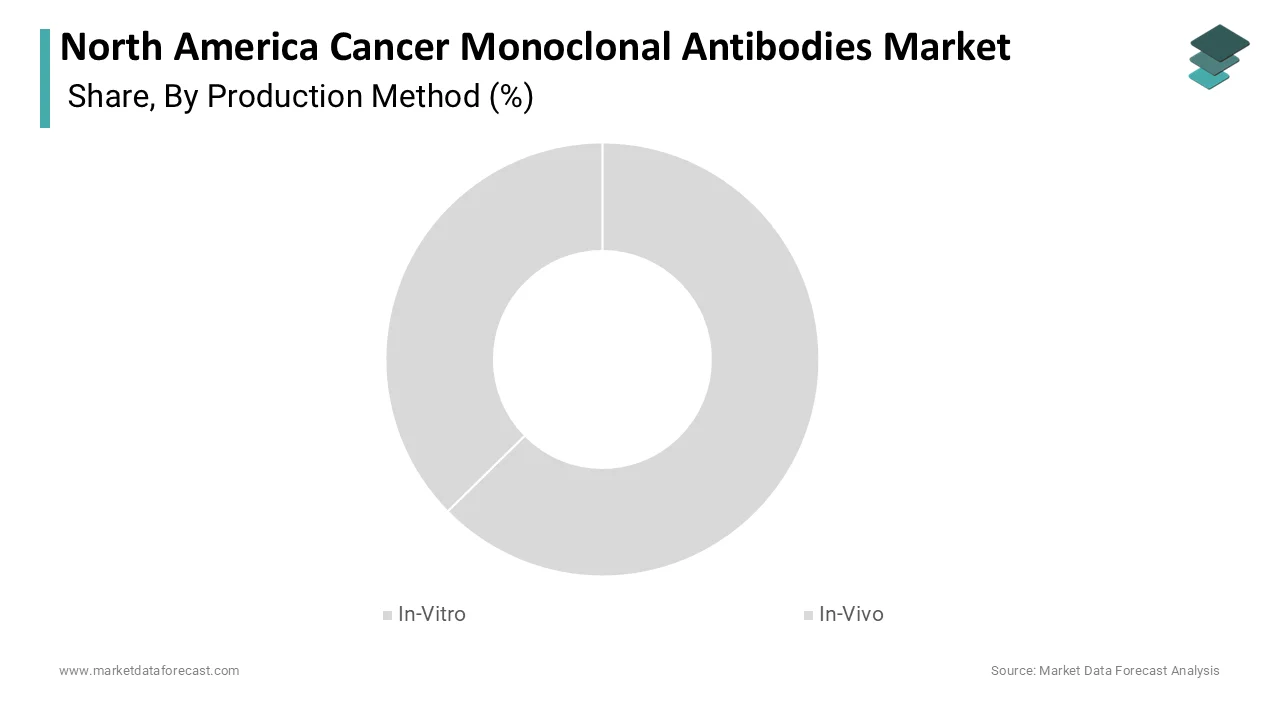
However, the in vivo segment is estimated to register a CAGR of 13.8% over the forecast period in the North American market over the forecast period owing to preclinical discovery applications rather than commercial manufacturing. According to pipeline analysis data, transgenic mouse and rat platforms generated 38% of novel oncology antibody candidates entering Phase I trials in 2023, reflecting superior ability to produce fully human antibodies with natural affinity maturation versus phage display libraries. Regeneron VelocImmune and Ablynx nanobody platforms contributed to 12 FDA approvals since 2020, demonstrating clinical validation of in vivo-derived molecules, particularly for complex targets requiring conformational epitope recognition. As per preclinical asset tracker data, venture capital investment in transgenic platform companies increased 45% in 2023, reaching 1.8 billion dollars as biotech startups license proprietary animal models to de-risk early-stage pipelines. Unlike historical ascites methods, modern transgenic platforms comply with animal welfare regulations through genetic humanization, eliminating murine immunogenicity concerns. Growth is concentrated in the discovery phase, where the biological complexity of the immune repertoire cannot be replicated synthetically, though scale-up still transitions to in vitro for commercial production. This niche acceleration reflects the irreplaceable role of living systems in generating diverse antibody candidates against challenging oncology targets, driving segment expansion despite limited direct revenue contribution.
By Source Insights
The humanized monoclonal antibodies segment led the market by accounting for the largest share of the North American market in 2025. The growth of the humanized segment in the North American market is attributed to the optimal balance between target specificity retention from parental murine clones and reduced immunogenicity through complementarity-determining region grafting onto human frameworks. According to the Therapeutic Monoclonal Antibodies Database maintained by the Antibody Society, 58% of FDA-approved oncology mAbs are classified as humanized, including blockbuster agents like bevacizumab, cetuximab, and pertuzumab, representing the majority of the installed therapeutic base. The National Cancer Institute Cancer Therapy Evaluation Program reports that 67% of active oncology clinical trial protocols in 2024 utilize humanized antibodies as backbone therapy, reflecting established safety databases and clinician familiarity accumulated over two decades of clinical use. As per industry reports, humanized mAbs account for 62% of total prescription volume in community oncology settings where risk aversion favors extensively characterized molecules over newer formats with limited post-marketing surveillance. Manufacturing processes for humanized antibodies are well standardized with decades of regulatory precedent, reducing development timelines versus fully human candidates requiring novel cell line development. This combination of clinical track record, manufacturing maturity, and prescriber confidence creates self-reinforcing dominance, particularly in first-line indications where deviation from proven standards carries medicolegal and reimbursement risks, limiting displacement by next-generation formats.
However, the fully human monoclonal antibodies segment is projected to record a CAGR of 17.5% over the forecast period owing to the technological advances in transgenic animal and phage display platforms enabling discovery of candidates with superior developability and reduced immunogenicity risk. According to industry pipeline review data, fully human antibodies comprise 74% of novel oncology mAbs in Phase II III trials versus only 32% of marketed products, indicating inevitable portfolio transition as the pipeline matures toward commercialization. The US Food and Drug Administration approved 8 new fully human oncology antibodies in 2023, including tebentafusp and teclistamab, each demonstrating breakthrough efficacy in refractory malignancies, validating platform capabilities against historically undruggable targets. As per technology trends analysis, transgenic mouse platforms achieved average affinity maturation improvements of10-foldd versus earlier-generation humanized candidates, reducing required dosing frequency and improving therapeutic index. Payer preference for lowest immunogenicity risk in chronic adjuvant settings creates formulary incentives for fully human options, particularly in breast and colorectal cancers where multi-year treatment duration amplifies safety differentials. This convergence of technical superiority, regulatory endorsement, and payer alignment accelerates adoption velocity beyond legacy humanized base despite higher development costs, positioning fully human as future standard of care.
By Therapy Area Insights
The oncology segment dominated the market by capturing the leading share of the North American cancer monoclonal antibodies market in 2025 and is predicted to maintain undisputed leadership in the North American cancer monoclonal antibodies market due to overwhelming disease burden and extensive therapeutic arsenal targeting diverse solid tumor types. According to the American Cancer Society Cancer Facts and Figures 2024, solid tumors account for 90% of all new cancer diagnoses in the United States, with lung, breast, prostate, and colorectal cancers alone representing 48% of cases, creating a massive addressable patient population for targeted biologics. The National Cancer Institute Surveillance, Epidemiology,y and End Results database documents that median survival for metastatic HER2-positive breast cancer increased from 24 months to 57 months between 2010 and 2023, directly attributable to sequential monoclonal antibody therapies establishing treatment paradigm dependency. As per industry market access reports, oncology mAbs represent 78% of total biologic spending in North America, reflecting both high unit costs and extended treatment durations characteristic of solid tumor management. Unlike hematology, where curative intent may limit exposure duration, solid tumor therapies often continue until progression or toxicity, creating cumulative lifetime drug consumption per patient. This epidemiological foundation, combined with therapeutic entrenchment, ensures the oncology segment maintains structural dominance regardless of innovation velocity in adjacent categories.
On the other hand, the hematology segment is expected to record a promising CAGR of 21.9% over the forecast period in the North American market over the forecast period owing to the revolutionary bispecific T-cell engagers and CAR T adjunctive antibodies transforming treatment paradigms for relapsed/refractory blood cancers. According to the Blood Cancer Journal Bispecific Antibody Landscape Review 2024, 14 novel bispecifics received FDA approval for myeloma, lymphoma, and leukemia between 2022 and 2024, each demonstrating unprecedented response rates exceeding 60% in heavily pretreated populations where conventional therapies failed. The Leukemia and Lymphoma Society State of Blood Cancer Report indicates that bispecific antibody utilization in community hematology practices increased 180% in 2023 as step therapy mandates relaxed following accumulation of real-world safety data supporting outpatient administration. As per industry forecast data, bispecific revenues are projected to reach 8.5 billion dollars in North America by 2026, representing 35% of total hematology mAb spend up from only 8% in 2021. Unlike solid tumors where bispecifics face penetration barriers due to antigen heterogeneity, hematologic malignancies exhibit uniform target expression enabling reliable efficacy prediction and rapid adoption. This technological inflection point creates category-defining growth momentum as bispecifics displace chemotherapy and transplant in earlier treatment lines, expanding both patient eligibility and treatment intensity.
COUNTRY LEVEL ANALYSIS
United States Cancer Monoclonal Antibodies Market Analysis
The United States captured 81.2% of the regional market share in 2025 and is poised to maintain its overwhelming dominance in the North America cancer monoclonal antibodies market. This leadership results from the world's largest healthcare expenditure base, with national cancer drug spending reaching 98 billion dollars in 2023 per the National Cancer Institute Financial Toxicity Report, reflecting both high prices and extensive utilization across 1.9 million annual new diagnoses. The country hosts headquarters of 18 of the top 20 global oncology biopharma companies, concentrating R&D investment, clinical trial activity, and early access programs domestically, creating innovation feedback loops unavailable elsewhere. Medicare Part B covered 42 billion dollars in physician-administered cancer drugs in 2023, representing the single largest payer for mAbs globally and establishing reimbursement benchmarks that influence private plan coverage decisions. FDA approval timelines average 8 months faster than Health Canada, enabling US patients to access novel therapies first, creating a temporal advantage in treatment adoption. Venture capital investment in US oncology biotechs reached 24 billion dollars in 2023 per PitchBook data, sustaining pipeline velocity. However, price sensitivity intensifies as Inflation Reduction Act Medicare negotiation provisions begin impacting 2026 pricing, creating uncertainty for long-term revenue trajectories despite current volume strength.
Canada Cancer Monoclonal Antibodies Market Analysis
Canada is expected to experience steady and publicly managed growth over the coming years. According to the Canadian Agency for Drugs and Technologies in Health Annual Review 2024, 34 new oncology mAbs received positive reimbursement recommendations in 2023, though implementation lag averaged 14 months post Health Canada approval due to pan-Canadian Pharmaceutical Alliance price negotiations and provincial budget cycles. Publicly funded cancer agencies, including Ontario Health Cancer Care and BC Cancer,r serve as single purchasers for 95% of hospital-administered biologics, enabling volume leverage but constraining premium pricing versus US benchmarks. Statistics Canada reports 233,000 new cancer cases in 2024, with aging demographics mirroring US trends, yet per capita mAb spending remains 40% lower, reflecting systematic cost containment through health technology assessment and generic biosimilar substitution mandates. Patented Medicine Prices Review Board price ceiling regulations limit list prices to the median of comparator countries, suppressing revenue per unit despite comparable utilization rates. Recent federal pharmacare legislation proposes national formulary harmonization, potentially reducing interprovincial variation but also introducing additional negotiation layers that may further delay access. This publicly managed model creates stable, predictable demand, but caps upside potential relative to US market dynamics.
COMPETITIVE LANDSCAPE
Competition within the North American cancer monoclonal antibodies market exhibits high intensity, characterized by an oligopolistic structure among five dominant multinational corporations alongside emerging biotech specialists and biosimilar entrants reshaping competitive dynamics. Barriers to entry remain substantial due to complex manufacturing requirements, lengthy clinical development timelines,s and regulatory scrutiny, limiting new participant threats despite attractive therapeutic opportunities. Incumbents compete through mechanism differentiation,n combination strategies, es and lifecycle extensions rather than price alone, preserving margins in innovative segments while facing margin compression in mature franchises exposed to biosimilar competition. Payer consolidation and health technology assessment influence create powerful buyer leverage, enabling aggressive formulary negotiations favoring vendors offering outcomes guarantees or bundled value propositions. Geographic concentration inthe United States amplifies the importance of Medicare and large commercial plan coverage decisions, making national account management capabilities a critical competitive differentiator versus fragmented international markets. Clinical trial diversity requirements and real-world evidence expectations raise development costs, disproportionately affecting smaller players lacking infrastructure for post approval studies. Competitive intensity varies significantly by indication, with crowded checkpointsexperiencing feature-basedd rivalry while novel bispecifics and conjugates enjoy temporary monopolies before class maturation. This bifurcated landscape rewards companies balancing innovation velocity with commercial execution excellence while punishing those unable to adapt to value-driven procurement paradigms reshaping North American oncology therapeutics through 2030.
KEY MARKET PLAYERS
Some of the companies that are playing a dominating role in the North America Cancer Monoclonal Antibodies Market include:
- Amgen Inc.
- Genmab A/S
- Bristol Myers Squibb Company
- GlaxoSmithKline plc
- Eli Lilly and Company
- Roche Holding AG
- ImmunoGen, Inc.
- Seagen Inc. (formerly Seattle Genetics)
- Novartis AG
- Spectrum Pharmaceuticals, Inc.
TOP LEADING PLAYERS IN THE MARKET
- Merck and Co Inc maintains profound influence across the North American cancer monoclonal antibodies landscape through its flagship pembrolizumab franchise, which has redefined treatment standards across more than 30 solid tumor and hematologic malignancies. The company contributes extensively by conducting over 1000 clinical trials, establishing evidence bases that guide National Comprehensive Cancer Network guidelines and payer coverage decisions throughout the region. Merck recently strengthened its position by securing FDA approval for subcutaneous pembrolizumab formulation in March 202,4 reducing administration time and improving patient convenience versus intravenous infusion. Their strategic partnerships with AstraZeneca and Daiichi Sankyantibody-drug drug conjugate combinations expand addressable indications beyond checkpoint inhibitor monotherapy limitations. Manufacturing capacity expansions at North Carolina and Ireland facilities ensure supply reliability amid growing global demand. These initiatives reinforce clinical leadership and operational resilience without relying on market share metrics to demonstrate sustained competitive advantage in immuno-oncology innovation and access throughout North American healthcare systems.
- Bristol Myers Squibb Company plays a pivotal role in the North American cancer monoclonal antibodies ecosystem through a diversified portfolio spanning checkpoint inhibitors, bispecific T-cell engagers, and targeted therapies addressing both solid tumors and hematologic malignancies. The company contributes regionally by pioneering nivolumab and ipilimumab combination regimens that established immunotherapy as a first-line standard in melanoma, renal cell carcinoma, a annon-smallll cell lung cancer, creating durable survival benefits for thousands of patients. Bristol Myers Squibb recently enhanced its market position by launching repotrectinib alongside existing ROS1 targeted antibodies in November 202,3 expanding precision medicine options for molecularly defined lung cancer subsets. Their acquisition of MMirati Therapeutics, cs completin ed January 2024, added adagrasib tothe KRAS G12C inhibitor portfolio, strengthening competitive positioning against Amgen's sotorasib in genetically stratified patient populations. Investment in outpatient bispecific administration infrastructure supports community oncology adoption, removing historical hospital-only constraints. These platform-centric strategies differentiate offerings through comprehensive mechanism coverage while creating switching costs via integrated treatment algorithms, strengthening long-term positioning across diverse North American oncology segments.
- Roche Holding AG has established a substantial presence in the North American cancer monoclonal antibodies market through its legacy HER2 franchise, next-generation bispecifics, and companion diagnostic integration,n enabling personalized treatment selection. The company contributes uniquely by maintaining a trastuzumab, pertuzumab, and trastuzumab emtansine portfolio that defined HER2-positive breast cancer treatment for two decades, while transitioning to newer Enhertu-competing formats through its Genentech subsidiary. Roche recently strengthened its position by obtaining FDA approval for divarasib in combination with existing EGFR antibodies in February 2024, addressing acquired resistance mechanisms in non-small cell lung cancer and extending therapeutic utility beyond first-line settings. Their cobas diagnostic platform integrates biomarker testing directly with therapeutic decision-making, creating closed-loop ecosystems that improve appropriate use rates and reduce off-label prescribing. Subcutaneous reformulations of rituximab and trastuzumab reduce chair time by 75 percent, improving clinic throughput and patient satisfaction. This vertical integration across diagnostic,s therapeutic,s and delivery formats creates defensible competitive moats distinct from pure-play biologic manufacturers operating in the North American oncology landscape.
TOP STRATEGIES USED BY KEY MARKET PARTICIPANTS
Key players in the North American cancer monoclonal antibodies market employ multifaceted strategic approaches to navigate patent cliffs, biosimilar competition,n and evolving value-based reimbursement landscapes. Lifecycle management through subcutaneous reformulations, fixed-dose combinations, and extended indications extends commercial exclusivity beyond core molecule patents, delaying revenue erosion from generic entry. Strategic acquisitions of biotech innovators with novel platforms, including bispecifics, antibody-drug conjugates, and radioligands, replenish pipelines with differentiated assets less susceptible to class-wide commoditization pressures. Companion diagnostic co-development ensures appropriate patient selection, improves trial success rates,s and satisfies payer demandsfor biomarker-drivenn utilization management, justifying premium pricing. Manufacturing excellence investments in continuous processing, single-use technologies, es and regional capacity expansion mitigate supply chain vulnerabilities that periodically constrain fulfillment and erode prescriber confidence. Real-world evidence generation through post-marketing registries and pragmatic trials demonstrates effectiveness in diverse populations, supporting label expansions and formulary inclusion beyond restrictive pivotal trial eligibility criteria. Value-basedd contracting arrangements linking payment to outcomes align stakeholder incentives and reduce payer resistance to high list prices, particularly in adjuvant settings where curative intent justifies upfront investment. These interconnected strategies collectively address fundamental market dynamics where clinical differentiation, operational reliability,y and economic alignment increasingly determine competitive success beyond regulatory approval alone.
MARKET SEGMENTATION
This research report on the North America Cancer Monoclonal Antibodies Market has been segmented and sub-segmented into the following categories.
By Production Method
- In-Vitro
- In-Vivo
By Source
- Human
- Humanized
- Chimeric
- Others
By Route of Administration
- Intravenous (IV)
- Subcutaneous (SC)
By Therapy Area
- Inflammatory & Autoimmune Disorders
- Oncology
- Hematology
- Ophthalmology
- Others
By Country
- The United States
- Canada
- Rest of North America