- Product Description Description
- Table of Contents TOC
- List of Table & Figure LOT
- Get Free Sample PDF Sample PDF
Market Size, 2025
$266.5 MnMarket Estimate, 2026
$285.9 MnMarket Forecast, 2034
$501.6 MnCAGR, 2026–2034
7.28%North America Carbohydrase Food Enzymes Market Size, Growth, Trends & Forecast (2026–2034)
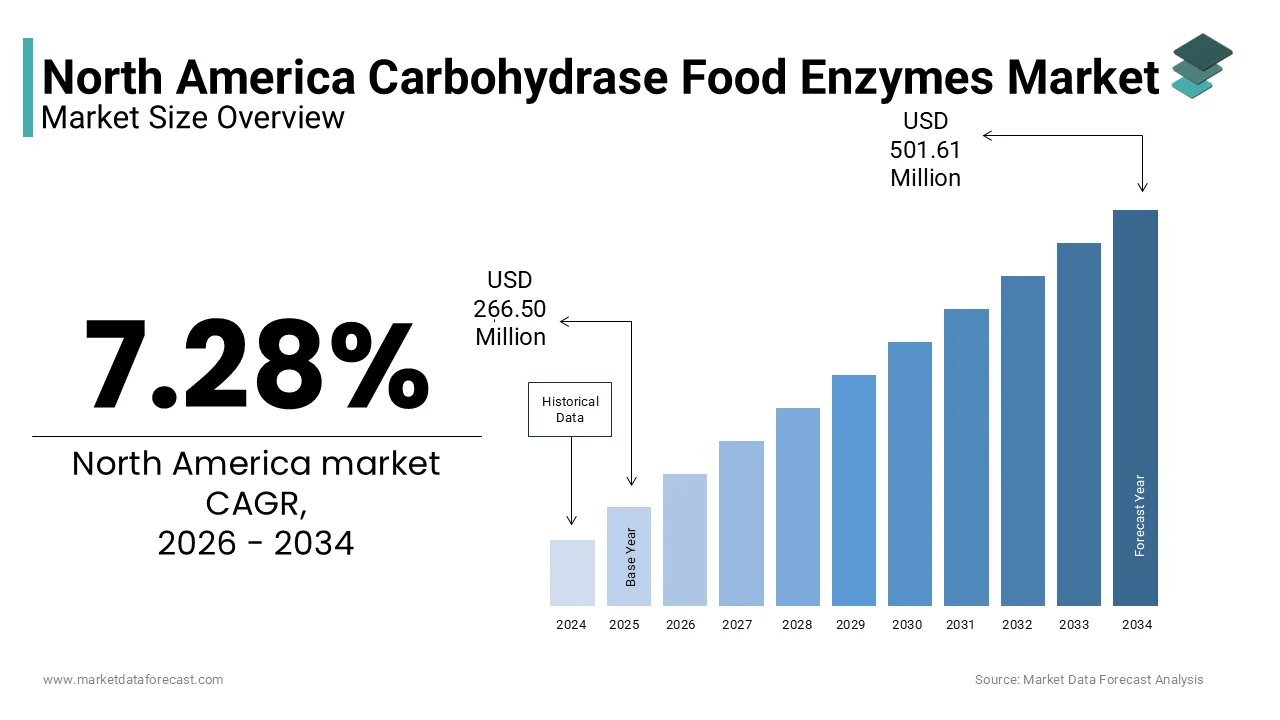
The North America carbohydrase food enzymes market size was valued at USD 266.50 million in 2025, is estimated at USD 285.90 million in 2026, and is projected to reach USD 501.61 million by 2034, registering a compound annual growth rate (CAGR) of 7.28% during the forecast period. Driven by clean-label product trends, intense activity across bakery and beverage processing sectors, and widespread adoption of natural processing aids, the regional market continues robust expansion.
Key Executive Metrics (At-a-Glance)
- 2025 Base Valuation: USD 266.50 Million
- 2026 Current Valuation: USD 285.90 Million
- 2034 Forecast Valuation: USD 501.61 Million
- Compound Annual Growth Rate (CAGR): 7.28% (2026–2034)
- Dominant Application Segment: Bakery (highest consumption volume led by amylases and dough modifiers)
- Fastest-Growing Application: Beverage Industry (fruit juices, plant-based drinks, and brewing)
- Key Regional Hub: United States (commanding 77.5% of regional market share in 2025)
Core Market Drivers
- Clean-Label Demand: Growing consumer preference for natural food products, eliminating artificial additives and synthetic modifiers through regulatory-exempt processing aids.
- Bakery & Confectionery Expansion: Continuous high-volume production of staple baked goods requiring precise dough rheology, extended shelf life, and waste minimization.
- Plant-Based Innovation: Surging popularity of plant-based meats and alternative dairy beverages driving novel enzyme applications.
Primary Market Restraints & Challenges
- Regulatory Complexities: Rigorous premarket notifications and safety evaluations from the FDA and Health Canada that increase development costs and slow down market entry.
- High Production Costs: Substantial capital expenses tied to fermentation technologies, strict purification standards, and specialized cold-chain logistics.
North America Carbohydrase Food Enzymes Market Segmentation Breakdown
| Segment Category | Leading Sub-Segment (2025 Base) | Fastest-Growing Sub-Segment (2026–2034) |
|---|---|---|
| By Application | Bakery Sector (dominates via amylases and consistent commercial output) | Beverage Industry (juices, plant-based milks, craft brewing) |
| By Region | United States (77.5% market share driven by a $1.3 trillion food manufacturing sector) | Canada & Rest of North America |
Major Industry Players Profiled
Key enterprises shaping the competitive North America carbohydrase food enzymes market include Novozymes A/S, E. I. du Pont de Nemours and Company, Kerry Group plc, Associated British Foods plc, Koninklijke DSM N.V., Chr. Hansen A/S, Dyadic International, Inc., Advanced Enzymes, Puratos Group, and Amano Enzyme Inc..
North America Carbohydrase Food Enzymes Market Size
The North America carbohydrase food enzymes market size was valued at USD 266.50 million in 2025, and is expected to reach USD 501.61 million by 2034 from USD 285.90 million in 2026. The market's promising CAGR for the predicted period is 7.28%.
The North America’s mature food and beverage industry relies heavily on these enzymes to enhance texture, improve yield, and optimize production efficiency. According to the United States Department of Agriculture, the food and beverage manufacturing sector contributes over 1.3 trillion US dollars to the national economy, underscoring the scale of operations where enzymatic solutions are deployed. Furthermore, as per Statistics Canada, the food and beverage processing industry generates over 115 billion Canadian dollars in annual shipments, highlighting the extensive integration of processing aids like carbohydrases. The shift towards clean label products has accelerated the adoption of enzyme technology as a natural alternative to chemical additives. Consumers increasingly demand transparency in ingredient lists, prompting manufacturers to replace synthetic modifiers with enzymatic processes that do not require labelling as additives in many jurisdictions. This regulatory advantage combined with the functional benefits of carbohydrases drives their widespread use across the continent. The technological advancements in enzyme stability and specificity have further expanded their applicability in novel food formulations, positioning carbohydrases as a cornerstone of modern food processing innovation in North America.
MARKET DRIVERS
Surging Demand for Clean Label and Natural Food Ingredients Accelerates Adoption
The growing consumer preference for clean label and natural food products is primarily driving the North American carbohydrase food enzymes market growth. Modern consumers are increasingly scrutinizing ingredient lists and avoiding artificial additives, preservatives, and synthetic modifiers. For instance, the demand for clean label flavors is on the rise and this influences and reflects wider clean label ingredient trends, which is creating a strong market pull for natural processing aids. Carbohydrases offer a viable solution by enabling manufacturers to achieve desired textural and functional properties without resorting to chemical agents. For instance, amylases are widely used in baking to improve dough handling and bread volume while maintaining a clean label status. For instance, the demand for organic foods is growing significantly, with the processed food segment accounting for the leading share and this is reflecting the robust demand for products perceived as wholesome and minimally processed. Enzymes are often exempt from labeling requirements when used as processing aids, allowing brands to market their products as free from artificial additives. This regulatory benefit combined with the functional efficacy of carbohydrases makes them an attractive option for food manufacturers aiming to meet consumer expectations for transparency and quality.
Expansion of the Bakery and Confectionery Industries Fuels Enzyme Consumption
The continuous expansion of the bakery and confectionery sectors in North America significantly drives the demand for carbohydrase food enzymes, which is further boosting the regional market expansion. Bread, cakes, cookies, and other baked goods constitute a staple part of the daily diet for millions of consumers, necessitating efficient and consistent production methods. For instance, the growing demand for bakery products fuels the massive scale of production that relies on enzymatic solutions. Carbohydrases such as alpha-amylase and glucoamylase are essential for improving dough rheology, extending shelf life, and enhancing flavor profiles in baked products. In the confectionery sector, enzymes are used to modify starches and sugars to achieve specific textures and sweetness levels. As per recent industry analysis, the confectionery sector continues to see a steady growth trajectory driven by innovation in product formats and flavors. The need for cost-effective production techniques that minimize waste and maximize yield further propels the use of enzymes. By breaking down complex carbohydrates efficiently, carbohydrases help manufacturers reduce energy consumption and raw material usage. This sustained growth in the bakery and confectionery segments ensures a steady and increasing consumption of carbohydrase enzymes across the region.
MARKET RESTRAINTS
Stringent Regulatory Compliance and Safety Assessment Requirements Hinder Speed to Market
The stringent regulatory framework governing food additives and processing aids in North America is impeding the regional market growth. Manufacturers must undergo rigorous safety assessments and obtain approvals from agencies such as the Food and Drug Administration in the United States and Health Canada before commercializing new enzyme variants. According to the Food and Drug Administration, the premarket notification process for food substances requires extensive toxicological and clinical data, which can be a time-intensive process. This lengthy timeline increases development costs and delays market entry, posing challenges for smaller companies with limited resources. The evaluation of novel food ingredients requires comprehensive documentation regarding source organisms, production methods, and potential allergenicity, which adds layers of complexity to the regulatory landscape. The varying requirements between the United States and Canada further complicate compliance for companies operating in both markets. Additionally, any changes in enzyme production strains or fermentation processes may trigger re-evaluation, creating uncertainty for manufacturers. Companies must invest heavily in regulatory affairs departments to navigate these complexities, which can strain operational budgets and slow down the pace of product launches in the competitive North American food industry.
High Costs Associated with Enzyme Production and Purification Limit Accessibility
The high costs associated with the production, purification, and stabilization of carbohydrase enzymes present a notable restraint for widespread adoption, particularly among small and medium-sized food processors. Producing high-purity enzymes requires sophisticated fermentation technologies, downstream processing equipment, and strict quality control measures, all of which contribute to elevated manufacturing expenses. The capital investment required for establishing state-of-the-art enzyme production facilities is substantial, creating significant barriers to entry for new players. Furthermore, the need for specialized storage conditions to maintain enzyme activity adds to logistical costs. The purification process alone accounts for a large portion of total production costs, making final products expensive for price-sensitive segments. Small-scale bakeries and local food producers often find it economically challenging to incorporate premium enzymatic solutions into their operations, opting instead for cheaper chemical alternatives or traditional methods. The volatility in raw material prices for fermentation media further exacerbates cost pressures, leading to fluctuating enzyme prices. This economic barrier restricts the market penetration of advanced carbohydrase formulations, limiting their availability to larger industrial players who can absorb the higher costs.
MARKET OPPORTUNITIES
Rising Popularity of Plant-Based and Alternative Protein Products Creates New Applications
The surging popularity of plant-based diets and alternative protein products presents a substantial opportunity for the carbohydrase food enzymes market in North America. Consumers are increasingly shifting away from animal-based proteins due to health concerns, environmental awareness, and ethical considerations, driving demand for meat and dairy alternatives. According to the Plant-Based Meat Market Report 2026, the market is expected to grow to 13.09 billion US dollars in 2026, highlighting the scale of this emerging market. Carbohydrases play a crucial role in improving the texture, mouthfeel, and nutritional profile of plant-based products by breaking down cell wall components and modifying starches. For instance, cellulases and hemicellulases are used to extract proteins from plant sources more efficiently and reduce bitterness in pea and soy isolates. Enzymatic treatment helps mimic the fibrous structure of animal meat, enhancing consumer acceptance of plant-based alternatives. Additionally, carbohydrases aid in the production of plant-based milks by improving yield and stability. The continuous innovation in this sector offers ample opportunities for enzyme manufacturers to develop specialized formulations tailored to the unique processing needs of plant-based ingredients, thereby expanding their customer base and revenue streams.
Advancements in Enzyme Engineering and Immobilization Technologies Open New Frontiers
Technological advancements in enzyme engineering and immobilization techniques offer significant opportunities for the North American carbohydrase food enzymes market growth. Innovations such as directed evolution and rational design allow scientists to create enzymes with improved stability, specificity, and activity under diverse processing conditions. Engineered enzymes can exhibit significantly higher activity compared to their natural counterparts, making them more efficient and cost-effective for industrial applications. Immobilization technologies enable the reuse of enzymes multiple times, reducing overall production costs and minimizing waste. These advancements facilitate the use of carbohydrases in novel applications such as high-temperature processing and extreme pH environments, which were previously challenging. The development of multi-enzyme complexes that perform simultaneous reactions further streamlines production processes, enhancing efficiency and product quality. Food manufacturers are increasingly seeking customized enzymatic solutions to address specific processing challenges, creating a demand for tailored enzyme products. By leveraging these technological breakthroughs, enzyme producers can differentiate their offerings and capture value in high-margin segments, driving growth and innovation in the North American market.
MARKET CHALLENGES
Allergenicity Concerns and Consumer Sensitivity Pose Safety Risks
Allergenicity concerns associated with certain enzyme sources present a significant challenge for the carbohydrase food enzymes market in North America. Many industrial enzymes are derived from microbial sources such as fungi and bacteria, which can trigger allergic reactions in sensitive individuals. According to the American Academy of Allergy, Asthma, and Immunology, a significant percentage of children with food allergies have multiple food triggers, highlighting the prevalence of complex health profiles that require strict monitoring. Although enzymes are generally degraded during processing, trace residues may remain in the final product, posing potential risks to allergic consumers. Cross-contamination during manufacturing can also introduce allergens, complicating safety assurance. Manufacturers must implement rigorous testing and labeling protocols to mitigate these risks, which adds to operational complexity and cost. Consumer awareness of allergens is high, and any incident related to undeclared allergens can lead to product recalls and reputational damage. Balancing the benefits of enzymatic processing with safety assurances remains a critical challenge, requiring continuous vigilance and adaptation to evolving scientific understanding and regulatory expectations in the North American market.
Supply Chain Volatility and Raw Material Scarcity Impact Production Stability
Supply chain volatility and scarcity of raw materials pose a persistent challenge to the North American carbohydrase food enzymes market expansion. The fermentation process relies on consistent supplies of carbon sources, nitrogen sources, and other nutrients, which are subject to market fluctuations and geopolitical disruptions. Global grain prices have experienced significant volatility in recent years due to climate change and trade tensions, affecting the cost and availability of key fermentation substrates. Supply chain bottlenecks have increased input costs for manufacturing sectors, impacting the profitability of enzyme producers. Dependence on specific microbial strains and proprietary fermentation media further exacerbates vulnerability to supply shocks. Any disruption in the availability of these critical inputs can lead to production delays and inconsistent product quality. Additionally, the reliance on imported specialty chemicals for enzyme stabilization and formulation introduces additional risks related to logistics and customs clearance. Manufacturers must develop robust supply chain strategies, including the diversification of suppliers and inventory buffering, to mitigate these risks. The unpredictability of raw material markets continues to challenge the ability of enzyme producers to maintain consistent pricing and reliable delivery schedules in the competitive North American food industry.
REPORT COVERAGE
| REPORT METRIC | DETAILS |
| Market Size Available | 2025 to 2034 |
| Base Year | 2025 |
| Forecast Period | 2026 to 2034 |
| CAGR | 7.28% |
| Segments Covered | By Application, and Region |
| Various Analyses Covered | Regional & Country Level Analysis, Segment-Level Analysis, DROC, PESTLE Analysis, Porter’s Five Forces Analysis, Competitive Landscape, Analyst Overview on Investment Opportunities |
| Regions Covered | The United States, Canada, Mexico, and Rest of North America |
| Market Leaders Profiled | E. I. du Pont de Nemours and Company (U.S.), Associated British Foods plc (U.K.), Koninklijke DSM N.V. (The Netherlands), Novozymes A/S (Denmark), Chr. Hansen A/S (Denmark), Dyadic International, Inc. (U.S.), Advanced Enzymes (India), Puratos Group (Belgium), Amano Enzyme Inc. (Japan) |
SEGMENTAL ANALYSIS
By Application Insights
The bakery segment dominated the market by accounting for the highest share of the North American carbohydrase food enzymes market in 2025 due to the indispensable role of amylases and other carbohydrases in improving dough quality and product consistency. Bread and baked goods are staple foods in North American diets, driving continuous high-volume production that relies on enzymatic solutions for efficiency. The commercial baking industry generates significant annual revenue, creating a massive base for enzyme consumption. The primary driver for this dominance is the ability of carbohydrases to replace chemical additives while enhancing texture and shelf life. Consumer demand for fresh and soft baked goods has increased, prompting manufacturers to adopt enzymes that retard staling and improve crumb structure. Alpha-amylase breaks down starch into sugars that feed yeast during fermentation, resulting in better volume and crust color. This functional benefit is critical for large-scale industrial bakeries that require consistent output across multiple production lines. Furthermore, the trend towards whole grain and fiber-enriched breads has increased the need for specific carbohydrases that mitigate the negative effects of bran on dough rheology. This combination of functional necessity and consumer preference solidifies the bakery sector as the dominant application area for carbohydrase enzymes in the region.
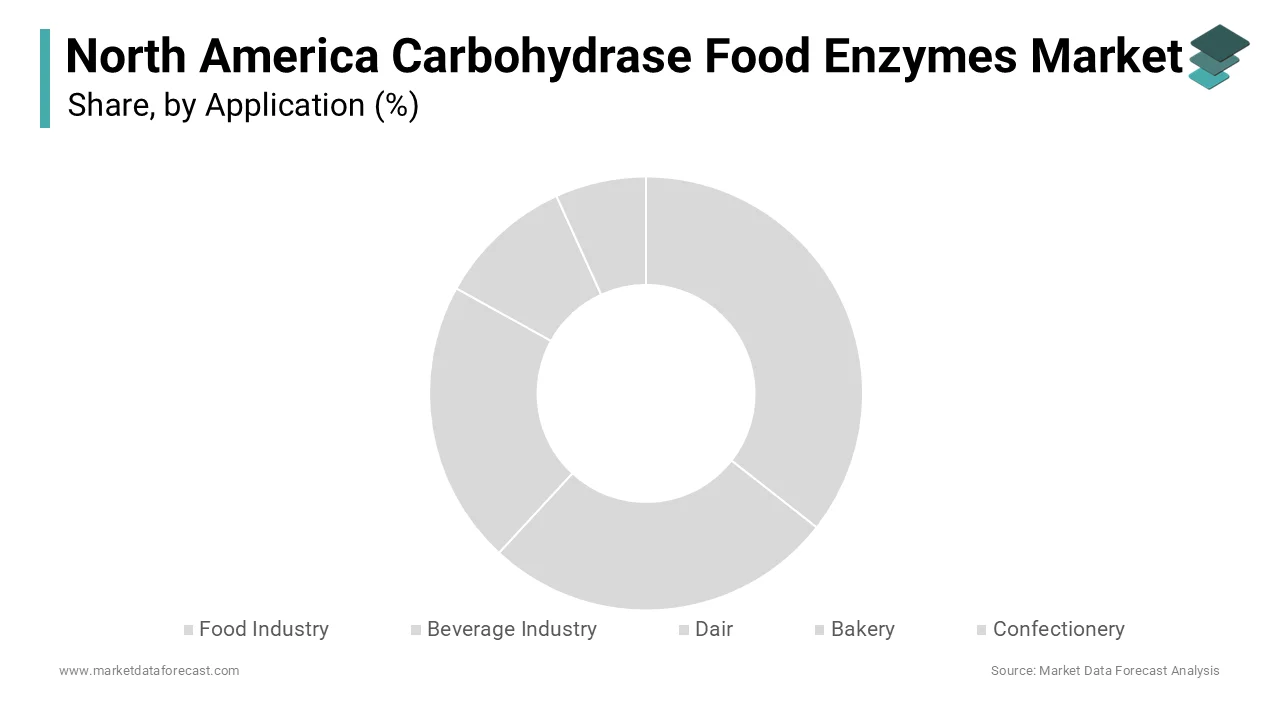
On the other side, the beverage segment is projected to be the fastest growing segment and is expected to showcase the fastest CAGR in the regional market during the forecast period owing to the rising consumption of fruit juices and plant-based drinks. Carbohydrases such as pectinases and cellulases are essential for clarifying juices and extracting maximum yield from fruits and vegetables. For instance, the North American juice market continues to expand, fuelled by health-conscious consumers seeking natural and nutrient-rich beverages. The use of pectinases reduces viscosity and prevents haze formation, ensuring clear and stable products that appeal to modern buyers. The rapidly growing plant-based milk and juice sector creates a new avenue for enzyme application in processing almonds, oats, and soybeans. Enzymes help break down cell walls to release more liquid and nutrients, improving both yield and nutritional value. The growing popularity of functional beverages and smoothies further accelerates demand for efficient extraction methods that preserve flavor and color. Additionally, the craft brewing sector utilizes carbohydrases to adjust fermentable sugar levels and create diverse beer styles. The versatility of carbohydrases in handling various raw materials and their ability to enhance process efficiency make them indispensable in the rapidly evolving beverage landscape, driving robust growth in this segment.
COUNTRY LEVEL ANALYSIS
The U.S. held the dominant position in the North American market with 77.5% of the regional market share in 2025. The country’s vast and diversified food processing industry serves as the primary engine for enzyme demand, supported by advanced technological infrastructure and high consumer spending. The food and beverage manufacturing sector contributes over 1.3 trillion US dollars to the national economy, reflecting the scale of operations that utilize enzymatic solutions. The strong presence of major food corporations and bakery chains drives consistent adoption of carbohydrases for quality improvement and cost reduction. Innovation in clean label products has led to a significant increase in the use of natural processing aids, including enzymes, across various food categories. The regulatory framework provided by the Food and Drug Administration facilitates the introduction of new enzyme variants, encouraging continuous innovation. Furthermore, the rising prevalence of lifestyle diseases has spurred demand for healthier food options, where enzymes play a key role in reducing sugar and fat content without compromising taste. The well-established distribution networks and robust research and development capabilities within the United States ensure that it remains the central hub for market growth and technological advancement in the North American region.
Canada occupies a significant position in the regional market and is characterized by its strong agricultural base and growing processed food sector. The country’s emphasis on high-quality food exports and domestic consumption drives the adoption of efficient processing technologies, including carbohydrase enzymes. According to Statistics Canada, the food and beverage processing industry is the largest manufacturing sector in the country, generating over 115 billion Canadian dollars in annual shipments. This substantial economic contribution underscores the extensive use of processing aids to maintain competitiveness in global markets. The production of maple syrup, fruit juices, and baked goods has seen steady growth, creating specific demands for specialized enzymes such as invertases and pectinases. The Canadian government’s support for sustainable agriculture and food innovation encourages the use of biological solutions over chemical alternatives. Health Canada’s rigorous safety standards ensure that only high-quality and safe enzymes enter the market, building trust among consumers and manufacturers. The increasing diversity of the Canadian population has also led to greater demand for ethnic and specialty foods, which often require unique enzymatic treatments. These factors, combined with a stable economic environment, position Canada as a key growth market within the North America carbohydrase food enzymes landscape.
COMPETITIVE LANDSCAPE
The competition in the North America carbohydrase food enzymes market is characterized by the presence of established multinational corporations and specialized regional players who compete on innovation and service quality. Multinational companies leverage their extensive research capabilities and global supply chains to introduce advanced enzymatic solutions that meet diverse industry needs. They focus on delivering high value products that improve process efficiency and support sustainability initiatives. Regional players compete by offering niche products and personalized customer service tailored to local market conditions. The market sees intense rivalry in terms of product performance pricing and technical support. Companies frequently engage in collaborations with academic institutions and industry associations to drive innovation and stay ahead of regulatory changes. Sustainability has become a key differentiator as firms develop eco friendly enzymes that reduce environmental impact. The mature nature of the North American market requires continuous innovation to capture growth opportunities. Overall the competitive landscape encourages constant improvement in product quality and customer engagement benefiting the entire food processing industry.
KEY MARKET PLAYERS
Major Key Players in the North America carbohydrase food enzymes market are
- E. I. du Pont de Nemours and Company (U.S.)
- Associated British Foods plc (U.K.)
- Koninklijke DSM N.V. (The Netherlands)
- Novozymes A/S (Denmark)
- Chr. Hansen A/S (Denmark)
- Dyadic International, Inc. (U.S.)
- Advanced Enzymes (India)
- Puratos Group (Belgium)
- Amano Enzyme Inc. (Japan)
Top Players in the Market
- Novozymes A/S maintains a leadership position in the North America carbohydrase food enzymes market through its extensive portfolio of high performance biological solutions. The company focuses on developing innovative enzyme formulations that enhance efficiency and sustainability in food processing applications. Novozymes recently expanded its technical service capabilities in the United States to provide customized support for bakery and beverage manufacturers. Their involvement includes launching next generation amylases that improve yield and texture while reducing energy consumption. By collaborating with key industry stakeholders and investing in local research facilities, Novozymes strengthens its reputation as a pioneer in sustainable food innovation. The company’s commitment to environmental stewardship and regulatory compliance ensures its products meet the stringent standards of the North American market.
- DuPont de Nemours Inc contributes significantly to the market by offering a diverse range of carbohydrase enzymes tailored for various food and beverage applications. The company leverages its strong scientific expertise to create solutions that improve product quality and operational efficiency. DuPont has strengthened its presence in North America by integrating advanced digital tools that help customers optimize enzyme usage and monitor performance. Recent initiatives include the development of specialized enzymes for plant based protein extraction and clean label baking. The company actively engages with food manufacturers to co create solutions that address specific processing challenges. Through strategic investments in production capacity and customer education programs, DuPont reinforces its position as a trusted partner in the North American food enzyme sector.
- Kerry Group plc plays a vital role in the North America carbohydrase food enzymes market by providing integrated taste and nutrition solutions. The company combines its enzyme technology with flavor expertise to deliver holistic products that enhance consumer appeal. Kerry has recently focused on expanding its portfolio of natural and organic certified enzymes to meet the growing demand for clean label ingredients. Their involvement includes partnering with major food brands to develop innovative baked goods and beverages with improved texture and shelf life. The company also invests in sustainability initiatives such as waste reduction and energy efficient production methods. By leveraging its global network and local market insights, Kerry Group delivers value added enzymatic solutions that support the evolving needs of the North American food industry.
Top Strategies Used by Key Market Participants
Key players in the North America carbohydrase food enzymes market primarily employ product innovation and strategic partnerships to maintain competitive advantage. Companies invest heavily in research and development to create specialized enzymes that address specific processing needs such as clean label requirements and sustainability goals. Collaborating with food manufacturers allows firms to co develop customized solutions that enhance product quality and efficiency. Additionally, expanding technical support services helps build long term relationships with customers by providing expert guidance on enzyme application. Mergers and acquisitions are used to broaden product portfolios and access new technologies. By focusing on sustainability and digital integration, leading companies differentiate their offerings and respond effectively to changing consumer preferences and regulatory standards in the region.
MARKET SEGMENTATION
This research report on the North America carbohydrase food enzymes market has been segmented and sub-segmented based on the following categories.
By Application
- Food Industry
- Beverage Industry
- Dair
- Bakery
- Confectionery
By Region
- United States
- Canada
- Rest of North America