- Product Description Description
- Table of Contents TOC
- List of Table & Figure LOT
- Get Free Sample PDF Sample PDF
North America Carbon Black Market Size
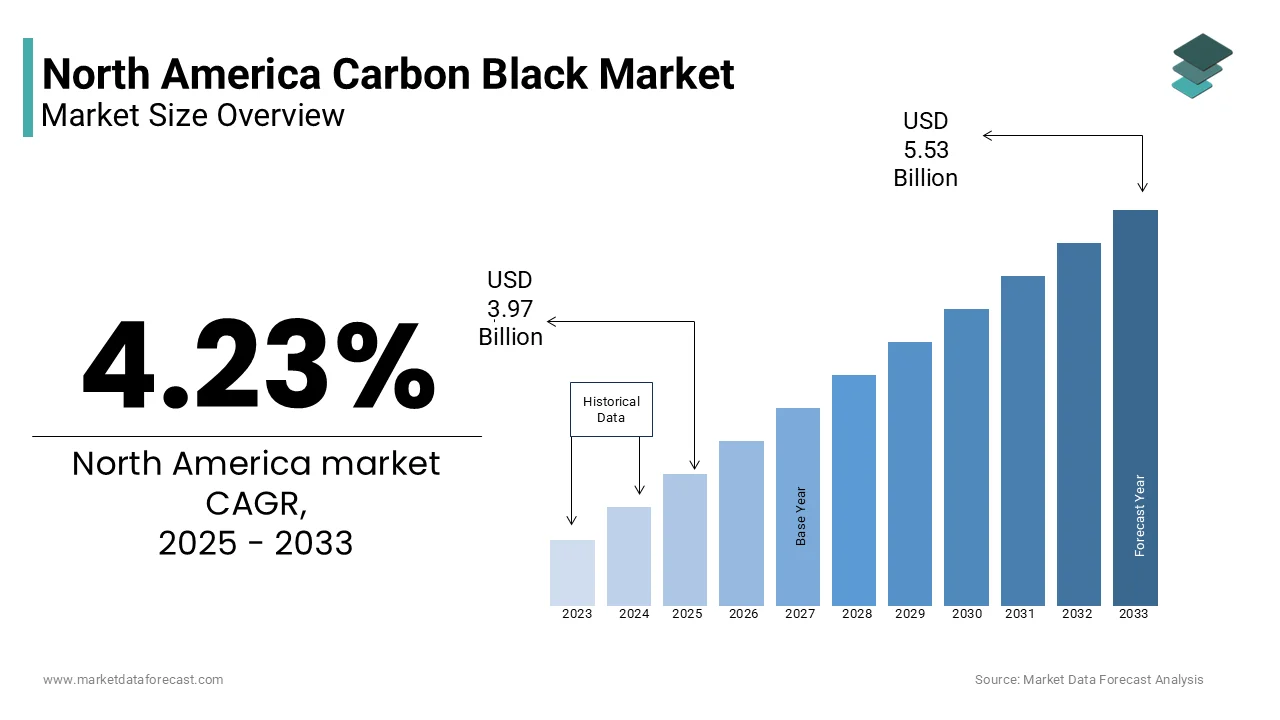
The carbon black market size in North America was valued at USD 3.81 billion in 2024 and is predicted to be worth USD 5.53 billion by 2033, from USD 3.97 billion in 2025 and grow at a CAGR of 4.23% from 2025 to 2033.
The North America carbon black market refers to the production, distribution, and consumption of carbon black—a fine, black powder derived from the incomplete combustion of heavy petroleum feedstocks. Widely used as a reinforcing agent in rubber products, especially tires, carbon black also serves as a pigment, UV stabilizer, and conductive material across industries such as plastics, coatings, and electronics. Its high surface area, thermal stability, and electrical conductivity make it indispensable for both industrial and specialty applications.
North America remains a key regional player in the global carbon black industry due to its robust automotive manufacturing base, extensive tire production facilities, and growing demand from downstream sectors. According to the American Chemistry Council, the U.S. alone accounted for over 80% of regional consumption in 2023, driven by strong ties between carbon black producers and tire manufacturers. The presence of major companies like Cabot Corporation and Birla Carbon has further consolidated the region’s strategic position in the supply chain.
Moreover, increasing environmental awareness has led to innovations in sustainable carbon black production, including recovery-based processes and alternative feedstock utilization. As per Natural Resources Canada, initiatives aimed at reducing emissions from carbon black plants have gained momentum, influencing regulatory frameworks and corporate sustainability goals.
MARKET DRIVERS
Growth in the Automotive and Tire Manufacturing Sector
A primary driver of the North America carbon black market is the sustained expansion of the automotive and tire manufacturing industry. Carbon black is an essential additive in tire production, enhancing durability, wear resistance, and mechanical strength. According to the study, the U.S. tire industry produced over 160 million passenger car and light truck tires in 2023, reflecting steady demand for carbon black as a critical raw material. Besides, the resurgence of domestic automotive manufacturing, supported by government incentives under the CHIPS and Science Act, has boosted tire output and related raw material procurement. Moreover, the rise in electric vehicle (EV) adoption has prompted tire manufacturers to develop specialized compounds that require higher reinforcement, further strengthening carbon black usage. Furthermore, tire recycling and retreading activities are gaining traction, with organizations like the Rubber Manufacturers Association promoting circular economy practices.
Increasing Demand from Non-Tire Applications
Beyond tire manufacturing, another significant driver of the North America carbon black market is the rising demand from non-tire applications such as plastics, coatings, inks, and conductive materials. Carbon black enhances mechanical properties, color depth, and UV protection in polymers, making it a preferred additive in packaging, agricultural films, and automotive components. According to Plastics Industry Association (PLASTICS), over 40% of plastic converters in North America incorporated carbon black into their formulations in 2023 for improved performance and longevity. In the electronics sector, carbon black is increasingly used in antistatic coatings and conductive composites for printed circuit boards, battery casings, and electronic enclosures. Besides, the construction industry utilizes carbon black in roofing membranes and sealants to enhance weather resistance and structural integrity. Moreover, the printing and ink industry continues to be a steady consumer of pigment-grade carbon black. This diversification into multiple end-use sectors ensures resilience and long-term growth potential for the North America carbon black market.
MARKET RESTRAINTS
Environmental Regulations and Emission Control Pressures
One of the major restraints affecting the North America carbon black market is the tightening of environmental regulations governing emissions from carbon black production facilities. The process of producing carbon black involves the controlled combustion of hydrocarbons, which generates particulate matter, volatile organic compounds (VOCs), and greenhouse gases. According to the U.S. Environmental Protection Agency (EPA), carbon black manufacturing ranks among the top industrial sources of hazardous air pollutants, prompting stringent compliance requirements. Under the Clean Air Act, the EPA mandates strict limits on particulate emissions and requires continuous monitoring and reporting from production sites. In 2023, several carbon black plants were subjected to updated Maximum Achievable Control Technology (MACT) standards, necessitating costly upgrades to filtration systems and combustion controls. Additionally, public scrutiny surrounding the environmental footprint of carbon black has intensified pressure on producers to adopt cleaner technologies. While some companies are exploring bio-based or recovered carbon black alternatives, these solutions remain in early commercialization stages.
Volatility in Raw Material Prices and Supply Chain Disruptions
Another critical restraint influencing the North America carbon black market is the volatility in feedstock prices and ongoing supply chain disruptions. Carbon black is primarily derived from oil refining byproducts such as aromatic oils and residual hydrocarbons, whose availability and pricing are closely tied to fluctuations in crude oil markets. According to the Energy Information Administration (EIA), crude oil prices in the U.S. experienced a 14% increase in 2023 compared to the previous year, directly affecting carbon black production costs. Supply chain bottlenecks have further compounded these challenges. Port congestion, labor shortages, and freight rate volatility have delayed the transportation of raw materials and finished carbon black products. As per DAT Freight & Analytics, spot truckload rates in North America peaked at $2.88 per mile in mid-2023, up from $2.28 per mile in early 2021, significantly raising logistics expenses for manufacturers. Additionally, geopolitical tensions and trade restrictions have disrupted the import of specialty additives and catalysts required for advanced carbon black processing. The American Chemistry Council noted that lead times for certain chemical inputs increased by up to 30 days in 2023, causing production delays and inventory management issues.
MARKET OPPORTUNITIES
Development of Sustainable and Recovered Carbon Black Solutions
A significant opportunity emerging in the North America carbon black market is the development and commercialization of sustainable and recovered carbon black (rCB) alternatives. Traditional carbon black production relies heavily on fossil fuels, leading to substantial greenhouse gas emissions and environmental concerns. However, advancements in pyrolysis and gasification technologies have enabled the extraction of carbon black from end-of-life tires and other waste materials, offering a eco-friendly solution. According to Natural Resources Canada, recovered carbon black can reduce CO₂ emissions by up to 80% compared to virgin carbon black, making it an attractive option for environmentally conscious manufacturers. Several startups and established firms, including Pyrum Innovations and Delta-Energy Group, have launched pilot projects in North America to scale rCB production. As per the Rubber Manufacturers Association, tire-derived rCB already accounts for over 5% of total carbon black consumption in select tire applications. Moreover, regulatory incentives and corporate sustainability goals are accelerating the adoption of circular economy models. Companies like Michelin and Goodyear have pledged to incorporate higher percentages of recycled content into their tire formulations, creating new demand channels for rCB.
 Expansion into High-Performance Conductive and Specialty Applications
An additional opportunity driving the North America carbon black market is the growing integration of carbon black into high-performance conductive and specialty applications beyond traditional tire and polymer uses. The demand for electric vehicles, energy storage systems, and advanced electronics has created new avenues for carbon black utilization, particularly in conductive composites, battery electrodes, and static-dissipative materials. Carbon black’s inherent electrical conductivity makes it a crucial component in lithium-ion batteries, where it serves as a conductive additive in cathode and anode materials. According to the Argonne National Laboratory, carbon black improves electrode efficiency and charge-discharge cycles, enhancing overall battery performance. With North America witnessing a surge in EV manufacturing, battery producers are increasingly sourcing carbon black tailored for electrochemical applications. In addition, the semiconductor and printed electronics industries are leveraging carbon black for flexible circuits, RFID tags, and smart packaging. The Printed Electronics Association reports that North America’s printed electronics market expanded by 11% in 2023, highlighting increased interest in cost-effective conductive materials.
MARKET CHALLENGES
Technological Substitution from Alternative Reinforcing Agents
A critical challenge facing the North America carbon black market is the increasing substitution of carbon black with alternative reinforcing agents, particularly in tire and polymer applications. Silica, in particular, has emerged as a viable replacement in high-performance tire treads due to its lower rolling resistance and improved fuel efficiency. According to the European Tyre and Rubber Manufacturers’ Association (ETRMA), silica usage in tire manufacturing has grown by over 20% in recent years, driven by stricter fuel economy regulations and the shift toward electric mobility. Automotive original equipment manufacturers (OEMs) are also exploring hybrid compounds that combine silica with modified carbon black to optimize performance while meeting sustainability targets. As per the International Rubber Study Group, silica-reinforced tire formulations accounted for nearly 30% of the North American tire market in 2023, signaling a gradual but notable shift away from conventional carbon black reliance. Beyond tires, calcium carbonate, clay, and engineered nanomaterials are being tested as fillers in polymer composites, offering comparable mechanical properties at reduced cost.
Consolidation and Entry Barriers for New Market Players
The North America carbon black market faces significant entry barriers due to industry consolidation, high capital requirements, and regulatory complexities. A few large-scale producers dominate the market, including Cabot Corporation, Orion Engineered Carbons, and Birla Carbon, collectively controlling a large share of production capacity. Establishing a carbon black manufacturing facility requires significant capital expenditure, often exceeding hundreds of millions of dollars, due to the need for sophisticated reactors, emission control systems, and feedstock infrastructure. These financial hurdles deter small and mid-sized enterprises from entering the market independently. Moreover, compliance with environmental regulations adds another layer of complexity. Permitting timelines for new plants have lengthened due to heightened scrutiny from federal and state agencies. The U.S. Environmental Protection Agency reports that obtaining full operational permits for a carbon black facility now takes an average of 22 months, delaying project execution.
REPORT COVERAGE
| REPORT METRIC | DETAILS |
| Market Size Available | 2024 to 2033 |
| Base Year | 2024 |
| Forecast Period | 2025 to 2033 |
| CAGR | 4.23% |
| Segments Covered | By Process, Grade, Application, and Region |
|
Various Analyses Covered | Regional & Country Level Analysis, Segment-Level Analysis, DROC, PESTLE Analysis, Porter’s Five Forces Analysis, Competitive Landscape, Analyst Overview on Investment Opportunities |
| Regions Covered | The United States, Canada, Mexico, and Rest of North America |
| Market Leaders Profiled | Orion Group Holdings Inc, Cabot Corp, Mitsubishi Corp, Imerys, Birla Carbon USA, Sid Richardson Carbon & Energy Co, Mongolian Mining Corp, Phillips Carbon Black, Continental Carbon, Tokai Carbon, and others |
SEGMENTAL ANALYSIS
By Process Insights
The furnace black process accounted for the largest share of the North America carbon black market by capturing a 84.3% of total production volume in 2024. This dominance is attributed to its versatility, scalability, and superior performance characteristics compared to other production methods. One of the primary drivers behind the dominance of furnace black is its extensive use in tire manufacturing, where it enhances tensile strength, abrasion resistance, and heat dissipation. Additionally, advancements in reactor technology have allowed manufacturers to fine-tune particle size and structure, making furnace black suitable for specialty applications such as conductive polymers and UV-stabilized plastics.
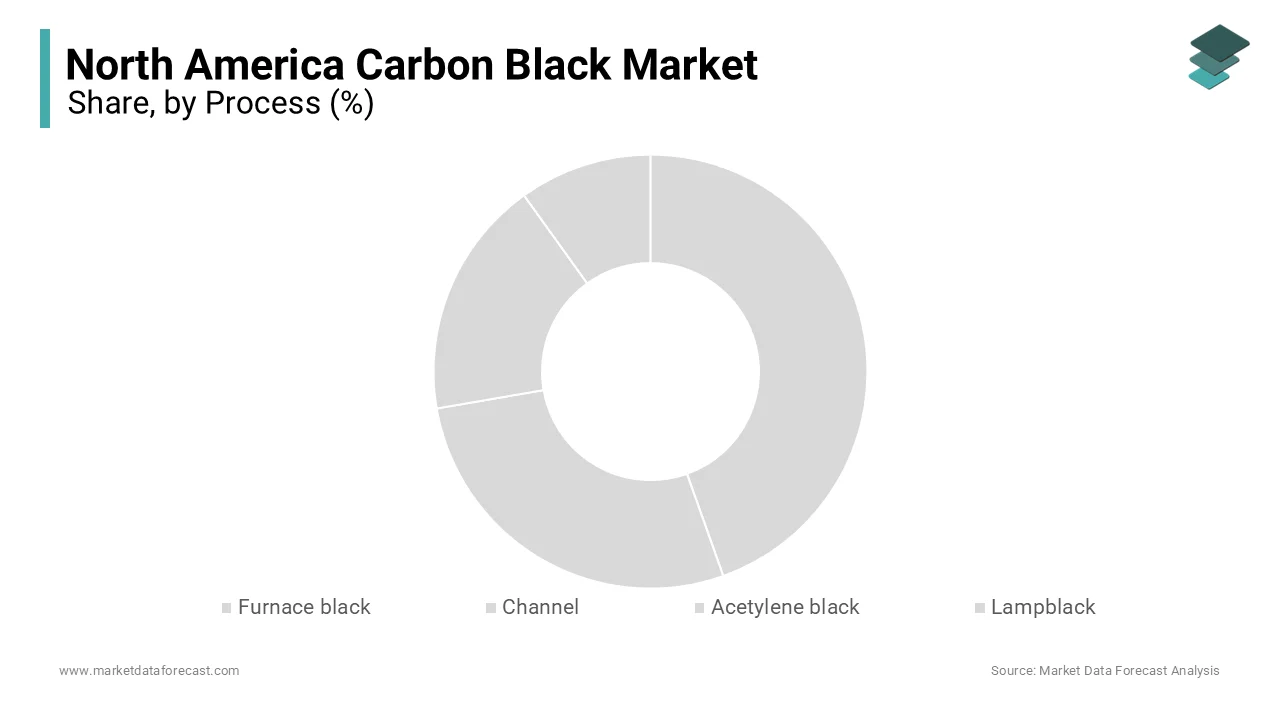
Acetylene black is the fastest-growing segment within the North America carbon black market, projected to expand at a CAGR of 6.9%. This growth is primarily driven by its unique electrical conductivity and purity, making it highly desirable for advanced battery applications and specialized polymer formulations. A key factor fueling this expansion is the rapid development of lithium-ion batteries and energy storage systems, particularly in electric vehicles (EVs) and renewable energy infrastructure. According to Argonne National Laboratory, acetylene black improves electron transport in cathode materials, enhancing battery efficiency and longevity. Moreover, the semiconductor and printed electronics industries are leveraging acetylene black for flexible circuits, RFID tags, and static-dissipative coatings.
By Grade Insights
Specialty grade carbon black had the biggest share of the North America carbon black market, accounting for approximately 62% of total consumption in 2024. This is due to its application in high-performance tire treads, colored coatings, and engineered plastics where precise dispersion, color depth, and reinforcing properties are essential. One of the primary drivers of specialty grade carbon black’s leadership is its critical role in tire manufacturing, particularly in high-performance and all-season tires that require enhanced wear resistance and road grip. According to the Rubber Manufacturers Association, specialty carbon black is used in over 50% of passenger and commercial tire compounds produced in North America, supporting durability and fuel efficiency. Apart from these, the growing demand for premium plastic products—such as agricultural films, automotive components, and UV-protected packaging—has reinforced the need for specialty-grade fillers. As per Plastics Industry Association (PLASTICS), more than 40% of plastic converters in North America incorporate specialty carbon black into their formulations for improved mechanical strength and weather resistance.
Conductive grade carbon black is the fastest-growing segment in the North America carbon black market, anticipated to grow at a CAGR of 7.4%. This rapid expansion is fueled by rising demand for antistatic and electroconductive materials in electronics, energy storage, and industrial applications. A major driver of this growth is the surge in electric vehicle (EV) production and battery manufacturing, where conductive carbon black enhances electrode conductivity and battery life. According to Argonne National Laboratory, conductive carbon black is an essential additive in lithium-ion battery electrodes, improving charge-discharge efficiency and thermal stability. Furthermore, the electronics industry is increasingly using conductive carbon black in printed circuit boards, RFID tags, and flexible electronics. The IPC – Association Connecting Electronics Industries reports that North America’s electronics manufacturing activity grew by 12% in 2023, directly stimulating demand for conductive materials.
By Application Insights
The tire application segment spearheaded the North America carbon black market by accounting for a 68.4% of total consumption in 2024. Carbon black plays a crucial role in tire formulation by improving mechanical strength, abrasion resistance, and heat dissipation, making it indispensable for both passenger and commercial vehicles. A key factor driving this segment’s leadership is the scale of tire production in North America, supported by major automotive hubs in the U.S. Midwest and Mexico. Also, tire retreading and recycling initiatives are contributing to ongoing consumption. Moreover, the shift toward high-performance tires for electric vehicles (EVs) has prompted tire manufacturers to optimize compound formulations, ensuring continued reliance on carbon black.
The plastics application segment is the rapidly advancing within the North America carbon black market, projected to expand at a CAGR of 6.3%. This progress is driven by the expanding use of carbon black in polymer composites to enhance mechanical properties, UV protection, and aesthetic appeal. One of the key drivers is the increasing demand for durable and weather-resistant plastic products in agriculture, construction, and automotive sectors. According to Plastics Industry Association (PLASTICS), over 40% of plastic converters in North America incorporate carbon black into films, pipes, and automotive components to improve longevity and structural integrity under harsh environmental conditions. Moreover, the rise of lightweight, high-performance polymers in electric vehicle (EV) manufacturing has created new opportunities for carbon black integration. Automotive suppliers are utilizing carbon black-infused thermoplastics for interior and exterior components that require thermal stability and impact resistance. Also, the packaging industry is adopting black-colored polyolefin films containing carbon black for food-safe, opaque containers that protect against UV degradation.
REGIONAL ANALYSIS
The United States occupied the dominant position in the North America carbon black market by accounting for 82% of the regional market share in 2024. This is attributed to a well-established industrial base, particularly in automotive manufacturing, tire production, and polymer compounding, which are major consumers of carbon black. A major growth driver is the country's robust tire manufacturing sector, with companies like Michelin, Goodyear, and Bridgestone maintaining large-scale operations across the Midwest and South. Additionally, the U.S. is a hub for innovation in alternative carbon black technologies, including recovered and conductive variants. Companies such as Cabot Corporation and Pyrum Innovations are investing in sustainable production methods and circular economy initiatives.
Canada maintains a stable presence due to its strong automotive manufacturing sector and growing polymer industry. One of the key drivers of carbon black demand in Canada is the presence of major automotive production facilities in Ontario and Quebec, which supply parts and finished vehicles to the broader North American market. Moreover, the Canadian polymer industry is increasingly adopting carbon black in film extrusion, pipe manufacturing, and injection molding applications due to its UV stabilization properties.
The Rest of North America exhibits emerging potential due to expanding tire production capacity and growing industrialization in Mexico. Mexico, in particular, has become a significant player in automotive component manufacturing, attracting investment from global tire producers such as Continental AG and Pirelli. In addition, the country’s proximity to the U.S. facilitates logistics and distribution, allowing for just-in-time supply chain models that benefit carbon black suppliers. However, challenges such as fluctuating crude oil prices and regulatory scrutiny remain barriers to large-scale expansion.
KEY MARKET PLAYERS AND COMPETITIVE LANDSCAPE
Orion Group Holdings Inc, Cabot Corp, Mitsubishi Corp, Imerys, Birla Carbon USA, Sid Richardson Carbon & Energy Co, Mongolian Mining Corp, Phillips Carbon Black, Continental Carbon, Tokai Carbon are the key players in the North America carbon black market.
The North America carbon black market is characterized by a concentrated yet dynamic competitive environment dominated by a few large-scale producers. Companies like Cabot Corporation, Orion Engineered Carbons, and Birla Carbon maintain strong footholds due to their established infrastructure, technological capabilities, and diversified product portfolios. However, increasing pressure from environmental regulations and shifting industry dynamics are compelling these players to innovate continuously and adopt more sustainable practices.
Smaller and mid-sized manufacturers are attempting to carve out niche positions by specializing in conductive or specialty-grade carbon blacks tailored for emerging applications such as energy storage and electronics. Additionally, startups focused on recovered carbon black are gaining traction, introducing alternative supply chains that challenge traditional business models. As demand diversifies beyond tire reinforcement into high-tech and environmentally conscious sectors, competition is intensifying not only on price and quality but also on sustainability credentials and technological adaptability.
Collaborations, joint ventures, and vertical integration strategies are becoming more prevalent as companies seek to secure raw material sources, enhance R&D capabilities, and expand their presence in fast-growing application areas within the North American region.
TOP PLAYERS IN THE MARKET
Cabot Corporation
Cabot Corporation is a global leader in specialty chemicals and one of the most influential players in the North America carbon black market. The company has a long-standing reputation for innovation, sustainability, and technical expertise in carbon black production. Cabot serves a wide range of industries including tire manufacturing, plastics, coatings, and energy storage. Its commitment to developing high-performance conductive and specialty carbon blacks has positioned it at the forefront of evolving industrial demands, particularly in electric vehicle battery applications.
Orion Engineered Carbons
Orion Engineered Carbons plays a pivotal role in shaping the North America carbon black landscape through its extensive product portfolio and focus on sustainable solutions. The company emphasizes custom-formulated carbon blacks tailored for specific performance needs across tires, polymers, and electronics. Orion’s strategic investments in green technologies and circular economy initiatives have strengthened its position as a responsible supplier in a market increasingly driven by environmental considerations and regulatory pressures.
Birla Carbon
Birla Carbon is a key participant in the North America carbon black market, known for its advanced research capabilities and broad geographic reach. The company offers a diverse range of carbon black products that cater to both traditional and emerging applications such as inkjet printing, UV-stabilized films, and conductive materials. Birla Carbon's emphasis on customer-centric innovation and sustainable production practices has reinforced its competitive edge in a market undergoing technological and environmental transformation.
TOP STRATEGIES USED BY KEY PLAYERS
Investing in Sustainable and Recovered Carbon Black Technologies
Leading companies are prioritizing the development of sustainable alternatives, including recovered carbon black (rCB) from end-of-life tires and bio-based feedstocks. This shift aligns with global sustainability goals and helps reduce reliance on fossil fuels while meeting regulatory requirements and consumer demand for greener products.
Expanding into High-Performance Conductive Applications
With the rise of electric vehicles and energy storage systems, major players are focusing on conductive carbon blacks tailored for lithium-ion batteries, semiconductors, and printed electronics. These applications offer higher value and long-term growth potential compared to traditional uses.
Strengthening Supply Chain Resilience Through Strategic Partnerships
To mitigate supply chain disruptions and raw material volatility, companies are forming strategic alliances with feedstock suppliers, logistics providers, and recycling firms. These partnerships enhance operational efficiency, ensure consistent supply, and support market expansion in North America.
RECENT HAPPENINGS IN THE MARKET
- In February 2024, Cabot Corporation announced a partnership with a leading tire manufacturer to co-develop next-generation carbon black compounds designed for ultra-low rolling resistance tires, aimed at improving fuel efficiency and supporting electric mobility.
- In June 2024, Orion Engineered Carbons launched a new line of sustainably sourced carbon black derived from renewable feedstocks, targeting polymer and packaging applications with enhanced UV protection properties and reduced environmental impact.
- In October 2023, Birla Carbon introduced a specialized conductive carbon black formulation tailored for use in lithium-ion battery anodes, positioning itself as a strategic supplier in the rapidly expanding North American EV battery ecosystem.
- In March 2024, a consortium of North American carbon black producers collaborated with a waste management firm to pilot a tire pyrolysis facility aimed at producing recovered carbon black for industrial reuse, enhancing circularity and resource efficiency.
- In November 2024, a U.S.-based startup secured venture capital funding to scale its production of nanostructured carbon black using low-emission synthesis methods, aiming to disrupt the market with cleaner and cost-effective alternatives for specialty applications.
MARKET SEGMENTATION
This research report on the North America carbon black market has been segmented and sub-segmented based on the following categories.
By Process
- Furnace black
- Channel
- Acetylene black
- Lampblack
By Grade
- Specialty
- Conductive
By Application
- Tires
- Coatings
- Plastics
- Printing inks
- Toners
By Country
- The United States
- Canada
- Rest of North America