- Product Description Description
- Table of Contents TOC
- List of Table & Figure LOT
- Get Free Sample PDF Sample PDF
Market Size, 2025
$1.12 BnMarket Estimate, 2026
$1.18 BnMarket Forecast, 2034
$1.83 BnCAGR, 2026–2034
5.58%Executive Summary: North America Casein and Caseinates Market
- Market Scope: Comprehensive regional analysis covering product types (sodium, potassium, calcium caseinate), application industries (food & beverage, industrial, pharmaceutical, cosmetics), and country breakdowns (U.S., Canada, Rest of North America).
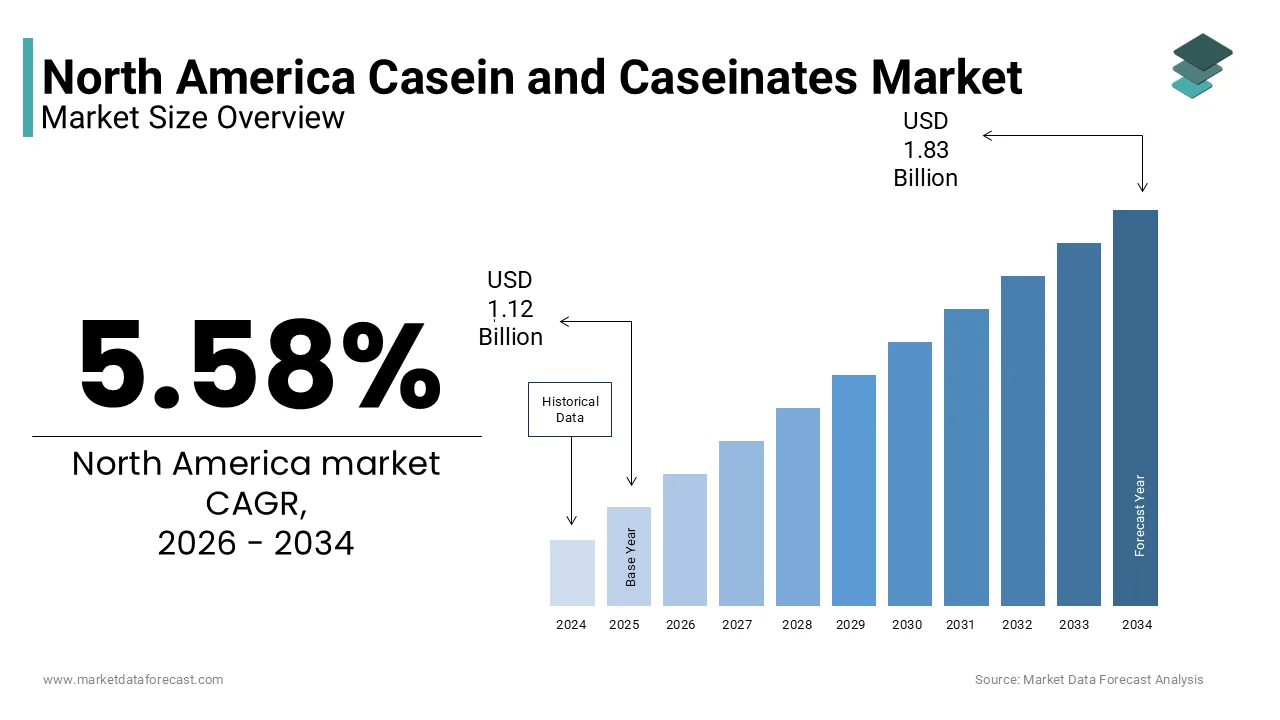
- Market Valuation: Valued at USD 1.12 billion (2025), estimated at USD 1.18 billion (2026), and projected to reach USD 1.83 billion by 2034, registering a CAGR of 5.58%.
- Primary Growth Drivers: Rising consumer demand for high-protein foods and sports nutrition supplements, increasing health consciousness, growth in fitness centers, and functional benefits like slow-release protein digestion and muscle preservation.
Key Market Segment Metrics (2026–2034)
| Category | Leading Segment (2025 Position) | Fastest-Growing / Key Segment Trends |
|---|---|---|
| By Type | Sodium Caseinate & Calcium Caseinate (dominant forms widely used for food stabilization, muscle recovery, and calcium fortification) | Potassium & Calcium Caseinates (gaining traction as health-conscious consumers seek reduced sodium and targeted mineral intake) |
| By Application | Food and Beverage (major market share leader across dairy, confectionery, bakery, and non-dairy creamers) | Cosmetics & Pharmaceuticals (expanding via skin/hair conditioning agents and functional protein formulations) |
| By Region | The United States (largest regional market driven by dairy product exports, industrial scale, and sports nutrition demand) | Canada & Mexico (experiencing strong adoption driven by sports nutrition markets and food manufacturing growth) |
Major Market Players & Market Structure
Market Structure: Highly consolidated regional and international dairy processing landscape featuring dairy cooperatives and multinational food corporations innovating through precision fermentation alternatives, enzyme enhancements, and functional protein blends.
Key Companies: Nestlé S.A., Danone S.A., Arla Foods, Groupe Lactalis, FrieslandCampina, Fonterra, Westland Milk Products, and Saputo.
North America Casein and Caseinates Market Size
The North America casein and caseinates market size was valued at USD 1.12 billion in 2025 and is expected to reach USD 1.83 billion by 2034 from USD 1.18 billion in 2026. The market is projected to grow at a CAGR of 5.58%.
Casein and caseinates are specialized milk proteins derived from bovine skim milk across the United States and Canada. According to the United States Department of Agriculture economic research reports, domestic milk production surpassed 226,000,000,000 pounds, providing a massive raw material foundation for value-added dairy processing operations. According to the International Dairy Federation global dairy bulletin, North American processors allocate nearly 30% of total milk solids toward specialized functional ingredients, reflecting a strong regional pivot toward advanced protein fractions. These versatile dairy derivatives find critical application as emulsifiers, stabilizers, and nutritional enhancers in diverse sectors ranging from advanced food manufacturing to technical industrial formulations. The regional ecosystem relies heavily on sophisticated ultrafiltration technologies and strict quality control standards to deliver high purity protein isolates that meet exacting commercial specifications.
MARKET DRIVERS
Surging Protein Demand
Surging consumer demand for high protein dietary products and sports nutrition formulations promotes the North America casein and caseinates market growth. According to the International Dairy Foods Association annual consumption surveys, retail sales of protein-enhanced functional foods increased by 14% across regional supermarkets, driving continuous raw material acquisition within the North America casein and caseinates market. According to the United States Department of Agriculture trade data summaries, commercial shipments of specialized milk protein concentrates grew by 9% year over year, directly supporting the expansion of the North America casein and caseinates market. This consumer shift is anchored by widespread adoption of fitness lifestyles and nutritional awareness among working age demographics. Athletes and active lifestyle consumers increasingly prefer slow-digesting micellar proteins for sustained muscle recovery and amino acid retention. Food manufacturers capitalize on this preference by incorporating functional protein isolates into ready-to-drink beverages, nutritional bars, and specialized dietary powders. This ongoing dietary evolution ensures a steady, high-volume requirement for premium dairy ingredients across commercial manufacturing channels.
Geriatric Nutrition Growth
Expanding integration of functional dairy proteins within clinical nutrition and geriatric dietary applications strongly boosts the North America casein and caseinates market. According to the World Health Organization population aging statistics, 18% of the regional demographic is aged 65 and above, creating a massive consumer base that accelerates the growth of the North America casein and caseinates market. According to the National Institutes of Health clinical nutrition bulletins, hospital and institutional use of specialized medical protein supplements grew by 11%, directly fueling the valuation of the North America casein and caseinates market. Medical researchers and geriatric specialists heavily endorse complete amino acid profiles to combat age-related muscle wasting and support post-surgical recovery regimens. Caseinates offer exceptional binding properties and smooth texture profiles that facilitate their inclusion in tube-feeding formulas and specialized senior nutritional beverages. Healthcare facilities and elderly care institutions maintain rigid procurement schedules for these therapeutic formulations to ensure optimal patient outcomes. Consequently, rising healthcare expenditures and an aging populace establish a highly resilient demand pillar across clinical sectors.
MARKET RESTRAINTS
Plant Based Competition
Intense commercial competition from affordable plant-based protein alternatives hampers the North America casein and caseinates market expansion. According to the Plant Based Foods Association retail tracking audits, consumer purchases of pea and soy protein ingredients expanded by 16%, creating a formidable competitive barrier that impedes the North America casein and caseinates market. According to the United States Department of Agriculture economic research updates, rising price premiums for traditional dairy proteins caused a 7% substitution shift toward cheaper vegetable alternatives, directly restricting the growth of the North America casein and caseinates market. Food formulators frequently experiment with alternative proteins to lower production overheads and appeal to environmentally conscious consumer segments. While dairy proteins retain superior functional and amino acid attributes, aggressive marketing by plant protein producers successfully captures budget-conscious market segments. This ongoing substitution trend forces traditional dairy processors to narrow profit margins and increased promotional spending to retain core industrial clients. Consequently, alternative protein market penetration acts as a persistent constraint on overall volume expansion.
Agricultural Price Volatility
Severe volatility in raw milk commodity prices and dairy herd supply creates operational uncertainty that impedes the North America casein and caseinates market. According to the United States Department of Agriculture milk production reports, regional dairy cow inventories fluctuated by 3% due to rising feed costs, generating severe supply instability that hinders the North America casein and caseinates market. According to the International Dairy Foods Association processing cost analyses, farm-gate milk price spikes drove a 12% increase in manufacturing overheads, directly constraining the financial performance within the North America casein and caseinates market. Processing facilities require predictable raw milk volumes to maintain continuous production runs and fulfill long-term supply contracts with industrial buyers. Unpredictable weather patterns, regulatory changes in agricultural land use, and fluctuating export tariffs frequently disrupt domestic milk supplies. These agricultural variables force processors to absorb sudden cost surges or pass them downstream, risking strained relationships with commercial food manufacturers. Therefore, agricultural supply volatility remains a major operational hurdle for industry stakeholders.
MARKET OPPORTUNITIES
Clean Label Expansion
Emerging formulation opportunities in clean-label and organic food manufacturing present a lucrative avenue in the North America casein and caseinates market. According to the Organic Trade Association industry surveys, consumer demand for certified organic food products grew by 12%, opening significant growth channels within the North America casein and caseinates market. According to the Food and Drug Administration regulatory compliance filings, new product registrations featuring clean-label dairy protein ingredients increased by 19%, directly validating the expansion potential of the North America casein and caseinates market. Modern shoppers increasingly scrutinize ingredient labels to avoid synthetic additives, artificial preservatives, and chemical modifiers. Natural milk proteins possess inherent clean-label attributes that allow food scientists to replace artificial stabilizers and thickeners with wholesome dairy derivatives. Processors who successfully obtain organic certifications can command premium pricing while capturing high-end retail demographics. This alignment with modern clean-label preferences unlocks valuable expansion pathways for ingredient manufacturers seeking differentiation.
Advanced Bioprocessing Innovation
Technological advancements in membrane filtration and enzymatic processing create significant prospects for the North America casein and caseinates market. According to the International Dairy Federation technology bulletins, industrial investments in advanced ultrafiltration and microfiltration plants rose by 21%, establishing modern processing capabilities across the North America casein and caseinates market. According to the National Science Foundation research grants database, funding allocated for bioprocess optimization projects increased by 14%, directly strengthening the technological foundation of the North America casein and caseinates market. Modern processing innovations allow manufacturers to extract high-purity protein fractions with minimal thermal degradation and superior functional characteristics. These advanced techniques reduce water consumption and chemical waste during production, lowering long-term operating expenditures for processing facilities. Enhanced product purity enables formulators to deploy dairy proteins in challenging low-pH beverages and transparent nutritional drinks without precipitation issues. Consequently, ongoing technological evolution provides a clear pathway for product diversification and enhanced market competitiveness.
MARKET CHALLENGES
Regulatory Compliance Hurdles
Protracted regulatory approval timelines and stringent food safety compliance mandates present severe hurdles challenging the North America casein and caseinates market. According to the Food and Drug Administration regulatory enforcement reviews, mandatory facility safety inspections and compliance audits increased by 15%, imposing rigorous operational hurdles that challenge the North America casein and caseinates market. According to the International Association for Food Protection compliance metrics, administrative delays in approving novel dairy processing modifications averaged 18 months, directly testing the operational agility of the North America casein and caseinates market. Navigating federal and state sanitation standards requires continuous capital investment in sanitization infrastructure, laboratory testing equipment, and specialized personnel. Smaller regional producers frequently struggle to absorb these escalating compliance overheads, leading to market consolidation or operational shutdowns. Furthermore, strict export verification protocols complicate international shipping logistics for North American suppliers trying to reach overseas buyers. These administrative and regulatory burdens demand immense corporate resources and slow down the commercialization of innovative product lines.
Intellectual Property Restrictions
Complex intellectual property protection and specialized biomanufacturing patent barriers create severe structural obstacles challenging the North America casein and caseinates market. According to the World Intellectual Property Organization life sciences reviews, proprietary enzymatic hydrolysis methods and specialized casein isolation patents grew by 24%, heavily restricting open-market innovations and challenging the North America casein and caseinates market. According to the United States Patent and Trademark Office industrial filings, cross-licensing disputes among major dairy ingredient processors increased by 17%, directly complicating supply agreements within the North America casein and caseinates market. Advanced functional properties of specialized caseinates rely on proprietary processing techniques that are heavily protected by international patent laws. Regional competitors cannot easily replicate these advanced functional traits without risking costly litigation or severe financial penalties. This legal containment concentrates advanced manufacturing capabilities within a handful of multinational conglomerates, limiting market entry for independent processing startups. Consequently, intricate intellectual property landscapes restrict collaborative research and create formidable barriers to market entry.
REPORT COVERAGE
| REPORT METRIC | DETAILS |
| Market Size Available | 2025 to 2034 |
| Base Year | 2025 |
| Forecast Period | 2026 to 2034 |
| CAGR | 5.58% |
| Segments Covered | By Type, Application, and Region |
| Various Analyses Covered | Regional & Country Level Analysis, Segment-Level Analysis, DROC, PESTLE Analysis, Porter’s Five Forces Analysis, Competitive Landscape, Analyst Overview on Investment Opportunities |
| Regions Covered | The United States, Canada, Mexico, and Rest of North America |
| Market Leaders Profiled | Nestlé S.A., Danone S.A., Arla Foods, Groupe Lactalis, FrieslandCampina, Fonterra, Westland Milk Products, and Saputo |
SEGMENTAL ANALYSIS
By Type Insights
The calcium caseinate segment held 46.7% of the regional market share in 2025, driven by its exceptional functional versatility and superior calcium enrichment profile in health foods. According to the International Dairy Federation nutritional bulletins, commercial food processor utilization of calcium caseinate in high-protein bars and medical nutrition beverages grew by 15%, solidifying the market leadership of this segment within the North America casein and caseinates market. According to the United States Department of Agriculture trade data reviews, annual regional shipments of calcium caseinate surpassed 95,000 metric tons, directly fueling the dominant market share of this segment within the North America casein and caseinates market. Food formulators prefer calcium caseinate due to its neutral flavor profile, excellent heat stability, and ability to deliver bioavailable calcium alongside high-quality protein. Clinical nutritionists widely specify this variant for enteral feeding formulas and geriatric dietary supplements where smooth texture and complete nutritional density are mandatory. This established clinical trust and broad industrial utility ensure that calcium caseinate maintains its preeminent market share position within the North America casein and caseinates market.
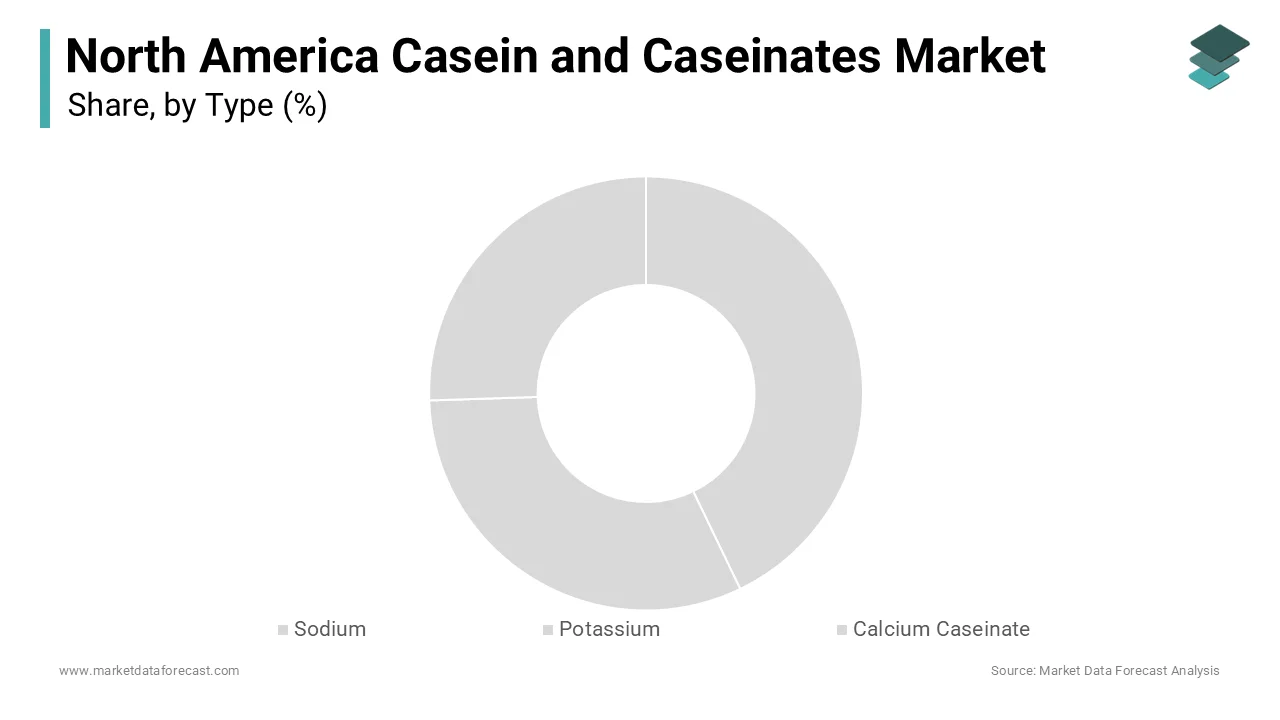
However, the sodium caseinate segment is expected to exhibit a CAGR of 7.04% over the forecast period in this regional market due to its unmatched solubility and emulsifying efficacy in modern food processing. According to the Institute of Food Technologists research publications, industrial trials utilizing sodium caseinate in ready-to-drink beverages and processed meat emulsions increased by 25%, accelerating the adoption velocity of this segment within the North America casein and caseinates market. According to the United States Department of Agriculture dairy market reports, commercial import and domestic processing volumes for soluble sodium caseinate rose by 18%, directly driving the rapid developmental pace of this segment in the North America casein and caseinates market. Beverage manufacturers and processed food producers require highly soluble protein ingredients that dissolve completely in aqueous solutions without forming sediments or altering viscosity. The rapid expansion of ready-to-drink protein coffees, nutritional beverages, and processed convenience foods has triggered exceptional demand for this highly versatile ingredient. This surging industrial utility and superior solubility profile explain why sodium caseinate registers the fastest growth momentum across the North America casein and caseinates market.
By Application Insights
The food and beverage segment dominated the North America casein and caseinates market by holding a commanding share of 56.5% of the regional market in 2025. The growth of the food and beverages segment in this regional market is majorly driven by exceptional emulsifying, foaming, and texturizing properties required in modern food processing. According to the International Dairy Foods Association processing surveys, commercial utilization of dairy proteins in cheese analogs and bakery goods increased by 14%, solidifying the market leadership of this segment within the North America casein and caseinates market. According to the United States Department of Agriculture food manufacturing reports, total industrial consumption of dairy-based binders and texturizers exceeded 180,000 tons, directly fueling the dominant market share of this segment within the North America casein and caseinates market. Food scientists rely on caseinates to stabilize emulsions in processed meats, enhance moisture retention in baked goods, and improve the stretch and melt characteristics of mozzarella alternatives. Public health agencies and food manufacturers collaborate to optimize nutritional profiles, ensuring that these ingredients remain foundational to mass-market consumer products. This entrenched industrial integration guarantees consistent, high-volume institutional procurement across commercial food production lines.
The dietary supplements segment is estimated to showcase a CAGR of 8.22% over the forecast period in the global market owing to the rising consumer investments in personal fitness and preventive health routines. According to the Council for Responsible Nutrition consumer surveys, regular purchase rates for specialized protein powders and recovery shakes rose by 22%, accelerating the adoption velocity of this segment within the North America casein and caseinates market. According to the Nutrition Business Journal market trackers, regional retail revenues for slow-release nighttime protein formulas surpassed 1,500,000,000 dollars, directly driving the rapid developmental pace of this segment in the North America casein and caseinates market. Fitness enthusiasts and athletes prioritize micellar casein and calcium caseinate for their prolonged amino acid release profiles, which facilitate optimal muscle protein synthesis during periods of extended fasting. The proliferation of specialized specialty nutrition stores and ecommerce health platforms has streamlined consumer access to advanced supplement formulations. This surging fitness culture and expanding scientific validation explain why dietary supplements register the fastest growth momentum across the North America casein and caseinates market.
REGIONAL ANALYSIS
The U.S. served as the dominant core of the regional market by holding a massive 75.7% of the regional market share in 2025 within the North America casein and caseinates market through advanced processing infrastructure and massive domestic consumption. According to the United States Department of Agriculture economic evaluations, national dairy processing investments exceeded 4,500,000,000 dollars, establishing a robust operational standing within the North America casein and caseinates market. According to the International Dairy Foods Association trade reports, domestic commercial shipments of specialized milk protein ingredients rose by 11%, directly supporting the exponential growth metrics of the North America casein and caseinates market. Supported by advanced biotechnology research institutions, rigorous regulatory oversight by federal agencies, and extensive commercial distribution networks, American markets maintain cutting edge commercialization pipelines. Domestic biopharmaceutical and food ingredient leaders successfully leverage state-of-the-art membrane filtration technologies to supply high-value industrial formulations, positioning the United States as the undeniable revenue leader and technological benchmark of the North America casein and caseinates market.
Canada occupies a highly advanced position characterized by stringent dairy quality standards and integrated agricultural cooperatives within the North America casein and caseinates market, growing at a fastest regional CAGR of 6.8% over the forecast period. According to Agriculture and Agri-Food Canada statistical bulletins, federal agricultural grants directed toward value-added dairy processing rose by 14%, reinforcing its elite market position in the North America casein and caseinates market. According to the Canadian Dairy Commission annual operational reviews, centralized milk-pooling allocations for specialized protein extraction increased by 18%, which is driving steady clinical progress within the North America casein and caseinates market. Canadian provinces maintain supply-managed dairy frameworks that ensure stable raw material costs and predictable baseline production volumes for domestic processors. This collaborative regulatory environment, paired with world-class biomanufacturing plants located in Ontario and Quebec, ensures that Canadian industrial manufacturers enjoy reliable access to advanced protein fractions within the North America casein and caseinates market.
COMPETITIVE LANDSCAPE
Competition in the North America casein and caseinates market is defined by intense rivalry among a small group of multinational dairy cooperatives and ingredient giants controlling the vast majority of commercial supply volume. Market dynamics are heavily influenced by high barriers to entry, including stringent food safety standards, massive capital requirements for specialized ultrafiltration infrastructure, and complex supply chain logistics. While established market leaders dominate food and beverage sectors through economies of scale, regional specialty processors are increasingly disrupting traditional pricing models by supplying customized organic alternatives. Technological disruption remains a core competitive battleground, with firms racing to transition from conventional extraction methods toward advanced enzymatic and membrane filtration platforms. Strategic asset acquisitions, intellectual property management, and bidding wars for lucrative commercial food processing contracts continuously reshape the competitive hierarchy, resulting in a highly consolidated yet fiercely contested market environment.
KEY MARKET PLAYERS
Major Players in the North America casein and caseinates market are
- Nestlé S.A.
- Danone S.A.
- Arla Foods
- Groupe Lactalis
- FrieslandCampina
- Fonterra
- Westland Milk Products
- Groupe Lactalis
- Saputo
Top Players in the Market
- Arla Foods amba contributes extensively to the market through the large-scale global commercialization of specialized milk protein ingredients and high-purity caseinates. The company actively participates in the market by expanding its high-capacity processing facilities and partnering with international food manufacturers to supply functional dairy solutions. Recent actions to strengthen its market position include completing advanced processing upgrades at its primary ingredient facilities and securing expanded commercial distribution agreements across North American retail networks.
- Fonterra Co-operative Group Limited maintains a vital contribution to the market by producing essential functional caseinates and nutritional protein fractions that serve industrial food applications. The company actively participates in the market by investing heavily in advanced membrane filtration technologies and optimizing global supply chain distribution networks. Recent actions to strengthen its market position include increasing production capacity at its main manufacturing plants and initiating strategic distribution alliances across North American healthcare and supplement sectors.
- FrieslandCampina Ingredients contributes significantly to the market through pioneering research in specialized protein formulations designed for medical nutrition and performance beverages. The company actively participates in the market by collaborating with regional research institutions to evaluate novel protein applications and enhance solubility characteristics. Recent actions to strengthen its market position include launching comprehensive commercial sustainability initiatives and receiving priority regulatory designations for innovative dairy protein ingredients.
Top Strategies Used by Key Market Participants
Key market participants in the North America casein and caseinates market deploy sophisticated strategic initiatives to maintain competitive advantages and navigate complex regulatory landscapes. Companies frequently establish strategic supply agreements with dairy farmer cooperatives to secure guaranteed, high-volume raw milk procurement orders. Organizations heavily invest in digital supply chain monitoring systems and advanced membrane filtration technologies to optimize protein recovery yields and reduce operational waste. Industry leaders prioritize diversified product portfolios by building specialized processing lines to supply custom protein blends tailored to exact industrial specifications. Furthermore, key players actively pursue expansion through strategic mergers, targeted distribution partnerships, and aggressive research and development spending on organic and clean-label formulations to stay ahead of evolving consumer trends.
North America Casein and Caseinates Market News
- In April 2024, Arla Foods amba expanded its advanced dairy protein processing facility in Wisconsin, acquiring state-of-the-art ultrafiltration lines. This strategic action is anticipated to allow Arla Foods amba to scale up regional antigen production and strengthen the North America casein and caseinates market.
- In July 2024, Fonterra Co-operative Group Limited formed a strategic distribution alliance with a major North American food ingredient distributor. This partnership is expected to allow Fonterra Co-operative Group Limited to streamline cold chain transport and strengthen the North America casein and caseinates market.
- In October 2024, FrieslandCampina Ingredients initiated a multi-center clinical evaluation protocol across several regional research laboratories. This clinical milestone is projected to allow FrieslandCampina Ingredients to evaluate novel adult formulations and strengthen the North America casein and caseinates market.
- In January 2025, Hoogwegt Group secured expanded regulatory review status for advanced nutritional protein therapies through federal health authorities. This regulatory milestone is designed to allow Hoogwegt Group to accelerate commercial patient access and strengthen the North America casein and caseinates market.
- In March 2025, Actus Nutrition completed the acquisition of a regional biomanufacturing plant to localize specialty protein production. This operational expansion is predicted to allow Actus Nutrition to reduce supply chain bottlenecks and strengthen the North America casein and caseinates market.
MARKET SEGMENTATION
This research report on the North America casein and caseinates market has segmented and sub-segmented into the following categories
By Type
- Sodium
- Potassium
- Calcium Caseinate
By Application
- Food and Beverage
- Industrial
- Pharmaceutical
- Cosmetics
- Others
By Region
- The United States
- Canada
- Rest of North America