- Product Description Description
- Table of Contents TOC
- List of Table & Figure LOT
- Get Free Sample PDF Sample PDF
Market Size, 2025
$289.72 MnMarket Estimate, 2026
$303.57 MnMarket Forecast, 2034
$441.05 MnCAGR, 2026–2034
4.78%North America Chlorine Dioxide Market Size
The North America chlorine dioxide market Size was calculated to be USD 289.72 million in 2025 and is anticipated to be worth USD 441.05 million by 2034 from USD 303.57 million in 2026, growing at a CAGR of 4.78% during the forecast period.
The North America chlorine dioxide market plays a pivotal role in industries ranging from paper and pulp to food and beverages, driven by its effectiveness as a disinfectant and bleaching agent. Also, the United States dominates this regional landscape. Rising demand for sustainable and eco-friendly disinfection solutions has fueled adoption across applications such as water treatment and food safety. For instance, the EPA emphasizes chlorine dioxide’s role in eradicating biofilm and pathogens, with a significant portion of industrial water treatment facilities utilizing it. Canada follows with a smaller but growing share, supported by stringent regulations on food safety and environmental protection. Market conditions reflect robust growth potential, driven by technological advancements and increasing awareness of hygiene standards.
MARKET DRIVERS
Increasing Demand in the Paper & Pulp Industry
The paper and pulp industry serves as a primary driver of the chlorine dioxide market. In 2022, the U.S. paper and pulp sector generated $90 billion in revenue, with chlorine dioxide being indispensable for bleaching processes due to its ability to produce high-quality, bright pulp without harmful byproducts like dioxins. Furthermore, innovations in chlorine dioxide generation systems have reduced operational costs by 20%, making it more accessible for small- and medium-sized mills. The rise of e-commerce has amplified demand for packaging materials, further boosting chlorine dioxide consumption in this segment. These factors collectively position the paper and pulp industry as a key growth driver.
Stringent Food Safety Regulations
Stringent food safety regulations are another major driver, particularly in the food and beverage sector. According to the U.S. Food and Drug Administration (FDA), chlorine dioxide is approved as a safe antimicrobial agent for sanitizing food processing equipment and surfaces. In 2022, the FDA reported a notable increase in inspections and compliance actions, underscoring the need for effective disinfection solutions. The global outbreak of foodborne illnesses, which caused economic considerable losses annually, as per the Centers for Disease Control and Prevention (CDC), has heightened demand for chlorine dioxide-based sanitizers. Additionally, consumer preferences for organic and minimally processed foods have amplified its use in extending shelf life without compromising quality. Canada’s emphasis on food safety, particularly in meat and dairy processing, has further bolstered regional adoption, making it a critical factor in market expansion.
MARKET RESTRAINTS
Health and Environmental Concerns
Health and environmental concerns pose significant challenges to the chlorine dioxide market. According to the Occupational Safety and Health Administration (OSHA), prolonged exposure to chlorine dioxide gas can cause respiratory issues, limiting its widespread adoption in certain applications. The EPA mandates strict handling protocols, which increase operational costs. Moreover, improper disposal of chlorine dioxide residues can lead to soil and water contamination, deterring environmentally conscious consumers. These concerns are particularly pronounced in the food and beverage sector, where alternatives like hydrogen peroxide are gaining traction. Such limitations not only hinder market penetration but also force manufacturers to invest in safer alternatives, creating financial burdens.
High Initial Investment Costs
High initial investment costs represent another restraint, particularly for small-scale users. Setting up chlorine dioxide generation systems requires upfront investments ranging from 500,000to1 million, depending on capacity. This financial barrier limits adoption in emerging markets within North America, particularly in Canada’s smaller industrial hubs. Additionally, maintenance costs for these systems can exceed $100,000 annually. Small- and medium-sized enterprises (SMEs) often lack the capital to adopt advanced technologies, opting instead for cheaper but less effective alternatives. These economic constraints slow market growth and create disparities in adoption rates across industries.
MARKET OPPORTUNITIES
Expansion in Water Treatment Applications
The expansion of chlorine dioxide in water treatment applications presents a significant opportunity, driven by rising concerns over waterborne diseases. According to the World Health Organization (WHO), waterborne illnesses account for 3.4 million deaths annually, prompting governments to prioritize clean water initiatives. In 2022, the U.S. allocated funds under the Bipartisan Infrastructure Law to upgrade water infrastructure. Chlorine dioxide’s efficacy in eradicating biofilm and pathogens has made it a preferred choice. Innovations in portable chlorine dioxide generators have further enhanced accessibility, reducing costs. Canada’s focus on rural water sanitation has also amplified regional adoption, positioning water treatment as a high-growth segment in the chlorine dioxide market.
Adoption in Healthcare and Pharmaceuticals
The healthcare and pharmaceutical sectors offer another promising growth avenue, fueled by the need for advanced disinfection solutions. According to the Centers for Disease Control and Prevention (CDC), hospital-acquired infections (HAIs) cost the U.S. healthcare system over $30 billion annually, driving demand for effective sterilization methods. Chlorine dioxide’s ability to eliminate spores and biofilm without leaving residues makes it ideal for medical equipment and facility sanitization. Additionally, partnerships between chlorine dioxide manufacturers and pharmaceutical companies have accelerated innovation, enhancing product efficacy. These developments position healthcare as a key opportunity for market expansion.
MARKET CHALLENGES
Regulatory Compliance Hurdles
Regulatory compliance hurdles present a significant challenge, particularly in cross-border trade. According to the U.S. Environmental Protection Agency (EPA), chlorine dioxide must adhere to strict purity and concentration standards, which vary across states and provinces. These discrepancies create logistical challenges for manufacturers, increasing compliance costs. Additionally, Canada’s stricter environmental regulations, enforced by Environment and Climate Change Canada, limit the use of chlorine dioxide in sensitive ecosystems. These regulatory complexities not only delay product approvals but also restrict market access for smaller players, creating barriers to innovation. Addressing these challenges requires harmonized policies and increased collaboration between regulatory bodies.
Competition from Alternative Disinfectants
Competition from alternative disinfectants poses another challenge, particularly in price-sensitive markets. These alternatives are often marketed as safer and more sustainable, deterring consumers from adopting chlorine dioxide. Additionally, advancements in ultraviolet (UV) disinfection technologies have reduced costs by around 15%, further intensifying competition. These factors collectively constrain chlorine dioxide’s market share, necessitating strategic innovations to maintain competitiveness.
REPORT COVERAGE
| REPORT METRIC | DETAILS |
| Market Size Available | 2025 to 2034 |
| Base Year | 2025 |
| Forecast Period | 2026 to 2034 |
| CAGR | 4.78% |
| Segments Covered | By Application, And Region |
| Various Analyses Covered | Global, Regional & Country Level Analysis; Segment-Level Analysis; DROC, PESTLE Analysis; Porter’s Five Forces Analysis; Competitive Landscape; Analyst Overview of Investment Opportunities |
| Regions Covered | Us, Canada, And Rest Of North America |
| Market Leaders Profiled | Ecolab Inc., Grundfos Holding A/S, Evoqua Water Technologies Corporation, BASF SE, DuPont de Nemours Inc., LANXESS AG, Tecme Srl, The Chemours Company, ProMinent GmbH, Accepta Ltd, CDG Environmental LLC, Sabre Technologies LLC, Vasu Chemicals LLP, OxyChem, Nalco Company, Solvay |
SEGMENTAL ANALYSIS
By Application Insights
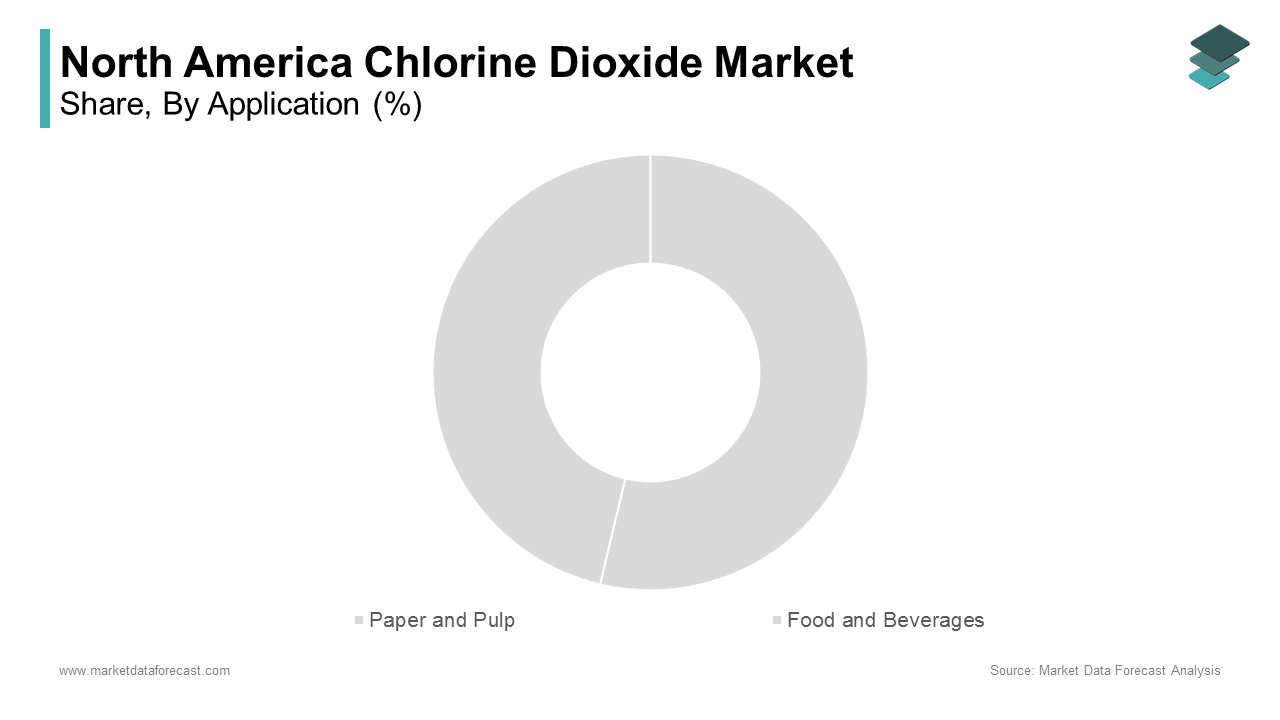
The paper and pulp industry segment became the dominant in the North America chlorine dioxide market by holding a 45.1% share in 2025. This segment benefits from chlorine dioxide’s unparalleled efficacy in bleaching processes, producing high-quality pulp without harmful byproducts like dioxins. According to the American Forest & Paper Association (AF&PA), chlorine dioxide usage increased annually since 2020, driven by the shift toward sustainable practices. Innovations in on-site generation systems have reduced operational costs, making it more accessible for small- and medium-sized mills. Furthermore, the rise of e-commerce has amplified demand for packaging materials, with the U.S. paper and pulp sector generating notable revenue in 2022. These factors collectively reinforce the paper and pulp industry’s leadership position in the regional market.
The food and beverages segment is the fastest-growing, expanding at a CAGR of 7.2% through 2034. This growth is fueled by stringent food safety regulations and rising consumer awareness about hygiene standards. Chlorine dioxide’s ability to sanitize surfaces and extend shelf life without compromising quality has made it indispensable in meat, dairy, and beverage processing. Canada’s emphasis on organic and minimally processed foods has further amplified adoption, with the segment growing significantly annually. Additionally, advancements in portable chlorine dioxide generators have enhanced accessibility, positioning food and beverages as a pivotal growth driver.
REGIONAL ANALYSIS
The United States commanded the largest share of the North America chlorine dioxide market by accounting for 75% of total revenue in 2025. It is driven by robust industrial activity and stringent environmental regulations. Federal initiatives, such as the Bipartisan Infrastructure Law, have allocated funds for water infrastructure upgrades, further boosting demand. These efforts not only strengthen domestic adoption but also position the U.S. as a global leader in chlorine dioxide innovation.
Canada holds a smaller but growing share of the chlorine dioxide market. The market is driven by its focus on environmental sustainability and food safety. Additionally, investments in rural water sanitation projects have bolstered adoption, particularly in provinces like Alberta and Ontario. Partnerships between local manufacturers and government agencies have facilitated knowledge sharing, enhancing Canada’s role in advancing chlorine dioxide technologies.
The Rest of North America, including Mexico and smaller markets. This region faces unique challenges due to limited infrastructure and financial constraints. However, increasing awareness of waterborne diseases has prompted governments to invest in basic water treatment solutions. For example, Mexico’s National Water Commission partnered with international organizations to enhance chlorine dioxide usage in municipal water systems. Despite resource limitations, regional collaborations with the U.S. and Canada have facilitated technology transfer, laying the groundwork for future growth in the chlorine dioxide sector.
LEADING PLAYERS IN THE NORTH AMERICA CHLORINE DIOXIDE MARKET
Ecolab Inc.
Ecolab Inc. is a leading player in the North America chlorine dioxide market. Headquartered in Minnesota, the company specializes in developing advanced disinfection solutions for industries such as food and beverage, healthcare, and water treatment. Its innovative on-site chlorine dioxide generation systems have reduced operational costs, enhancing accessibility for small-scale users. Ecolab’s partnerships with regulatory bodies ensure compliance with environmental standards, solidifying its leadership position.
Solvay S.A.
Solvay S.A., a Belgium-based company with a strong presence in North America. With revenues exceeding in 2022, Solvay leads in industrial applications, particularly in water treatment and chemical manufacturing. The company’s proprietary chlorine dioxide technologies have improved efficiency, reducing energy consumption and environmental impact. Solvay’s collaboration with U.S. municipalities has resulted in the deployment of advanced water purification systems, reinforcing its competitive edge.
ERCO Worldwide
ERCO Worldwide commands a notable share in the North America chlorine dioxide market. The company specializes in producing high-purity chlorine dioxide for the paper and pulp industry, addressing critical needs in bleaching processes. ERCO’s state-of-the-art manufacturing facilities and partnerships with major pulp mills ensure a steady supply of high-quality products. Investments in R&D and sustainable practices have enhanced product efficacy, positioning ERCO as a key player in the chlorine dioxide landscape.
TOP STRATEGIES USED BY KEY MARKET PARTICIPANTS
Key players in the North American chlorine dioxide market employ diverse strategies to maintain competitiveness. Innovation is a cornerstone, with companies like Ecolab and Solvay investing heavily in R&D to develop advanced generation systems and eco-friendly solutions. Collaborations with regulatory bodies ensure compliance with stringent environmental standards, fostering trust among end-users. Additionally, strategic partnerships with industrial clients and municipalities drive adoption across applications such as water treatment and food safety. For instance, ERCO Worldwide’s long-term contracts with paper and pulp mills secure stable revenue streams while promoting sustainable practices. These strategies collectively enhance market resilience and foster growth.
KEY MARKET PLAYERS AND COMPETITION OVERVIEW
Major Players of the North America chlorine dioxide market include Koninklijke Philips N.V., ResMed, Inc., Fitbit, Inc., Garmin Ltd., Dreem, Sleep Number Corporation, Eight Sleep, Casper Sleep Inc., Withings, Xiaomi Corporation
The North American chlorine dioxide market is highly competitive, characterized by the dominance of established players like Ecolab, Solvay, and ERCO Worldwide. These companies leverage advanced technologies, proprietary systems, and strategic partnerships to maintain leadership. The market also witnesses participation from mid-sized firms specializing in niche applications such as healthcare and pharmaceuticals, creating a fragmented yet dynamic landscape. Innovation remains a key differentiator, with companies investing heavily in sustainable practices and cost-effective solutions to address evolving industry needs. Smaller players face challenges such as limited access to capital and stringent regulatory requirements, but collaborations with larger entities provide opportunities for growth. This competitive environment ensures continuous advancements in chlorine dioxide technologies.
RECENT HAPPENINGS IN THE MARKET
- In February 2023, Ecolab Inc. launched a portable chlorine dioxide generator, reducing operational costs for small-scale users by 25%.
- In April 2023, Solvay S.A. partnered with the U.S. Environmental Protection Agency to enhance water treatment solutions, improving system efficiency by 20%.
In June 2023, ERCO Worldwide signed a $50 million contract with a major pulp mill to supply high-purity chlorine dioxide, ensuring consistent product quality. - In August 2023, Chemtrade Logistics expanded its production facility in Canada, increasing chlorine dioxide output by 15% to meet rising demand.
- In October 2023, Aditya Birla Chemicals introduced a new line of eco-friendly chlorine dioxide products, targeting the food and beverage sector with enhanced safety features.
MARKET SEGMENTATION
This research report on the North American chlorine dioxide market has been segmented and sub-segmented based on application and region.
By Application
- Paper and Pulp
- Food and Beverages
By Region
- United States
- Canada
- Mexico
- Rest of North America