North America CHP Market Size, Share, Trends & Growth Forecast Report - Segmented By Fuel Type (Natural Gas Coal Biomass Others), Technology, Capacity, Application and Country (The United States, Canada and Rest of North America), Industry Analysis From 2026 to 2034
Market Size, 2025
$6.59 BnMarket Estimate, 2026
$7.03 BnMarket Forecast, 2034
$11.78 BnCAGR, 2026–2034
6.66%North America CHP Market Report Summary
The North America Combined Heat and Power (CHP) market was valued at USD 6.59 billion in 2025, is estimated to reach USD 7.03 billion in 2026, and is projected to reach USD 11.78 billion by 2034, growing at a CAGR of 6.66% during the forecast period from 2026 to 2034. The growth of the North America CHP market is driven by stringent energy efficiency regulations, rising industrial energy demand, and increasing emphasis on cost optimization and energy security. CHP systems enable the simultaneous generation of electricity and useful thermal energy, significantly improving overall efficiency compared to conventional power generation. Strong policy support, grid resilience initiatives, and corporate carbon reduction commitments are further accelerating CHP adoption across industrial, commercial, institutional, and residential applications in the region.
Key Market Trends
- Growing deployment of natural gas–based CHP systems due to reliable fuel availability, cleaner combustion, and extensive pipeline infrastructure.
- Increasing adoption of CHP in industrial facilities such as chemicals, metals, pulp & paper, and food processing to reduce energy costs and improve reliability.
- Rising integration of CHP within microgrids and decentralized energy systems to enhance grid resilience and emergency power availability.
- Expanding use of biomass-based CHP solutions driven by renewable energy targets, waste-to-energy initiatives, and carbon neutrality goals.
- Greater focus on digital monitoring, automation, and system optimization to improve operational efficiency and lifecycle performance.
Segmental Insights
- Based on fuel type, the natural gas segment dominated the North America CHP market in 2024, supported by abundant domestic supply, a favorable emissions profile, and strong regulatory alignment. The biomass segment is expected to register the fastest growth over the forecast period due to increasing renewable energy incentives and sustainable waste management practices.
- Based on technology, the reciprocating engine segment held the largest share of the market in 2024, owing to its cost-effectiveness, fuel flexibility, and suitability for distributed generation. The combined cycle segment is anticipated to grow at a notable CAGR due to superior efficiency and suitability for large-scale industrial applications.
- Based on capacity, the 10–150 MW segment accounted for the largest market share in 2024, as it offers an optimal balance between economies of scale and distributed generation benefits. The up to 10 MW segment is projected to witness the fastest growth, driven by microgrid development, small commercial installations, and community resilience initiatives.
- Based on application, the commercial and industrial segment dominated the North America CHP market in 2024 due to high and consistent energy demand, strong cost-saving potential, and favorable incentive structures. The residential segment is expected to grow at the fastest CAGR, supported by rising electricity prices, increasing interest in energy independence, and adoption in luxury and multi-family housing developments.
Regional Insights
The North America CHP market is primarily driven by strong adoption across the United States and Canada, supported by policy incentives, industrial demand, and sustainability commitments.
- The United States accounted for 92.3% of the North America CHP market share in 2024, driven by its extensive industrial base, advanced regulatory frameworks, and widespread incentive programs supporting distributed generation and energy efficiency.
- Canada represents the second-largest market, supported by cold climate heating needs, progressive environmental policies, and strong adoption across industrial and municipal sectors.
Competitive Landscape
The North America CHP market is moderately to highly competitive, characterized by the presence of established global manufacturers and specialized technology providers focusing on system efficiency, reliability, and service capabilities rather than price competition. Companies are strengthening their market position through technological innovation, strategic partnerships, and comprehensive customer support services. Integration of CHP with renewable energy systems, digital platforms, and grid modernization initiatives remains a key competitive differentiator. Prominent players operating in the North America CHP market include Caterpillar Inc., Siemens Energy AG, General Electric Company, 2G Energy Inc., Cummins Inc., Capstone Green Energy Corporation, Mitsubishi Heavy Industries, Wärtsilä Corporation, Veolia Environnement S.A., and ABB Ltd.
North America CHP Market Size
The North America CHP market size was valued at USD 6.59 billion in 2025 and is anticipated to reach USD 7.03 billion in 2026 from USD 11.78 billion by 2034, growing at a CAGR of 6.66% during the forecast period from 2026 to 2034.
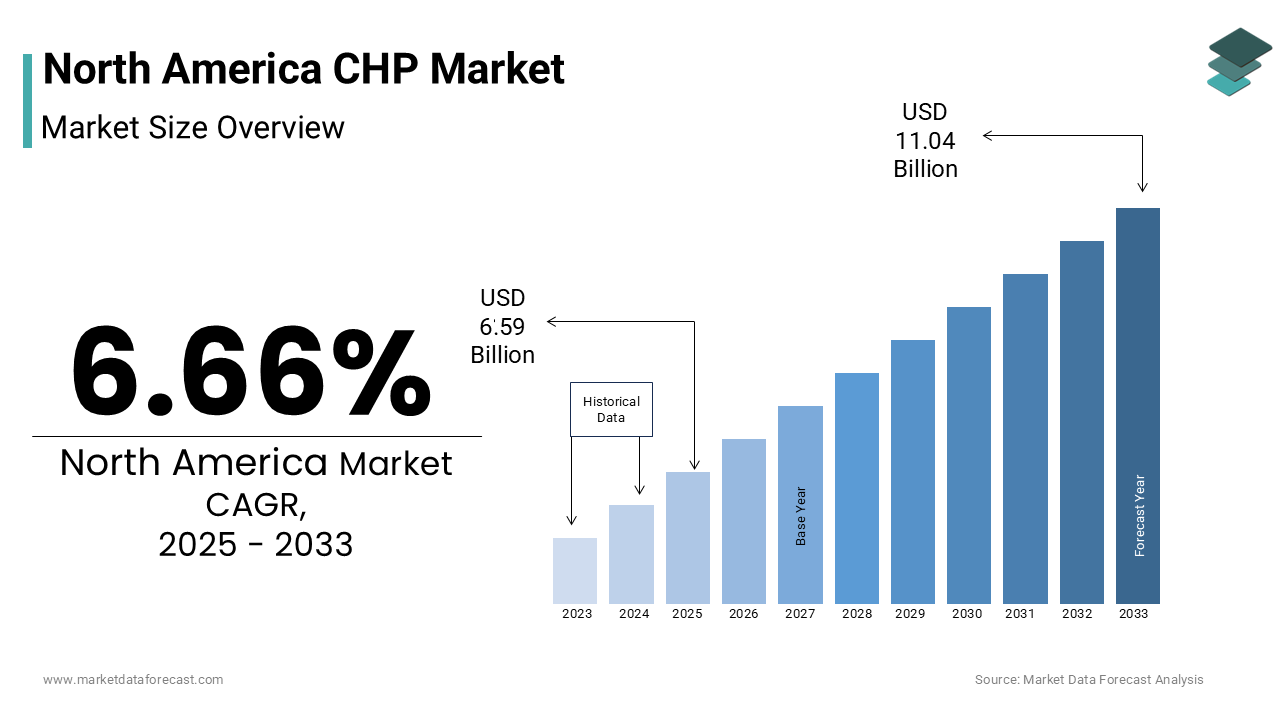
Combined Heat and Power (CHP), also known as cogeneration, is an energy-efficient technology that simultaneously produces electricity and useful thermal energy (heat) from a single fuel source. This integrated approach to energy utilization captures and repurposes waste heat that would otherwise be lost in traditional power generation systems, thereby maximizing resource efficiency and minimizing environmental impact. A notable efficiency gap exists between combined heat and power systems and conventional methods, with the integrated approach consistently achieving higher overall performance levels. The deployment of integrated power systems represents a significant portion of the overall electricity generating capacity in both the United States and a neighboring northern country. A cross-national comparison reveals a consistent, substantial commitment to integrating this specific technology into the respective national power grids. The data indicates a pattern of widespread adoption and reliance on this technology for a meaningful percentage of total electricity needs in the analyzed regions. The market encompasses diverse technologies including gas turbines, reciprocating engines, microturbines, and fuel cells, serving applications across industrial facilities, commercial buildings, hospitals, universities, and municipal districts.
MARKET DRIVERS
Stringent Energy Efficiency Regulations and Policy Support
Regulatory frameworks and policy initiatives across the region have emerged as key factors driving the expansion of the North America CHP market. Governments are implementing comprehensive measures to promote energy efficiency and reduce carbon emissions. There has been the establishment of comprehensive and supportive policy frameworks across different administrative levels within the United States. Federal legislation in the U.S. has strategically integrated combined heat and power (CHP) as a significant focus area, providing specific incentives for investment. This policy support has coincided with substantial private capital flow into new CHP installations and capacity expansion across the country. Several U.S. states have created substantial, dedicated financial incentive programs and modernized their energy initiatives to favor the adoption of distributed energy resources, including CHP systems. A similar pattern of policy initiatives has been observed in a neighboring country, with regional governments adopting frameworks like feed-in tariffs to encourage grid integration of CHP-generated electricity. Accelerated capital cost allowance provisions have also been implemented in this neighboring country, enhancing the financial viability of private sector investment in CHP equipment. These regulatory measures collectively create a favorable investment climate that encourages private sector adoption of CHP technologies across diverse market segments.
Rising Industrial Energy Demand and Cost Optimization Requirements
The escalating energy requirements of the regional industrial sectors, coupled with mounting pressure to optimize operational costs and enhance energy security, have boosted the expansion of the North America CHP market. This demand of these systems extends across manufacturing facilities and processing plants. Industrial operations represent the largest end-use segment for CHP deployment, with energy-intensive industries such as chemicals, metals, pulp and paper, and food processing deriving significant economic benefits from on-site power generation and thermal energy recovery. Manufacturing operations require dependable and economical power supplies to remain viable within their respective markets. Integrating combined heat and power systems allows industrial sites to enhance their energy performance by simultaneously producing electricity and thermal energy for local processes. Chemical production facilities often experience improved operational stability and a decreased reliance on public utility networks when utilizing onsite cogeneration. The integration of these systems in steel mills contributes to a notable increase in energy efficiency compared to standard procurement methods. Manufacturing sectors in various regions have increasingly adopted cogeneration technology to address their specific power and heating requirements. The pulp and paper sector frequently utilizes biomass-based cogeneration to manage energy needs while effectively repurposing production byproducts.
MARKET RESTRAINTS
High Initial Capital Investment and Complex Project Financing
The substantial upfront capital requirements associated with combined heat and power system installation is a major barrier to the North America CHP market expansion. This is particularly true for small and medium-sized enterprises, which often lack access to sophisticated financing mechanisms and risk mitigation strategies. Developing combined heat and power (CHP) facilities generally involves a broad spectrum of capital expenditures. The required investment per unit of electrical capacity demonstrates considerable variability based on the technology chosen and specific installation factors. These initial financial requirements often pose significant challenges for a wide range of entities. A reliance on outside financial aid is frequently necessary for organizations to proceed with these projects. The typical installed costs observed in heavy industry tend to be higher when compared to those in commercial operations. For many prospective users, these substantial financial commitments often exceed the scope of typical yearly energy allowances. Traditional financing structures often prove inadequate for CHP projects due to their unique risk profiles and complex revenue streams involving multiple utility relationships and regulatory compliance requirements. Additionally, the fragmented nature of North American energy markets complicates project economics, with varying utility interconnection standards, rate structures, and regulatory approval processes across jurisdictions. Canadian provinces exhibit similar financing challenges, with small commercial entities face particular difficulty accessing capital for CHP projects due to limited collateral and complex technical evaluation requirements. The extended payback periods further discourage investment from organizations prioritizing short-term financial returns over long-term operational savings.
Regulatory Complexity and Interconnection Challenges
The intricate web of regulatory requirements and utility interconnection procedures across the regional jurisdictions creates restricts the expansion of the North America CHP market. Varying standards and approval processes complicate project implementation and increase development timelines. Each state and province maintain distinct regulatory frameworks governing CHP system installation, operation, and grid interconnection, requiring project developers to navigate multiple approval authorities and comply with diverse technical standards. Utility interconnection procedures present additional complications, with many distribution companies lacking standardized protocols for accommodating distributed generation resources and requiring extensive engineering studies to assess grid impact. Grid stability concerns further complicate interconnection processes, with utilities often requiring expensive infrastructure upgrades to accommodate CHP systems, costs that may be passed back to project developers. Canadian provinces demonstrate similar regulatory fragmentation, interprovincial variations in CHP regulations create market inefficiencies and discourage cross-border project development. The absence of harmonized technical standards and performance criteria across jurisdictions increases project development risks and costs, limiting market accessibility for smaller developers and constraining overall market growth potential.
MARKET OPPORTUNITIES
Decentralized Energy Transition and Grid Modernization Initiatives
The accelerating transition toward decentralized energy systems and comprehensive grid modernization programs across the region offers significant growth possibilities for the North America CHP market. Utilities and policymakers are increasingly recognizing the value of distributed generation resources in enhancing grid resilience and operational efficiency. The integration of CHP systems into modernized grid architectures enables enhanced demand response capabilities, improved power quality, and reduced transmission losses while supporting renewable energy integration objectives. The emergence of microgrid development programs creates additional market opportunities, with CHP systems serving as anchor generation resources that provide reliable baseload power and thermal energy during grid outages or emergency conditions. Initiatives in one country identify Combined Heat and Power (CHP) as crucial for enhancing local community resilience. Pilot projects demonstrate a notable difference in operational reliability for facilities using this technology compared to conventional power systems. Another country has allocated substantial funding to projects integrating various local power generation resources, where systems providing both heat and power services are eligible for enhanced support due to their dual functionality. The increasing frequency of extreme weather events and cyber security threats has elevated the strategic importance of distributed energy resources. Municipal and institutional adoption of CHP technology for critical infrastructure applications, including hospitals, universities, and data centers, further expands market opportunities while supporting broader community resilience objectives.
Carbon Neutrality Commitments and Corporate Sustainability Initiatives
The widespread adoption of carbon neutrality commitments by corporations, municipalities, and governmental entities across the region generates substantial expansion opportunities for the North America CHP market. This is because organizations seek reliable pathways to reduce greenhouse gas emissions while maintaining operational efficiency. Organizations are increasingly committing to emissions reduction targets and comprehensive transformations of their internal energy systems. Certain energy technologies are becoming essential tools in corporate sustainability strategies due to their potential to lower greenhouse gas emissions. The adoption of carbon pricing mechanisms has improved the economic viability of specific low-carbon energy projects, leading large corporations to announce plans to utilize these technologies and some governmental bodies to implement financial frameworks encouraging investment in low-carbon energy solutions. Municipal governments have also embraced CHP technology for district energy applications, with cities like Toronto and Vancouver implementing comprehensive CHP programs to support community-wide emissions reduction objectives. The convergence of regulatory requirements, stakeholder expectations, and economic incentives creates a favorable environment for sustained CHP market expansion across diverse application sectors.
MARKET CHALLENGES
Technology Integration Complexity and Skilled Workforce Shortage
The sophisticated nature of combined heat and power systems and the increasing complexity of integrating these technologies with modern building management systems, renewable energy sources, and smart grid infrastructure are operational challenges that constrain the North America CHP market. CHP systems require specialized engineering expertise for proper design, installation, and ongoing maintenance, yet the industry faces a critical shortage of qualified technicians and system operators capable of managing these complex installations effectively. The integration of CHP with renewable energy sources such as solar photovoltaics and battery storage systems introduces additional complexity, requiring advanced control systems and predictive maintenance capabilities that exceed typical facility management competencies. Canadian provinces face similar workforce challenges. The absence of standardized training programs and certification requirements further exacerbates these challenges, resulting in inconsistent service quality and reduced customer confidence in CHP technology adoption.
Fuel Price Volatility and Supply Chain Disruptions
The dependence of combined heat and power systems on fossil fuel inputs, particularly natural gas, exposes project economics to significant volatility in energy commodity markets and supply chain disruptions that can affect long-term financial performance and investment attractiveness. This impedes the expansion of the North America CHP market. Natural gas price fluctuations have historically created substantial uncertainty for CHP project developers and operators, with price swings occurring within single calendar years and directly impacting operational cost structures and revenue projections. Supply chain disruptions affecting critical components including engines, generators, and control systems have become increasingly common. Canadian markets have experienced similar challenges. The increasing frequency of extreme weather events and geopolitical tensions further compounds fuel supply reliability concerns. These supply-side uncertainties create investment risk that many organizations are unwilling to accept without substantial risk mitigation measures and long-term fuel supply agreements.
REPORT COVERAGE
| REPORT METRIC | DETAILS |
| Market Size Available | 2025 to 2034 |
| Base Year | 2025 |
| Forecast Period | 2026 to 2034 |
| CAGR | 6.66% |
| Segments Covered | By Fuel Type, Technology, Capacity, Application and Region. |
| Various Analyses Covered | Global, Regional & Country Level Analysis, Segment-Level Analysis, DROC, PESTLE Analysis, Porter’s Five Forces Analysis, Competitive Landscape, Analyst Overview of Investment Opportunities |
| Regions Covered | U.S., Canada, Rest of North America |
| Market Leaders Profiled | Caterpillar Inc., Siemens Energy AG, General Electric Company, 2G Energy Inc., Aegis Energy Services Inc., Curtis Engine & Equipment Co. Inc., Cummins Inc., Capstone Green Energy Corporation, Mitsubishi Heavy Industries, Ltd., Wärtsilä Corporation, Veolia Environnement S.A., and ABB Ltd. |
SEGMENTAL ANALYSIS
By Fuel Type Insights
The natural gas segment dominated the North America combined heat and power market by accounting for a substantial share in 2025. The dominance of the natural gas segment is attributed to its favorable characteristics including cleaner combustion properties, reliable supply infrastructure, and competitive pricing compared to alternative fuel sources. Natural gas-fired CHP systems offer superior operational flexibility, rapid start-up capabilities, and excellent part-load performance that align with varying energy demand patterns across diverse applications. The segment's dominance is further reinforced by extensive pipeline infrastructure networks that ensure consistent fuel availability and competitive pricing structures. The fuel's compatibility with advanced combustion technologies and emission control systems makes it particularly attractive for urban applications where air quality regulations are stringent. Additionally, natural gas infrastructure development has been prioritized through federal and state-level energy policies. The fuel's ability to complement renewable energy sources and provide grid stability services further enhances its market position in the evolving energy landscape. The abundance of domestic natural gas resources and extensive infrastructure development across North America serves as the primary driver for natural gas dominance in the combined heat and power market. The shale gas revolution has transformed North America into a net natural gas exporter, ensuring long-term supply security and competitive pricing that makes CHP projects economically viable. An observed general increase in documented natural gas reserves has occurred across North America, pointing to enhanced resource availability. This rise in reserves provides a substantial, long-term supply based on current usage patterns. Significant reserve volumes in different regions of the continent contribute to a diverse and competitive energy landscape. The expansion of extensive pipeline infrastructure is a key factor in ensuring widespread and reliable delivery to various centers. Growth in facilities for exporting natural gas has been noted, which appears to strengthen overall market confidence and international trade capabilities. Approvals for new pipeline projects indicate ongoing efforts to expand transmission capacity, aiming to enhance supply reliability and potentially reduce costs for users. Natural gas's superior environmental performance characteristics and alignment with increasingly stringent air quality regulations constitute another critical factor driving its dominance in the North America CHP market. Natural gas combustion produces significantly lower emissions of particulate matter, sulfur compounds, and nitrogen oxides compared to coal and oil-fired systems, making it the preferred choice for urban installations and environmentally sensitive applications. The U.S. Environmental Protection Agency's Clean Air Act regulations have established strict emission limits for stationary power generation sources, with natural gas CHP systems consistently achieving compliance without requiring extensive after-treatment equipment. State-level environmental regulations further favor natural gas adoption. Canadian environmental policies demonstrate similar preferences. These regulatory advantages, combined with carbon pricing mechanisms that penalize high-emission fuels, create sustained demand for natural gas-fired CHP technologies.
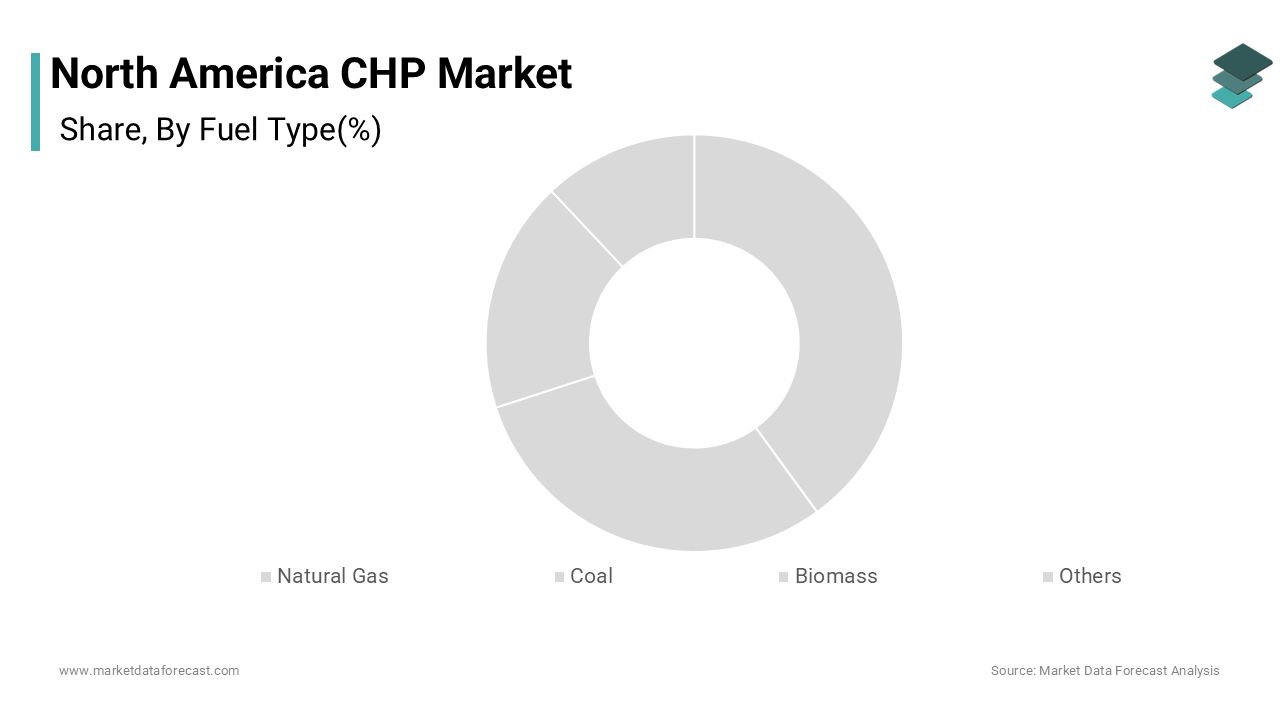
The biomass fuel segment is on the rise and is expected to be the fastest growing segment in the market by witnessing a CAGR of 9.3% from 2025 to 2033 due to increasing emphasis on renewable energy sources, carbon neutrality commitments, and sustainable waste management practices across industrial and municipal sectors. Biomass CHP systems utilize organic materials including wood waste, agricultural residues, municipal solid waste, and dedicated energy crops to generate both electricity and thermal energy while achieving negative net carbon emissions through photosynthetic carbon sequestration. The segment's acceleration is driven by supportive policy frameworks, carbon pricing mechanisms, and corporate sustainability initiatives that prioritize renewable energy sources. The growing availability of sustainable biomass feedstocks and technological advancements in combustion and gasification systems have enhanced project economics and operational reliability. Government incentives and renewable energy credits further improve financial returns, making biomass CHP increasingly attractive for industrial facilities seeking to reduce carbon footprints while managing waste streams effectively. Comprehensive renewable energy policy support and incentive programs across North America have emerged as key enabler driving the rapid expansion of biomass combined heat and power systems. Federal and state-level initiatives provide substantial financial incentives, tax credits, and regulatory preferences that significantly improve project economics and accelerate market adoption. State renewable portfolio standards increasingly recognize biomass CHP as a qualifying renewable energy technology. Canadian provinces have implemented parallel support mechanisms. These policy mechanisms, combined with federal production tax credits for qualifying biomass facilities, create a robust investment environment that drives sustained market growth. The integration of biomass combined heat and power systems with waste-to-energy applications and circular economy principles is another driver behind the segment's exceptional growth rate across North America. Organizations increasingly recognize biomass CHP as a sustainable solution for managing organic waste streams while generating valuable energy outputs, creating economic value from materials that would otherwise require costly disposal or emit greenhouse gases during decomposition. Municipal wastewater treatment facilities have particularly embraced biomass CHP technology. Agricultural sectors benefit similarly. The convergence of waste management requirements, energy cost reduction objectives, and sustainability commitments creates sustained demand for biomass CHP solutions across diverse market segments.
By Technology Insights
The reciprocating engine technology segment led the North America combined heat and power market by holding a 45.7% share in 2025. The leading position of the reciprocating engine technology segment is credited to reciprocating engines' exceptional versatility, cost-effectiveness, and suitability for diverse application requirements across residential, commercial, and industrial sectors. Reciprocating engines offer superior part-load performance, rapid start-up capabilities, and flexible fuel compatibility that make them ideal for distributed generation applications where load variability and operational flexibility are paramount. The technology's modular design enables scalable deployment from small residential units to large industrial installations, while relatively low capital costs and established supply chains facilitate widespread market adoption. The technology's mature manufacturing base and extensive service networks ensure reliable operation and competitive maintenance costs, further supporting market dominance. Additionally, reciprocating engines demonstrate excellent compatibility with renewable natural gas and biogas fuels, positioning them favorably for sustainable energy applications. The segment benefits from continuous technological improvements in engine design, emission control systems, and digital monitoring capabilities that enhance performance and reduce operational complexity. The cost-effectiveness and rapid deployment capabilities of reciprocating engine technology serve as a different driver for its dominant segment position. Reciprocating engines offer the lowest capital investment requirements among CHP technologies, which makes them accessible to small and medium-sized enterprises that represent significant market segments. The modular nature of reciprocating engine systems enables rapid installation and commissioning, with projects typically achieving commercial operation within fewer months compared to that for larger technology platforms. This speed-to-market advantage is particularly valuable for commercial and industrial customers requiring quick energy cost reduction solutions. The technology's standardized manufacturing processes and established supply chains ensure consistent pricing and short delivery schedules. Canadian markets demonstrate similar economic advantages. The availability of factory-trained service technicians and widespread parts distribution networks further reduces lifecycle costs and improves customer confidence in technology selection. The exceptional fuel flexibility and inherent suitability for distributed generation applications constitute another factor fuelling reciprocating engine technology dominance in the North America CHP market. Reciprocating engines can operate efficiently on diverse fuel sources including natural gas, propane, biogas, renewable natural gas, and diesel, providing customers with operational flexibility and fuel supply security that alternative technologies cannot match. Biogas utilization represents a particularly significant growth area. The technology's compact footprint and low noise characteristics make it ideal for urban applications where space constraints and environmental considerations limit alternative technology deployment. Commercial and institutional facilities particularly benefit from reciprocating engine CHP systems. Canadian distributed generation markets show similar preferences.
The combined cycle technology segment is expected to exhibit a noteworthy CAGR of 8.1% during the forecast period owing to the technology's superior efficiency characteristics, scalability for large industrial applications, and alignment with utility-scale renewable energy integration objectives. Combined cycle CHP systems achieve the highest electrical efficiencies among available technologies, with notable overall system efficiencies when properly configured for specific thermal requirements. The segment's acceleration is also driven by increasing demand for large-scale industrial CHP applications, grid modernization initiatives that favor high-efficiency generation resources, and corporate sustainability commitments requiring maximum energy utilization efficiency. The technology's ability to provide both baseload power generation and flexible thermal energy output supports diverse application requirements while achieving optimal economic returns. Government incentives for high-efficiency CHP projects and carbon reduction programs further enhance the segment's growth prospects, with utilities and large industrial customers prioritizing combined cycle installations for new capacity additions. The superior efficiency characteristics and substantial carbon reduction benefits of combined cycle technology also propels the growth of this segment. Combined cycle systems demonstrate a pattern of achieving high electrical efficiencies. Overall efficiencies often surpass levels found in other power generation methods. Integrated systems substantially lower the primary energy required compared to separate production methods. This reduction in energy use corresponds to decreases in carbon emissions and operational costs. Large industrial settings, such as chemical manufacturing, can effectively utilize these efficiency gains to reduce energy expenditure and lower carbon footprints. The technology's ability to integrate seamlessly with renewable energy sources and energy storage systems further enhances its appeal for organizations pursuing comprehensive sustainability objectives. Carbon pricing mechanisms across North American jurisdictions provide additional financial incentives for high-efficiency CHP technologies, with combined cycle systems qualifying for enhanced carbon credit payments due to their superior emission reduction capabilities. Canadian industrial sectors demonstrate similar adoption patterns. The exceptional suitability of combined cycle technology for large-scale industrial applications and complex process integration requirements is also a reason behind the segment's rapid growth across North America. Energy-intensive industries including petrochemicals, steel manufacturing, and pulp and paper production require substantial electrical and thermal energy inputs that can be optimally satisfied through combined cycle CHP systems' scalable architecture and flexible output characteristics. Petrochemical facilities benefit similarly. The technology's ability to provide steam at multiple pressure levels and temperatures makes it ideal for complex industrial processes requiring diverse thermal energy inputs. Canadian industrial markets show parallel adoption trends. The convergence of energy cost reduction objectives, process optimization requirements, and sustainability commitments creates sustained demand for combined cycle technology in industrial CHP applications.
By Capacity Insights
The 10-150 megawatt capacity segment was the largest segment in the North America combined heat and power market by holding a 38.6% share in 2025. The supremacy of the 10-150 megawatt capacity segment is because of the optimal balance between economies of scale and distributed generation benefits that this capacity range provides for diverse industrial and commercial applications. The segment serves large manufacturing facilities, hospitals, universities, and municipal districts that require substantial electrical and thermal energy outputs while maintaining operational independence from centralized power grids. According to sources, the 10-150 MW capacity range achieves optimal cost per kilowatt ratios due to reduced per-unit equipment costs and improved operational efficiencies compared to smaller installations. The technology's scalability enables incremental capacity additions that align with organizational growth patterns and changing energy requirements. Industrial facilities particularly favor this capacity range for achieving energy self-sufficiency while maintaining grid interconnection capabilities for peak demand management and emergency backup services. The segment benefits from streamlined permitting processes and regulatory approvals compared to larger installations, while offering sufficient capacity to justify advanced control systems and optimization technologies. Additionally, the 10-150 MW range provides attractive financial returns through enhanced efficiency, reduced transmission losses, and participation in demand response programs that generate additional revenue streams for facility operators. Industrial facility energy requirements and economic optimization considerations is also a driver for the dominance of the 10-150 megawatt capacity segment. Large manufacturing operations, processing plants, and industrial complexes require substantial electrical and thermal energy inputs that can be economically satisfied through CHP systems within this capacity range while achieving optimal return on investment. Energy cost reduction represents a critical competitive factor for industrial operations. The technology's ability to provide both baseload power generation and flexible thermal energy output supports diverse industrial processes while maximizing energy utilization efficiency. Process optimization benefits further enhance economic returns. Canadian industrial markets show similar economic advantages. Municipal and institutional applications with district energy integration capabilities constitute another seriosu factor driving the dominance of the 10-150 megawatt capacity segment. Cities, universities, hospitals, and military installations increasingly adopt CHP systems within this capacity range to achieve energy independence, enhance operational reliability, and support community sustainability objectives while providing district heating and cooling services to surrounding areas. Municipal applications particularly benefit from this capacity range. University campuses represent another significant application area. Canadian municipalities demonstrate parallel adoption patterns. The convergence of energy cost reduction objectives, sustainability commitments, and community service requirements creates sustained demand for CHP systems in this capacity category.
The up to 10-megawatt capacity segment is predicted to witness the highest CAGR of 11.2% over the forecast period. The rapid growth of this segment is propelled by increasing emphasis on distributed generation, microgrid development, and small-scale commercial applications that prioritize energy security, operational flexibility, and rapid deployment capabilities. The segment serves diverse applications including small manufacturing facilities, commercial buildings, healthcare facilities, and residential complexes that require reliable on-site power generation while maintaining grid independence during emergency conditions. The technology's modular design enables rapid deployment and incremental capacity additions that align with organizational growth patterns and changing energy requirements. Small commercial and institutional facilities particularly benefit from this capacity range due to reduced capital requirements, simplified permitting processes, and enhanced operational flexibility compared to larger installations. Government incentives for distributed generation projects and community resilience initiatives further accelerate market adoption, with utilities and municipalities prioritizing small-scale CHP installations for grid support services and emergency backup applications. Distributed generation and microgrid development initiatives across North America further drives the rapid expansion of the up to 10 megawatt combined heat and power capacity segment. Utilities, municipalities, and private organizations increasingly recognize the value of distributed energy resources in enhancing grid resilience, reducing transmission losses, and supporting renewable energy integration while providing reliable backup power during emergency conditions. The increasing frequency of extreme weather events and cyber security threats has elevated the strategic importance of distributed generation resources. Commercial and institutional facilities particularly benefit from microgrid capabilities. Canadian markets demonstrate similar development patterns. The convergence of grid modernization objectives, emergency preparedness requirements, and sustainability commitments creates sustained demand for small-capacity CHP systems in distributed generation applications. The enhanced accessibility and affordability of combined heat and power systems for small commercial and residential markets is a different factor fuels the growth of this segment. Technological advancements and manufacturing scale improvements have significantly reduced capital costs and operational complexity, making CHP systems economically viable for smaller facilities that previously could not justify large-scale installations. The modular nature of modern CHP technologies enables scalable deployment and incremental capacity additions that match facility growth patterns and changing energy requirements. Residential applications, while still emerging, show significant potential with luxury housing developments and high-end residential complexes increasingly incorporating small CHP systems for energy cost reduction and enhanced reliability. Canadian residential markets demonstrate parallel development trends. Government incentives and financing programs specifically targeting small commercial applications further accelerate market adoption, creating sustained growth momentum for this capacity segment.
By Application Insights
The commercial and industrial application segment captured the leading share of the North America combined heat and power market in 2025, with the substantial energy requirements and economic optimization needs of large commercial facilities, manufacturing plants, and industrial complexes that can effectively utilize both electrical and thermal energy outputs from CHP systems. Commercial and industrial facilities represent ideal candidates for CHP deployment due to their consistent energy demand patterns, diverse thermal requirements, and strong financial incentives for energy cost reduction. The segment benefits from favorable regulatory environments, including accelerated depreciation schedules, investment tax credits, and performance-based incentives that improve project economics and accelerate return on investment. Large industrial facilities particularly favor CHP systems due to their ability to provide both baseload power generation and process steam or hot water requirements while achieving superior energy utilization efficiency. The technology's scalability enables deployment across diverse facility sizes and energy requirements, from small manufacturing operations to large petrochemical complexes. Additionally, commercial and industrial customers often possess the technical expertise and operational resources necessary to effectively manage CHP systems, ensuring optimal performance and maximum economic returns. Energy cost reduction and operational efficiency requirements further accelerates the expansion of this segment. Large commercial facilities and manufacturing operations face intense competitive pressures that necessitate continuous optimization of operational costs. Commercial buildings, including office complexes, retail centers, and mixed-use developments, benefit similarly from CHP technology's ability to provide both electricity and heating or cooling services while reducing reliance on external utility providers. The American Council for an Energy-Efficient Economy reports that commercial CHP installations reduce total energy costs compared to conventional energy procurement strategies. Healthcare facilities represent another significant application area. Canadian commercial and industrial markets show parallel economic advantages. Corporate sustainability commitments and environmental, social, and governance requirements also boosts the growth of this segment. Organizations across diverse sectors have established comprehensive sustainability objectives including carbon neutrality commitments, renewable energy targets, and operational efficiency improvements that align perfectly with CHP technology benefits. The increasing importance of ESG reporting and stakeholder expectations has elevated the strategic value of CHP deployments. Financial institutions and investors increasingly consider energy efficiency and carbon reduction capabilities when evaluating commercial real estate investments and industrial facility acquisitions, creating additional market incentives for CHP adoption. Educational institutions represent another significant application area. Canadian organizations demonstrate similar sustainability focus.
The residential application segment is estimated to register the fastest CAGR of 12.8% from 2025 to 2033. The swift growth of this segment is because of increasing consumer awareness of energy efficiency benefits, rising electricity costs, and growing interest in home energy independence and sustainability solutions. The residential segment serves single-family homes, luxury residential developments, and multi-family housing complexes that require reliable on-site power generation while achieving reduced energy costs and enhanced comfort levels. The technology's ability to provide both electricity and space heating or cooling services makes it particularly attractive for residential applications in regions with significant heating or cooling requirements. Luxury housing developments and high-end residential communities increasingly incorporate CHP systems as premium amenities that enhance property values and support sustainability marketing objectives. Government incentives and financing programs specifically targeting residential applications further accelerate market adoption, with tax credits, rebates, and low-interest loans making CHP systems more accessible to homeowners and residential developers. Rising residential electricity costs and growing consumer demand for energy independence serve as major factor driving the rapid expansion of combined heat and power systems. Residential electricity rates have experienced consistent upward pressure due to infrastructure modernization costs, renewable energy integration expenses, and aging power grid maintenance requirements that directly impact consumer energy bills. These escalating costs create strong economic incentives for homeowners to invest in CHP systems that can reduce total energy expenses while providing enhanced reliability and comfort. The increasing frequency of power outages and grid reliability concerns has elevated the strategic value of residential CHP systems. Luxury residential developments particularly benefit from CHP technology integration. Canadian residential markets show similar cost pressure trends. The integration of combined heat and power systems into luxury housing markets and their demonstrated ability to enhance property values is another reason behind the residential segment's exceptional growth rate across North America. High-end residential developments increasingly incorporate CHP technology as premium amenities that differentiate properties in competitive markets while supporting sustainability marketing objectives and long-term value appreciation. The technology's ability to provide reliable power generation, enhanced comfort through optimized heating and cooling, and reduced environmental impact aligns with affluent consumers' lifestyle preferences and values. Real estate developers recognize CHP systems as valuable marketing tools that attract environmentally conscious buyers and support premium pricing strategies. Canadian luxury housing markets demonstrate parallel adoption patterns. The convergence of lifestyle enhancement benefits, property value appreciation potential, and sustainability commitments creates sustained demand for residential CHP systems in premium market segments.
REGIONAL ANALYSIS
United States CHP Market Analysis
The United States outperformed other countries in the North America combined heat and power market by accounting for a 92.3% share in 2025, with the country's vast industrial base, extensive commercial real estate sector, and progressive energy policies that support distributed generation and energy efficiency initiatives. The U.S. market benefits from well-established regulatory frameworks, comprehensive incentive programs, and sophisticated financial markets that facilitate CHP project development and deployment across diverse application sectors. American industrial facilities have demonstrated early adoption of CHP technologies, particularly in energy-intensive sectors including chemicals, metals, pulp and paper, and food processing where energy cost optimization is critical for maintaining competitive operations. The market's maturity is evidenced by the presence of multiple technology suppliers, experienced project developers, and established service networks that ensure reliable system operation and optimal performance throughout project lifecycles. Federal and state-level policies promoting energy efficiency and renewable energy development further strengthen the market foundation, ensuring sustained growth prospects for CHP applications across residential, commercial, and industrial sectors. The United States combined heat and power market demonstrates robust growth momentum supported by substantial industrial activity and evolving energy policy frameworks that prioritize efficiency and sustainability. The country's industrial sector, representing the largest CHP market segment, consumed approximately a portion of total electricity generation, creating extensive demand for on-site power generation solutions that optimize energy utilization and reduce operational costs. State-level policies further support market development. The convergence of industrial energy requirements, policy support mechanisms, and sustainability objectives creates a favorable environment for continued CHP market expansion throughout the United States.
Canada CHP Market Analysis
Canada was the second-largest player in the North America CHP market because of cold climate heating requirements, progressive environmental policies, and strong emphasis on sustainable energy development practices. Canadian industrial and commercial facilities have demonstrated early adoption of CHP technologies, particularly in provinces with high electricity costs and stringent environmental regulations that favor efficient energy utilization. The market benefits from federal and provincial incentive programs that support clean energy technology deployment, including accelerated capital cost allowance provisions and performance-based payment structures that improve project economics. Provincial building codes and municipal sustainability initiatives create consistent demand for efficient energy systems, positioning CHP as a preferred choice for both public and private sector projects. Canada's commitment to carbon neutrality by 2050, further reinforces the market's growth trajectory by promoting technologies that reduce greenhouse gas emissions while improving energy efficiency. Canadian industrial sectors increasingly recognize CHP systems as essential tools for achieving operational excellence and meeting corporate sustainability commitments in competitive global markets. The Canadian combined heat and power market demonstrates steady growth supported by progressive environmental policies and substantial industrial energy requirements across diverse economic sectors. Federal initiatives including the Clean Growth Hub provide comprehensive support services for clean technology projects, with CHP systems receiving priority consideration due to their proven emission reduction capabilities and economic benefits. Provincial governments have implemented comprehensive climate policies that favor efficient energy technologies. Ontario's Industrial Conservation Initiative provides financial incentives for facilities that reduce peak electricity demand through on-site generation. The convergence of energy cost reduction objectives, environmental compliance requirements, and sustainability commitments creates sustained demand for CHP technologies throughout Canadian markets.
COMPETITIVE LANDSCAPE
The North America combined heat and power market exhibits moderate to high competition characterized by the presence of established multinational manufacturers, specialized technology providers, and emerging innovative companies. The competitive landscape is shaped by companies differentiating themselves through technological capabilities, service offerings, and market specialization rather than engaging in aggressive price competition. Large industrial applications represent the most competitive segment due to high project values and established customer relationships, with manufacturers competing primarily on system efficiency, reliability, and comprehensive service capabilities. Commercial and residential segments present emerging opportunities for competitive positioning through innovative product development and customer-centric service approaches. The market features both direct competition among equipment manufacturers and indirect competition from alternative energy technologies including solar photovoltaics, battery storage systems, and fuel cells that offer complementary or substitute solutions. Regional market dynamics influence competitive strategies, with manufacturers adapting their approaches to address specific geographic requirements, regulatory environments, and customer preferences. The relatively complex nature of CHP projects creates opportunities for companies to establish strong customer relationships and brand loyalty through superior technical expertise and reliable project execution.
KEY MARKET PLAYERS
Some of the companies that are playing a dominating role in the North America CHP Market include
- Caterpillar Inc.
- Siemens Energy AG
- General Electric Company
- 2G Energy Inc.
- Aegis Energy Services Inc.
- Curtis Engine & Equipment Co. Inc.
- Cummins Inc.
- Capstone Green Energy Corporation
- Mitsubishi Heavy Industries, Ltd.
- Wärtsilä Corporation
- Veolia Environnement S.A.
- ABB Ltd.
Top Players in the North America CHP Market
General Electric Company
General Electric Company maintains a prominent position in the North America combined heat and power market through its comprehensive portfolio of gas turbine and reciprocating engine technologies designed for diverse industrial and commercial applications. The company's extensive research and development capabilities have enabled the creation of highly efficient CHP systems that deliver superior performance across varying load conditions and fuel types. GE's commitment to technological innovation is evident through continuous improvements in turbine efficiency, emission control systems, and digital monitoring capabilities that enhance operational reliability and maintenance optimization. The company has established strong partnerships with utilities, industrial customers, and engineering firms to ensure successful project implementation and long-term customer satisfaction. GE's global manufacturing footprint and service network provide customers with reliable equipment delivery and comprehensive aftermarket support. The organization actively participates in industry standards development and regulatory advocacy efforts to promote favorable policy environments for CHP technology deployment.
Siemens AG
Siemens AG has established itself as a leading provider of combined heat and power solutions in North America through its advanced gas turbine and steam turbine technologies that serve large industrial and municipal applications. The company's integrated approach combines cutting-edge power generation equipment with sophisticated control systems and digitalization capabilities that optimize system performance and enable predictive maintenance strategies. Siemens' commitment to sustainability is reflected in its development of hydrogen-compatible turbines and renewable fuel capabilities that support decarbonization objectives across diverse market segments. The organization maintains extensive manufacturing facilities and service centers throughout North America that ensure rapid equipment delivery and responsive customer support. Siemens has developed strong relationships with engineering procurement construction firms and system integrators to facilitate comprehensive project delivery and technical expertise. The company's participation in research initiatives and industry collaborations helps advance CHP technology development and market expansion opportunities.
Caterpillar Inc.
Caterpillar Inc. has emerged as a significant player in the North America combined heat and power market through its extensive range of reciprocating engine technologies specifically designed for distributed generation and industrial applications. The company leverages its decades of experience in engine manufacturing and power systems integration to deliver reliable, cost-effective CHP solutions that meet diverse customer requirements across residential, commercial, and industrial sectors. Caterpillar's commitment to product durability and operational efficiency has earned strong customer loyalty and market recognition for consistent performance in demanding applications. The organization maintains comprehensive dealer networks and service facilities throughout North America that provide customers with local support and rapid response capabilities. Caterpillar's investment in digital technologies and remote monitoring systems enables enhanced system performance optimization and predictive maintenance strategies. The company actively engages with regulatory bodies and industry associations to promote favorable policies and standards for CHP technology deployment and market growth.
Top Strategies Used by Key Market Participants
1. Technological Innovation and Product Development Leading manufacturers in the North America combined heat and power market have prioritized continuous technological innovation and product development to maintain competitive advantages and address evolving customer requirements. Companies invest significantly in research and development activities focused on improving system efficiency, reducing emissions, and enhancing fuel flexibility to accommodate diverse application needs. Innovation efforts include developing advanced turbine designs, improved heat recovery systems, and integrated control technologies that optimize performance across varying operating conditions. Manufacturers also focus on creating modular system configurations that enable scalable deployment and rapid installation for different capacity requirements. Digitalization initiatives encompass sophisticated monitoring and diagnostic capabilities that enhance operational reliability and enable predictive maintenance strategies. These technological advancements help companies differentiate their offerings and command premium pricing while expanding addressable market segments through improved performance characteristics and reduced operational complexity.
2. Strategic Partnerships and Alliance Formation Key players in the market have increasingly focused on forming strategic partnerships and alliances with utilities, engineering firms, finance companies, and technology providers to expand market reach and enhance service capabilities. These collaborative arrangements enable CHP manufacturers to access new customer segments, leverage complementary expertise, and share development costs for advanced technologies. Partnership strategies often involve joint marketing initiatives, shared research and development programs, and coordinated project delivery approaches that combine manufacturing capabilities with specialized engineering and installation services. Companies also establish relationships with fuel suppliers and renewable energy developers to create integrated solutions that address comprehensive customer energy needs. Alliance formation extends to regulatory advocacy efforts and industry standards development activities that promote favorable policy environments and technical specifications for CHP technology deployment. These strategic relationships provide manufacturers with enhanced market visibility and access to end-user networks while reducing individual risk exposure and development costs.
3. Market Education and Customer Support Programs Leading manufacturers recognize the importance of comprehensive market education and customer support programs in overcoming adoption barriers and expanding combined heat and power technology applications. Companies have implemented extensive technical training programs, application engineering services, and performance optimization support to help customers understand CHP benefits and achieve successful project outcomes. Educational initiatives include hosting technical seminars, publishing case studies, and offering consultation services that demonstrate economic and environmental advantages compared to conventional energy systems. Customer support programs feature comprehensive warranty offerings, preventive maintenance services, and remote monitoring capabilities that ensure reliable system operation and optimal performance throughout project lifecycles. Manufacturers also develop digital resources and online tools that help potential customers evaluate CHP feasibility and optimize system configurations for specific applications. These support services build customer confidence and facilitate broader market acceptance while creating opportunities for repeat business and long-term customer relationships.
MARKET SEGMENTATION
This research report on the North America CHP Market is segmented and sub-segmented based on categories.
By Fuel Type
- Natural Gas
- Coal
- Biomass
- Others
By Technology
- Combined Cycle
- Steam Turbine
- Gas Turbine
- Reciprocating Engine
- Others
By Capacity
- Up to 10 MW
- 10-150 MW
- 151-300 MW
- Above 300 MW
By Application
- Utilities
- Residential
- Commercial & Industrial
By Country
- U.S.
- Canada
- Rest of North America
Frequently Asked Questions
What is the North America CHP market?
It refers to the market for Combined Heat and Power systems that simultaneously produce electricity and useful thermal energy across North America.
Which category does the North America CHP market come under?
The market comes under Energy, Power Generation.
What are the key benefits of CHP systems?
CHP systems improve energy efficiency, reduce fuel consumption, lower greenhouse gas emissions, and decrease energy costs.
Which sectors primarily use CHP systems in North America?
Major sectors include industrial manufacturing, commercial buildings, healthcare facilities, universities, and district energy systems.
What factors are driving the growth of the CHP market in North America?
Key drivers include rising energy costs, demand for energy efficiency, government incentives, and emission reduction targets.
Which country leads the North America CHP market?
The United States leads the market, followed by Canada and Mexico.
What challenges does the CHP market face?
Challenges include high initial capital costs, regulatory complexity, and interconnection issues with utility grids.
What technologies are used in CHP systems?
Technologies include gas turbines, steam turbines, reciprocating engines, and microturbines.
What capacity ranges are common in CHP installations?
CHP systems range from small-scale units (below 1 MW) to large-scale systems (above 50 MW).
What is the future outlook for the North America CHP market?
The market is expected to grow steadily due to increased adoption of distributed generation and clean energy solutions.
Access the study in MULTIPLE FORMATS
Purchase options starting from
$ 2000
Didn’t find what you’re looking for?
TALK TO OUR ANALYST TEAM
Need something within your budget?
NO WORRIES! WE GOT YOU COVERED!
Call us on: +1 888 702 9696 (U.S Toll Free)
Write to us: sales@marketdataforecast.com