- Product Description Description
- Table of Contents TOC
- List of Table & Figure LOT
- Get Free Sample PDF Sample PDF
Market Size, 2025
$252.84 MnMarket Estimate, 2026
$278.38 MnMarket Forecast, 2034
$601.89 MnCAGR, 2026–2034
10.10%North America Coenzyme Q10 Market Size
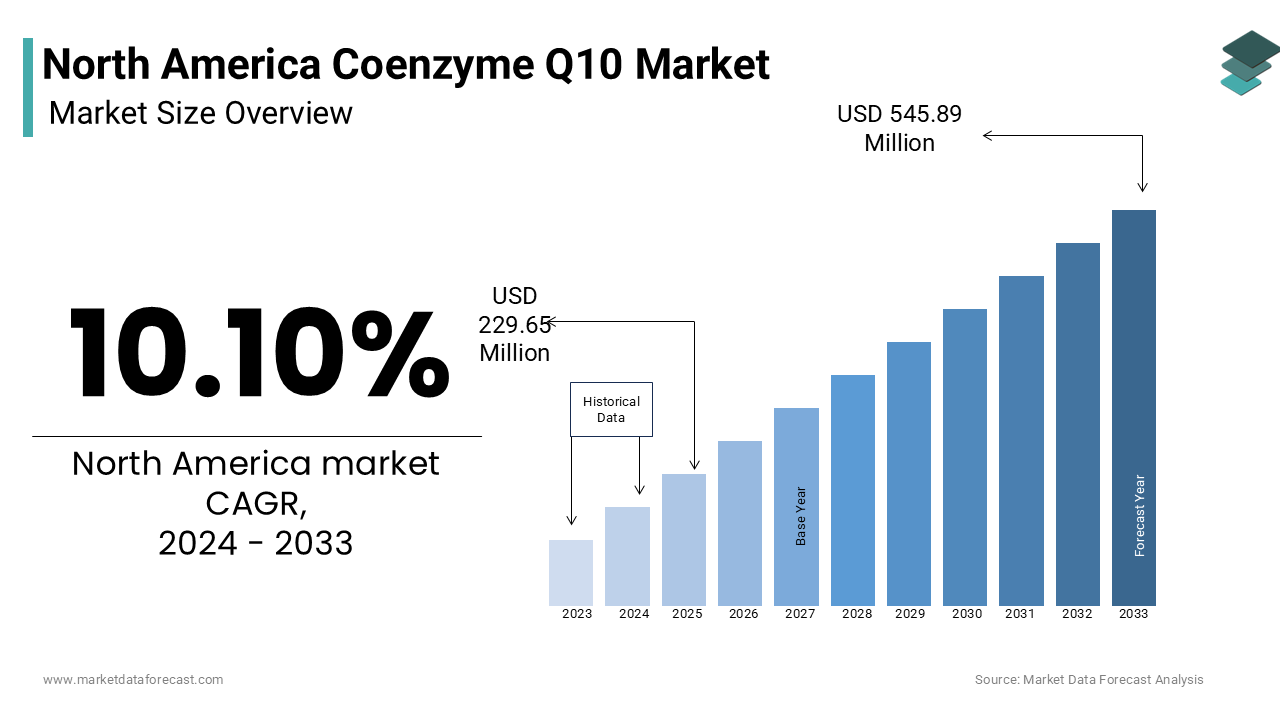
The North America coenzyme Q10 market size was valued at USD 252.84 million in 2025 and is anticipated to reach USD 278.38 million in 2026 from USD 601.89 million by 2034, growing at a CAGR of 10.10% during the forecast period from 2026 to 2034.
Coenzyme Q10 (CoQ10) is a fat-soluble, endogenously synthesized compound, functions as a component of the mitochondrial electron transport chain and a potent lipid-soluble antioxidant. In North America, CoQ10 is primarily consumed as a dietary supplement, available in both ubiquinone and its reduced, more bioavailable form, ubiquinol. The compound has gained significant traction due to its association with cardiovascular health, neuroprotection, and age-related mitochondrial decline. According to the National Institutes of Health Office of Dietary Supplements, over 30% of U.S. adults aged 60 and above report using CoQ10 supplements, often in conjunction with statin therapy, as statins are known to deplete endogenous CoQ10 levels. The U.S. Food and Drug Administration classifies CoQ10 as a dietary ingredient, allowing its inclusion in supplements without requiring pre-market approval, though it does not endorse specific health claims.
MARKET DRIVERS
Rising Prevalence of Cardiovascular Diseases and Associated Therapeutic Use of CoQ10
The escalating burden of cardiovascular diseases (CVD) is a primary factor for the growth of the North America Coenzyme Q10 Market. According to the American Heart Association, approximately 127 million adults in the United States suffer from hypertension, while over 6 million live with heart failure, conditions in which mitochondrial dysfunction and oxidative stress play pivotal roles. CoQ10 has demonstrated clinical relevance in improving cardiac output and reducing oxidative damage in myocardial tissue. Furthermore, statin-induced myopathy, a common side effect affecting up to 10% of statin users as reported by the Mayo Clinic, is frequently mitigated through CoQ10 supplementation due to the drug’s inhibition of the mevalonate pathway, which also synthesizes CoQ10. According to the Centers for Disease Control and Prevention, over 40% of adults aged 40 and above in the U.S. are on statin therapy, creating a vast population susceptible to CoQ10 depletion.
Growing Consumer Focus on Preventive Health and Longevity Optimization
The increasing consumer emphasis on preventive healthcare and biological aging mitigation is propelling the growth of the North American coenzyme Q10 market. CoQ10, recognized for its role in mitochondrial bioenergetics and antioxidant defense, has become a cornerstone of longevity-focused regimens. A 2022 survey by the Council for Responsible Nutrition revealed that 78% of supplement users in the U.S. prioritize products supporting long-term health maintenance, with CoQ10 ranking among the top 15 most consumed single-ingredient supplements. The compound is frequently integrated into anti-aging stacks alongside omega-3s, vitamin D, and resveratrol. Moreover, the rise of personalized wellness platforms, such as InsideTracker and WellnessFX, which analyze biomarkers and recommend CoQ10 based on mitochondrial health scores, has amplified consumer engagement.
MARKET RESTRAINTS
Lack of FDA-Approved Therapeutic Claims and Regulatory Ambiguity
The absence of formal therapeutic approvals and the resulting regulatory ambiguity surrounding its health claims is hindering the growth of the North American coenzyme Q10 market. The U.S. Food and Drug Administration classifies CoQ10 as a dietary supplement, which prohibits manufacturers from marketing it as a treatment or cure for any disease. As a result, despite robust clinical evidence in heart failure and neurodegenerative conditions, companies cannot legally communicate these benefits on product labeling. This restriction limits consumer awareness and physician endorsement, as healthcare providers are often hesitant to recommend products lacking FDA drug designation. Additionally, the lack of standardized dosing guidelines creates confusion among users and clinicians alike.
Variability in Bioavailability and Formulation Efficacy
The significant variability in bioavailability across different formulations with the consumer confidence and therapeutic consistency is also hampering the growth of the North American coenzyme Q10 market. CoQ10 is inherently poorly absorbed due to its high molecular weight and lipophilic nature, with traditional ubiquinone exhibiting oral bioavailability of less than 5%, as documented in pharmacokinetic studies published by the Journal of Clinical Pharmacology. While ubiquinol, the reduced form, demonstrates up to threefold higher absorption, its stability in capsule form remains a challenge, particularly under heat and light exposure. Additionally, formulation differences—such as use of solubilizing agents, lipid matrices, or nanoparticle delivery systems—lead to wide disparities in plasma concentration, even at identical dosages. The American Association of Clinical Endocrinologists emphasizes that inconsistent absorption can result in subtherapeutic blood levels, diminishing clinical outcomes. ConsumerLab.com testing in 2023 revealed that CoQ10 blood level increases varied by as much as 180% among users taking different brands at the same dose. In Canada, the Natural and Non-Prescription Health Products Directorate does not require bioavailability testing for product licensing, allowing lower-quality products to remain on shelves.
MARKET OPPORTUNITIES
Integration of CoQ10 into Medical Food and Clinically Supervised Regimens
The integration into medical foods and physician-guided therapeutic protocols for chronic disease management is escalating the growth of the North America coenzyme Q10 market. According to the U.S. Food and Drug Administration, medical foods are exempt from conventional labeling restrictions, allowing for disease-specific claims when supported by clinical evidence. This regulatory pathway enables CoQ10 to be positioned as a targeted intervention in conditions such as mitochondrial disorders, heart failure, and statin-associated muscle symptoms. The American College of Cardiology supports the use of CoQ10 in select heart failure patients, and several academic medical centers, including Cleveland Clinic and Massachusetts General Hospital, have incorporated it into metabolic cardiology programs. Companies like Nestlé Health Science and Abbott are already developing CoQ10-enriched medical nutrition products for cardiovascular and neurological support.
Expansion of Direct-to-Consumer Testing and Personalized Supplementation Platforms
The proliferation of direct-to-consumer (DTC) health testing platforms is posing new opportunities for the growth of the North American coenzyme Q10 market by enabling data-driven, personalized supplementation. Companies such as InsideTracker, WellnessFX, and Genova Diagnostics now offer biomarker panels that assess mitochondrial function, oxidative stress, and CoQ10 plasma levels, providing actionable insights for users. According to a 2023 analysis by the Personalized Medicine Coalition, over 14 million North Americans have used DTC health tests to guide supplement use, with CoQ10 being one of the most frequently recommended nutrients based on low serum levels or high oxidative stress markers. These platforms utilize algorithms that correlate biomarker data with clinical studies, generating customized regimens that enhance consumer trust and adherence. For instance, InsideTracker’s algorithm recommends CoQ10 supplementation when users exhibit elevated oxidized LDL or reduced VO2 max, both linked to mitochondrial inefficiency. This evidence-based approach transforms CoQ10 from a generic wellness product into a precision health intervention.
MARKET CHALLENGES
Scientific Skepticism and Inconsistent Clinical Trial Outcomes
The divergence in clinical trial outcomes and the resulting skepticism within the mainstream medical community is hampering the growth of the North America coenzyme Q10 market. While some studies demonstrate significant benefits, others report minimal or no effect, leading to inconsistent clinical guidelines and cautious physician adoption. The 2014 Q-SYMBIO trial showed a substantial reduction in cardiovascular mortality, yet the earlier 2010 KiSel-10 study, though positive for cardiovascular and mortality outcomes, focused on selenium and CoQ10 in combination, complicating attribution. According to the Journal of the American Medical Association, over 40 randomized controlled trials on CoQ10 have been published since 2000, with nearly half showing neutral results, often due to small sample sizes, short durations, or suboptimal dosing. The American Heart Association’s scientific statement on supplements acknowledges CoQ10 as "possibly beneficial" but stops short of recommending routine use, citing insufficient high-quality evidence. This ambiguity discourages widespread integration into standard care protocols.
Competition from Alternative Mitochondrial Support Agents and Nootropics
The intensifying competition from emerging mitochondrial support agents and cognitive enhancers that offer overlapping or perceived superior benefits is impeding the growth of the North American coenzyme Q10 market. According to the Linus Pauling Institute, NAD+ levels decline by up to 50% between ages 40 and 60, driving consumer interest in NR and NMN supplements, which generated over $100 million in U.S. sales in 2023, as estimated by the Nutrition Business Journal. Additionally, nootropic stacks containing compounds like acetyl-L-carnitine and ubiquinol analogs are promoted for cognitive longevity, encroaching on CoQ10’s traditional anti-aging niche. The Cognitive Health Foundation reports that 68% of supplement users aged 35–55 now prioritize "brain energy" formulations, many of which exclude CoQ10 in favor of newer ingredients. Furthermore, combination products labeled as "mitochondrial support complexes" often include CoQ10 as one of several components, diluting its brand identity. In Canada, health retailers such as Well.ca and Supplement King have reorganized their online categories to feature these newer compounds more prominently.
SEGMENTAL ANALYSIS
By Application Insights
The dietary supplements segment dominated the North America coenzyme Q10 market share in 2025 with the widespread consumer adoption of CoQ10 as a standalone or multi-ingredient wellness product. According to the American Heart Association, heart disease remains the leading cause of death in the United States, prompting millions of adults to proactively use CoQ10, particularly those on statin therapy, which depletes endogenous levels. The Mayo Clinic estimates that up to 75% of statin users experience muscle-related side effects, many of whom turn to CoQ10 for symptomatic relief. Another major driver is the aging population’s focus on energy metabolism and cellular health.
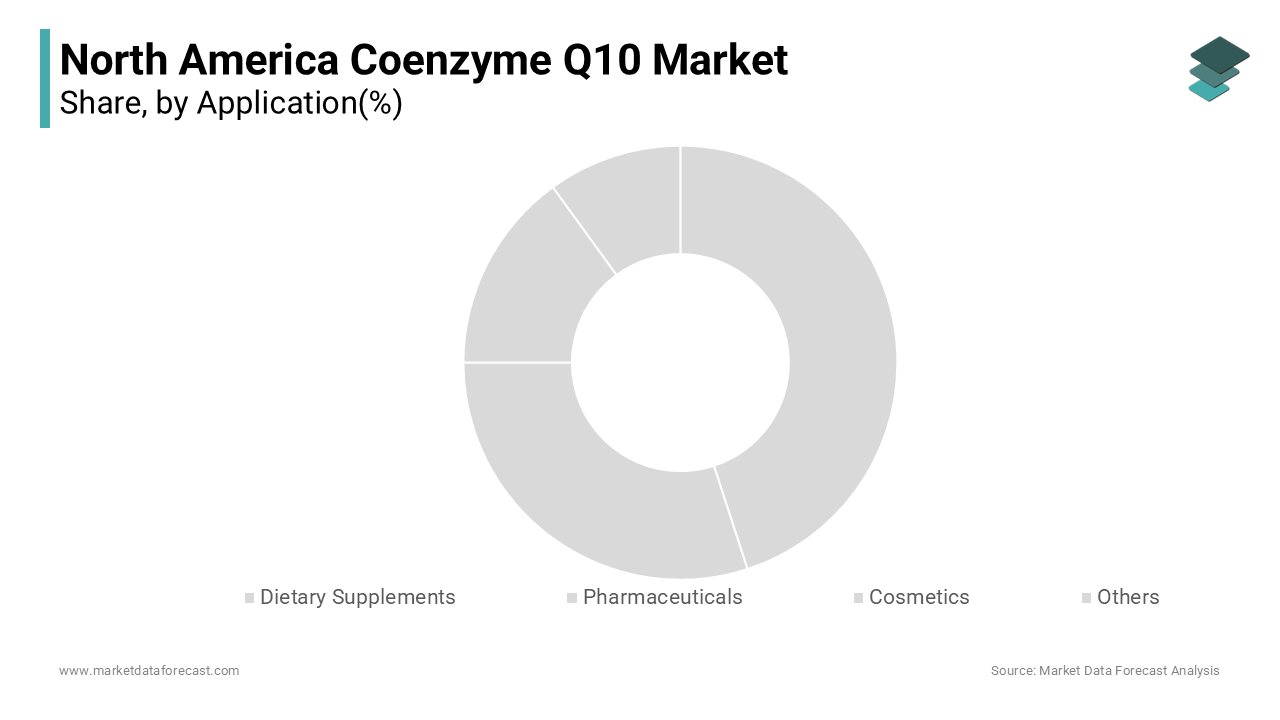
The cosmetics segment is likely to grow with a CAGR of 9.3% from 2026 to 2034 with the increasing demand for anti-aging skincare products that leverage CoQ10’s potent antioxidant properties to combat oxidative stress and photoaging. A clinical study conducted by the University of Maryland Medical Center demonstrated that topical application of 0.3% CoQ10 over 12 weeks led to a statistically significant reduction in wrinkle depth, particularly in sun-exposed facial areas. The rise of "clean beauty" and science-backed skincare has further elevated its appeal brands such as Neutrogena, Olay, and Canadian company Osmoter are incorporating CoQ10 into serums, moisturizers, and eye creams marketed for cellular renewal. The Environmental Working Group classifies CoQ10 as a low-hazard ingredient by enhancing its suitability for sensitive and eco-conscious consumers. Moreover, dermatologists are increasingly recommending CoQ10-enriched products as adjuncts to medical treatments for photodamage.
REGIONAL ANALYSIS
United States Coenzyme Q10 Market Insights
The United States was the top performer in the North America coenzyme Q10 market by occupying 91.2% of the share in 2025. The U.S. Census Bureau reports that over 75% of American adults use dietary supplements regularly, with cardiovascular and energy support being the top purchase motivations. The National Institutes of Health indicates that CoQ10 is one of the most frequently recommended supplements by integrative medicine practitioners, particularly for patients with heart failure or mitochondrial disorders. The country is also a leader in clinical research, with institutions like the Cleveland Clinic and Johns Hopkins conducting trials on CoQ10’s role in neuroprotection and metabolic health. Regulatory flexibility under the Dietary Supplement Health and Education Act allows for rapid product innovation and marketing, fostering a dynamic ecosystem of brands ranging from mainstream retailers to premium wellness companies. The presence of major ingredient suppliers such as Kaneka and DSM further strengthens domestic formulation capabilities.
Canada Coenzyme Q10 Market Insights
Canada coenzyme Q10 market held 9.1% of the share in 2025. While the country has a more regulated approach to supplements compared to the U.S., its structured framework has fostered consumer trust and steady market growth. The Canadian Community Health Survey reveals that over 48% of adults use natural health products, with CoQ10 commonly used for heart health and energy enhancement, particularly among seniors. The aging population is a key driver; Statistics Canada projects that by 2030, nearly 25% of Canadians will be aged 65 or older, increasing demand for mitochondrial support agents. Additionally, provincial healthcare systems are increasingly recognizing the role of nutraceuticals in chronic disease prevention, with Ontario’s Seniors’ Co-Payment Program covering certain supplements in specific cases. The growing presence of functional medicine clinics and integrative health practitioners has also boosted clinical recommendations for CoQ10. Canadian retailers such as Shoppers Drug Mart and Well.ca have expanded their CoQ10 offerings, including both ubiquinone and ubiquinol forms.
COMPETITIVE LANDSCAPE
The competitive landscape of the North America coenzyme Q10 market is shaped by a convergence of scientific credibility, brand positioning, and technological innovation rather than price-based rivalry. Major players distinguish themselves through proprietary production methods, particularly fermentation-derived CoQ10, which is perceived as superior to synthetic alternatives. The market is characterized by a tiered structure: ingredient manufacturers like Kaneka and DSM serve as foundational suppliers, while finished product brands compete on formulation, delivery format, and marketing narratives centered on longevity, heart health, and cellular energy. Smaller premium brands leverage transparency, third-party testing, and clean-label positioning to capture niche segments, while mass-market retailers focus on affordability and accessibility. Competition is further intensified by the blurring boundaries between supplements, medical foods, and cosmetics, with companies expanding CoQ10 into skincare, functional beverages, and physician-recommended regimens. Regulatory compliance, consumer trust, and scientific backing have become decisive factors in market differentiation.
KEY MARKET PLAYERS
The key players in the North America Coenzyme Q10 Market include
- Kaneka Corporation
- DSM Nutritional Products
- Kyowa Hakko Bio Co., Ltd.
- Tishcon Corp.
- Gnosis S.p.A. (Mitsubishi Chemical Group)
- NOW Foods
- Nature’s Bounty Co.
- Swanson Health Products
- PharmaEssentia Corporation
- ZMC USA LLC (Zhejiang Medicine Co.)
- PharmaNutra S.p.A.
- Nisshin Seifun Group, Inc.
- Healthy Origins
Top Players in the North America Coenzyme Q10 Market
Kaneka Corporation
Kaneka Corporation stands as a pioneer and global leader in coenzyme Q10 production, renowned for its proprietary fermentation technology that yields high-purity, naturally derived CoQ10. The company’s flagship product, Kaneka Q10®, is widely regarded as the gold standard in both ubiquinone and ubiquinol forms, setting benchmarks for bioavailability and stability. Kaneka’s influence extends beyond manufacturing, as it actively collaborates with researchers, regulatory bodies, and formulators to advance scientific understanding and application of CoQ10 in health and wellness. Kaneka has positioned its ingredient as a trusted component in premium supplements and medical nutrition products by investing in clinical validation and consumer education.
DSM Nutritional Products
DSM Nutritional Products plays a pivotal role in the North American coenzyme Q10 market through its integration of science, sustainability, and large-scale ingredient supply. The company leverages its expertise in life sciences to deliver high-quality, fermented CoQ10 that meets stringent regulatory and performance criteria for dietary supplements and fortified foods. DSM distinguishes itself through a holistic approach, combining CoQ10 with other bioactive nutrients in synergistic formulations targeting cardiovascular, cognitive, and cellular health. Its research collaborations with academic and clinical institutions have contributed to the growing body of evidence supporting CoQ10’s role in metabolic resilience. The company’s global supply network ensures consistent availability and technical support for North American brands, from mass-market retailers to specialty wellness companies. Its influence in setting industry benchmarks for purity, traceability, and innovation solidifies its position as a key enabler of advanced nutraceutical development worldwide.
Naturex (A Givaudan Company)
Naturex, now fully integrated into Givaudan’s Natural Products Division, has established a strong presence in the North American coenzyme Q10 market through its focus on clean-label, plant-based, and naturally derived ingredients. While not a primary CoQ10 manufacturer, Naturex excels in formulation expertise, encapsulation technologies, and delivery systems that enhance the stability and absorption of sensitive compounds like ubiquinol. The company’s strength lies in its ability to combine CoQ10 with complementary botanicals and antioxidants in customized blends for immune support, energy, and anti-aging applications. Its extraction and purification technologies ensure high ingredient integrity, meeting the demands of premium supplement brands focused on transparency and efficacy. The company’s commitment to ethical sourcing and regulatory compliance reinforces trust among health-conscious consumers and manufacturers alike.
Top Strategies Used by Key Market Participants
One major strategy employed by leading players is vertical integration and control over the production process through proprietary fermentation technologies that ensure high purity, consistency, and sustainability of coenzyme Q10.
Another key approach is investment in scientific validation and clinical research to build credibility and support health-related messaging. Companies are collaborating with academic institutions and medical experts to generate peer-reviewed data on bioavailability, efficacy, and safety, which strengthens brand positioning and supports engagement with healthcare professionals and informed consumers.
Likely another strategy is the development of advanced delivery systems, such as lipid-based encapsulation, nanoemulsions, and softgel formulations, to improve the bioavailability and stability of CoQ10, especially in its sensitive ubiquinol form. These innovations not only enhance consumer outcomes but also allow brands to command premium pricing and differentiate themselves in a crowded and competitive marketplace.
RECENT MARKET DEVELOPMENTS
- In June 2023, Kaneka Corporation launched a new stabilized ubiquinol formulation designed to resist oxidation during storage by enhancing shelf life and efficacy for supplement brands across North America.
- In September 2023, DSM introduced a CoQ10-enriched medical nutrition prototype in collaboration with a leading U.S. health system, which is targeting patients with mitochondrial dysfunction and heart failure.
- In January 2024, Givaudan (via Naturex) unveiled a plant-based delivery system for CoQ10 that improves absorption by optimizing lipid dispersion by catering to clean-label and vegan product developers.
- In November 2023, Kaneka expanded its technical support team in Chicago to provide formulation assistance and regulatory guidance to North American supplement manufacturers using its Q10 ingredients.
- In February 2024, DSM partnered with a digital health platform to integrate CoQ10 supplementation into personalized wellness plans based on biomarker testing, which is strengthening its presence in the precision nutrition space.
MARKET SEGMENTATION
This research report on the North America Coenzyme Q10 Market is segmented and sub-segmented based on categories.
By Application
- Dietary Supplements
- Pharmaceuticals
- Cosmetics
- Others
By Country
- U.S.
- Canada
- Rest of North America