- Product Description Description
- Table of Contents TOC
- List of Table & Figure LOT
- Get Free Sample PDF Sample PDF
Market Size, 2025
$23.95 BnMarket Estimate, 2026
$25.54 BnMarket Forecast, 2034
$42.75 BnCAGR, 2026–2034
6.65%North America Coffee Premixes Market Size, Growth, Trends & Forecast (2026–2034)
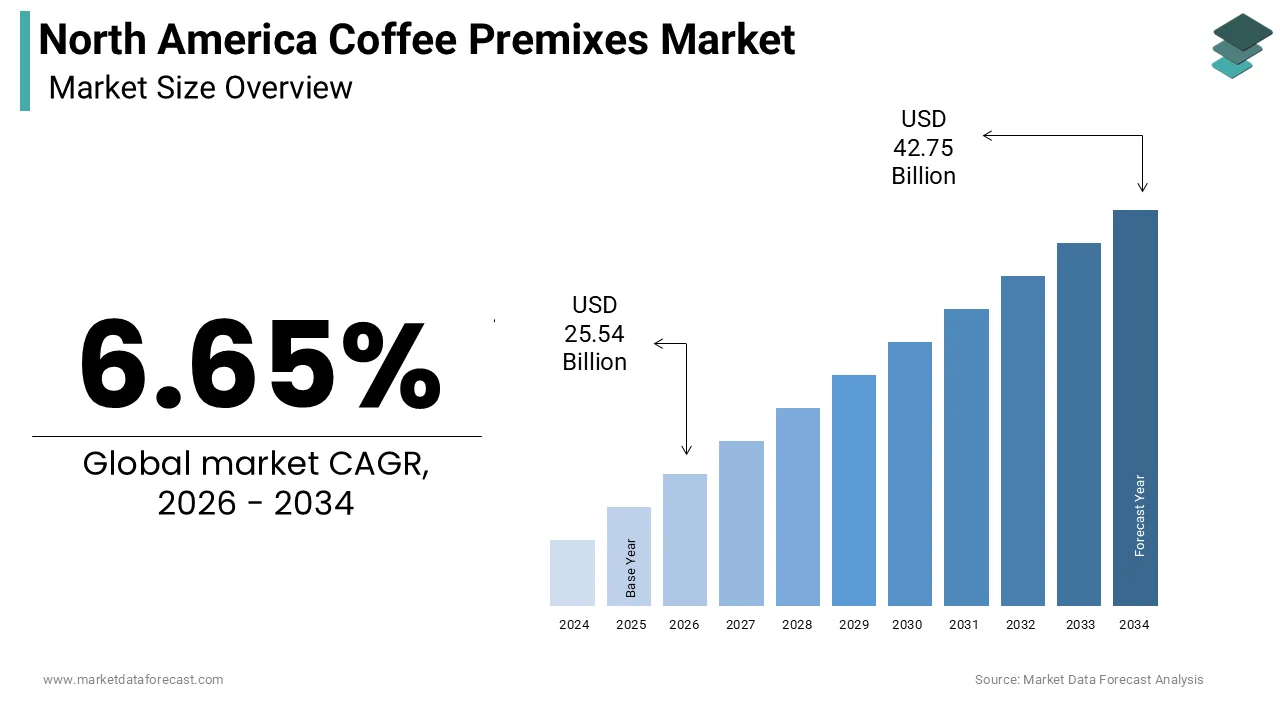
The North America coffee premixes market size was calculated to be USD 23.95 billion in 2025, is anticipated to be worth USD 25.54 billion in 2026, and is projected to reach USD 42.75 billion by 2034, growing at a compound annual growth rate (CAGR) of 6.65% during the forecast period from 2026 to 2034. Driven by a deeply entrenched coffee culture, increasing demand for instant convenience amid fast-paced lifestyles, and the rapid rise of functional wellness-infused beverages, the industry continues to expand steadily across North America.
Key Executive Metrics (At-a-Glance)
- 2025 Base Valuation: USD 23.95 Billion
- 2026 Current Valuation: USD 25.54 Billion
- 2034 Forecast Valuation: USD 42.75 Billion
- Compound Annual Growth Rate (CAGR): 6.65% (2026–2034)
- Dominant Type Segment: Brewing Segment (held the majority market share in 2025 due to baseline consumer expectations and soluble format versatility)
- Dominant Bean Segment: Brown Bean Segment (occupied a commanding share in 2025 backed by traditional roast familiarity and excellent extraction stability)
- Dominant Brewing Style: Regular Brewing Style (led market volume in 2025 due to ubiquitous daily routines and cost efficiency)
- Dominant Region: United States (accounted for a 78.1% market share in 2025 driven by massive consumption volumes and retail efficiencies)
- Fastest-Growing Segments: Flavored Formulations (8.5% CAGR), White Bean Category (9.2% CAGR), and Latte Brewing Style (8.8% CAGR)
Core Market Drivers
- Urban Lifestyles & Convenience: High demand for fast, single-serve, and mess-free coffee solutions among remote and hybrid workforce demographics.
- Institutional Expansion: Strong procurement demands across hospitality, healthcare, and corporate office sectors for standardized flavor profiles and operational ease.
- Functional Innovation: Infusing premixes with proteins, vitamins, and adaptogens to capture the expanding health and wellness economy.
Primary Market Restraints & Challenges
- Health Concerns: Consumer backlash against high levels of added sugars, artificial flavors, and processed creamers.
- Supply Chain Volatility: Price swings in raw materials like coffee beans, dairy derivatives, and sugar driven by climate disruptions and inflation.
North America Coffee Premixes Market Segmentation Breakdown
| Segment Category | Leading Sub-Segment (2025 Base) | Fastest-Growing Sub-Segment (2026–2034) |
|---|---|---|
| By Type | Brewing Segment (dominant baseline for daily caffeine routines) | Flavors Segment (8.5% CAGR driven by novel sensory profiles and café-style trends) |
| By Types of Beans | Brown Bean Segment (commanding share via traditional roast familiarity and extraction yield) | White Bean Segment (9.2% CAGR propelled by light roasts, higher antioxidants, and specialty trends) |
| By Brewing Style | Regular Brewing Style (major volume share through straightforward daily usage) | Latte Brewing Style (8.8% CAGR backed by dairy premiumization and machine compatibility) |
| By Region | United States (78.1% share fueled by massive retail scale and high daily consumption) | Canada (expanding via strong preference for organic, sustainable, and climate-driven warm options) |
Major Industry Players Profiled
Key enterprises shaping the competitive North American coffee premixes market include Unilever, Godrej & Boyce Manufacturing Company Limited, Nestle (Nescafé), The Coca-Cola Company (Georgia), Starbucks Corporation, European Coffee Federation, Paulig Juhla Mokka, and Vending Updates India Pvt. Ltd.
North America Coffee Premixes Market Size
The size of the North America Coffee Premixes Market was calculated to be USD 23.95 billion in 2025 and is anticipated to be worth USD 42.75 billion by 2034 from USD 25.54 billion In 2026, growing at a CAGR of 6.65% during the forecast period.
A coffee premix is a powdered, all-in-one blend containing instant coffee, milk powder (or creamer), and sugar. These products are designed to offer convenience, consistency, and speed for both commercial establishments and individual consumers seeking a quick caffeine fix without the need for separate ingredient measurement. The region is characterized by a deeply entrenched coffee culture where daily consumption is a ritual for millions. According to data from the National Coffee Association (NCA), approximately 66% to 67% of adults in the United States drink coffee daily, marking its highest past-day consumption rate in more than two decades. As per the Coffee Association of Canada (CAC), approximately 72% of Canadian adults consume coffee on a daily basis, making it the most frequently consumed beverage across the country. The shift toward remote work and the expansion of the gig economy have further amplified the need for efficient home brewing options that replicate the café experience. Commercial sectors such as hospitality, healthcare, and corporate offices increasingly rely on premixes to streamline service operations and ensure uniform taste profiles across multiple locations. The market is also influenced by rising health consciousness, prompting manufacturers to innovate with functional ingredients like collagen protein and adaptogens. This dynamic landscape positions coffee premixes as a critical component of the modern beverage industry, bridging the gap between traditional brewing and instant convenience.
MARKET DRIVERS
Surging Demand for Convenience in Fast-Paced Urban Lifestyles
The relentless pace of urban life and the increasing value placed on time efficiency fuel the growth of the North American coffee premix market. Consumers in major metropolitan areas such as New York, Toronto, and Los Angeles often face long commutes and demanding work schedules, leaving little time for traditional brewing methods. According to the Bureau of Labor Statistics, the average employed American who works on an average day puts in approximately 7.5 to 8.0 hours of work, establishing a stable baseline for daily consumer scheduling and time-use patterns. The International Labour Organization indicates that the expansion of the gig economy and hybrid work models has significantly altered daily household routines, blending traditional home and office spheres. Coffee premixes eliminate the need for measuring beans, grinding equipment, or cleaning up after brewing, allowing users to enjoy a consistent cup of coffee in seconds. This convenience factor is particularly appealing to younger demographics, including millennials and Generation Z, who prioritize speed and simplicity in their daily routines. The ability to carry single-serve sachets or pods ensures that consumers can access their preferred coffee blend anywhere, from construction sites to corporate boardrooms. This structural shift toward convenience-driven consumption guarantees sustained growth for the coffee premix sector.
Expansion of the Hospitality and Institutional Food Service Sectors
The robust expansion of the hospitality, healthcare, and institutional food service sectors further accelerates the growth of the North America coffee premix market. This significantly drives the demand for standardized and cost-effective coffee premixes. Hotels, hospitals, universities, and corporate cafeterias require beverage solutions that deliver consistent quality and taste regardless of the staff member preparing them. According to the American Hotel & Lodging Association, the broader U.S. travel and hotel ecosystem generates over $1 trillion in annual economic output, making it a critical driver of local employment, guest spending, and municipal tax revenue. Coffee premixes offer a turnkey solution that reduces training requirements for staff and ensures uniform flavor profiles across different locations and shifts. Furthermore, the ability to control portion sizes helps institutions manage costs and reduce inventory complexity compared to maintaining separate stocks of coffee bean,s milk, and sugar. The growing trend of outsourcing food service management to large contractors who prioritize operational efficiency further drives the adoption of premixed formats. This institutional reliance on standardized beverage solutions creates a stable and high-volume revenue stream for coffee premix manufacturers.
MARKET RESTRAINTS
Health Concerns Regarding Added Sugars and Artificial Ingredients
Growing consumer awareness regarding the negative health impacts of added sugars, artificial flavors, and processed creamers hampers the growth of the North America coffee premix market. Many traditional premix formulations contain high levels of sucrose, high fructose corn syrup, and hydrogenated oils, which are increasingly viewed as detrimental to cardiovascular health and weight management. According to the Centers for Disease Control and Prevention, adult obesity rates in the United States hover above 40%, illustrating a persistent national chronic disease challenge that heavily influences preventative medicine frameworks. As per Health Canada, new labeling regulations require clearer disclosure of sugar content, prompting consumers to scrutinize ingredient lists more closely. The perception of coffee premixes as highly processed and unhealthy alternatives to fresh-brewed coffee with natural milk limits their appeal among health-conscious individuals. Fitness enthusiasts and those following specific diets such as keto or paleo often avoid standard premixes due to their carbohydrate and fat profiles. This health consciousness forces manufacturers to reformulate products, which can increase production costs and alter taste profiles, potentially alienating traditional customers. The persistent stigma associated with processed beverage mixes restricts market penetration among premium and wellness-oriented consumer segments.
Preference for Freshly Brewed Specialty Coffee Experiences
The strong cultural preference for freshly brewed specialty coffee and the artisanal café experience is also a formidable obstacle to the North American coffee premix market. North American consumers have become increasingly sophisticated in their coffee taste, favoring single-origin beans, specific roast profiles, and expert barista preparation over instant or premixed alternatives. According to the Specialty Coffee Association, the specialty coffee market in the United States has grown significantly, with consumers willing to pay premium prices for high-quality, freshly roasted beans. As per the National Coffee Association (NCA), a substantial segment of daily coffee drinkers utilizes traditional and specialty preparation methods at home, with drip coffee makers, single-serve brewing pods, and espresso-based machines leading household usage. The rise of third-wave coffee shops has educated consumers about the nuances of coffee tasting, making them less likely to accept the standardized and often flat flavor profiles of premixes. This preference for authenticity and craftsmanship positions coffee premixes as a lower-tier option suitable only for situations where convenience outweighs quality. The dominance of specialty coffee culture limits the ability of premix manufacturers to position their products as premium offerings, thereby constraining market growth in higher-income demographics.
MARKET OPPORTUNITIES
Integration of Functional Ingredients and Wellness Trends
The integration of functional ingredients, such as proteins, vitamins, adaptogens, and nootropics, into these premixes offers a lucrative opportunity for the expansion of the North American coffee premix market. Consumers are increasingly viewing coffee not just as a stimulant but as a vehicle for overall wellness and performance enhancement. According to data from the Global Wellness Institute (GWI), the global wellness economy has expanded to an estimated $6.3 trillion valuation, with the "Healthy Eating, Nutrition & Weight Loss" sector standing as one of its largest core pillars. The Council for Responsible Nutrition (CRN) shows that approximately 74% to 75% of American adults regularly consume dietary supplements, underscoring a stable national focus on proactive personal health management. Coffee premixes infused with collagen for skin health, MCT oil for energy, or ashwagandha for stress relief appeal to health-conscious consumers who seek multitasking benefits in their daily routines. These functional premixes allow manufacturers to command premium pricing and differentiate their products in a crowded market. The trend toward biohacking and mental performance optimization among professionals and athletes further drives demand for specialized coffee blends. By aligning with broader wellness trends, coffee premix manufacturers can tap into new consumer bases that prioritize health and functionality over mere convenience. This innovation potential offers a pathway to overcome negative perceptions of processed ingredients and reposition premixes as beneficial health tools.
Growth of E-Commerce and Direct-to-Consumer Subscription Models
The rapid growth of e-commerce and the popularity of direct-to-consumer subscription models open the door for brands to reach wider audiences within the North American coffee premix market. Online retail platforms allow manufacturers to bypass traditional grocery channels and engage directly with consumer,s offering personalized recommendations and convenient recurring deliveries. According to the United States Census Bure,au e-commerce sales in the United States have continued to grow steadily, accounting for a significant portion of total retail sales. Studies indicate that the subscription commerce ecosystem has expanded significantly, with automated replenishment models for consumable staples like coffee driving consumer convenience. Coffee premix brands can leverage data analytics to understand consumer preferences and tailor product offerings, such as varying sweetness levels or flavor profiles. Subscription models ensure customer loyalty and predictable revenue streams while reducing the friction of repeated purchasing decisions. The ability to ship lightweight and durable premix packages directly to homes and offices enhances accessibility for consumers in rural or underserved areas. This digital transformation enables smaller niche brands to compete with established players by offering unique and customized experiences. The shift toward online shopping and subscription services provides a robust channel for sustained market growth and brand building.
MARKET CHALLENGES
Volatility in Raw Material Prices and Supply Chain Disruptions
The inherent volatility in the prices of key raw materials, such as coffee beans, sugar, and dairy derivatives, is a significant challenge to the profitability and stability of the North American coffee premix market. Climate change, pests, and geopolitical tensions frequently disrupt global coffee supplies, leading to unpredictable price fluctuations. According to the International Coffee Organization, coffee prices have experienced significant swings in recent years due to weather events in major producing countries like Brazil and Vietnam. As per the World Bank, global food price indices indicate that sugar and dairy costs have also risen due to supply chain bottlenecks and increased energy costs. These fluctuations make it difficult for manufacturers to maintain consistent pricing and profit margins, especially when competing against private label brands. Additionally, the reliance on imported ingredients exposes companies to currency exchange risks and trade policy changes. Supply chain disruptions can lead to shortages of specific components, forcing manufacturers to reformulate products or delay launches. The inability to fully pass on cost increases to price-sensitive consumers further squeezes margins. Managing these financial and logistical uncertainties requires sophisticated hedging strategies and diversified sourcing, which can be resource-intensive for smaller players.
Intense Competition from Private Label and Generic Brands
The intense competition from private-label and generic coffee premix brands creates significant pressure on established manufacturers to lower prices and innovate continuously, which holds back the expansion of the North American market. Retailers such as Walmart, Costco, and Amazon have developed their own high-quality private label premixes that offer comparable taste and convenience at lower price points. According to a study, private label products account for a growing share of sales in the packaged food and beverage sector as consumers seek value amidst inflationary pressures. As per the Private Label Manufacturers Association, retailer-owned brands have improved their quality and packaging, making them attractive alternatives to national brands. This competition erodes brand loyalty and forces established players to invest heavily in marketing and product differentiation to maintain market share. Generic brands often mimic popular flavors and formats, making it difficult for proprietary brands to distinguish themselves solely on taste. The ease of switching between brands in the commoditized premix segment means that price becomes a primary decision factor for many consumers. This competitive landscape limits the ability of manufacturers to raise prices and necessitates continuous investment in innovation to stay ahead. The threat of private label expansion remains a persistent challenge to the long-term profitability of branded coffee premix companies.
REPORT COVERAGE
| REPORT METRIC | DETAILS |
| Market Size Available | 2025 to 2034 |
| Base Year | 2025 |
| Forecast Period | 2026 to 2034 |
| CAGR | 6.65% |
| Segments Covered | By Type, Types of Beans, Brewing Style, and Region |
| Various Analyses Covered | Global, Regional & Country Level Analysis; Segment-Level Analysis; DROC, PESTLE Analysis; Porter’s Five Forces Analysis; Competitive Landscape; Analyst Overview of Investment Opportunities |
| Regions Covered | North America, Europe, Asia Pacific, the Middle East and Africa, And Latin America |
| Market Leaders Profiled | Unilever, Godrej & Boyce Manufacturing Company Limited, Nestle (Nescafé), The Coca-Cola Company (Georgia), Starbucks Corporation, European Coffee Federation, Paulig Juhla Mokka, and Vending Updates India Pvt. Ltd |
SEGMENTAL ANALYSIS
By Type Insights
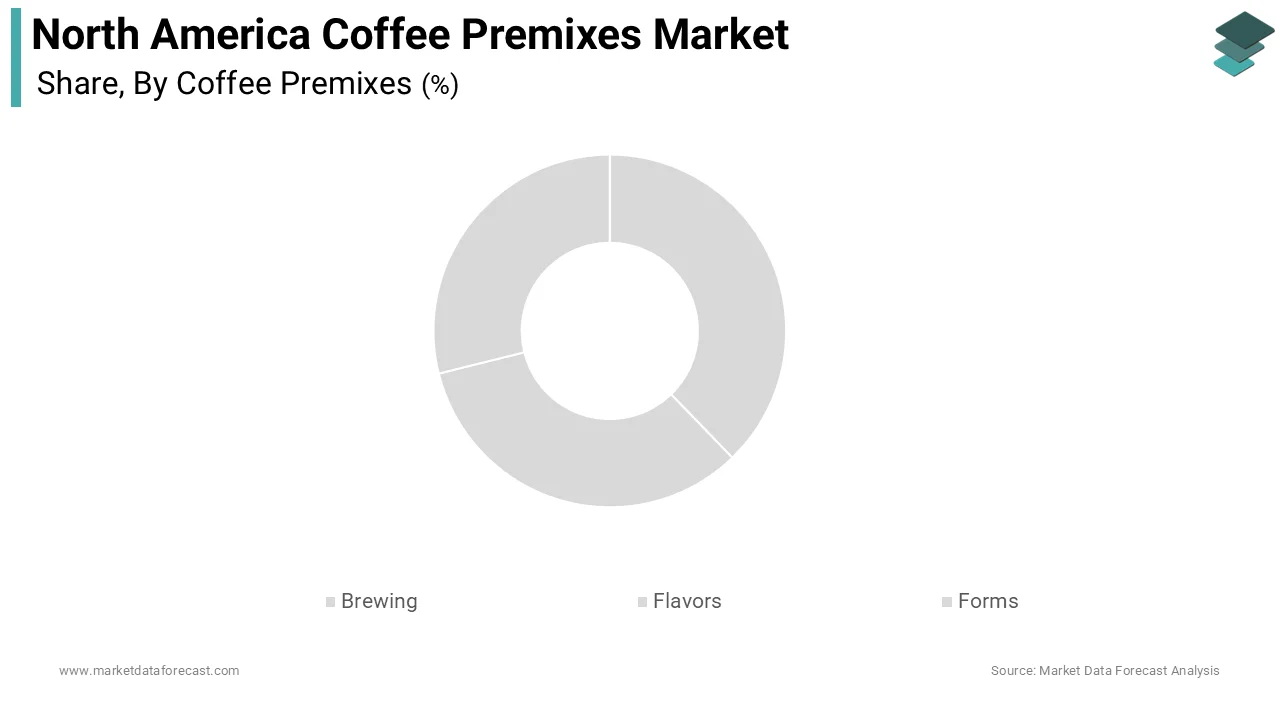
In 2025, the brewing segment maintained the majority share of the North American coffee premix market because it represents the fundamental baseline of consumer expectations and daily caffeine routines. According to the National Coffee Association (NCA), traditional drip coffee makers and single-serve pod machines remain the top two most popular preparation methods among daily coffee drinkers in the United States. As per the Specialty Coffee Association, the sensory attributes associated with classic brewing methods, such as aroma, body, and acidity, remain the primary metrics by which buyers evaluate product quality. Premix manufacturers focusing on the brewing segment invest heavily in advanced freeze drying and agglomeration technologies to replicate these exact sensory characteristics in a soluble format. This technological commitment ensures that the core coffee experience is not compromised by the addition of creamers or sweeteners. Furthermore, institutional buyers, including hotels and corporate offices, heavily procure brewing premixes to satisfy the diverse palates of their patrons without alienating traditional coffee drinkers. This unwavering demand for an authentic foundational coffee experience guarantees that the brewing segment will perpetually lead the market in terms of sheer volume and revenue generation across the continent.
Also, one more force supporting this segment's top position is its unparalleled versatility across a vast array of commercial and institutional applications. The National Restaurant Association highlights that beverage premiumization and personalized options, such as specialty coffees and signature cold builds, serve as vital tools for operators looking to boost profitability. In addition, the neutral and robust profile of brewing premixes allows them to serve as the perfect canvas for both simple black coffee servings and complex customized beverages. This adaptability makes them indispensable for large-scale caterers, university dining halls and healthcare facilities where operational efficiency and menu flexibility are paramount. By functioning as the essential backbone of diverse beverage menus, the brewing segment secures its position as the most widely utilized and financially substantial category within the entire North American coffee premix landscape.
The flavors segment is estimated to register the fastest CAGR of 8.5% from 2026 to 2034, mainly due to the rising consumer demand for indulgent and novel sensory experiences. According to the annual Food and Health Survey conducted by the International Food Information Council (IFIC), taste consistently ranks as the single most critical factor driving consumer food and beverage purchasing decisions. The psychological shift toward treating oneself with affordable luxuries has significantly boosted the sales of flavored premixes, particularly among millennials and Generation Z. Furthermore, the proliferation of artisanal coffee shop menus has educated consumers about complex flavor combinations, prompting them to seek similar experiences in the convenience of their homes. Manufacturers are responding by developing sophisticated flavor encapsulation technologies that ensure the taste remains vibrant and authentic even after prolonged shelf storage. This relentless consumer pursuit of elevated and enjoyable sensory moments guarantees that the flavors segment will continue to outpace all other categories in market growth.
Moreover, a critical driver maintaining this segment's front position is the profound influence of social media and modern cafe culture on home consumption habits. Research indicates that a vast majority of young adults are highly active users of visually driven social media platforms, making digital landscapes central to youth communication and culture. Sources confirm that social media platforms serve as primary discovery channels for younger demographics, with online product exposures heavily influencing immediate consumer purchasing intent. Flavored coffee premixes allow individuals to easily recreate these trendy and visually appealing drinks at home without the need for expensive equipment or professional barista skills. The vibrant colors and rich aromas of flavored premixes make them highly shareable on social media, further amplifying their popularity through organic peer-to-peer marketing. Brands are increasingly launching limited-edition and collaborative flavors to capitalize on these digital trends, creating a sense of urgency and exclusivity. This powerful synergy between digital culture and at-home beverage preparation ensures that flavored coffee premixes will maintain their rapid and dynamic expansion across the North American market.
By Types Of Beans Insights
The brown bean segment was the largest in the North American coffee premix market and occupied a commanding share in 2025. Factors such as the deeply established consumer preference for traditional and familiar roast profiles have contributed to the supremacy of this segment. Premix manufacturers rely heavily on brown beans because their intense flavor profiles can effectively penetrate and balance the rich sweetness of added creamers and sugars. This sensory compatibility is crucial for creating a harmonious and satisfying final beverage that meets mass market expectations. Furthermor,e the widespread availability and established global supply chains for brown roasted beans ensure consistent quality ancost-effectiveve procurement for large-scale premix production. This enduring alignment with traditional consumer palates and manufacturing efficiencies cements the brown bean segment as the undisputed leader in the regional market.
A further key factor reinforcing the dominance of the brown bean segment is its optimal extraction characteristics, which are perfectly suited for instant and premix manufacturing processes. The resilience ensures that the final premix product retains a rich and authentic coffee taste upon reconstitution with hot water. In contrast, less roasted beans often yield lower extraction rates and possess delicate flavor profiles that can be easily destroyed or altered during industrial processing. The superior yield and flavor retention capabilities of brown beans directly translate to higher production efficiencies and better profit margins for manufacturers. This technical superiority in large-scale beverage manufacturing guarantees the continued leadership of the brown bean segment.
The white bean segment is experiencing the fastest growth, with a CAGR of 9.2% during the forecast period, owing to the emergence of specialty coffee trends and shifting health perceptions. According to the Specialty Coffee Association, a growing niche of consumers is actively seeking out lightly roasted and alternative coffee preparations to experience the unique terroir and delicate floral notes of the bean. As per the Harvard T.H. Chan School of Public Health, white coffee, which is roasted at a much lower temperature, retains higher concentrations of chlorogenic acid and other antioxidants compared to fully roasted brown beans. This nutritional advantage has attracted health-conscious consumers who view white coffee premixes as a functional beverage that offers enhanced cognitive and metabolic benefits alongside their daily caffeine intake. Manufacturers are capitalizing on this trend by introducing premium white coffee premixes that highlight these health attributes while providing a distinct and smooth flavor profile. The intersection of specialty coffee appreciation and functional nutrition creates a highly compelling value proposition. This powerful combination of wellness benefits and novel taste experiences ensures that the white bean segment will continue its rapid and aggressive expansion in the near future.
This segment grows quickly, helped by its unique and distinct flavor profiles, which are highly effective at attracting younger and more adventurous demographics. According to a study, younger consumers, including millennials and Generation Z, are significantly more likely than older generations to experiment with new and unconventional food and beverage products. The distinctiveness allows brands to position white coffee premixes as an innovative and trendy alternative to standard offerings, capturing the attention of early adopters and trendsetters. The visual appeal of the lighter colored beverage also aligns perfectly with the aesthetic preferences of social media-driven consumers who enjoy sharing unique lifestyle choices online. By offering a novel and visually appealing product that caters to the experimental nature of younger buyers, the white bean segment is successfully carving out a rapidly expanding niche within the broader North American coffee premix market.
By Brewing Style Insights
The regular brewing style segment led the North American coffee premix market and captured a significant share in 2025. This dominance of the segment was driven by the fact that it seamlessly integrates into the ubiquitous daily consumption habits of the general population. As per the National Coffee Association, the simplicity and straightforward nature of regular coffee make it the default choice for consumers seeking a reliable and unadulterated caffeine boost to start their day or maintain focus during work. Premixes categorized under the regular style are formulated to deliver a consistent and familiar taste that requires no additional preparation or customization. This reliability is highly valued by busy professionals, students, and manual laborers who need a quick and effective energy source without the complexity of milk-based or heavily sweetened alternatives. Furthermore, the lower calorie content of regular coffee premixes appeals to individuals monitoring their dietary intake. This universal acceptance and deep integration into daily routines ensure that the regular brewing style will perpetually dominate the market in terms of volume and consistent consumer loyalty.
A different factor driving the top position of the regular brewing style is its inherent cost efficiency and broad appeal across diverse demographic groups. The Bureau of Labor Statistics (BLS) illustrates that inflationary pressures across food-away-from-home indices heavily impact overall household budgeting and discretionary consumer retail spending patterns. The straightforward ingredient list of regular premixes typically consists of coffee extract and minimal stabilizers, which allows manufacturers to keep production costs low and pass the savings on to the consumer. This affordability makes regular premixes highly accessible to lower and middle-income households as well as large institutional buyers operating on strict budgets. Additionally, the neutral and classic flavor profile of regular coffee appeals to a wide age range, avoiding the polarizing effects of strong sweetness or heavy dairy additions. This combination of economic accessibility and universal taste acceptance guarantees that the regular brewing style will remain the most widely purchased and financially substantial segment in the market.
The latte brewing style segment is anticipated to witness the fastest CAGR of 8.8% between 2026 and 2034. This quick surge of the segment is propelled by the ongoing premiumization of milk-based coffee beverages. As per the National Coffee Association, latte preparations, which combine rich espresso with steamed milk, represent the most popular customized coffee order among young adults and professionals. Premix manufacturers are responding to this trend by developing advanced latte formulations that utilize premium dairy powders or high-quality plant-based milk alternatives to deliver a creamy and authentic texture. The perception of a latte as a sophisticated and indulgent treat allows brands to command higher price points and achieve better profit margins compared to standard coffee premixes. Furthermore, the inclusion of functional ingredients like protein or collagen into latte premixes aligns with the growing demand for nutritious and satisfying meal replacements. This continuous elevation of the milk-based coffee experience ensures that the latte segment will maintain its rapid and highly profitable growth trajectory across the continent.
The fast growth of this segment is boosted by the rapid expansion of advanced home brewing equipment compatibility and the increasing availability of specialized premix pods. Also, the technological synergy eliminates the traditional barriers to making a high-quality latte at home, such as the need for expensive espresso machines or manual frothing skills. Manufacturers are partnering with equipment brands to create exclusive premix lines that are optimized for specific machine parameters, guaranteeing a superior and consistent cup every time. The convenience of achieving a professional-grade latte with the simple push of a button strongly appeals to time-starved consumers who refuse to compromise on quality. This harmonious integration of advanced hardware and specialized premix software guarantees the rapid expansion of the latte segment.
REGIONAL ANALYSIS
United States Coffee Premix Market Analysis
The United States dominated the North American coffee premix market and accounted for a 78.1% share in 2025. This dominance of the US market was attributed to its massive population and deeply entrenched coffee consumption culture. This country hosts a highly competitive market where corporations and startups constantly struggle to win over consumers. To stand out, these entities rely heavily on aggressive marketing and unique product differentiation. According to data from the National Coffee Association (NCA), the daily consumption rate of coffee among American adults remains exceptionally high, with recent tracking showing that over 65% of adults consume the beverage daily. As per the United States Census Bureau, demographic shifts over recent decades show a steady increase in single-person households and dual-income family structures across the nation. The robust presence of advanced retail infrastructure and the dominance of large warehouse clubs facilitate the bulk purchasing of these products. Furthermore, the strong trend toward health and wellness has prompted American manufacturers to heavily invest in functional and low-sugar premix variants. This dynamic combination of high consumption volume, retail efficienc,y and rapid product innovation ensures that the United States will perpetually lead the regional market in both volume and revenue generation.
Canada Coffee Premix Market Analysis
Canada maintains a highly significant position in the regional market due to a strong preference for premium quality and sustainable coffee products. A highly educated consumer base heavily influences the market status in this country. These shoppers prioritize ethical sourcing, environmental responsibility, and superior taste in their beverage choices. According to Statistics Canada, household expenditure tracking shows that coffee and tea remain stable, core staples in Canadian retail food and beverage consumer baskets. Canadian consumers are particularly receptive to plant-based and organic coffee premixes, aligning with the country's strong environmental consciousness and dietary trends. Furthermore, the harsh winter climate in many provinces drives a higher seasonal demand for ho,t comforti,ng and indulgent beverage options during the colder months. This unique blend of premium quality expectati,ons ethical consume,rismclimate-drivenriven consumption patterns guarantees that Canada will remain a highly lucrative and sophisticated market for coffee premix manufacturers.
COMPETITION OVERVIEW
The competition in the North America Coffee Premix Market is characterized by intense rivalry among established multinational corporations and emerging niche brands. Major players leverage their extensive distribution networks and strong brand recognition to dominate shelf space in retail outlets. Private-label products from large retailers pose a significant threat by offering comparable quality at lower prices. Innovation in flavor profiles and functional ingredients serves as a key differentiator for brands seeking to capture health-conscious consumers. Sustainability initiatives and ethical sourcing practices are increasingly important for building consumer loyalty and meeting regulatory expectations. Digital marketing and direct-to-consumer sales channels allow smaller brands to compete effectively by targeting specific demographic segments. Price wars and promotional discounts are common tactics used to gain market share in the highly saturated instant coffee segment. Collaborations with popular coffee shops and celebrities help brands enhance their appeal and reach wider audiences. The market sees continuous entry of new players introducing novel concepts such as adaptogen-infused or keto-friendly coffee premixes. Strategic acquisitions and mergers enable larger companies to expand their product portfolios and eliminate competitors. Overall, the competitive landscape drives constant innovation and improvement in product quality and consumer engagement.
KEY MARKET PLAYERS
A few major players of the NorthAmericana coffee premix market include
- Unilever
- Godrej & Boyce Manufacturing Company Limited
- Nestle
- The Coca-Cola Company
- Starbucks Corporation
- European Coffee Federation
- Paulig Juhla Mokka
- Vending Updates India Pvt. Ltd
Top Strategies Used by Key Market Participants
Key players in the North America Coffee Premix Market primarily focus on product innovation to develop healthy and functional coffee blends that align with evolving consumer wellness trends. Companies invest heavily in sustainable sourcing and ethical certification to build brand trust and meet regulatory standards. Strategic partnerships with popular coffee chains and influencers help expand brand visibility and attract younger demographics. Expansion oe-commercece platforms and subscription services ensures convenient access and customer loyalty. Manufacturers prioritize packaging improvements to enhance freshness and reduce environmental impact. Diversification into plant-based and dairy-free options addresses the growing demand for alternative ingredients. Competitive pricing strategies and promotional campaigns drive volume sales in retail and institutional channels. Continuous investment in research and development allows for the creation of unique flavor profiles and improved solubility. These multifaceted approaches enable companies to maintain competitive advantages and capture growing market opportunities.
Leading Players in the North America Market
- Nestle USA operates as a dominant force in the North America coffee premix market, leveraging its extensive portfolio of iconic brands such as Nescafé and Starbucks at Home. The company focuses on delivering high-quality instant and flavored coffee solutions that cater to diverse consumer preferences for convenience and taste. Recent actions include expanding its production capabilities for plant-based coffee premixes to meet the growing demand for dairy-free options. Nestle actively invests in sustainable sourcing initiatives to ensure ethical procurement of coffee beans, which resonates with environmentally conscious consumers. By integrating advanced digital marketing strategies and enhancing its e-commerce distribution channels, the company strengthens its direct connection with customers. These strategic efforts reinforce its leadership position by ensuring product availabilit,y innovati,on and alignment with modern lifestyle trends across the region.
- The J.M. Smucker Company holds a significant position in the market through its ownership of premium coffee brands like Folgers and Dunkin. The company is deeply involved in providing a wide range of coffee premixes, including flavored lattes and cappuccinos that appeal to mass market consumers. Recent actions involve launching new limited edition seasonal flavors and collaborating with popular beverage chains to create exclusive home brewing blends. Smucker prioritizes supply chain resilience by securing long-term contracts with coffee growers to maintain consistent quality and pricing. The company also focuses on packaging innovations that enhance freshness and convenience for single-serve formats. Smucker maintains a robust presence in both retail and institutional sectors throughout North America. This is achieved by leveraging strong brand recognition and continuous product development.
- Keurig Dr Pepper Inc contributes significantly to the market by offering versatile coffee premix solutions compatible with its widespread single-serve brewing systems. The company provides an extensive array of K-Cup pods featuring various coffee styles, flavor,s and functional ingredients such as added protein or vitamins. Recent actions include expanding its partnership with specialty coffee roasters to introduce premium artisanal blends into its premix portfolio. Keurig Dr Pepper invests heavily in recycling programs for its po,ds addressing environmental concerns and improving brand perception amosustainability-focusedsed consumers. The company also utilizes data analytics to understand consumer flavor preferences and optimize its product offerings accordingly. Through continuous innovation in brewing technology and diverse flavor profiles, Keurig Dr Pepper solidifies its role as a key player in the convenient coffee segment.
MARKET SEGMENTATION
This research report on the North America Coffee Premixes Market is segmented and sub-segmented into the following categories.
By Coffee Premixes
- Brewing
- Flavors
- Forms
By Bean Type
- Green
- Black
- Brown
- White
By Brewing Style
- Instant
- Cappuccino
- Mocha
- Latte
- Espresso
- Regular
Regular coffee has the highest market share.
By Flavors
- Chicory
- Chocolate
- Maple walnut
- Honey cinnamon
- Rosemary
Chocolate has the highest market share among all the flavors available in the market.
By Region
- US
- Canada
- Mexico
- Rest of North America