- Product Description Description
- Table of Contents TOC
- List of Table & Figure LOT
- Get Free Sample PDF Sample PDF
Market Size, 2025
$2.65 BnMarket Estimate, 2026
$2.89 BnMarket Forecast, 2034
$5.71 BnCAGR, 2026–2034
8.90%Executive Summary: North America Collagen and Gelatin Market
- Market Scope: Regional analysis of the North American collagen and gelatin market covering source categories, application segments, country-level insights, bioengineered alternatives, and sustainable supply chain trends.
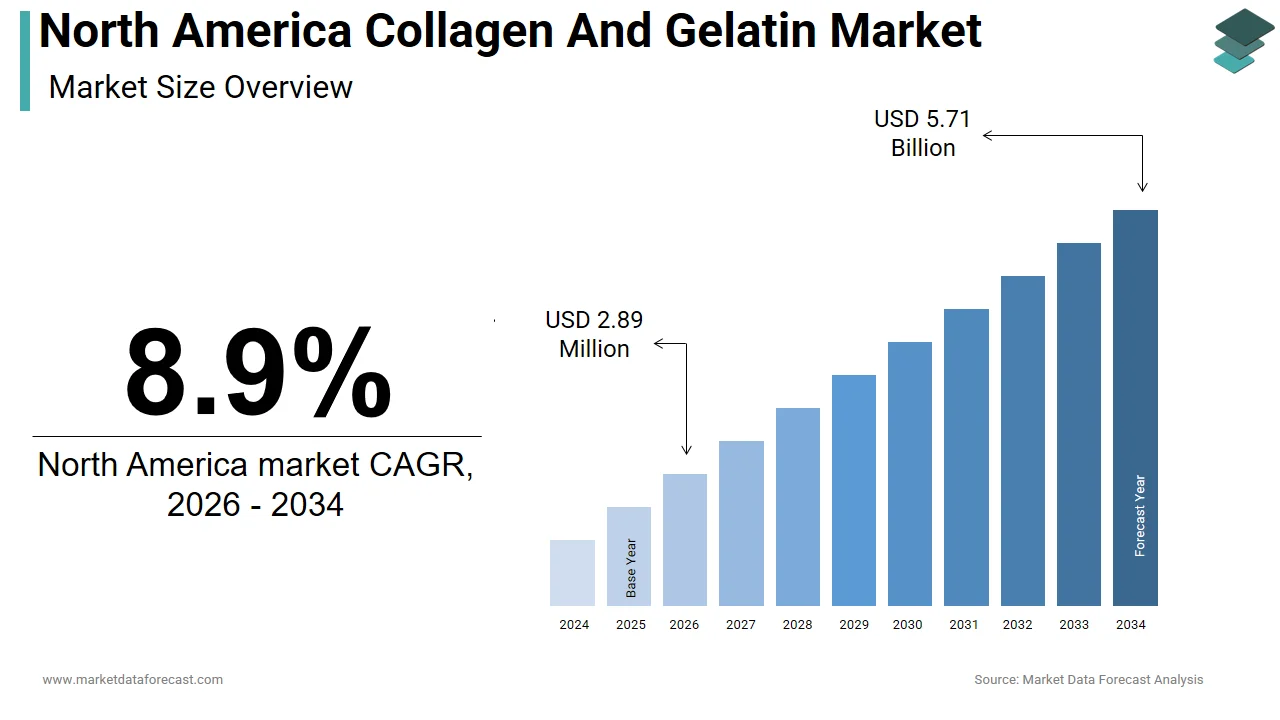
- Market Valuation: Valued at USD 2.65 billion in 2025, estimated at USD 2.89 billion in 2026, and projected to reach USD 5.71 billion by 2034, registering a strong CAGR of 8.9% from 2026 to 2034.
- Primary Growth Drivers: Escalating demand in nutraceuticals, functional foods, and dietary supplements; rising integration of collagen in cosmetics and skincare; strong regional livestock and biomedical processing infrastructure.
Key Market Segment Metrics (2026–2034)
| Category | Leading Segment (2025 Position) | Fastest-Growing Segment / Country |
|---|---|---|
| By Source | Bovine Source (held 38.7% share in 2025, driven by abundant livestock feedstock and FDA medical approvals) | Marine-Derived Collagen (projected to grow at a 9.7% CAGR, supported by seafood processing waste repurposing and superior bioavailability) |
| By Application | Orthopaedic Applications (held 33.2% share in 2025, essential for bone regeneration, cartilage repair, and viscosupplements) | Wound Care (anticipated to grow at a 10.2% CAGR, driven by chronic wounds, diabetic ulcers, and advanced tissue healing dressings) |
| By Country | United States (top performer holding 78.3% market share in 2025, anchored by an aging population and robust beauty/wellness sector) | Canada (17.5% share, fueled by natural-ingredient preferences, transparent labeling, and e-commerce growth) |
Major Market Players & Market Structure
Market Structure: Highly competitive landscape comprising major established ingredient suppliers and agile biotechnology innovators focusing on bioengineered collagen, vertical integration, and clean-label solutions.
Key Companies: Rousselot, Darling Ingredients Inc., Gelnex, LifeSciences Holding Corporation, Collagen Solutions plc, Vornia Biomaterials Ltd., Collagen Matrix Inc., GELITA AG, Nitta Gelatin Inc., and PB Gelatin.
 Download Free Sample Report
North America Collagen and Gelatin Market Size
The North America collagen and gelatin market was valued at USD 2.65 billion in 2025. The market is estimated at USD 2.89 billion in 2026 and is projected to reach USD 5.71 billion by 2034, growing at a CAGR of 8.9% from 2026 to 2034.
Collagen and gelatin are protein-based substances derived primarily from animal sources such as bovine, porcine, and marine origins. Collagen is a structural protein found in connective tissues, skin, and bones, while gelatin is a denatured form of collagen commonly used for its gelling, stabilizing, and emulsifying properties. These ingredients have widespread applications across the food & beverage, pharmaceutical, nutraceutical, cosmetic, and biomedical industries. In North America, the demand for collagen and gelatin has surged due to increasing consumer awareness about health and wellness, growing preference for clean-label products, and rising adoption in functional foods and dietary supplements. The region’s robust healthcare infrastructure and strong presence of key manufacturers such as Rousselot, Darling Ingredients, and Gelnex have further supported market growth. Additionally, changing beauty standards and rising investments in personal care innovation have expanded the use of collagen in skincare formulations.
MARKET DRIVERS
Rising Demand in Nutraceuticals and Functional Foods
One of the primary drivers of the North America collagen and gelatin market is the escalating demand from the nutraceutical and functional food sectors. Consumers are increasingly incorporating collagen peptides and gelatin-based products into their diets due to their perceived benefits in supporting joint health, skin elasticity, gut integrity, and muscle repair. According to the Council for Responsible Nutrition, more than 75% of U.S. adults regularly take dietary supplements, with collagen-based formulations witnessing particularly strong growth. The expansion of product offerings by major brands has also contributed to this growth trajectory. Companies like Vital Proteins and Sports Research have introduced ready-to-consume collagen powders, gummies, and beverages that cater to on-the-go lifestyles. Nielsen reports that sales of collagen-infused products grew by double digits between 2021 and 2023, indicating strong consumer acceptance. Moreover, regulatory approvals from agencies such as the FDA for specific health claims have reinforced consumer trust.
Increasing Use in Cosmetics and Skincare Applications
Another significant driver fueling the North America collagen and gelatin market is the expanding usage of these proteins in cosmetics and skincare products. Collagen has become a sought-after ingredient in creams, serums, masks, and lotions designed to improve skin texture, hydration, and firmness with rising consumer emphasis on appearance and anti-aging solutions. According to the American Academy of Dermatology, nearly 40% of adult women in the U.S. use topical skincare products containing active ingredients like collagen to address signs of aging. Leading cosmetic companies such as L’Oréal, Estée Lauder, and Neutrogena have incorporated hydrolyzed collagen and gelatin into their formulations to enhance product efficacy and appeal to eco-conscious consumers. A study published by the Journal of Cosmetic Dermatology found that regular use of collagen-containing skincare products resulted in measurable improvements in skin elasticity and wrinkle reduction within 8–12 weeks.
MARKET RESTRAINTS
Ethical and Dietary Concerns Regarding Animal-Derived Sources
A major restraint affecting the North America collagen and gelatin market is the growing ethical and dietary concerns surrounding animal-derived ingredients. Many consumers, particularly those following vegetarian, vegan, or halal dietary guidelines, avoid traditional collagen and gelatin sourced from bovine, porcine, or fish origins. According to a survey conducted by the Vegetarian Resource Group, approximately 5% of the U.S. population identifies as vegetarian or vegan, a figure that continues to rise due to environmental, ethical, and health considerations. Moreover, younger generations are increasingly conscious of sustainability and animal welfare, prompting them to seek alternatives such as plant-based or lab-grown proteins. While some companies have begun developing bioengineered or microbial-derived collagen, these innovations are still in early stages and face higher production costs and limited consumer awareness.
Regulatory Hurdles and Labeling Challenges
Regulatory scrutiny and labeling complexities present another significant barrier to the growth of the North America collagen and gelatin market. Both ingredients are subject to strict oversight by the U.S. Food and Drug Administration (FDA) and Health Canada, particularly concerning health claims, sourcing transparency, and allergen disclosures. Manufacturers must navigate varying regulations depending on whether the final product is classified as a food, dietary supplement, or cosmetic, which complicates formulation strategies and marketing approaches. In particular, the FDA mandates that any structure/function claim associated with collagen must be substantiated with scientific evidence, limiting the extent to which marketers can promote benefits without clinical backing. A 2023 analysis by the International Food Additives Council revealed that nearly one-third of collagen-related product recalls were due to mislabeling or unapproved health assertions.
MARKET OPPORTUNITIES
Expansion of Marine-Derived Collagen Applications
One of the most promising opportunities in the North America collagen and gelatin market lies in the growing adoption of marine-derived collagen, particularly from fish scales, skins, and bones. Compared to traditional bovine and porcine sources, marine collagen offers superior bioavailability, lower antigenicity, and enhanced sustainability credentials, aligning with the preferences of health-conscious and environmentally aware consumers. This opportunity is being fueled by advancements in extraction technologies that allow for efficient recovery of collagen from seafood processing waste, reducing environmental impact while creating economic value. Companies like Vital Proteins and Blue Bite have launched marine collagen supplements targeting athletes, aging populations, and individuals seeking sustainable wellness options.
Technological Advancements in Bioengineered Collagen Production
A transformative opportunity emerging in the North America collagen and gelatin market is the development of bioengineered or recombinant collagen using microbial fermentation and cellular agriculture techniques. Unlike conventional collagen sourced from animals, bioengineered collagen is produced using yeast or bacteria engineered to synthesize human-like collagen proteins, offering improved purity, consistency, and ethical alignment. This innovation enables manufacturers to bypass supply chain dependencies on livestock and mitigate concerns related to disease transmission and allergens. Startups such as Geltor and FibroGen are pioneering the commercialization of lab-grown collagen for use in cosmetics, nutraceuticals, and medical applications. Their products are gaining traction among premium skincare brands and supplement companies aiming to cater to vegan and cruelty-free markets. Additionally, bioengineered collagen can be tailored for specific functional properties, enhancing its utility in pharmaceutical and biomedical fields.
MARKET CHALLENGES
Price Volatility and Supply Chain Disruptions
One of the foremost challenges facing the North America collagen and gelatin market is the volatility in raw material prices and frequent supply chain disruptions. Collagen and gelatin production heavily relies on animal-derived feedstock such as hides, bones, and connective tissues, which are influenced by fluctuations in livestock farming, trade policies, and global events. According to the U.S. Bureau of Labor Statistics, the price of bovine hides increased by over 15% in 2023 compared to the previous year, directly impacting manufacturing costs for collagen producers. Additionally, geopolitical tensions and pandemic-induced logistical bottlenecks have exposed vulnerabilities in the sourcing and distribution networks. For instance, import restrictions and delays in international shipping have affected the availability of marine collagen sourced from Asia-Pacific countries. Small and mid-sized enterprises, in particular, struggle to absorb these cost fluctuations, which is limiting their ability to compete with larger firms that have diversified supplier relationships. Until more resilient sourcing models and alternative feedstock options are established, price instability will continue to pose a significant operational risk in the market.
Consumer Skepticism and Lack of Standardized Claims
Another critical challenge impeding the growth of the North America collagen and gelatin market is consumer skepticism regarding the efficacy of collagen-based products and the lack of standardized health claims. Despite widespread marketing efforts, many consumers remain uncertain about the actual benefits of ingesting collagen in relation to skin health, joint function, and muscle recovery. Furthermore, inconsistent messaging across brands and the absence of universally accepted performance benchmarks create confusion among buyers. This lack of consensus contributes to regulatory caution and restricts aggressive promotional strategies. Until clearer scientific consensus and standardized labeling emerge, consumer hesitation may persist, which is limiting the market's full potential despite its growing visibility.
REPORT COVERAGE
| REPORT METRIC | DETAILS |
| Market Size Available | 2025 to 2034 |
| Base Year | 2025 |
| Forecast Period | 2026 to 2034 |
| Segments Covered | By Source, Application, and Region, and Region |
| Various Analyses Covered | Global, Regional and Country-Level Analysis, Segment-Level Analysis, Drivers, Restraints, Opportunities, Challenges; PESTLE Analysis; Porter’s Five Forces Analysis, Competitive Landscape, Analyst Overview of Investment Opportunities |
| Countries Covered | United States, Canada, Mexico, Rest of North America |
| Market Leaders Profiled | LifeSciences Holding Corporation (U.S.), Collagen Solutions plc (U.K.), Vornia Biomaterials, Ltd. (Ireland), Collagen Matrix, Inc. (U.S.), GELITA AG (Germany), Nitta Gelatin, Inc. (Japan), and PB Gelatin (Belgium), Royal DSM (Netherlands), Integra SYMATESE (France), and NuCollagen, LLC. (U.S.). |
SEGMENTAL ANALYSIS
By Source Insights
The bovine source segment held 38.7% of the North America collagen and gelatin market share in 2025, with its widespread use across food, pharmaceuticals, and cosmetic applications. Bovine collagen is extensively used in dietary supplements due to its high content of Type I and III collagen, which are crucial for skin, bone, and connective tissue health. One key factor behind this dominance is the well-established livestock industry in the U.S., which provides a consistent supply of raw materials such as hides and bones for collagen extraction. The U.S. Department of Agriculture reports that in 2023, the country processed over 32 million head of cattle, generating significant volumes of collagen-rich byproducts. Additionally, regulatory approvals from the FDA for bovine collagen in medical devices and wound care products have reinforced its application in healthcare settings.
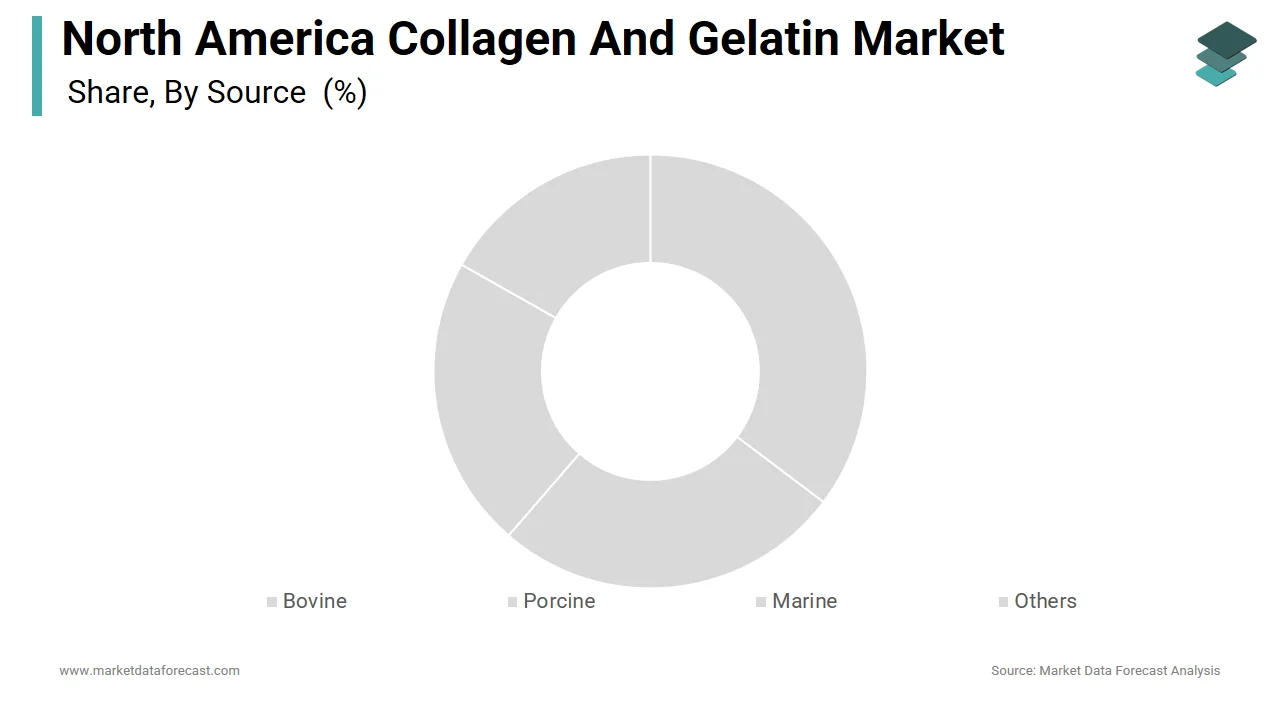
The marine-derived collagen segment is projected to grow with a CAGR of 9.7% in the next coming years. Marine collagen, primarily extracted from fish scales, skins, and fins, offers superior bioavailability and lower allergenic potential compared to traditional animal sources. This rapid growth is being fueled by rising environmental awareness and the utilization of seafood processing waste to produce value-added collagen products. A study by the National Oceanic and Atmospheric Administration (NOAA) indicates that over 25% of seafood waste in the U.S. is now being repurposed for collagen extraction, reducing environmental impact while creating economic opportunities. Additionally, brands like Vital Proteins and Further Food have introduced marine collagen powders and beverages targeting health-conscious consumers seeking clean-label and eco-friendly alternatives.
By Application Insights
The orthopaedic applications segment was the largest and held 33.2% of the North America collagen and gelatin market share in 2025. Collagen plays a critical role in bone regeneration, cartilage repair, and implantable medical devices, making it indispensable in orthopedic treatments. According to the American Academy of Orthopaedic Surgeons, over 130 million Americans suffer from chronic musculoskeletal conditions, driving demand for collagen-based therapies. Moreover, the integration of collagen into injectable formulations for osteoarthritis treatment has expanded its clinical utility. The U.S. Food and Drug Administration has approved several collagen-based viscosupplements for intra-articular injections, contributing to their widespread use in orthopedic clinics.
The wound care application segment is anticipated to grow with a CAGR of 10.2% during the forecast period owing to the increasing incidence of chronic wounds, diabetic ulcers, and post-surgical injuries requiring advanced healing solutions. Collagen-based dressings and biomaterials promote cellular proliferation, accelerate tissue regeneration, and provide a moist environment conducive to healing. According to the Wound Healing Society, chronic wounds affect over 6.5 million patients in the U.S., with diabetes and obesity being major contributing factors.
COUNTRY-LEVEL ANALYSIS
United States Collagen and Gelatin Market Insights
The United States was the top performer in the North America collagen and gelatin market with 78.3% of the share in 2025 with a robust healthcare system, high consumer awareness, and a booming nutraceutical and beauty industry. The country's large aging population, rising health consciousness, and expanding functional food sector contribute significantly to collagen consumption. The presence of major manufacturers such as Rousselot, Darling Ingredients, and Gelnex, along with innovative startups focusing on clean-label and sustainable sourcing, has strengthened the U.S. market position. Additionally, the FDA’s regulatory framework supports product development and safety standards, encouraging new entrants. The cosmetics industry, led by companies like L’Oréal and Estée Lauder, continues to integrate collagen into premium skincare lines, aligning with the "beauty-from-within" trend.
Canada Collagen and Gelatin Market Insights
Canada was accounted in holding 17.5% of the North America collagen and gelatin market share in 2025. Canadian consumers exhibit a strong preference for natural and ethically sourced ingredients, prompting manufacturers to adopt transparent labeling and eco-friendly production practices. The Canadian Food Inspection Agency (CFIA) enforces stringent quality controls, ensuring product safety and consumer confidence. Moreover, the rise of e-commerce platforms has facilitated easier access to collagen-based products, particularly among younger demographics. Companies such as Wellinks and NativePath have gained traction with premium collagen offerings tailored to local preferences.
KEY MARKET PLAYERS
Companies playing a dominant role in the North America collagen and gelatin market profiled in this report are LifeSciences Holding Corporation (U.S.), Collagen Solutions plc (U.K.), Vornia Biomaterials, Ltd. (Ireland), Collagen Matrix, Inc. (U.S.), GELITA AG (Germany), Nitta Gelatin, Inc. (Japan), and PB Gelatin (Belgium), Royal DSM (Netherlands), Integra SYMATESE (France), and NuCollagen, LLC. (U.S.).
TOP LEADING PLAYERS IN THE MARKET
Rousselot (Part of Groupe Petkim)
Rousselot is a leading global supplier of collagen-based ingredients, with a strong presence in North America. The company offers a wide range of gelatin and collagen peptides tailored for food, pharmaceutical, and nutraceutical applications. Known for its high-quality sourcing and advanced extraction technologies, Rousselot plays a pivotal role in setting industry standards for purity and functionality. Its commitment to innovation has led to the development of specialized collagen solutions that cater to evolving consumer preferences for clean-label and functional products.
Darling Ingredients Inc.
Darling Ingredients is a major player in the North American gelatin market, leveraging its extensive network of animal processing facilities to supply high-grade collagen derivatives. The company integrates sustainable practices into its production processes, ensuring minimal waste and maximum utilization of raw materials. Darling’s expertise in hydrolyzed collagen production supports diverse applications across food, health, and beauty sectors. Its strategic investments in R&D and manufacturing capabilities have reinforced its position as a key contributor to the regional collagen and gelatin supply chain.
Gelnex
Gelnex is a prominent provider of customized collagen and gelatin solutions, serving various industries in North America. The company emphasizes product differentiation through specialized formulations that meet specific functional and nutritional requirements. Gelnex's focus on traceability, quality assurance, and sustainability aligns with growing consumer demand for ethically sourced and transparently produced ingredients.
TOP STRATEGIES USED BY KEY MARKET PARTICIPANTS
One major strategy employed by leading players in the North America collagen and gelatin market is product diversification and formulation innovation, where companies develop specialized collagen peptides and gelatin variants tailored for niche applications such as sports nutrition, skincare, and medical devices. This enables them to cater to evolving consumer needs while differentiating their offerings in a competitive landscape.
Another key approach is strategic partnerships and vertical integration, allowing manufacturers to secure reliable raw material sources and enhance production efficiency. By collaborating with livestock processors or acquiring upstream suppliers, companies ensure consistent feedstock availability and maintain stringent quality control throughout the value chain.
The brand positioning and consumer education play a crucial role in strengthening market presence. Companies invest heavily in marketing initiatives that promote the health benefits, sustainability, and transparency of their collagen and gelatin products, which is fostering trust and long-term brand loyalty among health-conscious consumers.
COMPETITION OVERVIEW
The competition in the North America collagen and gelatin market is characterized by a mix of established players and emerging innovators striving to capture a larger share of the expanding wellness and functional ingredients space. Major companies leverage their strong distribution networks, brand recognition, and deep-rooted relationships with suppliers to maintain dominance. At the same time, new entrants are focusing on differentiated product offerings, including plant-based alternatives, bioengineered collagen, and premium formulations targeting specific health concerns. As consumer awareness grows around the benefits of collagen supplementation, brands are increasingly emphasizing transparency, ethical sourcing, and clinical validation of their claims. This has led to a shift toward more science-backed marketing strategies and enhanced product formulations. Additionally, rising interest from private-label retailers and e-commerce platforms is reshaping the competitive dynamics, providing alternative channels for market expansion.
RECENT MARKET DEVELOPMENTS
- In February 2024, Rousselot launched a new line of clean-label collagen peptides designed specifically for use in plant-based protein blends by aiming to expand its reach among health-conscious consumers seeking natural and easily digestible ingredients.
- In May 2024, Darling Ingredients announced a strategic partnership with a biotech firm specializing in cellular agriculture to explore hybrid collagen production methods that combine traditional sourcing with fermentation-based enhancements.
- In July 2024, Gelnex introduced an eco-friendly packaging initiative for its collagen-based dietary supplements, which is reinforcing its commitment to sustainability while appealing to environmentally aware customers in North America.
- In September 2024, a leading U.S.-based collagen brand collaborated with a major pharmacy chain to launch exclusive retail bundles by enhancing product visibility and accessibility in mainstream consumer markets.
- In November 2024, a fast-growing direct-to-consumer collagen startup secured exclusive shelf space in national grocery stores, which is marking a significant step toward bridging the gap between digital-first branding and physical retail presence.
MARKET SEGMENTATION
This North America collagen and gelatin market research report is segmented and sub-segmented into the following categories.
By Source
- Bovine
- Porcine
- Marine
- Others
By Application
- Orthopaedic Applications
- Wound Care
- Cardiovascular Applications
- Others
By Country
- United States
- Canada
- Mexico
- Rest of North America