- Product Description Description
- Table of Contents TOC
- List of Table & Figure LOT
- Get Free Sample PDF Sample PDF
Market Size, 2025
$197.33 BnMarket Estimate, 2026
$223.69 BnMarket Forecast, 2034
$609.99 BnCAGR, 2026–2034
13.36%North America Commercial Heat Pump Water Heater Market Report Summary
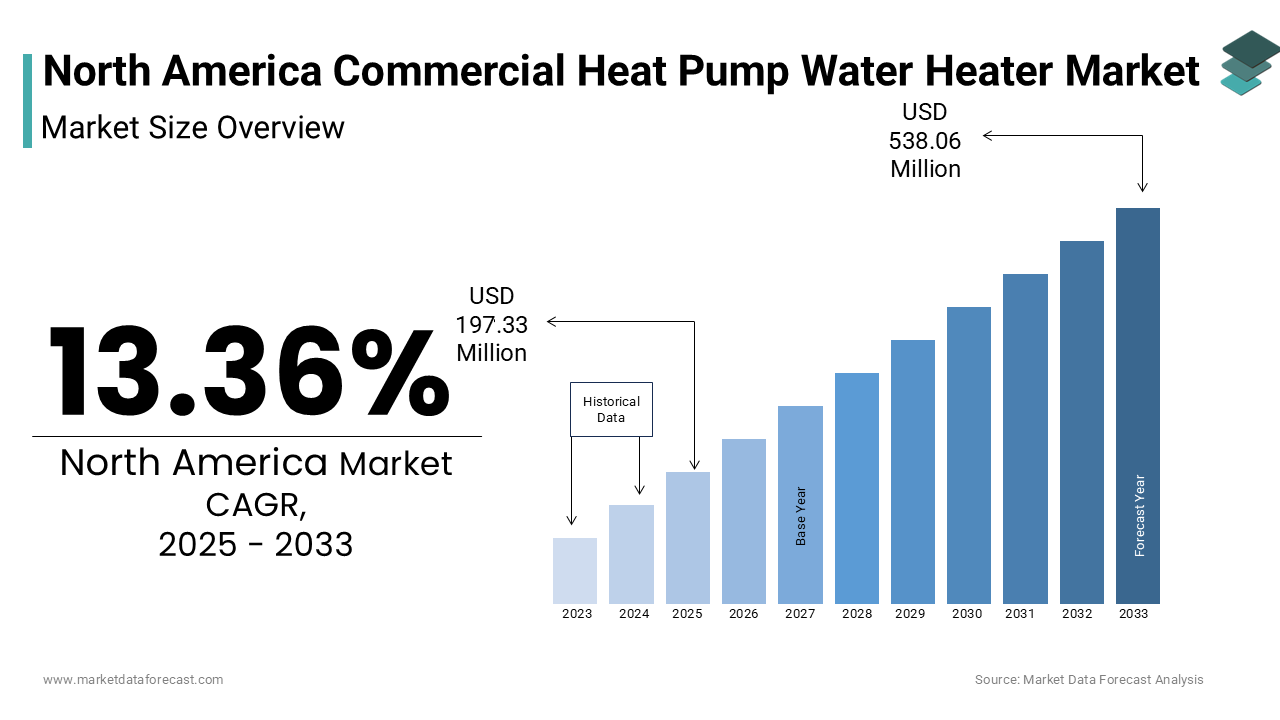
The North America commercial heat pump water heater market was valued at USD 197.33 million in 2025, is expected to reach USD 223.69 million in 2026, and is projected to grow to USD 609.99 million by 2034, registering a CAGR of 13.36% during the forecast period from 2026 to 2034. Market growth is primarily driven by stringent energy efficiency regulations, rising electricity costs, and increasing adoption of low-carbon technologies in commercial buildings. Commercial heat pump water heaters offer significantly higher efficiency than conventional electric or gas systems by transferring heat rather than generating it, making them ideal for hotels, hospitals, hostels, multi-family housing, and institutional facilities with continuous hot water demand. Advancements in variable-speed compressors, smart controls, cold-climate performance, and IoT-enabled monitoring are further accelerating adoption across the region.
Key Market Drivers
- Stringent energy efficiency regulations and building codes across the U.S. and Canada encouraging high-efficiency water heating systems.
- Substantial operational cost savings and attractive return on investment, particularly for hospitality and healthcare facilities with high hot water consumption.
- Utility rebates, tax incentives, and green building certifications supporting heat pump adoption in commercial construction and retrofits.
- Decarbonization initiatives aimed at reducing fossil fuel dependency and lowering carbon emissions in commercial buildings.
Segmental Insights
- By application, the hospitality segment dominated the market in 2024 by holding 32.6% share, driven by continuous hot water demand in hotels, resorts, and extended-stay properties. The healthcare facilities segment is expected to witness a CAGR of 11.3%, supported by expanding healthcare infrastructure, strict hygiene requirements, and energy cost optimization needs.
- By operation, the non-inverter segment accounted for 65% of the market share in 2024, owing to lower upfront costs, operational simplicity, and proven reliability. However, the inverter segment is projected to grow at the fastest CAGR of 13.7%, driven by superior energy efficiency, precise temperature control, and compatibility with smart building management systems.
Regional Insights
- The United States dominated the North America market with an 86.1% share in 2024, supported by a large commercial building base, strong policy incentives, and progressive energy efficiency programs in major metropolitan areas.
- Canada is emerging as a high-growth market, driven by carbon pricing mechanisms, federal and provincial clean energy programs, and increasing adoption in provinces such as British Columbia, Ontario, and Quebec.
Competitive Landscape
The North America commercial heat pump water heater market is highly competitive, with a mix of established global manufacturers and specialized regional players. Competition centers on technology innovation, energy efficiency, cold-climate performance, smart integration, and contractor support networks. Key players focus on strategic partnerships, inverter technology development, government incentive alignment, and distribution expansion to strengthen market presence. Leading companies include Rheem Manufacturing Company, A. O. Smith Corporation, Bradford White Corporation, LG Electronics, Daikin Industries, Panasonic Holdings Corporation, Lochinvar, Colmac Industries, Nyle Systems, and Trane Technologies.
North America Commercial Heat Pump Water Heater Market Size
The North America commercial heat pump water heater market size was valued at USD 197.33 million in 2025 and is anticipated to reach USD 223.69 million in 2025 from USD 609.99 million by 2034, growing at a CAGR of 13.36% during the forecast period from 2026 to 2034.
A Commercial Heat Pump Water Heater (HPWH) is an energy-efficient appliance for businesses that uses electricity to move heat from the surrounding air (or ground/water) into a storage tank, rather than generating heat directly, making it significantly more efficient than traditional electric or gas heaters for high-volume hot water needs in places like hotels, hospitals, or hostels, and offering big energy savings. According to sources, Commercial buildings are a significant consumer of energy, highlighting an ongoing need for energy-efficient alternatives in the sector. The commercial heat pump water heater market encompasses diverse applications including hotels, hospitals, restaurants, manufacturing facilities, and multi-family residential complexes that require continuous hot water supply with minimal operational costs. As per research, heat pump water heating technology adoption in commercial buildings is increasing, driven by improved performance across different climate conditions. Modern commercial systems feature advanced controls, variable-speed compressors, and intelligent defrost cycles that enable effective operation even in cold climates previously considered challenging for heat pump technology. The integration of smart building automation systems and Internet of Things connectivity has enhanced monitoring capabilities, allowing facility managers to optimize performance and reduce maintenance requirements. Modern heat pump water heating systems operate at significantly higher efficiency levels compared to standard electric resistance heaters and substantially reduce associated carbon emissions when displacing fossil fuel use.
MARKET DRIVERS
Stringent Energy Efficiency Regulations and Building Codes
The implementation of increasingly stringent energy efficiency regulations and building codes across the regional jurisdictions serves as a primary driver for the North America commercial heat pump water heater market. Building energy codes are increasingly establishing energy performance requirements for large commercial buildings. These standards often favor high-efficiency water heating systems, which heat pump technology can meet or exceed in many climate areas. Industry groups have developed criteria for commercial water heating systems that set specific efficiency levels. Many U.S. states and Canadian provinces have efficiency mandates for commercial water heating systems that encourage or effectively require high-efficiency technology for new projects. Some regional building energy codes specify that commercial facilities transitioning to new water heating systems should consider heat pump options. Sustainable building certification programs offer incentives and credits for using heat pump water heaters. Green construction codes require new commercial projects to achieve energy savings relative to baseline standards, which can make heat pump water heaters an attractive option for compliance. These regulatory imperatives, combined with utility rebate programs and tax incentives, create sustained demand for commercial heat pump water heating solutions that support both operational efficiency and environmental compliance objectives.
Substantial Operational Cost Savings and Return on Investment
The significant operational cost savings and attractive return on investment profiles associated with commercial heat pump water heater installations drive widespread adoption across diverse commercial sectors, which in turn fuels the expansion of the North America commercial heat pump water heater market. This allows businesses to reduce energy expenses and improve financial performance. Commercial heat pump water heaters offer significant energy cost savings when compared to conventional electric resistance systems. Specific applications may achieve relatively short payback periods. An average commercial facility may substantially reduce annual water heating costs through the implementation of heat pump technology, depending on usage patterns and local energy rates. Large hospitality facilities can achieve notable average annual savings through reduced electricity consumption and decreased cooling requirements, due to the technology's heat recovery capabilities. The performance measure for modern commercial heat pump water heaters typically indicates they produce considerably more thermal energy output than electrical input, significantly outperforming gas-fired systems in regions with moderate electricity pricing. Food service establishments benefit particularly from dual functionality, as these systems provide both water heating and space cooling during summer months, eliminating the need for separate air conditioning equipment. Healthcare facilities demonstrate strong adoption rates due to continuous hot water requirements and the economic advantages of reduced utility expenses that support patient care funding. These financial benefits, combined with available incentive programs and extended equipment lifespans, make commercial heat pump water heaters economically attractive for facility managers seeking sustainable cost reduction strategies.
MARKET RESTRAINTS
High Initial Capital Investment and Financial Barriers
The substantial upfront capital investment required for its installations presents a significant barrier to the North America commercial heat pump water heater market. This is particularly problematic for small and medium-sized businesses with limited access to capital financing and extended payback period concerns. Installation costs for commercial heat pump water heating systems vary significantly, influenced by system capacity and installation complexity. These initial expenses often represent a substantial multiple of the cost associated with conventional electric resistance alternatives. Small businesses, particularly those with more limited annual revenues, may find it challenging to justify these investments. The time required for the energy savings to offset the initial cost can sometimes exceed typical equipment replacement cycles and budget planning horizons. A majority of smaller commercial facilities may lack access to the financing mechanisms necessary for larger capital investments. This situation often results in a reliance on available cash reserves or the need to secure external funding sources. The complexity of cost-benefit analyses and varying utility rate structures across North American jurisdictions complicates investment decision-making, particularly for multi-site operations requiring standardized equipment specifications. Additionally, ongoing maintenance and parts replacement costs add to initial capital expenditures annually, creating long-term financial commitments that may strain operational budgets. Many commercial facilities must secure equipment financing, municipal bonds, or federal grants to proceed with implementations, creating dependency on external funding sources and extended approval processes. The requirement for specialized installation contractors and extended commissioning periods further increases total project costs, particularly in regions with limited qualified service provider availability. These financial barriers, combined with uncertainty regarding long-term energy pricing and regulatory changes, create hesitation among budget-conscious facility managers despite demonstrated long-term economic benefits.
Limited Cold Climate Performance and Application Constraints
The perceived limitations of commercial heat pump water heater performance in cold climate conditions and specific application environments create significant adoption barriers despite technological improvements in recent years. This constrains the expansion of the North America commercial heat pump water heater market. Traditional heat pump water heaters may encounter decreased efficiency and face potential operational challenges as ambient temperatures fall below a certain threshold. This can limit their use in colder regions, including some northern commercial facilities and outdoor installations. The coefficient of performance for standard commercial heat pump systems can decline significantly in freezing temperatures, which may make them less economically attractive than conventional heating options in cold climate areas. Commercial facilities in northern states and Canadian provinces often need specialized cold-climate heat pump technology, which can increase equipment costs compared to standard models. The complexity of system sizing and load calculations for varying seasonal conditions creates additional implementation challenges, particularly for facilities with fluctuating hot water demands throughout the year. Applications requiring high-temperature water delivery above 140°F present particular challenges, as heat pump efficiency decreases significantly at elevated setpoint temperatures, limiting applicability in healthcare and industrial processing environments. The requirement for adequate ventilation and air circulation around equipment installations creates space constraints in existing facilities with limited mechanical room availability. Additionally, noise considerations in hospitality and residential applications may limit installation locations and require additional sound attenuation measures that increase total project costs. These performance and application constraints, combined with lingering misconceptions about cold climate viability, create market resistance despite technological advancements that have addressed many previous limitations.
MARKET OPPORTUNITIES
Integration with Renewable Energy Systems and Smart Grid Technologies
The convergence of commercial heat pump water heater technology with renewable energy systems and smart grid infrastructure creates growth opportunities for North America commercial heat pump water heater market expansion. These opportunities arise through enhanced efficiency, grid interaction capabilities, and sustainability benefits. According to research, commercial facilities integrating heat pump water heaters with solar photovoltaic systems achieve greater overall energy savings compared to standalone renewable energy installations, as excess solar generation can be utilized for water heating during peak production periods. The development of vehicle-to-grid and battery storage systems enables commercial heat pump water heaters to operate during optimal energy pricing periods while providing grid services through demand response participation. The integration opportunities extend to building management systems, where real-time energy pricing data enables automated operation scheduling that maximizes cost savings while maintaining service requirements. Electric utilities increasingly offer time-of-use rate structures and demand response programs that provide financial incentives for commercial facilities to shift water heating loads to off-peak periods, creating additional revenue streams for heat pump system owners. The convergence of Internet of Things connectivity and artificial intelligence enables predictive optimization that considers weather forecasts, occupancy patterns, and energy pricing to maximize system efficiency. Commercial real estate developers demonstrate strong interest in integrated solutions that support sustainability certifications and attract environmentally conscious tenants. These integration capabilities, combined with evolving utility program structures and technology advancement, position commercial heat pump water heaters as essential components of future-proof commercial building infrastructure.
Expansion into Emerging Commercial Sectors and Retrofit Markets
The extension of commercial heat pump water heater technology into emerging commercial sectors and large-scale retrofit markets offers growth prospects beyond traditional hospitality and healthcare applications, which is expected to propel the expansion of the North America commercial heat pump water heater market. New commercial establishments are opening across North America, leading to increased demand for energy-efficient water heating solutions in various market segments. The cannabis cultivation industry has emerged as a market where licensed facilities require continuous water heating for irrigation, processing, and general operations. The data center sector is increasingly utilizing heat pump technology for water heating and waste heat recovery to manage thermal requirements. Establishments within the fast-casual dining segment are increasingly selecting energy-efficient water heating systems to meet sustainability goals and manage operational expenses. Multi-family residential developments represent another expanding market. The senior living and assisted care sector shows particular promise, as aging populations create demand for comfortable, efficient living environments with reduced environmental impact. Industrial process heating applications in food processing, textile manufacturing, and chemical production present additional opportunities for specialized heat pump water heating solutions that support operational efficiency and environmental compliance requirements.
MARKET CHALLENGES
Technical Complexity and Installation Expertise Requirements
The sophisticated technical requirements and specialized installation expertise needed for commercial HPWH deployments are major challenges that affect market penetration and customer satisfaction rates, and thereby negatively impact the growth of the North America commercial heat pump water heater market. The complexity of load calculations, equipment sizing, and ductwork requirements for optimal performance creates particular challenges for retrofit installations in existing commercial facilities with space constraints and infrastructure limitations. The integration of advanced controls, communication protocols, and building automation systems adds further complexity, particularly in large facility deployments requiring network connectivity and remote monitoring capabilities. Variable-speed compressor technology and intelligent defrost cycles require precise calibration and ongoing optimization to achieve promised efficiency levels, creating ongoing service requirements that may exceed typical contractor capabilities. The requirement for adequate ventilation, drainage, and electrical infrastructure modifications increases project complexity and cost, particularly in older commercial buildings lacking pre-designed mechanical spaces. These technical complexities require extensive training programs, specialized tools, and extended commissioning periods that increase total project costs and create barriers to widespread adoption among facility managers seeking straightforward equipment replacement solutions.
Regulatory Variability and Compliance Complexity Across Jurisdictions
The fragmented regulatory landscape governing commercial HPWL installations across the regional jurisdictions poses major obstacles for manufacturers, contractors, and facility managers seeking to navigate varying requirements and compliance standards, which in turn impedes the expansion of the North America commercial heat pump water heater market. The complexity of electrical safety standards, refrigerant handling requirements, and plumbing codes creates particular challenges for multi-site commercial operations requiring standardized equipment specifications and installation procedures. The requirement for certified contractors, specialized equipment certifications, and ongoing compliance monitoring adds further complexity, particularly for organizations operating in multiple regulatory environments. International trade requirements create additional challenges, as equipment must meet varying safety and performance standards when crossing state or provincial borders, necessitating multiple certification processes and product modifications. The coordination required between federal agencies including the EPA, DOE, and NRCan creates overlapping jurisdiction issues that increase compliance costs and timeline pressures. Local utility rebate programs often have specific equipment requirements and installation standards that may conflict with building code provisions, creating confusion and additional administrative burdens. These regulatory challenges require substantial investment in legal expertise and compliance management systems, creating barriers to market entry for smaller technology companies while increasing costs and development timelines for established players seeking to expand their geographic reach
REPORT COVERAGE
| REPORT METRIC | DETAILS |
| Market Size Available | 2025 to 2034 |
| Base Year | 2025 |
| Forecast Period | 2026 to 2034 |
| CAGR | 13.36% |
| Segments Covered | By Application, Operation, and Region. |
| Various Analyses Covered | Global, Regional & Country Level Analysis, Segment-Level Analysis, DROC, PESTLE Analysis, Porter’s Five Forces Analysis, Competitive Landscape, Analyst Overview of Investment Opportunities |
| Regions Covered | U.S., Canada, Rest of North America |
| Market Leaders Profiled | A. O. Smith Corporation, American Water Heaters, Ariston Holding, Bradford White Corporation, Colmac Industries, Daikin Industries, Hubbell Heaters, INTELLIHOT, LG Electronics, Lochinvar, Lync, Nyle Systems, Panasonic Holdings Corporation, Rheem Manufacturing Company, and Trane Technologies. |
SEGMENTAL ANALYSIS
By Application Insights
The hospitality segment dominated the North America commercial heat pump water heater market by capturing a 32.6% share in 2025. The dominance of the hospitality segment is driven by the extensive hot water requirements of hotels, resorts, and related hospitality facilities that operate continuously and require reliable, energy-efficient water heating solutions to maintain guest comfort and operational efficiency. The hospitality segment includes diverse facility types including full-service hotels, limited-service properties, extended-stay accommodations, and resort complexes that demand consistent hot water delivery for guest rooms, laundry operations, kitchen facilities, and spa services. The constant demand for high-volume hot water in hospitality facilities creates substantial market demand for efficient water heating solutions that can maintain consistent performance while minimizing operational costs. Hotels use significant amounts of hot water daily, creating considerable energy needs that support the adoption of heat pump technology. Large hotel properties require a high continuous water heating capacity, making energy efficiency a critical factor in operational profitability. Commercial heat pump water heaters can reduce energy consumption compared to conventional systems, which translates to notable annual savings for mid-sized hotel properties. The requirement for 24/7 operation and minimal downtime creates particular challenges for conventional systems that experience higher failure rates under continuous operation conditions. Extended-stay hotels and resort properties demonstrate especially strong adoption rates due to longer guest stays and increased hot water consumption per visitor. The integration of heat pump systems with hotel building management systems enables sophisticated load management that optimizes performance based on occupancy patterns and guest usage trends. These operational requirements, combined with the economic advantages of reduced utility costs and extended equipment lifespans, make heat pump water heaters essential for competitive hospitality operations seeking to maximize profitability while maintaining guest satisfaction standards. The increasing emphasis on corporate sustainability initiatives and evolving guest expectations regarding environmental responsibility drive widespread adoption of heat pump water heating technology among hospitality operators seeking to demonstrate environmental stewardship and attract environmentally conscious travelers. Major hospitality brands including Marriott, Hilton, and Hyatt have established comprehensive sustainability commitments that require properties to reduce carbon emissions, making energy-efficient water heating systems economically essential for brand compliance. The hospitality industry's recognition of the business case for sustainability has accelerated adoption. Corporate social responsibility reporting requirements necessitate detailed energy consumption tracking and reduction documentation that heat pump systems facilitate through integrated monitoring capabilities. International hotel chains increasingly mandate heat pump water heating installations in new construction and major renovation projects to support global sustainability targets and brand reputation management. These sustainability drivers, combined with guest demand for environmentally responsible accommodations, create sustained market demand for commercial heat pump water heating solutions in the hospitality sector.
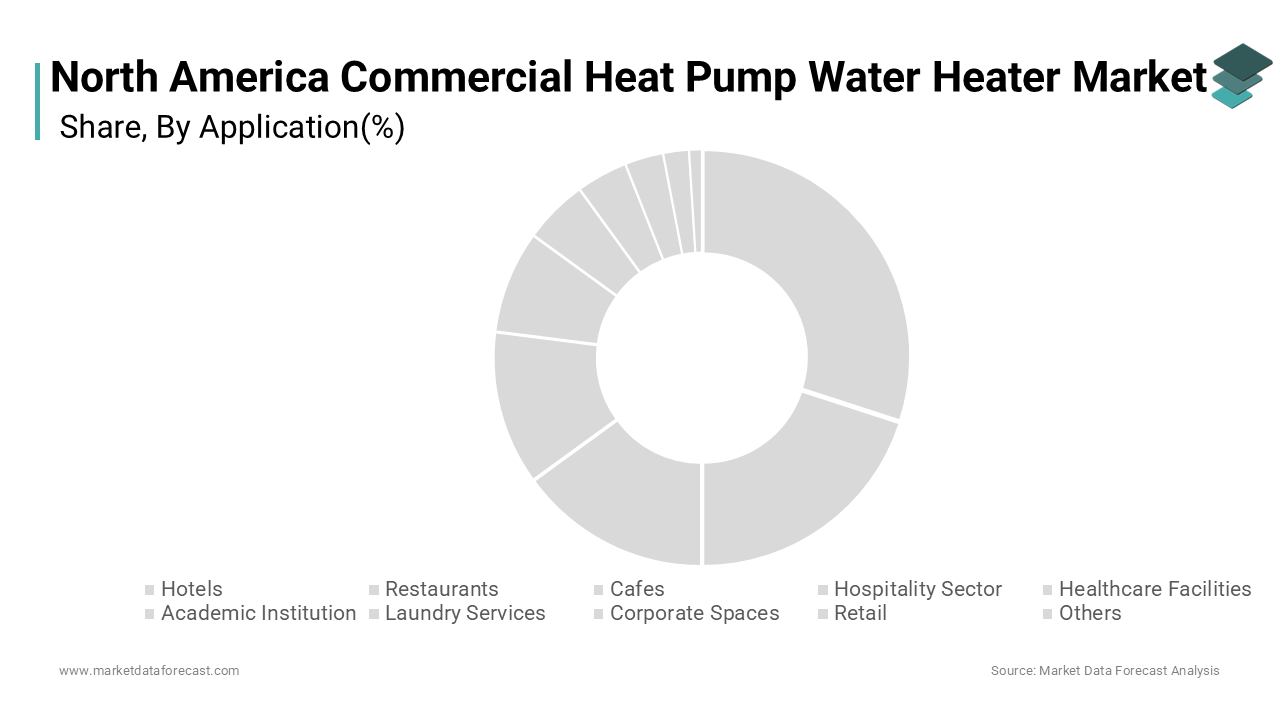
The healthcare facilities segment is expected to exhibit a noteworthy CAGR of 11.3% from 2026 to 2034. The rapid growth of the healthcare facilities segment is propelled by increasing healthcare infrastructure investments, stringent hygiene requirements, and the economic benefits of energy-efficient water heating in medical environments that demand continuous hot water supply for patient care, sterilization, and facility operations. The substantial expansion of healthcare infrastructure and new medical facility construction across North America creates significant demand for energy-efficient water heating solutions that support operational requirements while meeting sustainability objectives. The demand for hot water in these new facilities is substantial, encompassing various critical areas like patient rooms, surgical suites, laboratories, laundry facilities, and general staff areas. This demand necessitates the specification of efficient water heating solutions as essential equipment within new construction budgets. There is a growing preference for specific types of heating technology, such as heat pump water heating systems, in new healthcare construction projects. The selection of these systems is often driven by the desire to meet green building certifications and align with broader corporate sustainability goals. The complexity of healthcare facility operations, including 24/7 operation requirements and critical system redundancy needs, makes energy efficiency and reliability particularly important for water heating system selection. Ambulatory surgery centers, urgent care facilities, and specialty clinics represent emerging market segments with growing demand for efficient water heating solutions that support patient comfort and operational efficiency. The integration of heat pump systems with hospital building management systems enables sophisticated monitoring and control capabilities that support infection control protocols and energy management objectives. Rural healthcare facilities, which constitute a portion of North American medical facilities, demonstrate particular interest in heat pump technology due to limited utility infrastructure and high energy costs. These infrastructure expansion trends, combined with the economic advantages of reduced operational costs and environmental compliance benefits, drive rapid market growth in healthcare applications. The critical importance of hygiene compliance and continuous hot water availability in healthcare environments drives rapid adoption of advanced heat pump water heating technology that ensures reliable performance while supporting infection control protocols and operational efficiency requirements. Healthcare facilities require the continuous delivery of water at high temperatures to inhibit bacterial growth and support sterilization processes. These requirements drive the demand for sophisticated heating systems capable of maintaining precise temperature control. Additionally, demonstrating consistent hot water availability and monitoring capabilities is necessary for meeting industry accreditation and safety standards. The economic advantages of heat pump technology become particularly important in healthcare applications. The requirement for redundant heating systems and emergency backup capabilities makes energy efficiency a critical factor in system selection and long-term operational planning. Healthcare facilities increasingly integrate water heating systems with building automation networks to enable real-time monitoring, predictive maintenance, and compliance reporting that support regulatory requirements and operational excellence. The convergence of patient safety requirements, energy efficiency mandates, and sustainability commitments creates substantial demand for commercial heat pump water heating solutions that address multiple operational priorities simultaneously. These critical operational requirements, combined with the economic benefits of reduced energy consumption and enhanced system reliability, drive rapid adoption rates in healthcare facility applications.
By Operation Insights
The non-inverter operation segment held the leading share of 65% of the North America commercial heat pump water heater market in 2025. The supremacy of the non-inverter operation segment is credited to the established market presence, lower initial costs, and proven reliability of fixed-speed compressor systems that have served commercial applications for decades. Non-inverter systems utilize traditional on/off cycling compressors that provide consistent performance for steady-state applications and require less sophisticated control systems and installation expertise. The economic advantages of non-inverter commercial heat pump water heaters make them particularly attractive for budget-conscious commercial applications where initial capital investment constraints influence technology selection. Non-inverter systems generally have a lower initial purchase price compared to inverter-equipped alternatives, which can make them more accessible for small and medium-sized commercial facilities that may have limited capital budgets. The lower initial costs of non-inverter systems can result in a shorter period to recoup the investment, even considering a slight difference in operational efficiency under certain conditions. Smaller commercial facilities often prioritize solutions that are cost-effective overall, rather than focusing solely on systems offering the highest possible efficiency ratings. Bulk purchasing agreements enable facility managers to achieve additional cost savings. The simplicity of non-inverter system installation and maintenance reduces total cost of ownership, particularly in rural areas where specialized technical expertise may be limited. These cost advantages, combined with adequate performance for basic water heating functions, ensure continued preference for non-inverter technology among budget-conscious commercial facility managers seeking reliable heating solutions. The established reliability and straightforward maintenance requirements of non-inverter commercial heat pump water heater systems make them particularly attractive for commercial applications where operational continuity and minimal service complexity are critical success factors. The reduced complexity of control systems and fewer electronic components create particular advantages in harsh operating environments including food service establishments, industrial facilities, and outdoor installations where exposure to moisture, grease, and temperature fluctuations can affect sophisticated electronic controls. The availability of replacement parts and service expertise for established non-inverter systems ensures rapid repair response and minimal equipment downtime, particularly important for critical applications in healthcare, hospitality, and food service industries. Training requirements for service technicians are significantly reduced for non-inverter systems. The longevity of non-inverter systems provides facility managers with predictable replacement cycles and reduced long-term planning complexity. These reliability advantages, combined with simplified operation and maintenance requirements, ensure continued market preference for non-inverter commercial heat pump water heating systems.
The inverter operation segment is predicted to witness the highest CAGR of 13.7% during the forecast period owing to increasing demand for advanced energy efficiency, precise temperature control, and integration capabilities that characterize next-generation commercial water heating systems with variable-speed compressor technology. The exceptional energy efficiency and sophisticated load matching capabilities of inverter commercial heat pump water heater systems drive rapid market adoption among facility managers seeking to optimize operational costs and reduce environmental impact through advanced thermal management technology. According to sources, inverter systems achieve greater energy efficiency compared to fixed-speed alternatives under variable load conditions, with coefficient of performance ratings exceeding 4.0 during optimal operation periods. These systems utilize variable-speed compressors that automatically adjust output based on real-time hot water demand, eliminating the energy waste associated with on/off cycling and maintaining consistent water temperatures without excessive energy consumption. The ability to operate at partial load conditions without sacrificing efficiency creates particular advantages for facilities with fluctuating hot water demands throughout the day, including hotels, restaurants, and healthcare facilities. Integration with building automation systems enables sophisticated scheduling and load management that maximizes efficiency while maintaining service requirements. The convergence of time-of-use utility rate structures and demand response programs creates additional economic benefits for inverter systems that can shift operation to off-peak periods and participate in grid services programs. These efficiency advantages, combined with available incentive programs and extended equipment lifespans, make inverter technology increasingly attractive for forward-thinking commercial facility managers seeking operational excellence. The sophisticated integration capabilities and compatibility with smart building technologies make inverter commercial heat pump water heater systems particularly attractive for modern commercial facilities seeking comprehensive building management solutions and advanced operational control capabilities. These inverter systems feature advanced communication protocols including BACnet, Modbus, and LonWorks that enable seamless integration with facility management platforms, energy management systems, and predictive maintenance programs. The ability to participate in demand response programs and time-of-use rate optimization creates additional revenue opportunities for facility managers. Integration with renewable energy systems including solar photovoltaic arrays and battery storage enables sophisticated energy management that maximizes self-consumption and reduces grid dependency. The convergence of Internet of Things connectivity and artificial intelligence enables predictive maintenance and performance optimization that reduces service costs and extends equipment lifespans. Healthcare facilities, hotels, and large commercial complexes demonstrate particularly strong adoption rates for integrated inverter systems that support comprehensive facility management and sustainability reporting requirements. These integration advantages, combined with enhanced control capabilities and operational flexibility, position inverter technology as the preferred choice for sophisticated commercial applications seeking digital transformation and operational excellence.
REGIONAL ANALYSIS
United States Commercial Heat Pump Water Heater Market Analysis
The United States led the North America commercial heat pump water heater market by capturing a 86.1% share in 2025. The leading position of the US market is attributed to the country's vast commercial building stock, extensive hospitality industry, and comprehensive policy framework supporting energy-efficient technologies. The U.S. market is characterized by diverse regional adoption patterns, with western states showing particularly strong growth due to sustainability initiatives and progressive building codes. The American market benefits from substantial federal and state-level support mechanisms that drive widespread adoption of commercial heat pump water heating technology. The convergence of supportive policies, technological advancement, and consumer education continues to solidify the United States' leadership position in the regional market. Major metropolitan areas including New York, Los Angeles, and Chicago have implemented comprehensive commercial building efficiency programs that serve as models for smaller markets across the country.
Canada Commercial Heat Pump Water Heater Market Analysis
Canada was the next prominent player in the North America commercial heat pump water heater market. The growth of the Canadian market is driven by strong government support and increasing awareness of energy efficiency benefits. The Canadian market is characterized by concentrated adoption in provinces like British Columbia, Ontario, and Quebec, where supportive policies and climate conditions favor heat pump technology. Canadian adoption patterns reflect strong policy support and commercial facility engagement with energy-efficient technologies. Commercial establishments are increasingly adopting heat pump water heating systems, supported by federal government programs focused on energy efficiency improvements. Provincial initiatives also encourage the installation of clean energy heating systems, contributing to widespread regional participation in energy programs. New commercial construction specifications are increasingly including heat pump systems as a standard. These factors, combined with rising electricity rates and carbon pricing mechanisms, position Canada as a rapidly growing segment within the North American market.
COMPETITIVE LANDSCAPE
The North America commercial heat pump water heater market exhibits intense competition characterized by the presence of established global manufacturers alongside emerging regional players and specialized commercial equipment providers. Market dynamics are shaped by technological innovation, pricing strategies, and brand recognition, with competition intensifying as commercial facility managers increasingly recognize the value of energy-efficient water heating solutions for operational cost reduction and sustainability compliance. Established players leverage extensive distribution networks, comprehensive product portfolios, and strong brand equity to maintain market positions, while newer entrants focus on disruptive technologies and competitive pricing strategies that challenge traditional market leaders. The competitive landscape is influenced by varying regional preferences, with different manufacturers achieving stronger positions in specific geographic areas based on local partnerships and market understanding. Commercial contractor relationships play a crucial role in market competition, as installation expertise and ongoing service capabilities significantly influence purchasing decisions in commercial applications. Companies compete through product differentiation, warranty offerings, and customer support services while addressing diverse commercial requirements including hospitality, healthcare, food service, and institutional applications. The market also experiences competition from alternative water heating technologies and system configurations, requiring manufacturers to continuously demonstrate value propositions through energy savings, reliability, and integration capabilities. Brand loyalty remains important, though changing commercial requirements and evolving technology preferences create opportunities for market share shifts. Competition extends beyond product features to include financing options, installation support, and digital integration capabilities that address comprehensive commercial facility management needs.
KEY MARKET PLAYERS
Some of the companies that are playing a dominating role in the North America Commercial Heat Pump Water Heater Market include
- O. Smith Corporation
- American Water Heaters
- Ariston Holding
- Bradford White Corporation
- Colmac Industries
- Daikin Industries
- Hubbell Heaters
- INTELLIHOT
- LG Electronics
- Lochinvar
- Lync
- Nyle Systems
- Panasonic Holdings Corporation
- Rheem Manufacturing Company
- Trane Technologies
Top Players in the North America Commercial Heat Pump Water Heater Market
Rheem Manufacturing Company Rheem stands as a dominant force in the North America commercial heat pump water heater market, leveraging its extensive manufacturing capabilities and innovative product portfolio to serve diverse commercial applications. The company's contribution to the global market extends through advanced inverter technology and smart controls integration that enhance system efficiency and user experience. Their comprehensive commercial product line includes high-capacity systems designed for hospitality, healthcare, and institutional applications. Rheem's extensive distribution network spans across residential and commercial sectors, supported by comprehensive dealer partnerships and technical support infrastructure. The company's focus on cold-climate performance solutions has positioned them as a leader in expanding heat pump adoption in traditionally challenging regions. Their commitment to research and development has resulted in breakthrough technologies including variable-speed compressors and advanced defrost systems. Rheem's global presence enables technology transfer from international markets, incorporating best practices and innovations from worldwide operations into North American product offerings while maintaining strong brand recognition and customer loyalty.
A.O. Smith Corporation A.O. Smith maintains a strong market position through its premium commercial water heating solutions and emphasis on durability and reliability in demanding commercial applications. The company's contribution to the global market includes pioneering glass-lined tank technology and advanced heat pump systems that deliver exceptional performance in hospitality and healthcare environments. Their commercial product portfolio features sophisticated controls, energy recovery systems, and modular designs that address diverse facility requirements. A.O. Smith's commitment to sustainability drives continuous innovation in heat pump technology, with focus on reducing environmental impact while maximizing operational efficiency. The company's extensive service network and training programs support contractor partnerships throughout North America, ensuring successful system implementation and ongoing performance optimization. Their research initiatives in smart building technologies and IoT integration position them at the forefront of digital transformation in commercial water heating. A.O. Smith's global manufacturing footprint enables cost-effective production while maintaining quality standards, supporting competitive pricing strategies and comprehensive warranty offerings that enhance customer confidence.
Sanden Corporation Sanden holds a significant position in the North America commercial heat pump water heater market through its innovative CO2 heat pump technology and comprehensive commercial solutions that provide exceptional performance in diverse operating conditions. The company's contribution to the global market stems from decades of heat pump technology development, particularly in transcritical CO2 systems that offer superior efficiency and environmental benefits. Their commercial-grade systems feature advanced controls, compact designs, and exceptional durability that reduce maintenance requirements and extend operational lifespans. Sanden's focus on customer-centric solutions has established strong relationships with commercial facility managers seeking tailored approaches to water heating challenges. The company's commitment to quality manufacturing and reliability has established strong brand loyalty among contractors and end-users in demanding commercial applications. Their extensive training programs and technical support infrastructure support widespread adoption of their solutions. Sanden's global technology development enables continuous innovation, with North American operations benefiting from international research initiatives and product development efforts that enhance system performance and functionality while addressing specific regional requirements.
Top Strategies Used by Key Market Participants
Strategic Partnerships and Distribution Network Expansion Leading manufacturers in the North America commercial heat pump water heater market actively pursue strategic partnerships with contractors, distributors, and commercial facility management companies to strengthen market penetration and enhance product availability. These collaborations focus on training programs, joint marketing initiatives, and exclusive distribution agreements that enhance product accessibility and technical support capabilities. Companies invest significantly in developing comprehensive dealer networks that provide installation expertise and ongoing service capabilities for diverse commercial applications. Partnership strategies also include working with hospitality chains, healthcare systems, and institutional buyers to integrate heat pump systems into new construction projects and major renovation initiatives. These alliances enable manufacturers to leverage existing market relationships while expanding their reach into previously untapped geographic regions and customer segments through established procurement channels and specification processes.
Technology Innovation and Product Development Key players continuously invest in research and development to advance commercial heat pump water heating technology and differentiate their offerings through superior performance and innovative features. Innovation strategies focus on improving energy efficiency, enhancing cold-climate performance, and integrating smart building technologies that optimize system operation and reduce maintenance requirements. Companies develop proprietary inverter technologies, advanced control systems, and improved heat exchanger designs to optimize system performance across diverse commercial applications. Product development efforts also emphasize reducing installation complexity and improving user interface experiences for facility managers and maintenance personnel. Manufacturers invest in testing facilities and certification programs to validate performance claims and ensure regulatory compliance with evolving building codes and energy efficiency standards. These innovation strategies enable companies to command premium pricing while addressing evolving customer requirements for energy efficiency, reliability, and integration capabilities in commercial environments.
Government Program Participation and Incentive Alignment Market leaders actively engage with government agencies and utility programs to maximize the impact of incentive initiatives on commercial market adoption and regulatory compliance. These strategies involve participating in rebate programs, contributing to policy development discussions, and aligning product offerings with energy efficiency standards and building code requirements. Companies develop specialized product lines that meet specific program requirements and collaborate with utilities to design effective customer outreach campaigns targeting commercial facility managers and procurement professionals. Participation strategies also include supporting contractor training programs funded through government initiatives and contributing technical expertise to standards development organizations and industry associations. These approaches enable manufacturers to capture increased market share during periods of heightened incentive activity while building long-term relationships with key stakeholders including regulatory bodies, utility companies, and commercial building industry organizations.
MARKET SEGMENTATION
This research report on the North America Commercial Heat Pump Water Heater Market is segmented and sub-segmented based on categories.
By Application
- Hotels
- Restaurants
- Cafes
- Hospitality Sector
- Healthcare Facilities
- Academic Institution
- Laundry Services
- Corporate Spaces
- Retail
- Others
By Operation
- Inverter
- Non-Inverter
By Country
- U.S.
- Canada
- Rest of North America