North America Crop Protection Pesticides Market Size, Share, Trends COVID-19 Impact And Growth Forecasts Report, Segmented By Origin (Synthetic and Bio-based), Type (Insecticide, Herbicide, Fungicide, and other crop protection chemicals), Crop Type (Cereals and Grains, Pulses and Oilseeds, Fruits and vegetables, Turf and ornamentals and other crops), And Countries (US, Canada, Mexico, Brazil), Industry Analysis From 2026 to 2034
Market Size, 2025
$13.97 BnMarket Estimate, 2026
$14.28 BnMarket Forecast, 2034
$16.99 BnCAGR, 2026–2034
2.2%North America Crop Protection Pesticides Market
The North American crop protection pesticides market was valued at USD 13.97 billion in 2025 and is anticipated to reach a valuation of USD 14.28 billion in 2026 to reach USD 16.99 billion by 2034, growing at a CAGR of 2.2% during the forecast period from 2026 to 2034.
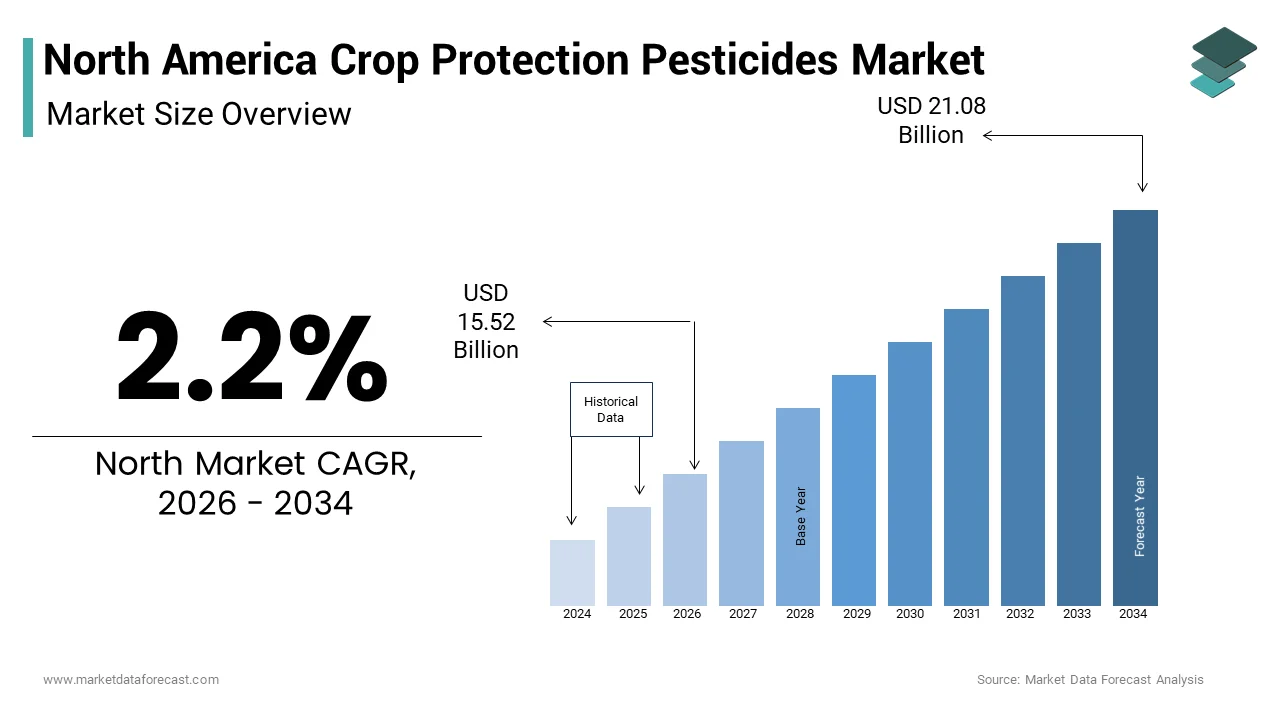
Crop protection is when pesticides protect a crop from pests by controlling the population and keeping them safe so that the crop and yield don’t hurt. Pesticides are an important part of agriculture. Even though agriculture is a mature industry, more people are becoming aware of biopesticides and want to use them to protect the environment. Some pesticides like glyphosate, atrazine, and chlorpyrifos are being phased out. This is expected to increase the demand for biopesticides. Biopesticides are made from animals, plants, bacteria, and minerals. They help get rid of pests without using poison.
One of the major drivers driving the North American crop protection pesticides market is the demand for food due to the increase in population. As the population increases, the demand for food increases as well; thus, the crop protection market also witnesses significant growth. With the increasing technology, the agriculture sector has also witnessed advancements in farming practices, thus acting as a major driver for the crop protection pesticides market. In recent years, the North American crop protection pesticides market has grown significantly due to its increased usage in the agriculture sector. Now, the seed treatment industry has also started to use crop protection pesticides. Thus, the seed treatment market is estimated to report significant growth in the upcoming years.
One of the major factors restraining the market growth is that there have been strict restrictions and a ban on certain powerful pesticides owing to their harmful effects on human health. Another major restraining market growth is that authorities in many countries have put high restrictions on lower usage. Synthetic pesticides are linked to various health risks, such as increased cancer rates, fertility problems, etc., owing to which the government has limited their usage.
Impact of COVID-19 on the North American crop protection pesticides market
Like any other market, the North American crop protection pesticides market also suffered a loss worth millions of dollars. In addition, the aftermath of the pandemic left a huge global crisis, especially in the agriculture and food processing industries, thus leaving the crop protection pesticide market in a huge crisis. Additionally, restrictions and various phases of lockdowns put on by government bodies across the North American region also had a huge impact on the crop protection pesticides market.
REPORT COVERAGE
| REPORT METRIC | DETAILS |
| Market Size Available | 2025 to 2034 |
| Base Year | 2025 |
| Forecast Period | 2026 to 2034 |
| CAGR | 2.2% |
| Segments Covered | By Origin, Type, Application, and Country |
| Various Analyses Covered | Global, Regional and Country Level Analysis; Segment-Level Analysis; DROC, PESTLE Analysis; Porter’s Five Forces Analysis, Competitive Landscape; Analyst Overview of Investment Opportunities |
| Regions Covered | United States, Canada, Mexico |
| Market Leaders Profiled | Syngenta, Bayer Crop Science, Corteva Agriscience, UPL-USA, BASF SE |
SEGMENT ANALYSIS
By Origin Insights
Due to the rising demand for bio-based products in the market, the bio-based segment is said to hold the most shares. These bio-based pesticides are usually extracted from natural sources such as plants without negatively affecting the environment.
By Type Insights
Based on type, herbicides account for almost 35% of the market shares and are anticipated to experience the greatest growth during the forecast period. After herbicides, fungicides are the second most prevalent crop production strategy, with a nearly 23% share. Due to favorable climate conditions for fungal growth, demand for fungicides is projected to increase over the next few years.
By Application Insights
The largest pesticide application market was cereals and grains, accounting for 30% of the entire crop protection volume. The grains most frequently treated with pesticides include wheat, rice, sorghum, oats, and barley. As the demand for cereals and grains increases, the demand for crop protection also rises, thus driving market growth.
KEY MARKET PLAYERS
These are some of the major key players involved in the North American crop protection pesticides market.
- Syngenta
- Bayer Crop Science
- Corteva Agriscience
- UPL-USA
- BASF SE
RECENT MARKET NEWS
- In June 2020, Chr. Hansen and FMC Corporation announced that they would continue to work together for another five years to find and sell natural solutions for the agriculture industry.
- In November 2020, BASF and TECNALIA, a European center for research and technological development, joined forces to speed up the research and development of new crop production products worldwide through digitalization. This speeds up the creation of new ideas that help farmers worldwide control weeds, fungal diseases, and bugs that eat their crops.
MARKET SEGMENTATION
This research report on the North American crop protection pesticides market is segmented and sub-segmented into the following categories.
By Origin
- Synthetic
- Bio-based
By Type
- Insecticide
- Herbicide
- Fungicide
- Others
By Application
- Cereals and grains
- Pulses and oilseeds
- Fruits and vegetables
- Turf and ornamentals
- Others
By Country
- US
- Canada
- Mexico
- Brazil
Frequently Asked Questions
What factors are currently driving the North America crop protection pesticides market?
Rising need for higher agricultural productivity and crop yield protection is driving market growth.
Why do farmers in North America rely heavily on crop protection pesticides?
They help control pests, diseases, and weeds that can significantly reduce crop output.
In simple words, what are crop protection pesticides?
They are chemical or biological products used to protect crops from harmful organisms.
Across which agricultural activities are these pesticides most widely used?
They are extensively used in farming of cereals, fruits, vegetables, and cash crops.
What makes pesticides essential in modern agriculture systems?
They ensure stable crop production and reduce losses caused by pests and diseases.
From a farmer’s perspective, are pesticides a necessary investment?
Yes, they protect crop value and help maintain consistent agricultural output.
What major challenges are affecting the North America pesticides market?
Strict environmental regulations and concerns over chemical usage are key challenges.
How is climate change influencing pesticide demand in this region?
Changing weather patterns are increasing pest outbreaks, driving higher pesticide usage.
Which crop segments generate the highest demand for pesticides?
Cereal grains, fruits, and vegetables account for the largest share of usage.
Is the North America crop protection pesticides market growing steadily?
Yes, the market is expanding with ongoing demand for efficient crop management solutions.
Access the study in MULTIPLE FORMATS
Purchase options starting from
$ 2000
Didn’t find what you’re looking for?
TALK TO OUR ANALYST TEAM
Need something within your budget?
NO WORRIES! WE GOT YOU COVERED!
Call us on: +1 888 702 9696 (U.S Toll Free)
Write to us: sales@marketdataforecast.com