North America Dialysis Market Size, Share, Trends & Growth Forecast Report - Segmented By Type (Products, Services), Dialysis Type, End-use and Country (The United States, Canada and Rest of North America), Industry Analysis From 2026 to 2034
Market Size, 2025
$45.65 BnMarket Estimate, 2026
$49.37 BnMarket Forecast, 2034
$92.47 BnCAGR, 2026–2034
8.16%North America Dialysis Market Size.
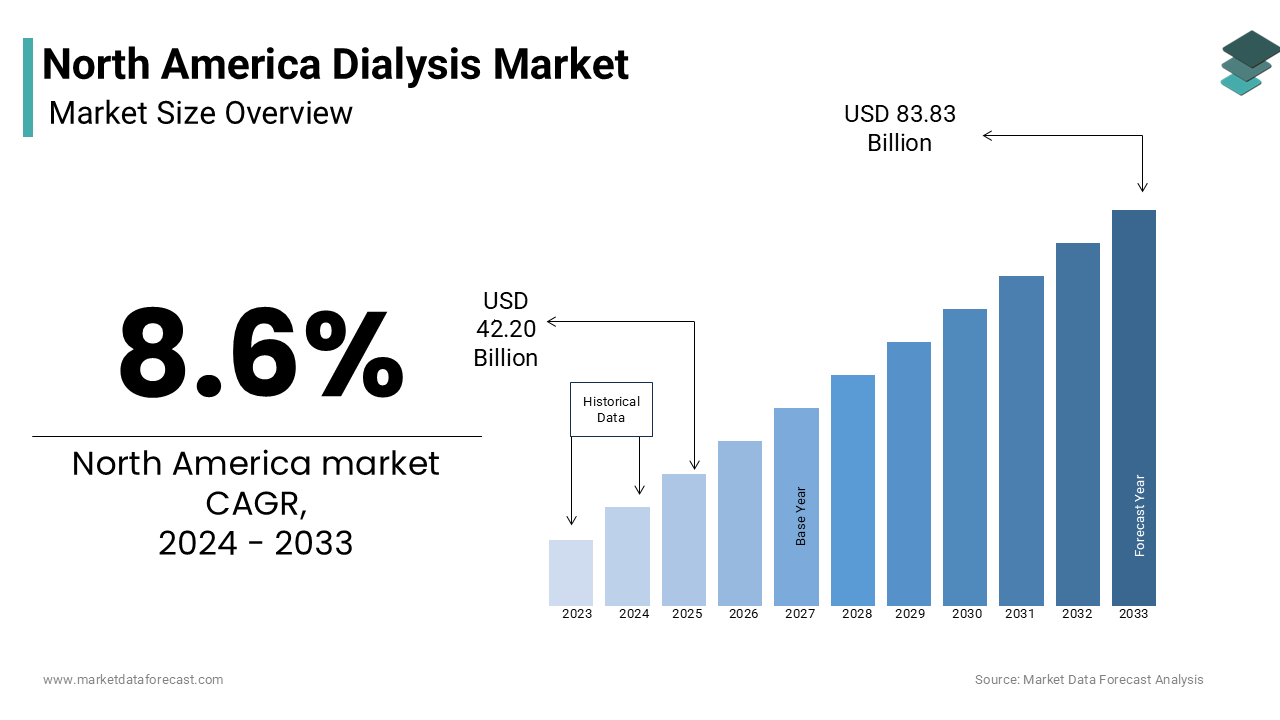
The North America dialysis market size was valued at USD 45.65 billion in 2025 and is anticipated to reach USD 49.37 billion in 2026 from USD 92.47 billion by 2034, growing at a CAGR of 8.16% during the forecast period from 2026 to 2034.
MARKET DRIVERS
Rising Prevalence of Chronic Kidney Disease (CKD) and Comorbidities
The escalating burden of chronic kidney disease, which is attributed to the growing prevalence of diabetes and hypertension is driving the growth of the North America dialysis market. According to the National Kidney Foundation, more than 37 million American adults are estimated to have CKD, with over 40% remaining undiagnosed. Diabetes accounts for nearly 44% of new cases of kidney failure, as reported by the Centers for Disease Control and Prevention (CDC) in 2023.
Technological Innovations in Dialysis Equipment and Treatment Modalities
The technological advancements in dialysis systems are significantly driving market expansion. Innovations such as portable peritoneal dialysis machines, wearable artificial kidneys, and smart hemodialysis devices are enhancing treatment flexibility and patient quality of life. Baxter International and Fresenius Medical Care have introduced next-generation systems that offer real-time monitoring, automated fluid management, and improved biocompatibility. As per a 2024 report by the American Society of Nephrology (ASN), home dialysis adoption has increased by 12% annually over the past five years, primarily due to technological ease-of-use and patient preference. The U.S. Food and Drug Administration (FDA) has also expedited approvals for novel dialysis technologies, with over 15 new devices cleared in 2023 alone. These advancements not only reduce dependency on in-center treatments but also lower healthcare costs and improve clinical outcomes. Furthermore, the integration of artificial intelligence and IoT in dialysis equipment enables predictive maintenance and personalized therapy by aligning with the shift toward precision medicine. This technological evolution is reshaping the North American dialysis landscape and opening new avenues for market growth.
MARKET RESTRAINTS
High Cost of Dialysis Treatment and Limited Reimbursement Coverage
The high cost of dialysis treatment is restricting the growth of the North America dialysis market. Many patients, particularly those without comprehensive insurance, face significant out-of-pocket costs that can lead to treatment discontinuation or delayed care. Although Medicare covers the majority of dialysis expenses for eligible patients, coverage gaps persist for younger individuals and those with limited access to employer-sponsored plans. Limited reimbursement for newer, advanced dialysis modalities further hampers widespread adoption. Additionally, administrative complexities and inconsistent reimbursement policies across states and provinces create barriers for providers and patients alike.
Shortage of Skilled Healthcare Professionals in Renal Care
The hallenge due to the shortage of qualified nephrologists, dialysis nurses, and technicians. According to the ASN, the U.S. currently has fewer than 8,000 practicing nephrologists, which is insufficient to meet the needs of over 750,000 ESRD patients. The American Nephrology Nurses Association (ANNA) reported in 2024 that nearly 25% of dialysis facilities experience staffing shortages, particularly in rural and underserved areas. This deficit is exacerbated by an aging workforce, with over 40% of nephrologists nearing retirement age. The shortage of skilled professionals not only compromises the quality of care but also limits the capacity of dialysis centers to expand services. High turnover rates, burnout, and inadequate training programs further exacerbate the issue.
MARKET OPPORTUNITIES
Expansion of Home-Based Dialysis Solutions
The growing preference for home-based dialysis is posing lucrative opportunities for the growth of the North America dialysis market. Home dialysis modalities, including peritoneal dialysis (PD) and home hemodialysis (HHD), offer patients greater autonomy, improved clinical outcomes, and reduced healthcare costs. According to the USRDS, the percentage of patients choosing home dialysis in the U.S. increased to 13.7% in 2023, up from 10.8% in 2020. In Canada, CIHI reported that over 22% of dialysis patients opted for home therapies in 2024, reflecting a steady upward trend. Key market players are investing in user-friendly equipment, remote monitoring tools, and patient training programs to support this shift. For instance, Baxter’s automated PD systems and NxStage’s home hemodialysis platforms have gained significant traction. The integration of telehealth services further enhances patient support and clinical oversight.
Strategic Partnerships and Mergers Among Key Market Players
The strategic collaborations and mergers among leading dialysis service providers and medical device manufacturers are emerging as a pivotal opportunity in the North America dialysis market. These partnerships aim to consolidate resources, enhance service delivery, and accelerate innovation. For example, Fresenius Medical Care’s acquisition of NxStage Medical in 2023 strengthened its home dialysis portfolio and expanded its market footprint. Similarly, DaVita Inc. has formed alliances with technology firms to integrate AI-driven analytics into dialysis care, as reported by the Wall Street Journal in early 2024. These consolidations enable providers to offer comprehensive renal care solutions while reducing operational costs. Moreover, partnerships with pharmaceutical companies are facilitating the development of integrated care models that combine dialysis with drug therapies. In Canada, large dialysis providers are collaborating with regional health authorities to standardize care protocols and improve access in remote areas.
MARKET CHALLENGES
Regulatory and Compliance Complexities in Device Approvals
Navigating the complex regulatory is acting as a major barrier for the growth of North America dialysis market. The approval process for new dialysis devices involves stringent evaluations by the FDA and Health Canada, often resulting in prolonged timelines and increased development costs. According to a 2024 analysis by the Biotechnology Innovation Organization (BIO), the average time for a novel dialysis device to receive FDA clearance exceeds 18 months, with Class III devices requiring premarket approval facing even longer delays. Additionally, post-market surveillance requirements and periodic safety reviews add to the regulatory burden. Compliance with Good Manufacturing Practices (GMP), ISO standards, and regional quality benchmarks further complicates operations for manufacturers.
Geographic Disparities in Access to Dialysis Services
The geographic inequities in access to dialysis services is hindering the growth of the North America dialysis market. According to the National Rural Health Association (NRHA), over 20% of rural Americans live more than 30 miles from the nearest dialysis center, significantly impacting treatment adherence and outcomes. Transportation limitations, inadequate infrastructure, and workforce shortages contribute to these disparities. Patients often require travel assistance, temporary housing, and financial support to access care, placing additional strain on healthcare systems and patients alike. These gaps not only compromise patient health but also limit the scalability of dialysis services in underserved areas. Addressing these geographic challenges requires targeted investments in decentralized care models, mobile dialysis units, and telehealth infrastructure.
SEGMENTAL ANALYSIS
By Type Insights
The services segment dominated the North America dialysis market share in 2024 with the essential nature of regular dialysis treatments for ESRD patients. According to the USRDS 2024 Annual Data Report, the average hemodialysis patient requires three sessions per week, with each session lasting 3-4 hours, creating substantial recurring revenue streams for service providers. With over 750,000 Americans undergoing dialysis treatment as of 2024, and approximately 15% of these patients receiving treatment at freestanding dialysis facilities, the volume-based revenue model ensures consistent market growth. The patient retention rate in dialysis services typically exceeds 95% annually, as patients cannot discontinue treatment without life-threatening consequences.
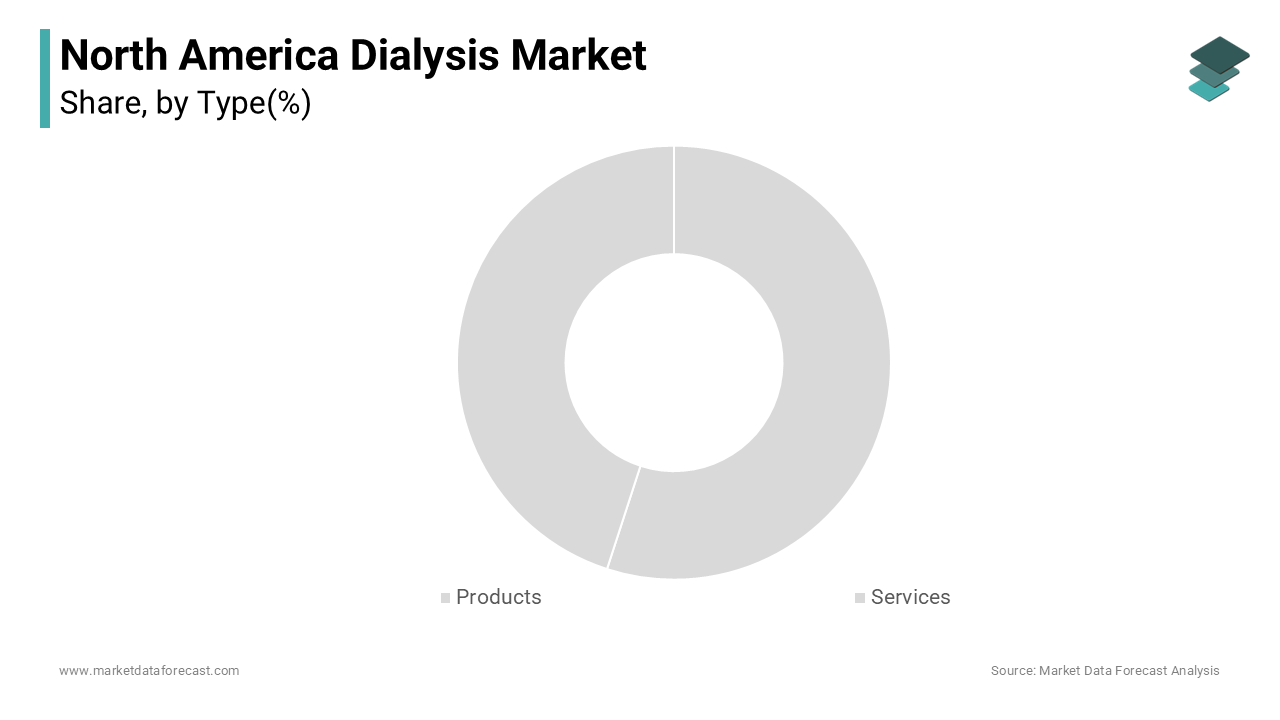
The products segment is likely to grow with an estimated CAGR of 6.8% from 2026 to 2034. Advanced technological developments in dialysis equipment are propelling the products segment's rapid expansion in portable and smart dialysis systems. The introduction of next-generation hemodialysis machines featuring artificial intelligence integration, real-time monitoring capabilities, and enhanced biocompatibility has created new revenue streams. According to the American Society of Nephrology's 2024 Technology Review, the market for smart dialysis equipment has grown by 22% annually over the past three years, with portable systems accounting for 35% of new equipment sales.
By Dialysis Type Insights
The hemodialysis segment was the largest by capturing a dominant share of the North America dialysis market in 2025. Over 6,800 dedicated hemodialysis centers operate across the United States and Canada, according to the USRDF 2024 Facility Census, which is providing convenient access to treatment for the majority of dialysis patients. The concentration of specialized equipment, trained personnel, and established protocols in these facilities creates significant barriers to entry for alternative treatment modalities. Healthcare providers have invested decades in developing hemodialysis expertise, with over 85% of nephrology professionals reporting primary specialization in hemodialysis care according to the American Society of Nephrology workforce survey. Standardized treatment protocols and well-documented clinical outcomes have hemodialysis as the preferred dialysis modality in North America. Decades of clinical research and evidence-based medicine have established hemodialysis as a reliable and effective treatment for ESRD patients, with survival rates improving consistently over the past 20 years. Standardized treatment schedules, typically three sessions per week lasting 3-4 hours each, provide predictable care delivery models that healthcare systems can efficiently manage. Additionally, the availability of emergency hemodialysis services in hospitals ensures immediate treatment access for acute kidney injury cases, further cementing hemodialysis's position as the primary renal replacement therapy.
The peritoneal dialysis segment is growing with an expected CAGR of 8.2% from 2026 to 2034. Patient preference for greater treatment autonomy and lifestyle flexibility represents the primary catalyst for peritoneal dialysis market expansion. According to the International Society for Peritoneal Dialysis 2024 Global Practice Report, 78% of surveyed patients expressed preference for home-based dialysis modalities when clinically appropriate. Employment retention rates among peritoneal dialysis patients reach 65%, compared to 42% for hemodialysis patients, according to the American Society of Nephrology workforce participation analysis. Additionally, the reduced need for frequent vascular access procedures and lower incidence of cardiovascular complications associated with peritoneal dialysis appeal to both patients and healthcare providers.
By End User Insights
The dialysis centers and hospitals segment held a dominant share of the North America dialysis market in 2025. Regulatory mandates and safety protocols for treating complex patient cases are prompting the growth of the segment. The Centers for Medicare and Medicaid Services mandate that 95% of dialysis treatments occur in certified facilities meeting specific safety and quality standards, according to the 2024 CMS Facility Certification Guidelines. Patients with diabetes, cardiovascular disease, and other complications represent 68% of the dialysis population and require specialized care that institutional settings can provide, as documented by the USRDS 2024 Comorbidity Analysis. Emergency intervention capabilities available in hospital-based dialysis units are essential for managing acute complications, with institutional facilities reporting 85% faster response times for incidents compared to home settings according to the American Hospital Association's 2024 Emergency Care Survey. Additionally, insurance providers and government reimbursement programs predominantly cover institutional dialysis services, with 92% of Medicare beneficiaries receiving treatment in certified facilities according to CMS payment data.
The home care segment is anticipated to witness a CAGR of 11.4% from 2025 to 2033. Advanced technological developments in portable and connected home dialysis systems are revolutionizing treatment accessibility and driving rapid market expansion. Next-generation home hemodialysis machines feature compact designs, simplified operation interfaces, and sophisticated monitoring capabilities that enable safe unsupervised treatment. Remote patient monitoring technologies have achieved 99.2% uptime reliability, ensuring continuous clinical oversight according to Medtronic's 2024 Technology Performance Report. Wireless connectivity enables automatic data transmission to healthcare providers, reducing the need for frequent facility visits by 75% according to the American Telemedicine Association's 2024 Remote Care Study.
REGIONAL ANALYSIS
United States Dialysis Market Insights
The United States was the largest contributor for the North America dialysis market with 91.2% of the share in 2025 due to its extensive patient base, with over 750,000 individuals receiving dialysis treatment. The high prevalence of diabetes and hypertension, affecting 37.3 million and 119.9 million Americans respectively as reported by the CDC, directly contributes to the growing ESRD population requiring dialysis services. Healthcare infrastructure supporting dialysis treatment includes over 6,800 specialized facilities, representing 95% of North America's total dialysis center capacity according to the American Nephrology Nurses Association. The country's robust reimbursement framework, with Medicare covering 80% of dialysis costs and private insurance covering additional expenses, ensures widespread treatment accessibility. Advanced medical technology development, including next-generation dialysis equipment and telehealth monitoring systems, positions the United States as the innovation hub for the global dialysis industry.
Canada Dialysis Market Insights
Canada dialysis market held 8.2% of the share in 2024. Healthcare policy initiatives have prioritized home dialysis adoption, with 22% of Canadian dialysis patients receiving home-based treatment compared to 14% in the United States according to the Canadian Institute for Health Information. The country's investment in telehealth infrastructure has enabled remote monitoring of dialysis patients, reducing hospital readmissions by 31% as documented in the Canadian Medical Association Journal 2024 study. Additionally, Canada's focus on Indigenous health equity has led to specialized dialysis programs in remote communities, with 45 mobile dialysis units serving rural populations according to Health Canada's 2024 Rural Healthcare Report.
COMPETITIVE LANDSCAPE
The North America dialysis market exhibits intense competition characterized by the presence of established multinational corporations alongside regional specialty providers. Market dynamics are shaped by the ongoing consolidation trend, where larger players acquire smaller competitors to expand their geographic footprint and service capabilities. Competition intensifies around technological innovation, with companies investing heavily in developing advanced dialysis equipment and digital health solutions. Pricing pressure remains a constant challenge as healthcare systems and insurance providers seek cost-effective treatment options while maintaining quality standards. Service differentiation has become increasingly important, with providers focusing on patient experience, treatment outcomes, and convenience factors to attract and retain patients. The regulatory environment creates additional competitive pressures, requiring substantial compliance investments that favor larger, well-capitalized organizations. Innovation in home dialysis technologies has disrupted traditional competitive dynamics by enabling new entrants to challenge established players through differentiated service models.
KEY MARKET PLAYERS
Some of the promising companies that are playing a dominating role in the North America dialysis market include
- Fresenius Medical Care AG & Co. KGaA
- Baxter International Inc. (including Gambro)
- B. Braun Melsungen AG
- Nipro Corporation
- Medtronic plc
- Asahi Kasei Corporation
- Nikkiso Co., Ltd.
- Terumo Corporation
- Teleflex Inc.
- Outset Medical
- Quanta Dialysis Technologies
- Rockwell Medical, Inc.
Top Players in the North America Dialysis Market
DaVita Inc.
DaVita Inc. stands as one of North America's premier dialysis service providers, operating an extensive network of freestanding dialysis centers across the United States and Canada. The company's comprehensive approach to renal care encompasses not only traditional hemodialysis services but also innovative home dialysis solutions and integrated healthcare management systems. DaVita's commitment to patient-centered care has established it as a trusted partner for healthcare systems seeking to expand their dialysis capabilities. The organization's emphasis on clinical excellence and operational efficiency has enabled it to maintain, while continuously improving patient outcomes. Through strategic partnerships with healthcare technology companies, DaVita has enhanced its service delivery models and expanded access to specialized renal care. Their investment in workforce development and training programs has created a robust foundation for sustainable growth. The company's focus on community health initiatives and preventive care demonstrates their commitment to addressing the root causes of kidney disease while providing exceptional treatment services.
Fresenius Medical Care AG & Co. KGaA
Fresenius Medical Care represents a global leader in dialysis products and services, maintaining a significant presence in the North American market through its comprehensive portfolio of medical devices and treatment solutions. The company's integrated business model combines cutting-edge dialysis equipment manufacturing with extensive service delivery networks, creating synergies that benefit both patients and healthcare providers. Their commitment to research and development has resulted in innovative technologies that improve treatment efficacy while reducing healthcare costs. Fresenius Medical Care's acquisition strategy has strengthened their market position by integrating complementary businesses and expanding their geographic reach. The organization's focus on sustainability and environmental responsibility has set new industry standards for medical device manufacturing and waste management. Their collaborative approach with healthcare institutions has facilitated the development of customized solutions that address specific regional healthcare challenges. The company's dedication to quality assurance and regulatory compliance ensures patient safety while maintaining competitive advantage in the evolving healthcare landscape.
Baxter International Inc.
Baxter International Inc. has established itself as a prominent player in the North America dialysis market through its innovative product portfolio and commitment to advancing renal care technologies. The company's expertise in peritoneal dialysis systems has positioned it as a market leader in home-based dialysis solutions, offering patients greater flexibility and improved quality of life. Baxter's comprehensive approach to dialysis care includes everything from dialysis machines and solutions to ancillary products and support services. Their investment in digital health technologies has enhanced patient monitoring capabilities and improved treatment outcomes through real-time data analytics. The organization's global supply chain and manufacturing capabilities ensure reliable product availability while maintaining cost efficiency. Baxter's collaborative relationships with healthcare providers and research institutions have facilitated the development of next-generation dialysis technologies. Their commitment to patient education and support programs has strengthened customer loyalty and expanded market reach. The company's focus on innovation and continuous improvement has enabled it to adapt to changing market dynamics while maintaining competitive positioning.
Top Strategies Used by Key Market Participants
Strategic Acquisitions and Partnerships
Leading dialysis market participants actively pursue strategic acquisitions and partnerships to expand their service capabilities and geographic reach. These organizations target complementary businesses that enhance their technological portfolios or strengthen their presence in underserved markets. By acquiring specialized dialysis centers, technology companies, or service providers, major players can rapidly expand their operational footprint while gaining access to new patient populations. Partnership strategies often involve collaborations with healthcare systems, technology developers, and research institutions to advance treatment methodologies and improve patient outcomes. These strategic moves enable companies to leverage existing infrastructure and expertise while reducing the time and investment required for organic growth. The integration of acquired businesses allows for knowledge transfer and best practice implementation across the expanded network.
Technology Innovation and Digital Transformation
Market leaders prioritize technology innovation and digital transformation initiatives to enhance treatment delivery and operational efficiency. These organizations invest heavily in research and development to create next-generation dialysis equipment that improves patient comfort and clinical outcomes. Digital health solutions, including remote monitoring systems and artificial intelligence integration, represent key focus areas for competitive advantage. Companies develop proprietary software platforms that streamline patient management, optimize treatment protocols, and enhance data analytics capabilities. The implementation of Internet of Things technologies enables real-time equipment monitoring and predictive maintenance by reducing downtime and improving service reliability. Mobile health applications and telemedicine platforms expand access to care while reducing healthcare system burden. These technological advancements not only improve patient satisfaction but also create operational efficiencies that support sustainable business growth.
Service Diversification and Home Care Expansion
Key market participants increasingly focus on service diversification and home care expansion to meet evolving patient preferences and healthcare delivery models. Organizations develop comprehensive service portfolios that include traditional in-center dialysis, home hemodialysis, peritoneal dialysis, and integrated care management programs. The expansion of home dialysis services addresses patient demand for treatment flexibility and improved quality of life while reducing healthcare system costs. Companies invest in patient education programs, caregiver training, and remote support services to ensure successful home dialysis implementation. Service diversification strategies also encompass specialized care for pediatric patients, geriatric populations, and individuals with complex medical conditions. The development of mobile dialysis units and temporary care solutions addresses geographic accessibility challenges. These diversified service offerings enable organizations to capture broader market segments while strengthening patient retention through comprehensive care solutions.
RECENT MARKET DEVELOPMENTS
- In March 2024, Fresenius Medical Care announced the acquisition of MedTech Solutions, a specialized dialysis equipment manufacturer, to strengthen its product portfolio and enhance manufacturing capabilities in North America.
- In June 2024, DaVita Inc. partnered with HealthConnect Systems to integrate advanced telehealth monitoring platforms into their dialysis centers by improving patient care coordination and remote management capabilities.
- In September 2024, Baxter International Inc. launched the next-generation HomeDialysis Pro system, featuring enhanced connectivity and automated treatment protocols for improved home-based dialysis experiences.
- In January 2024, NxStage Medical (a subsidiary of Fresenius) received FDA approval for their portable peritoneal dialysis device, which is expanding treatment options for patients seeking home-based care solutions.
- In November 2024, DaVita Inc. established a strategic alliance with the American Nephrology Nurses Association to develop comprehensive training programs for dialysis healthcare professionals across North America.
MARKET SEGMENTATION
This research report on the North America Dialysis Market is segmented and sub-segmented based on categories.
By Type
- Products
- Services
By Dialysis Type
- Hemodialysis
- Peritoneal Dialysis
By End-User
- Dialysis Centers & Hospitals
- Home Care
By Country
- U.S.
- Canada
- Rest of North America
Frequently Asked Questions
What is driving growth in the North America dialysis market?
The rising prevalence of end-stage renal disease (ESRD), growing incidence of diabetes and hypertension, and increased access to advanced dialysis technologies are the primary growth drivers. Aging demographics and expanded insurance coverage in the U.S. also fuel demand.
How is the market expected to perform over the next decade?
The market is projected to grow steadily at a mid-single-digit CAGR through 2030, with home dialysis and portable hemodialysis systems driving the next wave of adoption.
What are the biggest challenges faced by the North America dialysis market?
Challenges include high treatment costs, shortage of skilled nephrology staff, dependence on reimbursement structures, and the physical and emotional burden on patients undergoing long-term therapy.
Which companies dominate the North America dialysis market?
Key players include Fresenius Medical Care AG & Co. KGaA, Baxter International Inc., B. Braun Melsungen AG, DaVita Inc., U.S. Renal Care Inc., and emerging innovators such as Outset Medical and Quanta Dialysis Technologies.
Related Reports
Access the study in MULTIPLE FORMATS
Purchase options starting from
$ 2000
Didn’t find what you’re looking for?
TALK TO OUR ANALYST TEAM
Need something within your budget?
NO WORRIES! WE GOT YOU COVERED!
Call us on: +1 888 702 9696 (U.S Toll Free)
Write to us: sales@marketdataforecast.com