- Product Description Description
- Table of Contents TOC
- List of Table & Figure LOT
- Get Free Sample PDF Sample PDF
Market Size, 2025
$33.41 BnMarket Estimate, 2026
$35.94 BnMarket Forecast, 2034
$64.43 BnCAGR, 2026–2034
7.57%Executive Summary: North America Edible Nuts Market
- Market Scope: Comprehensive North American edible nuts market analysis covering product types (almonds, pistachios, walnuts, pecans, and cashews), usages (snacks, butters and spreads), forms, and country-level dynamics across the United States, Canada, and Mexico.
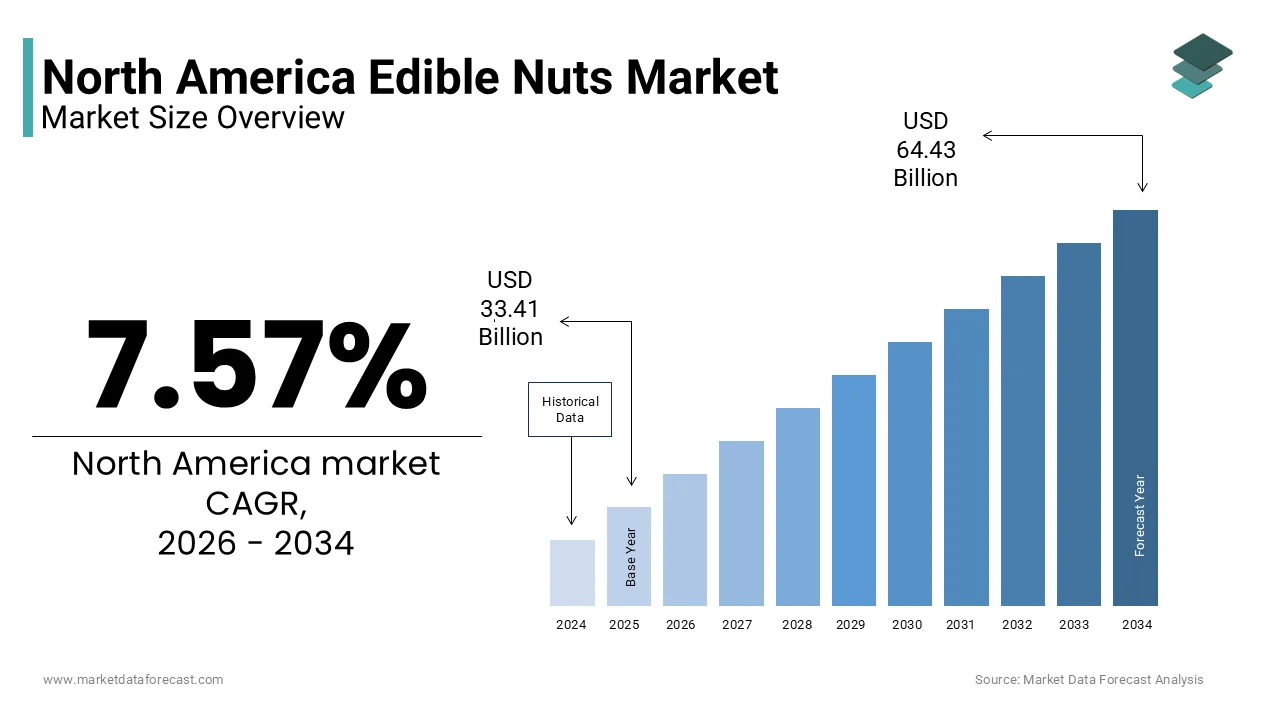
- Market Valuation: Valued at USD 33.41 billion (2025), estimated at USD 35.94 billion (2026), and projected to reach USD 64.43 billion by 2034, registering a solid CAGR of 7.57% (2026–2034).
- Primary Growth Drivers: Shifting consumer dietary habits toward plant-centric nutrition and high-protein snacks, rising prevalence of cardiovascular diseases driving demand for heart-healthy foods, and broad integration into functional food and beverage applications.
Key Market Segment Metrics (2026–2034)
| Category | Leading Segment (2025 Position) | Fastest-Growing Segment |
|---|---|---|
| By Product Type | Almonds (largest segment, occupying a 35.8% share driven by plant-based dairy alternatives and high nutritional density) | Pistachios (projected to grow at a CAGR of 7.5% driven by premium snacking and interactive in-shell experiences) |
| By Usage | Snacks (captured a 40.5% share supported by portable, on-the-go eating habits and flavor innovation) | Butter and Spreads (exhibiting an 8.2% CAGR driven by ketogenic, gluten-free, and clean-label baking alternatives) |
| By Country | United States (undisputed leader, accounting for a 75.1% share backed by massive California agricultural output and health initiatives) | Canada (rapidly evolving import and distribution network catering to organic and plant-based trends) |
Major Market Players & Market Structure
Market Structure: Highly competitive landscape comprising massive agricultural cooperatives, international distributors, and specialized regional processors investing in advanced roasting technologies and sustainable farming practices.
Key Companies: Blue Diamond Growers, Wonderful Pistachios and Almonds, Diamond Foods, Olam International, Waterford Nut, Farm Breeze International, Just Almonds, Mariani Nut, Select Harvests, Global Nut, and Archer Daniels.
North America Edible Nuts Market Size
The North America edible nuts market size was valued at USD 33.41 billion in 2025, and the market size is expected to reach USD 64.43 billion by 2034 from USD 35.94 billion in 2026. The market's promising CAGR for the predicted period is 7.57%.
Edible nuts are hard-shelled seeds or dry fruits that contain a safe, energy-dense, and highly nutritious kernel. They are widely consumed raw, roasted, or processed into nut butters and milks. These nutrient dense commodities including almonds walnuts cashews and pecans are increasingly integrated into daily diets due to their recognized health benefits and culinary versatility. The regional consumption landscape is shaped by a strong cultural preference for convenient healthy snacks and clean label food products. According to the USDA Economic Research Service, U.S. per capita tree nut availability reached approximately 3.69 pounds, reflecting a steady upward trend driven largely by almonds. This dietary shift is further amplified by national health initiatives promoting plant based protein sources. As per the Centers for Disease Control and Prevention, 40.3% of adults in the United States are classified as obese, driving a major public health focus on nutritious alternatives to processed snacks. Edible nuts offer a compelling solution with their high content of unsaturated fats fiber and essential micronutrients. This confluence of consumer preference scientific validation and public health guidance has firmly established edible nuts as a staple within the North American food ecosystem.
MARKET DRIVERS
Growing consumer preference for plant based protein sources drives nut consumption
The dietary habits of consumers in the region are undergoing a significant transformation with a marked shift toward plant centric nutrition, which fuels the growth of the North America edible nuts market. This is driven by health environmental and ethical considerations. Edible nuts serve as a primary source of high quality plant protein offering a sustainable alternative to animal derived products. According to the International Food Information Council's Spotlight Survey, overall protein consumption is a high priority for 70% of U.S. consumers, heavily driving the inclusion of plant-based protein alternatives into daily snacking habit. Almonds and peanuts for instance provide approximately 6 to 8 grams of protein per one ounce serving making them ideal for incorporation into snacks meals and beverages. Furthermore the Plant Based Foods Association states that retail sales of plant based foods reached 8 billion dollars in the United States in 2024 with nut based products representing a major growth segment. This surge is supported by extensive scientific literature linking plant protein intake to reduced risk of chronic diseases. As per the Harvard T H Chan School of Public Health replacing just 3 percent of animal protein with plant protein is associated with a 10 percent lower risk of overall mortality. The robust alignment between consumer values nutritional science and product innovation ensures that demand for edible nuts will continue to expand across the continent.
Rising incidence of cardiovascular diseases amplifies demand for heart healthy snacks
The growing prevalence of cardiovascular conditions drives the need for cardiovascular-friendly bites, which in turn boosts the expansion of the North America edible nuts market. Cardiovascular conditions remain the leading cause of death in the United States accounting for approximately 1 in every 5 deaths according to the Centers for Disease Control and Prevention. This alarming statistic has spurred a massive public health campaign promoting dietary interventions to mitigate risk factors such as elevated cholesterol and hypertension. Edible nuts are scientifically validated as cardioprotective foods due to their rich content of monounsaturated and polyunsaturated fats magnesium and antioxidants. The American Heart Association recommends consuming four or more servings of unsalted nuts per week as part of a heart healthy diet. A single serving of walnuts for example provides 2.5 grams of alpha linolenic acid an essential omega 3 fatty acid proven to reduce arterial inflammation. Furthermore the National Institutes of Health funded a long term study demonstrating that individuals who regularly consume nuts have a 29 percent lower risk of dying from heart disease. This powerful clinical evidence has been widely disseminated through public health messaging influencing consumer behavior at the point of purchase. The Academy of Nutrition and Dietetics clinical guidelines consistently endorse nuts as a therapeutic, nutrient-dense snack choice to assist patients in managing blood lipid levels and cardiovascular risk factors.
MARKET RESTRAINTS
High prevalence of tree nut and peanut allergies constrains market expansion
A significant portion of the population cannot consume edible nuts due to life-threatening allergic reactions, which impedes the growth of the North American market. This is unfortunate, as these nuts are otherwise associated with numerous health benefits. According to updated metrics from Food Allergy Research & Education (FARE), food allergies affect approximately 33 million people in the United States, including 5.6 million children under the age of 18. Peanuts and tree nuts are among the nine major food allergens recognized by federal health organizations as the primary drivers of severe anaphylactic food reactions in the country. This widespread sensitivity creates substantial barriers in institutional settings such as schools workplaces and public venues where nut free policies are increasingly enforced to ensure safety. In addition, the Food and Drug Administration mandates strict labeling requirements for any product containing major allergens which adds complexity to food manufacturing and limits cross contamination risks. As per the Asthma and Allergy Foundation of America (AAFA), the overall societal economic burden of food allergies in the United States is estimated to approach $371 billion per year. The constant threat of accidental exposure forces millions of consumers to avoid nuts entirely even in trace amounts. This pervasive health concern significantly dampens overall market potential and restricts product formulation in shared food environments.
Volatile climatic conditions threaten domestic nut production sustainability
The cultivation of key edible nuts such as almonds and walnuts is highly dependent on stable climatic patterns and abundant water resources which are becoming increasingly unpredictable due to climate change. This hampers the expansion of the North America edible nuts market. However Californial’s agricultural region has experienced recurrent extreme droughts with the state declaring a drought emergency in 2021 that lasted through 2023. Driven by long-term water uncertainty and regional groundwater laws, data from agricultural market agencies shows California almond growers slashed new orchard plantings by 68% to mitigate structural water risks. Furthermore rising temperatures accelerate pest infestations such as the navel orangeworm which can destroy entire harvests if not controlled. Research published via the University of California Agriculture and Natural Resources shows that almond yield maximums are highly dependent on canopy light interception and specific spring temperature thresholds during early growth phases. These environmental pressures not only jeopardize domestic supply chains but also drive up production costs which are ultimately passed on to consumers. The inherent vulnerability of nut agriculture to climate instability poses a persistent and growing restraint on the long term viability of the North American edible nuts market.
MARKET OPPORTUNITIES
Expansion of functional food and beverage applications unlocks new revenue streams
These nuts are increasingly being leveraged beyond traditional snacking formats and integrated into a wide array of functional food and beverage products designed to deliver specific health benefits, which is a key growth area for the North America edible nuts market. Nut butters nut milks and protein powders derived from almonds cashews and peanuts are now mainstream offerings in grocery aisles catering to consumers seeking convenient and nutritious options. According to the Hartman Group over 55 percent of North American consumers actively purchase foods that offer added functional benefits such as improved digestion or sustained energy. As per the Good Food Institute, almond milk remains the top-selling plant-based milk category, making up standard mainstream household purchases across North America. Furthermore, the clean label movement favors whole food ingredients like ground nuts over synthetic additives enhancing their appeal to health conscious shoppers. According to the Plant Based Foods Association, retail sales of plant-based milks alone reached approximately $2.9 billion, leading the alternative dairy sector. This diversification into value added segments allows producers to capture premium pricing and reach consumers who may not traditionally purchase whole nuts. Manufacturers embed nut ingredients into everyday staples. This creates consistent, scalable demand that transcends seasonal snacking trends.
Strategic development of regenerative agricultural practices enhances brand equity and supply resilience
Forward looking nut producers are investing in regenerative farming techniques, which creates a pathway for the expansion of the North America edible nuts market. These techniques restore soil health, conserve water, and sequester carbon, thereby aligning with the growing consumer demand for environmentally responsible products. Studies reveal that while over 80% of consumers value sustainability, true willingness to absorb price premiums varies significantly under inflationary pressures. As documented by the Almond Board of California, regional farmers utilize advanced irrigation scheduling and soil management to make measurable, incremental progress toward long-term water efficiency goals. These practices not only mitigate the impacts of climate volatility but also generate verifiable environmental credentials that strengthen brand narratives. Collaboration through the Sustainable Agriculture Initiative Platform assists multinational food brands in standardizing on-farm sustainability practices to build resilient, verifiable supply chains. Furthermore, through its landmark Partnerships for Climate-Smart Commodities program, the United States Department of Agriculture distributes billions of dollars to support farmers transitioning to climate-resilient and regenerative practices. By embedding sustainability into the core of their production model nut suppliers can secure long term contracts with major food brands and insulate themselves from future regulatory pressures related to water and carbon emissions.
MARKET CHALLENGES
Intensifying global competition from low cost nut producing regions erodes price competitiveness
The region’s appetite for edible nuts continues to grow, but local industries are increasingly squeezed by international market competitors, which holds back the growth of the North America edible nuts market. These global competitors offer comparable products at significantly lower prices because of their lower labor and regulatory costs. Countries such as Vietnam India and Turkey have dramatically expanded their nut processing capacities leveraging favorable growing conditions and government subsidies. The USDA Foreign Agricultural Service show that expanding global supplies from low-cost walnut exporters like China and Chile have heavily constrained international wholesale pricing, squeezing margins for domestic producers. This influx of competitively priced imports compresses profit margins for North American processors who must contend with higher operational expenses including stringent food safety protocols and wage standards. As per the National Agricultural Statistics Service the average farm gate price for California walnuts declined by 12 percent in 2024 despite stable domestic consumption reflecting the downward pressure exerted by foreign competition. Furthermore large retail chains often prioritize cost efficiency in their procurement strategies favoring imported nuts for private label products. This relentless price competition forces domestic producers to either absorb losses or risk losing shelf space to cheaper alternatives undermining the economic sustainability of local nut farming communities.
Persistent labour shortages in harvesting and processing operations disrupt supply chain continuity
The production of these nuts remains heavily reliant on manual labor for critical tasks such as harvesting, hulling, and sorting, particularly during peak seasons when timing is crucial to prevent spoilage, which impedes the expansion of the North America Edible Nuts Market. However, the agricultural sector across North America is grappling with a chronic shortage of available workers due to demographic shifts and restrictive immigration policies. According to the American Farm Bureau Federation over 50 percent of specialty crop growers including nut producers report being unable to find sufficient labor to meet their seasonal needs. While California almond production is heavily mechanized, agricultural groups like the California Farm Bureau state that broader H-2A visa administrative friction complicates hiring for necessary processing and hauling operations. This labor deficit leads to delayed harvests increased crop loss and higher wages to attract scarce workers all of which inflate production costs. According to the University of California Agricultural Issues Center, cash overhead and mechanical harvesting inputs represent the primary operational expenses on modern California nut farms. Without a reliable and adequate workforce, the post-harvest supply chain is highly vulnerable to bottlenecks and quality degradation. This poses a fundamental operational challenge to the stability of the North American edible nuts market.
REPORT COVERAGE
| REPORT METRIC | DETAILS |
| Market Size Available | 2024 to 2033 |
| Base Year | 2024 |
| Forecast Period | 2025 to 2033 |
| CAGR | 7.57% |
| Segments Covered | By Product Type, Usage, Form, and Region |
| Various Analyses Covered | Regional & Country Level Analysis, Segment-Level Analysis, DROC, PESTLE Analysis, Porter’s Five Forces Analysis, Competitive Landscape, Analyst Overview on Investment Opportunities |
| Regions Covered | The United States, Canada, Mexico, and Rest of North America |
| Market Leaders Profiled | Diamond Foods, Olam International, Waterford Nut, Farm Breeze International, Just Almonds, Blue Diamond Growers, Mariani Nut, Select Harvests, Global Nut, and Archer Daniels. |
SEGMENTAL ANALYSIS
By Product Type Insights
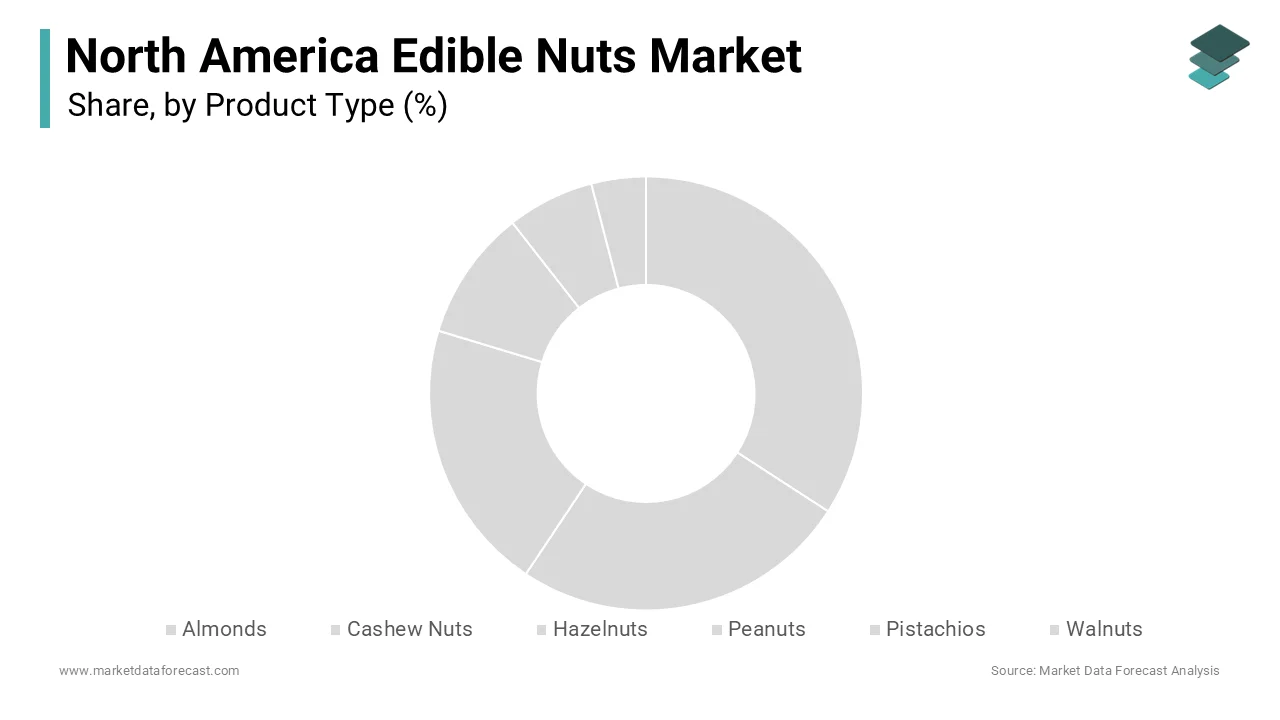
The almond segment was the largest in the regional market and occupied a 35.8% share in 2025. Moreover, the widespread integration of almonds into plant based dairy alternatives heavily drives the supremacy of this segment. Almond milk has become the premier non dairy beverage choice across North America due to its creamy texture and mild flavor profile. According to the Plant Based Foods Association, retail sales of plant-based milk alternatives in the United States reached $2.80 billion, with almond milk firmly capturing the largest market share. Food manufacturers extensively utilize almond flour and almond butter to formulate clean label baked goods and nutritional bars. The neutral taste profile allows almonds to seamlessly blend into diverse culinary applications without overpowering other ingredients. In standard tracking surveys, a massive consumer footprint relies on plant-based milk alternatives, though traditional trade entities like the International Dairy Foods Association highlight that the vast majority of mainstream shoppers still prioritize traditional dairy milk. This massive integration into everyday food and beverage products cements the leading position of almonds within the regional edible nuts market landscape.
The exceptional nutritional density of almonds combined with rising consumer health awareness heavily drives their widespread consumption. Almonds are naturally rich in essential nutrients including vitamin E magnesium and heart healthy monounsaturated fats which align perfectly with modern dietary preferences. According to the United States Department of Agriculture a single 1 ounce serving of almonds provides 6 grams of protein and 4 grams of dietary fiber making them an ideal snack for weight management. The clinical endorsement significantly influences purchasing behavior among health conscious demographics. Annual consumer surveys from the International Food Information Council show that a substantial majority of consumers routinely look at ingredient lists and nutrition facts to find healthy additions like functional proteins. Almonds consistently rank at the top of preferred healthy snacks due to their satiating properties and clean label status. The Food and Drug Administration even permits a qualified health claim stating that eating 1.5 ounces of almonds daily may reduce the risk of heart disease. This powerful regulatory backing coupled with immense nutritional value solidifies the commanding market share of almonds.
The pistachios segment is on the rise and is expected to be the fastest growing segment in the market by witnessing a CAGR of 7.5% from 2026 to 2034. Also, the surging consumer preference for premium interactive snacking experiences significantly accelerates the rapid expansion of this segment. Unlike other nuts that are consumed quickly in shell pistachios require manual shelling which naturally slows down the eating pace and promotes mindful consumption. Production updates from the American Pistachio Growers indicate that global demand and volume shipments for U.S. pistachios have experienced steady milestone expansions. This unique consumption experience helps individuals control portion sizes while enjoying a highly satisfying and flavorful treat. In addition, the American Pistachio Growers highlight that per capita consumption of pistachios continues to climb alongside rising awareness of their whole-food wellness profile. The physical act of shelling also leaves visible shells that provide a psychological cue of how much has been eaten which discourages overeating. Also, the Snack Food and Wholesale Bakery Association highlights that pistachios rank consistently among the top tree nuts in retail volume, finding strong popularity with demographic groups favoring engaging food experiences. This distinct behavioral advantage ensures that pistachios will continue to grow at the fastest rate.
The rapid integration of pistachio ingredients into premium confectionery and artisanal culinary applications heavily fuels the exceptional growth of this segment. Food manufacturers and high end chocolatiers are increasingly utilizing pistachio butter paste and crushed pistachios to create luxurious and visually appealing products that command premium price points. Moreover, the National Confectioners Association indicates that premium confectionery items with nut inclusions are major revenue drivers, with pistachio growing rapidly as a preferred ingredient flavor profile. The vibrant green color and distinct rich flavor of pistachios make them highly desirable for gourmet ice creams artisanal baklava and specialty baked goods. Furthermore the Specialty Food Association verify that artisan and nut-alternative butter categories have expanded considerably as consumers pivot to varied protein spreads. Pistachio butter is particularly favored for its delicate taste and high nutritional profile appealing to affluent consumers willing to pay for superior quality. This continuous culinary innovation and product diversification guarantee the rapid expansion of the pistachio market.
By Usage Insights
The snacks segment led the North America edible nuts market and captured a 40.5% share in 2025. This leading position of the segment was attributed to the overwhelming consumer shift toward convenient and nutritious on the go eating habits. Modern lifestyles demand portable food options that provide sustained energy without compromising health goals. As study shows that 62% of all U.S. snacking occasions focus heavily on "Nourishment," fueling a strong baseline demand for wholesome options like fruits, vegetables, and high-protein nuts. Edible nuts offer the perfect combination of portability shelf stability and high nutritional value required by busy professionals and students. Furthermore, sources indicate that grocery aisles are shifting heavily to accommodate premium, grab-and-go options, with nut-based snacks expanding rapidly to bridge the gap between wellness and convenience. The convenience of single serve packaging and resealable pouches has significantly boosted impulse purchases. This deep integration into daily snacking routines and the sheer convenience factor solidify the commanding market share of the snacks segment.
The continuous innovation in flavor profiling and premiumization of roasted nut products significantly sustains the leading position of the snacks segment. Manufacturers are constantly introducing exotic and globally inspired seasoning blends to attract adventurous consumers and elevate the snacking experience. The Snack Food and Wholesale Bakery Association highlight that flavored and seasoned tree nut lines are gaining significant retail momentum as brands experiment with bold seasoning applications. Flavors such as truffle sea salt spicy sriracha and maple pecan have transformed basic nuts into gourmet indulgences that command higher retail prices. Furthermore the International Food Information Council underscores that younger demographic segments, including millennials, heavily prioritize clean-label products that incorporate authentic global flavor innovations. This trend toward culinary experimentation encourages food companies to invest heavily in research and development for novel seasoning applications. This relentless pursuit of flavor innovation ensures that the snacks segment remains the most lucrative and dominant category.
The butter and spreads segment is expected to exhibit a noteworthy CAGR of 8.2% during the forecast period due to the escalating demand for gluten free and ketogenic baking alternatives. Almond butter and other finely milled nut pastes have become essential staples for individuals adhering to low carbohydrate or gluten intolerant diets. According to the National Institutes of Health, approximately 2 million people in the United States have celiac disease, creating a crucial, non-negotiable reliance on certified gluten-free foods and nutrient-dense alternative spreads. Nut butters provide a rich source of healthy fats and protein that perfectly align with ketogenic macronutrient requirements. The smooth and spreadable consistency of these products allows them to be seamlessly integrated into specialized dietary baking and smoothie preparations. The Specialty Food Association demonstrates that premium almond, cashew, and alternative seed spreads have grown into standard center-store staples, pulling consumer market share from legacy spreads. This critical role in specialized dietary lifestyles ensures that the butter and spreads segment will continue to expand at the fastest pace.
The seamless integration of nut butters into clean label breakfast and culinary applications significantly fuels the exceptional growth of this segment. Health conscious consumers are increasingly replacing traditional dairy spreads and processed jams with pure nut butters to enhance their morning meals. The natural creaminess and rich flavor of nut butters make them highly desirable for gourmet culinary applications ranging from savory sauces to decadent desserts. The Organic Trade Association note that clean-label organic agricultural items enjoy resilient consumer loyalty as shoppers minimize their intake of highly processed oils and additives. As per the National Restaurant Association professional chefs are increasingly utilizing premium nut butters as base ingredients for plant based sauces and dressings to cater to vegan diners. This versatile culinary utility combined with the clean label breakfast trend guarantees the rapid expansion of the butter and spreads segment.
COUNTRY LEVEL ANALYSIS
United States Edible Nuts Market Analysis
The United States dominated the North America edible nuts market and accounted for a 75.1% share in 2025. Also, the country is the undisputed global leader in the cultivation and consumption of edible nuts particularly almonds walnuts and pecans. According to the United States Department of Agriculture California alone produces over 80 percent of the global supply of almonds generating billions of dollars in annual agricultural revenue. This massive domestic production capacity ensures that the United States enjoys unparalleled supply chain stability and favorable pricing structures. Furthermore, the American Heart Association promotes nut consumption through its Heart-Check Food Certification Program, certifying qualifying nuts as heart-healthy to influence consumer dietary habits across the nation. According to data from the Centers for Disease Control and Prevention, approximately 49.1% of U.S. adults try to lose weight each year, driving immense demand for nutrient-dense snacking options. The presence of major food manufacturing conglomerates and a highly sophisticated retail distribution network further amplifies the penetration of nut based products. This unique combination of massive agricultural output strong health awareness and robust commercial infrastructure solidifies the absolute leadership of the United States in the North American edible nuts market.
Canada Edible Nuts Market Analysis
Canada maintains a rapidly evolving position in the regional market. Although the country has a smaller domestic agricultural footprint for tree nuts compared to its southern neighbor it boasts a highly sophisticated import and distribution network. According to data from Statistics Canada, the nation imports hundreds of millions of dollars worth of processed fruits and nuts annually, primarily from the United States to satisfy robust domestic consumer demand. The Canadian population exhibits a strong preference for premium and organic food products which heavily drives the sales of high quality nut varieties. Moreover, as outlined by Health Canada, the revised Canada's Food Guide explicitly encourages the consumption of unsalted nuts as a primary source of plant-based protein to support cardiovascular health. According to the Canadian Community Health Survey, tree nuts and seeds are regularly consumed by a significant portion of the population as part of a growing trend toward plant-based dietary routines. The thriving multicultural population also contributes to diverse culinary applications increasing the demand for specific varieties like cashews and pistachios in ethnic cuisines. This strong regulatory support and diverse consumer palate ensure that Canada remains a vital and highly profitable market.
COMPETITIVE LANDSCAPE
The competition in the North America edible nuts market is characterized by the presence of massive agricultural cooperatives alongside numerous specialized regional processors creating a highly dynamic and fragmented landscape. Major industry leaders leverage their extensive global distribution networks and massive farming operations to maintain a strong foothold in the region. These established companies continuously invest heavily in advanced roasting technologies and sustainable agricultural practices to introduce premium products with enhanced flavor profiles. Concurrently smaller specialized firms focus on developing organic and artisanal nut products catering to niche applications in gourmet cooking and premium snacking. The market witnesses intense rivalry in the development of innovative seasoning blends and value added snack formats designed to capture the attention of health conscious millennials and generation Z consumers. Furthermore strategic collaborations between nut processors and major food manufacturers are accelerating the integration of nut ingredients into plant based dairy alternatives and functional bakery items. This continuous push toward product diversification and sustainability intensifies the competitive environment as companies strive to meet evolving consumer preferences and stringent environmental standards. Ultimately the relentless pursuit of agricultural efficiency and culinary innovation ensures a fiercely competitive and rapidly evolving market environment today across the entire continent.
Key Market Players
Some of the key Players in the North America edible nuts market are
- Diamond Foods
- Olam International
- Waterford Nut
- Farm Breeze International
- Just Almonds
- Blue Diamond Growers
- Mariani Nut
- Select Harvests
- Global Nut
- Archer Daniels
Top Players in the Market
- Blue Diamond Growers operates as a premier global agricultural cooperative specializing in the cultivation and processing of almonds. The company plays a pivotal role in the global market by supplying premium almond ingredients and snack products to numerous countries. Recently Blue Diamond Growers significantly expanded its processing facilities in California to increase production capacity and enhance operational efficiency. The cooperative also launched several new innovative snack flavors and fortified almond milk products to capture the growing demand for plant based nutrition. The company continues to strengthen its global supply chain by investing heavily in sustainable farming practices and advanced roasting technologies. Consequently, this reinforces its position as a leading supplier of high-quality almond products worldwide.
- Wonderful Pistachios and Almonds stands as a massive agricultural enterprise dedicated to growing and marketing premium tree nuts. The company contributes significantly to the global market by exporting millions of pounds of pistachios and almonds to international destinations annually. Recently the enterprise initiated a massive multimillion dollar marketing campaign to promote the interactive snacking experience of in shell pistachios. Furthermore the company expanded its state of the art processing and packaging facilities to ensure superior product quality and freshness. The enterprise demonstrates a strong commitment to environmental sustainability by implementing advanced water conservation techniques across its orchards. This approach ensures the consistent delivery of exceptional nut products to consumers and food manufacturers across the globe.
- Diamond Nuts functions as a prominent supplier of premium tree nuts and peanut products serving both retail consumers and commercial food manufacturers. The company maintains a strong global presence by offering a diverse portfolio of whole roasted seasoned and processed nut ingredients. Recently Diamond Nuts introduced a comprehensive line of sustainably sourced and organically grown nut products to appeal to environmentally conscious shoppers. The enterprise also upgraded its manufacturing equipment to improve roasting precision and enhance the natural flavors of their nuts. Through strategic partnerships with local farmers and continuous innovation in snack seasoning profiles the company successfully expands its product offerings and solidifies its reputation as a trusted provider of high quality edible nuts.
Top Strategies Used by the Key Market Participants
Key participants in the North America edible nuts market primarily utilize strategic product innovation and aggressive marketing campaigns to maintain their competitive advantage. Companies continuously develop new and exciting flavor profiles for roasted nuts to attract younger demographics and encourage impulse purchases. Furthermore market leaders heavily invest in sustainable agricultural practices and regenerative farming initiatives to appeal to environmentally conscious consumers and secure long term supply chain resilience. Another major strategy involves expanding processing and packaging capacities to improve operational efficiency and ensure product freshness. Additionally companies actively pursue strategic partnerships with food manufacturers to integrate nut ingredients into a wider array of functional foods and beverages. By combining these strategic product launches sustainability initiatives and capacity expansions key market participants effectively strengthen their market positions and drive continuous growth across the entire North American edible nuts market landscape.
MARKET SEGMENTATION
This research report on the North America edible nuts market has been segmented and sub-segmented based on the following categories.
By Product Type
- Almonds
- Cashew Nuts
- Hazelnuts
- Peanuts
- Pistachios
- Walnuts
By Usage
- Bakery and Confectionery
- Flavored Drinks
- Breakfast Cereals
- Snacks
- Butter and Spreads
- Dairy Products
- Others
By Form
- Whole
- Powder
- Roasted
- Splits
By Country
- The United States
- Canada
- Rest of North America