- Product Description Description
- Table of Contents TOC
- List of Table & Figure LOT
- Get Free Sample PDF Sample PDF
Market Size, 2025
$1,029.98 MnMarket Estimate, 2026
$1,082.51 MnMarket Forecast, 2034
$1,611.59 MnCAGR, 2026–2034
5.1%Executive Summary: North America Electric Zero Turn Mower Market
- Market Scope: Comprehensive North American electric zero turn mower industry analysis covering battery types, cutting widths, capacity classes, regional leadership frameworks, strategic developments, and competitive landscapes.
- Market Valuation: Valued at USD 1,029.98 million (2025), estimated at USD 1,082.51 million (2026), and projected to reach USD 1,611.59 million by 2034, registering a steady CAGR of 5.10% (2026–2034).
- Primary Growth Drivers: Stringent environmental regulations, emission standards, lithium-ion battery technology advancements, smart battery monitoring systems, fleet management telematics, and commercial landscape decarbonization mandates. Restraints include high initial purchase costs and charging infrastructure limitations.
Key Market Segment Metrics (2026–2034)
| Category | Leading Segment (2025 Position) | Fastest-Growing Segment |
|---|---|---|
| By Battery Type | Lithium-ion batteries (dominated market in 2025 due to superior energy density and fast-charging) | Lead-acid batteries (projected to grow at a CAGR of 4.8% through 2033) |
| By Cutting Width | 50 to 60 inches cutting width (led with 45.5% share in 2025) | More than 60 inches segment (anticipated to register a CAGR of 12.3%) |
| By Battery Capacity | 18 to 25 kWh segment (held 52.7% share in 2025) | 26 to 35 kWh segment (predicted to witness the highest CAGR of 18.7%) |
| By Region / Country | United States (captured 94.5% of the market in 2025, supported by residential landscaping) | Canada (benefits from strong environmental policies and cross-border trade) |
Major Market Players & Market Structure
Market Structure: Highly competitive North American turf care and outdoor power equipment market driven by strategic battery tech partnerships, R&D investments in AI-enhanced design, predictive maintenance, and modular product platforms.
Key Companies: Husqvarna Group, The Toro Company, John Deere (Deere & Company), Cub Cadet (by MTD Products), Greenworks Tools, EGO Power+ (Chervon), Snapper (Briggs & Stratton), Ryobi (Techtronic Industries), ARIENS Company, Makita Corporation, BLACK+DECKER, and Milwaukee Electric Tool Corporation.
North America Electric Zero Turn Mower Market Size
The North America Electric Zero Turn Mower Market is projected to grow from USD 1,029.98 million in 2025 to USD 1,082.51 million in 2026 and reach USD 1,611.59 million by 2034, registering a CAGR of 5.10% from 2026 to 2034.
Electric zero-turn mowers are battery-powered mowers offering zero-degree turning, known for eco-friendliness (zero emissions), quiet operation, lower running costs, and reduced maintenance compared to gas models, with innovations focusing on better battery life, GPS, and smart controls. These sophisticated machines combine the manoeuvrability advantages of zero-turn radius steering mechanisms with the clean operation and low maintenance benefits of electric propulsion systems. Unlike traditional riding mowers, electric zero-turn mowers eliminate the need for gasoline engines, oil changes, and exhaust emissions while providing instant torque delivery and precise cutting control through their unique steering geometry. The landscaping equipment market is experiencing shifts driven by several factors. A consistent need exists for mowing solutions across numerous North American properties requiring regular lawn care. Growing awareness of air quality issues linked to traditional gasoline-powered equipment is promoting a move towards cleaner technologies. Regulatory changes are encouraging equipment with lower emissions and reduced noise. Commercial landscaping businesses are increasingly adopting electric options to control costs and achieve sustainability targets. Technological progress is enhancing battery-powered equipment's performance through extended operating times and faster recharging. Advances in battery technology have led to the availability of lighter, more powerful machines, while quiet operation is gaining importance due to local restrictions on noisy machinery during specific hours.
MARKET DRIVERS
Environmental Regulations and Emission Standards
Stringent environmental regulations and emission standards implemented across the regional jurisdictions have emerged as a major enabler driving the growth of the electric zero-turn mower market. Consequently, this has surged the adoption of electric zero turn mower in both residential and commercial sectors. Government agencies at the federal, state, and municipal levels have introduced comprehensive legislation aimed at reducing air pollution, noise emissions, and carbon footprints associated with traditional gasoline-powered lawn equipment. A specific region has implemented strict mandates regarding emission requirements for all new lawn and garden equipment, which in effect promotes the use of electric alternatives for many tasks. Other regional jurisdictions are putting similar regulatory frameworks into place. Many cities have established local rules that restrict the use of gasoline-powered equipment during certain times of day, which specifically influences how commercial landscaping is performed. The desire to meet carbon reduction goals is leading private companies to transition their landscaping operations to electric equipment. Government incentives and financial programs have been created to encourage a wider adoption of electric equipment. Regional air quality management districts have introduced emission fees for gasoline-powered equipment, which creates additional financial incentives for electric mower adoption among commercial operators and landscaping contractors.
Advancing Battery Technology and Performance Improvements
The continuous advancement in lithium-ion battery technology has fundamentally transformed the viability and appeal of these electric mowers, which further propels the expansion of the North American electric mower market. This advancement has specifically addressed previous limitations related to operating time, charging speed, and power delivery that historically constrained market adoption. Modern lithium-ion battery systems offer energy densities that have improved compared to battery technologies available just a few years ago, according to sources. This technological progress has extended typical operating times for electric zero-turn mowers by several hours per charge, making them suitable for medium to large property maintenance tasks that previously required gasoline-powered alternatives. A notable shift in fast-charging capabilities means many contemporary electric mowers can now reach significant battery capacity within a short timeframe, which reduces operational pauses for commercial users. Enhanced battery management systems incorporating advanced thermal regulation and optimized charging processes have improved both the safety and durability of these batteries. The evolution of these systems has resulted in an extended operational lifespan, allowing batteries to maintain performance over many charge cycles. The integration of smart battery monitoring systems provides real-time performance data and predictive maintenance alerts that improve equipment reliability and reduce unexpected downtime. Temperature performance improvements have addressed previous limitations in extreme climate conditions, with modern batteries maintaining notable capacity efficiency at temperatures. Cost reductions in lithium-ion battery production, driven by economies of scale and manufacturing efficiency improvements, have decreased battery replacement costs over the years, which makes electric zero-turn mowers more economically attractive to both residential and commercial users.
MARKET RESTRAINTS
High Initial Purchase Costs and Return on Investment Concerns
The substantial upfront investment required for electric ZT mowers is a significant barrier to the North American electric zero-turn mower market. This is particularly true among price-sensitive residential consumers and small commercial operators who must carefully evaluate long-term cost benefits against immediate financial outlays. Electric zero-turn mowers typically command price premiums compared to equivalent gasoline-powered models. The total cost of ownership analysis becomes complex for potential buyers, as they must factor in battery replacement costs, charging infrastructure investments, and potential maintenance savings over extended operational periods. Many small landscaping businesses face constraints in readily investing in high-cost equipment upgrades due to the nature of their operating costs. The expense associated with replacing batteries continues to be a notable ongoing financial consideration for operators utilizing electric equipment. A shift is observed in the time it takes for investments in electric mowers to become financially viable; commercial operations typically see a much shorter recoup period compared to residential users. Limited availability of financing options specifically tailored for electric lawn equipment creates additional barriers for small business owners seeking to upgrade their equipment fleets. Economic uncertainty and fluctuating interest rates have made capital investment decisions more challenging for potential buyers, with a portion of surveyed landscaping contractors indicating delayed equipment purchases due to financial market volatility.
Charging Infrastructure and Operational Limitations
The development of adequate charging infrastructure and management of operational limitations associated with these mowers creates practical challenges that constrain the expansion of the North American electric rotary mower market. This is particularly true in commercial applications requiring extended daily operation periods. Commercial landscaping tasks often involve extended periods of daily use that can outlast the energy storage limits of many electric mowers, requiring operators to plan for mid-day recharging or to switch between multiple machines. The transition to electric fleets frequently involves an initial investment in specialized charging infrastructure to support high-capacity batteries. Smaller landscaping firms may find the upfront costs of establishing dedicated multi-unit power stations difficult to reconcile with their existing budgets. Operational efficiency for electric equipment often depends on developing workflows that accommodate the time required to replenish power reserves. Power grid capacity limitations in rural areas and older commercial facilities create challenges for supporting multiple high-powered charging stations simultaneously, requiring infrastructure upgrades that add to total implementation costs. Weather-related charging complications, including reduced charging efficiency in extreme temperatures and potential equipment damage from outdoor charging exposure, create operational uncertainties that commercial users must address through additional protective measures. The lack of standardized charging connectors and protocols across different manufacturer platforms creates compatibility issues that limit equipment flexibility and increase logistical complexity for businesses operating mixed fleets. Battery performance degradation during extended storage periods creates seasonal management challenges for residential users who store equipment for several months, requiring periodic charging maintenance to preserve battery health. Emergency operation capabilities during power outages or charging equipment failures remain limited compared to gasoline-powered alternatives, which creates operational risk concerns for professional landscaping services that must maintain service level commitments.
MARKET OPPORTUNITIES
Commercial Landscaping Sector Expansion
The expansive commercial landscaping sector offers substantial opportunities for manufacturers of these mowers, which is expected to fuel the growth of the North America electric zero-turn mower market. Businesses increasingly prioritize operational efficiency, environmental responsibility, and cost reduction in their equipment procurement decisions. Large property management companies, golf courses, and municipal maintenance operations are particularly attractive market segments due to their extensive acreage requirements and ongoing operational cost pressures that favor electric equipment benefits. Corporate sustainability initiatives have created demand for environmentally responsible landscaping practices, with many Fortune 1000 companies requiring their landscaping contractors to utilize low-emission equipment according to corporate procurement policy databases. The trend toward managed community developments, including homeowners associations and commercial real estate properties, has increased demand for quiet, emission-free mowing operations that can occur during extended time windows without disturbing residents or tenants. Government facility management agencies have prioritized electric equipment procurement, with federal buildings and military installations increasing electric mower purchases. The integration of telematics and fleet management technologies with electric zero-turn mowers provides commercial operators with enhanced operational insights and maintenance optimization capabilities that improve return on investment. Training and certification programs for electric equipment operation have expanded, with a notable share of landscaping trade schools now offering specialized electric equipment courses.
Residential Premium Market Development
The growing residential premium segment creates expansion opportunities for electric zero-turn mower manufacturers. This paves the way for manufacturers targeting affluent homeowners who prioritize convenience, environmental responsibility, and advanced technology features in their lawn care equipment choices. Wealthier households represent a portion of the population that accounts for a disproportionately large share of high-end outdoor power equipment sales. The market for advanced electric machinery is supported by consumers who prioritize reduced noise levels and minimal upkeep. Purchasing trends suggest a growing preference for products that align with personal ecological values and sustainability. An increasing demographic of older property owners is shifting demand toward equipment that simplifies operation and requires less physical effort. Reliability and ease of use are becoming primary drivers for homeowners seeking to manage their properties with greater efficiency. Smart home integration capabilities, including smartphone app connectivity, GPS tracking, and automated scheduling features, appeal to tech-savvy consumers seeking convenient and sophisticated lawn care solutions. The trend toward larger residential properties in suburban markets has increased demand for efficient mowing equipment that can handle extensive acreage while minimizing environmental impact and operational noise. Subscription-based equipment services and rental programs have emerged to make premium electric mowers accessible to homeowners who may not justify outright purchase investments, creating new revenue streams for manufacturers and dealers. Social media influence and digital marketing channels have enhanced brand awareness and product education.
MARKET CHALLENGES
Technical Complexity and Maintenance Requirements
The increasing technical sophistication of these mowers introduces complexity challenges related to maintenance, repair, and user education that create barriers to adoption and ongoing customer satisfaction, and thereby negatively impact the growth of the North America electric zero turn mower market. Advanced battery management systems, electric motor controllers, and electronic steering mechanisms require specialized diagnostic equipment and technical expertise that many traditional lawn equipment service providers lack. Many authorized dealers currently lack certified technicians trained in electric equipment repair, creating service gaps that inconvenience customers and limit equipment reliability. Battery diagnostics and troubleshooting require specialized software and training that extends beyond traditional mechanical repair skills, with manufacturers reporting longer repair times for electric equipment compared to gasoline alternatives. The integration of multiple electronic systems increases potential failure points and diagnostic complexity, requiring comprehensive training programs for service technicians and customer support personnel. Software updates and firmware upgrades add maintenance requirements that traditional equipment users are unaccustomed to managing. The lack of standardized diagnostic protocols across different manufacturer platforms creates inefficiencies in service operations and increases training requirements for multi-brand service facilities. Warranty and liability concerns related to high-voltage systems create additional challenges for service providers.
Supply Chain and Component Availability Issues
The specialized supply chain requirements and component availability challenges for these mowers create operational risks and cost pressures that slow down the expansion of the North American electric zero-turn mower market. This impacts manufacturers' ability to meet growing market demand while maintaining quality standards. Lithium-ion battery cells, motor controllers, and electronic components essential for electric mower production are sourced from limited supplier networks that have experienced significant capacity constraints and price volatility in recent years. Battery cell suppliers have struggled to meet increasing demand from multiple industries, including automotive and consumer electronics, creating allocation challenges that force mower manufacturers to compete for limited production capacity. The concentration of key component manufacturing in specific geographic regions creates supply chain vulnerabilities that were highlighted during recent global logistics disruptions and geopolitical tensions. The rapid pace of technological advancement in battery and motor technologies requires continuous supplier qualification and component validation processes that extend product development cycles and increase development costs. Currency exchange rate fluctuations and international trade policy changes create additional cost uncertainties that impact pricing strategies and profit margins for electric mower manufacturers operating in global supply chains.
REPORT COVERAGE
| REPORT METRIC | DETAILS |
| Market Size Available | 2025 to 2034 |
| Base Year | 2025 |
| Forecast Period | 2026 to 2034 |
| Segments Covered | By Battery Type, Cutting Width, End-Battery Capacity, and Region. |
| Various Analyses Covered | Global, Regional, and Country-Level Analysis, Segment-Level Analysis, Drivers, Restraints, Opportunities, Challenges; PESTLE Analysis; Porter’s Five Forces Analysis, Competitive Landscape, Analyst Overview of Investment Opportunities |
| Countries Covered | United States |
| Market Leaders Profiled | Husqvarna Group, The Toro Company, John Deere (Deere & Company), Cub Cadet (by MTD Products), Greenworks Tools (Global Garden Products), EGO Power+ (Chervon), Snapper (Briggs & Stratton), Ryobi (Techtronic Industries), ARIENS Company, Hurricane Energy (Electric mower innovations), Toro Workman (Electric variants), Husqvarna Automower (Electric robotic segments), Cub Cadet ZT1 Electric Series, EcoFlow, Makita Corporation (Electric mower models), BLACK+DECKER (Stanley Black & Decker), Milwaukee Electric Tool Corporation, Greenworks Commercial, TurfMaster Electric Mowers (regional specialists), Electric Mower Company (specialty OEMs) |
SEGMENT ANALYSIS
By Battery Type Insights
The lithium-ion batteries segment dominated the North American electric zero-turn mower market by accounting for a substantial share in 2025. The dominance of the lithium-ion batteries segment is attributed to continuous improvements in energy density, charging speed, and cost-effectiveness that make lithium-ion solutions increasingly attractive to both residential and commercial users. This reflects the superior performance characteristics, longer lifespan, and enhanced efficiency that lithium-ion technology provides compared to traditional lead-acid alternatives. The technology's lightweight construction, minimal maintenance requirements, and environmental benefits have established it as the preferred choice for modern electric mower applications. The exceptional energy density and performance capabilities of lithium-ion batteries provide compelling advantages that drive their widespread adoption in electric zero-turn mower applications across North America. Lithium-ion battery systems offer energy densities that are higher than lead-acid alternatives, which enables manufacturers to produce lighter yet more powerful mowers that deliver extended operating times on a single charge. Modern lithium-ion batteries used in zero-turn mowers provide several hours of continuous operation compared to those for equivalent lead-acid systems. The instant torque delivery characteristic of lithium-ion systems eliminates the gradual power degradation experienced with lead-acid batteries, ensuring consistent cutting performance throughout the entire operating period. Temperature performance advantages allow lithium-ion batteries to maintain considerable capacity efficiency across a wider operating temperature range. The integration of advanced battery management systems with lithium-ion technology provides real-time performance monitoring, charge optimization, and safety protection that enhances overall equipment reliability and user experience. Fast-charging capabilities have been revolutionized with lithium-ion systems, achieving notable charge capacity within minutes compared to hours required for lead-acid batteries. The substantial long-term cost advantages and minimal maintenance requirements associated with lithium-ion batteries create compelling economic incentives that support their market dominance in electric zero-turn mower applications. A discernible pattern in battery technology observation reveals that certain advanced battery systems tend to achieve an operational lifespan that is notably longer than traditional battery systems, suggesting a shift in typical application longevity. This increased operational duration suggests a potential reduction in how frequently equipment powered by these systems might require a replacement over a standard equipment lifecycle. An observed pattern in maintenance practices is the shift from systems requiring periodic upkeep, such as watering and terminal cleaning, towards largely maintenance-free operations, simplifying the service process. An emerging pattern in material composition is the reduced reliance on corrosive electrolytes and materials typically classified as hazardous, which potentially influences environmental compliance procedures and end-of-life disposal handling. The trend towards systems with lighter physical construction is notable, which can influence various aspects of logistics, including shipping and general equipment handling throughout the supply chain. A general pattern of improved energy conversion is apparent in newer systems, which can lead to a reduction in the energy required for recharging and subsequently affect ongoing operational utility consumption.
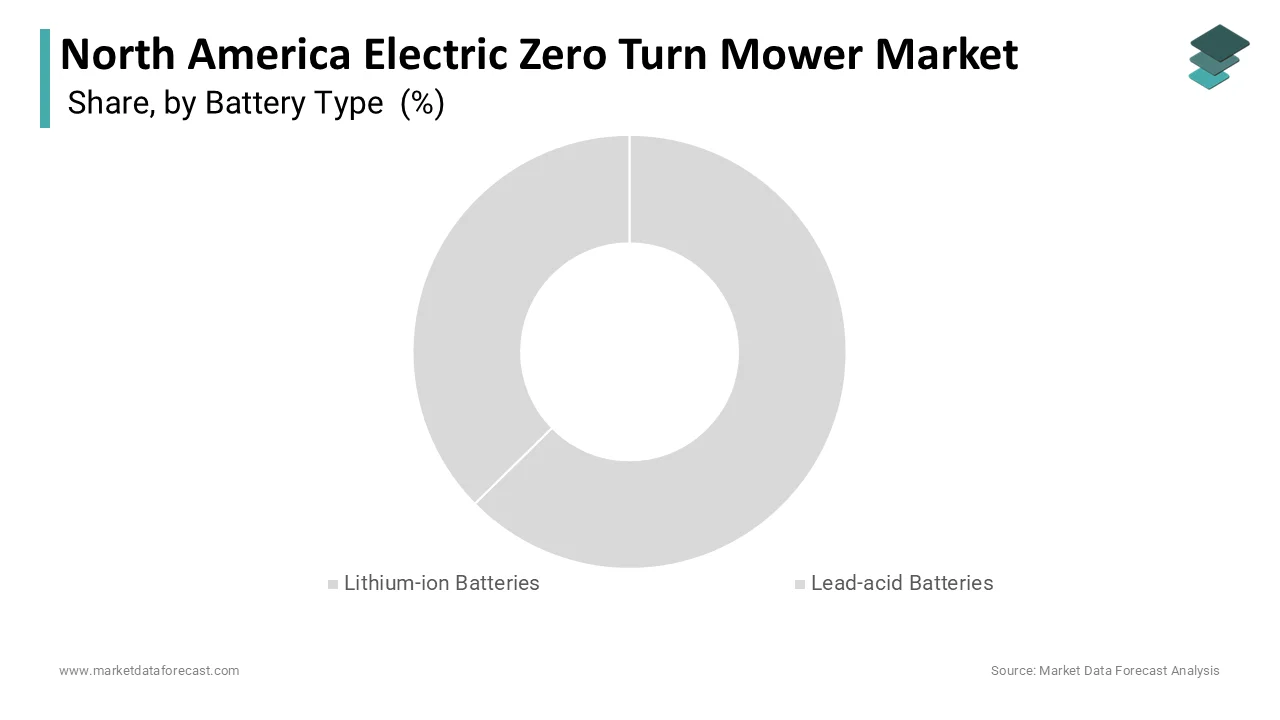
The lead-acid batteries segment is on the rise and is expected to be the fastest-growing segment in the market by witnessing a CAGR of 4.8% from 2025 to 2033. The segment's expansion is driven by renewed interest in entry-level electric mower applications and specific commercial use cases where extended operating times are not critical requirements. This unexpected growth path shows strategic market positioning by manufacturers targeting price-sensitive segments and emerging applications where cost considerations outweigh performance advantages. The fundamental cost advantages of lead-acid battery technology continue to drive market expansion in price-sensitive segments where initial purchase price considerations outweigh long-term performance benefits. Lead-acid battery systems cost less than equivalent lithium-ion alternatives at initial purchase, making electric zero-turn mowers more accessible to budget-conscious residential consumers and small commercial operators. Entry-level electric mower models utilizing lead-acid batteries can be priced lower than lithium-ion equivalents, creating opportunities for manufacturers to penetrate market segments previously dominated by gasoline-powered equipment. The simplicity of lead-acid technology reduces manufacturing complexity and component costs, enabling manufacturers to offer competitively priced electric mower options while maintaining acceptable profit margins. Small landscaping businesses operating on tight capital budgets find lead-acid powered mowers attractive for secondary equipment roles or seasonal applications where extended operating times are not essential. The established supply chain and widespread availability of lead-acid battery components ensure consistent production capabilities and competitive pricing that support market growth initiatives. Rental and shared equipment programs benefit from the lower replacement costs associated with lead-acid systems, as rental companies can more easily absorb battery replacement expenses without significantly impacting equipment rental rates. The extensive existing service infrastructure and widespread technician familiarity with lead-acid battery technology provide significant advantages that support continued market growth despite the dominance of newer alternatives. Traditional lawn equipment dealers and service centers possess established expertise in lead-acid battery maintenance, testing, and replacement procedures, eliminating the need for specialized training and diagnostic equipment required for lithium-ion systems. Many authorized equipment dealers currently maintain lead-acid battery service capabilities compared to only a portion with certified lithium-ion repair technicians, creating service accessibility advantages for lead-acid powered equipment. The simplicity of lead-acid battery diagnostics enables faster repair turnaround times and reduced service costs, with basic voltage testing and specific gravity measurements providing comprehensive health assessments without specialized equipment. Emergency service capabilities are enhanced by the widespread availability of lead-acid replacement batteries at automotive parts stores and general equipment suppliers, ensuring minimal equipment downtime for users experiencing battery failures. Warranty and liability concerns associated with high-voltage lithium-ion systems are eliminated with lead-acid technology, reducing insurance costs and regulatory compliance requirements for service providers. The established recycling infrastructure for lead-acid batteries ensures environmentally responsible disposal and material recovery.
By Cutting Width Insights
The 50 to 60 inches segment led the North American electric zero-turn mower market and captured a share of 45.5% in 2025. The segment's supremacy is because of its ability to efficiently handle medium to large property maintenance requirements while maintaining the precision and agility characteristics that make zero-turn mowers appealing to users. This size range offers a leading combination of cutting efficiency, manoeuvrability, and operational versatility, ideal for most residential and commercial needs. The 50 to 60 inches cutting width range provides the ideal balance between cutting efficiency and maneuverability that addresses the diverse needs of both residential homeowners and commercial landscaping operators across North America. Properties of a certain size, typically less than half a standard unit of land measurement, are well-suited for a specific range of mowing equipment, which offers enhanced cutting efficiency. The maneuverability of these mowers allows for effective navigation around common landscape features such as trees and various obstacles. A significant portion of properties used for business landscaping purposes falls within a size range that makes mid-sized cutting widths optimal for ground coverage. Utilizing this range of equipment helps preserve the precision necessary for delivering high-quality ground care results on business-oriented properties.s The versatility of this size range accommodates varying grass types and terrain conditions, from flat residential lawns to moderately sloped commercial properties, ensuring broad market applicability. Equipment weight and power requirements remain manageable within this cutting width range, allowing manufacturers to optimize battery capacity and motor performance for extended operating times without excessive equipment size or cost. The balance between cutting width and turning radius enables efficient mowing patterns that minimize overlap and reduce overall mowing time compared to smaller cutting widths. The segment's popularity among rental equipment operators reflects its suitability for diverse customer requirements and property types. The 50 to 60 inches cutting width segment offers optimal cost-performance ratios that make electric-turn mowers accessible to broader market segments while delivering compelling value propositions for both residential and commercial users. Equipment pricing within this segment strikes a favourable balance between cutting capacity and affordability. The optimized power-to-weight ratios achieved in 50–60-inch mowers enable manufacturers to utilize standard battery capacities and motor configurations that reduce production costs while maintaining acceptable performance standards. Residential consumers seeking premium lawn care equipment find 50-60 inch electric zero turn mowers provide professional-grade cutting capabilities at price points that align with discretionary spending budgets. Commercial landscaping businesses benefit from the segment's balance of productivity and versatility, allowing single equipment investments to serve diverse property types and client requirements without compromising operational efficiency. Financing options and lease programs are more readily available for 50–60-inch mowers due to their established market demand and proven resale value, making capital investment decisions more accessible for small business operators. The segment's popularity has driven economies of scale in manufacturing and component sourcing, resulting in improved quality-to-price ratios that further enhance market accessibility and adoption rates.
The more than 60 inches segment is expected to exhibit a noteworthy CAGR of 12.3% over the forecast period, owing to increasing demand for high-capacity mowing solutions that can efficiently handle large property maintenance requirements while delivering the environmental and operational benefits of electric propulsion technology. The expanding commercial landscaping sector and increasing prevalence of large residential properties create substantial demand for high-capacity electric zero-turn mowers with cutting widths exceeding 60 inches. Large residential properties, particularly in suburban and rural markets, have driven demand for wider cutting widths that can reduce mowing time and improve operational efficiency for homeowners managing acres of property. Golf course maintenance operations, which require specialized high-capacity mowing equipment for fairways and rough areas, represent a significant market segment with specific requirements for 60+ inch cutting widths that electric technology can now effectively address. Municipal park maintenance departments have increasingly adopted electric zero-turn mowers for large open space management. The trend toward managed community developments, including homeowners associations and commercial real estate properties with extensive common areas, has created demand for professional-grade equipment that can efficiently maintain large grassed areas. Agricultural applications, including orchard and vineyard maintenance, have emerged as niche market opportunities where electric zero-turn mowers with wide cutting widths offer environmental and operational advantages over traditional tractor-mounted equipment. Continuous technological advancements in electric motor systems, battery management, and structural engineering have enabled manufacturers to develop larger cutting-width electric zero-turn mowers that overcome previous limitations related to power delivery and equipment stability. Advanced lithium-ion battery systems now provide sufficient power density and energy capacity to support 60+ inch cutting decks while maintaining acceptable operating times and charging characteristics. High-efficiency electric motor technologies, including brushless DC motors and advanced controller systems, deliver the torque and power requirements necessary for wide cutting decks while maintaining energy efficiency and reducing heat generation. Structural engineering improvements have addressed weight distribution and stability challenges associated with larger cutting widths, enabling manufacturers to produce equipment that maintains the agility and precision characteristics essential for zero-turn mower performance. Advanced cutting deck designs incorporating optimized blade configurations and airflow management systems improve cutting quality and efficiency for wider decks, reducing power requirements and extending battery life during operation. The integration of sophisticated electronic control systems enables precise speed and direction control for larger equipment, maintaining the responsive handling characteristics that make zero-turn mowers appealing to professional operators. Enhanced safety features, including improved rollover protection systems and advanced operator presence controls, address regulatory requirements and user confidence concerns associated with larger, more powerful electric mowing equipment.
By Battery Capacity Insights
The 18 to 25 Kwh segment held the leading share of 52.7% of the North American electric zero-turn mower market in 2025. The leading position of the 18 to 25 Kwh segment is credited to its ability to deliver sufficient operating time for typical mowing tasks while remaining affordable and practical for widespread adoption. This capacity range holds the leading position because it perfectly balances essential factors like efficient operational capability, value for money, and broad market accessibility for most residential and commercial uses. The 18 to 25 Kwh battery capacity range provides sufficient operating time to meet the requirements of typical residential and commercial mowing applications while maintaining cost-effectiveness and practicality for widespread market adoption. Commercial landscaping operations managing 0.5 to 2-acre properties benefit from the extended operating time provided by this capacity range, enabling completion of multiple property visits or extended work sessions without requiring mid-day charging interruptions. The balance between battery capacity and charging time ensures that equipment can be fully recharged overnight or during lunch breaks, maximizing daily productivity and minimizing operational downtime. Equipment weight and size considerations remain manageable within this capacity range, allowing manufacturers to optimize overall equipment design while maintaining maneuverability and transportability. The segment's popularity among rental equipment operators reflects its suitability for diverse customer requirements and typical usage patterns. The 18 to 25 Kwh battery capacity segment offers optimal cost-performance ratios that make electric zero-turn mowers accessible to broader market segments while delivering compelling value propositions for both residential and commercial users. Battery costs within this capacity range represent a favorable balance between operational capability and affordability. The optimized power-to-capacity ratios achieved in 18-25 Kwh systems enable manufacturers to utilize standard charging infrastructure and thermal management systems that reduce production costs while maintaining acceptable performance standards. Residential consumers seeking premium lawn care equipment find that 18-25 Kwh battery capacity provides sufficient operating time for their needs at price points that align with discretionary spending budgets. Commercial landscaping businesses benefit from the segment's balance of productivity and cost-effectiveness, allowing single equipment investments to serve diverse property types and client requirements without excessive capital expenditure. Financing options and lease programs are more readily available for 18-25 Kwh capacity mowers due to their established market demand and proven resale value, making capital investment decisions more accessible for small business operators. The segment's popularity has driven economies of scale in battery manufacturing and component sourcing, resulting in improved quality-to-price ratios that further enhance market accessibility and adoption rates.
The 26 to 35 Kwh segment is predicted to witness the highest CAGR of 18.7% from 2025 to 2033, owing to increasing demand for extended operating capabilities that can support larger property maintenance requirements and professional commercial applications while delivering the environmental and operational benefits of electric propulsion technology. The growing demand for extended operating times and professional-grade performance capabilities drives rapid adoption of 26 to 35 Kwh battery capacity electric zero-turn mowers across North American markets. Commercial landscaping operations managing properties larger than 2 acres require extended operating times to maintain productivity and service level commitments, with 26-35 Kwh capacity providing several hours of continuous operation. Municipal maintenance operations and park management departments increasingly specify higher capacity battery systems to support full-day operation schedules and reduce charging infrastructure requirements. Golf course maintenance applications require specialized equipment capable of extended operation periods to efficiently maintain fairways, rough areas, and course perimeters that demand several hours of daily mowing. Large residential properties, particularly in rural and suburban markets, drive demand for higher capacity systems that can efficiently maintain 3–10-acre properties without mid-session recharging requirements. Agricultural applications, including orchard and vineyard maintenance, have emerged as niche market opportunities where extended battery capacity enables comprehensive daily maintenance operations without equipment downtime. Continuous advancements in lithium-ion battery technology and significant cost reductions have made 26 to 35 Kwh battery capacity systems increasingly viable and attractive for North American electric zero-turn mower applications. Energy density improvements in lithium-ion cells have enabled manufacturers to pack higher capacity systems into compact form factors that maintain equipment maneuverability and weight distribution. Manufacturing scale economies and production efficiency improvements have reduced battery system costs over the years, making higher capacity systems more accessible to price-sensitive market segments. Advanced battery management systems now provide sophisticated charge optimization, thermal regulation, and performance monitoring capabilities that enhance reliability and lifespan for higher capacity installations. Fast-charging technology improvements have reduced charging times for 26-35 Kwh systems to a few hours for full capacity restoration, making extended operation schedules more practical for commercial users. The integration of smart battery monitoring and predictive maintenance capabilities reduces unexpected downtime and extends operational lifespan, improving return on investment for higher capacity battery investments. Environmental benefits associated with larger battery systems, including reduced charging frequency and extended equipment utilization periods, align with corporate sustainability objectives and regulatory compliance requirements that influence purchasing decisions.
COUNTRY LEVEL ANALYSIS
United States Electric Zero Turn Mower Market Analysis
The United States outperformed other regions in the North American electric zero-turn mower market by capturing a share of 94.5% in 2025 due to the country's extensive residential and commercial landscaping sectors, robust consumer spending power, and established distribution networks that create substantial demand for advanced lawn care equipment. Moreover, the U.S. market's size and diversity support innovation in electric mower technologies while providing opportunities for both domestic and international manufacturers to participate in various market segments. The sheer scale of the U.S. residential lawn care landscape creates unparalleled demand for electric zero-turn mowers. Each residential property typically requires dedicated mowing equipment, creating a massive installed base that drives replacement demand through regular equipment lifecycle replacements and technology upgrades. The Infrastructure Investment and Jobs Act has allocated funding for municipal park improvements and green space development that creates additional demand for professional-grade electric mowing equipment. Regional variations in property sizes and landscaping requirements create diverse market opportunities, with suburban markets in states such as Texas, California, and Florida accounting for a portion of total U.S. electric zero-turn mower sales. The concentration of affluent households in specific geographic areas creates premium market opportunities where consumers demonstrate a higher willingness to invest in advanced electric mower technologies.
Canada Electric Zero Turn Mower Market Analysis
Canada followed closely in the North American electric zero-turn mower market, with its significant residential and commercial landscaping sectors, environmental consciousness, and regulatory environment that supports advanced electric equipment adoption. In addition, the Canadian market's characteristics align closely with U.S. demand patterns while incorporating unique regional factors related to climate conditions and regulatory frameworks. Canada's position as a major market for electric zero-turn mowers is influenced by the country's commitment to environmental sustainability and carbon reduction objectives that favor electric equipment adoption over traditional gasoline alternatives. Local governance trends involving sound-level restrictions during specific periods have increased interest in landscaping tools that produce less acoustic disturbance. Environmental policy shifts aimed at reducing emissions within the maintenance sector are encouraging the transition toward machinery that does not rely on internal combustion. The prevalence of residential layouts with significant yard space supports a growing preference for high-efficiency, battery-powered mowing equipment. Regulatory frameworks and incentive programs are increasingly aligned to support the integration of sustainable technologies in property care. Commercial landscaping operations in major metropolitan areas such as Toronto, Vancouver, and Montreal have increasingly adopted electric equipment to comply with municipal environmental regulations and reduce operational costs. The harsh winter climate conditions in many Canadian regions necessitate durable equipment construction and reliable performance in extreme temperatures, creating demand for premium electric mower solutions that command higher average selling prices. Cross-border trade relationships with the U.S. provide additional market opportunities.
COMPETITIVE LANDSCAPE
The North American electric zero-turn mower market exhibits highly competitive dynamics characterized by the presence of established equipment manufacturers, specialized electric technology providers, and emerging innovative startups vying for market share across diverse application segments. The competitive landscape is shaped by factors including technological capabilities, product quality, pricing strategies, customer service excellence, and brand recognition. Large multinational companies leverage their extensive resources, global manufacturing capabilities, and comprehensive product portfolios to maintain dominant market positions through economies of scale and broad market coverage. However, specialized equipment manufacturers compete effectively by focusing on niche applications, superior technical expertise, and personalized customer service that larger competitors may struggle to replicate efficiently. The market's fragmentation creates opportunities for regional players to capture specialized segments while established companies pursue market consolidation through strategic acquisitions and partnerships. Competition intensity varies across application segments, with residential markets experiencing price-based competition while commercial segments focus on differentiation through advanced features, cutting performance, and customized solutions. The increasing importance of digital technologies and smart equipment integration has created new competitive dimensions where companies must balance traditional competitive factors with emerging requirements related to connectivity, data management, and user experience enhancement. Market participants must continuously adapt to evolving regulatory requirements, technological advancements, and changing customer preferences to maintain competitive positioning and sustainable growth trajectories.
KEY MARKET PLAYERS
Some of the companies that are playing a dominating role in the global North America electric zero-turn mower market include
- Husqvarna Group
- The Toro Company
- John Deere (Deere & Company)
- Cub Cadet (by MTD Products)
- Greenworks Tools (Global Garden Products)
- EGO Power+ (Chervon)
- Snapper (Briggs & Stratton)
- Ryobi (Techtronic Industries)
- ARIENS Company
- Hurricane Energy (Electric mower innovations)
- Toro Workman (Electric variants)
- Husqvarna Automower (Electric robotic segments)
- Cub Cadet ZT1 Electric Series
- EcoFlow
- Makita Corporation (Electric mower models)
- BLACK+DECKER (Stanley Black & Decker)
- Milwaukee Electric Tool Corporation
- Greenworks Commercial
- TurfMaster Electric Mowers (regional specialists)
- Electric Mower Company (specialty OEMs)
TOP LEADING PLAYERS IN THE MARKET
- The Toro Company stands as a leading innovator in the North American electric zero-turn mower market, leveraging its extensive experience in lawn care equipment to develop sophisticated battery-powered solutions that combine cutting-edge technology with proven reliability. The company's electric zero-turn mower portfolio encompasses both residential and commercial applications, featuring advanced battery management systems, precision cutting decks, and intuitive user interfaces that appeal to diverse customer segments. Toro's strength lies in its ability to integrate traditional mower expertise with emerging electric propulsion technologies, which creates products that maintain the performance standards expected by professional landscapers while delivering the environmental benefits of electric operation. Their commitment to innovation is demonstrated through continuous investment in research and development activities focused on battery technology, motor efficiency, and user experience enhancement. The company's extensive dealer network and service infrastructure provide customers with comprehensive support throughout the equipment lifecycle. Strategic partnerships with battery technology providers and component suppliers ensure access to cutting-edge components while maintaining quality standards. Toro's brand recognition and reputation for durability have established a strong market presence across residential, commercial, and municipal applications.
- Husqvarna Group maintains a prominent position in the North American electric zero-turn mower market through its comprehensive portfolio of innovative battery-powered mowing solutions designed for professional and consumer applications. The company's electric zero-turn mowers incorporate advanced lithium-ion battery systems, precision cutting technologies, and ergonomic design features that enhance user experience and operational efficiency. Husqvarna's commitment to sustainability drives its electric equipment development initiatives, with a focus on reducing environmental impact while maintaining superior cutting performance and reliability. Their global research and development capabilities enable continuous innovation in battery management, motor control, and cutting system technologies that differentiate their products in competitive markets. The company's extensive distribution network and service infrastructure provide customers with reliable access to equipment and support services across diverse geographic regions. Strategic acquisitions and partnerships have strengthened Husqvarna's market position while expanding technological capabilities and geographic reach. Their focus on professional user needs has established strong relationships with commercial landscaping companies and municipal maintenance operations that require reliable, high-performance electric mowing solutions.
- John Deere represents a significant force in the North American electric zero-turn mower market, bringing decades of agricultural and turf equipment expertise to develop sophisticated battery-powered mowing solutions for residential and commercial applications. The company's electric zero-turn mower portfolio emphasizes durability, precision, and advanced technology integration that appeals to both professional landscapers and discerning residential users. John Deere's strength lies in its ability to combine traditional equipment manufacturing excellence with cutting-edge electric propulsion systems, creating products that deliver exceptional performance while reducing environmental impact. Their commitment to innovation is demonstrated through substantial investment in battery technology research, motor efficiency optimization, and smart equipment connectivity that enhances user experience and operational effectiveness. The company's global manufacturing footprint ensures reliable supply chain capabilities while maintaining quality standards across diverse product lines. John Deere's extensive service network provides comprehensive support, including installation, maintenance, and technical assistance that ensures optimal equipment performance throughout operational lifecycles. Strategic market positioning has enabled the company to capture significant market share in premium segments while maintaining strong relationships with key commercial customers and municipal utilities.
TOP STRATEGIES USED BY KEY MARKET PARTICIPANTS
- Leading North American electric zero-turn mower manufacturers have increasingly focused on forming strategic partnerships with battery technology providers, motor manufacturers, and software developers to enhance their technological capabilities and accelerate product development cycles. These collaborative arrangements enable mower manufacturers to access specialized expertise in areas such as battery management systems, electric motor efficiency, and smart connectivity that are essential for competitive electric mower solutions. Partnership strategies often involve joint development initiatives that combine complementary strengths to create innovative products that address specific market needs and performance requirements. Companies are also establishing alliances with academic institutions and research organizations to support long-term innovation initiatives and emerging technology development in battery systems and electric propulsion. These strategic relationships provide valuable market intelligence and customer feedback that inform product development decisions and market positioning strategies. Additionally, partnerships with charging infrastructure providers help manufacturers offer comprehensive solutions that address customer concerns about operational limitations and charging convenience. The collaborative approach enables manufacturers to leverage partner resources and market access capabilities while reducing development risks and time-to-market for new product introductions.
- Market leaders have prioritized continuous product innovation and advanced technology development to differentiate their offerings and maintain competitive advantages in the evolving electric zero-turn mower market. This strategy involves substantial investment in research and development activities focused on improving battery performance, enhancing cutting system efficiency, and integrating advanced user interface technologies. Companies are developing next-generation electric mowers that incorporate artificial intelligence, predictive maintenance capabilities, and sophisticated data analytics to provide users with enhanced operational insights and automated performance optimization. Innovation efforts also focus on addressing emerging customer requirements related to noise reduction, environmental performance, and operational convenience that influence purchasing decisions. The development of modular product platforms enables manufacturers to offer customizable solutions that can be adapted to specific customer requirements and application needs. Companies are also investing in sustainable manufacturing processes and eco-friendly materials that align with growing environmental consciousness among consumers and commercial users. Product innovation strategies include the development of specialized cutting systems, advanced safety features, and integrated connectivity solutions that address emerging market opportunities and regulatory requirements.
- North American electric zero-turn mower manufacturers have pursued aggressive geographic expansion strategies to increase market coverage and capture opportunities in emerging markets throughout the continent. This approach involves establishing local manufacturing facilities, distribution networks, and service centers that provide enhanced customer support and reduced delivery times. Companies are targeting regional markets with high growth potential, including developing suburban areas, commercial development corridors, and regions undergoing infrastructure modernization initiatives. Market penetration strategies include developing product portfolios specifically designed for regional climate conditions, regulatory requirements, and customer preferences that vary across different geographic areas. Manufacturers are also establishing partnerships with local distributors and equipment rental companies to gain market insights and establish strong customer relationships in new territories. The geographic expansion strategy extends to cross-border opportunities, with companies developing solutions that meet regulatory standards and technical requirements in multiple jurisdictions. Additionally, manufacturers are investing in regional training programs and technical support capabilities that ensure successful product deployment and customer satisfaction in diverse market environments.
MARKET SEGMENTATION
This research report on the North America electric zero-turn mower market is segmented and sub-segmented into the following categories.
By Battery Type
- Lithium-ion Batteries
- Lead-acid Batteries
By Cutting Width
- 50 to 60 Inches
- More than 60 Inches
By Battery Capacity
- 18 to 25 kWh
- 26 to 35 kWh
By Country
- United States
- Canada