- Product Description Description
- Table of Contents TOC
- List of Table & Figure LOT
- Get Free Sample PDF Sample PDF
North America Feeding Tubes Market Size
The North America Feeding Tubes Market Size is estimated to grow from USD 0.24 billion in 2024 to USD 0.35 billion in 2033, representing a CAGR of 4.39%.
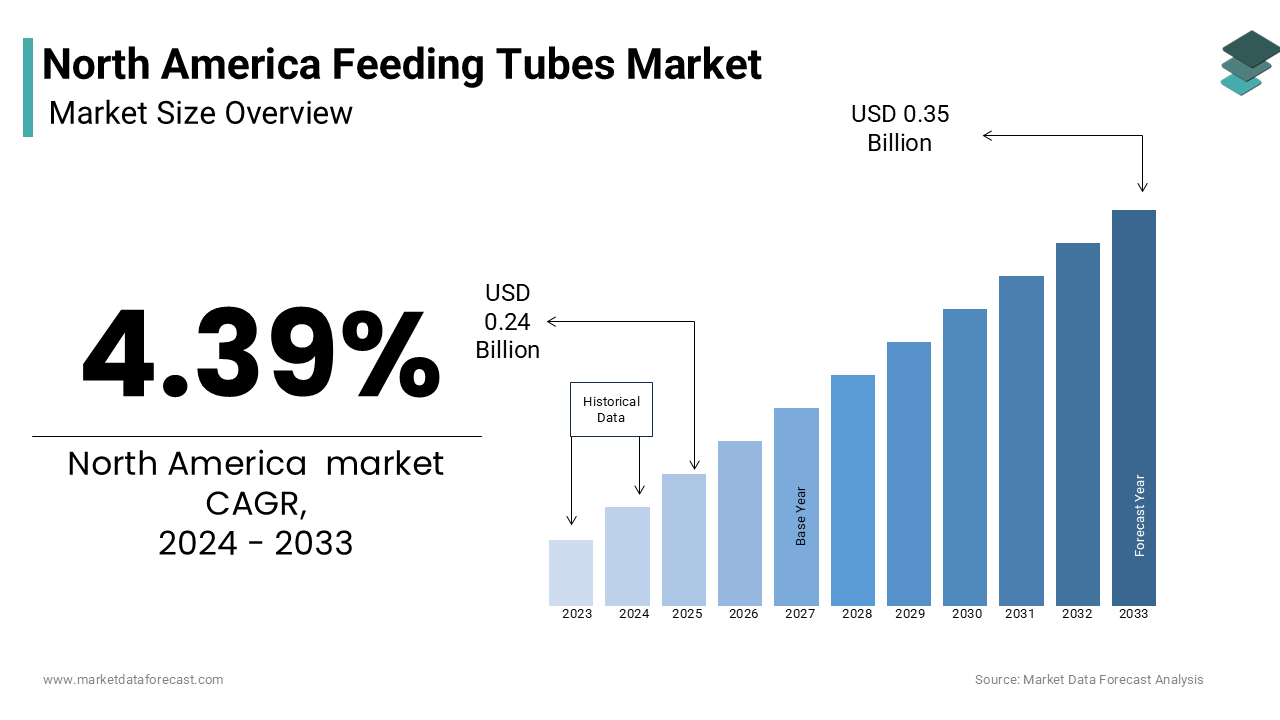
The feeding tubes are a range of medical devices designed to deliver nutrition, fluids, and medications directly into the gastrointestinal tract for patients unable to consume food orally. Their clinical deployment spans acute care hospitals, long-term care facilities, rehabilitation centers, and increasingly, home healthcare environments. The integration of feeding tubes into patient care pathways reflects broader shifts in medical management, particularly the emphasis on preserving nutritional status to improve clinical outcomes. According to the American Speech-Language-Hearing Association, approximately 15 million people in the United States suffer from some form of swallowing disorder, with prevalence rising sharply among geriatric populations.
MARKET DRIVERS
Rising Prevalence of Neurodegenerative Disorders
The escalating incidence of neurodegenerative diseases is majorly propelling the growth of the North America feeding tubes market. According to the National Institute of Neurological Disorders and Stroke, over 30,000 Americans are living with ALS at any given time, and nearly 100% of these patients develop dysphagia requiring enteral support as the disease progresses. Parkinson’s disease affects an estimated 1 million individuals in the U.S., as per the Parkinson’s Foundation, and dysphagia occurs in 80% of cases, often necessitating percutaneous endoscopic gastrostomy (PEG) tube placement. The absence of curative treatments for these disorders means that supportive care, including enteral nutrition, becomes a cornerstone of disease management.
Expansion of Home-Based and Long-Term Care Infrastructure
The structural shift toward decentralized healthcare delivery is significantly amplifying the adoption of feeding tubes in non-hospital environments, which is also driving the growth of the North America feeding tubes market. Patients with chronic conditions or post-acute needs are increasingly managed at home, supported by portable enteral pumps, caregiver training programs, and telehealth monitoring. According to the U.S. Department of Health and Human Services, the number of Americans receiving long-term services and supports (LTSS) at home rose to 4.5 million in 2023, a 28% increase over the past decade. This transition is driven by cost-efficiency, patient preference, and policy incentives such as the Money Follows the Person program, which promotes deinstitutionalization. Feeding tubes are integral to this model, particularly for pediatric patients with congenital disorders and elderly individuals with swallowing impairments. The American Academy of Pediatrics notes that over 300,000 children in the U.S. rely on enteral nutrition, with 60% managed entirely in home settings.
MARKET RESTRAINTS
Risk of Catheter-Related Infections and Mechanical Complications
The persistent risk of device-related complications, particularly infections and mechanical failures is restraining the growth of the North America feeding tubes market. Gastrostomy and nasogastric tubes create direct pathways into the body, increasing susceptibility to bacterial colonization, peristomal infections, and sepsis. According to the Centers for Disease Control and Prevention, enteral access devices contribute to nearly 12% of all healthcare-associated infections in long-term care facilities, with Staphylococcus aureus and Candida species being the most frequently isolated pathogens. A 2023 study published in Infection Control & Hospital Epidemiology found that 18% of patients with PEG tubes developed clinically significant peristomal infections within six weeks of placement. Mechanical issues further complicate care; tube dislodgement, clogging, and leakage occur in up to 30% of cases, as reported by the American Society for Gastrointestinal Endoscopy. These complications often necessitate emergency interventions, hospital readmissions, or surgical revisions, undermining patient safety and increasing healthcare costs. Pediatric patients are especially vulnerable due to smaller anatomical dimensions and higher mobility.
Variability in Reimbursement and Insurance Coverage Policies
The inconsistent reimbursement frameworks across public and private payers with a significant barrier to equitable access and sustained utilization of feeding tubes, which is additionally declining the growth of the North America feeding tubes market. In the United States, coverage for enteral devices and associated supplies varies widely among Medicare Advantage plans, Medicaid programs, and commercial insurers. According to the Medicare Payment Advisory Commission, Medicare Part B covers PEG tube placement in outpatient settings but provides limited reimbursement for replacement tubes or specialized low-profile devices, forcing patients to absorb out-of-pocket costs. A 2023 analysis by the Healthcare Financial Management Association revealed that 22% of claims for enteral pump supplies were initially denied due to documentation discrepancies or lack of prior authorization.
MARKET OPPORTUNITIES
Advancement in Smart and Connected Feeding Tube Technologies
The development of intelligent, sensor-integrated devices that enhance safety, compliance, and remote monitoring is creating new opportunities for the growth of the North America feeding tubes market. For instance, companies are incorporating impedance sensors and wireless telemetry into gastrostomy tubes to alert caregivers of blockages or misplacement before adverse events occur. According to the National Institutes of Health, 40% of feeding interruptions in home care are due to undetected clogs, which smart tubes could mitigate through early warning systems. The integration of Bluetooth-enabled enteral pumps with mobile applications allows clinicians to monitor feeding adherence and adjust regimens remotely, particularly beneficial for pediatric and cognitively impaired patients. The U.S. Food and Drug Administration’s Digital Health Center of Excellence has fast-tracked several such devices under its pre-certification program. Furthermore, artificial intelligence algorithms are being tested to predict aspiration risk based on feeding patterns and patient movement.
Growing Focus on Pediatric and Neonatal Enteral Nutrition
The specialized care of infants and children with complex nutritional needs is escalating the growth of the North America feeding tubes market. Congenital anomalies such as esophageal atresia, gastroschisis, and genetic disorders like Prader-Willi syndrome frequently necessitate long-term enteral support from birth or early infancy. According to the Centers for Disease Control and Prevention, approximately 7,000 babies are born annually in the U.S. with esophageal atresia, nearly all of whom require NG or G-tube placement. The March of Dimes reports that preterm births, which are strongly associated with feeding difficulties that affected 10.4% of all deliveries in 2023, with over 400,000 infants requiring nutritional intervention in neonatal intensive care units (NICUs). Unlike adult patients, pediatric users demand smaller-diameter, flexible, and growth-adaptive tubes that minimize tissue trauma and accommodate developmental changes. Innovations such as balloon-retained gastrostomy tubes with adjustable length and MRI-safe materials are gaining traction. Hospitals like Boston Children’s and Cincinnati Children’s have established dedicated enteral nutrition teams to optimize feeding protocols, driving demand for high-performance devices. Additionally, parental education and psychosocial support programs are improving adherence and long-term outcomes.
MARKET CHALLENGES
Psychological and Social Stigma Associated with Feeding Tube Use
The psychosocial burden experienced by patients and caregivers, which can deter timely adoption and impair quality of life is impeding the growth of the North America feeding tubes market. Visible devices such as gastrostomy buttons or external tubing often lead to feelings of self-consciousness, social isolation, and reduced participation in daily activities among adolescents and young adults. According to a 2023 study published in Quality of Life Research, 68% of adult patients with long-term feeding tubes reported moderate to severe anxiety related to body image, with many avoiding public dining or social gatherings. This emotional resistance is compounded by cultural perceptions that equate eating with independence and normalcy. Clinicians often lack training in addressing these concerns, resulting in inadequate psychosocial support during care planning.
Shortage of Trained Clinical Personnel for Feeding Tube Management
The scarcity of healthcare professionals skilled in the insertion, maintenance, and monitoring of enteral access devices is also to hinder the growth of the North America feeding tubes market. While gastrostomy placement is typically performed by gastroenterologists or interventional radiologists, ongoing management often falls to primary care providers, nurses, and home health aides who may lack specialized training. According to the American Association of Critical-Care Nurses, only 37% of registered nurses in long-term care facilities have received formal education in enteral nutrition management. This gap leads to suboptimal care, including incorrect tube positioning, improper feeding regimens, and delayed response to complications. For pediatric patients, the shortage of pediatric gastroenterologists is particularly severe, with the American Academy of Pediatrics estimating a national deficit of over 1,200 specialists. In Canada, the Canadian Association of Enterostomal Therapists notes that fewer than 500 certified wound, ostomy, and continence (WOC) nurses serve the entire population, limiting access to expert care. Telehealth consultations help bridge the gap but cannot replace hands-on interventions.
SEGMENTAL ANALYSIS
By Tube Type Insights
The gastric Tubes segment was the largest and held 42.3% of the North America feeding tubes market share in 2024 with their widespread use in both acute and chronic care settings for patients requiring long-term enteral nutrition. Gastric tubes, particularly percutaneous endoscopic gastrostomy (PEG) tubes, are the standard of care for individuals with prolonged dysphagia due to neurological conditions such as stroke, amyotrophic lateral sclerosis (ALS), and advanced dementia. According to the American Stroke Association, over 790,000 stroke survivors in the U.S. annually require nutritional support, with more than 60% transitioning to PEG tubes when oral intake becomes unsafe. The procedure is minimally invasive, typically performed on an outpatient basis, and offers a durable solution for enteral access. The Centers for Disease Control and Prevention notes that PEG placements account for over 230,000 procedures annually in the U.S., making it one of the most common interventional gastroenterology procedures. Additionally, gastric tubes are preferred in pediatric populations with congenital feeding disorders that supported by standardized protocols in neonatal intensive care units (NICUs).
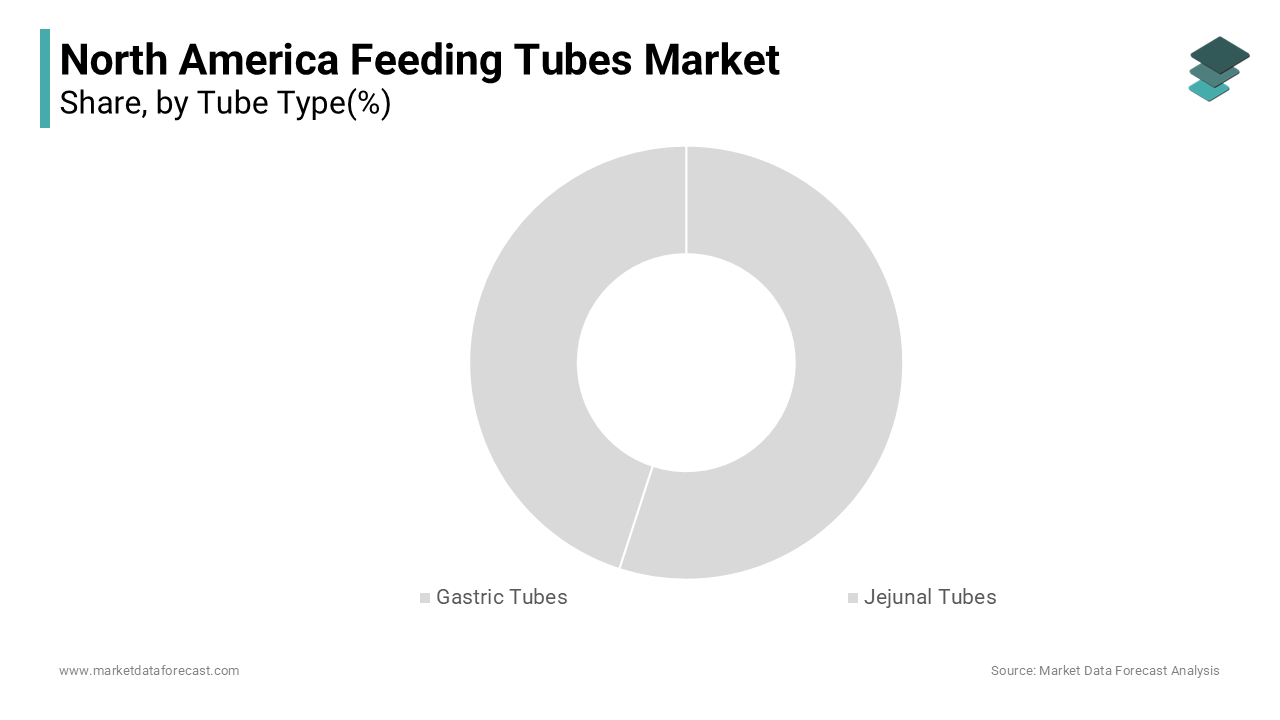
The jejunal tubes segment is lucratively growing with a CAGR of 8.7% from 2025 to 2033 with the increasing clinical recognition of their role in managing patients with impaired gastric motility or high aspiration risk. Jejunal tubes deliver nutrition directly into the small intestine, bypassing the stomach, which is for individuals with gastroparesis, severe reflux, or post-surgical bowel dysfunction. According to the American Gastroenterological Association, gastroparesis affects an estimated 5 million people in the U.S., with diabetic patients comprising nearly 40% of cases. For these individuals, gastric feeding can lead to vomiting, aspiration pneumonia, and malnutrition, making jejunal access a safer alternative. The use of post-pyloric tubes has also risen in intensive care units (ICUs), where early enteral feeding via nasojejunal or surgical jejunostomy tubes improves outcomes in ill patients. Additionally, advancements in endoscopic placement techniques, such as direct percutaneous jejunostomy (PEJ), have improved procedural success rates and reduced complications.
By Material Insights
The Polyurethane (PUR) segment was the largest and held 38.2% of the share in 2024 with the PUR’s superior biocompatibility, flexibility, and resistance to kinking and clogging attributes for long-term enteral access. Unlike polyvinyl chloride (PVC), which can degrade over time and leach plasticizers, polyurethane maintains structural integrity in gastric and intestinal environments, reducing the risk of tube failure. According to the American Society for Parenteral and Enteral Nutrition (ASPEN), PUR-based tubes exhibit a 40% lower occlusion rate compared to PVC counterparts, significantly decreasing the need for replacements and emergency interventions. The material’s radiopacity also allows for easier visualization during imaging, enhancing patient safety during placement and monitoring. Its lightweight nature improves patient comfort, particularly in pediatric and home care settings where mobility is a priority.
The silicone segment is lucratively growing with an expected CAGR of 9.2% from 2025 to 2033 with its exceptional biocompatibility, hypoallergenic properties, and suitability for patients with sensitive skin or chronic conditions requiring long-term enteral support. Silicone is increasingly favored in pediatric and neonatal applications, where tissue fragility and prolonged device contact necessitate inert, non-irritating materials. According to the Children’s Hospital Association, over 300,000 children in the U.S. rely on enteral nutrition, with silicone tubes preferred in 70% of cases involving congenital gastrointestinal anomalies. The material’s softness reduces the risk of granuloma formation and peristomal irritation, common complications with stiffer alternatives. Additionally, silicone demonstrates superior resistance to bacterial adhesion and biofilm formation, a factor in preventing catheter-related infections. A 2023 study in Infection Control & Hospital Epidemiology found that silicone feeding tubes had a 25% lower incidence of microbial colonization compared to polyurethane and PVC. The rise of home-based care has further amplified demand, as caregivers find silicone tubes easier to clean and maintain. Moreover, silicone’s compatibility with magnetic resonance imaging (MRI) makes it ideal for patients undergoing frequent diagnostic scans.
By Length Insights
The 30–60 cm segment was the largest and held 45.3% of share in 2024 with the optimal balance between anatomical fit and functional versatility across a wide range of patient demographics and clinical applications. Tubes in this length range are primarily used for nasogastric (NG) and nasojejunal (NJ) placements, which are common in acute care settings for short- to medium-term nutritional support. According to the Society of Critical Care Medicine, over 1.2 million ICU patients in the U.S. receive enteral feeding annually, with 80% initiated via NG tubes of 45–55 cm in length, tailored to average adult body proportions. Additionally, this length is suitable for pediatric patients over the age of five, broadening its applicability.
The More than 90 cm segment is projected to grow at a CAGR of 7.9% from 2025 to 2033 with the rising use of long feeding tubes in complex gastrointestinal interventions for post-pyloric and surgical jejunostomy placements. These extended-length tubes are essential for patients requiring duodenal or jejunal feeding, where the catheter must traverse the entire stomach and part of the small intestine to deliver nutrition beyond the pylorus. Long tubes are also used in patients with anatomical alterations, such as those who have undergone gastric bypass or esophagectomy, where standard-length tubes cannot reach the target site. The rise of home-based enteral nutrition for chronic conditions has further amplified demand, as longer tubes allow for greater mobility and discreet placement under clothing.
By Application Inisights
The short-Term (less than 4 weeks) segment was accounted in holding 58.3% of the North America feeding tubes market share in 2024 with the high volume of acute care interventions where temporary nutritional support is required during recovery from surgery, trauma, or illness. Nasogastric (NG) tubes, which are typically used for short-term feeding, are among the most frequently deployed medical devices in hospitals. According to the Society of Critical Care Medicine, over 65% of mechanically ventilated ICU patients receive enteral nutrition via NG tubes within 48 hours of admission, with the majority weaned off within three weeks. Postoperative patients undergoing abdominal or head and neck surgeries often experience transient dysphagia or ileus, necessitating brief enteral support. Their non-invasive nature, ease of insertion, and cost-effectiveness make them the default choice for transient nutritional needs. Unlike surgical gastrostomy tubes, NG tubes do not require anesthesia or endoscopic guidance in most cases, enabling rapid deployment.
The Long-Term (more than 4 weeks) segment is anticipated to witness a register a CAGR of 8.1% from 2025 to 2033 with the increasing prevalence of chronic neurological and degenerative conditions that necessitate sustained enteral support. Patients with advanced ALS, Parkinson’s disease, and late-stage dementia often require feeding tubes for months or years by leading to a shift from temporary NG tubes to surgically placed gastrostomy or jejunostomy devices. According to the Alzheimer’s Association, the number of Americans aged 65 and older living with Alzheimer’s dementia is expected to rise to 12.7 million by 2050, many of whom will develop severe dysphagia requiring long-term nutritional intervention. Medicaid and Medicare now cover home enteral nutrition supplies for eligible patients, reducing financial barriers.
REGIONAL ANALYSIS
United States held 74.3% of the North America feeding tubes market share in 2024 with a vast healthcare infrastructure, high prevalence of chronic diseases, and advanced clinical protocols for nutritional support. The U.S. performs over 230,000 PEG placements annually, according to the American Gastroenterological Association, and has the highest per capita utilization of enteral devices in the region. The growing aging population is projected to include 74 million adults over 65 by 2030, as per the U.S. Census Bureau that drives demand for feeding tubes in stroke, dementia, and oncology care. Federal initiatives such as the National Plan to Address Alzheimer's Disease and the CMS Innovation Center’s home-based care models have institutionalized enteral nutrition as a standard of care. Additionally, the presence of leading medical device manufacturers and a robust regulatory framework through the FDA ensures continuous innovation and product availability.
Canada feeding tubes market held 18.2% of the share in 2024. The country’s universal healthcare system ensures broad access to enteral nutrition devices in provincial long-term care and home care programs. The Canadian Institute for Health Information notes that over 120,000 seniors reside in long-term care facilities, many of whom require feeding tubes due to stroke or neurodegenerative conditions. Provincial health authorities such as Ontario Health and Alberta Health Services have standardized enteral nutrition guidelines, promoting consistent clinical adoption. The rise in home-based care, supported by programs like Home and Community Care in British Columbia, has increased demand for portable and low-profile tubes. Additionally, Canada’s focus on patient safety and infection control has driven the adoption of advanced materials like silicone and polyurethane, aligning with global best practices.
KEY MARKET PLAYERS AND COMPETITIVE LANDSCAPE
Cardinal Health, Becton, Dickinson and Company, B. Braun Melsungen AG, Avanos Medical Inc, Medtronic plc, Applied Medical Technology Inc, Vygon SA, Cook Medical, Abbott Laboratories, and Boston Scientific Corporation are some of the key market players.
The North America feeding tubes market are shaped by a integration of clinical innovation, regulatory rigor, and evolving patient expectations. Unlike commoditized medical device segments, rivalry here is not centered on price but on clinical efficacy, safety, and integration into care workflows. Market leaders distinguish themselves through engineering precision, material science advancements, and holistic support systems that extend beyond the device itself. Smaller innovators are gaining traction by addressing unmet needs like infection prevention and patient comfort, often partnering with larger firms for distribution. Regulatory compliance with FDA and Health Canada standards acts as both a constraint and a competitive filter, favoring companies with robust quality systems. Reimbursement policies further influence adoption, as payers increasingly demand evidence of reduced complications and hospitalizations.
Top Players in the North America Feeding Tubes Market
Abbott Laboratories is a leading force in the North America feeding tubes market by leveraging its deep expertise in nutrition science and medical devices to deliver integrated enteral solutions. The company offers a comprehensive portfolio of feeding tubes, including low-profile gastrostomy devices and nasogastric systems, designed for both acute and chronic care settings. Abbott’s strength lies in its seamless integration of devices with its specialized nutritional formulas, enabling clinicians to provide coordinated care. Its global footprint allows for extensive R&D investment, particularly in infection-resistant materials and patient-centric designs.
B. Braun Medical Inc. holds a prominent position in the North American enteral market through its focus on safety, precision, and innovation in feeding tube technology. The company specializes in high-performance tubes made from advanced materials such as polyurethane and silicone, emphasizing biocompatibility and durability. B. Braun’s feeding systems are engineered to minimize complications, featuring anti-reflux valves, secure fixation devices, and radiopaque markings for accurate placement. Its commitment to clinical education and training enhances adoption among gastroenterologists and care teams.
Fresenius Kabi is a key contributor to the North America feeding tubes market, known for its holistic approach to clinical nutrition and infusion technologies. The company provides a wide range of enteral access devices tailored for adult and pediatric populations, with an emphasis on ease of use and integration into complex care pathways. Fresenius Kabi’s strength lies in its end-to-end solutions, combining tubes, pumps, and nutrient formulations into cohesive systems that support seamless patient management. Its focus on home care and long-term therapy has driven innovation in discreet, low-profile designs that enhance patient dignity and mobility.
Top Strategies Used by Key Market Participants
One of the most impactful strategies employed by leading companies in the North America feeding tubes market is the integration of feeding tubes with comprehensive nutritional ecosystems. Firms are increasingly bundling devices with proprietary enteral formulas, pumps, and monitoring systems to offer end-to-end solutions that enhance clinical outcomes and brand loyalty. This approach not only simplifies procurement for healthcare providers but also ensures compatibility and safety across the care continuum.
Another strategy is the prioritization of patient-centered design, focusing on comfort, discretion, and ease of use. Manufacturers are developing low-profile buttons, soft-tip catheters, and antimicrobial surfaces to reduce complications and improve adherence in home and pediatric settings. These innovations respond to growing demand for devices that support mobility and psychosocial well-being, differentiating products in a competitive landscape.
RECENT MARKET DEVELOPMENTS
- In February 2023, Abbott Laboratories launched a new line of antimicrobial-coated gastrostomy tubes in collaboration with leading U.S. hospitals, which is designed to reduce biofilm formation and lower infection rates in long-term enteral patients.
- In June 2023, B. Braun Medical Inc. introduced a next-generation low-profile feeding button with enhanced fixation technology by improving patient comfort and reducing dislodgement incidents in pediatric and mobile adult users.
- In November 2023, Fresenius Kabi expanded its enteral nutrition training program to include virtual reality simulations for nurses by enhancing clinical proficiency in feeding tube placement and management across home and hospital settings.
- In January 2024, Moog Inc., a provider of enteral pump systems, partnered with a major U.S. home health agency to integrate smart feeding pumps with remote monitoring capabilities, which is enabling real-time clinician oversight.
- In August 2024, Conmed Corporation acquired a specialty medical device firm focused on minimally invasive gastrostomy access by strengthening its surgical enteral position.
MAREKT SEGMENTATION
This research report on the North America Feeding Tubes Market is segmented and sub-segmented based on categories.
By Tube Type
- Gastric Tubes
- Jejunal Tubes
By Material
- Polyurethane (PUR)
- Silicone
By Length
- 30–60 cm
- More than 90 cm
By Application
- Short-Term (less than 4 weeks)
- Long-Term (more than 4 weeks)
By Country
- U.S.
- Canada
- Rest of North America