- Product Description Description
- Table of Contents TOC
- List of Table & Figure LOT
- Get Free Sample PDF Sample PDF
Market Size, 2025
$326.93 MnMarket Estimate, 2026
$372.37 MnMarket Forecast, 2034
$1,054 MnCAGR, 2026–2034
13.9%Executive Summary: North America Fennel Seeds Market
- Market Scope: Regional analysis of the North American fennel seeds market covering product variants, application segments, end-user industries, and country performances (U.S. and Canada).
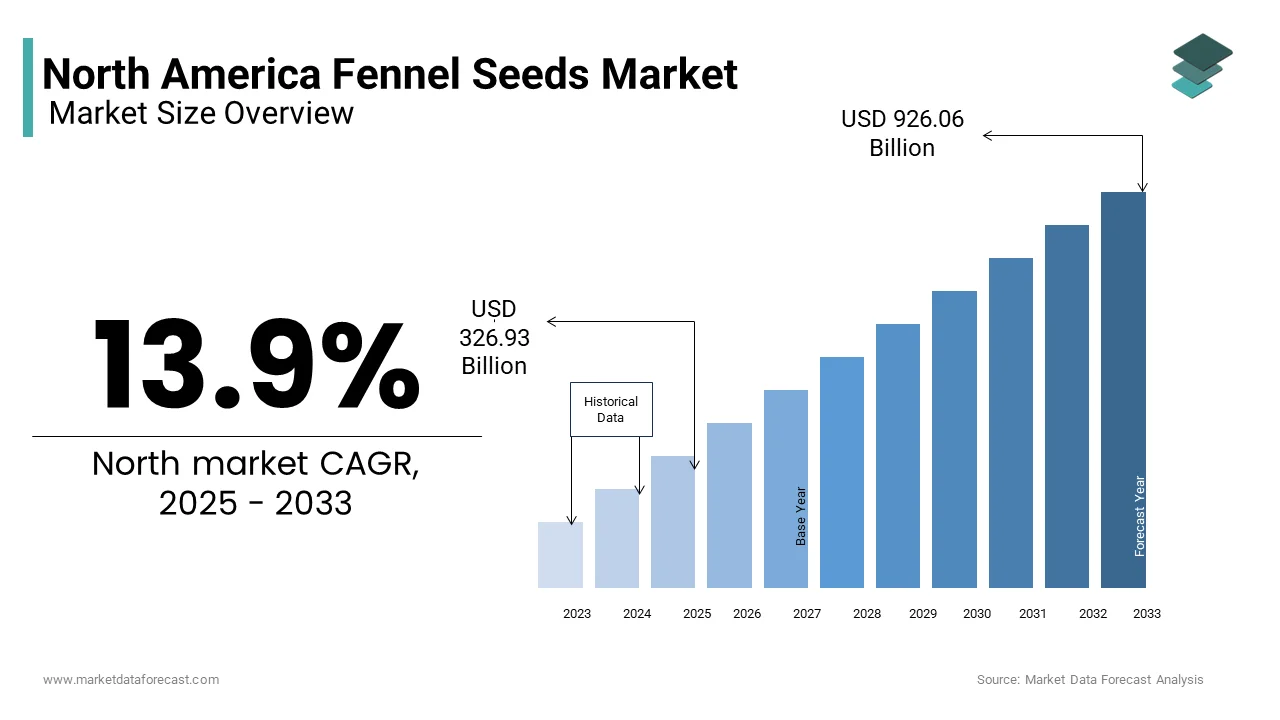
- Market Valuation: Valued at USD 326.93 million in 2025, estimated at USD 372.37 million in 2026, and projected to reach USD 1,054.80 million by 2034, registering a strong CAGR of 13.9% during the forecast period (2026–2034).
- Primary Growth Drivers: Rising consumer preference for natural remedies and plant-based wellness products, expanding adoption in functional foods and herbal supplements, and growing culinary popularity of Mediterranean and ethnic cuisines.
Key Market Segment Metrics (2026–2034)
| Category | Leading Segment (2025/2026 Position) | Fastest-Growing Segment |
|---|---|---|
| By Product | Organic (captured 58.4% share in 2025, driven by clean-label and natural ingredient trends) | Conventional (growing at a 6.5% CAGR, favored for cost-effectiveness and bulk food manufacturing) |
| By Application | Seasoning Ingredient (dominated with 42.5% consumption share due to widespread culinary uses) | Beverages (fastest-growing at over 7% CAGR, fueled by herbal infusions, teas, and digestive tonics) |
| By End User | Food Industry (prevailed by contributing 50.4% to volume via commercial processing and bakery goods) | Personal Care Industry (fastest-growing at an 8% CAGR, driven by skincare, haircare, and oral hygiene extracts) |
| By Country | United States (market leader holding 70.5% share backed by strong culinary culture and supplement demand) | Canada (stable high-growth market expanding through urban culinary scenes and natural health products) |
Major Market Players & Market Structure
Market Structure: Dynamic and competitive landscape featuring a mix of global flavoring giants, organic distributors, and specialty spice suppliers focusing on clean-label solutions, sustainability, and product diversification.
Key Companies: Symrise AG, International Flavors & Fragrances (IFF / Frutarom), Kalsec Inc., McCormick & Company Inc., Gregg’s Company, Willmar Schwabe GmbH & Co. KG, Steenbergs Organic, Just Ingredients, and Mangalam Seeds Ltd.
North America Fennel Seeds Market Size
The North American fennel seeds market size was valued at USD 326.93 million in 2025 and is anticipated to reach a valuation of USD 372.37 million in 2026 and USD 1,054.80 million by 2034, growing at a CAGR of 13.9%, from 2026 to 2034.
Fennel Seeds are botanically known as Foeniculum vulgare and are used across culinary, medicinal, and industrial applications. Widely recognized for their aromatic flavor and health benefits, fennel seeds are integral in food seasoning, herbal teas, dietary supplements, and even cosmetic formulations.
Fennel cultivation in North America has seen a steady rise over the past decade, particularly in California, which remains a key agricultural hub for specialty crops. Though the region is not a major global producer like India or Egypt, it plays a crucial role in value-added consumption and import demand.
In addition, there has been an increased consumer interest in natural remedies and plant-based wellness solutions, contributing to the rising use of fennel seeds in functional foods and digestive health products. The National Institutes of Health (NIH) also recognizes fennel seed extract as a beneficial ingredient in managing gastrointestinal discomfort and hormonal balance.
Moreover, the growing popularity of Mediterranean and Middle Eastern cuisines in the U.S. and Canada has driven culinary demand for fennel seeds, especially in bakery items, meat curing, and artisanal spice blends.
Despite these positive trends, the market faces challenges including fluctuating supply due to climate dependencies, regulatory scrutiny on herbal ingredients, and increasing competition from alternative spices and botanicals.
MARKET DRIVERS
Rising Demand in Functional Foods and Herbal Supplements
The expanding integration of fennel into functional foods and herbal supplements is one of the primary drivers behind the growth of the North American fennel seeds market. Also, fennel seed extracts have become increasingly popular in dietary supplements targeting digestive health, respiratory wellness, and women’s hormonal balance.
Fennel seeds are rich in bioactive compounds such as anethole, which exhibits anti-inflammatory and antimicrobial properties. Several peer-reviewed studies have validated fennel’s efficacy in alleviating symptoms of indigestion, bloating, and irritable bowel syndrome, prompting supplement manufacturers to include standardized fennel seed oil and powder in their product lines.
In addition, the growing presence of clean-label and plant-based nutrition products has further reinforced this trend. As per the Institute of Food Technologists (IFT), many food companies are incorporating fennel seeds into probiotic beverages, fiber-rich snacks, and herbal infusions to meet consumer demand for natural and functional ingredients.
This shift toward holistic health and preventive nutrition is significantly boosting the utilization of fennel seeds in North America, making this segment a strong contributor to market expansion.
Growing Culinary Adoption Across Diverse Cuisines
The increasing adoption of ethnic and fusion cuisines that traditionally rely on this spice is another key driver fueling the demand for fennel seeds in North America. The U.S. restaurant industry has seen a surge in Mediterranean, Indian, and Italian-inspired dishes, all of which commonly feature fennel seeds in marinades, breads, sausages, and pickling brines.
Furthermore, the rising popularity of home cooking with authentic global flavors has led to greater retail sales of whole and ground fennel seeds.
Food manufacturers are also responding to this trend by reformulating ready-to-eat meals and snack bars with fennel-derived ingredients. These shifts in culinary preferences and food innovation are playing a pivotal role in expanding the reach and relevance of fennel seeds across North America.
MARKET RESTRAINTS
Supply Chain Volatility and Climate Dependency
The volatility in supply chain logistics and the heavy dependency on favourable climatic conditions for production a major restraints affecting the North American fennel seeds market. While the U.S. grows some fennel domestically, a significant portion of its supply comes from international sources, particularly India and Turkey.
In addition, unpredictable weather patterns, including prolonged droughts and unseasonal rainfall, have disrupted fennel harvests in traditional export regions. This inconsistency affects both availability and pricing stability in the North American market, posing challenges for processors and retailers.
Additionally, transportation bottlenecks, customs delays, and geopolitical tensions can impact the timely delivery of bulk shipments. As per the U.S. International Trade Commission (ITC), extended lead times and freight cost fluctuations have made inventory planning difficult for small-scale importers and independent food businesses.
These supply-related uncertainties limit market predictability and increase costs for end users.
Limited Consumer Awareness and Misconceptions
The limited awareness among general consumers about the diverse uses and health benefits of fennel is another notable restraint impacting the North American fennel seeds market. While fennel is widely used in certain regional cuisines and herbal medicine circles, broader consumer segments often overlook it in favor of more familiar spices or synthetic alternatives.
Additionally, confusion between fennel and similar-looking seeds such as anise and star anise has contributed to misconceptions regarding flavor profiles and application methods.
Educational efforts from trade organizations and food influencers are gradually improving recognition, but widespread marketing and promotion are still lacking compared to other herbs and spices.
MARKET OPPORTUNITY
Expansion of Natural and Organic Product Lines
The expanding use of fennel in organic and natural product formulations is a promising opportunity for the North American fennel seeds market. With the rise of plant-based diets and clean-label movements, food and beverage companies are seeking minimally processed ingredients that offer both flavor and functionality.
According to the Organic Trade Association (OTA), the U.S. organic food sector grew by 3.4% in 2023, with plant-based dairy alternatives, grain-based snacks, and herbal teas leading the way. Fennel seeds, valued for their natural preservatives, prebiotic content, and digestive benefits, are well-positioned to be incorporated into new organic product innovations.
Moreover, natural personal care brands are exploring fennel essential oil in oral hygiene products, skincare creams, and aromatherapy blends. As per the Environmental Working Group (EWG), consumer demand for non-synthetic ingredients in cosmetics is at an all-time high, offering a fresh avenue for fennel-based derivatives.
Increasing Application in Functional Beverages and Gut Health Products
The increasing inclusion of fennel in functional beverages and gut health-focused products is an emerging opportunity for the North American fennel seeds market. As digestive wellness becomes a central theme in health-conscious consumption, fennel is gaining recognition for its carminative properties and ability to support gastrointestinal comfort.
Fennel tea, either alone or in combination with ginger and peppermint, has become a staple in wellness-oriented households and retail chains.
In addition, ready-to-drink (RTD) herbal beverages and kombucha brands are integrating fennel seed extract as a natural flavor enhancer and digestion-supportive additive.
MARKET CHALLENGES
Intense Competition from Alternative Spices and Herbs
The intense competition from alternative spices and herbs that offer overlapping functionalities and flavors is a significant challenge facing the North American fennel seeds market. Consumers and manufacturers often substitute fennel with anise, cumin, coriander, and caraway, which provide similar taste profiles and digestive benefits.
The annual per capita spice consumption in the U.S. has increased, but the share attributed to fennel remains relatively low compared to more frequently used spices like black pepper, turmeric, and chili powders.
Moreover, newer adaptogenic and superfood ingredients such as ashwagandha, moringa, and chia are capturing attention in the wellness space, diverting focus away from traditional herbs and spices like fennel.
Regulatory and Labeling Constraints on Herbal Ingredients
The tightening of regulatory frameworks around herbal ingredients, particularly when used in dietary supplements and therapeutic formulations, is another major challenge confronting the North American fennel seeds market.
Additionally, the Federal Trade Commission (FTC) has scrutinized health claims associated with herbal ingredients, requiring scientific substantiation before any promotional messaging can be approved. This has led to cautious marketing strategies and limited advertising scope for fennel-based products.
In Canada, Health Canada has imposed restrictions on the use of certain herbal components in over-the-counter medicines, indirectly affecting how fennel seeds can be marketed for health benefits without medical claims. These regulatory hurdles, while intended to ensure consumer safety, create barriers for small players looking to enter the market with innovative fennel-enriched offerings.
REPORT COVERAGE
| REPORT METRIC | DETAILS |
| Market Size Available | 2025 to 2034 |
| Base Year | 2025 |
| Forecast Period | 2026 to 2034 |
| CAGR | 13.9% |
| Segments Covered | By Product, Application, End-User, and Region |
| Various Analyses Covered | Global, Regional & Country Level Analysis, Segment-Level Analysis, DROC, PESTLE Analysis, Porter’s Five Forces Analysis, Competitive Landscape, Analyst Overview of Investment Opportunities |
| Regions Covered | The USA, Canada, Mexico, and the rest of North America |
| Market Leaders Profiled | McCormick & Company, Inc., Gregg’s Company, Willmar Schwabe GmbH & Co. KG, Steenbergs Organic, Just Ingredients, and Mangalam Seeds Ltd |
SEGMENTAL ANALYSIS
By Product Insights
Organic
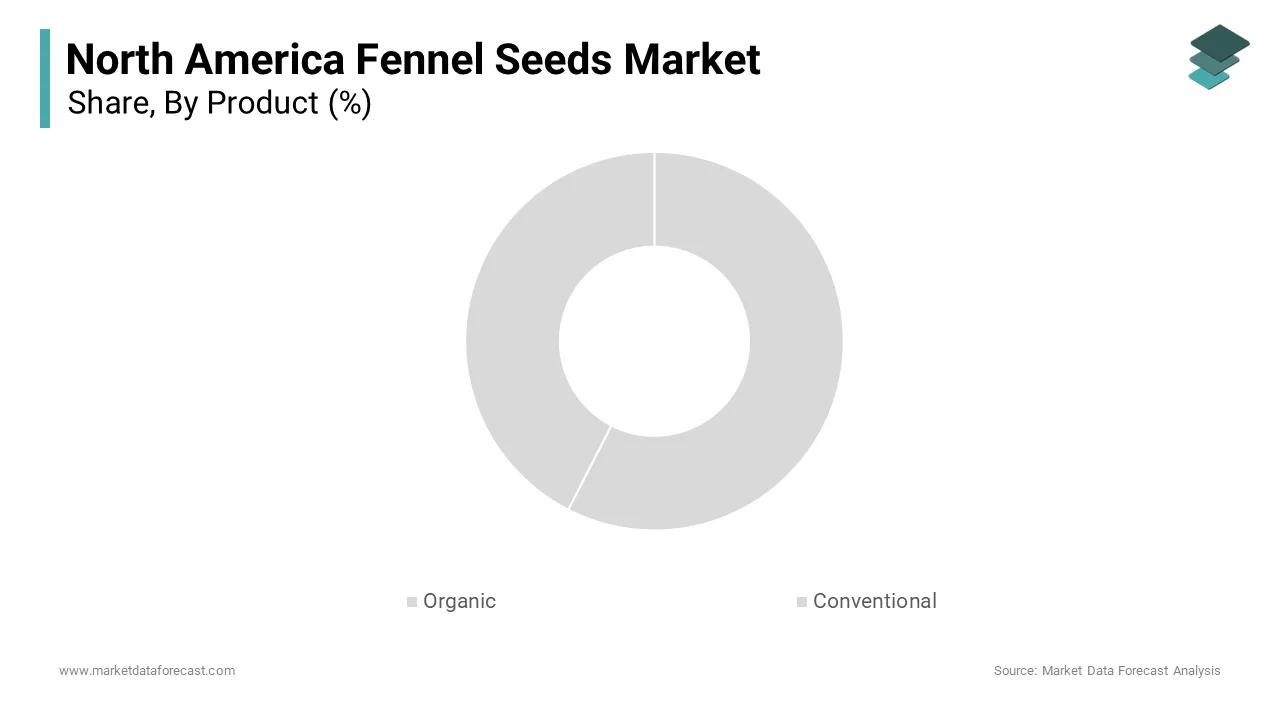
The organic segment led the market by accounting for 58.4% of total revenue in 2025. Shifting consumer preferences toward clean-label and natural ingredients across food, herbal supplements, and personal care applications is primarily attributed to the dominance of the Organic segment. In addition, the growing adoption of organic fennel seeds in functional foods and herbal teas, particularly among health-conscious consumers, is one key factor driving this segment’s growth. According to the Organic Trade Association (OTA), organic spice sales in the U.S. grew by over 10% between 2021 and 2023, with fennel being a popular ingredient due to its recognized digestive benefits and traditional use in Ayurveda and Mediterranean medicine.
In addition, the increasing demand from natural and organic supplement manufacturers, who prefer organic-certified raw materials for digestive support, hormone balance, and infant colic relief formulations, is another major driver.
Additionally, food service and retail brands are emphasizing transparency and sustainability, prompting them to source organic fennel seeds for inclusion in plant-based dishes, artisanal breads, and wellness-focused seasoning blends.
Conventional Segment
The conventional segment is emerging as the fastest-growing category in the North America fennel seeds market and is projected to grow at a CAGR of 6.5% through 2033. This growth is driven by Cost-effectiveness, widespread availability, and expanding industrial applications where organic certification may not be a prerequisite, which is driving the growth of the conventional segment. In addition, the increasing use of conventional fennel seeds in large-scale food manufacturing, especially in meat processing, bakery goods, and ready-to-eat meals, where flavor consistency and bulk procurement are prioritized, is a primary growth catalyst. Also, many mainstream processors are integrating fennel into spice blends and flavor enhancers without requiring organic labeling, which helps reduce production costs.
Moreover, the personal care industry is adopting conventional-grade fennel oil in fragrance compositions and skincare products, where sourcing flexibility allows for broader application across price-sensitive consumer markets. Also, fennel-derived essential oils are gaining traction in aromatherapy and oral hygiene products due to their antimicrobial and soothing properties.
Lastly, the affordability and accessibility of conventional fennel seeds make them a preferred choice for independent retailers, ethnic grocery stores, and small-scale herbalists.
By Application Insights
Seasoning Ingredient
The seasoning Ingredient segment dominated the market by capturing 42.5% of total consumption in 2023. Widespread culinary use of fennel seeds in various regional and global cuisines is largely the reason behind the leading position of the seasoning Ingredient segment.
Moreover, the growing popularity of Mediterranean, Italian, Indian, and Middle Eastern dishes that traditionally feature fennel seeds is one of the key reasons behind this segment’s dominance.
Additionally, the expansion of artisanal and gourmet food markets has reinforced the use of fennel seeds in specialty seasonings, charcuterie rubs, and fermentation-based recipes.
Furthermore, the rise in home cooking trends, especially during and after the pandemic, has led to higher retail purchases of whole fennel seeds for DIY meal preparation.
Beverages
The beverages segment is emerging as the fastest-growing application area in the North America fennel seeds market and is projected to expand at a CAGR of over 7% from 2025 to 2033. Rising consumer interest in herbal infusions, digestive tonics, and functional beverages that incorporate fennel seed extract or infusion is fuelling the swift rise of the beverages segment. In addition, the increasing integration of fennel in herbal tea and kombucha products is a primary growth driver. According to the Tea Association of the USA, herbal tea sales increased by nearly 12% between 2020 and 2023, with fennel-based blends gaining traction for their calming and digestion-enhancing properties.
The rise of ready-to-drink (RTD) herbal never, particularly among younger consumers seeking natural hydration alternatives, is another key factor.
Additionally, wellness-focused beverage brands are using fennel seed water and sprouted fennel powders in probiotic drinks and detox waters.
These developments position the Beverages segment as a key engine of growth within the broader fennel seeds market in North America.
By End User Insights
Food Industry
The food industry prevailed in the market by contributing 50.4% to the total volume in 2025. This dominant position stems from the extensive use of fennel seeds in commercial food processing, bakery items, meat curing, and spice blends is largely due to the dominant position of the food industry. In addition, the rising incorporation of fennel seeds in plant-based and alternative protein products, where they serve as flavoring agents and digestibility aids, is one of the main reasons behind the food industry’s leading role. Also, plant-based meat producers are leveraging fennel’s aromatic profile to enhance savory flavors while reducing reliance on synthetic additives.
The growth of artisanal and ethnic cuisine-based food manufacturing, particularly in urban centers like New York, Toronto, and Los Angeles, is another major driver. As per the Specialty Food Association, fusion cuisine and global flavor trends have spurred greater use of fennel in ready-to-cook meals, spice packets, and frozen entrees tailored for home chefs and quick-service restaurants.
Additionally, the foodservice sector’s increasing emphasis on authentic flavor profiles has led to expanded usage in cafes, bakeries, and fine dining establishments. Restaurants and packaged food companies alike are incorporating fennel seeds into signature dishes, aligning with consumer demand for bold and heritage-inspired tastes.
These factors ensure the continued dominance of the food industry as the largest consumer of fennel seeds in North America.
Personal Care Industry
The personal care industry is emerging as the fastest-growing end-user segment in the North America fennel seeds market and is projected to grow at a CAGR of 8% through 2033. Increasing use of fennel seed oil and extracts in skincare, haircare, and oral hygiene formulations is driving the surge of the personal care industry. Also, the rising consumer preference for natural and plant-based cosmetics, especially among millennials and Gen Z buyers, is a primary growth catalyst. Also, demand for herbal-infused beauty and wellness products has grown substantially, with fennel being highlighted for its anti-inflammatory, antimicrobial, and antioxidant properties.
Moreover, fennel seed oil is increasingly being used in oral care products such as mouthwashes and breath fresheners due to its ability to soothe inflammation and provide a refreshing effect.
Additionally, natural personal care brands are exploring fennel in baby skincare and postpartum wellness lines, citing its gentle yet effective properties in managing skin irritations and supporting hormonal balance.
COUNTRY-LEVEL ANALYSIS
United States
The United States held the largest share of the North American fennel seeds market with 70.5% of total regional consumption in 2025. This dominant position is underpinned by a strong culinary culture, a thriving herbal supplement industry, and growing demand for natural and functional ingredients across multiple sectors.
As per the U.S. International Trade Commission (ITC), annual fennel seed imports reached record levels in 2023, reflecting heightened demand from both the food and wellness sectors.
The U.S. market also benefits from rising awareness of holistic health and digestive wellness, which has led to increased use of fennel in dietary supplements and herbal teas. Beyond food, the personal care and cosmetics industry in the U.S. is adopting fennel seed oil in skincare and aromatherapy products, aligning with the region’s growing preference for natural ingredients in beauty routines.
Canada
Canada is maintaining a stable yet growing presence driven by increasing demand in food processing, herbal supplements, and niche culinary applications.
According to Statistics Canada, the country’s spice import volumes have risen steadily over the past five years, with fennel seeds seeing notable growth due to their role in both ethnic cuisine and natural health products. The Canadian health and wellness sector has seen an uptick in herbal teas and digestive support formulations containing fennel, supported by Health Canada’s recognition of fennel as a safe and beneficial botanical ingredient.
In addition, Canada’s urban culinary scene, particularly in cities like Toronto, Montreal, and Vancouver, has embraced global flavors, including those featuring fennel in artisanal breads, fermented foods, and craft spice blends.
Moreover, the Canadian organic movement has encouraged the use of organic-certified fennel seeds in certified natural supplements and eco-friendly personal care products, enhancing brand appeal among environmentally conscious consumers.
KEY MARKET PLAYERS
McCormick & Company, Inc., Gregg’s Company, Willmar Schwabe GmbH & Co. KG., Steenbergs Organic, Just Ingredients, and Mangalam Seeds Ltd. are the market players dominating the North America fennel seeds market.
Top Players In The Market
Symrise AG
Symrise is a leading global supplier of fragrances, flavors, and food ingredients, including fennel seeds. In the North American market, Symrise plays a vital role by supplying high-quality fennel seeds to food and beverage manufacturers, pharmaceutical companies, and natural product brands. The company emphasizes sustainable sourcing and innovation, ensuring that its products meet the evolving needs of consumers who prefer natural and organic ingredients. Its strong distribution network and commitment to quality make it a key player in the region.
Frutarom Industries Ltd. (now part of IFF)
As a major flavor and fragrance company, Frutarom (acquired by IFF) contributes significantly to the North American fennel seeds market through its wide range of botanical ingredients. The company sources and processes fennel seeds for use in food, dietary supplements, and herbal remedies. With a focus on research and development, Frutarom ensures the purity and potency of its fennel seed offerings, catering to health-conscious consumers and supporting product innovation across industries.
Kalsec Inc.
Kalsec is a prominent supplier of natural spice extracts and botanical ingredients, including fennel seeds. Known for its clean-label solutions, Kalsec provides fennel seed derivatives for use in functional foods, beverages, and nutraceuticals across North America. The company’s emphasis on sustainability, traceability, and consumer wellness has positioned it as a trusted partner for manufacturers seeking natural ingredient alternatives. Its expertise in spice technology enhances the value of fennel seeds in various applications.
Top Strategies Used by Key Market Participants
Product Innovation and Diversification
Key players continuously invest in developing new fennel-based products tailored for specific applications such as functional foods, herbal teas, and dietary supplements. By diversifying their portfolios, companies cater to changing consumer preferences and expand into niche markets that emphasize natural and holistic wellness.
Strategic Partnerships and Collaborations
To enhance supply chain efficiency and reach, companies form strategic alliances with farmers, distributors, and research institutions. These collaborations help ensure consistent quality, promote sustainable farming practices, and accelerate the development of innovative fennel seed applications in the food and pharmaceutical sectors.
Emphasis on Sustainability and Transparency
Market leaders are increasingly focusing on ethical sourcing, eco-friendly processing, and transparent labeling. This approach aligns with growing consumer demand for clean-label and sustainably sourced ingredients, thereby strengthening brand loyalty and enhancing competitive advantage in the North American fennel seeds market.
COMPETITION OVERVIEW
The competition in the North American fennel seeds market is marked by a blend of established players and emerging suppliers striving to capture market share through differentiation and innovation. As consumer interest in natural and functional foods grows, companies are intensifying efforts to offer premium quality fennel seeds and derived ingredients. Large firms leverage their extensive distribution networks and R&D capabilities to maintain dominance, while smaller players focus on niche segments such as organic and locally sourced products. Strategic acquisitions and partnerships are common tactics used to strengthen supply chains and broaden product portfolios. Additionally, branding and marketing play crucial roles, with companies emphasizing transparency, sustainability, and health benefits to appeal to conscious consumers. The market remains dynamic, with continuous product development and formulation enhancements shaping competitive dynamics. While traditional players retain significant influence, new entrants are challenging norms by introducing innovative applications and delivery formats, making the landscape both competitive and evolving.
RECENT HAPPENINGS IN THE MARKET
- In January 2023, Symrise AG launched a new line of natural spice extracts, including fennel seed derivatives, aimed at the clean-label food and beverage industry. This initiative enhanced its portfolio and strengthened its position in the North American market by meeting rising demand for plant-based ingredients.
- In July 2023, International Flavors & Fragrances (IFF), following its acquisition of Frutarom, integrated fennel seed sourcing operations across North America to streamline supply chain logistics and improve product consistency for end-use applications.
- In March 2024, Kalsec Inc. introduced a sustainable sourcing program for fennel seeds, partnering directly with select growers in the U.S. and Canada to ensure traceability, quality control, and environmentally responsible production methods.
- In September 2024, a leading organic spice distributor entered into a strategic partnership with a Canadian herb processor to co-develop fennel-based functional tea blends, targeting health-conscious consumers and expanding product reach in retail and e-commerce channels.
- In November 2024, one of the top natural wellness brands launched a new line of fennel seed-infused digestive wellness supplements, backed by clinical research, marking a significant move to position fennel as a key ingredient in the North American nutraceutical market.
MARKET SEGMENTATION
This research report on the North America Fennel Seeds market is segmented and sub-segmented into the following categories.
By Product
- Organic
- Conventional
By Application
- Essential Oil
- Flavor
- Seasoning Ingredient
- Beverages
By End User
- Households
- Food Industry
- Personal Care Industry
By Region
- U.S.A
- Canada