- Product Description Description
- Table of Contents TOC
- List of Table & Figure LOT
- Get Free Sample PDF Sample PDF
Market Size, 2025
$155.87 BnMarket Estimate, 2026
$164.24 BnMarket Forecast, 2034
$249.58 BnCAGR, 2026–2034
5.37%Executive Summary: North America Food Packaging Market
- Market Scope: Comprehensive regional analysis of the North American food packaging sector, covering packaging technologies, material types, retail drivers, regulatory constraints, and country-level profiles.
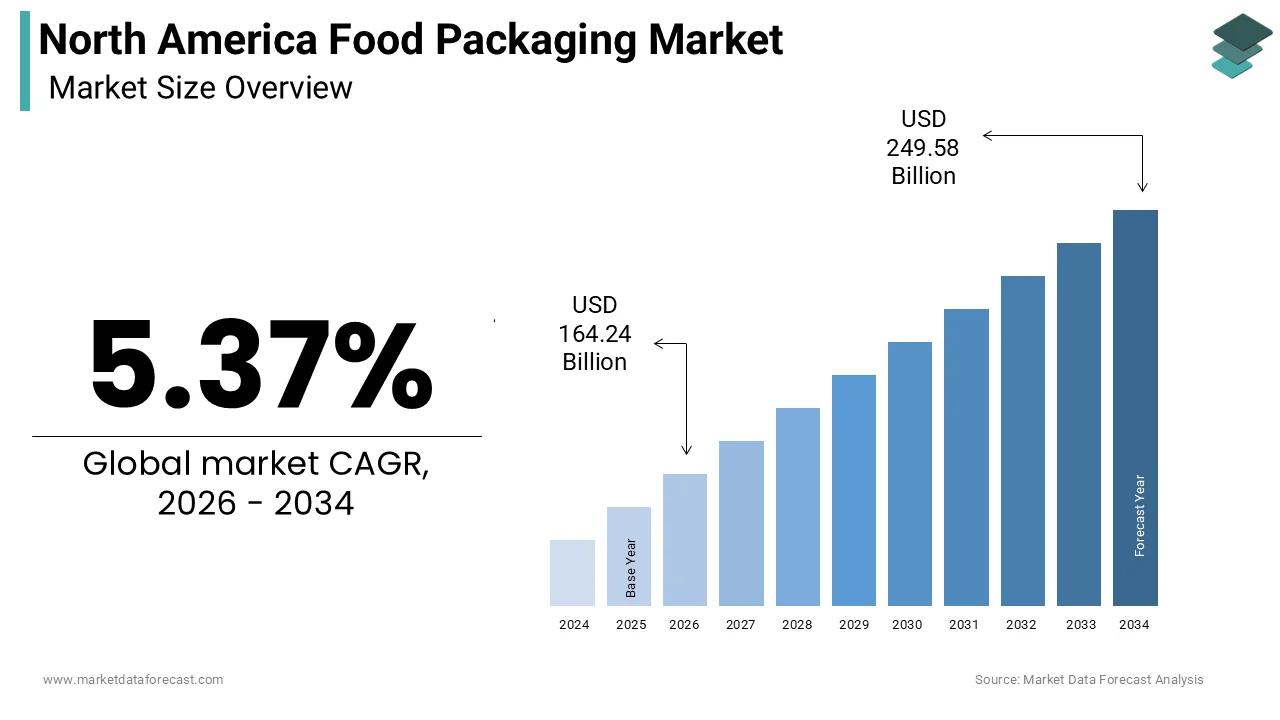
- Market Valuation: Valued at USD 155.87 billion in 2025, reaching USD 164.24 billion in 2026, and projected to expand to USD 249.58 billion by 2034, growing at a steady CAGR of 5.37% from 2026 to 2034.
- Primary Growth Drivers: Rising consumer preference for packaged and convenience foods, accelerated lifestyles, growth of online shopping and retail sales, and increasing demand for individual portion packaging.
Key Market Segment Metrics
| Category | Leading Segment (Base Position) | Fastest-Growing / High-Growth Segment |
|---|---|---|
| By Technology | Controlled, Active & Aseptic (traditional robust packaging methods safeguarding food safety and extension) | Biodegradable (growing at the highest CAGR driven by environmental concerns and strict plastic regulations) |
| By Material | Plastics (dominant market share due to low cost, versatility, durability, hygiene, and lightweight features) | Paper & Paperboard / Biodegradable materials (expanding rapidly in response to sustainability mandates) |
| By Region / Country | US (largest regional contributor backed by a massive retail sector and quick-service restaurant networks) | Mexico & Canada (expanding packaging infrastructure and rising urbanized consumption habits) |
Major Market Players & Industry Landscape
Market Structure: Highly competitive landscape featuring major food processing corporations, packaging machinery leaders, and material manufacturers navigating environmental regulations and recycling infrastructure enhancements.
Key Companies: Kraft Foods, Berry Plastics, PepsiCo, DINE Marketing, Tetra Pak, Beam Suntory, AmeriPak Inc., INX International Packaging, Impact Plastics, Kellogg's Co., CSI Closure Systems International, McCain Foods, Cargill Inc., and ConAgra Foods Inc.
 Download Free Sample Report
North America Food Packaging Market Size
The size of the North American food packaging market was expected to be worth USD 155.87 billion in 2025 and is anticipated to be worth USD 249.58 billion by 2034, up from USD 164.24 billion in 2026, growing at a CAGR of 5.37% during the forecast period.
Food packaging is the design, production, and distribution of protective materials for food products across the United States and Canada. According to the Environmental Protection Agency, containers and packaging constitute 28.1% of municipal solid waste generation, amplifying the environmental implications of packaging choices. These statistics demonstrate how packaging directly influences both food conservation efforts and waste management challenges within the region. Innovations in sustainable solutions are increasingly shaping industry dynamics as stakeholders seek to balance functionality with ecological responsibility.
MARKET DRIVERS
Rising E-Commerce and Food Delivery Services
The proliferation of online grocery shopping and food delivery platforms is driving the growth of the North America food packaging market. This exponential expansion creates substantial demand for durable, leak-proof, and temperature-controlled packaging materials that ensure product integrity during last-mile delivery. As consumers increasingly rely on digital channels for meal procurement, manufacturers must innovate packaging designs that withstand logistical stresses while maintaining visual appeal. The shift toward convenience-driven consumption patterns further amplifies the need for single-serve and ready-to-eat formats that require specialized packaging structures. Companies are investing heavily in materials that offer superior barrier properties against moisture and oxygen to preserve freshness throughout extended supply chains.
Consumer Preference for Sustainable Solutions
The growing consumer inclination toward environmentally friendly packaging options, as brands respond to ecological concerns, is accelerating the growth of the North America food packaging market. This trend reflects a significant shift in purchasing behavior where shoppers actively seek recyclable, biodegradable, or compostable packaging alternatives. Manufacturers are compelled to reformulate materials and adopt circular economy principles to align with these evolving expectations. Regulatory pressures from governmental bodies further accelerate this transition by mandating reduced plastic usage and enhanced recycling infrastructure. The integration of bio-based polymers and plant-derived materials becomes increasingly prevalent as companies strive to minimize their carbon footprint. This driver not only influences material selection but also reshapes entire supply chain operations to prioritize sustainability metrics alongside traditional performance indicators.
MARKET RESTRAINTS
High Costs of Sustainable Material Adoption
The elevated expenses associated with implementing eco-friendly packaging materials are impeding the growth of the North America food packaging market. This low recycling rate complicates the economic viability of sustainable alternatives, which often require specialized processing facilities and higher raw material costs. Small and medium-sized enterprises particularly struggle to absorb these additional expenditures without compromising profit margins or passing costs to consumers. The transition from conventional plastics to biodegradable or compostable options demands significant capital investment in new machinery and training programs. Supply chain disruptions for bio-based materials further exacerbate cost volatility, making long-term planning challenging for manufacturers. These financial barriers slow the widespread adoption of green packaging solutions despite growing regulatory and consumer pressure.
Complex Recycling Infrastructure Limitations
The fragmented and inefficient recycling systems are also impeding the growth of the North American food packaging market. This inadequate infrastructure creates uncertainty for manufacturers who invest in recyclable packaging that may not actually be processed effectively. Consumers often face confusion regarding proper disposal methods, leading to high contamination levels that render batches unrecyclable. Municipalities lack standardized sorting technologies and funding to handle diverse packaging materials efficiently. The absence of uniform regulations across different states and provinces further complicates compliance efforts for national brands. These systemic limitations discourage innovation in recyclable designs as companies question the actual environmental benefit of their efforts.
MARKET OPPORTUNITIES
Advancements in Smart Packaging Technologies
The integration of intelligent features into packaging is expected to fuel the growth of the North America food packaging market. Smart packaging solutions incorporating sensor indicators and QR codes enable real-time monitoring of freshness, temperature, and authenticity. These technologies provide valuable data to both consumers and retailers, improving supply chain transparency and reducing waste through better inventory management. As digital connectivity becomes ubiquitous, packaging serves as an interactive platform for brand storytelling and customer loyalty programs. The ability to track the product journey from production to consumption builds trust and ensures compliance with safety standards. Manufacturers can leverage these innovations to differentiate their offerings in a crowded marketplace while addressing consumer demands for information and convenience. Investment in research and development for cost-effective smart packaging solutions will unlock new revenue streams and strengthen competitive positioning.
Expansion of Bio-Based and Compostable Materials
The development of innovative bio-based and compostable packaging materials is also set to fuel the growth of the North America food packaging market. These materials, derived from renewable resources such as corn, starch, sugarcane, or mushroom mycelium, provide viable alternatives to petroleum-based plastics. Advances in material science have improved the durability, barrier properties, and cost competitiveness of these eco-friendly options. Regulatory incentives and corporate sustainability commitments further accelerate adoption rates across various food segments. Partnerships between packaging manufacturers, agricultural producers, and waste management firms create circular ecosystems that support material sourcing and end-of-life processing. This opportunity enables companies to reduce dependency on fossil fuels while meeting consumer expectations for environmentally responsible products.
MARKET CHALLENGES
Regulatory Compliance and Standardization Issues
The complex web of varying regulations across different jurisdictions acts as a major barrier to the growth of the North America food packaging market. Manufacturers must constantly adapt to changing requirements regarding material composition, labeling, recycling symbols, and chemical safety standards. The lack of harmonized regulations between the United States, Canada, and Mexico complicates operations for companies serving the entire North American region. Compliance costs escalate as businesses invest in legal expertise, testing protocols, and documentation systems to meet diverse regional mandates. Failure to adhere to these regulations can result in substantial fines, product recalls, and reputational damage.
Supply Chain Volatility and Raw Material Scarcity
The instability in global supply chains and scarcity of key raw materials is disrupting production schedules and increasing costs, which is degrading the growth of the North America food packaging market. Geopolitical tensions, trade disputes, and natural disasters frequently interrupt the flow of essential inputs such as resins, papers, and metals. Manufacturers face difficulties in securing consistent quality and quantity of materials needed for packaging production, leading to delays and price fluctuations. The transition to bio-based materials introduces additional vulnerabilities, as agricultural outputs depend on weather conditions and crop yields. Limited availability of specialized recycling infrastructure further constrains the supply of post-consumer recycled content required for sustainable packaging initiatives. These disruptions force companies to diversify suppliers, hold larger inventories, and explore alternative materials, all of which increase operational complexity. Building resilient supply chains through strategic partnerships and vertical integration becomes crucial for mitigating these risks.
REPORT COVERAGE
| REPORT METRIC | DETAILS |
| Market Size Available | 2025 to 2034 |
| Base Year | 2025 |
| Forecast Period | 2026 to 2034 |
| CAGR | 5.37% |
| Segments Covered | By Technology, Material, And Region |
| Various Analyses Covered | Global, Regional & Country Level Analysis; Segment-Level Analysis; DROC, PESTLE Analysis; Porter’s Five Forces Analysis; Competitive Landscape; Analyst Overview of Investment Opportunities |
| Regions Covered | US, Canada, and the Rest of North America |
| Market Leaders Profiled | Kraft Foods, Berry Plastics, PepsiCo, DINE Marketing, Tetra Pak, Beam Suntory, AmeriPak, Inc, INX International Packaging, Impact Plastics, Kellogg's Co, CSI Closure Systems International, McCain Foods, Cargill Inc, and ConAgra Foods, Inc |
SEGMENTAL ANALYSIS
By Technology Insights
The aseptic packaging segment was the largest, accounting for 44.2% of the North America Food Packaging Market share in 2025 due to its unparalleled ability to extend shelf life without refrigeration. This technology sterilizes both the product and the packaging material separately before filling them in a sterile environment. Aseptic solutions directly address this issue by preserving nutritional value and safety for months. Aseptic packaging often uses lighter materials compared to traditional cans or glass, which reduces overall waste volume. Dairy juice and liquid egg products heavily rely on this technology for distribution across vast geographical areas. Consumers appreciate the convenience of ambient storage, which lowers energy costs for retailers and households. Manufacturers benefit from reduced logistics expenses since cold chain infrastructure is not required. The dominance of this segment stems from its proven reliability, cost efficiency, and alignment with sustainability goals through material reduction.
The intelligent packaging segment is expected to grow at the fastest CAGR of 11.2% from 2026 TO 2034 with digital transformation and consumer demand for transparency. This technology incorporates sensors, indicators, and data carriers to monitor conditions and communicate information. Intelligent packaging supports these claims by providing verifiable data on freshness and origin. This surge necessitates smart solutions that ensure quality during transit and enhance user experience. Time-temperature indicators help prevent spoilage while QR codes enable traceability from farm to fork. Retailers use this data to optimize inventory management and reduce shrinkage. Consumers gain confidence through real-time access to product history and safety metrics. The integration of Internet of Things devices allows for interactive engagement and personalized marketing opportunities. Regulatory bodies increasingly support traceability initiatives, which further accelerates adoption. Companies investing in intelligent systems gain competitive advantage through improved operational efficiency and brand loyalty.
By Material Insights
The plastics segment accounted for 44.3% of the North America Food Packaging Market share in 2025 due to its versatility, durability, and cost-effectiveness. These materials offer excellent barrier properties against moisture, oxygen, and contaminants, ensuring product safety. This domestic processing capability supports supply chain stability and reduces dependency on foreign markets. As per the Environmental Protection Agency, the recycling rate for PET bottles and jars was 29.1 % in 2018. Flexible plastics dominate applications such as bags, wraps, and pouches due to their lightweight nature. Rigid plastics serve as containers for dairy beverages and personal care items. Manufacturers favor plastics for their design flexibility, which allows for innovative shapes and branding opportunities. The low production cost compared to glass or metal makes plastics attractive for high-volume consumer goods. Ongoing innovations in recyclable and bio-based plastics aim to address sustainability challenges, while retaining performance advantages.
The paper and paperboard segment is likely to witness the fastest CAGR of 9.3% during the forecast period, with strong consumer preference for renewable resources. These materials are perceived as more environmentally friendly due to their biodegradability and high recyclability rates. This disparity drives brands to switch to paper-based alternatives to improve their sustainability profiles. Paper packaging meets this demand by offering compostable options for dry goods and frozen foods. Advances in coating technologies have enhanced barrier properties, allowing paper to replace plastics in some liquid applications. E-commerce growth further boosts demand for corrugated boxes and protective paper inserts. Retailers promote paper packaging as part of their corporate social responsibility initiatives. Government incentives for using recycled content also encourage adoption. The aesthetic appeal of natural fibers aligns with premium branding strategies.
REGIONAL ANALYSIS
United States Food Packaging Market Analysis
The United States was the largest contributor, capturing 88.6% of the North America Food Packaging Market share in 2025 due to its large consumer base and advanced industrial infrastructure. The country accounts for the majority of regional revenue, driven by high demand for convenience foods and beverages. According to the United States Department of Agriculture, 30 % to 40 % of the food supply is wasted annually, with the important role of packaging in preservation. This statistic underscores the massive scale of packaging usage required to mitigate spoilage across the supply chain. This significant waste volume drives regulatory focus and innovation in sustainable packaging solutions. Strong e-commerce penetration further accelerates demand for durable shipping materials. Major food manufacturers and retailers headquartered in the United States influence regional trends and standards. Investment in research and development remains high as companies seek competitive differentiation. Consumer awareness of environmental issues prompts brands to adopt eco-friendly materials rapidly. The presence of key technology providers supports the adoption of smart and active packaging systems.
Canada Food Packaging Market Analysis
Canada food packaging market was ranked second, holding an 8.2% share in 2025, with strong regulatory frameworks and environmental consciousness. The country emphasizes sustainable practices and circular economy principles in its packaging industry. Statistics Canada data indicates that household spending on food continues to rise, driving demand for protective packaging solutions. This economic trend supports steady growth in packaging consumption across various food categories. The Government of Canada has implemented strict regulations on single-use plastics, which accelerate the shift toward alternative materials. These policies compel manufacturers to innovate with compostable and recyclable options. The Canadian food export sector relies heavily on robust packaging to maintain quality during international transit. Cold climate conditions increase the need for insulated and durable packaging for frozen goods. Consumer preference for locally sourced and organic products influences packaging design toward natural aesthetics. Collaboration between government, industry, and consumers fosters a supportive environment for green initiatives. Investment in recycling infrastructure improves material recovery rates and supports sustainability goals.
COMPETITIVE OVERVIEW
The North America Food Packaging Market features intense competition among established multinational corporations and specialized regional players. Companies compete primarily on innovation, sustainability, and cost efficiency to capture consumer loyalty and retailer contracts. The landscape is characterized by continuous product development aimed at meeting strict regulatory standards and environmental goals. Key participants leverage economies of scale to offer competitive pricing while investing in advanced manufacturing technologies. Strategic collaborations between packaging manufacturers and food brands drive customization and joint innovation efforts. Mergers and acquisitions remain common as companies seek to expand geographic reach and diversify material portfolios. The shift toward circular economy principles forces competitors to differentiate through recyclable and biodegradable offerings. Digital transformation enhances supply chain visibility and enables data-driven decision-making for optimized operations. Customer service and technical support become critical differentiators as clients require tailored solutions for complex packaging challenges. Regulatory compliance capabilities provide competitive advantage, as laws regarding single-use plastics and labeling evolve rapidly.
KEY MARKET PLAYERS
Major Key players in the North America Food Packaging Market include
- Kraft Foods
- Berry Plastics
- PepsiCo
- DINE Marketing
- Tetra Pak
- Beam Suntory
- AmeriPak, Inc
- INX International Packaging
- Impact Plastics
- Kellogg's Co
- CSI Closure Systems International
- McCain Foods
- Cargill Inc
- ConAgra Foods, Inc
Top Strategic Approaches by Key Participants
Strategies employed by leading market participants include aggressive investment in research and development for sustainable materials. Companies prioritize creating recyclable, compostable, and bio-based alternatives to traditional plastics. Expansion of manufacturing facilities in key regions ensures proximity to customers and reduces logistics costs. Strategic partnerships with technology firms enable integration of smart packaging features like freshness indicators. Focus on circular economy initiatives involves collaborating with recycling infrastructure providers to improve material recovery rates. Customization services help brands differentiate their products through unique packaging designs and functionalities. Digital marketing and transparency campaigns build consumer trust by highlighting sustainability credentials and sourcing practices.
Leading Players Contribution
- Amcor plc operates as a global leader in packaging solutions with significant influence across the North America Food Packaging Market. The company focuses on developing sustainable and innovative materials that meet evolving consumer demands for environmental responsibility. Amcor invests heavily in research to create recyclable films and rigid containers that preserve food quality while reducing waste. Their strategic partnerships with major food brands enable customized packaging designs that enhance shelf appeal and functionality. Recent initiatives include expanding production capacity for bio-based plastics and improving recycling infrastructure collaboration. Amcor emphasizes circular economy principles by designing products that are easier to recycle or compost.
- Berry Global Group Inc. specializes in engineered materials and packaging products serving diverse industries, including food and beverage. The company contributes to the North America Food Packaging Market through its extensive portfolio of protective and convenient packaging solutions. Berry Global focuses on lightweighting technologies that reduce material usage without compromising strength or barrier properties. Their commitment to sustainability drives the development of post-consumer recycled content integration in various product lines. The company actively collaborates with customers to design packaging that extends shelf life and minimizes food waste. Berry Global expands its manufacturing footprint to support regional demand and improve delivery times.
- Sealed Air Corporation provides protective packaging solutions that ensure product integrity during storage and transit within the North America Food Packaging Market. The company is renowned for its cushioning and void fill technologies that safeguard fragile food items. Sealed Air emphasizes innovation in material science to create lighter and stronger protective barriers. Their sustainable product lines include recyclable air cushions and paper-based alternatives that reduce environmental impact. The company works closely with e-commerce retailers and food distributors to optimize packaging efficiency and reduce shipping costs. Sealed Air invests in automation technologies that streamline packaging processes and minimize labor requirements. Their global reach allows them to offer consistent quality and service across different regions. The company continues to expand its portfolio with smart packaging features that enhance tracking and monitoring capabilities.
MARKET SEGMENTATION
This research report on the North American food packaging market is segmented and sub-segmented by technology, material, and region.
By Technology
- Controlled
- Active
- Intelligent
- Aseptic
- Biodegradable
By Material
- Metal
- Glass & Wood
- Paper & Paperboard
- Plastics
By Region
- US
- Canada
- Mexico
- Rest of North America