- Product Description Description
- Table of Contents TOC
- List of Table & Figure LOT
- Get Free Sample PDF Sample PDF
Market Size, 2025
$203.15 MnMarket Estimate, 2026
$219.32 MnMarket Forecast, 2034
$404.75 MnCAGR, 2026–2034
7.96%Executive Summary: North America Ginger Processing Market
- Market Scope: Regional North American ginger processing market analysis covering product types, end-use industries, country leadership frameworks, and natural ingredient adoption metrics.
- Market Valuation: Valued at USD 203.15 million in 2025, estimated at USD 219.32 million in 2026, and projected to reach USD 404.52 million by 2034, registering a CAGR of 7.96% from 2026 to 2034.
- Primary Growth Drivers: Increasing consumer preference for natural ingredients, growing demand for functional foods and beverages, rising consumption of herbal supplements, and wider adoption across food, pharmaceutical, nutraceutical, and personal care industries. Key operational trends include improvements in extraction technologies and clean-label product development.
Key Market Segment Metrics (2026–2034)
| Category | Leading Segment (2025 Position) | Fastest-Growing Segment |
|---|---|---|
| By Product Type | Ginger powder segment (held the largest share, supported by extensive use in bakery, beverages, and seasonings) | Ginger oil and extracts segment (projected to witness the fastest growth in pharmaceutical and cosmetic applications) |
| By End-Use Industry | Food and beverage industry (accounted for the dominant market share due to rising demand for natural flavoring) | Pharmaceutical, nutraceutical, and personal care industries |
| By Application / Formulation | Clean-label and organic processed ginger ingredients | Value-added functional health and aromatherapy products |
| By Region / Country | United States (dominated with an 87.3% share, benefiting from advanced processing infrastructure and FDA standards) | Canada and Mexico (witnessing steady growth driven by natural health product demand) |
Major Market Players & Market Structure
Market Structure: Competitive North American food processing landscape focused on product innovation, organic and clean-label ginger ingredients, advanced extraction technologies, sustainable sourcing, and strategic manufacturing partnerships.
Key Companies: McCormick & Company, Kerry Group plc, Olam Food Ingredients (ofi), Archer Daniels Midland (ADM), Döhler Group, Kalsec Inc., Sensient Technologies Corporation, Naturex (Givaudan), Monterey Bay Spice Company, and The Ginger People.
North America Ginger Processing Market Size
The North America ginger processing market size was valued USD 203.15 million in 2025 and is anticipated to reach a valuation of USD 219.32 million in 2026 and USD 404.75 million by 2034, growing at a CAGR of 7.96%, from 2026 to 2034.
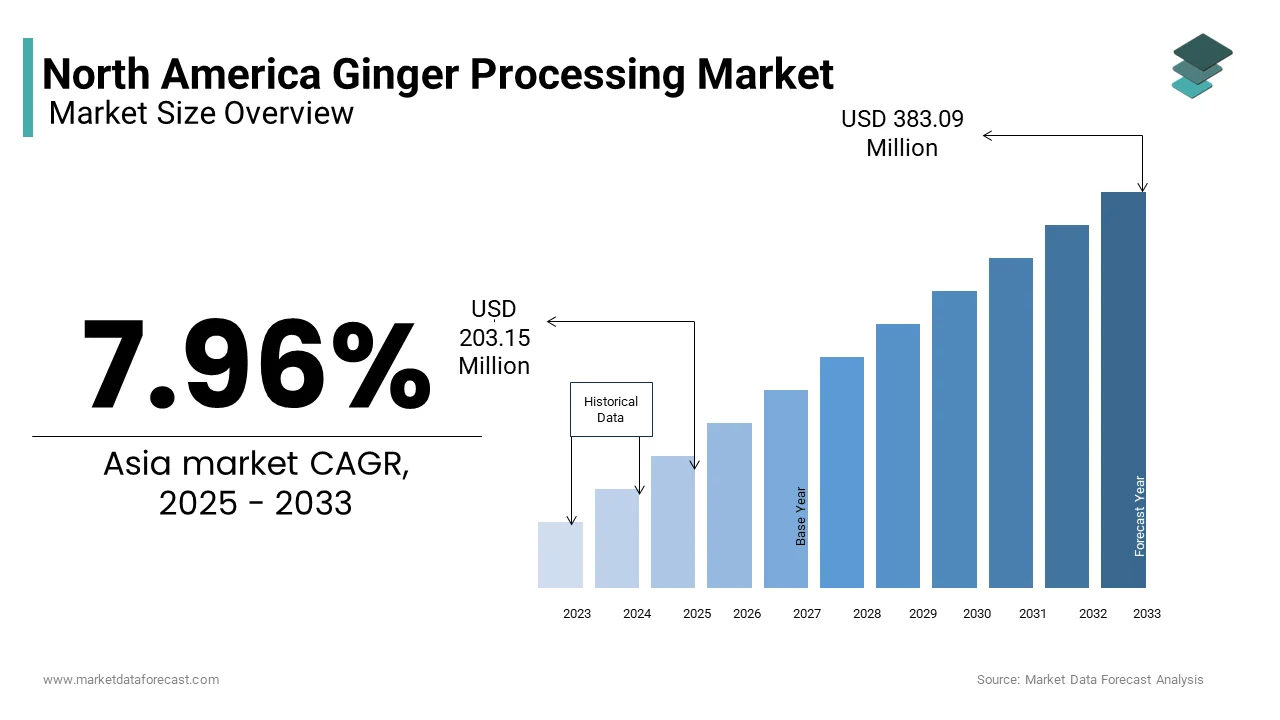
The ginger processing is the industrial transformation of raw ginger roots into value-added forms such as dried powders, essential oils, extracts, juices, and preserved segments for use in food, beverage, dietary supplements, and personal care products. Unlike direct agricultural markets, the processed ginger industry is defined by its dependency on post-harvest stabilization, microbial control, and standardized quality metrics. Furthermore, the integration of ginger into functional foods and nutraceuticals has elevated the need for advanced extraction methods, including CO₂ and cold-press techniques, to preserve bioactive compounds like gingerol and shogaol. As per the National Institutes of Health, these phytochemicals exhibit anti-inflammatory and antioxidant properties, reinforcing the ingredient’s appeal in preventive health regimens.
MARKET DRIVERS
Expanding Integration of Ginger into Functional Foods and Beverages
The incorporation of ginger into functional food and beverage formulations is propelling the growth of the North American ginger processing market. Consumers are increasingly seeking natural ingredients with scientifically supported health benefits, and ginger’s well-documented anti-nausea, anti-inflammatory, and digestive properties position it as a preferred functional additive. According to the American Gastroenterological Association, 48% of adults experiencing gastrointestinal discomfort use natural remedies, with ginger being the most frequently cited botanical. This has led to its inclusion in a growing array of products, including digestive teas, immunity-boosting shots, plant-based yogurts, and fermented beverages. According to the Beverage Marketing Corporation, sales of functional drinks containing ginger grew by 19% between 2020 and 2023, with brands like Suja, Health-Ade, and Evolution Fresh leading innovation. The rise of cold-pressed juice bars and wellness-focused cafes has further amplified demand for ready-to-use ginger concentrates and pastes that ensure consistency and potency. Additionally, the Food and Drug Administration’s recognition of ginger as Generally Recognized as Safe (GRAS) facilitates its use across product categories without stringent regulatory hurdles. Processors are responding by investing in extraction technologies that preserve gingerol concentration, ensuring efficacy in end products.
Rising Consumer Preference for Natural and Plant-Based Remedies
The shift toward natural health solutions is significantly boosting the growth of the North American ginger processing market. The integration of ginger into dietary supplements available as capsules, tinctures, and chewables has been accelerated by clinical validation of its efficacy.. Moreover, the global clean-label movement has heightened scrutiny over ingredient transparency, favoring natural extracts over synthetic additives. According to the Consumer Brands Association, 64% of shoppers now avoid products with artificial ingredients, which is further boosting demand for pure ginger powders and extracts. Processors are capitalizing on this by obtaining organic certifications and implementing blockchain traceability systems to verify origin and processing methods.
MARKET RESTRAINTS
Volatility in Raw Ginger Supply and Dependence on Imports
The heavy reliance on imported raw ginger from tropical growing regions vulnerable to climatic and geopolitical disruptions is hampering the growth of the North American ginger processing market. Over 80% of fresh ginger consumed in the U.S. is imported, with India and China supplying 65% of total volume, as per the U.S. Department of Agriculture’s Foreign Agricultural Service. For instance, India’s 2022 monsoon deficit reduced ginger production by 18%, according to the Indian Council of Agricultural Research. Furthermore, currency fluctuations and freight cost volatility exacerbate procurement challenges. The Bureau of Transportation Statistics recorded a 140% increase in trans-Pacific shipping rates between 2020 and 2022, directly inflating input costs. These supply-side vulnerabilities force processors to maintain costly buffer inventories or risk production halts, undermining operational efficiency and profit margins.
High Energy and Labor Intensity of Processing Operations
The ginger processing is inherently resource-intensive, which is requiring substantial energy inputs and manual labor at multiple stages is inhibiting the growth of the North America ginger processing market. Drying alone is a step for powder and extract production, consumes significant thermal energy. According to the U.S. Energy Information Administration states that industrial dehydration accounts for 12% of total energy use in food processing facilities, with ginger requiring longer drying cycles due to high moisture content (up to 80%). Furthermore, mechanical peeling results in 25–30% yield loss, as per the American Society of Agricultural and Biological Engineers, necessitating large volumes of raw material to achieve the desired output. Labor costs compound the challenge: much of the initial sorting and quality inspection remains manual due to the irregular shape and size of ginger rhizomes. Automation adoption is limited by the complexity of handling fibrous, uneven root structures, with only 38% of medium-sized processors using semi-automated systems, according to the Association for Advancing Automation. Additionally, compliance with FDA food safety regulations requires rigorous sanitation protocols, increasing water and chemical usage.
MARKET OPPORTUNITIES
Development of Cold-Chain and Controlled Environment Cultivation in North America
The emergence of controlled environment agriculture (CEA), including hydroponic and greenhouse-based ginger cultivation to reduce import dependency and ensure consistent raw material, shall pose new opportunities for the growth of the Americanmerica ginger processing market. According to the Association for Vertical Farming, over 120 commercial indoor farms in the U.S. and Canada are experimenting with rhizome crops, including ginger, using nutrient film techniques and LED spectral tuning to optimize growth. These systems reduce water usage by up to 90% compared to field farming and eliminate the need for chemical pesticides by aligning with organic and clean-label trends. Additionally, localized production shortens supply chains, minimizing spoilage and transportation emissions. According to the World Resources Institute, regionally sourced ingredients reduce food miles by an average of 74% by enhancing sustainability credentials. Early adopters like Local Roots Farms and Bowery Farming are already supplying premium grocery chains with domestically grown ginger, creating a premium market segment.
Expansion into Personal Care and Topical Applications
The growing use of ginger extracts in skincare, haircare, and topical wellness is likely to enhance the growth of the Americanmerica ginger processing market. Ginger’s anti-inflammatory, antimicrobial, and circulation-stimulating properties have garnered attention in the personal care sector, particularly in formulations targeting acne, scalp health, and joint pain. According to the Personal Care Products Council, over 400 new skincare products containing ginger were launched in North America between 2021 and 2023, including serums, masks, and balms. Processors are developing standardized ginger extracts with enhanced bioavailability for dermal absorption by using nanoemulsion and liposomal delivery systems. Brands like Burt’s Bees and Josie Maran have introduced ginger-infused lines, validating market acceptance. For processors, this diversification reduces reliance on food and supplement sectors, opening higher-margin revenue streams.
MARKET CHALLENGES
Maintaining Bioactive Compound Integrity During Processing
The potency of ginger’s key bioactive compounds, gingerol and shogaol during industrial processing remains a persistent technical challenge for the growth oAmericanorth America ginger processing market. These thermolabile compounds degrade rapidly under high heat, prolonged drying, and exposure to oxygen, compromising the health benefits that drive consumer demand. This degradation undermines the value proposition of ginger-based supplements and functional foods, particularly as consumers become more informed about ingredient quality. Processors face a dilemma: achieving microbial safety and shelf stability often requires thermal treatment, yet excessive heat diminishes therapeutic value. Regulatory scrutiny is increasing; the FDA has issued warnings to supplement manufacturers for inaccurate potency declarations.
Navigating Regulatory and Labeling Complexities Across Product Categories
The multi-category application of processed ginger spanning food, dietary supplements, and cosmetics creates a complex regulatory landscape whicimpedes to impedes the growth of the North America ginger processing market. For instance, while ginger can be labeled as a spice in food products, its use in supplements triggers stricter Good Manufacturing Practice (GMP) standards under DSHEA, requiring third-party testing and adverse event monitoring. The Federal Trade Commission also regulates marketing claims by prohibiting unsubstantiated assertions about disease treatment. Additionally, organic certification through the USDA National Organic Program requires rigorous documentation of sourcing and processing methods, with non-compliance resulting in loss of premium pricing.
REPORT COVERAGE
| REPORT METRIC | DETAILS |
| Market Size Available | 2025 to 2034 |
| Base Year | 2025 |
| Forecast Period | 2026 to 2034 |
| CAGR | 7.96% |
| Segments Covered | By Form, End-Use, Distribution Channel, and By Country |
| Various Analyses Covered | Global, Regional & Country Level Analysis; Segment-Level Analysis, DROC, PESTLE Analysis, Porter’s Five Forces Analysis, Competitive Landscape, Analyst Overview of Investment Opportunities |
| Regions Covered | The United States, Canada, Mexico, Rest of North America |
| Market Leaders Profiled | Green Nutra, Honsea, Inner Natural, Kangdao, Lincao, Lvli, Natural Ex, Pioneer Herb, Pure Source, World Way |
SEGMENTAL ANALYSIS
By Form Insights
The ginger powder set was accounted in holding a dominant share of the North America ginger processing market i,n 2025, owing to its widespread use in the food manufacturing sector, where standardized, shelf-stable spice formats are essential for consistent flavoring and blending. Ginger powder offers logistical advantages over fresh or liquid forms, including extended shelf life, reduced storage volume, and ease of integration into dry mixes, baked goods, and seasoning blends. According to the Institute of Food Technologists, over 80% of commercial spice blends used in North American food production contain ginger powder, including curry powders, rubs, and ready-to-eat meal seasonings. Additionally, ginger powder is a preferred format in dietary supplements due to its compatibility with capsule and tablet formulations. The U.S. Food and Drug Administration’s classification of dried ginger as a GRAS (Generally Recognized as Safe) substance facilitates its broad regulatory acceptance across product categories.
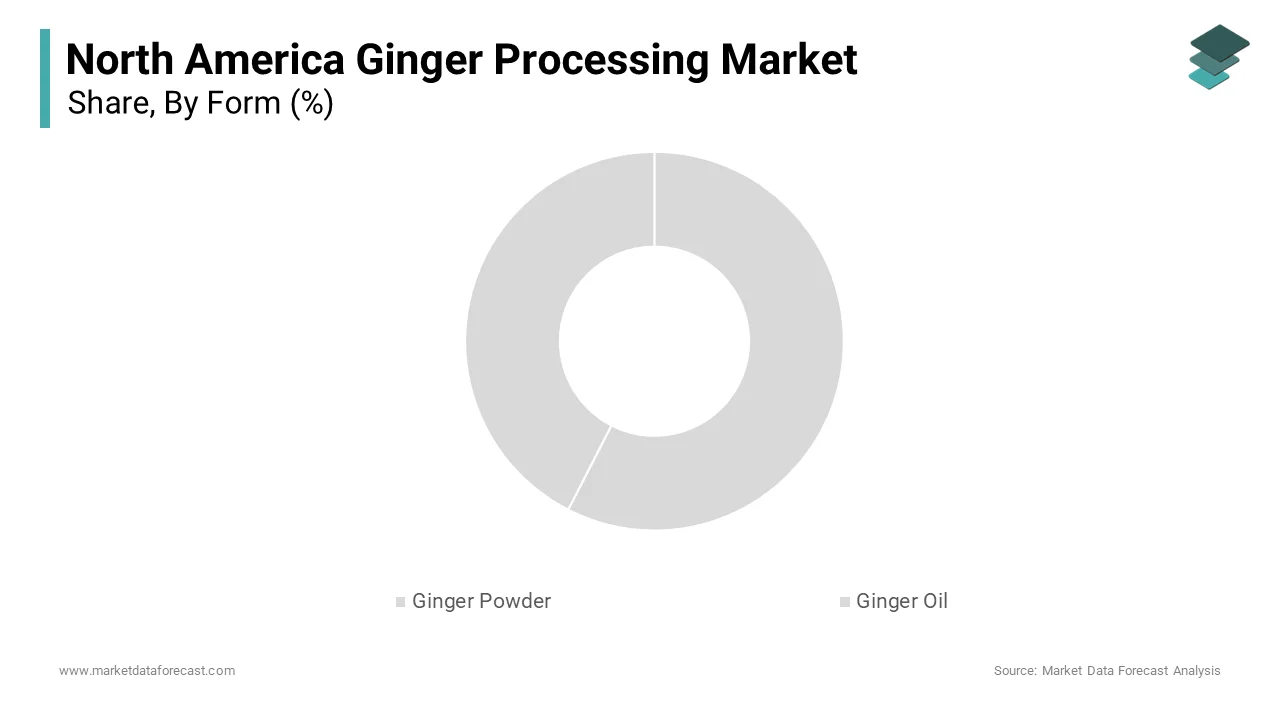
The ginger extract is expected to grow with an expected CAGR of 13.8% from,m 2025 to 2033, with the rising demand in the personal care, aromatherapy, and natural medicine sectors, where concentrated ginger extracts are valued for their bioactive potency and sensory properties. As per the American Academy of Dermatology, topical formulations containing ginger oil reduce skin redness and irritation by modulating inflammatory pathways, which is making it a sought-after ingredient in premium skincare. As per the National Association for Holistic Aromatherapy, ginger oil usage in wellness products increased by 42% between 2020 an,d 2023 with the consumer interest in natural pain relief and stress reduction. Furthermore, ginger oil is gaining traction in the functional beverage space, where micro-encapsulated oil droplets are used to enhance flavor and bioavailability without sedimentation.
By End-Use Insights
The food industry segment was the largest by capturing a prominent share of the North American ginger processing market in 202,4, with the integral role of ginger as both a flavor enhancer and functional ingredient in a wide array of processed foods. According to the Food Marketing Institute, over 1,200 new food products launched in the U.S. in 2023 contained ginger, spanning categories from plant-based meat alternatives to fermented kombucha. Additionally, the clean-label movement has favored ginger as a natural preservative and flavor modifier, reducing reliance on synthetic additives. Furthermore, the rise of home cooking and meal kits has increased demand for pre-portioned, easy-to-use ginger products. According to the Culinary Institute of America, 74% of meal kit providers include ginger in at least one weekly offering, often in paste or dried form.
The pharmaceutical industry segment is expected to grow with an expected CAGR of 11.6% due to the increasing clinical validation of ginger’s therapeutic benefits and its integration into evidence-based nutraceuticals and over-the-counter remedies. Ginger is widely recognized for its efficacy in managing nausea, particularly in pregnancy, chemotherapy, and postoperative settings. The American College of Obstetricians and Gynecologists recommends ginger as a first-line natural remedy for morning sickness, citing studies where 70% of pregnant women reported symptom relief with daily ginger supplementation. The U.S. Pharmacopeia has established monographs for ginger root powder by enabling quality benchmarking across manufacturers. Furthermore, the rise of personalized medicine and preventive health regimens has expanded the market for ginger-based capsules, tinctures, and effervescent tablets.
By Distribution Channel Insights
The supermarkets and hypermarkets segment accounted in holding 54.3% of the North America ginger processing market share in 2025, with these retailers playing a role in household grocery procurement, offering one-stop access to both food-grade and supplement-grade ginger products. According to the U.S. Census Bureau, 78% of American households shop at supermarkets at least once a week by making them the primary touchpoint for routine grocery purchases. These retailers also leverage private-label brands to offer cost-effective alternatives, capturing price-sensitive consumers. Additionally, supermarkets have enhanced their ethnic food sections to accommodate growing demand for global cuisines, prominently featuring ginger in Asian, Indian, and Caribbean spice racks. In-store promotions, recipe cards, and sampling events further drive consumer trial and brand loyalty.
The online distribution channel segment is expected to grow with a CAGR of 14.2% during the forecast period, with the increasing consumer preference for convenience, specialized product access, and digital engagement in purchasing decisions. Additionally, subscription models for ginger-based supplements and culinary staples have gained traction, ensuring recurring revenue and customer retention. The U.S. Department of Commerce reports that online sales of health and wellness products grew by 21% in 2023, outpacing overall retail growth. Direct-to-consumer brands like Gaia Herbs and Frontier Co-op have leveraged digital marketing and social media to build loyal followings, bypassing traditional retail gatekeepers.
COUNTRY LEVEL ANALYSIS
The United States was the largest contributor in the North American ginger processing market, with 87.3% of the share, as of 2025, with the U.S. setting the standard for product innovation, regulatory compliance, and market demand. According to the National Institutes of Health, 23% of U.S. adults use herbal supplements, with ginger ranking among the most popular. The country hosts the majority of large-scale processing facilities, particularly in agricultural states like California and Florida, where climate-controlled infrastructure supports import handling and extraction. The U.S. Food and Drug Administration’s stringent quality protocols ensure high product standards, influencing global best practices. Additionally, the presence of major food and pharmaceutical companies fosters continuous R&D investment. Urbanization, rising health consciousness, and the popularity of global cuisines further amplify demand, which is making the U.S. the undisputed leader in both consumption and processing innovation.
Canada was positioned second by occupying 11.2% of the North American ginger processing market share in 2025. Health Canada regulates natural health products under strict licensing by ensuring product safety and efficacy, which builds consumer trust in ginger-based supplements. According to the Canadian Health Measures Survey, 38% of adults use natural health products regularly, with ginger being a common choice for digestive and anti-inflammatory support. Retailers like Loblaws and Whole Foods Market have expanded their organic and ethically sourced ginger offerings, aligning with national sustainability goals. The country’s multicultural population,n where 23% identify as South Asian or East Asia,n drives consistent demand for authentic culinary ingredients. Additionally, Canada’s investment in food safety research through Agriculture and Agri-Food Canada supports innovation in processing techniques.
KEY MARKET PLAYERS
Green Nutra, Honsea, Inner Natural, Kangdao, Lincao, Lvli, Natural Ex, Pioneer Herb, Pure Source, World Way. Are the market players that are dominating the North American ginger processing market.
Top Players In The Market
McCormick & Company
McCormick & Company is a top key player in the North American ginger processing landscape through its mastery of supply chain integration, quality standardization, and global flavor expertise. The company sources ginger from key growing regions and subjects it to rigorous purification, grinding, and microbiological testing, ensuring consistency across its retail and foodservice portfolios. Its dominance lies in transforming raw botanicals into reliable, scalable ingredients trusted by both home cooks and industrial manufacturers. Beyond volume, McCormick shapes global flavor trends by incorporating ginger into signature blends and seasoning systems used by major food brands. The company’s investment in sustainable sourcing and traceability has set industry benchmarks, influencing ethical practices across spice supply chains worldwide.
Frontier Co-op
Frontier Co-op has carved a distinct identity in the ginger processing market by championing organic certification, cooperative sourcing, and environmental stewardship. As a leader in the natural and organic products sector, the company emphasizes transparency, fair trade practices, and non-irradiated processing, resonating with health-conscious and ethically driven consumers. Its ginger products are widely used in dietary supplements, herbal teas, and specialty foods, where purity and integrity are paramount. Frontier Co-op’s influence extends beyond North America, as its certification models and farmer partnerships serve as a template for sustainable botanical procurement in developing regions. Its commitment to clean-label values has made it a preferred supplier for natural food brands and holistic wwewellnessmpanieswith its role as a steward of responsible spice processing.
Kalsec Inc.
Kalsec Inc. distinguishes itself through advanced extraction technologies and the development of high-potency ginger derivatives tailored for functional applications. Rather than focusing solely on culinary use, Kalsec specializes in isolating bioactive compounds such as gingerols and shogaols for integration into nutraceuticals, beverages, and personal care products. The company’s proprietary processing methods preserve the therapeutic integrity of ginger while enhancing bioavailability and stability in finished goods. This scientific approach has positioned Kalsanc as an enabler of innovation in the health and wellness sector, where efficacy and standardization are essential. Its collaborations with research institutions and product developers have expanded the boundaries of ginger utilization, from immune-support formulations to topical anti-inflammatory agents. Globally, Kalsec is recognized for bridging the gap between traditional botanical knowledge and modern biotechnology, setting new standards for performance-driven natural ingredients.
Top Strategies Used by Key Market Participants
One major strategy employed by leading ginger processors is vertical integration of the supply chain, from farm partnerships to final product formulation. Companies are increasingly securing direct sourcing agreements with growers in ginger-producing regions to ensure quality, traceability, and supply stability. This control allows for consistent raw material input and reduces exposure to market volatility and contamination risks.
Another key approach is the development of specialized ginger extracts tailored for high-value applications in pharmaceuticals, cosmetics, and functional foods. The firms enhance the concentration and stability of bioactive compounds, meeting the stringent demands of health-focused industries.
A third strategic focus is brand differentiation through sustainability and transparency. Leading players are adopting blockchain traceability, organic certifications, and eco-friendly processing to appeal to ethically conscious consumers.
COMPETITION OVERVIEW
The competitive dynamics of the American Amerer processing market are shaped by a convergence of quality, innovation, and ethical positioning. While the sector lacks the visibility of consumer-facing brands, it operates under intense pressure to deliver consistent, safe, and efficacious ingredients across food, health, and beauty applications. Established players leverage scale, regulatory expertise, and long-standing supplier relationships to maintain dominance, while niche producers differentiate through organic certification, specialized extracts, and sustainable sourcing. The market is not defined by price wars but by trust in purity, potency, and traceability. Innovation is increasingly directed toward preserving bioactive compounds and developing application-specific formats, such as water-soluble extracts or micro-encapsulated oils. Smaller processors are gaining ground by catering to clean-label and functional food brands that prioritize authenticity over volume. Meanwhile, the rise of private-label and direct-to-consumer wellness brands is reshaping distribution and brand loyalty. In this environment, success hinges on balancing scientific rigor with ethical stewardship by ensuring that processed ginger meets both regulatory standards and evolving consumer expectations for natural, effective, and responsibly produced ingredients.
RECENT HAPPENINGS IN THE MARKET
- In March 2023, McCormick & Company launched a blockchain-enabled traceability program for its ginger supply chain, allowing consumers to scan a QR code and view the origin, harvest date, and processing journey of their product. This initiative is expected to enhance transparency and reinforce consumer trust in ingredient authenticity.
- In June 2023, Frontier Co-op partnered with a network of smallholder ginger farmers in India to establish a regenerative agriculture pilot project focused on soil health and water conservation. This collaboration is aimed at improving long-term crop sustainability and securing high-quality raw material.
- In October 2023, Kalsec Inc. introduced a new line of water-dispersible ginger extracts designed for clear functional beverages, enabling seamless integration without cloudiness or sedimentation. This innovation is anticipated to expand ginger’s use in premium drink formulations.
- In January 2025, McCormick expanded its North American processing capacity by commissioning a new extraction facility in Maryland dedicated to high-purity botanical oils, including ginger. This investment is designed to meet rising demand from the health and wellness sector.
- In May 2025, Frontier Co-op achieved Non-GMO Project verification for its entire ginger product line, reinforcing its commitment to clean-label standards and strengthening its position in the natural products market.
MARKET SEGMENTATION
This research report on the American ginger processing market is segmented and sub-segmented into the following categories.
By Form
- Ginger Powder
- Ginger Oil
By End-Use
- Food Industry
- Pharmaceutical Industry
- Cosmetic Industry
- Others
By Distribution Channel
- Supermarkets and Hypermarkets
- Convenience Stores
- Specialty Food Stores
- Online
- Others
By Country
- The United States
- Canada
- Mexico