- Product Description Description
- Table of Contents TOC
- List of Table & Figure LOT
- Get Free Sample PDF Sample PDF
Market Size, 2025
$189.87 MnMarket Estimate, 2026
$203.67 MnMarket Forecast, 2034
$357.08 MnCAGR, 2026–2034
7.27%North America Gluten-Free Baking Mixes Market Report Summary
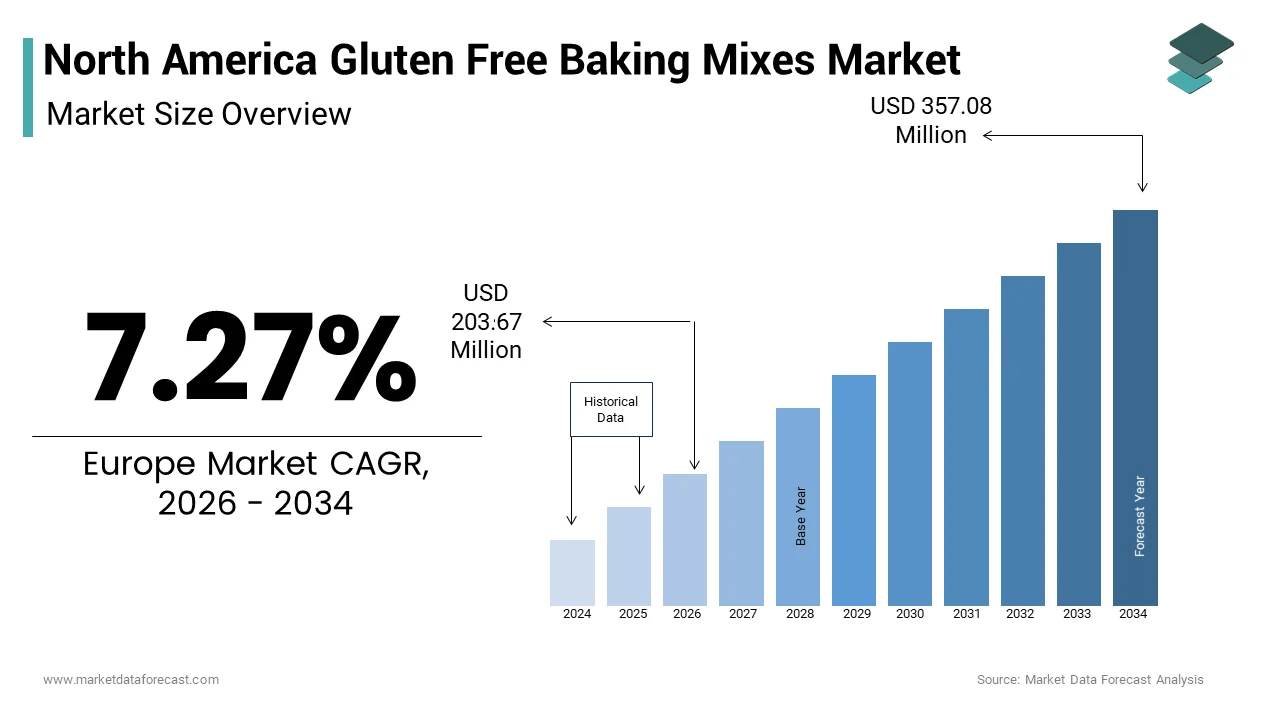
The North America gluten-free baking mixes market was valued at USD 189.87 million in 2025, is estimated to reach USD 203.67 million in 2026, and is projected to grow to USD 357.08 million by 2034, registering a CAGR of 7.27% during the forecast period from 2026 to 2034. Market growth is driven by the rising prevalence of gluten intolerance and celiac disease, increasing consumer focus on health and wellness, and growing demand for convenient, at-home baking solutions. Expanding availability of clean-label and allergen-free products, along with premiumization and flavor innovation, is further accelerating adoption across North America.
Key Market Trends
- Growing preference for convenient gluten-free baking solutions that reduce preparation time without compromising taste.
- The rising popularity of gluten-free indulgent products, including cookies, brownies, and desserts.
- Expansion of mainstream grocery retail distribution, improving product accessibility and visibility.
- Increasing demand for clean-label, non-GMO, and plant-based formulations among health-conscious consumers.
- Product innovation focused on taste parity with traditional baking mixes to attract a wider consumer base.
Segmental Insights
- Based on product, the cookies baking mixes segment dominated the market, accounting for 35.6% of the North America gluten-free baking mixes market share in 2025, driven by strong consumer demand for indulgent yet gluten-free snack and dessert options.
- By distribution channel, the grocery stores segment led the market with a 48.6% share in 2025, supported by wide product assortments, strong private-label presence, and increasing shelf space for gluten-free foods.
Regional Insights
The North American gluten-free baking mixes market is highly concentrated geographically.
- The United States dominated the regional market by holding 89.8% of the market share in 2025, driven by high consumer awareness, a mature gluten-free food ecosystem, and the strong presence of leading food brands.
- Canada represents another important market, supported by its multicultural population, rising health-focused consumption patterns, and increasing demand for specialty and allergen-free foods.
Competitive Landscape
The North America gluten-free baking mixes market is moderately competitive, with established food manufacturers and niche gluten-free specialists focusing on product innovation, clean-label positioning, and retail expansion. Companies are strengthening brand portfolios through new flavors, improved textures, and expanded distribution across grocery and online channels. Prominent players operating in the market include General Mills Inc., Conagra Brands, Inc., Kinnikinnick Foods Inc., Williams-Sonoma Inc., Continental Mills, Inc., Partake Foods, King Arthur Baking Company, Inc., and SalDoce Fine Foods.
North America Gluten-free Baking Mixes Market Size
The North America gluten-free baking mixes market size was valued at USD 189.87 million in 2025 and is anticipated to reach a valuation of USD 203.67 million in 2026 and USD 357.08 million by 2034, growing at a CAGR of 7.27% during the forecast period from 2026 to 2034.
Current Introductiontoo the North America Gluten-free Baking Mixes Market
Gluten-free baking mixes are convenient, pre-blended dry ingredients (such as rice, tapioca, and almond flours) that replace wheat for individuals with celiac disease or gluten sensitivity. These mixes offer easy preparation for breads, cakes, and cookies. These pre-formulated baking mixes eliminate the complexity traditionally associated with gluten-free baking by combining essential flour alternatives such as rice flour, almond flour, tapioca starch, and binding agents like xanthan gum or guar gum to replicate the texture and structure typically provided by wheat gluten. According to the Celiac Disease Foundation, approximately 1 in 100 people worldwide suffer from celiac disease, an autoimmune disorder triggered by gluten consumption that necessitates strict lifelong adherence to gluten-free diets. The market includes diverse product categories, including cake mixes, cookie mixes, bread mixes, pancake mixes, and muffin mixes, each formulated to address specific baking challenges and consumer taste preferences. The prevalence of non-celiac gluten sensitivity (NCGS) affects a notable segment of the U.S. population. Studies based on rigorous criteria suggest a moderate prevalence, while those utilizing self-reporting indicate a substantially higher perceived prevalence among the population. The gluten-free baking mixes market has evolved significantly from early offerings that were criticized for poor taste and texture, now incorporating advanced formulation techniques and premium ingredients that closely mimic traditional baked goods. Consumer awareness regarding gluten-related health issues has increased substantially. As per sources, a portion of American adults actively seek gluten-free options when purchasing food products.
MARKET DRIVERS
Rising Prevalence of Celiac Disease and Gluten Sensitivity
The increasing diagnosis rates of celiac disease and growing awareness of non-celiac gluten sensitivity serve as primary enablers propelling the North America gluten-free baking mixes market expansion. Medical research has revealed that celiac disease affects significantly larger populations than previously understood, with improved diagnostic capabilities and heightened physician awareness contributing to increased case identification. As per research, a large number of Americans remain undiagnosed with celiac disease, representing a substantial untapped market for gluten-free products,s including baking mixes. The condition's serious health implications, including malnutrition, osteoporosis, and increased cancer risk, necessitate strict adherence to gluten-free diets, creating sustained demand for convenient and reliable baking solutions. Non-celiac gluten sensitivity, while less severe, affects considerably larger populations and drives significant market demand through consumer preference rather than medical necessity. According to sources, gluten sensitivity affects a portion of the global population, with many individuals experiencing digestive discomfort, fatigue, and cognitive issues when consuming gluten-containing foods. The diagnostic process for gluten-related disorders has become more accessible and accurate. Healthcare providers increasingly recommend gluten-free diets for patients presenting with unexplained gastrointestinal symptoms, expanding the addressable market for baking mixes beyond confirmed celiac cases. Besides, the hereditary nature of celiac disease means that family members of diagnosed individuals often adopt gluten-free lifestyles preventatively, further amplifying market demand.
Health and Wellness Trend Adoption Among General Consumers
The broader health and wellness movement has significantly fuelled the North American gluten-free baking mixes market growth. This growth is beyond medically necessary consumers to include health-conscious individuals seeking cleaner eating habits and perceived nutritional benefits. This lifestyle-driven demand represents a substantial growth driver as consumers increasingly associate gluten-free products with improved digestion, weight management, and overall wellness outcomes. According to sources, a notable share of American consumers actively try to avoid gluten in their diets, with many citing general health improvement as their primary motivation rather than diagnosed medical conditions. The wellness trend encompasses diverse demographic segments,nts including millennials and Generation Z consumers who prioritize ingredient transparency, natural formulations, and functional food benefits. As per research, health-focused food purchases grew in recent years, significantly outpacing overall food category growth rates. Social media influence and celebrity endorsements have amplified gluten-free diet popularity, with wellness influencers promoting gluten-free baking as part of holistic lifestyle approaches to health optimization. The perception that gluten-free products are inherently healthier or more natural has driven trial behavior among mainstream consumers, even in the absence of medical necessity. Retailers have responded by expanding gluten-free product offerings and dedicating prominent shelf space to these items, making them more accessible to casual consumers. The premium positioning of many gluten-free products aligns with consumer willingness to pay higher prices for perceived health benefits, which creates favourable market conditions for baking mix manufacturers.
MARKET RESTRAINTS
Premium Pricing and Cost Barriers for Mainstream Adoption
The significantly higher cost structure associated with these baking mixes is a substantial barrier to the NoAmericanrica gluten-free baking mixes market. This limits the accessibility for price-sensitive consumer segments and constrains overall market penetration, despite growing awareness and interest. Gluten-free flour alternatives such as almond flour, coconut flour, and specialty starches command premium prices compared to conventional wheat flour, with ingredient costs higher. The complex formulation requirements for gluten-free baking mixes necessitate multiple specialty ingredients to achieve acceptable texture and taste, further inflating production costs and retail prices. The small-batch production requirements and limited economies of scale in gluten-free manufacturing contribute to higher per-unit costs that manufacturers struggle to reduce without compromising product quality. Distribution challenges and limited retail shelf space further impact pricing dynamics, with specialty retailers often marking up gluten-free products to maximize profit margins on niche category sales. The economic accessibility gap disproportionately affects medically necessary consumers who require consistent access to gluten-free products but may lack sufficient disposable income to support premium pricing structures. Besides, the perception-value disconnect between premium pricing and actual nutritional superiority creates consumer skepticism and purchase hesitation, particularly among trial users who may abandon gluten-free baking after initial expensive experiences.
Taste and Texture Performance Limitations
Persistent issues in replicating the taste, texture, and sensory characteristics of traditional wheat-based baked goods continue to impede widespread adoption of these baking mixes, which further holds back the growth of the North America gluten-free baking mixes market. These problems create significant barriers for consumer satisfaction and repeat purchase behaviour. The absence of gluten, a protein that provides elasticity, structure, and moisture retention in conventional baking, necessitates complex formulation strategies involving multiple binding agents, starches, and hydrocolloids that often result in products with compromised sensory attributes. As per research, a considerable portion of consumers report dissatisfaction with the taste or texture of gluten-free baked goods, citing dryness, grittiness, and lack of authentic flavor profiles as primary concerns. The technical complexity of gluten-free baking requires precise ingredient balancing and specialized processing techniques that many commercial manufacturers struggle to perfect consistently across product lines. Moisture management represents a particularly challenging aspect, with gluten-free baked goods typically exhibiting shorter shelf lives and accelerated staling characteristics compared to conventional alternatives. Gluten-free breads lose a shartheirf its initial moisture content compared to that of wheat-based equivalents. Flavour masking effects from alternative flours and binding agents often result in bland or chemically aftertastes that deter consumer acceptance and brand loyalty. The variability in consumer expectations and regional taste preferences further complicates formulation standardization, requiring manufacturers to develop multiple product versions for different market segments. Technical issues in achieving proper rise, browning, and crust development continue to distinguish gluten-free products from traditional baked goods, which limits their appeal to mainstream consumers seeking authentic sensory experiences.
MARKET OPPORTUNITY
Innovation in Alternative Protein and Fiber Enrichment
The integration of alternative protein sources and fiber enrichment into these baking mixes offers significant growth opportunities for the North American gluten-free baking mixes market. This is because health-conscious consumers increasingly seek functional food benefits beyond basic gluten elimination. Also, this innovation trajectory aligns with broader nutritional trends emphasizing protein intake optimization, digestive health support, and satiety management through enhanced fiber consumption. Manufacturers are incorporating ingredients such as pea protein, hemp protein, and ancient grain flours that provide complete amino acid profiles while enhancing nutritional density and consumer appeal. Fiber enrichment opportunities encompass both soluble and insoluble fiber sources, including chicory root fiber, psyllium husk, and resistant starches that address common nutritional deficiencies in gluten-free diets while improving digestive health outcomes. Also, gluten-free diets typically provide less fiber than conventional diets by creating substantial opportunities for fiber-enhanced baking mixes that support regularity and gut microbiome health. Protein fortification enables manufacturers to position gluten-free baking mixes as meal replacement or sports nutrition solutions, expanding addressable markets beyond traditional baking applications. Consumer willingness to pay premium prices for functional food benefits supports higher-margin product development strategies, with protein-enriched gluten-free products commanding price premiums, according to research. The convergence of gluten-free, high-protein, and high-fiber positioning creates unique value propositions that differentiate products from basic gluten-free alternatives while addressing comprehensive nutritional needs.
Expansion into Ethnic and Artisanal Baking Categories
The extension of these baking mixes into ethnic and artisanal baking categories shows a potential for the North American gluten-free baking mixes market growth. This is because culturally diverse consumers and culinary enthusiasts seek authentic gluten-free alternatives to traditional regional specialties and gourmet baked goods. This expansion addresses the previously underserved demand for gluten-free versions of ethnic breads, pastries, and desserts that reflect diverse cultural preferences and sophisticated taste expectations. Artisanal baking categories,s including sourdough, focaccia, bagels, and European pastries, present particularly attractive opportunities due to their premium positioning and consumer willingness to pay higher prices for authentic quality and craftsmanship. The technical challenges associated with replicating these specialized products create natural barriers to entry that favor innovative manufacturers with advanced formulation capabilities and cultural authenticity expertise. Many specialty food purchasers actively seek gluten-free versions of their favorite ethnic and artisanal items, yet availability remains limited in mainstream retail channels. Regional flavor preferences and ingredient authenticity requirements necessitate localized product development strategies that account for cultural nuances and taste expectations. The premium pricing tolerance associated with ethnic and artisanal food categories supports higher-margin gluten-free product positioning, with specialty mixes commanding price premiums compared to basic gluten-free alternatives. Collaborations with ethnic restaurants, cultural organizations, and celebrity chefs can accelerate market penetration and establish brand credibility among target demographic segments.
MARKET CHALLENGES
Supply Chain Vulnerabilities and Ingredient Sourcing Complexity
Supply chain vulnerabilities and ingredient sourcing complexities continue to hinder the expansion of the North American gluten-free baking mixes market. This is due to dependence on diverse specialty flours, starches, and binding agents that originate from geographically dispersed sources and experience variable availability based on agricultural conditions and market dynamics. The formulation complexity of gluten-free baking mixes requires multiple ingredients, ts including rice flour, almond flour, tapioca starch, potato starch, and various hydrocolloids that must be sourced from different suppliers and regions, creating logistical challenges and quality control difficulties. As per sources, almond production has experienced volatility over the past decade due to drought conditions in California, the world's largest producer, directly impacting the pricing and availability of almond flour for gluten-free applications. Climate change effects on agricultural production have intensified supply chain risks, with extreme weather events disrupting harvests and creating ingredient shortages that affect manufacturing schedules and product consistency. The premium nature of many gluten-free ingredients makes them susceptible to price manipulation and supply concentration risks. Cross-contamination prevention requirements add additional complexity, as gluten-free ingredients must be sourced from dedicated facilities or undergo rigorous testing to ensure compliance with gluten-free standards. Transportation and storage requirements for specialty ingredients often differ from conventional food ingredients, which necessitate specialized logistics capabilities and increased handling costs. The seasonal nature of many alternative flours and the limited number of certified gluten-free suppliers create inventory management challenges that can impact product availability and manufacturing efficiency.
Regulatory Compliance and Cross-Contamination Prevention Requirements
Stringent regulatory compliance requirements and cross-contamination prevention standards govern these baking mixes, which slows the growth of the North America gluten-free baking mixes market. These requirements create significant operational challenges and cost burdens for manufacturers seeking to maintain product integrity and regulatory approval across diverse market jurisdictions. Regulatory agencies, including the U.S. Food and Drug Administration, Health Canada, and the European Food Safety Authority, have established strict gluten-free labeling standards. As per sources, manufacturers must implement dedicated production lines, specialized cleaning procedures, and validated testing methods to prevent cross-contamination, with compliance costs typically increasing production expenses. The complexity of supply chain monitoring increases exponentially as manufacturers must verify gluten-free status for every ingredient and supplier, maintain detailed documentation, and conduct regular third-party audits to ensure ongoing compliance. Testing requirements encompass multiple stages,s including raw material verification, in-process monitoring, and finished product analysis, with false positive results potentially leading to costly product recalls and brand reputation damage. International market expansion presents additional challenges as different countries maintain varying gluten-free standards and certification requirements, necessitating multiple compliance strategies and testing protocols. The liability exposure associated with gluten contamination incidents is substantial, with legal settlements for celiac disease sufferers experiencing adverse reactions. The documentation and traceability requirements for gluten-free production create administrative burdens that small and medium-sized manufacturers struggle to manage effectively, potentially limiting market participation and innovation capacity.
REPORT COVERAGE
| REPORT METRIC | DETAILS |
| Market Size Available | 2025 to 2034 |
| Base Year | 2025 |
| Forecast Period | 2026 to 2034 |
| CAGR | 7.27% |
| Segments Covered | By Product, Distributional Channel, Country |
| Various Analyses Covered | Global, Regional, and Country Level Analysis; Segment-Level Analysis; DROC; PESTLE Analysis; Porter’s Five Forces Analysis; Competitive Landscape; Analyst Overview of Investment Opportunities |
| Regions Covered | The United States, Canada, Mexico, Rest of North America |
| Market Leaders Profiled | General Mills Inc., Conagra Brands, Inc., Kinnikinnick Foods Inc., Williams-Sonoma Inc., Continental Mills, Inc., Partake Foods, Chebe, Naturpro, King Arthur Baking Company, Inc., SalDoce Fine Foods |
SEGMENTAL ANALYSIS
By Product Insights
The cookies product category segment dominated the North America gluten-free baking mixes market and accounted for a 35.6% share in 2025. The dominant position of the cookies product category segment is driven by cookies' inherent appeal as convenient, portion-controlled snack items that align perfectly with modern consumption patterns and lifestyle preferences. Gluten-free cookie mixes benefit from relatively simple formulation requirements compared to other baking categories, enabling manufacturers to achieve consistent quality and taste profiles while maintaining cost competitiveness. The segment's popularity is further enhanced by cookies' versatility in flavor variations, seasonal adaptations, and occasion-based marketing opportunities that drive repeat purchases and consumer engagement. The informal nature of cookie consumption makes them ideal trial vehicles for gluten-free baking, as consumers are more willing to experiment with alternative formulations for snacks compared to meal replacement items. Besides, the baking simplicity and quick preparation time associated with cookie mixes appeal to time-constrained consumers seeking convenient gluten-free solutions without compromising on taste or convenience. Consumer preference for convenient snack solutions serves as the primary driver behind the cookies segment's dominance in the North America gluten-free baking mixes market, reflecting evolving lifestyle patterns and consumption behaviors that prioritize accessibility and ease of preparation. Modern consumers increasingly seek snack options that can be quickly prepared and consumed without extensive cooking skills or time investments, making cookie mixes particularly attractive within the gluten-free category. The portion-controlled nature of cookies addresses health-conscious consumers' desire to manage caloric intake while satisfying sweet cravings, with single-serving preparation capabilities enabling better portion control compared to larger baked goods. Time constraints associated with contemporary lifestyles have elevated the importance of quick-preparation food items. Working professionals and busy parents particularly favor cookie mixes due to their preparation times and minimal cleanup requirements. The social sharing aspect of cookies, including holiday baking traditions and workplace treat exchanges, creates sustained demand for gluten-free options that accommodate diverse dietary needs within social settings. Canadian consumer behavior demonstrates similar patterns. Flavor innovation and seasonal marketing opportunities constitute another critical factor driving the cookies segment's market leadership in the North America gluten-free baking mixes category, enabling manufacturers to create compelling product differentiation and sustained consumer engagement through diverse taste experiences and occasion-based promotions. The cookie format's inherent versatility allows for extensive flavor experimentation, including chocolate chip, oatmeal raisin, sugar cookies, and seasonal variations that align with consumer preferences for variety and novelty in snack consumption. Seasonal marketing opportunities,ies including holiday-themed flavors, Valentine's Day heart-shaped cookies, and autumn spice variations, create recurring purchase triggers that boost sales during specific periods while building brand loyalty through consistent product availability. The emotional connection associated with cookie baking and consumption, particularly during festive occasions and family gatherings, makes gluten-free cookie mixes essential for inclusive social experiences. Retailers capitalize on these seasonal opportunities through promotional campaigns and dedicated display merchandising. Canadian markets demonstrate parallel seasonal patterns.
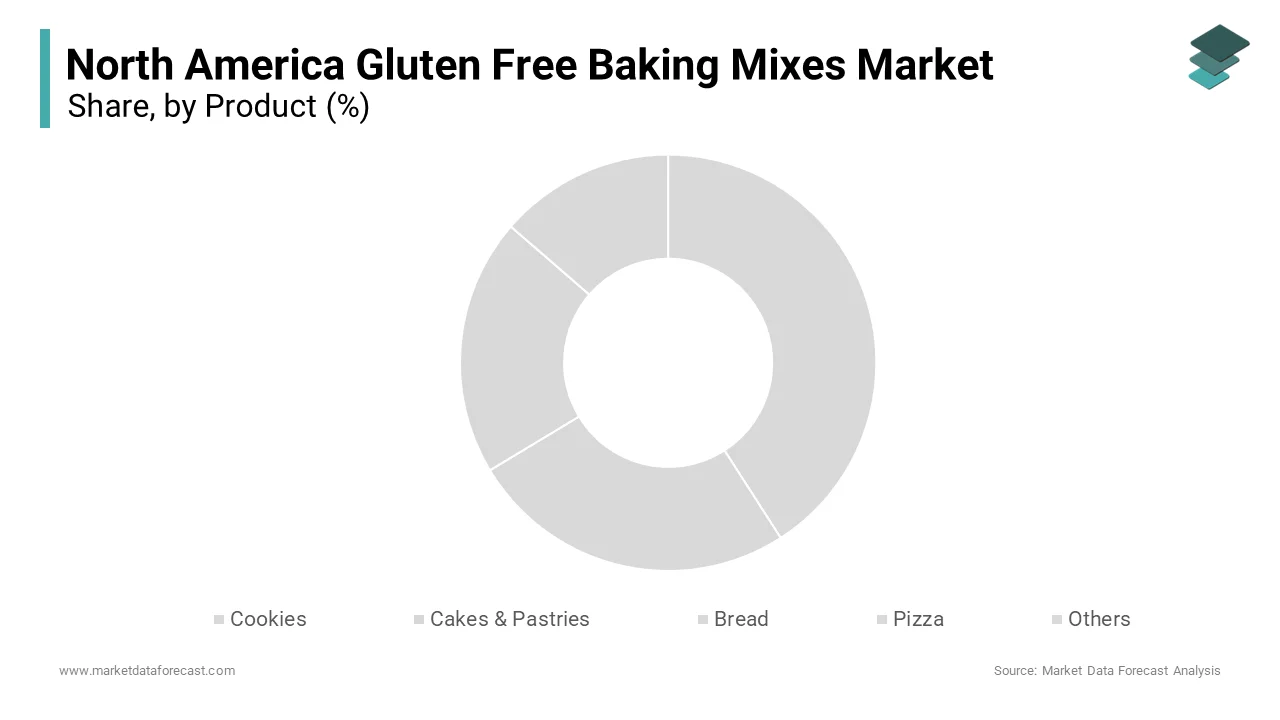
The pizza product category segment is likely to experience the fastest CAGR of 12.4% from 2026 to 2034 due to increasing consumer demand for gluten-free alternatives to popular comfort foods and the successful resolution of technical challenges associated with gluten-free pizza crust formulation and preparation. Pizza represents one of the most challenging gluten-free baking applications due to the complex requirements for crust texture, elasticity, and flavor that closely mimic traditional wheat-based crusts. Recent technological advancements in binding agents, fermentation processes, and ingredient combinations have enabled manufacturers to produce gluten-free pizza crusts that achieve acceptable taste and texture profiles, driving consumer acceptance and market expansion. The meal replacement nature of pizza creates different purchase motivations compared to snack items, with consumers seeking substantial, satisfying gluten-free options that can serve as complete meals rather than supplementary snacks. The social dining aspect of pizza consumption, including family meals and entertaining occasions, drives demand for inclusive gluten-free options that accommodate diverse dietary needs without compromising on taste or dining experience quality. The demand for family meal solutions and social dining inclusion serves as a primary catalyst driving the rapid expansion of gluten-free pizza baking mixes in the North American market, reflecting consumers' desire for inclusive dining experiences that accommodate diverse dietary requirements without compromising on satisfaction or social participation. Pizza's central role in family meals, entertaining occasions, and social gatherings creates significant market opportunities for gluten-free alternatives that enable medically necessary consumers to participate fully in shared dining experiences. The meal replacement nature of pizza, providing substantial nutrition and satiation compared to snack items, makes gluten-free pizza crusts particularly valuable for consumers seeking complete meal solutions that align with their dietary restrictions. Social dining inclusion has become increasingly important as awareness of gluten-related disorders has expanded, yet many consumers prefer home preparation for quality assurance and ingredient control. The versatility of pizza as a customizable meal platform, accommodating various toppings and dietary preferences, makes gluten-free pizza crusts appealing to entire families rather than just gluten-sensitive individuals. Technical innovation in crust formulation and preparation methods represents a fundamental driver behind the pizza segment's exceptional growth rate in the North America gluten-free baking mixes market, as manufacturers have successfully addressed the complex challenges associated with replicating traditional pizza crust characteristics using gluten-free ingredients. Advanced binding technologies, including specialized hydrocolloid systems and protein fortification strategies, have enabled manufacturers to achieve the elasticity, rise, and texture characteristics that were previously difficult to replicate in gluten-free pizza crusts. Fermentation technology improvements, including optimized yeast systems and extended rising protocols, have enhanced crust flavor development and structural integrity, addressing previous criticisms regarding bland taste and crumbly texture. The development of par-baked crust options and freeze-dried preparation methods has simplified home preparation while maintaining quality consistency, appealing to consumers who previously avoided homemade gluten-free pizza due to preparation complexity. Cooking instruction innovations, including microwave-oven combination techniques and specialized pizza stone recommendations, have improved final product quality and consumer confidence in successful preparation outcomes. Canadian technical development initiatives have contributed significantly to market advancement.
By Distribution Channel Insights
The grocery stores distribution channel segment led the North America gluten-free baking mixes market by capturing a share of 48.6% share in 2025. The leading position of the grocery stores distribution channel segment is because of its established role as primary shopping destinations for household food items anitsir comprehensive product selection capabilities that cater to diverse consumer needs and preferences. Grocery retailers provide essential accessibility and convenience for gluten-free baking mix purchases, with dedicated gluten-free sections and knowledgeable staff support that enhance consumer shopping experiences and product discovery opportunities. The channel's strength is further reinforced by established supply chain relationships, competitive pricing structures, and promotional capabilities that enable manufacturers to achieve optimal market penetration and brand visibility. According to sources, a notable portion of American households shop at grocery stores weekly, creating extensive reach and frequent purchase opportunities for gluten-free baking mixes that align with regular shopping patterns and impulse buying behaviors. The integration of gluten-free products within mainstream grocery store layouts has normalized these offerings and reduced the stigma previously associated with specialty dietary items, encouraging broader consumer trial and adoption. Additionally, grocery stores' ability to provide immediate product availability, competitive pricing through private label offerings, and convenient return policies creates a favorable environment for sustained consumer loyalty and repeat purchases. Mainstream market integration and enhanced consumer accessibility serve as primary drivers for the grocery stores' distribution channel's dominance in the North America gluten-free baking mixes market, reflecting the successful transition of gluten-free products from specialty niches to everyday consumer staples. The normalization of gluten-free offerings within mainstream grocery environments has eliminated the inconvenience and social stigma previously associated with specialty dietary shopping, making these products accessible to casual trial users and health-conscious consumers beyond medically necessary segments. As per research, many grocery store shoppers report purchasing gluten-free products during regular shopping trips, compared to only a portion who actively visit specialty stores for these items. The strategic placement of gluten-free baking mixes within conventional baking aisles, alongside traditional alternatives, has increased product visibility and encouraged spontaneous purchase decisions that drive incremental sales growth. Grocery stores' comprehensive product selection capabilities enable consumers to compare gluten-free options side-by-side with conventional alternatives, facilitating informed decision-making and brand switching behaviors. The convenience factor of one-stop shopping for all household food needs has elevated grocery stores as preferred purchase channels. Canadian grocery landscape dynamics demonstrate similar integration patterns. Private label development and competitive pricing strategies constitute another critical factor driving the grocery stores' distribution channel's market leadership in the North America gluten-free baking mixes category, as retailers leverage their brand equity and supply chain capabilities to offer cost-effective alternatives that capture value-conscious consumer segments. Grocerystore private-labell gluten-free baking mixes typically retail at lower prices compared to national brand equivalents. The competitive pricing environment created by private label offerings has pressured national manufacturers to optimize their cost structures and pricing strategies, ultimately benefiting consumers through improved value propositions and expanded market accessibility. Grocery retailers' ability to control supply chain costs, eliminate intermediary markups, and leverage economies of scale enables them to offer gluten-free baking mixes at price points that make these products accessible to broader consumer segments beyond high-income households. The quality improvements in private-label gluten-free products have addressed previous consumer concerns regarding taste and performance. Canadian grocery retailers have demonstrated parallel private label development success.
The independent natural or health food stores segment is on the rise and is expected to be the fastest-growing segment in the market by witnessing a CAGR of 9.8% from 2026 to 2034. The swift growth of the independent natural or health food stores segment is fuelled by the channel's specialized expertise, premium product positioning, and ability to serve niche consumer segments seeking high-quality, organic, and artisanal gluten-free baking solutions that are not typically available in mainstream retail environments. Independent natural food retailers have established strong reputations as trusted advisors for health-conscious consumers and those with specific dietary requirements, creating loyal customer bases that value product authenticity, ingredient transparency, and personalized service experiences. The channel's growth is further supported by increasing consumer demand for clean-label products, organic ingredients, and locally-sourced alternatives that align with holistic wellness lifestyles and environmental consciousness. The channel's ability to curate unique product selections, provide detailed ingredient information, and offer sampling opportunities creates strong consumer engagement and brand loyalty that drives sustained sales growth. Additionally, independent retailers' flexibility in responding to local market preferences and emerging trends enables them to capture early adoption opportunities for innovative gluten-free baking mix formulations and specialty applications. Premium product positioning and organic ingredient demand serve as primary catalysts driving the rapid expansion of independent natural or health food stores in the North America gluten-free baking mixes market, reflecting consumers' increasing willingness to pay premium prices for high-quality, sustainably-sourced, and health-enhancing food products. Independent natural food retailers have successfully positioned gluten-free baking mixes as premium lifestyle products rather than mere medical necessities, appealing to affluent consumers who prioritize ingredient quality, nutritional density, and environmental sustainability in their purchasing decisions. The channel's expertise in organic certification verification, non-GMO verification, and fair trade sourcing creates consumer confidence that justifies premium pricing and supports higher-margin product positioning. Health-conscious consumers particularly value the detailed ingredient disclosure and third-party certifications that independent retailers provide. The artisanal and small-batch nature of many gluten-free baking mixes sold through independent channels appeals to consumers seeking unique flavour profiles and innovative formulations that are not available through mainstream retailers. Canadian natural food markets demonstrate similar premium positioning success.
Specialized consumer education and personalized service capabilities represent fundamental drivers behind the independent natural or health food stores' exceptional growth rate in the North American gluten-free baking mixes market, as these retailers leverage their expertise and customer relationships to provide value-added services that mainstream channels cannot replicate effectively. Independent natural food retailers have established themselves as trusted advisors for consumers navigating complex dietary requirements, offering personalized product recommendations, detailed ingredient consultations, and customized usage guidance that enhance customer satisfaction and build long-term loyalty. The specialized knowledge possessed by natural food store staff regarding gluten-free diet requirements, cross-contamination prevention, and ingredient interactions enables them to provide comprehensive support that builds consumer confidence and encourages trial of new products. Educational initiatives, including in-store demonstrations, recipe sharing sessions, and allergy awareness wworkshopss create community engagement opportunities that differentiate independent retailers from impersonal shopping experiences and drive repeat customer visits. The ability to offer product sampling and small quantity purchases allows consumers to trial premium gluten-free baking mixes without significant financial commitment, reducing purchase risk and encouraging brand exploration. Canadian independent retailers demonstrate similar educational service excellence.
COUNTRY ANALYSIS
United StateGluten-Freeee Baking Mixes Market Analysis
The United States outperformed other countries in the North American gluten-free baking mixes market by holding a 89.8% share in 2025. The dominance of the US market is driven by the country's large population base, high prevalence of celiac disease and gluten sensitivity, and advanced retail infrastructure that supports diverse product distribution and consumer accessibility. The U.S. market benefits from well-established food manufacturing capabilities, extensive research and development activities, and progressive regulatory frameworks that support gluten-free product innovation and quality standards. American consumers have demonstrated early adoption of gluten-free diets and products, driven by increased health consciousness, medical awareness, and lifestyle preferences that create sustained demand for convenient and reliable gluten-free baking solutions. The market's maturity is evidenced by the presence of multiple national brands, extensive retail distribution networks, and sophisticated marketing strategies that ensure broad product availability and consumer awareness. Federal and state-level policies promoting food safety and allergen labeling further strengthen the market foundation, ensuring sustained growth prospects for gluten-free baking mixes across diverse consumer segments and application categories. The United States gluten-free baking mixes market demonstrates robust growth momentum supported by substantial consumer awareness and evolving dietary preferences that prioritize health and wellness outcomes. The country's large and diverse population creates extensive demand for varied gluten-free product offerings that accommodate different taste preferences, cultural backgrounds, and lifestyle requirements. Consumer health consciousness has reached unprecedented levels. The retail infrastructure supporting gluten-free product distribution is exceptionally developed. Social media influence and celebrity endorsements have significantly amplified gluten-free diet popularity, with wellness influencers promoting gluten-free baking as part of holistic lifestyle approaches to health optimization and weight management. Additionally, the professional baking and culinary education sectors have embraced gluten-free techniques.
Canada Gluten Free Baking Mixes Market Analysis
Canada is another key player inthe North American gluten-free baking mixes market due to multicultural population demographics, progressive healthcare policies, and a strong emphasis on food safety and quality standards. Canadian consumers have demonstrated high awareness of gluten-related health issues and a strong preference for natural, organic, and locally-sourced food products that align with national values and environmental consciousness. The market benefits from federal and provincial health policies that support allergen awareness and food labeling requirements, creating favorable conditions for gluten-free product development and consumer confidence. Canadian retail environments have shown exceptional commitment to gluten-free product availability and education, with major grocery chains investing significantly in dedicated gluten-free sections and staff training programs. The country's multicultural population creates demand for diverse gluten-free product offerings that accommodate various ethnic dietary preferences and traditional baking requirements. Canada's commitment to sustainable agriculture and organic farming practices further supports the growth of premium gluten-free baking mixes that emphasize natural ingredients and environmental responsibility. Provincial health authorities have implemented comprehensive celiac disease screening programs and public education initiatives that increase diagnosis rates and consumer awareness of gluten-free dietary requirements. The Canadian gluten-free baking mixes market demonstrates steady growth supported by progressive healthcare policies and substantial consumer demand for health-enhancing food products that align with national values and lifestyle preferences. Health Canada has implemented comprehensive food allergen labeling requirements that exceed international standards, creating strong consumer confidence in gluten-free product safety and quality while supporting market expansion through regulatory clarity and consumer protection. Multicultural population demographics drive demand for diverse gluten-free product offerings that accommodate various ethnic dietary traditions and baking preferences. Provincial healthcare systems have implemented comprehensive celiac disease awareness and screening programs. Canadian consumers demonstrate a strong preference for organic and natural food products. Additionally, the Canadian retail sector has shown exceptional commitment to gluten-free product education and accessibility.
COMPETITIVE LANDSCAPE
The North America gluten-free baking mixes market exhibits moderate to high competition characterized by the presence of established food manufacturers, specialized gluten-free brands, and emerging artisanal producers competing for consumer attention and market share. The competitive landscape is shaped by companies differentiating themselves through product quality, brand positioning, and distribution strategies rather than engaging in aggressive price competition that could compromise product integrity. Large national brands compete primarily on brand recognition, distribution reach, and marketing capabilities, while specialized gluten-free manufacturers focus on product expertise, ingredient quality, and community relationships to establish market positions. The market features both direct competition among similar product categories and indirect competition from alternative gluten-free baking solutions, including fresh bakery items, restaurant offerings, and homemade ingredient combinations. Regional market dynamics influence competitive strategies, with manufacturers adapting their approaches to address specific geographic preferences, retail environments, and consumer demographics. The relatively specialized nature of gluten-free baking creates opportunities for companies to establish strong customer relationships and brand loyalty through superior product performance and reliable consumer support services.
KEY MARKET PLAYERS
A few of the market players in the Europeand North America gluten-free baking mixes market are
- General Mills Inc.
- Conagra Brands, Inc.
- Bob's Red Mill Natural Foods
- Kraft Heinz Company
- Kinnikinnick Foods Inc.
- Williams-Sonoma Inc.
- Continental Mills, Inc.
- Partake Foods
- Chebe
- Naturpro
- King Arthur Baking Company, Inc.
- SalDoce Fine Foods
Top Players In The Market
- General Mills Inc. maintains a prominent position in the North American gluten-free baking mixes market through its comprehensive portfolio of Betty Crocker and Bisquick gluten-free product lines that cater to diverse consumer baking needs and preferences. The company's extensive research and development capabilities have enabled the creation of innovative formulations that closely replicate traditional baking results while maintaining strict gluten-free standards and superior taste profiles. General Mills has successfully leveraged its established brand recognition and distribution networks to achieve widespread market penetration and consumer acceptance of gluten-free alternatives. The organization's commitment to ingredient transparency and quality assurance has earned strong consumer trust and loyalty within the gluten-free community. Their investment in consumer education initiatives and recipe development support has enhanced user confidence and product adoption rates. General Mills actively collaborates with healthcare professionals and celiac disease organizations to ensure product safety and efficacy. The company's global manufacturing footprint and supply chain capabilities enable consistent product availability and competitive pricing across diverse market segments.
- Kraft Heinz Company has established itself as a significant player in the North American gluten-free baking mixes market through its Jell-O and Cookshop brand offerings that provide consumers with convenient and reliable gluten-free baking solutions. The company's extensive food science expertise and manufacturing capabilities have enabled the development of high-quality gluten-free mixes that meet diverse consumer taste preferences and baking requirements. Kraft Heinz has successfully integrated gluten-free product development into its broader portfolio strategy, leveraging existing brand equity and distribution channels to achieve market penetration. The organization's commitment to innovation is evident through continuous product improvements and newflavors introductions that address evolving consumer demands and preferences. Their focus on clean-label ingredients and natural formulations appeals to health-conscious consumers seeking transparent and wholesome gluten-free baking options. Kraft Heinz maintains strong relationships with retail partners and food service providers to ensure optimal product placement and consumer accessibility. The company actively participates in industry research and consumer insights initiatives to stay ahead of market trends and technological developments.
- Bob's Red Mill Natural Foods has emerged as a leading specialist in the North American gluten-free baking mixes market through its extensive range of organic, natural, and specialty flour blends that cater to health-conscious consumers and artisanal bakers seeking premium gluten-free solutions. The company's commitment to organic certification and sustainable sourcing practices has established strong brand loyalty among environmentally conscious consumers and those prioritizing ingredient quality and purity. Bob's Red Mill has successfully differentiated itself through extensive product variety, including specialized mixes for specific dietary needs such as paleo, keto, and vegan preferences. The organization's expertise in grain milling and flour blending has enabled the creation of superior gluten-free formulations that deliver exceptional baking results and nutritional benefits. Their direct-to-consumer marketing approach and strong online presence have facilitated brand building and customer engagement within the gluten-free community. Bob's Red Mill maintains close relationships with farmers and suppliers to ensure consistent quality and sustainable sourcing practices. The company actively supports celiac disease research and education initiatives, reinforcing its commitment to the gluten-free community.
Top Strategies Used By Key Market Participants
- Product Innovation and Flavor Diversification Leading manufacturers in the NortAmericanca gluten-free baking mixes market have prioritized continuous product innovation and flavor diversification to maintain competitive advantages and address evolving consumer taste preferences and dietary requirements. Companies invest significantly in research and development activities focused on improving texture, taste, and nutritional profiles while expanding flavor variety to include ethnic and artisanal options that appeal to diverse consumer segments. Innovation efforts encompass developing new ingredient combinations, optimizing binding systems, and creating specialized formulations for specific dietary need,s including vegan, paleo, and keto preferences. Manufacturers also focus on seasonal and limited-edition flavor introductions that create excitement and drive repeat purchases while maintaining consumer engagement throughout the year. Technical improvements in moisture retention, shelf life extension, and preparation simplicity enhance user experience and product satisfaction. These innovation initiatives help companies differentiate their offerings and command premium pricing while expanding addressable market segments through improved performance characteristics and broader appeal to mainstream consumers.
- Strategic Partnerships and Retail Collaborations Key players in the market have increasingly focused on forming strategic partnerships and retail collaborations to expand market reach, enhance distribution capabilities, and leverage complementary expertise for mutual growth and market development. These collaborative arrangements enable gluten-free baking mix manufacturers to access new customer segments, utilize retail partners' marketing expertise, and share development costs for advanced formulations and packaging solutions. Partnership strategies often involve exclusive product development agreements, co-marketing initiatives, and joint promotional campaigns that combine manufacturing capabilities with retail partners' customer insights and merchandising expertise. Companies also establish relationships with food service providers, restaurants, and catering companies to create business-to-business sales channels and expand product applications. Alliance formation extends to ingredient suppliers and technology providers to ensure consistent quality and access to innovative components. These strategic relationships provide manufacturers with enhanced market visibility and access to end-user networks while reducing individual risk exposure and development costs through shared resources and expertise.
- Consumer Education and Community Engagement Leading manufacturers recognize the importance of comprehensive consumer education and community engagement programs in overcoming adoption barriers and expanding gluten-free baking mixes market penetration. Companies have implemented extensive educational initiative,s including recipe development support, baking technique guidance, and ingredient transparency informati,on that help consumers achieve successful baking outcomes and build confidence in gluten-free alternatives. Engagement programs feature interactive cooking demonstrations, social media content creation, and collaboration with influencers and culinary experts to showcase product versatility and inspire creative usage. Manufacturers also develop digital resources and mobile applications that provide personalized recipe recommendations and baking tips based on consumer preferences and skill levels. Community involvement extends to supporting celiac disease research, participating in awareness campaigns, and partnering with healthcare organizations to promote proper diagnosis and dietary management. These educational and engagement efforts build consumer trust and facilitate broader market acceptance while creating opportunities for brand loyalty development and long-term customer relationships.
RECENT MARKET PLAYERS
- In March 2024, General Mills Inc. launchitseir new line of organic gluten-free baking mixes featuring ancient grain flour blends and enhanced nutritional profiles for health-conscious consumers.
- In November 2023, Kraft Heinz Company established a strategic partnership with a major retail chain to develop exclusive gluten-free baking mix formulations and in-store demonstration programs.
- In June 2024, Bob's Red Mill Natural Foods acquired a specialized organic ingredient supplier to enhanceitsr sourcing capabilities and expand product variety for premium gluten-free baking applications.
- In September 2023, General Mills Inc. opened a new dedicated gluten-free manufacturing facility to increase production capacity and ensure complete cross-contamination prevention for sensitive consumers.
- In January 2024, Kraft Heinz Company received certification from a leading organic standards organization foritsr entire gluten-free baking mix product line, supporting premium market positioning and consumer trust.
MARKET SEGMENTATION
This research report on the North America gluten-free baking mixes market is segmented and sub-segmented into the following categories.
By Product
- Cookies
- Cakes & Pastries
- Bread
- Pizza
- Others
By Distribution Channel
- Grocery Stores
- Mass Merchandiser
- Independent Natural or Health Food Store
- Club Stores
- Drug Stores
- Others
By Country
- United States
- Canada
- Mexico