- Product Description Description
- Table of Contents TOC
- List of Table & Figure LOT
- Get Free Sample PDF Sample PDF
Market Size, 2025
$2.92 BnMarket Estimate, 2026
$3.17 BnMarket Forecast, 2034
$6.07 BnCAGR, 2026–2034
8.46%North America Gluten-Free Desserts and Ice Creams Market Size, Growth, Trends & Forecast (2026–2034)
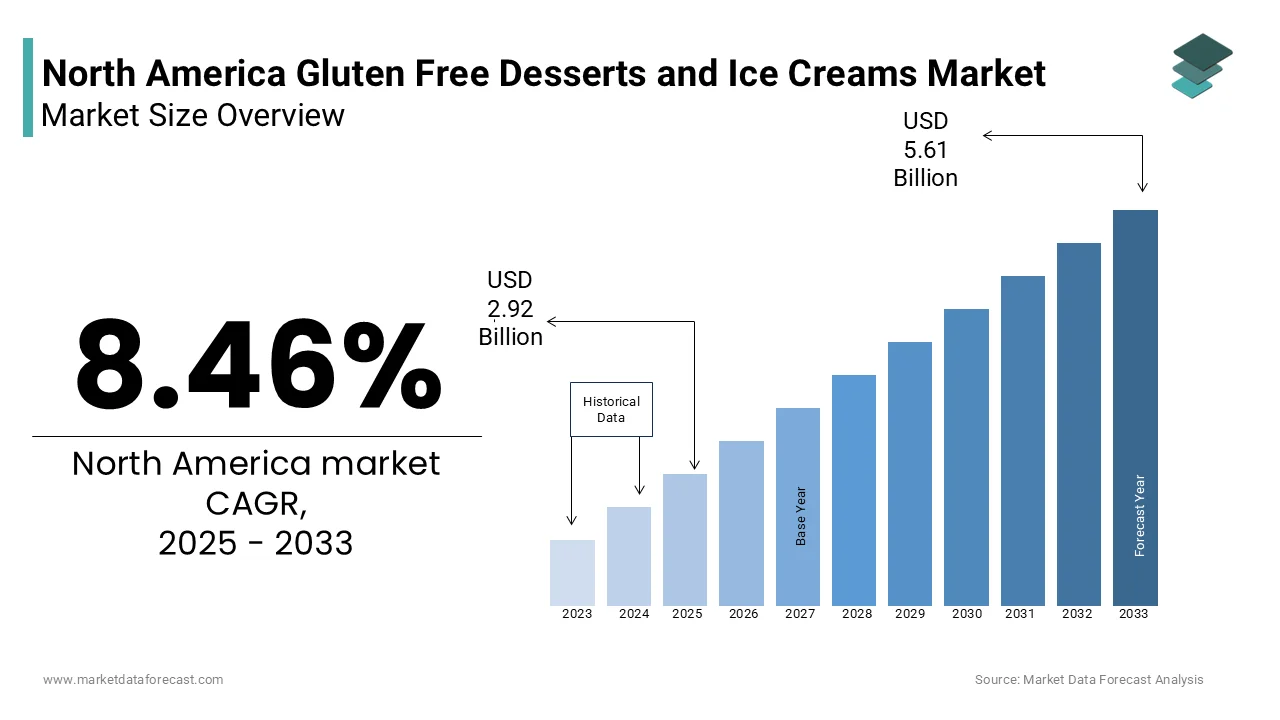
The North America gluten-free desserts and ice creams market size was valued at USD 2.92 billion in 2025, is anticipated to reach USD 3.17 billion in 2026, and is projected to scale up to USD 6.07 billion by 2034, registering a compound annual growth rate (CAGR) of 8.46% during the forecast period from 2026 to 2034. Driven by the rising prevalence of gluten-related disorders, increasing health-conscious lifestyle choices, and expanding mainstream retail availability, the regional market continues to grow robustly.
Key Executive Metrics (At-a-Glance)
- 2025 Base Valuation: USD 2.92 Billion
- 2026 Current Valuation: USD 3.17 Billion
- 2034 Forecast Valuation: USD 6.07 Billion
- Compound Annual Growth Rate (CAGR): 8.46% (2026–2034)
- Dominant Distribution Channel Segment: Retail Stores (holding 42.2% share in 2025 across specialty grocers and natural food outlets)
- Fastest-Growing Distribution Channel Segment: Supermarkets (projected at a rapid CAGR of 9.8% via mainstream grocery assortment expansion)
- Dominant Country Segment: United States (accounting for 78.4% of regional market share in 2025)
Core Market Drivers
- Gluten-Related Disorders: Rising medical diagnoses of celiac disease and non-celiac gluten sensitivity (NCGS) driving demand for safe alternative formulations.
- Lifestyle & Clean-Label Trends: Significant preference among millennials and Gen Z for clean-label, plant-based, and wellness-oriented dietary treats.
Primary Market Restraints & Challenges
- Costs & Shelf Life Stability: Elevated ingredient and processing expenses driving premium retail prices, alongside technical hurdles regarding product texture stability and short shelf-life.
North America Gluten-Free Desserts and Ice Creams Market Segmentation Breakdown
| Segment Category | Leading Sub-Segment (2025 Base) | Fastest-Growing Sub-Segment (2026–2034) |
|---|---|---|
| By Distribution Channel | Retail Stores (dominant contributor holding 42.2% share in specialty/natural grocery formats) | Supermarkets (fastest-growing mainstream channel at 9.8% CAGR) |
| By Country | United States (holding 78.4% market share with mature specialty infrastructure) | Canada (steady growth driven by national grocers and government awareness campaigns) |
Major Industry Players Profiled
Key enterprises shaping the North American gluten-free desserts and ice creams market include Ben & Jerry’s (Unilever), Halo Top Creamery, General Mills Inc., Boulder Brands, Hain Celestial Group, Kellogg’s Company, The Kraft Heinz Company, Hero Group AG, Glutamel, and Schar.
North America Gluten Free Desserts and Ice Creams Market Size
The North America gluten free desserts and ice creams market size was valued at USD 2.92 billion in 2025 and is predicted to reach USD 6.07 billion by 2034 from USD 3.17 billion in 2026, growing at a CAGR of 8.46%.
The North America Gluten Free Desserts and Ice Creams Market encompasses many sweet treats, including cakes, cookies, brownies, frozen desserts, and ice creams that are manufactured without gluten-containing ingredients such as wheat, barley, or rye. These products cater to individuals with celiac disease, non-celiac gluten sensitivity, and those who voluntarily adopt gluten-free diets for perceived health benefits. The market has witnessed significant growth over the past decade due to increased consumer awareness, improved product availability, and advancements in food processing technologies.
According to data published by the National Institute of Diabetes and Digestive and Kidney Diseases (NIDDK), approximately 1 in 141 Americans may have celiac disease, although many remain undiagnosed.
Apart from these, Beyond Celiac, a leading advocacy organization, estimates that around 6% of the U.S. population experiences symptoms related to gluten sensitivity, further fueling demand for gluten-free alternatives. As consumers increasingly seek indulgent yet diet-compliant options, the dessert and ice cream segment within this niche has gained momentum. Retailers and manufacturers have responded by expanding their gluten-free portfolios, with major players like Ben & Jerry’s, Halo Top, and General Mills offering certified gluten-free frozen desserts.
MARKET DRIVERS
Rising Prevalence of Gluten-Related Disorders
One of the key drivers of the North America Gluten-Free Desserts and Ice Creams Market is the growing prevalence of gluten-related disorders, particularly celiac disease and non-celiac gluten sensitivity (NCGS).
According to the Celiac Disease Foundation, approximately 3 million Americans suffer from celiac disease, which triggers an autoimmune response when gluten is consumed.
In addition, as per a research published by the University of Maryland Center for Celiac Research, about 6% of the U.S. population may be affected by NCGS, experiencing gastrointestinal discomfort and other symptoms after consuming gluten-containing foods. With these conditions becoming more widely recognized, there has been a corresponding increase in demand for safe, palatable, and accessible gluten-free food options, especially in the dessert category where traditional formulations often include wheat-based ingredients.
This rising health consciousness has significantly influenced purchasing behavior among consumers. Moreover, healthcare professionals now routinely recommend gluten-free diets for diagnosed patients, reinforcing long-term adherence to such dietary restrictions. As a result, manufacturers have invested heavily in developing innovative gluten-free recipes using alternative flours such as almond, coconut, and rice flour, while also ensuring cross-contamination protocols during production. This has led to a wider variety of high-quality gluten-free desserts and ice creams available on store shelves and in restaurants across North America, supporting sustained market expansion.
 Increasing Consumer Preference for Health-Conscious and Specialty Diets
Another significant driver of the North America Gluten-Free Desserts and Ice Creams Market is the growing consumer inclination towards health-conscious and specialty diets, even among those without diagnosed medical conditions. Many individuals perceive gluten-free products as healthier alternatives, associating them with weight loss, better digestion, and overall wellness.
According to a 2025 report by the International Food Information Council (IFIC), nearly 30% of Americans intentionally consume gluten-free products, not because of medical necessity, but due to lifestyle and dietary preferences. This trend is particularly pronounced among millennials and Gen Z consumers, who prioritize clean-label ingredients, transparency, and functional benefits in their food choices.
This shift has prompted major food companies to expand their gluten-free offerings beyond basic staples into indulgent categories such as desserts and ice creams.
For instance, brands like Häagen-Dazs and Magnum have introduced certified gluten-free variants of their popular ice cream bars, capitalizing on this lucrative demographic.
Supermarket chains such as Whole Foods Market and Trader Joe’s have also broadened their private-label gluten-free dessert lines, responding to heightened consumer demand.
This robust demand underscores how consumer perception, rather than just medical necessity, plays a pivotal role in shaping the trajectory of the gluten-free desserts and ice creams market in North America.
MARKET RESTRAINTS
High Production Costs and Price Sensitivity Among Consumers
A significant restraint affecting the North America Gluten-Free Desserts and Ice Creams Market is the elevated cost of production associated with gluten-free ingredients and manufacturing processes. Unlike conventional desserts that use inexpensive wheat-based flours and stabilizers, gluten-free formulations often require specialty ingredients such as tapioca starch, xanthan gum, and almond flour, which are considerably more expensive.
Furthermore, manufacturers must invest in dedicated production lines or implement stringent cleaning protocols to avoid cross-contamination, adding to operational expenses.
These higher input costs are typically passed on to consumers, making gluten-free desserts and ice creams more expensive than standard products. This premium pricing creates a barrier to entry for budget-conscious consumers, limiting market penetration despite strong interest. While some segments, particularly urban and health-focused demographics, are willing to pay extra, others—especially in economically vulnerable regions—opt for cheaper alternatives, even if they contain gluten.
Limited Shelf Life and Product Stability Issues
Another critical challenge restraining the North America Gluten-Free Desserts and Ice Creams Market is the limited shelf life and stability issues inherent in many gluten-free formulations. Due to the absence of gluten—a protein that provides elasticity and structure—gluten-free desserts often face texture degradation, moisture loss, and crumbling over time. Ice creams, particularly those with gluten-free cone or wafer components, are also prone to sogginess or structural breakdown when stored for extended periods.
These stability concerns pose logistical difficulties for both manufacturers and retailers. Distributors must manage tighter inventory cycles to ensure freshness, increasing handling and waste costs. Grocery chains often hesitate to stock gluten-free dessert items unless they come with proven longevity, which limits product availability. This inconsistency affects consumer trust and repeat purchase behaviour.
Additionally, online delivery platforms face added complexity in maintaining cold chain integrity for gluten-free ice creams, further complicating last-mile distribution. Until formulation science advances to address these limitations effectively, the issue of short shelf life will continue to impede the full commercial potential of the gluten-free desserts and ice creams market in North America.
MARKET OPPORTUNITIES
Expansion of E-commerce and Direct-to-Consumer Distribution Channels
One of the most promising opportunities in the North America Gluten-Free Desserts and Ice Creams Market lies in the rapid expansion of e-commerce and direct-to-consumer (DTC) distribution channels. With the rise of online grocery shopping and meal delivery services, consumers now have greater access to niche and specialty products that may not be readily available in local stores.
According to Digital Commerce 360, U.S. e-commerce sales reached $1.09 trillion in 2025, marking a 12.6% increase from the previous year. Within this digital marketplace, gluten-free products have seen particularly strong growth, driven by health-conscious buyers seeking convenience and variety.
Leading DTC brands such as Coolhaus and Yasso have leveraged online platforms to reach consumers nationwide, bypassing traditional retail constraints. Subscription-based models have also gained traction, allowing customers to receive regular deliveries of gluten-free frozen desserts directly to their doorstep. Amazon Fresh and Instacart have expanded their gluten-free product selections, enhancing visibility and accessibility. As logistics networks improve and cold-chain fulfillment becomes more efficient, e-commerce will play a pivotal role in scaling the gluten-free desserts and ice creams market across North America.
Innovation in Plant-Based and Functional Ingredients
A compelling opportunity emerging in the North America Gluten-Free Desserts and Ice Creams Market is the integration of plant-based and functional ingredients to meet evolving consumer expectations around health, sustainability, and indulgence. As dietary preferences shift toward cleaner, nutrient-dense, and ethically sourced foods, manufacturers are exploring alternative bases such as oat milk, cashew cream, and pea protein to formulate gluten-free desserts and frozen treats.
This convergence between plant-based and gluten-free trends allows brands to capture dual-demand from consumers following multiple restrictive diets. For example, Ripple Foods and Oatly have launched plant-based frozen desserts fortified with vitamins, minerals, and probiotics, positioning them as functional indulgences.
Additionally, clean-label certifications such as Non-GMO Project Verified and USDA Organic are gaining importance, influencing purchasing decisions among millennials and Gen Z. By leveraging these ingredient innovations, manufacturers can differentiate their gluten-free dessert offerings and appeal to a broader, more health-oriented customer base.
MARKET CHALLENGES
Regulatory Complexity and Labeling Compliance Across Jurisdictions
A major challenge facing the North America Gluten-Free Desserts and Ice Creams Market is the regulatory complexity and inconsistent labeling standards across different jurisdictions. Although the U.S. Food and Drug Administration (FDA) established a federal standard in 2013 that defines "gluten-free" as containing less than 20 parts per million (ppm) of gluten, Canada’s regulations under the Canadian Food Inspection Agency (CFIA) impose additional compliance requirements, including mandatory allergen declarations and third-party certification for certain claims. These differences create logistical hurdles for manufacturers aiming to distribute products seamlessly across borders.
Moreover, states within the U.S. sometimes impose stricter guidelines or interpret federal rules differently, leading to inconsistencies in product approval and marketing claims. For example, California’s Proposition 65 requires businesses to provide warnings for any chemical known to cause cancer or reproductive harm, which can apply to trace contaminants in gluten-free ingredients. Such regulatory fragmentation increases compliance costs, especially for small and medium-sized enterprises lacking in-house legal expertise. As a result, some manufacturers limit their gluten-free dessert offerings to specific markets, hindering broader industry growth and limiting consumer access to diverse product options.
Consumer Perception Gaps Regarding Taste and Quality
Despite the growing availability of gluten-free desserts and ice creams, a persistent challenge remains in overcoming negative consumer perceptions regarding taste, texture, and overall quality. Many consumers associate gluten-free products with dryness, crumbliness, or artificial aftertastes, which discourages trial and repeat purchases.
This perception gap persists even though technological advancements in food science have significantly improved the sensory attributes of gluten-free formulations. Ingredients such as hydrocolloids, enzyme-modified starches, and microencapsulated fats have enabled manufacturers to replicate the creamy textures and moist consistency typical of traditional desserts. However, consumer skepticism lingers, particularly among those without dietary restrictions who may view gluten-free desserts as inferior indulgences. Brand education and sensory marketing strategies are essential to bridge this gap, yet many companies still struggle to communicate the quality improvements effectively. According to a 2025 white paper by the Institute of Food Technologists (IFT), only 22% of gluten-free dessert brands included detailed taste descriptions or consumer testimonials on packaging, limiting the ability to reshape perceptions. Until these perceptual barriers are fully addressed, they will continue to hinder the mainstream acceptance of gluten-free desserts and ice creams in North America.
REPORT COVERAGE
| REPORT METRIC | DETAILS |
| Market Size Available | 2025 to 2034 |
| Base Year | 2025 |
| Forecast Period | 2026 to 2034 |
| CAGR | 8.46% |
| Segments Covered | By Distribution Channel and Region |
|
Various Analyses Covered | Regional & Country Level Analysis, Segment-Level Analysis, DROC, PESTLE Analysis, Porter’s Five Forces Analysis, Competitive Landscape, Analyst Overview on Investment Opportunities |
| Regions Covered | The United States, Canada, Mexico, and Rest of North America |
| Market Leaders Profiled | Boulder Brands, Hain Celestial Group, General Mills, Inc., Kellogg’s Company, The Kraft Heinz Company, Hero Group AG, Glutamel, Schar, Domino's Pizza Enterprises Ltd., Big Oz Industries Ltd, and others |
SEGMENTAL ANALYSIS
By Distribution Channel
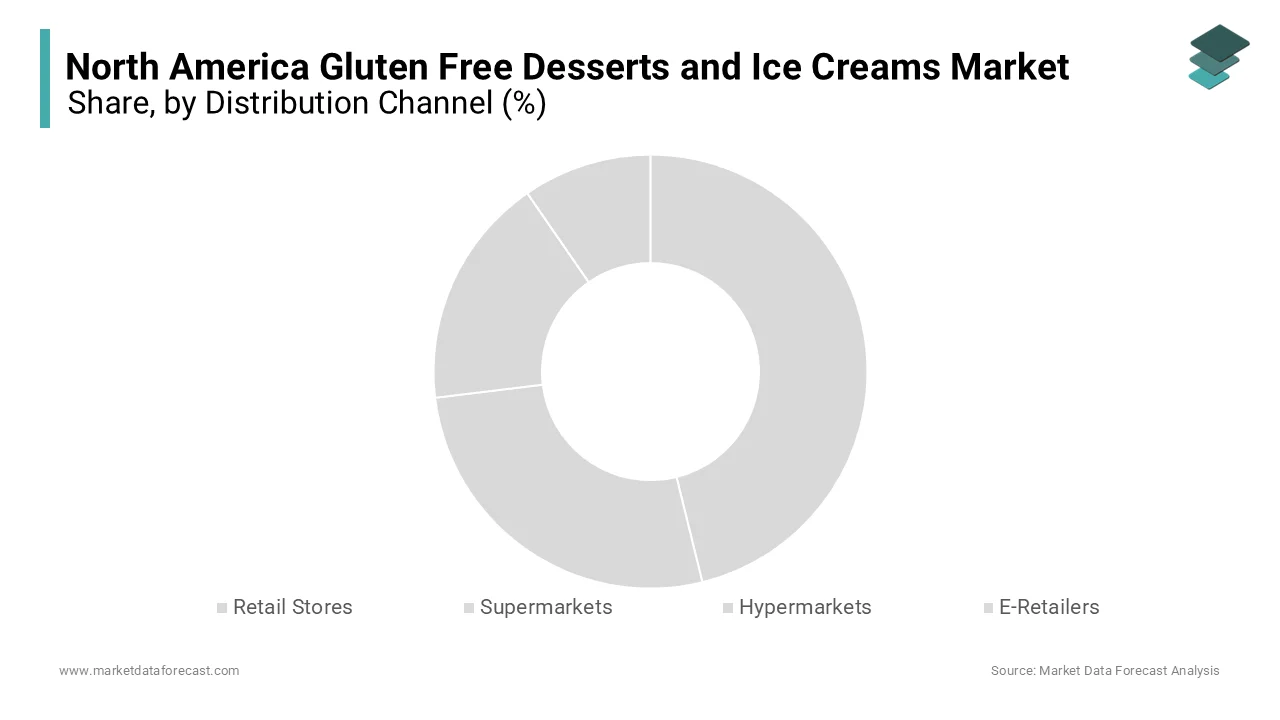
The retail stores segment was the largest contributor to the North America Gluten-Free Desserts and Ice Creams Market, accounting for 42.2% of total market share in 2025. This dominance is because of the widespread availability of gluten-free desserts through specialty health food stores, natural grocers, and boutique bakeries that cater specifically to consumers with dietary restrictions.
One key driver behind this segment’s leadership is the growing consumer preference for niche and premium products that are often first introduced through smaller retail formats before reaching mass-market chains. Retailers such as Whole Foods Market and Sprouts Farmers Market have expanded their gluten-free frozen dessert aisles, offering exclusive private-label brands that appeal to health-conscious shoppers. Additionally, these stores often host tasting events and wellness promotions that build brand loyalty and drive repeat purchases, reinforcing their central role in the market's growth.
The supermarkets segment is projected to be the fastest-growing distribution channel in the North America Gluten-Free Desserts and Ice Creams Market, registering a CAGR of 9.8%. This rapid expansion is driven by the increasing integration of gluten-free desserts into mainstream grocery assortments, making them more accessible to a broader consumer base beyond those with diagnosed dietary restrictions.
A major factor fueling this growth is the aggressive shelf-space allocation by supermarket chains like Kroger, Albertsons, and Safeway, which have significantly expanded their gluten-free offerings in response to rising demand. Furthermore, chain-wide partnerships with gluten-free manufacturers have enabled cost efficiencies and improved supply chain reliability, allowing for competitive pricing that appeals to budget-sensitive shoppers.
Additionally, point-of-purchase signage and digital shelf tags highlighting gluten-free certifications have enhanced consumer confidence. These developments position supermarkets as the primary conduit for mainstreaming gluten-free desserts across North America.
REGIONAL ANALYSIS
United States
The United States held the dominant position in the North America Gluten-Free Desserts and Ice Creams Market, capturing an estimated market share of 78.4% in 2025. As the most mature market for specialty dietary foods, the U.S. benefits from high consumer awareness, extensive product innovation, and robust retail infrastructure catering to individuals with celiac disease, gluten sensitivity, and lifestyle-driven dietary choices.
One of the key drivers underpinning this lead position is the significant prevalence of gluten-related disorders. This has spurred a surge in demand for certified gluten-free desserts and frozen treats, particularly among urban populations. Additionally, strong brand presence from major players such as Ben & Jerry’s, Halo Top, and Yasso—alongside expanding private-label offerings from national retailers—has further consolidated the U.S. as the epicenter of market activity, reinforcing its leading status in the regional landscape.
Canada
Canada is maintaining a steady but growing presence within the region. The Canadian market is characterized by increasing regulatory support, heightened consumer interest in functional foods, and a well-established network of national grocery chains that actively promote gluten-free options.
A primary growth catalyst is the rising diagnosis rate of celiac disease and gluten intolerance. According to Gastrointestinal Society Canada, approximately 1 in 133 Canadians suffers from celiac disease , though many cases remain undiagnosed. In response, government agencies and advocacy groups have launched awareness campaigns, encouraging both food producers and consumers to adopt gluten-free standards.
Moreover, leading retailers such as Loblaws and Sobeys have expanded their in-house gluten-free dessert lines, contributing to stronger category penetration. With ongoing product development and retailer commitment, Canada continues to solidify its role as a key player in the regional gluten-free desserts and ice creams market.
KEY MARKET PLAYERS AND COMPETITIVE LANDSCAPE
Boulder Brands, Hain Celestial Group, General Mills, Inc., Kellogg’s Company, The Kraft Heinz Company, Hero Group AG, Glutamel, Schar, Domino's Pizza Enterprises Ltd., Big Oz Industries Ltd are the key players in the North America Gluten-Free Desserts and Ice Creams Market.
The competition in the North America Gluten-Free Desserts and Ice Creams Market is characterized by a dynamic mix of established food giants and emerging niche brands striving to capture a growing consumer base. As awareness around dietary restrictions and health-conscious eating continues to rise, market participants are increasingly focusing on innovation, brand differentiation, and accessibility to gain a competitive edge. Large multinational corporations leverage their existing infrastructure and brand equity to launch gluten-free variants of popular products, ensuring widespread availability and consumer recognition. Meanwhile, smaller artisanal and specialty brands capitalize on premium positioning, emphasizing clean labeling, organic sourcing, and unique flavor profiles to attract discerning buyers. Retailers also play a significant role by introducing private-label gluten-free dessert lines, further intensifying competition. Consumer education, digital engagement, and packaging transparency have become essential tools in building brand loyalty. With demand driven by both medical necessity and lifestyle choices, the market remains highly fragmented yet rapidly evolving, encouraging continuous investment and creative product development across the industry.
TOP PLAYERS IN THE MARKET
Ben & Jerry’s (Unilever)
Ben & Jerry’s has been a prominent player in the frozen desserts segment, offering a range of certified gluten-free ice cream flavors. Known for its commitment to ethical sourcing and innovation, the brand has significantly contributed to raising awareness about dietary inclusivity in mainstream markets. Its gluten-free product line has helped attract health-conscious consumers while reinforcing Unilever’s broader strategy of catering to evolving dietary preferences globally.
Halo Top Creamery
Halo Top revolutionized the low-calorie frozen dessert space and quickly expanded into the gluten-free category, becoming a favorite among consumers seeking indulgence without compromising dietary needs. The brand’s focus on clean-label ingredients and transparent marketing has positioned it as a leader in specialty frozen desserts, influencing global trends around healthier treat options and expanding consumer access to gluten-free alternatives.
General Mills Inc.
General Mills has leveraged its extensive distribution network and well-established brand portfolio to introduce gluten-free versions of popular dessert items. Through brands like Betty Crocker and Pillsbury, it has made gluten-free baking mixes and ready-to-eat desserts widely available. This strategic expansion has played a crucial role in normalizing gluten-free products within everyday households across North America and beyond.
TOP STRATEGIES USED BY KEY PLAYERS
One major strategy employed by key players is product diversification , where companies expand their portfolios to include a wide variety of gluten-free desserts and ice creams that cater to different consumer tastes and dietary requirements. This helps capture a larger customer base and meet rising demand for inclusive food choices.
Another critical approach is brand positioning through health-focused marketing , which involves promoting gluten-free products as part of a healthy, conscious lifestyle. Companies emphasize clean labels, natural ingredients, and certifications to appeal to wellness-driven consumers and build long-term trust.
Lastly, strategic partnerships and collaborations with retailers and ingredient suppliers allow manufacturers to streamline production, improve shelf placement, and enhance product availability. These alliances help maintain consistent quality and ensure wider market reach across both physical and online platforms.
RECENT HAPPENINGS IN THE MARKET
- In June 2025, Halo Top launched a new line of organic-certified gluten-free ice cream pints, targeting health-conscious consumers looking for clean-label frozen treats.
- In September 2025, General Mills introduced a gluten-free version of its popular Betty Crocker brownie mix, expanding its dessert offerings to better serve individuals with dietary restrictions.
- In January 2025, Ben & Jerry’s announced a partnership with a third-party certification body to ensure all its gluten-free flavors undergo rigorous testing, enhancing consumer trust in product integrity.
- In March 2025, Coolhaus expanded its direct-to-consumer delivery service to additional U.S. states, improving nationwide access to its gluten-free dessert options through e-commerce channels.
- In August 2025, Nestlé USA reformulated several of its gluten-containing frozen dessert lines to offer gluten-free alternatives, aligning with shifting consumer preferences and increasing demand for inclusive treat options.
MARKET SEGMENTATION
This research report on the North America gluten free desserts and ice creams market has been segmented and sub-segmented based on the following categories.
By Distribution Channel
- Retail Stores
- Supermarkets
- Hypermarkets
- E-Retailers
By Country
- The United States
- Canada
- Rest of North America