- Product Description Description
- Table of Contents TOC
- List of Table & Figure LOT
- Get Free Sample PDF Sample PDF
Market Size, 2025
$7.78 BnMarket Estimate, 2026
$9.41 BnMarket Forecast, 2034
$43.26 BnCAGR, 2026–2034
21%Executive Summary: North America Healthcare Cybersecurity Market
- Market Scope: Comprehensive regional market analysis covering security offerings, threat types, security architectures, end-user settings, deployment modes, and country-level adoption frameworks across North America.
- Market Valuation: Valued at USD 7.78 billion (2025), estimated at USD 9.41 billion (2026), and projected to reach USD 43.26 billion by 2034, registering an exceptional CAGR of 21% (2026–2034).
- Primary Growth Drivers: Heightened public awareness regarding data security vulnerabilities following high-profile breaches, rapid technological evolution (such as EHRs, telemedicine, and IoT device expansion), and stringent compliance mandates like HIPAA protecting sensitive medical records.
Key Market Segment Metrics (2026–2034)
| Category | Leading Segment (2025 Position) | Fastest-Growing Segment |
|---|---|---|
| By Offering | Solutions (led the market via comprehensive IAM, SIEM, and encryption frameworks) | Managed and Professional Services (expanding rapidly due to resource constraints among smaller healthcare providers) |
| By Threat Type | Ransomware and Malware (accounted for the highest share of reported healthcare security incidents) | Advanced Persistent Threats (APT) and Phishing (surging due to interconnected digital health vectors) |
| By Security Type | Network Security (dominated market share to safeguard hospital architecture and data flows) | Endpoint and IoT Security (accelerating alongside connected medical device implementations) |
| By End User | Hospitals and Healthcare Facilities (held the largest market share owing to vast patient databases) | Telehealth and Digital Health Providers (scaling quickly with remote care adoption) |
| By Country | United States (dominant regional position driven by high-value data and mature regulatory enforcement) | Canada (witnessing strong growth driven by nationwide digital health and telehealth integration standards) |
Major Market Players & Market Structure
Market Structure: Highly competitive regional cybersecurity landscape featuring specialized defense vendors, major technology corporations, and managed service providers competing on advanced threat detection, AI-driven analysis, compliance readiness, and cloud security scalability.
Key Companies: McAfee LLC, FireEye, Atos SE, Palo Alto Networks Inc, Cisco Systems Inc, Fortified Health Security, Lockheed Martin Corporation, Booz Allen Hamilton Inc, and IBM Corporation.
 Download Free Sample Report
North America Healthcare Cybersecurity Market Size
The North America healthcare cybersecurity market was valued at USD 7.78 billion in 2025. The market is estimated at USD 9.41 billion in 2026 and is projected to reach USD 43.26 billion by 2034, growing at a CAGR of 21% from 2026 to 2034.

Healthcare cybersecurity is a specialized digital protection framework designed to safeguard sensitive patient information and medical infrastructure from unauthorized access and malicious cyber threats. The healthcare industry experienced over 725 data breaches in the United States alone during 2023, as per the Office for Civil Rights under the Department of Health and Human Services. These incidents compromised the records of more than 133 million individuals, which demonstrates the severe vulnerability of legacy health information systems. This financial burden compels healthcare providers to invest heavily in robust cybersecurity architectures to ensure regulatory compliance with the Health Insurance Portability and Accountability Act, while maintaining operational continuity and patient trust in an increasingly digitized medical environment.
MARKET DRIVERS
Rising Frequency of Ransomware Attacks on Healthcare Infrastructure
The escalating prevalence of ransomware attacks directly fuels demand for advanced threat detection and response solutions within the healthcare sector, which is promoting the growth of the North America healthcare cybersecurity market. Cybercriminals increasingly target healthcare organizations due to the critical nature of their operations, which forces institutions to pay ransoms to restore access to life-saving systems. The surge creates an immediate necessity for real-time monitoring tools and automated backup systems that can mitigate downtime during attacks. Additionally. Such widespread exposure drives procurement of next-generation firewalls and endpoint protection platforms that offer behavioral analytics to identify anomalous activities before they escalate. The inability of traditional security measures to counter sophisticated encryption tactics used by modern ransomware gangs further accelerates the adoption of artificial intelligence-driven security orchestration tools. Consequently, healthcare administrators prioritize investments in resilient infrastructure that ensures continuous patient care delivery despite ongoing cyber threats, thereby expanding the market for comprehensive cybersecurity suites.
Stringent Regulatory Compliance Requirements Under HIPAA and HITECH
The strict regulatory mandates imposed by federal laws are significantly propelling the growth of the North America healthcare cybersecurity market. The Health Insurance Portability and Accountability Act requires covered entities to implement administrative, physical, and technical safeguards to protect electronic protected health information from unauthorized disclosure. Non-compliance results in severe financial penalties, which motivates organizations to deploy robust security frameworks that align with legal standards. Moreover, the Health Information Technology for Economic and Clinical Health Act incentivizes the use of electronic health records, which expands the attack surface and necessitates enhanced data protection mechanisms. As per the American Hospital Association, over 90% of hospitals have adopted electronic health record systems, which increases the volume of digital data requiring secure storage and transmission. This digital transformation mandates continuous risk assessments and employee training programs to prevent internal breaches and external intrusions. Healthcare providers therefore allocate substantial budgets to compliance management software and audit tools that automate regulatory reporting and ensure adherence to evolving privacy laws. The persistent evolution of regulatory guidelines further sustains demand for adaptable cybersecurity solutions that can meet changing legal requirements while protecting patient confidentiality and institutional reputation.
MARKET RESTRAINTS
High Implementation Costs and Budget Constraints in Small Healthcare Practices
The substantial financial requirements for deploying comprehensive cybersecurity solutions among smaller healthcare providers and rural clinics are solely attributed to hindering the growth of the North America healthcare cybersecurity market. Advanced security infrastructure, including intrusion detection systems and encrypted communication channels, demands significant upfront capital expenditure, which many small practices cannot afford. This budget limitation forces smaller entities to rely on basic security measures that are vulnerable to sophisticated cyberattacks. Furthermore, small practices lack dedicated IT staff to manage complex cybersecurity protocols, leading to gaps in threat monitoring and incident response. The high cost of hiring certified cybersecurity professionals exacerbates this issue, as salaries for such experts have risen by 15% annually, according to the study. Consequently, many small healthcare operators delay or avoid investing in advanced security tools, leaving them exposed to data breaches and regulatory fines. This financial barrier limits the overall market growth, as a significant portion of healthcare providers remain underserved by premium cybersecurity vendors who primarily target large hospital networks with deeper pockets.
Shortage of Skilled Cybersecurity Professionals in the Healthcare Sector
Lack of qualified cybersecurity personnel impedes the effective implementation and management of security systems within healthcare organizations that is additionally hindering the growth of the North America healthcare cybersecurity market. The specialized nature of medical data protection requires professionals who possess both technical security expertise and knowledge of healthcare regulations, which creates a narrow talent pool. This shortage results in understaffed security teams that struggle to monitor networks continuously and respond promptly to emerging threats. Additionally, the Healthcare Information and Management Systems Society indicated that many healthcare organizations face difficulties in recruiting and retaining cybersecurity staff due to competitive salary demands and limited career development opportunities. The lack of skilled personnel leads to delayed patch management and incomplete vulnerability assessments, which increase the risk of successful cyberattacks. Healthcare institutions often rely on third-party managed security service providers to fill this gap, but such arrangements may not provide the customized attention required for complex medical environments. The persistent talent scarcity forces organizations to operate with reduced security coverage, thereby limiting the effectiveness of deployed technologies.
MARKET OPPORTUNITIES
Integration of Artificial Intelligence and Machine Learning in Threat Detection
The incorporation of artificial intelligence and machine learning technologies for enhancing proactive threat identification and response capabilities is likely to pose as a major opportunity for the growth of the North America healthcare cybersecurity market. These advanced algorithms analyze vast amounts of network traffic and user behavior patterns to detect anomalies that indicate potential security breaches before they cause damage. This efficiency gain encourages healthcare providers to upgrade from traditional signature-based detection systems to intelligent platforms that learn from new attack vectors. The ability of machine learning models to adapt to novel malware strains and phishing techniques provides a dynamic defense mechanism that static rules cannot match. Vendors offering AI-integrated security suites can differentiate themselves by demonstrating measurable improvements in threat mitigation and operational resilience. The growing acceptance of automation in clinical workflows also facilitates the seamless integration of smart security tools into existing hospital information systems. This technological convergence creates new revenue streams for cybersecurity firms that develop specialized AI applications tailored to the unique data structures and compliance needs of the healthcare industry.
Expansion of Telemedicine and Remote Patient Monitoring Services
The rapid growth of telemedicine and remote patient monitoring services is another attribute to elevate the growth of the North America healthcare cybersecurity market. As healthcare delivery shifts beyond traditional hospital walls to patients' homes, the attack surface expands to include numerous connected devices and personal networks that lack enterprise-level security. This proliferation of remote care platforms necessitates robust virtual private networks and multi-factor authentication systems to prevent unauthorized access to patient data during transmission. Additionally, many medical device vulnerabilities were disclosed in 2023, many of which pertained to remote monitoring equipment used in home care settings. These vulnerabilities expose patients to potential hacking risks that could compromise both privacy and physical safety. Cybersecurity vendors can capitalize on this trend by developing lightweight security agents compatible with consumer-grade devices and broadband connections. The need for end-to-end encryption in video consultations and secure cloud storage for remote diagnostic data creates recurring revenue opportunities for service providers.
MARKET CHALLENGES
Complexity of Legacy System Integration and Interoperability Issues
The presence of outdated legacy systems within healthcare infrastructure also hinders the growth of the North America healthcare cybersecurity market. Many hospitals and clinics continue to operate on older software and hardware platforms that were not designed with current security standards in mind, making them incompatible with contemporary protection tools. The Healthcare Information and Management Systems Society stated that some healthcare organizations still use operating systems that no longer receive security updates from vendors, which leaves them exposed to known vulnerabilities. Integrating new security solutions with these legacy environments requires custom development and extensive testing, which increases deployment time and costs. Furthermore, the interoperability challenges between different electronic health record systems hinder the uniform application of security policies across connected networks. This fragmentation creates security gaps where data moves between systems without consistent encryption or access controls. Cybersecurity vendors face difficulties in providing standardized products that work seamlessly across diverse and antiquated IT landscapes. Healthcare IT teams must often maintain parallel security architectures to protect both old and new systems, which strains resources and increases complexity. The inability to retire legacy systems due to high replacement costs and operational dependencies perpetuates this challenge, forcing organizations to adopt workaround solutions that may not offer comprehensive protection against advanced persistent threats.
Increasing Sophistication of State-Sponsored and Organized Cyber Crime Groups
The rising sophistication of cyber attacks orchestrated by state-sponsored actors and organized criminals is also impeding the growth of the North America healthcare cybersecurity market. These advanced threat groups employ zero-day exploits and social engineering tactics that bypass conventional security defenses and target specific vulnerabilities in medical research and patient databases. Such highly coordinated attacks require continuous threat intelligence updates and adaptive defense strategies that many healthcare organizations lack the resources to maintain. The financial motivation behind these attacks, combined with political objectives, creates a persistent and evolving threat landscape that demands constant vigilance. Healthcare providers struggle to keep pace with the rapid development of new attack methodologies employed by these well-funded adversaries. The need for specialized threat hunting services and international collaboration to track cybercriminal networks adds another layer of complexity to security management. This escalating arms race between attackers and defenders strains the capacity of internal security teams and necessitates ongoing investment in advanced forensic tools and incident response capabilities to mitigate the impact of high-profile breaches.
REPORT COVERAGE
| REPORT METRIC | DETAILS |
| Market Size Available | 2025 to 2034 |
| Base Year | 2025 |
| Forecast Period | 2026 to 2034 |
| Segments Covered | By Offering, Threat Type, Security Type, End User, Deployment Mode, Country. |
| Various Analyses Covered | Global, Regional, and Country-Level Analysis, Segment-Level Analysis, Drivers, Restraints, Opportunities, Challenges; PESTLE Analysis; Porter’s Five Forces Analysis, Competitive Landscape, Analyst Overview of Investment Opportunities |
| Countries Covered |
|
| Market Leaders Profiled | McAfee, LLC, FireEye, Atos SE, Palo Alto Networks, Inc., Cisco Systems, Inc., Fortinet, Lockheed Martin Corporation, Palo Alto Networks, Inc., Booz Allen Hamilton, Inc., and IBM Corporation. |
SEGMENTAL ANALYSIS
By Offering Insights
The solutions segment was the largest, holding 44.3% of the North America healthcare cybersecurity market due to the critical need for automated and integrated protection mechanisms against evolving digital threats. Healthcare organizations prioritize deploying robust software and hardware tools that provide continuous monitoring and immediate threat neutralization without relying heavily on manual intervention. This widespread adoption is fueled by the necessity to protect vast amounts of electronic health records and connected medical devices from unauthorized access. The integration of encryption technologies, identity management systems, and network security appliances creates a layered defense architecture that addresses multiple vulnerability points simultaneously. As cybercriminals develop more complex malware and ransomware strains, healthcare entities invest heavily in next-generation firewalls and intrusion detection systems that offer real-time visibility into network activities. The ability of these solutions to scale across large hospital networks and multi site clinics ensures consistent security posture enforcement.
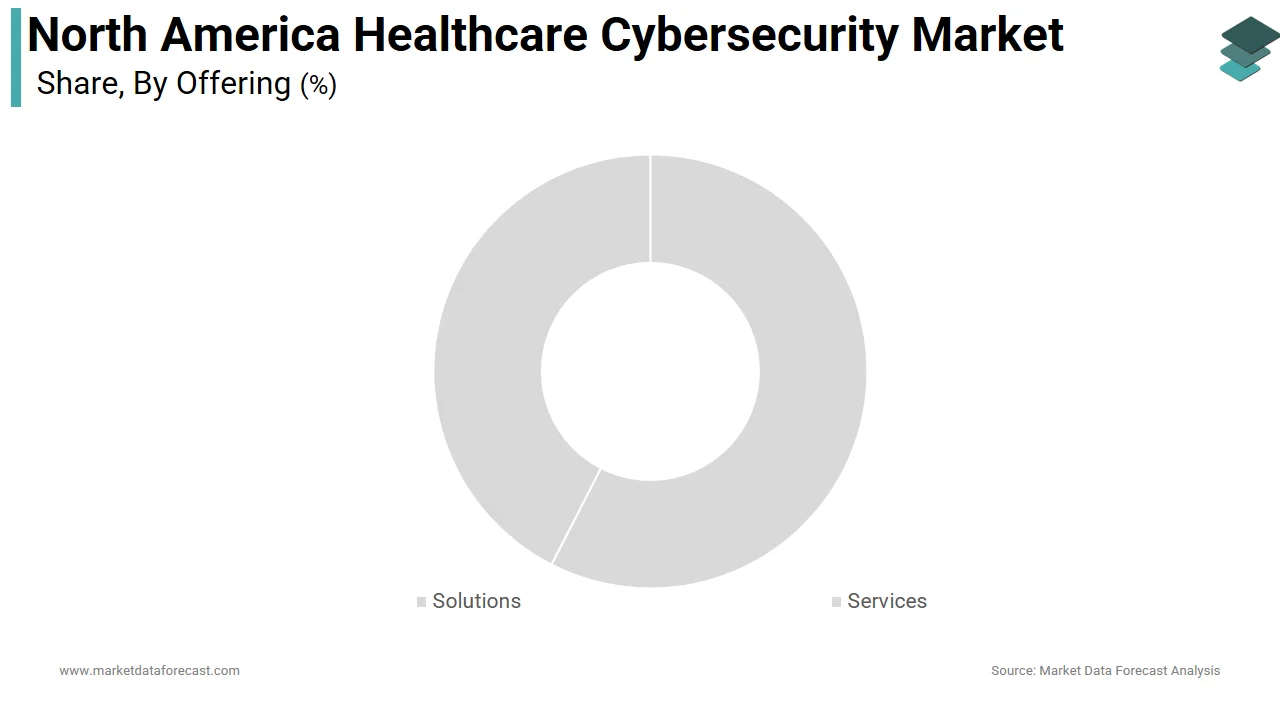
The services segment is projected to register the fastest CAGR of 14.5% during the forecast period, with the increasing outsourcing of security operations to specialized providers. The acute shortage of skilled cybersecurity professionals within healthcare institutions, which makes internal management of complex security infrastructures challenging. Managed security service providers offer 24/7 monitoring, incident response, and vulnerability management, which alleviates the operational burden on internal IT teams. The ability of service providers to leverage global threat intelligence and advanced analytics tools provides healthcare entities with superior protection levels that would be cost-prohibitive to build in-house. The rising sophistication of cyber attacks requires continuous updates and proactive hunting, which managed services deliver efficiently. Healthcare providers benefit from the scalability and flexibility of service models that allow them to adjust security coverage based on changing needs.
By Threat Type Insights
The ransomware segment held 44.3% of the North America healthcare cybersecurity market share in 2025 due to its devastating impact on healthcare operations and the high financial losses associated with these attacks. Cybercriminals target healthcare institutions because they rely on continuous access to patient data and medical devices, making them more likely to pay ransoms to restore services. This high-stakes environment drives healthcare providers to invest heavily in anti-ransomware solutions, including backup recovery systems and endpoint detection tools. Furthermore, healthcare organizations consider ransomware their top security concern, prompting prioritized budget allocation for protective measures. The ability of ransomware to encrypt critical files and disrupt clinical workflows poses direct risks to patient safety, which amplifies the urgency for robust defenses. Healthcare IT leaders focus on implementing immutable backups and network segmentation to limit the spread of ransomware infections. The emergence of ransomware-as-a-service models allows less skilled attackers to launch sophisticated campaigns, increasing the volume of threats.
The phishing segment is deemed to grow at the fastest CAGR of 13.2% during the forecast period. Phishing attacks exploit human error by tricking employees into revealing credentials or downloading malicious attachments, which serves as a gateway for broader compromises. This surge necessitates advanced email security gateways and user awareness training programs that can identify and block deceptive communications. Healthcare workers often handle urgent communications, making them susceptible to spear phishing attacks that appear to come from trusted sources such as supervisors or vendors. The customization of phishing messages using publicly available information increases their credibility and success rate. Organizations respond by implementing multi-factor authentication and simulated phishing campaigns to educate staff. The low cost and high return on investment for attackers make phishing a persistent threat that drives continuous innovation in detection and prevention technologies.
By Deployment Mode Insights
The on-premises segment accounted for 32.1% of the North America healthcare cybersecurity market share in 2025 due to the stringent requirements for data sovereignty and direct control over sensitive patient information. Many healthcare organizations prefer keeping security infrastructure within their own facilities to ensure complete oversight of data access and compliance with strict regulatory mandates. This level of control minimizes the risk of third-party exposure and ensures that data remains within defined physical boundaries. The ability to customize security policies and integrate with legacy systems without dependency on external cloud providers appeals to established healthcare institutions. On-premises solutions also offer predictable performance and latency, which is essential for real-time clinical applications. Healthcare IT teams value the transparency of on-premises architectures, which facilitates easier auditing and incident investigation. The trust in internal infrastructure management drives continued investment in on-premises security hardware and software.
The cloud-based segment is anticipated to exhibit the fastest CAGR of 16.2% from 2026 to 2034, as healthcare providers seek scalable and cost-effective security solutions. Cloud deployments eliminate the need for substantial upfront capital expenditure on hardware and allow organizations to pay for security services on a subscription basis. This financial efficiency enables smaller clinics and rural hospitals to access enterprise-grade security protections that were previously unaffordable. Cloud platforms offer automatic updates and patch management, which ensures that security defenses remain current against emerging threats without manual intervention. The elasticity of cloud resources allows healthcare providers to scale security capacity up or down based on fluctuating demand, such as during pandemic surges. The ease of deployment and management appeals to IT teams facing staff shortages.
REGIONAL ANALYSIS
U.S. Healthcare Cybersecurity Market Analysis
The United States was the largest contributor in the North America healthcare cybersecurity market by occupying 85.4% of the share in 2025. The growth of the market in this country is mainly driven by its advanced healthcare infrastructure and high prevalence of cyber threats. The country accounts for the largest share of regional revenue due to the widespread adoption of electronic health records and connected medical devices, which expand the attack surface. This high incident rate compels healthcare providers to invest heavily in state-of-the-art cybersecurity solutions to protect sensitive data and maintain operational continuity. The presence of major cybersecurity vendors and research institutions in the United States fosters innovation and rapid adoption of new technologies. Healthcare organizations in the country face sophisticated attacks from state-sponsored actors and organized crime groups, which necessitates continuous investment in advanced threat detection and response capabilities. The strong regulatory framework combined with high digital maturity ensures sustained market growth.

Canada Healthcare Cybersecurity Market Analysis
Canada was ranked second in the North America healthcare cybersecurity market by holding a 10.2% share in 2025, with increasing digital transformation and heightened awareness of data privacy risks. The Canadian healthcare system is undergoing rapid modernization with the adoption of electronic health records and telehealth services, which creates new security challenges. This regulatory pressure drives healthcare providers to implement stronger encryption and access control measures to protect patient information. Government initiatives to enhance national cybersecurity resilience provide funding and guidance for healthcare institutions to upgrade their security infrastructure. The growing collaboration between public and private sectors facilitates the sharing of threat intelligence and best practices. Canadian healthcare providers are increasingly adopting cloud-based security solutions to improve scalability and reduce costs.
COMPETITIVE LANDSCAPE
The competition in the North America healthcare cybersecurity market is characterized by intense rivalry among established technology giants and specialized security firms striving to offer comprehensive protection solutions. Major players leverage their extensive resources to develop integrated platforms that combine network security, identity management, and data encryption into unified suites. These vendors compete on the basis of technological innovation, particularly in artificial intelligence and machine learning capabilities that enable proactive threat detection and automated response. Smaller niche firms differentiate themselves by offering highly specialized solutions for specific healthcare challenges such as medical device security or telehealth protection. The market sees frequent mergers and acquisitions as larger companies seek to absorb innovative technologies and expand their customer base. Strategic partnerships with healthcare providers and electronic health record vendors are crucial for gaining market access and ensuring product compatibility. Customer retention relies heavily on demonstrating measurable improvements in breach prevention and regulatory compliance. Price competition remains moderate as healthcare organizations prioritize effectiveness and reliability over cost savings due to the critical nature of their operations. The entry of new competitors with cloud native architectures challenges traditional vendors to adapt their offerings continuously.
KEY MARKET PLAYERS
The leading companies operating in the North America healthcare cybersecurity market include:
- McAfee, LLC
- FireEye
- Atos SE
- Palo Alto Networks, Inc.
- Cisco Systems, Inc.
- Fortinet
- Lockheed Martin Corporation
- Booz Allen Hamilton, Inc.
- IBM Corporation
TOP PLAYERS IN THE MARKET
- Palo Alto Networks significantly contributes to the North America healthcare cybersecurity market by delivering advanced cloud native security platforms that protect sensitive patient data and critical medical infrastructure. The company integrates artificial intelligence-driven threat detection with zero-trust architecture to safeguard electronic health records and connected medical devices from sophisticated cyberattacks. Recent actions include the launch of specialized healthcare security bundles that combine network security with identity management solutions tailored for hospital environments. These initiatives enable healthcare providers to maintain regulatory compliance while ensuring uninterrupted clinical operations. The company actively collaborates with major electronic health record vendors to embed security controls directly into clinical workflows. This strategic integration reduces deployment complexity and enhances real-time visibility into network activities. Palo Alto Networks also invests heavily in threat intelligence research to anticipate emerging ransomware tactics targeting healthcare institutions. Their continuous innovation in automated response capabilities helps hospitals mitigate breaches rapidly.
- Cisco Systems plays a pivotal role in the North America healthcare cybersecurity market by providing comprehensive networking and security infrastructure that supports secure digital health transformations. The company offers integrated solutions including secure access service edge and multi-cloud defense mechanisms that protect hybrid healthcare environments. Recent efforts involve enhancing their SecureX platform with healthcare-specific analytics that identify anomalies in medical device communications and user behavior patterns. Cisco actively partners with healthcare technology firms to ensure seamless interoperability between security tools and clinical applications. This collaboration facilitates easier adoption of zero trust principles across large hospital networks. The company also expands its managed detection and response services tailored for healthcare clients who lack internal security expertise. Cisco emphasizes training programs for healthcare staff to recognize phishing attempts and social engineering threats.
- Fortinet strengthens its presence in the North America healthcare cybersecurity market through its Security Fabric approach, which unifies various security tools into a single cohesive platform. The company delivers high-performance firewalls, endpoint protection, and secure web gateways that address the unique needs of healthcare organizations. Fortinet collaborates with medical device manufacturers to embed security features directly into Internet of Things devices used in patient care settings. This proactive measure prevents vulnerabilities at the source and reduces the attack surface for hospitals. The company also provides specialized training certifications for healthcare IT professionals to enhance their cybersecurity skills. These educational initiatives help bridge the talent gap and improve overall security posture within healthcare institutions. Fortinet emphasizes cost-effective scalability, allowing smaller clinics to access enterprise-grade protection without prohibitive expenses. Their commitment to open architecture ensures compatibility with existing healthcare IT systems.
TOP STRATEGIES USED BY KEY MARKET PARTICIPANTS
Key players in the North America healthcare cybersecurity market primarily employ strategic acquisitions to expand their technological capabilities and broaden their solution portfolios. Companies frequently acquire specialized startups focused on artificial intelligence threat detection or cloud security to integrate advanced features into their existing platforms. This approach allows established vendors to rapidly innovate and address emerging threats such as ransomware and phishing attacks targeting healthcare institutions. Another major strategy involves forming strategic partnerships with electronic health record providers and medical device manufacturers. These collaborations enable seamless integration of security controls into clinical workflows and connected devices, ensuring comprehensive protection without disrupting patient care. Vendors also focus on developing managed security services tailored specifically for healthcare organizations that lack internal expertise. These services provide continuous monitoring and incident response capabilities that alleviate operational burdens on hospital IT teams. Additionally, companies invest heavily in research and development to create automated security orchestration tools that reduce response times and minimize human error. Marketing efforts emphasize compliance with regulatory standards such as HIPAA to attract healthcare clients concerned about legal liabilities.
MARKET SEGMENTATION
This research report on the North America healthcare cybersecurity market is segmented and sub-segmented into the following categories.
By Offering
-
Solutions
-
Identity and Access Management (IAM)
-
Risk and Compliance Management
-
Antivirus and Antimalware
-
DDoS Mitigation
-
Security Information and Event Management (SIEM)
-
Intrusion Detection/Prevention Systems (IDS/IPS)
-
Encryption and Tokenization
-
Patch Management
-
Other Solutions (e.g., data backup and recovery, asset identification)
-
-
Services
-
Professional Services
-
Managed Services
-
By Threat Type
- Malware
- Ransomware
- Phishing
- Distributed Denial of Service (DDoS)
- Advanced Persistent Threats (APT)
- Spyware
- Lost or Stolen Devices
- Other Threats (e.g., unauthorized access, code injection)
By Security Type
- Network Security
- Cloud Security
- Application Security
- Endpoint and IoT Security
- Content Security
By End User
- Hospitals and Healthcare Facilities
- Medical Device Manufacturers
- Pharmaceuticals and Biotechnology Companies
- Health Insurance Providers and Payers
- Telehealth and Digital Health Providers
- Government Healthcare Agencies
- Others
By Deployment Mode
- On-Premises
- Cloud-Based
By Country
- United States
- Canada
- Mexico
- Rest of North America