- Product Description Description
- Table of Contents TOC
- List of Table & Figure LOT
- Get Free Sample PDF Sample PDF
Market Size, 2025
$374.9 MnMarket Estimate, 2026
$426.2 MnMarket Forecast, 2034
$1,190.6 MnCAGR, 2026–2034
13.7%North America Hemp Milk Market Size, Trends, and Forecast (2026-2034)
- Market Scope: Comprehensive regional industry analysis covering variant types (flavoured/unflavoured), product formulations (sweetened/unsweetened), categories (organic/conventional), distribution channels, and country-level adoption across the United States, Canada, Mexico, and the rest of North America.
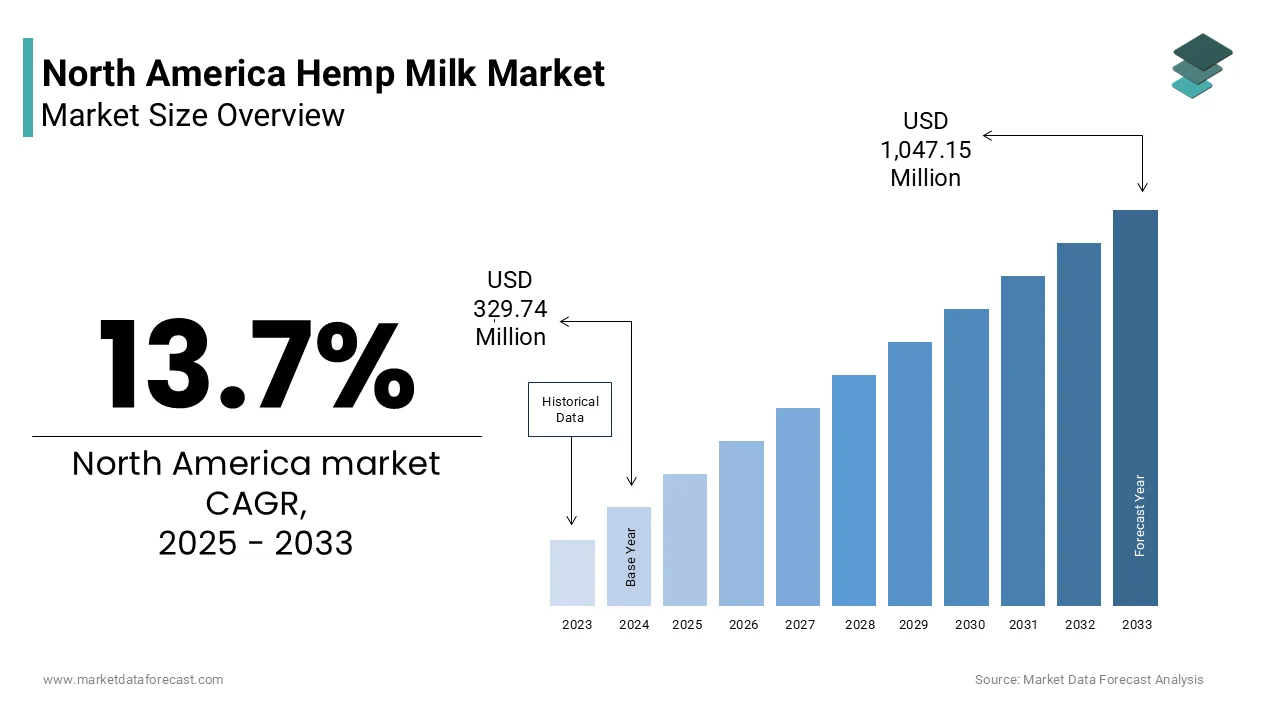
- Market Valuation: Valued at USD 374.92 million in 2025, estimated at USD 426.28 million in 2026, and projected to reach USD 1,190.64 million by 2034, registering an impressive CAGR of 13.70% from 2026 to 2034.
- Primary Growth Drivers: Rising consumer shift toward plant-based diets and clean-label nutrition, high demand for complete plant proteins containing essential amino acids and omega fatty acids, and expanding retail distribution networks.
Key Market Segment Metrics (2026-2034)
| Category | Leading Segment (Base Position) | Fastest-Growing / Promising Segment |
|---|---|---|
| By Variant & Product | Flavoured (58.2% share) & Sweetened Hemp Milk (54.3% share in 2025, driven by taste preferences and convenience) | Unflavoured (19.2% CAGR) & Unsweetened Hemp Milk (21.4% CAGR, fueled by health-conscious and diabetic consumers) |
| By Category & Distribution | Organic Category & Supermarkets/Hypermarkets (captured 48.4% share via dedicated dairy-free aisle placements) | Conventional Category (17.8% CAGR) & Online Retail (23.6% CAGR, driven by DTC models and subscription services) |
| By Country | United States (68.3% share in 2025, backed by the 2018 Farm Bill legalization and millennial adoption) | Canada (expanding via supportive Industrial Hemp Regulations and high per capita plant-based consumption) |
Major Market Players & Industry Structure
Market Structure: Fragmented and rapidly intensifying landscape featuring a blend of large multinational food conglomerates and specialized producers competing on clean-label formulations, sustainability claims, and functional enhancements.
Key Industry Companies: Hemp Foods Canada Inc., The Hain Celestial Group (Pacific Foods), Milkadamia Pty Ltd., Braham & Murray, Healthy Brands Collective, Wild Harvest Organics, and Waska Farms.
North America Hemp Milk Market Size
The North America hemp milk market size was valued at USD 374.92 million in 2025 and is predicted to reach USD 1,190.64 million by 2034 from USD 426.28 million in 2026, growing at a CAGR of 13.7%.
Hemp milk is a plant-based dairy alternative derived from the seeds of the Cannabis sativa plant, processed to create a nutrient-rich beverage with high protein content, omega fatty acids, and essential minerals. Unlike its psychoactive cousin, industrial hemp used for food production contains negligible levels of THC, making it safe and legal for consumption. Government support for hemp cultivation under the Industrial Hemp Regulations has enabled local production and innovation in hemp-based foods will further promote the demand of the hemp milk in North America.
MARKET DRIVERS
Rising Consumer Preference for Plant-Based Diets and Health-Conscious Lifestyles
The increasing shift toward plant-based diets driven by health consciousness and ethical consumption is attributed to fuel the growth of the North America hemp milk market. Consumers are becoming more aware of the benefits associated with plant-derived nutrition, including lower cholesterol levels, improved digestion, and reduced risk of chronic diseases. Hemp milk stands out due to its rich nutritional profile by offering a complete source of plant-based protein containing all nine essential amino acids, along with omega-3 and omega-6 fatty acids in an optimal ratio. According to a 2023 survey conducted by NielsenIQ, nearly 39% of U.S. consumers actively seek out plant-based products for health-related reasons, with a growing number incorporating them into daily meals. Additionally, data from the Plant Based Foods Association shows that sales of plant-based milks increased by 11% in 2022 compared to the previous year, outpacing growth in traditional dairy categories. This trend is particularly pronounced among millennials and Gen Z, who prioritize wellness and transparency in food sourcing. A report by Mintel in early 2025 revealed that 45% of young American adults prefer beverages with clean-label ingredients, a category that includes unsweetened, organic hemp milk variants.
Expansion of Retail Distribution Channels and Product Innovation
The expansion of retail distribution networks and continuous product innovation by manufacturers is additionally to fuel the growth of the North America Hemp Milk Market. Over the past few years, there has been a marked increase in the availability of hemp milk across mainstream supermarkets, convenience stores, and online platforms. As per data released by IRI in Q4 2023, hemp milk products saw a 22% year-over-year increase in retail distribution across major U.S. grocery chains, indicating strong retailer confidence in the product’s market potential. Moreover, e-commerce platforms such as Amazon Fresh and Thrive Market have contributed significantly to visibility and accessibility, especially in rural and underserved markets. According to Digital Commerce 360, online sales of plant-based dairy substitutes grew by 17% in 2023, with hemp milk experiencing some of the highest conversion rates among niche categories. Additionally, partnerships between hemp milk producers and national retailers have led to strategic placements in prominent dairy alternatives sections, boosting trial rates. For instance, in late 2023, Walmart expanded its private-label plant-based milk line to include hemp variants, which is reflecting growing consumer demand and retailer commitment to diversify offerings in the alternative dairy space.
MARKET RESTRAINTS
Limited Consumer Awareness and Misconceptions About Hemp-Derived Products
Limited consumer awareness is hampering the growth of the North America Hemp Milk Market. Many consumers still associate hemp with marijuana due to their shared botanical origin, leading to misconceptions about legality, safety, and psychoactive effects. According to the Hartman Group survey in 2023, only 32% of U.S. consumers could correctly distinguish between industrial hemp and marijuana. This lack of understanding translates into hesitation among potential buyers, which is limiting hemp milk’s penetration into mainstream markets. In addition, compared to well-established alternatives like almond or oat milk, hemp milk lacks widespread brand recognition. According to a 2025 analysis by NielsenIQ, while almond milk accounted for 62% of plant-based milk sales in the U.S., hemp milk held less than 3%, underscoring the gap in consumer familiarity and acceptance.
Supply Chain Constraints and Raw Material Availability
Supply chain inefficiencies and inconsistent availability of raw hemp seeds pose another major challenge to the growth of the North America Hemp Milk Market. Although hemp cultivation has expanded since the passage of the 2018 U.S. Farm Bill, which legalized industrial hemp at the federal level, the industry still faces logistical hurdles related to seed sourcing, processing infrastructure, and regulatory compliance across states. According to the USDA’s 2023 Hemp Production Survey, only 42% of licensed hemp growers reported consistent yields due to issues such as crop failure, pests, and inadequate agronomic expertise. As noted by the Hemp Industries Association in early 2025, domestic hemp seed supply met just 65% of manufacturer demand, which is forcing companies to rely on imports from Canada and China, which increases production costs and delays. Moreover, transportation and storage challenges further complicate the supply chain. Hemp seeds require controlled environments to maintain quality, yet many regional distributors lack the necessary infrastructure.
MARKET OPPORTUNITIES
Growing Demand for Sustainable and Environmentally Friendly Food Products
Sustainability is increasingly shaping consumer choices in the food and beverage sector, which shall create huge opportunities for the North America Hemp Milk Market. Compared to conventional dairy and even some other plant-based milks, hemp milk has a significantly lower carbon footprint and requires far less water to produce. According to a 2023 lifecycle assessment study published by the University of Michigan’s Center for Sustainable Systems, hemp milk generates approximately 0.3 kg of CO₂-equivalent emissions per liter, substantially lower than cow’s milk (3.2 kg) and even almond milk (0.7 kg). sThis sentiment is especially strong among millennials and Gen Z, who drive much of the alternative dairy demand. Brands leveraging sustainability claims in their hemp milk marketing campaigns have seen higher engagement and loyalty.
Increasing Adoption in the Functional Beverage and Dairy-Free Food Service Sectors
The integration of hemp milk into functional beverages and the expanding dairy-free offerings in the food service industry represent a compelling growth avenue for the North America Hemp Milk Market. Functional beverages are designed to deliver specific health benefits beyond basic nutrition, which are gaining popularity among fitness enthusiasts, athletes, and individuals seeking cognitive enhancement or immune support. Hemp milk’s natural richness in protein, omega fatty acids, and antioxidants makes it an ideal base for such formulations. According to SPINS’ 2023 Functional Beverage Market Report, sales of plant-based functional drinks grew by 18% year-over-year, with hemp-based options seeing a 24% increase in specialty store placements. Major players like Califia Farms and Recess have started incorporating hemp milk into ready-to-drink wellness beverages, targeting consumers looking for clean energy and mental clarity without artificial stimulants. Simultaneously, the rise of dairy-free menus in cafes, restaurants, and fast-casual dining establishments offers another promising channel. Technomic’s 2025 Menu Trend Analysis showed that 38% of U.S. coffee shops now offer hemp milk as a standard alternative in lattes and smoothies, up from just 12% in 2021. This dual expansion into functional beverages and foodservice underscores a significant untapped potential for market growth.
MARKET CHALLENGES
Regulatory Complexity and Labeling Restrictions Across States
The complex and often inconsistent regulatory environment surrounding hemp-derived products is one of the challenging factor for the North America Hemp Milk Market players. While the 2018 U.S. Farm Bill federally legalized hemp cultivation, individual states retain authority over how hemp-based foods are regulated, labeled, and sold. This patchwork of regulations creates operational difficulties for manufacturers seeking nationwide distribution and limits market uniformity. According to a 2025 policy brief by the National Association of State Departments of Agriculture (NASDA), 17 U.S. states had enacted additional restrictions on hemp-containing foods beyond federal guidelines, citing concerns over residual cannabinoids and labeling accuracy. Some states, including Idaho and South Dakota, previously prohibited hemp milk sales entirely until recent legal revisions, causing prolonged market exclusion. Canada presents a different but equally nuanced challenge. Although hemp foods are legally permitted under Health Canada’s Industrial Hemp Regulations, strict advertising guidelines limit claims about nutritional benefits unless approved under the Food and Drug Regulations. A 2023 report by Deloitte noted that 41% of Canadian hemp food producers faced delays in product launches due to compliance requirements.
Price Volatility and Cost Competitiveness Relative to Other Plant-Based Milks
Price volatility and cost competitiveness relative to other plant-based milks pose a persistent challenge for the North America Hemp Milk Market. Hemp milk tends to be more expensive than widely consumed alternatives like almond, soy, and oat milk. This price disparity stems from multiple factors, including limited economies of scale, fluctuating raw material costs, and relatively small production volumes. According to data from the U.S. Bureau of Labor Statistics (BLS) in early 2025, the average retail price for a half-gallon of hemp milk was $4.89, compared to $3.79 for almond milk and $3.99 for oat milk. The higher cost is primarily attributed to the limited domestic supply of certified hemp seeds and the specialized processing required to extract hemp protein and oils. Furthermore, larger plant-based milk brands benefit from long-standing supply chain efficiencies and bulk purchasing agreements, enabling them to maintain lower retail prices. As per a 2023 analysis by Rabobank, almond milk producers operate at 2.5 times the production scale of hemp milk manufacturers by contributing to greater cost control.
REPORT COVERAGE
| REPORT METRIC | DETAILS |
| Market Size Available | 2025 to 2034 |
| Base Year | 2025 |
| Forecast Period | 2026 to 2034 |
| CAGR | 13.7% |
| Segments Covered | By Variants, Products, Category, Distribution Channel, and Region |
|
Various Analyses Covered | Regional & Country Level Analysis, Segment-Level Analysis, DROC, PESTLE Analysis, Porter’s Five Forces Analysis, Competitive Landscape, Analyst Overview on Investment Opportunities |
| Regions Covered | The United States, Canada, Mexico, and Rest of North America |
| Market Leaders Profiled | Braham & Murray, Healthy Brands Collective, Wild Harvest Organics, Waska Farms, Pacific Foods of Oregon, and Drink Daily Greens, and others |
SEGMENTAL ANALYSIS
By Variants Insights
The flavoured hemp milk segment held 58.2% of the North America Hemp Milk Market share in 2025. The popularity of flavoured variants is the growing demand among younger consumers who seek convenience and sensory satisfaction. According to a 2023 survey conducted by Mintel, nearly 62% of U.S. millennials prefer flavoured plant-based beverages over unflavoured ones, citing better taste and ease of consumption as primary factors. Brands like Hemptopia and Pacific Foods have capitalized on this trend by introducing vanilla, chocolate, and cinnamon-flavoured hemp milks fortified with vitamins and minerals. Additionally, flavoured hemp milk has gained traction in the foodservice industry, particularly in coffee shops and smoothie bars.

The unflavoured segment is projected to grow with a CAGR of 19.2% in the next coming years. This rapid growth trajectory is attributed to increasing health consciousness and the demand for clean-label products free from added sugars and artificial flavouring agents. According to the Centers for Disease Control and Prevention (CDC), more than 37 million Americans live with diabetes , many of whom actively avoid sugar-laden beverages. Moreover, fitness enthusiasts and athletes are increasingly incorporating unsweetened hemp milk into protein shakes and post-workout meals due to its high-quality protein content and neutral taste profile. NielsenIQ’s 2025 Functional Nutrition Insights revealed that sales of unsweetened plant-based milks increased by 23% year-over-year with unflavoured hemp milk outpacing other categories in specialty health stores.
By Products Insights
The sweetened hemp milk segment was the largest and held 54.3% of the North America Hemp Milk Market share in 2025. The continued dominance of sweetened variants is largely influenced by evolving consumer expectations around taste and convenience. A 2023 study by the Hartman Group found that nearly 59% of consumers purchasing plant-based milks prioritize taste above all other attributes, with sweetness playing a critical role in perceived enjoyment. According to IRI’s 2025 Q1 Retail Insights, sweetened hemp milk accounted for 61% of in-store sales across major U.S grocery chains by reflecting strong consumer adoption. Additionally, the presence of sweetened variants in ready-to-drink formats and breakfast-oriented applications further strengthens their market position by ensuring sustained demand.
The unsweetened hemp milk segment is lucratively to grow with an expected CAGR of 21.4% from 2026 to 2034. The growth of the segment is driven by the growing prevalence of lifestyle diseases such as type 2 diabetes and cardiovascular disorders. According to the American Diabetes Association, over 10% of the U.S. population suffers from diabetes by prompting healthcare professionals to recommend unsweetened alternatives. Hemp milk, being naturally low in sugar and rich in essential nutrients, fits seamlessly into such dietary guidelines. Furthermore, the influence of digital wellness platforms and nutrition-focused influencers has heightened consumer interest in unsweetened options.
By Category Insights
The organic segment was accounted in holding a dominant share of the North America Hemp Milk Market in 2025. The growing shift toward organic consumption, particularly among health-conscious demographics. According to the Organic Trade Association (OTA), organic food sales in the U.S. reached $60.4 billion in 2023, which is marking a 4.2% increase from the previous year. Consumers view organic certification as a guarantee of purity and sustainable production practices, which enhances trust in hemp milk as a premium product. Moreover, regulatory support for organic hemp cultivation under the USDA Organic Standards has enabled greater supply chain stability.
The conventional segment is anticipated to register a CAGR of 17.8% during the forecast period. The cost differential between organic and non-organic products is eventually to enhance the growth of the segment. As per the U.S. Department of Agriculture (USDA)’s 2025 Food Price Outlook, conventional hemp milk retails at an average price of $4.29 per half-gallon, compared to $5.19 for organic variants , making it more attractive to middle-income households. Additionally, advancements in sustainable farming practices have allowed conventional producers to meet many of the environmental standards previously exclusive to organic offerings. According to a 2023 sustainability report by Rabobank, many conventional hemp farms have adopted regenerative agriculture techniques by reducing the stigma associated with non-certified products.
By Distribution Channel Insights
The supermarkets and hypermarkets segment was the largest by capturing 48.4% of the North America Hemp Milk Market share in 2025 due to the strategic placement of hemp milk alongside other plant-based alternatives in dedicated dairy-free sections. According to IRI’s 2025 Retail Landscape Report, over 70% of U.S. supermarkets now carry at least three different hemp milk SKUs , including both national and private-label brands. Retailers such as Walmart, Albertsons, and Safeway have expanded their alternative dairy shelves, boosting visibility and trial rates. Moreover, promotional activities like endcap displays and introductory discounts have significantly influenced consumer purchasing behavior.
The online retail segment is esteemed to grow with a CAGR of 23.6% during the forecast period. The rise in direct-to-consumer (DTC) models adopted by hemp milk manufacturers. Platforms like Amazon Fresh, Thrive Market, and iHerb allow consumers to explore a diverse array of hemp milk products beyond what is available in local stores. According to Digital Commerce 360, online sales of plant-based dairy substitutes surged by 21% in 2023 with hemp milk seeing some of the highest conversion rates among alternative milks. Additionally, the integration of subscription services and personalized recommendations has enhanced customer retention.
REGIONAL ANALYSIS
United States
The United States was the largest contributor in the North America Hemp Milk Market with 68.3% of share in 2025. The growing adoption of plant-based diets among millennials and Gen Z is one of the key drivers propelling the growth of the market. Data from NielsenIQ’s 2025 Plant-Based Consumer Insights reveals that over 40% of U.S. consumers regularly purchase plant-based beverages , with hemp milk gaining traction due to its nutritional density and clean-label positioning. Moreover, the legalization of industrial hemp under the 2018 Farm Bill has facilitated domestic production, which is reducing reliance on imports and lowering manufacturing costs. Additionally, the expansion of major retail chains and the proliferation of online grocery services have made hemp milk more accessible nationwide. According to IRI, U.S. retail sales of hemp milk increased by 19% in 2023 , outperforming several other alternative milk categories.
Canada
Canada hemp milk market held 22.3% of the North America Hemp Milk Market share in 2025. A key growth driver is the federal government’s Industrial Hemp Regulations, which facilitate legal cultivation and commercialization of hemp-derived foods. According to Health Canada’s 2023 Annual Review, domestic hemp seed production reached 45,000 metric tons , providing a stable supply chain for food processors. Another contributing factor is the country’s high per capita consumption of plant-based beverages. As per Dalhousie University’s 2025 Alternative Dairy Trends Study, nearly 30% of Canadian households regularly consume plant-based milks , with hemp milk enjoying a growing reputation for its eco-friendly sourcing and superior nutritional profile.
KEY MARKET PLAYERS AND COMPETITIVE LANDSCAPE
Key players in the North America Hemp Milk Market are Braham & Murray, Healthy Brands Collective, Wild Harvest Organics, Waska Farms, Pacific Foods of Oregon, and Drink Daily Greens.
The competition in the North America Hemp Milk Market is intensifying as more players enter the space, drawn by rising consumer interest in plant-based nutrition and sustainable food choices. Established brands are leveraging their existing distribution networks and brand equity to expand their hemp milk portfolios, while emerging companies are focusing on product differentiation through ingredient transparency, flavor variety, and functional enhancements. The market remains fragmented, with a mix of large multinational corporations and smaller specialty producers vying for consumer attention. Innovation plays a crucial role in gaining a competitive edge, as companies strive to meet the growing demand for clean-label, allergen-free, and nutrient-rich alternatives to traditional dairy. Additionally, strategic acquisitions, co-branding efforts, and targeted marketing campaigns are becoming essential tools in capturing market share.
TOP PLAYERS IN THE MARKET
Hemp Foods Canada Inc.
Hemp Foods Canada is a leading player known for its premium-quality hemp-based nutrition products, including hemp milk. The company has been instrumental in promoting the health benefits of hemp seeds and has established a strong presence in both domestic and international markets. With a focus on organic certification and clean-label formulations, it has helped shape consumer perception of hemp as a functional food source. Its commitment to sustainable sourcing and transparency has positioned it as a trusted brand in the evolving plant-based dairy space.
The Hain Celestial Group, Inc.
Hain Celestial, through its subsidiary Pacific Foods, plays a significant role in expanding the reach of hemp milk across North America. The company has integrated hemp milk into mainstream retail channels, which is making it more accessible to a wider audience. Its expertise in branding, product innovation, and distribution has allowed it to influence market trends and drive consumer adoption of hemp-based beverages.
Milkadamia Pty Ltd.
Although primarily known for its macadamia milk, Milkadamia has expanded into the hemp milk category, leveraging its success in plant-based dairy alternatives. The company focuses on sustainability, using eco-friendly packaging and water-efficient production methods. Its entry into hemp milk reflects a broader industry shift toward diversifying plant-based offerings while maintaining nutritional value and taste appeal.
TOP STRATEGIES USED BY KEY PLAYERS
Product Innovation and Diversification
Leading players continuously introduce new variants such as flavored, unsweetened, and fortified hemp milk to cater to evolving consumer preferences. The companies enhance their market appeal and capture niche consumer segments by offering a range of options tailored to specific dietary needs such as vegan, keto, or gluten-free.
Strategic Partnerships and Retail Expansion
To strengthen market penetration, key players collaborate with major retailers and foodservice providers. Expanding shelf space in supermarkets and introducing hemp milk in cafes and restaurants increases visibility and consumer trial, reinforcing brand presence in everyday consumption settings.
Marketing and Consumer Education
Given lingering misconceptions about hemp-derived products, companies invest heavily in marketing campaigns that emphasize nutritional benefits, sustainability, and regulatory compliance. Educational initiatives help dispel myths and build trust by encouraging broader acceptance and long-term brand loyalty.
RECENT HAPPENINGS IN THE MARKET
- In February 2025, Hemp Foods Canada Inc. launched a new line of organic, cold-pressed hemp milk enriched with plant-based vitamins and minerals, which is targeting health-conscious consumers seeking premium functional beverages.
- In May 2025, The Hain Celestial Group announced a partnership with a national chain of plant-based cafes to include Pacific Foods’ hemp milk as a standard alternative in all locations by significantly boosting brand visibility and consumer access.
- In July 2025, Milkadamia expanded its product range by introducing an unsweetened, protein-enriched hemp milk variant designed specifically for fitness enthusiasts and individuals following low-sugar diets.
- In September 2025, a leading U.S.-based hemp milk producer entered into a co-packing agreement with a major private-label retailer by enabling broader distribution through mass-market grocery chains and enhancing accessibility.
- In November 2025, an emerging hemp beverage startup secured a strategic investment from a global alternative food fund, which is allowing it to scale up production, improve supply chain efficiency, and launch aggressive marketing initiatives.
MARKET SEGMENTATION
This research report on the North America hemp milk market has been segmented and sub-segmented based on the following categories.
By Variants
- Flavoured
- Unflavoured
By Products
- Sweetened
- Unsweetened
By Category
- Organic
- Conventional
By Distribution Channel
- Supermarkets/Hypermarkets
- Convenience Stores
- Specialty Stores
- Online Retail
By Country
- The United States
- Canada
- Rest of North America