- Product Description Description
- Table of Contents TOC
- List of Table & Figure LOT
- Get Free Sample PDF Sample PDF
Market Size, 2025
$31.73 BnMarket Estimate, 2026
$34.10 BnMarket Forecast, 2034
$60.73 BnCAGR, 2026–2034
7.48%North America Low Voltage (LV) Switchgear Market Size, Growth, Trends & Forecast (2026–2034)
The North American low voltage (LV) switchgear market size was calculated to be USD 31.73 billion in 2025, is anticipated to be worth USD 34.10 billion in 2026, and is expected to reach USD 60.73 billion by 2034, growing at a compound annual growth rate (CAGR) of 7.48% during the forecast period from 2026 to 2034. Growth is primarily propelled by industrial automation, manufacturing growth, and digital infrastructure expansion.
Key Executive Metrics (At-a-Glance)
- 2025 Base Valuation: USD 31.73 billion
- 2026 Current Valuation: USD 34.10 billion
- 2034 Forecast Valuation: USD 60.73 billion
- Compound Annual Growth Rate (CAGR): 7.48% (2026–2034)
- Dominant Product Type Segment: Fixed mounting segment (accounting for a 58.2% share in 2025)
- Fastest-Growing Product Type Segment: Withdrawable unit segment (predicted to witness the highest CAGR of 6.8% from 2026 to 2034)
- Dominant Voltage Rating Segment: 250-750V segment (capturing a share of 62.7% in 2025)
- Fastest-Growing Voltage Rating Segment: 751-1000V segment (registering the fastest CAGR of 7.2% over the forecast period)
- Dominant Application Segment: Distribution segment (holding the largest share of 45.4% in 2025)
- Fastest-Growing Application Segment: Motor control segment (anticipating the fastest CAGR of 8.1% from 2026 to 2034)
- Dominant Region: United States (capturing an 85.4% share in 2025)
Core Market Drivers
- Industrial Automation and Manufacturing Growth: Transition toward smart factories, Industry 4.0 initiatives, and the adoption of energy-efficient motor drives and VFDs.
- Data Center Expansion: Proliferation of cloud computing, AI, and edge computing driving the need for fail-safe, highly reliable power distribution infrastructure.
Primary Market Restraints & Challenges
- Stringent Regulatory and Safety Standards: Compliance protocols from NEC, OSHA, and UL increasing production costs and development timelines.
- Supply Chain Disruptions and Skills Gap: Semiconductor and raw material shortages coupled with a growing labor gap for qualified electricians and technicians.
North America Low Voltage Switchgear Market Segmentation Breakdown
| Segment Category | Leading Sub-Segment | Fastest-Growing Sub-Segment |
|---|---|---|
| By Product Type | Fixed Mounting Segment (58.2% share in 2025) | Withdrawable Unit Segment (CAGR of 6.8%) |
| By Voltage Rating | 250-750V Segment (62.7% share in 2025) | 751-1000V Segment (CAGR of 7.2%) |
| By Application | Distribution Segment (45.4% share in 2025) | Motor Control Segment (CAGR of 8.1%) |
| By Region | United States (85.4% share in 2025) | Canada |
Major Industry Players Profiled
Key market leaders shaping the North American low voltage switchgear landscape include Schneider Electric, ABB, Siemens, Eaton, Rockwell Automation, General Electric, Mitsubishi Electric, Toshiba International Corporation, Legrand, Emerson Electric, Powell Industries, Hubbell Incorporated, Larsen & Toubro, and Hyundai Electric.
North America Low Voltage (LV) Switchgear Market Size
The North American low voltage (LV) switchgear market size was calculated to be USD 31.73 billion in 2025 and is anticipated to be worth USD 60.73 billion by 2034, growing from USD 34.10 billion in 2026 at a CAGR of 7.48% during the forecast period.
Low Voltage Switchgear refers to assemblies of breakers, fuses, and switches controlling power below 1,000V AC (often 120V-600V), protecting and managing electricity in buildings/industries, ensuring safety, and allowing reliable distribution, forming the core product in a growing market for electrical infrastructure. These systems are widely deployed across manufacturing facilities, data centers, hospitals, and residential complexes, where reliability and safety in power management are paramount. According to recent data from the U.S. Energy Information Administration (EIA) for 2022, the residential sector consumed the largest share of retail electricity, followed closely by the commercial sector, and then the industrial sector. Together, the commercial and industrial sectors account for a significant portion of electricity consumption. The region’s emphasis on modernizing aging grid infrastructure and integrating smart technologies has further elevated the importance of advanced LV switchgear systems. The United States operates an extensive network of power lines, encompassing millions of miles of transmission and distribution infrastructure, a large portion of which requires ongoing upgrades and maintenance to ensure safety and efficiency. Infrastructure Canada has dedicated substantial funding through various long-term plans to support the modernization of public infrastructure, with specific initiatives aimed at improving electrical systems as part of a transition to a clean growth economy. This ongoing transformation underscores the sustained relevance of LV switchgear in maintaining resilient and adaptive power networks throughout North America.
MARKET DRIVERS
Industrial Automation and Manufacturing Growth
Industrial automation has emerged as a major factor propelling the growth of the North American low-voltage (LV) switchgear market. With the rise of smart factories and Industry 4.0 initiatives, manufacturers are increasingly integrating automated systems that demand reliable and modular electrical infrastructure. U.S. manufacturing employment involves a significant number of workers, and the industry is experiencing a continuous shift toward increased automation in production processes. LV switchgear plays a pivotal role in ensuring stable power distribution to programmable logic controllers (PLCs), robotics, and conveyor systems. In addition, the adoption of energy-efficient motor drives and variable frequency drives (VFDs), which are integral to automation, necessitates the use of LV switchgear assemblies for safe operation. According to research, there is a general trend toward increased automation adoption and necessary updates to industrial electrical infrastructure in North America. As per a study, the manufacturing sector consistently provides a substantial contribution to the U.S. gross domestic product, which in turn underpins ongoing demand for critical electrical power distribution equipment. These trends are particularly pronounced in sectors such as automotive, chemicals, and food processing, which rely heavily on uninterrupted power supply and precise control systems.
Data Center Expansion and Digital Infrastructure Development
The exponential growth of digital infrastructure, particularly data centers, has significantly boosted the growth of the North America low voltage (LV) switchgear market. With the proliferation of cloud computing, artificial intelligence, and edge computing, there is a heightened need for high-reliability power distribution systems. North America has a significant concentration of data centers, representing a large share of the global capacity. These facilities require redundant and fail-safe LV switchgear systems to support uninterruptible power supply (UPS) units, transformers, and cooling systems. Investments in data centers across the region have been substantial over the past several years. The amount of power consumed by data centers in North America continues to grow, with estimates indicating high levels of usage in the near future. LV switchgear ensures compliance with stringent safety and redundancy standards such as those set by the National Fire Protection Association (NFPA). The deployment of modular and arc-resistant switchgear solutions is also rising in response to the need for scalable and resilient power architectures. These developments emphasize the critical role of LV switchgear in sustaining the digital economy’s backbone.
MARKET RESTRAINTS
Stringent Regulatory and Safety Standards
The rigorous regulatory and safety standards imposed by authorities such as the National Electrical Code (NEC), Occupational Safety and Health Administration (OSHA), and Underwriters Laboratories (UL) have constrained the expansion of the North American low voltage (LV) switchgear market. These regulations mandate extensive testing, certification, and compliance protocols for LV switchgear components, increasing both development time and production costs. Stringent safety standards like UL 508A require extensive documentation and third-party verification, which can prolong product development cycles. Frequent reports of non-residential structure fires attributed to electrical equipment failures have led to a more rigorous enforcement of safety protocols. The financial burden of maintaining regulatory compliance increases the total cost of low-voltage switchgear systems, influencing the purchasing decisions of budget-conscious consumers. In addition, the complexity of adhering to regional variations in electrical codes across U.S. states and Canadian provinces complicates standardization efforts for manufacturers. These regulatory hurdles, while essential for ensuring safety, pose a substantial barrier to rapid market expansion and innovation.
High Initial Capital Investment and Maintenance Costs
The substantial upfront capital expenditure associated with low-voltage (LV) switchgear installations is a major barrier to the North America low voltage (LV) market growth. This is particularly true for small and medium-sized enterprises (SMEs). LV switchgear systems, especially those incorporating advanced features such as digital monitoring and arc-flash protection, often require significant investment in both equipment and skilled labor. According to sources, the financial commitment required for typical low-voltage switchgear equipment generally spans a particular price range. Furthermore, ongoing maintenance and retrofitting costs add to the total cost of ownership. As per a study, annual upkeep expenses often represent a consistent percentage of the initial purchase price for the equipment. These costs are exacerbated by the need for periodic inspections, component replacements, and compliance upgrades. As per research, the vast majority of businesses within the national economy are categorized as small or medium-sized enterprises. The reluctance to invest in high-end LV switchgear systems often leads to delayed infrastructure upgrades, exposing facilities to operational risks and inefficiencies. Additionally, the shortage of certified electricians in North America further escalates labor costs and delays project execution.
MARKET OPPORTUNITIES
Integration of Smart Grid Technologies
The growing emphasis on smart grid development in the region opens a big opportunity for the North American low-voltage (LV) switchgear market. Smart grids rely on intelligent electrical infrastructure capable of real-time monitoring, fault detection, and automated control, all of which necessitate advanced LV switchgear solutions. LV switchgear equipped with digital relays, communication modules, and remote monitoring capabilities aligns with the objectives of these programs. The integration of Internet of Things (IoT)-enabled devices within LV switchgear allows for predictive maintenance and enhanced operational efficiency. Moreover, the increasing adoption of distributed energy resources (DERs), such as solar photovoltaic systems and battery storage, necessitates bidirectional power flow management, a function that LV switchgear is uniquely positioned to support. These developments signal a paradigm shift toward intelligent electrical infrastructure, opening new revenue streams for LV switchgear manufacturers.
Surge in Renewable Energy Installations
The rapid expansion of renewable energy projects across the region is creating a robust demand for LV switchgear systems tailored for distributed generation applications, which in turn provides new possibilities for the growth of the North American low voltage (LV) market. Solar and wind energy installations require LV switchgear for grid interconnection, power conditioning, and load management. According to multiple sources, renewable energy sources, particularly solar and wind, are providing an increasing share of U.S. electricity generation, with these sources making up the vast majority of new capacity added to the grid. The Canadian Renewable Energy Association (CanREA) indicates continued growth in the nation's wind energy capacity, which is part of a broader, accelerating trend to expand renewable energy and energy storage infrastructure across the country. These installations necessitate LV switchgear solutions that comply with IEEE 1547 standards for interconnection with utility grids. LV switchgear manufacturers are responding by offering compact, modular designs that support rapid deployment and scalability. The integration of renewable energy sources also drives demand for arc-resistant and low-voltage power circuit breaker technologies, which ensure safety and reliability in fluctuating power environments. Furthermore, government incentives such as the U.S. Investment Tax Credit (ITC) and Canada’s Clean Energy for Rural and Remote Communities Program are further accelerating renewable energy adoption, thereby boosting LV switchgear demand. This trend is expected to sustain market growth over the next decade.
MARKET CHALLENGES
Supply Chain Disruptions and Component Shortages
Persistent challenges stemming from supply chain disruptions and the unavailability of critical components are among the major challenges to the North American low voltage (LV) market. The global semiconductor shortage, exacerbated by geopolitical tensions and the aftermath of the pandemic, has severely impacted the production of LV switchgear components such as relays, contactors, and circuit breakers. Many electrical equipment manufacturers have reported delays when obtaining necessary components. The procurement of components is taking longer than previously observed. Lead times for specific electrical parts, such as molded case circuit breakers, are experiencing significant increases in duration. These disruptions have forced manufacturers to seek alternative suppliers, often resulting in increased procurement costs and quality inconsistencies. The reliance on imported raw materials, particularly copper and rare earth metals, further compounds the issue. As per research, a notable share of rare earth elements used in electrical components is sourced from Asia, making North American manufacturers vulnerable to geopolitical risks. Additionally, the lack of domestic production capacity for specialized LV switchgear components limits supply chain resilience. Addressing these vulnerabilities requires strategic investments in localized manufacturing and supplier diversification.
Skills Gap in Electrical Engineering Workforce
The growing skills gap within the electrical engineering and installation workforce slows down the growth of the North American low voltage (LV) market. The increasing complexity of LV switchgear systems, particularly those incorporating digital controls and smart technologies, demands a highly skilled labor force capable of design, installation, and maintenance tasks. However, the industry is experiencing a shortage of qualified electricians and technicians. Many electrical contractors in North America experience challenges when attempting to hire skilled personnel. Projections indicate a significant labor gap for electricians, primarily due to an aging workforce and limited training opportunities. This shortage is particularly acute in rural and remote areas where LV switchgear installations are expanding due to renewable energy projects. The complexity of modern LV switchgear systems also necessitates continuous upskilling, yet many training institutions lack updated curricula. This mismatch between industry requirements and workforce capabilities poses a significant barrier to market scalability and innovation.
REPORT COVERAGE
| REPORT METRIC | DETAILS |
| Market Size Available | 2025 to 2034 |
| Base Year | 2025 |
| Forecast Period | 2026 to 2034 |
| CAGR | 7.48% |
| Segments Covered | By Product Type, Voltage Type, Application, And Region |
| Various Analyses Covered | Global, Regional & Country Level Analysis; Segment-Level Analysis; DROC, PESTLE Analysis; Porter’s Five Forces Analysis; Competitive Landscape; Analyst Overview of Investment Opportunities |
| Regions Covered | US, Canada, and the rest of North America |
| Market Leaders Profiled | Schneider Electric, ABB, Siemens, Eaton, Rockwell Automation, General Electric, Mitsubishi Electric, Toshiba International Corporation, Legrand, Emerson Electric, Powell Industries, Hubbell Incorporated, Larsen & Toubro, Hyundai Electric |
SEGMENTAL ANALYSIS
By Product Type Insights
The fixed mounting segment led the North American low voltage switchgear market by accounting for a 58.2% share in 2025. The supremacy of the fixed mounting segment is attributed to its cost-effectiveness, reliability, and widespread adoption across various industrial applications. Fixed mounting switchgear systems are permanently installed and hardwired into electrical distribution networks, making them ideal for applications where frequent maintenance or reconfiguration is not required. Its economic advantage over alternative configurations drives the growth of this segment. Fixed mounting switchgear systems typically cost less than withdrawable units due to simpler construction and reduced mechanical components. Fixed mounting low-voltage switchgear generally incurs lower installation costs per unit than withdrawable systems. This cost differential becomes particularly significant for large-scale industrial facilities requiring multiple switchgear assemblies. Small and medium enterprises, which constitute a notable share of industrial establishments in North America, predominantly choose fixed mounting systems to optimize their infrastructure budgets. Additionally, the lower maintenance requirements of fixed systems translate to operational savings annually per unit. Reliability and Performance Excellence: Fixed mounting switchgear systems demonstrate superior reliability metrics compared to their counterparts, primarily due to fewer moving parts and permanent connections that eliminate mechanical wear issues. The continuous electrical connections in fixed mounting configurations reduce resistance points and potential failure locations, contributing to enhanced system longevity. According to research, fixed mounting switchgear installations demonstrate longer operational lifespan, compared to that of plug-in systems. This extended service life translates to reduced replacement costs and improved return on investment for end-users. The inherent stability of fixed mounting systems makes them particularly suitable for critical applications in healthcare facilities, data centers, and manufacturing environments where unplanned downtime carries substantial financial implications.
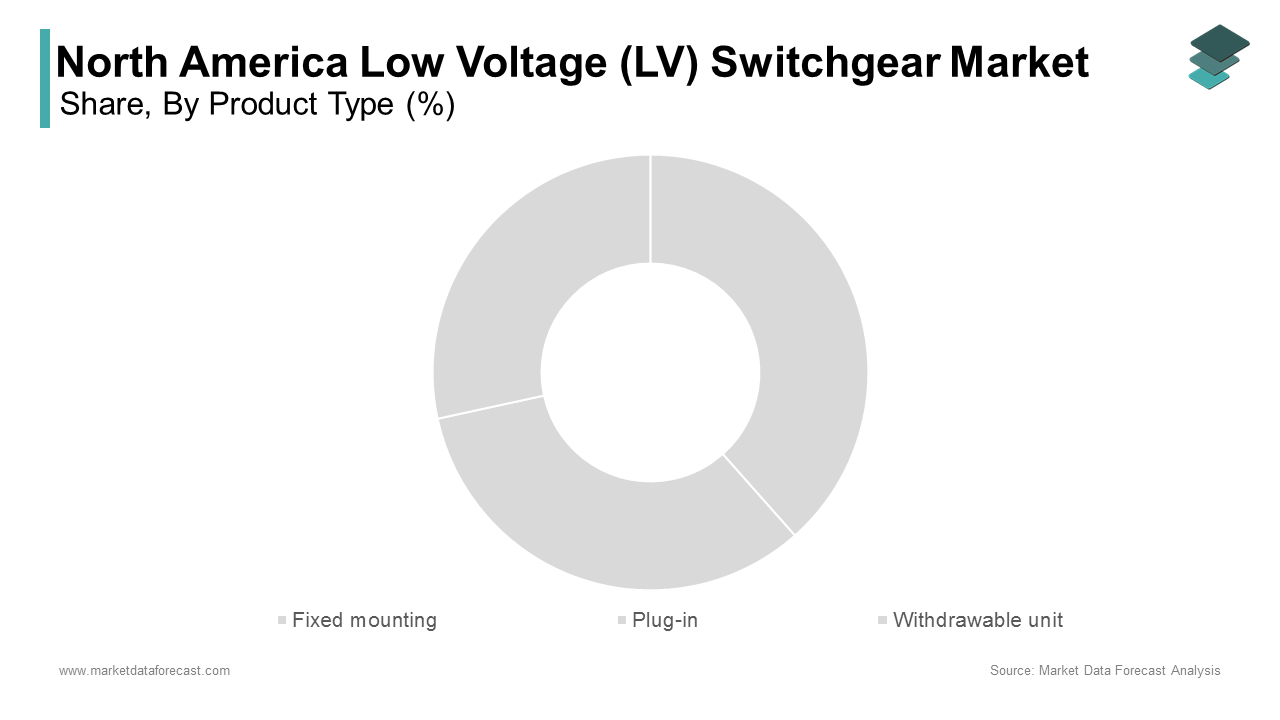
The withdrawable unit segment is predicted to witness the highest CAGR of 6.8% from 2026 to 2034 due to increasing demand for flexible, maintainable electrical infrastructure across modern industrial facilities. Withdrawable units offer distinct advantages in terms of serviceability and system uptime, making them increasingly attractive to facility managers and electrical engineers seeking to minimize operational disruptions. In addition, a primary factor driving the rapid growth of withdrawable units is their superior maintenance accessibility and reduced downtime capabilities. Unlike fixed mounting systems, withdrawable units can be safely isolated and removed from service without de-energizing the entire switchgear assembly, enabling hot-swapping and preventive maintenance without production interruptions. The ability to perform component-level maintenance translates to annual operational savings per installation. Critical infrastructure sectors such as healthcare and data centers increasingly mandate withdrawable configurations to ensure continuous power availability. Additionally, the growing complexity of industrial processes necessitates regular equipment upgrades and modifications, which are more efficiently accomplished with withdrawable units. The National Fire Protection Association (NFPA) has updated its electrical safety standards to recommend withdrawable configurations for applications requiring frequent access, further accelerating market adoption. The increasing demand for flexible and scalable electrical infrastructure represents another significant growth driver for the withdrawable unit segment. Modern industrial facilities frequently undergo expansion, reconfiguration, or process modifications that require adaptable power distribution systems. Withdrawable units excel in these scenarios by enabling easy component replacement, capacity upgrades, and system reconfiguration without extensive rewiring or infrastructure modifications. The modular nature of withdrawable systems allows for incremental capacity additions, reducing the need for complete system replacements and optimizing capital allocation. Besides, the growing trend toward predictive maintenance and condition-based monitoring aligns perfectly with withdrawable unit capabilities, as sensors and monitoring devices can be easily installed and serviced without system shutdowns.
By Voltage Rating Insights
The 250-750V segment dominated the North American low voltage switchgear market by capturing a share of 62.7% in 2025. A key driver behind the 250-750V segment's dominance is the continuous expansion of commercial and industrial infrastructure across North America. This voltage range has established itself as the industry standard for commercial and industrial applications due to its optimal balance between safety, efficiency, and versatility. The widespread adoption of 250-750V switchgear systems across diverse sectors, including manufacturing, healthcare, and commercial buildings, has solidified its position as the preferred voltage classification for low-voltage electrical distribution. This voltage range perfectly aligns with the power requirements of most commercial buildings, manufacturing facilities, and institutional installations, making it the default choice for electrical contractors and facility managers. The 250-750V switchgear systems are ideally suited for commercial applications such as office buildings, retail complexes, and mixed-use developments that require reliable power distribution without the complexity of higher voltage systems. Additionally, the healthcare sector, which represents a portion of North American commercial electricity consumption, extensively utilizes 250-750V systems for critical care equipment and life-support infrastructure. Modern hospitals and medical facilities in North America have increasingly selected 250-750V switchgear for their primary electrical distribution systems. This preference is based on the equipment's established reliability and its compatibility with standard medical infrastructure requirements. The widespread regulatory acceptance and standardization of 250-750V systems constitute another critical factor driving segment dominance. National and international electrical codes extensively reference and recommend this voltage range for commercial and industrial applications, creating a standardized framework that facilitates widespread adoption. The harmonization of voltage standards across North American jurisdictions eliminates specification confusion and streamlines procurement processes for electrical contractors and facility managers. The Canadian Standards Association (CSA) has aligned its electrical safety standards with NEC requirements for 250-750V systems, ensuring seamless market penetration across both U.S. and Canadian territories. Additionally, insurance companies and risk management organizations prefer 250-750V systems due to their extensive loss history data and proven safety record.
The 751-1000V segment is estimated to register the fastest CAGR of 7.2% over the forecast period, owing to the increasing demand for industrial process optimization and energy efficiency improvements. This voltage classification is gaining prominence as industrial facilities seek to optimize power distribution efficiency while maintaining compliance with low-voltage safety standards. The increasing adoption of energy-intensive processes and the need for enhanced power transmission capabilities are driving demand for higher voltage switchgear solutions within the low voltage category. Higher voltage switchgear systems within the low voltage range enable reduced current flow for equivalent power transmission, resulting in lower I²R losses and improved system efficiency. The automotive manufacturing sector, which accounts for a portion of North American industrial electricity consumption according to research, has increasingly adopted 751-1000V systems for assembly line operations and robotic welding applications. Major automotive manufacturers, including Ford and General Motors, have standardized on 751-1000V switchgear for new facility construction projects to support high-power manufacturing equipment and reduce energy costs. Additionally, the petrochemical industry, representing a portion of North American industrial energy consumption, extensively utilizes 751-1000V systems for motor control centers and process heating applications where high power density is essential. The rapid expansion of renewable energy installations across North America represents another significant growth driver for the 751-1000V switchgear segment. Solar photovoltaic and wind energy systems often require higher voltage distribution capabilities to efficiently transmit power from generation sources to grid interconnection points. The higher voltage classification enables solar inverters to operate more efficiently while reducing cable sizing requirements and installation costs. The integration of battery energy storage systems with renewable generation projects has further accelerated demand for 751-1000V switchgear solutions.
By Application Insights
The distribution segment held the largest share of 45.4% of the North American low-voltage switchgear market in 2025. The supremacy of the distribution segment is because of its essential role in delivering reliable electrical power from utility sources to end-use equipment and systems throughout various sectors of the economy. This application segment encompasses the fundamental power distribution infrastructure that serves commercial buildings, industrial facilities, and institutional installations across North America. A different driver behind the distribution segment's market leadership is the unprecedented growth in commercial building construction across North America. The expansion of office complexes, retail centers, healthcare facilities, and educational institutions has created substantial demand for reliable power distribution infrastructure. Commercial building permit activity has increased relative to previous periods, and electrical infrastructure accounts for a portion of total construction expenditures. Investment in commercial real estate supports new construction and renovation initiatives requiring the installation of modern switchgear. Healthcare facilities, which represent a portion of commercial building construction, extensively utilize distribution switchgear for critical power systems, including emergency backup generators and life-support equipment. Besides, the growing trend toward mixed-use developments and urban infill projects has increased the complexity of electrical distribution requirements, necessitating advanced switchgear solutions that can accommodate diverse load profiles and power quality requirements. The continuous expansion of industrial manufacturing capacity across North America represents another critical factor driving the distribution segment's dominance. Manufacturing facilities require robust and reliable power distribution systems to support production equipment, lighting, HVAC systems, and administrative functions. The automotive industry, which accounts for a portion of North American industrial electricity consumption according to research, has invested funds in new manufacturing facilities and equipment upgrades, creating substantial demand for distribution switchgear installations. Chemical processing facilities, representing a percentage of industrial electricity consumption, require specialized distribution switchgear systems to support process heating, refrigeration, and control systems. Additionally, the reshoring of manufacturing operations to North America, supported by the CHIPS and Science Act and other federal incentives, has accelerated demand for new distribution infrastructure.
The motor control segment is anticipated to witness the fastest CAGR of 8.1% from 2026 to 2034. The rapid expansion of the motor control segment is fuelled by the increasing adoption of variable frequency drives, smart motor control technologies, and energy efficiency initiatives across North American industries. This application segment encompasses switchgear systems specifically designed for controlling electric motors used in industrial processes, HVAC systems, pumping applications, and material handling equipment. A further driver of the rapid growth of the motor control segment is the widespread adoption of industrial automation and smart manufacturing technologies across North America. Modern manufacturing facilities increasingly utilize programmable motor control systems to optimize production efficiency, reduce energy consumption, and enhance operational flexibility. The automotive manufacturing sector, which accounts for a portion of North American industrial electricity consumption, has extensively adopted advanced motor control switchgear for robotic assembly lines, conveyor systems, and painting operations. Major automotive manufacturers, including Tesla and Rivian, have standardized on intelligent motor control switchgear for their new production facilities to support flexible manufacturing processes and rapid model changeovers. In addition, the growing implementation of Industry 4.0 technologies, including predictive maintenance and condition monitoring systems, requires sophisticated motor control switchgear with integrated communication capabilities. The increasing emphasis on energy efficiency and sustainability initiatives represents another significant growth driver for the motor control switchgear segment. Variable frequency drives and intelligent motor control systems can reduce energy consumption compared to traditional motor control methods, making them attractive investments for facility managers seeking to reduce operational costs and environmental impact. According to sources, commercial and industrial facilities implementing advanced motor control systems report energy savings across motor-driven equipment. HVAC systems, which account for a notable share of commercial building energy consumption, increasingly utilize variable frequency drive motor control switchgear to optimize fan and pump operations. Additionally, federal and state energy efficiency incentives have accelerated motor control switchgear adoption across North American facilities. The growing emphasis on corporate sustainability goals has further increased demand for energy-efficient motor control solutions.
REGIONAL ANALYSIS
United States Low Voltage Switchgear Market Analysis
The United States outperformed other countries in the North American low voltage switchgear market by capturing a 85.4% share in 2025. The demand for LV switchgear in the US is propelled by the country's vast industrial base, extensive commercial infrastructure, and robust manufacturing sector that collectively drive substantial demand for electrical distribution equipment. The U.S. market's strength is further reinforced by its advanced technological ecosystem, stringent safety standards, and significant investments in infrastructure modernization programs. The United States' industrial manufacturing sector serves as the primary factor driving the country's dominant position in the LV switchgear market. The nation's diverse manufacturing base, encompassing automotive, aerospace, chemicals, and electronics industries, requires extensive electrical infrastructure to support production operations. U.S. manufacturing output continues to grow, requiring investments in electrical distribution systems. The automotive industry is investing in new production facilities and equipment upgrades, which creates demand for low-voltage switchgear installations. Federal legislation has provided substantial funding for infrastructure modernization, including significant allocations for electrical infrastructure. Commercial construction spending has expanded in office buildings, retail centers, and healthcare facilities, amplifying demand for electrical distribution switchgear systems. The condition of existing infrastructure indicates a need for continued investment, which will influence the demand for low-voltage switchgear. Government initiatives promoting the expansion of domestic industries have accelerated construction projects for new industrial facilities, which require advanced switchgear solutions. Many manufacturing companies have relocated operations to the United States, and each requires a comprehensive electrical infrastructure, including low-voltage switchgear systems. The United States' leadership position in technological innovation and smart grid development represents another critical factor driving its market dominance in the LV switchgear sector. The nation's commitment to modernizing its electrical infrastructure through smart grid initiatives creates substantial demand for advanced switchgear systems incorporating digital monitoring, communication capabilities, and intelligent control features. The proliferation of data centers across the United States, with numerous facilities hosting a percentage of global data center capacity, requires highly reliable and redundant switchgear installations for mission-critical operations. The growing adoption of renewable energy sources, with solar and wind capacity additions, requires specialized LV switchgear for grid interconnection and distributed generation applications.
Canada Low Voltage Switchgear Market Analysis
Canada followed closely in the North American LV switchgear market due to its developed economy, substantial natural resource sector, and ongoing infrastructure modernization efforts that drive consistent demand for electrical distribution equipment. Canada's commitment to renewable energy development and industrial expansion provides a stable foundation for continued market growth throughout the forecast period. Canada's extensive natural resources sector serves as the key driver of the country's LV switchgear market demand, with mining, oil and gas, and forestry industries requiring robust electrical infrastructure to support operations in challenging environments. The oil and gas industry, which accounts for a portion of Canada's GDP according to Statistics Canada, continues to modernize extraction and processing facilities, requiring advanced switchgear systems for safety-critical applications. The forestry sector extensively utilizes LV switchgear for pulp and paper mill operations, sawmill facilities, and wood processing plants. Canada's commitment to critical minerals development, with the federal government allocating funds for critical mineral exploration and processing, will further accelerate demand for industrial-grade switchgear systems. Additionally, the growing emphasis on sustainable resource extraction practices has increased demand for energy-efficient switchgear systems that support variable frequency drives and automated control systems. Canada's aggressive renewable energy targets and comprehensive grid modernization initiatives represent significant growth drivers for the LV switchgear market. The government has a commitment to achieving net-zero emissions, which is supported by legislation. Investments in clean energy infrastructure are increasing in response to the commitment. These new energy systems require advanced electrical distribution infrastructure. Renewable energy sources, such as wind and solar power, are a growing part of the electricity mix. Specific types of electrical components are needed for managing and connecting these energy sources to the main power grid. Funding initiatives are in place to support the development of clean energy infrastructure. Hydroelectric power, which generates a portion of Canada's electricity, requires extensive LV switchgear systems for dam operations, pumping stations, and distribution substations. The growing adoption of distributed energy resources, including rooftop solar installations and community wind projects, has increased demand for bidirectional switchgear systems capable of supporting grid-tied renewable generation. Additionally, Canada's commitment to smart grid development has accelerated the adoption of intelligent switchgear systems incorporating IoT connectivity and real-time performance monitoring.
COMPETITION OVERVIEW
The North American LV switchgear market exhibits intense competition characterized by the presence of established global players alongside regional specialists and emerging technology companies. Market leaders maintain their positions through comprehensive product portfolios, extensive distribution networks, and strong brand recognition among electrical contractors and facility managers. The competitive landscape is defined by continuous innovation in digital technologies, with companies racing to integrate IoT connectivity, artificial intelligence, and predictive analytics into their switchgear solutions. Price competition remains significant, particularly in standardized applications where differentiation opportunities are limited. Customer relationships and after-sales service capabilities have become critical competitive factors, with companies investing heavily in training programs and technical support infrastructure. The market also experiences competition from alternative technologies and evolving industry standards that may disrupt traditional switchgear applications. Strategic partnerships and acquisitions have become common tactics for companies seeking to expand their technological capabilities and market reach. Regional players often compete effectively by offering customized solutions and localized service support that larger multinational companies may struggle to provide.
KEY MARKET PLAYERS
A few major players of the North American low-voltage switchgear market include
- Schneider Electric
- ABB
- Siemens
- Eaton
- Rockwell Automation
- General Electric
- Mitsubishi Electric
- Toshiba International Corporation
- Legrand
- Emerson Electric
- Powell Industries
- Hubbell Incorporated
- Larsen & Toubro
- Hyundai Electric
Top Strategies Used by Key Market Participants
Strategic Acquisitions and Partnerships Leading players in the North American LV switchgear market actively pursue strategic acquisitions and partnerships to expand their technological capabilities and market reach. These companies target specialized firms offering complementary technologies such as smart grid solutions, IoT connectivity platforms, and advanced monitoring systems. By acquiring niche technology providers, major players can rapidly integrate cutting-edge features into their existing switchgear portfolios without lengthy development cycles. Partnerships with system integrators and electrical contractors enhance distribution networks and ensure proper installation and maintenance services. These strategic moves also enable companies to enter new market segments and geographic regions while leveraging existing customer relationships and technical expertise.
Digital Transformation and Smart Technologies Integration. Key market participants are heavily investing in digital transformation initiatives that integrate smart technologies into traditional switchgear systems. This strategy involves incorporating sensors, communication modules, and cloud-based monitoring platforms to create intelligent switchgear solutions. Companies are developing predictive maintenance capabilities that use artificial intelligence and machine learning algorithms to anticipate equipment failures before they occur. The integration of cybersecurity features addresses growing concerns about industrial network vulnerabilities. Digital twin technology allows customers to simulate and optimize switchgear performance in virtual environments before physical implementation. These digital enhancements not only improve product functionality but also create new revenue streams through software licensing and subscription-based services.
Sustainability and Green Technology Focus:s Leading companies are increasingly emphasizing sustainability and green technology development as core strategic initiatives in the LV switchgear market. This approach involves designing energy-efficient switchgear systems that minimize power losses and reduce environmental impact throughout their lifecycle. Companies are investing in recyclable materials and manufacturing processes that reduce carbon footprints. The development of switchgear solutions specifically designed for renewable energy integration supports the growing demand for clean energy infrastructure. Sustainable product design also includes modular components that extend equipment lifespan and reduce replacement frequency. This strategy aligns with corporate sustainability goals of end-users and supports regulatory compliance requirements for energy efficiency and environmental protection.
Leading Players in the North America LV Switchgear Market
- Schneider Electric stands as a global leader in energy management and automation solutions, with significant influence in the North American LV switchgear market. The company's comprehensive portfolio spans from residential to industrial switchgear applications, emphasizing smart grid integration and digital transformation. Their EcoStruxure architecture platform has revolutionized how switchgear systems communicate and operate, providing real-time monitoring and predictive maintenance capabilities. Schneider's commitment to sustainability and energy efficiency has positioned them at the forefront of green building initiatives and industrial automation projects. Their extensive distribution network and strong partnerships with electrical contractors ensure widespread market penetration across North America. The company's continuous investment in research and development has resulted in innovative arc-resistant switchgear designs and modular systems that meet evolving industry standards.
- Siemens AG maintains a prominent position in the North American LV switchgear landscape through its comprehensive electrical infrastructure solutions and industrial automation expertise. The company's switchgear offerings integrate seamlessly with their broader automation and digitalization portfolio, providing customers with end-to-end power distribution and control solutions. Their focus on digital twin technology and predictive analytics has transformed traditional switchgear into intelligent assets capable of self-monitoring and optimization. Siemens' commitment to cybersecurity in industrial applications has made its switchgear solutions particularly attractive to critical infrastructure operators, including healthcare facilities and data centers. The company's extensive service network and training programs ensure proper installation and maintenance of their systems. Their emphasis on modular design and standardized components has reduced lead times and simplified system upgrades for customers across various industries.
- ABB Ltd has established itself as a major player in the North American LV switchgear market through its innovative approach to electrical distribution and automation technologies. The company's switchgear solutions are designed with a focus on reliability, safety, and environmental sustainability, aligning with North America's stringent electrical safety standards. Their ability to integrate renewable energy sources with traditional power distribution systems has made them a preferred partner for utility-scale projects and industrial facilities transitioning to clean energy. ABB's commitment to modular design principles has enabled faster deployment and easier maintenance of switchgear systems across diverse applications. The company's extensive global manufacturing footprint ensures consistent product quality and supply chain reliability. Their focus on digitalization through the Ability platform provides customers with advanced monitoring and control capabilities that enhance operational efficiency and reduce downtime.
MARKET SEGMENTATION
This research report on the North American low voltage (LV) switchgear market has been segmented and sub-segmented based on product type, voltage rating, application, and region.
By Product Type
- Fixed mounting
- Plug-in
- Withdrawable unit
By Voltage Rating
- Less than 250V
- 250-750V
- 751-1000V
By Application
- Substation
- Distribution
- Power Factor Correction
- Sub-Distribution
- Motor Control
By Region
- US
- Canada
- Mexico
- Rest of North America