- Product Description Description
- Table of Contents TOC
- List of Table & Figure LOT
- Get Free Sample PDF Sample PDF
Market Size, 2025
$53.99 BnMarket Estimate, 2026
$219.59 MnMarket Forecast, 2034
$677.81 MnCAGR, 2026–2034
32.46%North America Medical Holography Market Report Summary
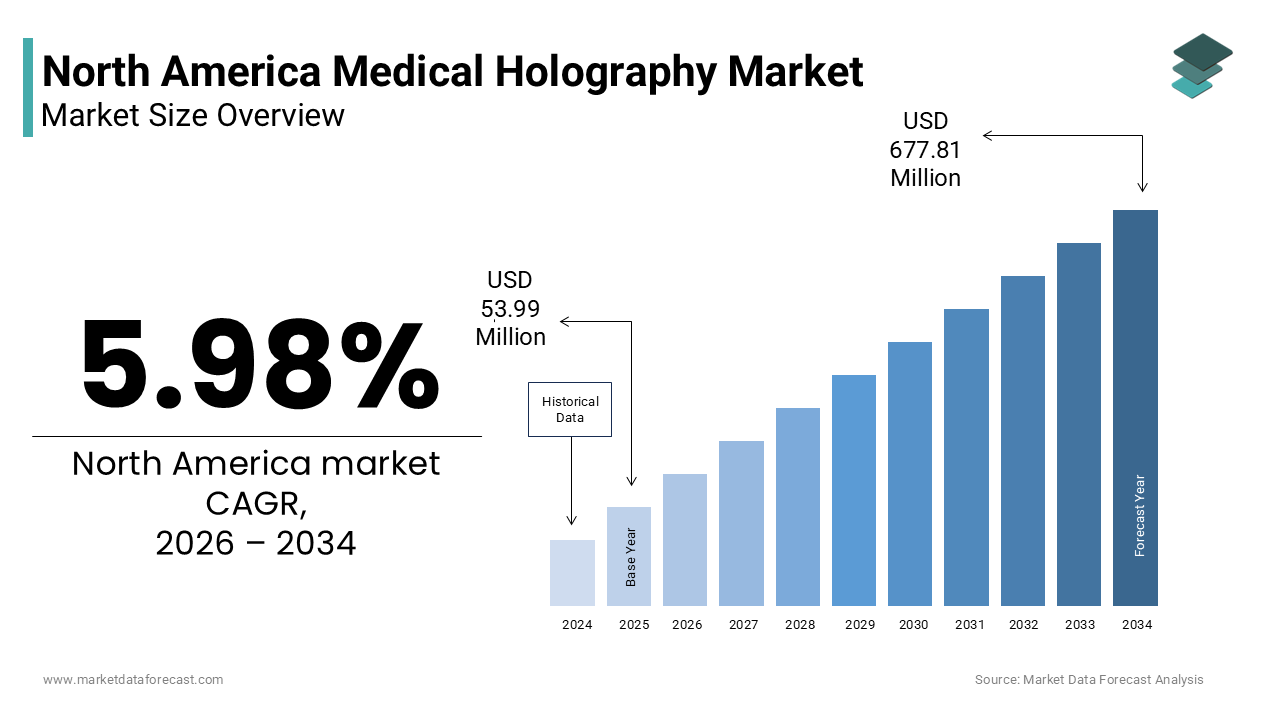
The North America medical holography market was valued at USD 53.99 million in 2025 and is anticipated to reach USD 219.59 million in 2026 from USD 677.81 million by 2034, growing at a CAGR of 32.46% during the forecast period from 2026 to 2034. The growth of the North America medical holography market is driven by the increasing adoption of minimally invasive surgical procedures, rising demand for advanced medical imaging technologies, and expanding integration of three-dimensional visualization into clinical workflows. Growing investments in digital healthcare infrastructure, increasing emphasis on simulation-based medical education, and continuous advancements in holographic display technologies are further accelerating market growth. Moreover, the integration of artificial intelligence with holographic imaging, expansion of telemedicine applications, and increasing utilization of holography in surgical planning and precision medicine are supporting the expansion of the North America medical holography market.
Key Market Trends
-
Rising adoption of holographic visualization for minimally invasive and image-guided surgical procedures.
-
Increasing integration of artificial intelligence and machine learning with medical holography platforms.
-
Growing demand for immersive holographic technologies in medical education and simulation-based training.
-
Rising expansion of holographic telemedicine and remote collaborative healthcare services.
-
Increasing investments in advanced holographic displays and cloud-enabled visualization software.
Segmental Insights
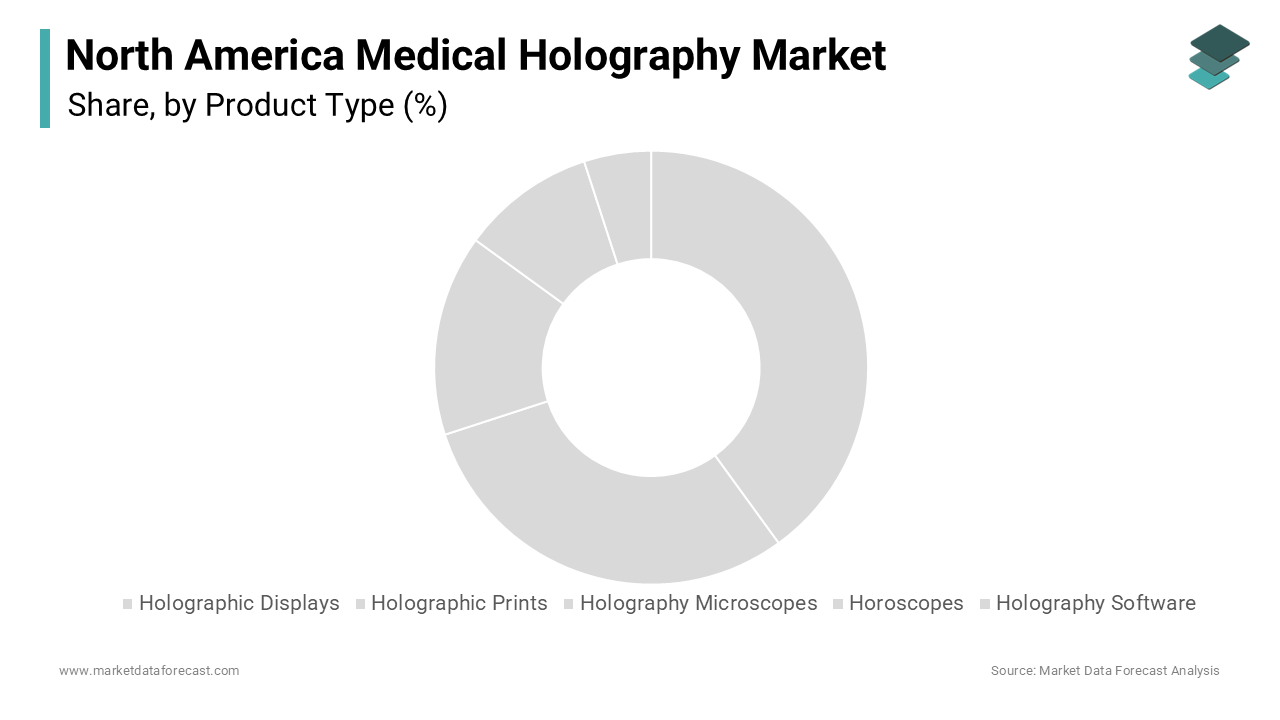
- Based on product type, the holographic displays segment dominated the North America medical holography market and accounted for 36.4% of the market share in 2025. The dominance of the segment is attributed to its critical role in three-dimensional anatomical visualization, surgical planning, real-time intraoperative guidance, integration with CT and MRI imaging systems, and increasing adoption across neurosurgery, cardiology, and orthopedic procedures.
- The holography software segment is projected to witness the fastest CAGR of 18.5% during the forecast period owing to the increasing adoption of artificial intelligence-enabled image processing, cloud-based visualization platforms, automated segmentation technologies, growing demand for remote collaboration, and continuous software innovations that enhance workflow efficiency and image quality.
- Based on application, the medical imaging segment dominated the North America medical holography market and accounted for 32.1% of the market share in 2025. The growth of the segment is driven by the widespread use of holographic visualization in diagnostic imaging, increasing demand for accurate surgical planning, growing utilization of three-dimensional anatomical reconstruction, expanding adoption in oncology and cardiovascular disease management, and seamless integration with hospital imaging systems.
- The medical education segment is anticipated to register the fastest CAGR of 17.2% during the forecast period due to increasing adoption of simulation-based medical training, growing demand for interactive anatomical learning, expanding use of digital cadaver alternatives, rising investments in educational technologies, and increasing collaboration between medical schools and technology providers.
- Based on end user, the hospitals and clinics segment dominated the North America medical holography market and accounted for 36.4% of the market share in 2025. The dominance of the segment is attributed to high patient volumes, increasing demand for advanced surgical planning tools, expanding adoption of digital healthcare technologies, growing investments in operating room modernization, and rising implementation of holographic visualization across multidisciplinary clinical teams.
- The pharmaceutical and biotechnology companies segment is expected to witness the fastest CAGR of 16.8% during the forecast period owing to increasing use of holographic technologies in drug discovery, molecular visualization, personalized medicine research, virtual drug development, and expanding collaborations between biotechnology companies and digital health technology providers.
Regional Insights
- The United States dominated the North America medical holography market and accounted for 82.3% of the regional market share in 2025. The country's leadership is driven by advanced healthcare infrastructure, high healthcare expenditure, strong presence of leading technology companies, increasing investments in digital health innovation, expanding minimally invasive surgical procedures, and rapid adoption of artificial intelligence-enabled medical technologies.
- Canada held 15.2% of the North America medical holography market share in 2025 owing to its universal healthcare system, increasing investments in healthcare modernization, strong academic research ecosystem, growing adoption of simulation-based medical education, expanding telemedicine infrastructure, and supportive regulatory environment for digital healthcare technologies.
- The Rest of North America is expected to witness steady growth during the forecast period owing to increasing healthcare digitalization, rising investments in advanced medical imaging technologies, expanding access to specialized healthcare services, growing adoption of holographic training solutions, and increasing implementation of collaborative telemedicine platforms across healthcare institutions.
Competitive Landscape
The North America medical holography market is highly competitive and characterized by the presence of established healthcare technology companies and emerging digital health innovators competing through continuous technological advancements, artificial intelligence integration, advanced visualization platforms, and strategic collaborations with healthcare providers. Leading companies are focusing on enhancing holographic display quality, developing cloud-based software platforms, improving real-time image rendering capabilities, expanding telemedicine applications, and strengthening partnerships with hospitals, academic institutions, and pharmaceutical companies. Continuous investments in research and development and regulatory compliance continue to strengthen competitive positioning across the North America medical holography market. The prominent players operating in the North America medical holography market include Roche Diagnostics, LifeScan, Bayer Healthcare, Abbott Diabetes Care, Medtronic, AgaMatrix Inc., Nova Biomedical Corporation, Dexcom Inc., and Sanofi.
North America Medical Holography Market Size
The North America medical holography market size was valued at USD 53.99 million in 2025 and is anticipated to reach USD 219.59 million in 2026 from USD 677.81 million by 2034, growing at a CAGR of 32.46% during the forecast period from 2026 to 2034.
The medical holography is healthcare technology, utilizing advanced optical techniques to create three dimensional visualizations of anatomical structures for diagnostic, surgical, and educational purposes. This technology enables clinicians to interact with patient specific data in a spatial context, enhancing precision in complex procedures, such as neurosurgery and orthopedic reconstruction. The integration of holographic displays with existing imaging modalities like computed tomography and magnetic resonance imaging allows for real time visualization during interventions. According to the Centers for Disease Control and Prevention, chronic diseases account for 90% of the 4.1 trillion US dollars spent annually on healthcare in the United States, driving the need for precise diagnostic tools that can improve treatment outcomes and reduce complications. Furthermore, as per the Association of American Medical Colleges, there is a projected shortage of up to 124000 physicians by 2034, which necessitates innovative training solutions like holography to accelerate the proficiency of medical students and residents. The adoption of this technology is further supported by the increasing prevalence of minimally invasive surgeries, where detailed spatial awareness is critical for success. Regulatory bodies in the region are also beginning to establish frameworks for digital health technologies, creating a conducive environment for the integration of holographic systems into clinical workflows.
MARKET DRIVERS
Increasing Adoption of Minimally Invasive Surgical Procedures Enhances Precision Requirements
The rising preference for minimally invasive surgical procedures is propelling the growth of the North America medical holography market. These procedures require surgeons to operate through small incisions using cameras and instruments, limiting direct visual access to internal anatomy. As per the research, over 15 million minimally invasive surgeries are performed annually in the United States, reflecting the widespread shift away from open surgery. Holographic visualization provides surgeons with a three-dimensional understanding of the surgical field, allowing for better navigation around critical structures such as blood vessels and nerves. The ability to overlay preoperative imaging onto the patient’s body in real time enhances spatial orientation and decision making during surgery. This technological advantage is particularly valuable in oncology and cardiovascular surgeries where precision is paramount. Hospitals and surgical centers are increasingly investing in holographic systems to improve patient outcomes and reduce hospital stays. The demand for such precision driven tools is further amplified by the aging population, which requires more frequent and complex surgical interventions. The integration of holography into operating rooms is becoming a standard practice for leading healthcare institutions seeking to maintain competitive excellence.
Growing Emphasis on Advanced Medical Education and Training Accelerates Technology Integration
The growing emphasis on advanced medical education and training is significantly driving the growth of the medical holography market. Traditional methods of anatomical study rely heavily on cadavers and two dimensional images, which often fail to convey the complexity of human physiology. According to the Liaison Committee on Medical Education, there are over 150 accredited medical schools in the United States and Canada, all of which are seeking innovative tools to enhance curriculum effectiveness. Holographic systems allow students to interact with life size three dimensional models of organs and systems, facilitating a deeper understanding of spatial relationships and pathological conditions. As per the study, simulation based training has been linked to a 30% improvement in procedural skills among residents compared to traditional lecture based methods. Medical institutions are increasingly incorporating holography into their training programs to prepare future physicians for the complexities of modern healthcare. The technology also supports continuous professional development for practicing surgeons who need to master new techniques without risking patient safety. Furthermore, the ability to share holographic data remotely enables collaborative learning and mentorship across geographical boundaries. This educational utility ensures a steady demand for holographic solutions as medical schools and hospitals prioritize competency based training and lifelong learning initiatives.
MARKET RESTRAINTS
High Initial Investment and Maintenance Costs Limit Accessibility for Smaller Facilities
The high initial investment and ongoing maintenance costs associated with medical holography systems, particularly for smaller healthcare facilities is hindering the growth of the North America medical holography market. Implementing these advanced technologies requires substantial capital expenditure for hardware, software licenses, and integration with existing hospital information systems. According to the research, the average cost of implementing a new digital health technology can exceed 500000 US dollars, which poses a financial barrier for community hospitals and rural clinics. Additionally, the specialized nature of holographic equipment necessitates regular calibration and technical support, adding to the total cost of ownership. As per the reports, nearly 40% of rural hospitals operate at a loss, making it difficult for them to justify such expensive investments amidst tight budget constraints. The lack of standardized reimbursement codes for holographic assisted procedures further complicates the financial viability for providers. Without clear pathways to recoup costs through insurance payments, many institutions hesitate to adopt the technology. This economic disparity creates a divide where only large academic medical centers and wealthy private practices can afford to utilize medical holography.
Complex Regulatory Approval Processes and Lack of Standardized Guidelines Delay Adoption
The complex regulatory approval processes and the absence of standardized clinical guidelines is additionally impeding the growth of the North America medical holography market. In North America, medical devices must undergo rigorous evaluation by agencies such as the Food and Drug Administration in the United States and Health Canada to ensure safety and efficacy. According to the Food and Drug Administration, the premarket approval process for novel Class III medical devices can take between 18 to 36 months, involving extensive clinical trials and data submission. This lengthy timeline delays the commercial availability of new holographic solutions and increases development costs for manufacturers. The lack of unified standards for validating holographic accuracy and clinical utility creates uncertainty for healthcare providers. Clinicians are often hesitant to adopt technologies that lack established best practices and evidence-based guidelines. The variability in regulatory requirements between different jurisdictions further complicates market entry for companies operating across borders. Additionally, the rapid pace of technological advancement often outpaces the development of regulatory frameworks by leading to gaps in oversight. This regulatory ambiguity discourages investment and slows down the integration of holography into routine clinical care.
MARKET OPPORTUNITIES
Integration with Artificial Intelligence and Machine Learning Enhances Diagnostic Capabilities
The integration of medical holography with artificial intelligence and machine learning for enhancing diagnostic accuracy and personalized treatment planning is solely to set up new opportunities for the growth of the North America medical holography market. AI algorithms can analyze vast amounts of medical imaging data to identify patterns and anomalies that may be missed by the human eye. The artificial intelligence applications in radiology have demonstrated a 95% accuracy rate in detecting certain types of cancers, surpassing traditional methods, as per the study. When combined with holographic visualization, these AI driven insights can be presented in an intuitive three dimensional format by allowing clinicians to explore potential diagnoses interactively. As per the research, the use of AI enhanced imaging tools has reduced diagnostic errors by 15% in pilot studies. This synergy enables the creation of dynamic patient specific models that simulate disease progression and treatment responses. Pharmaceutical companies are also leveraging this combination for drug discovery and clinical trial simulations. The ability to visualize molecular interactions in three dimensions accelerates the development of targeted therapies. Furthermore, AI powered holography can assist in predicting surgical outcomes by modeling various procedural scenarios. This technological convergence offers immense potential for improving patient care and operational efficiency, attracting significant interest from investors and healthcare providers seeking cutting edge solutions.
Expansion into Telemedicine and Remote Collaborative Care Opens New Markets
The rapid expansion of telemedicine and remote collaborative care, particularly in underserved regions is eventually to promote new opportunities for the growth of the North America medical holography market. The rise of remote healthcare services has created a demand for tools that enable specialists to consult with patients and local providers effectively. According to the American Telemedicine Association, telehealth visits increased by 38 times compared to pre pandemic levels, highlighting the shift towards virtual care models. Holographic telepresence allows experts to project three dimensional anatomical models into remote locations, facilitating real time guidance and second opinions. As per the Rural Health Information Hub, over 60 million Americans live in rural areas with limited access to specialized medical care, making remote collaboration essential. Holography bridges this gap by providing a shared visual context that enhances communication and decision making. Surgeons can guide local practitioners through complex procedures without being physically present, improving access to high quality care. Additionally, medical conferences and training sessions can leverage holographic platforms for immersive remote participation. This capability not only expands the reach of healthcare providers but also reduces travel costs and carbon footprints. As broadband infrastructure improves across North America, the feasibility of holographic telemedicine will increase by creating a robust market for remote diagnostic and consultative services.
MARKET CHALLENGES
Data Privacy and Security Concerns Pose Significant Legal and Ethical Risks
The data privacy and security concerns are to pose as a major challenge for the growth of the North America medical holography market. Holographic systems generate and store detailed three dimensional reconstructions of patient anatomy, which constitute protected health information under regulations such as the Health Insurance Portability and Accountability Act. According to the Office for Civil Rights, there were over 700 reported healthcare data breaches in the United States in the last year, affecting millions of individuals. The transmission and storage of large holographic data files increase the vulnerability to cyberattacks and unauthorized access. As per the Cybersecurity and Infrastructure Security Agency, healthcare remains one of the most targeted sectors for ransomware attacks due to the critical nature of its operations. Ensuring end to end encryption and secure cloud storage for holographic data requires significant technical expertise and investment. Additionally, the ethical implications of sharing three dimensional biological data raise questions about consent and ownership. Patients may be concerned about how their digital twins are used and who has access to them. The lack of standardized protocols for securing holographic data further exacerbates these risks. Healthcare providers must navigate these complex legal and ethical landscapes carefully to maintain trust and compliance.
Technical Limitations in Image Resolution and Real Time Processing Affect Clinical Utility
The technical limitations in image resolution and real time processing capabilities is another factor to limit the growth of the North America medical holography market. While the technology has advanced considerably, achieving photorealistic quality and seamless interactivity remains difficult, especially for complex anatomical structures. Current holographic displays often struggle with latency issues when rendering high resolution three dimensional images, which can disrupt surgical workflows. As per the study, artifacts and distortions in holographic projections can lead to misinterpretation of anatomical details, potentially compromising patient safety. The computational power required to process and render large datasets from computed tomography and magnetic resonance imaging in real time is substantial, necessitating expensive hardware upgrades. Additionally, the viewing angles and brightness of some holographic devices are limited by making them less effective in brightly lit operating rooms. These technical shortcomings can hinder user acceptance and limit the scope of applications. Manufacturers must continue to invest in research and development to overcome these barriers and improve the fidelity and responsiveness of holographic systems.
REPORT COVERAGE
| REPORT METRIC | DETAILS |
| Market Size Available | 2025 to 2034 |
| Base Year | 2025 |
| Forecast Period | 2026 to 2034 |
| CAGR | 32.46% |
| Segments Covered | By Product Type, Application, End User and Region |
| Various Analyses Covered | Global, Regional, & Country Level Analysis; Segment-Level Analysis, Drivers, Restraints, Opportunities, Challenges, PESTLE Analysis, Porter’s Five Forces Analysis, Competitive Landscape, Analyst Overview of Investment Opportunities |
| Regions Covered | The United States, Canada, Rest of North America |
| Key Market Players | Roche Diagnostics LifeScan, Bayer Healthcare, Abbott Diabetes, Medtronic, AgaMatrix Inc., Nova Biomedical Corporation, Dexcom Inc., and Sanofi. |
SEGMENTAL ANALYSIS
By Product Type Insights
The holographic displays segment by holding 36.4% of the North America medical holography market share in 2025 due to their critical role in visualizing complex anatomical structures for surgical planning and intraoperative guidance. These devices enable clinicians to interact with three dimensional patient data in real time by enhancing spatial awareness and precision during procedures. According to the study, the adoption of advanced visualization tools has increased by 25% in major academic medical centers, driven by the need for minimally invasive techniques that require detailed internal mapping. The integration of holographic displays with existing imaging modalities, such as computed tomography and magnetic resonance imaging is also elevating the growth of the segment. Many radiologists now utilize three dimensional reconstruction software, creating a direct demand for compatible display hardware. The ability to project life size models allows surgical teams to collaborate more effectively and reduce operative errors. Furthermore, technological advancements in resolution and latency have made these displays more reliable for clinical use. Hospitals are increasingly investing in high end holographic workstations to support complex specialties such as neurosurgery and cardiology. The tangible benefits in terms of improved patient outcomes and reduced recovery times justify the significant capital expenditure required for these systems.
The holography software segment is projected to grow at a fastest CAGR of 18.5% during the forecast period, driven by the increasing need for sophisticated algorithms to process and render medical data. The software serves as the backbone of holographic systems, converting two-dimensional scans into interactive three dimensional models. The volume of medical imaging data generated annually has doubled in the last five years, necessitating powerful software solutions for efficient management and visualization. The integration of artificial intelligence and machine learning capabilities that automate segmentation and enhance image quality. AI driven software can reduce the time required for image processing by 40% by making holographic workflows more feasible in busy clinical settings. Cloud based platforms are also gaining traction, allowing for remote access and collaborative analysis among multidisciplinary teams. The flexibility of software updates and the lower barrier to entry compared to hardware make this segment attractive to a broader range of healthcare providers. Additionally, the rise of telemedicine has increased demand for software that supports remote holographic consultations.
By Application Insights
The medical imaging segment was the largest by holding 32.1% in the North America medical holography market share in 2025 due to the essential role of three dimensional visualization in diagnostic accuracy and treatment planning. Radiologists and surgeons rely on holographic representations of computed tomography and magnetic resonance images to identify abnormalities and plan complex interventions. According to the study, the number of advanced imaging procedures performed in the United States exceeds 100 million annually, creating a vast base for holographic application. The ability to rotate and slice through virtual models provides insights that are difficult to achieve with traditional two dimensional screens. The integration of holography into picture archiving and communication systems allows seamless workflow integration for healthcare providers. Furthermore, the growing prevalence of chronic diseases such as cancer and cardiovascular disorders requires precise imaging for effective management. Hospitals are increasingly adopting holographic imaging stations to support multidisciplinary tumor boards and surgical rehearsals. The regulatory approval of several holographic imaging devices by the Food and Drug Administration has also facilitated wider adoption.
The medical education segment is swiftly emerging at a fastest CAGR of 17.2% from 2026 to 2034 owing to the shift towards immersive and interactive learning methods. Traditional cadaver based training is limited by availability and ethical concerns, prompting institutions to adopt digital alternatives. According to the research, over 150 medical schools in North America are actively integrating simulation technologies into their curricula to enhance student engagement and retention. Holography allows students to explore anatomical structures in three dimensions, providing a deeper understanding of spatial relationships and physiological functions. The ability to visualize pathological conditions and surgical techniques in a risk free environment accelerates the learning curve for future physicians. Additionally, holographic platforms support remote learning and collaborative projects across different institutions. The cost effectiveness of digital models compared to physical specimens further drives adoption in resource constrained settings. Government grants and private investments in educational technology are also fueling this growth.
By End User Insights
The hospitals and clinics segment was accounted in occupying 36.4% of the North America medical holography market share in 2025 due to their high volume of patient interactions and need for advanced diagnostic and surgical tools. These facilities are at the forefront of adopting innovative technologies to improve patient outcomes and operational efficiency. According to the research, there are over 6000 hospitals in the United States, many of which are upgrading their infrastructure to support digital health initiatives. The pressure to reduce readmission rates and surgical complications drives the investment in holographic systems for preoperative planning and intraoperative guidance. The concentration of specialized services in large medical centers creates a natural demand for high precision tools. Furthermore, competitive pressures encourage hospitals to differentiate themselves by offering cutting edge treatments. Reimbursement policies that favor value based care also incentivize the adoption of technologies that enhance quality and safety. The established procurement processes and financial resources of large hospital networks facilitate the widespread deployment of holographic solutions.
The pharmaceutical and biotechnology companies segment is to exhibit a fastest CAGR of 16.8% during the forecast period with the need for advanced tools in drug discovery and development. These companies utilize holography to visualize molecular structures and protein interactions, accelerating the identification of potential drug candidates. Holographic models allow scientists to manipulate and analyze complex biological data in an intuitive manner. The ability to simulate drug binding and efficacy in a virtual environment reduces the need for extensive animal testing and early stage clinical trials. Additionally, holography aids in the design of personalized medicine approaches by modeling patient specific responses. The increasing collaboration between tech firms and pharmaceutical companies is further driving adoption. Regulatory agencies are also encouraging the use of computational models in submissions by creating a favorable environment for holographic applications.
COUNTRY ANALYSIS
United States Medical Holography Market Analysis
The United States was the largest contributor in the North America medical holography market by holding 82.3% of the share in 2025 owing to the robust healthcare infrastructure, high healthcare expenditure, and presence of leading technology companies. According to the study, national health spending in the United States reached 4.3 trillion US dollars, providing ample resources for the adoption of advanced medical technologies. The presence of top tier academic medical centers and research institutions fosters innovation and early adoption of holographic solutions. The approval of numerous digital health devices has created a supportive regulatory environment for market entry. The high prevalence of chronic diseases and the aging population increase the demand for precise diagnostic and surgical tools. Furthermore, strong venture capital funding for health tech startups accelerates the development and commercialization of new holographic products. The United States also leads in telecommunications infrastructure by facilitating the integration of cloud based holographic services.
Canada Medical Holography Market Analysis
Canada medical holography market was ranked second by holding 15.2% of share in 2025 with its universal healthcare system and focus on equitable access to advanced medical technologies. The country’s government initiatives to modernize healthcare infrastructure support the adoption of digital health solutions including holography. The presence of renowned research universities and hospitals drives the demand for educational and clinical holographic applications. The collaborative nature of the Canadian healthcare system facilitates the sharing of best practices and technologies across provinces. Additionally, the growing emphasis on rural healthcare delivery creates opportunities for telemedicine enabled holographic services. Canada’s regulatory framework, aligned with international standards, also attracts global players seeking to expand their presence in the North American region.
KEY MARKET PLAYERS
A few of the notable companies operating in the North American medical holography market include
- Roche Diagnostics
- LifeScan
- Bayer Healthcare
- Abbott Diabetes Care
- Medtronic
- AgaMatrix Inc.
- Nova Biomedical Corporation
- Dexcom Inc.
- Sanofi
MARKET SEGMENTATION
This research report on the North American medical holography market has been segmented and sub-segmented into the following categories
By Product Type
- Holographic Displays
- Holographic Prints
- Holography Microscopes
- Horoscopes
- Holography Software
By Application
- Medical Imaging
- Biomedical Research
- Medical Education
By End User
-
Research Laboratories
- Hospitals & Clinics
- Academic Medical Centers
- Pharmaceutical and Biotechnology Companies
By Country
- The United States
- Canada
- Rest of North America